Dachshunds can eat many complete dog foods and some simple dog-safe human foods, but portion control matters. Because Dachshunds are small and long-backed, extra weight can put more strain on the spine and joints.
Use this guide as a starting point, not a replacement for veterinary advice. If your Dachshund has allergies, pancreatitis, kidney disease, diabetes, or a sensitive stomach, ask your veterinarian before changing food.
Quick answer
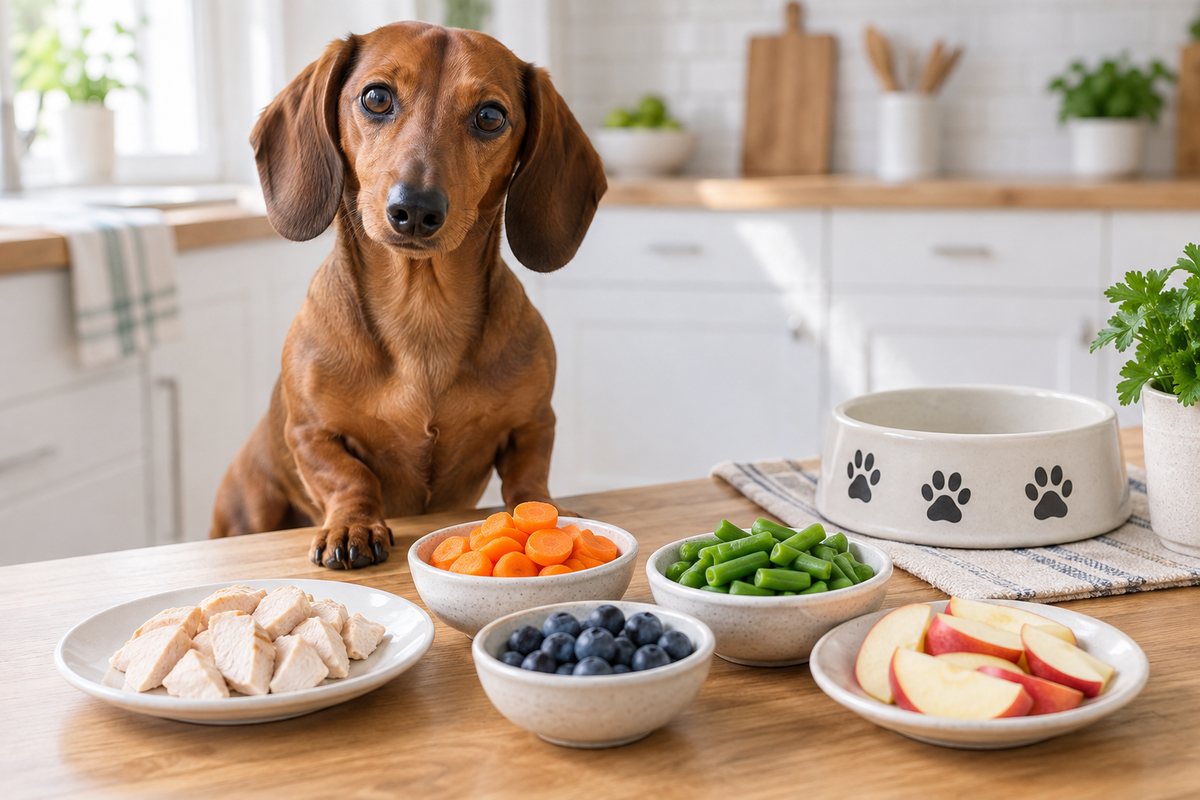
Dachshunds can eat a complete and balanced dog food for their life stage, plus small amounts of dog-safe extras such as plain cooked chicken, plain pumpkin, carrots, green beans, blueberries, and apple slices without seeds. Treats should stay limited so the main diet remains balanced.
Key takeaways
- A complete dog food should be the foundation of the diet.
- Treats and extras should be small because Dachshunds gain weight easily.
- Avoid toxic foods such as chocolate, grapes, raisins, xylitol, onions, garlic, alcohol, and cooked bones.
- Ask your vet before changing diets for a dog with medical issues.
Best everyday food foundation
Most Dachshunds do best with a complete commercial dog food appropriate for puppy, adult, or senior life stage. In the United States, look for an AAFCO nutritional adequacy statement, clear feeding directions, and calorie information you can measure.
Dog-safe extras in small amounts
- Plain cooked chicken or turkey without bones, skin, or seasoning
- Plain cooked egg
- Plain pumpkin, not pumpkin pie filling
- Green beans or carrots
- Blueberries
- Small apple pieces without seeds or core
- Plain rice for short-term bland meals if your veterinarian recommends it
Foods Dachshunds should not eat
Avoid chocolate, grapes, raisins, xylitol, onions, garlic, alcohol, raw yeast dough, macadamia nuts, cooked bones, and very fatty foods. If your Dachshund eats something risky, contact your veterinarian or a pet poison hotline promptly.
Portion control for Dachshunds
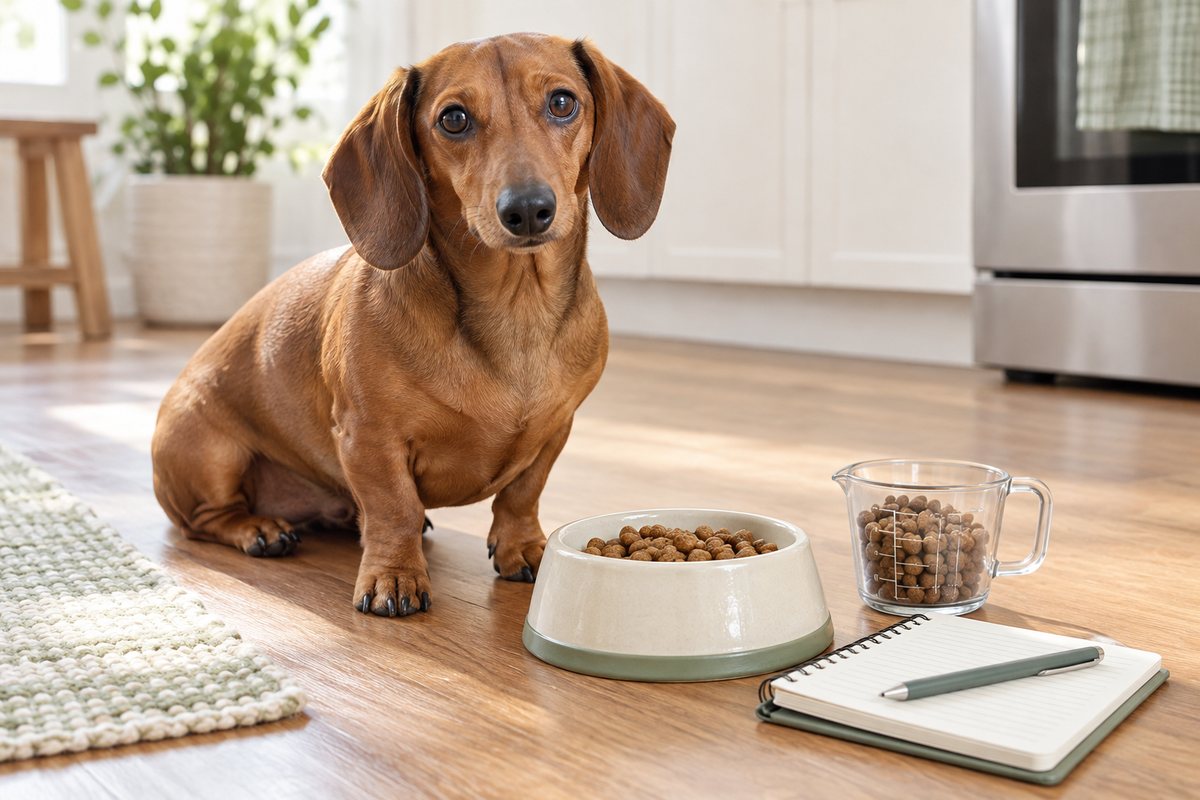
Because Dachshunds are small, a few extra bites can become a large share of daily calories. Measure meals with a real measuring cup or kitchen scale. Count treats, chews, dental sticks, training rewards, and table scraps as part of the day.
Puppy, adult, and senior needs
Dachshund puppies need growth nutrition. Adults need maintenance food unless your vet recommends a specific diet. Senior Dachshunds may need adjustments based on teeth, weight, muscle, appetite, and medical conditions.
Signs a food may not agree
- Vomiting or diarrhea
- Excessive gas
- Itching or recurring ear issues
- Sudden appetite loss
- Weight gain or weight loss
- Dull coat or low energy
These signs can have many causes. Do not assume food is the only explanation, especially if symptoms are sudden or severe.
Related guides
For buying criteria, read best food for Dachshunds. For weight and spine context, see common Dachshund health problems.
FAQ
Can Dachshunds eat chicken?
Plain cooked chicken without bones, skin, or seasoning is safe for many dogs in small amounts, but it should not replace a balanced diet.
Can Dachshunds eat fruit?
Some fruits such as blueberries and apple pieces without seeds can be safe in small amounts. Grapes and raisins are dangerous and should be avoided.
How much should a Dachshund eat?
The right amount depends on age, size, activity, food calories, and body condition. Use the label as a starting point and adjust with your veterinarian.

Sources and further reading
- ASPCA: People Foods to Avoid Feeding Your Pets
- FDA: Potentially Dangerous Items for Your Pet
- AAHA: Nutrition and Weight Management Guidelines