What can Dachshunds not eat? Dachshunds should not eat chocolate, grapes, raisins, xylitol, onions, garlic, alcohol, raw yeast dough, macadamia nuts, cooked bones, very fatty scraps, moldy foods, or heavily seasoned human meals. Some of these can be toxic to any dog. Others are especially risky for Dachshunds because this small, long-backed breed can be overfed quickly, and extra weight can make movement and back strain harder to manage.
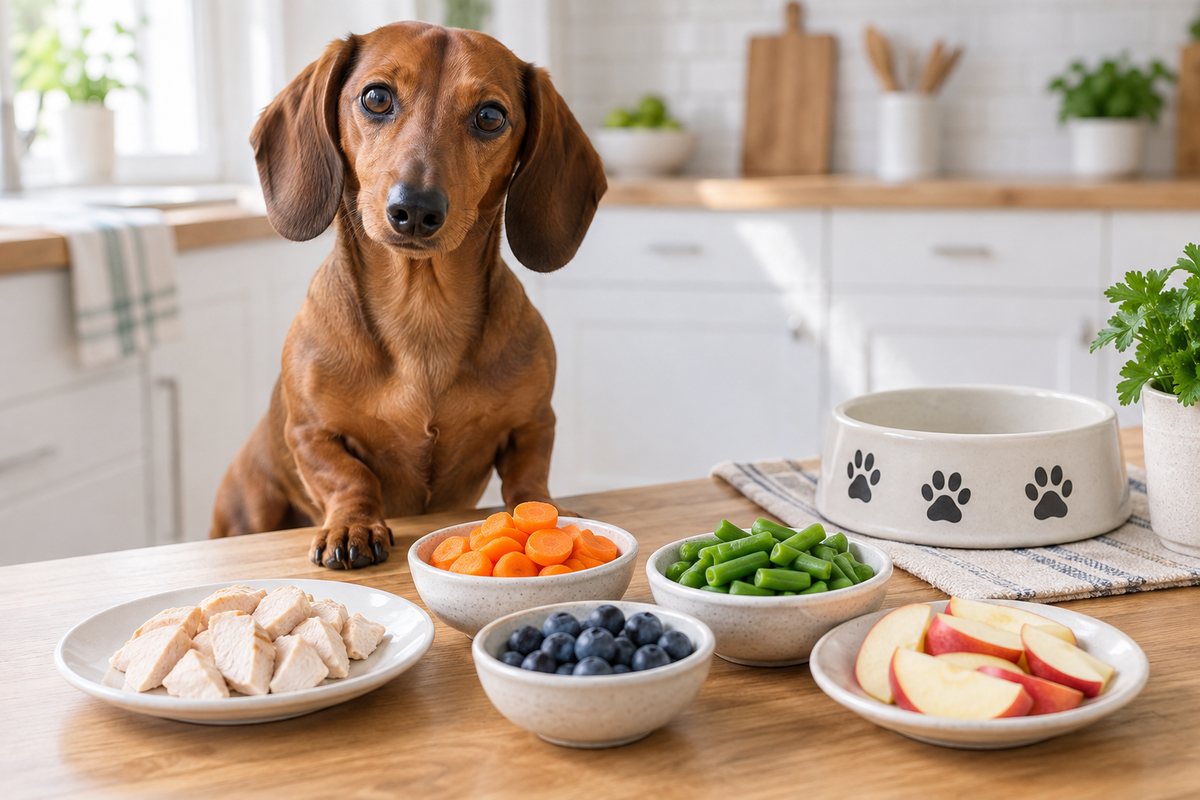
This guide focuses on foods to avoid, what makes them risky, and what to do if your Dachshund eats something unsafe. It is not a substitute for emergency veterinary care. If your Dachshund ate a known toxin, is vomiting repeatedly, seems weak, has tremors, has a painful belly, collapses, or is acting strangely, call your veterinarian, an emergency clinic, or a pet poison control service right away.
Quick answer
The most important foods Dachshunds should not eat are chocolate, caffeine, grapes, raisins, currants, xylitol, onions, garlic, chives, leeks, alcohol, raw yeast dough, macadamia nuts, cooked bones, moldy food, and very fatty foods such as bacon grease, rich gravy, fried scraps, and heavily seasoned leftovers. Keep sugar-free gum, candy, baked goods, and some nut butters away from dogs because they may contain xylitol.
If your dog ate a risky food, do not wait to see if symptoms appear. Some food toxins are time-sensitive. Save the package, estimate the amount eaten, note your dog’s weight, and call for professional advice. A 10-pound miniature Dachshund has less margin for error than a much larger dog.
What can Dachshunds not eat by risk level?
Think about unsafe foods in three groups. The first group is emergency-risk foods: xylitol, grapes, raisins, chocolate, alcohol, raw yeast dough, and large amounts of caffeine. These deserve fast professional advice because waiting can reduce treatment options. The second group is cumulative or hidden-risk foods: onions, garlic, chives, leeks, and powders made from them. These may appear inside sauces, soups, baby food, meatballs, stuffing, and gravy. The third group is digestive and injury-risk foods: cooked bones, fatty scraps, moldy leftovers, hard pits, and rich table food. These may not all be classic toxins, but they can still cause pain, vomiting, pancreatitis concerns, choking, or obstruction.
For Dachshunds, the practical rule is simple: if a food is questionable, do not use your dog as the test case. Choose a plain dog-safe treat instead, keep portions tiny, and save high-value rewards for training moments where they actually help.
Foods Dachshunds should never eat
| Food or ingredient | Why it is dangerous | What to do |
|---|---|---|
| Chocolate and caffeine | Can affect the heart and nervous system | Call a veterinarian or poison control |
| Grapes, raisins, currants | Linked with acute kidney injury in dogs | Treat any exposure as urgent |
| Xylitol | Can cause dangerous low blood sugar and liver injury | Check labels and call immediately |
| Onions, garlic, chives, leeks | Allium foods can damage red blood cells | Avoid raw, cooked, powdered, and mixed forms |
| Alcohol | Can cause poisoning, breathing problems, coma, or worse | Seek emergency advice |
| Raw yeast dough | Can expand in the stomach and produce alcohol | Call a veterinarian promptly |
| Macadamia nuts | Can cause weakness and other signs in dogs | Do not use nuts as treats |
| Cooked bones | Can splinter, obstruct, or injure the digestive tract | Use safer vet-approved chews instead |
The ASPCA, VCA, FDA, and Merck Veterinary Manual all identify common human foods and ingredients that can be hazardous for dogs. Exact risk depends on the food, amount, dog size, and timing, so Dachshund owners should be cautious rather than trying to calculate risk alone.
Hidden risks in everyday foods
Many unsafe foods are not served as obvious single ingredients. They are hidden inside normal meals. A meatball may contain onion powder. A sugar-free muffin may contain xylitol. A holiday plate may combine fatty gravy, garlic, onions, bones, and dessert. A small Dachshund can get into trouble from what looks like a tiny portion to a person.
- Check peanut butter, gum, mints, candy, toothpaste, and baked goods for xylitol.
- Avoid sauces, soups, stuffing, gravy, and seasoned meats that may contain onion or garlic.
- Do not let children share chocolate, cookies, grapes, raisins, or candy with the dog.
- Keep trash cans secured because bones, wrappers, moldy food, and fat scraps often end up there.
- Store medications and supplements away from food areas because dogs may eat anything that smells interesting.
Why unsafe foods matter for Dachshunds
Dachshunds are not uniquely immune or uniquely fragile compared with other dogs, but their size changes the practical risk. A piece of dark chocolate, a few raisins, or a xylitol sweetened snack represents a larger dose for a small dog than for a large breed. Their strong food motivation also means they may swallow first and think never.
Weight is another Dachshund-specific issue. Very fatty foods may not be toxic in the same way as xylitol or grapes, but they can still cause vomiting, diarrhea, or pancreatitis risk in susceptible dogs. Extra calories also make it harder to keep the waist lean, which matters for comfort, mobility, and back-safe living.
Warning signs after eating something unsafe
| Possible sign | Why it matters | Response |
|---|---|---|
| Repeated vomiting or diarrhea | Can follow toxin exposure, rich food, or obstruction | Call your vet, especially if persistent |
| Weakness, wobbling, tremors | Can be serious with toxins such as xylitol or caffeine | Seek urgent help |
| Loss of appetite or painful belly | Can indicate pancreatitis, obstruction, or illness | Do not wait if severe |
| Excessive thirst or urination | Can occur with kidney concerns after grape or raisin exposure | Call promptly |
| Pale gums, lethargy, collapse | Emergency-level warning signs | Go to emergency care |
Symptoms are not always immediate. That is one reason poison-control guidance matters. For example, waiting until a dog looks sick can reduce treatment options for some exposures. Fast advice is usually safer than guessing.
What to do if your Dachshund eats a risky food
- Move the food away so your dog cannot eat more.
- Check the package or recipe for ingredients such as xylitol, chocolate, grapes, raisins, onions, garlic, alcohol, or macadamia nuts.
- Estimate the amount eaten and the time it happened.
- Write down your Dachshund’s approximate weight, age, and any symptoms.
- Call your veterinarian, an emergency clinic, ASPCA Poison Control, or another pet poison hotline.
- Do not induce vomiting unless a veterinary professional tells you to.
- Bring the package, wrapper, or ingredient list if you go to the clinic.
This is especially important for puppies, seniors, very small miniature Dachshunds, and dogs with diabetes, pancreatitis history, kidney disease, liver disease, or other medical issues.
Safer alternatives for treats
Avoiding unsafe foods does not mean your Dachshund can never enjoy extras. Use tiny portions of dog-safe foods and keep the main diet complete and balanced. For training, the reward can be pea-size. The dog cares more about timing and value than treat size.
- Small pieces of plain cooked chicken
- Plain cooked egg in tiny amounts
- Carrot pieces
- Green beans
- Blueberries
- Plain pumpkin, not pie filling
- Part of the daily kibble used as rewards
For a broader safe-food overview, use what can Dachshunds eat. For choosing a main diet, see best food for Dachshunds. For tiny training rewards, see best treats for Dachshund training.
Prevention checklist
| Situation | Risk | Prevention |
|---|---|---|
| Holiday meals | Fatty scraps, bones, desserts, raisins, onions | Feed the dog before guests arrive and use gates |
| Kids eating snacks | Shared chocolate, grapes, candy, cookies | Teach a no-sharing rule and supervise closely |
| Training sessions | Too many calories or unsafe treats | Use tiny dog-safe rewards |
| Trash access | Bones, moldy food, wrappers, fat scraps | Use a lidded or locked trash can |
| Medication time | Xylitol in products or dropped pills | Check labels and keep items out of reach |
FAQ
Can Dachshunds eat chocolate?
No. Chocolate and caffeine-containing foods should be avoided. Dark chocolate and baking chocolate are especially concerning, but any chocolate exposure should be handled carefully.
Can Dachshunds eat grapes or raisins?
No. Grapes, raisins, currants, and foods containing them should be avoided because they are linked with kidney injury in dogs. Call a veterinarian or poison control if your Dachshund eats them.
Can Dachshunds eat onions or garlic?
No. Avoid onions, garlic, chives, leeks, and powders made from them. These ingredients can hide in soups, sauces, stuffing, gravy, and seasoned meats.
Is peanut butter safe for Dachshunds?
Only use peanut butter that does not contain xylitol and keep portions tiny. Check the label every time because formulas can change.
Should I make my Dachshund vomit after eating something unsafe?
Do not induce vomiting unless a veterinary professional tells you to. The right response depends on what was eaten, how much, when it happened, and your dog’s health.
What to do if your Dachshund ate something unsafe
When a Dachshund eats a risky food, the safest response is specific and fast. Identify the food, estimate the amount, note the time, and call your veterinarian or a pet poison helpline when the item is known to be dangerous. Do not wait for symptoms with high-risk foods.
Use the warning signs below as a practical filter before you decide the plan is working. If one of these signs appears repeatedly, the next step is not more pressure; it is a clearer setup, a smaller training step, or a health check when comfort may be involved.
- Chocolate or xylitol is involved
- Grapes or raisins were eaten
- Dog is vomiting or weak
- You do not know the amount
For Dachshunds, the best plan is usually the one that reduces jumping, slipping, confusion, stress, or repeated rehearsal. Keep the routine boring enough to repeat, specific enough to measure, and flexible enough to change when your dog gives you new information.
Sources
- ASPCA Poison Control: People Foods to Avoid Feeding Your Pets
- VCA Animal Hospitals: Toxic Household Hazards for Dogs
- Merck Veterinary Manual: Food Hazards
- FDA: Paws Off Xylitol; It’s Dangerous for Dogs
- FDA: Potentially Dangerous Items for Your Pet