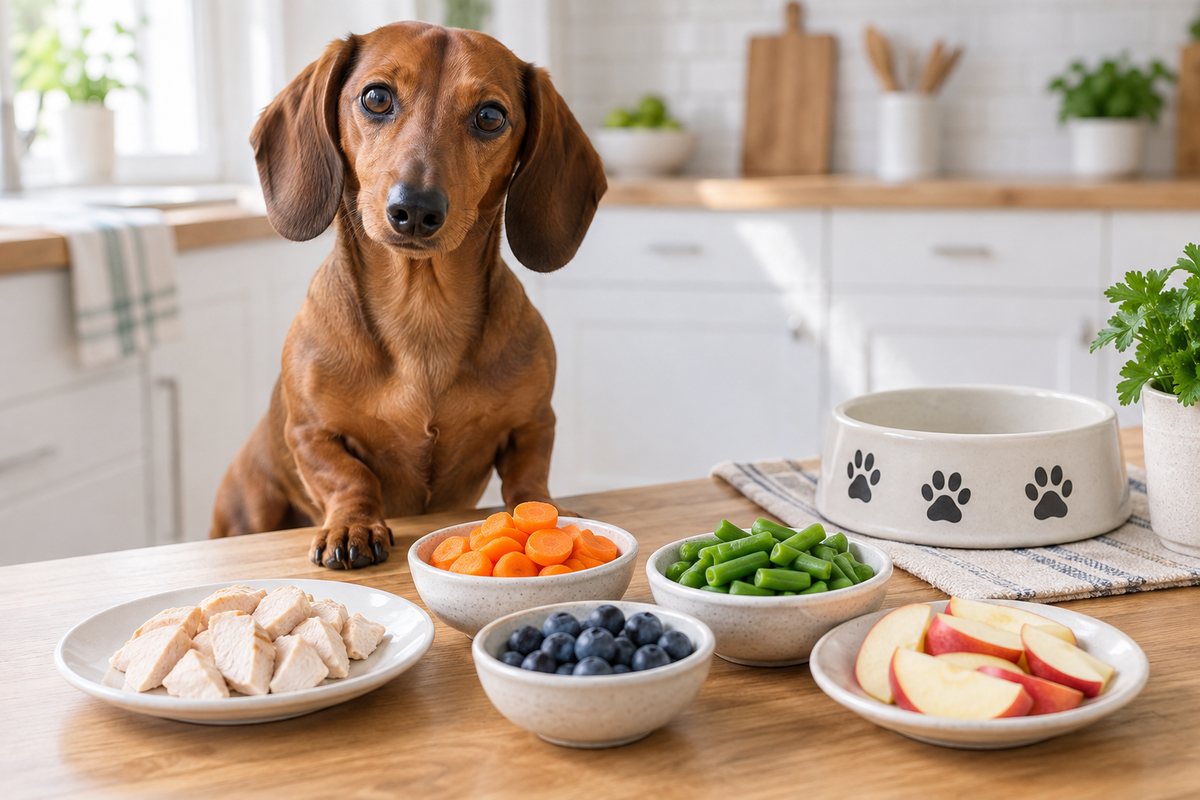
Dachshund Feeding Chart should help owners make a feeding decision without replacing veterinary nutrition advice. Dachshunds are small dogs with long backs, so excess calories matter quickly. This guide focuses on dachshund feeding chart, body condition, treat calories, life stage, and how to adjust portions without creating a second general food guide.
Quick answer
A Dachshund feeding chart is a starting tool, not a fixed prescription. Use it to organize meals by age, current weight, body condition, and treat load, then adjust with your veterinarian’s guidance. The best chart is the one you update when your dog’s waist, ribs, activity, or health changes.
| Dachshund situation | Starting point | Adjust when |
|---|---|---|
| 8-12 week puppy | Multiple small meals daily | Vet guidance, stool quality, growth trend |
| 3-6 month puppy | Scheduled puppy meals | Training treats and steady growth |
| Adult mini or standard | Measured meals once or twice daily | Body condition and activity |
| Senior or overweight dog | Vet-guided calorie control | Muscle condition and medical history |
How this page is different from the food hub
This page is the chart and tracking reference. It should not duplicate the portion-calculation page. Link readers to the portion article when they need to calculate how much to feed from the food label.
Use the main food guide for brand-selection criteria, ingredient label reading, and choosing a complete and balanced diet. Use this Phase 3 article for the exact owner job named in the keyword. That split protects the site from keyword cannibalization and helps readers find the right next step.

A practical feeding workflow
- Choose the correct life stage first: puppy, adult, senior, or veterinary diet.
- Record current weight, ideal weight if known, and body condition.
- Write down meals, treats, chews, and toppers in one place.
- Review the chart every two to four weeks instead of treating it as permanent.
- Use the portion guide when you need to convert food calories into daily meal amounts.
Step 1: start with the food, not the bowl
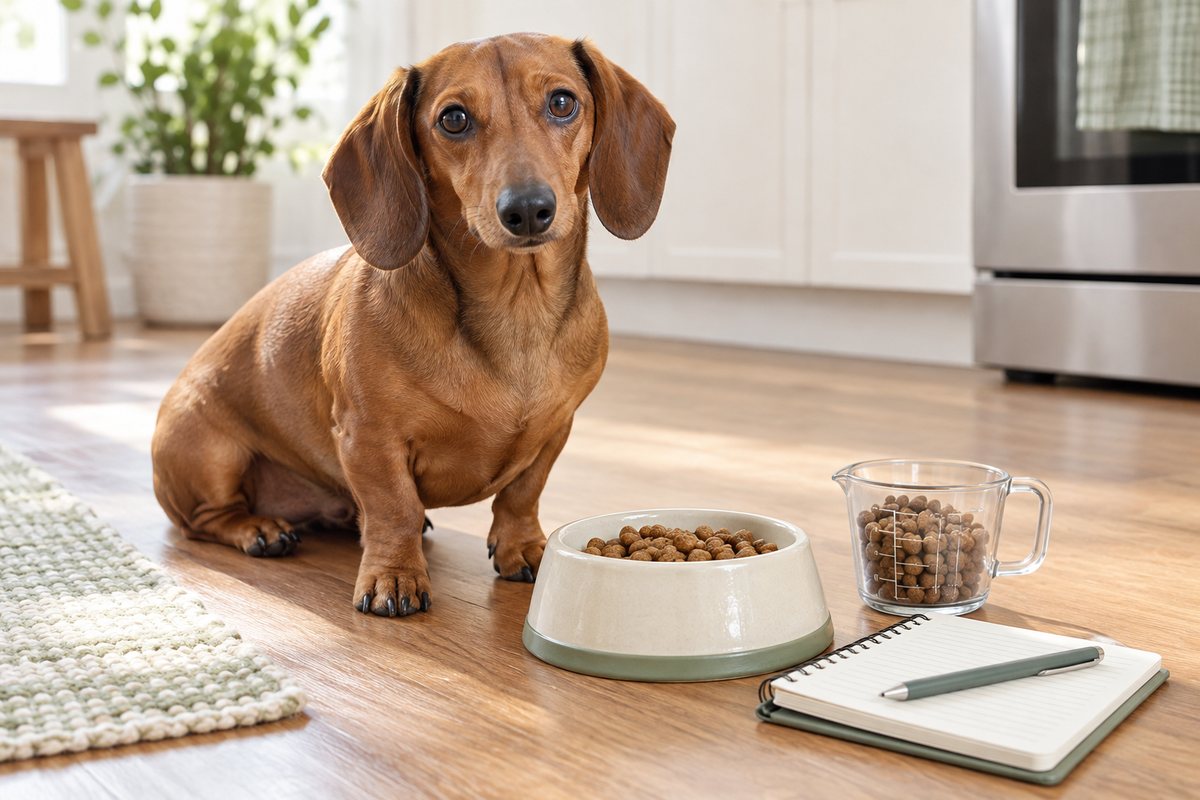
Two bowls that look identical can contain very different calories. Dry food, canned food, fresh food, toppers, and prescription diets vary widely. Before changing the amount, find the calorie information for the exact product and write it down. If the label is confusing, ask your veterinary team to help you translate the feeding directions into a daily amount for your dog.
For Dachshunds, the margin for error is smaller than it feels. A few extra bites every day can matter when the dog weighs 10 to 25 pounds. This is why measuring with a real cup or kitchen scale is more reliable than filling the bowl by habit.
Body condition matters more than a fixed number
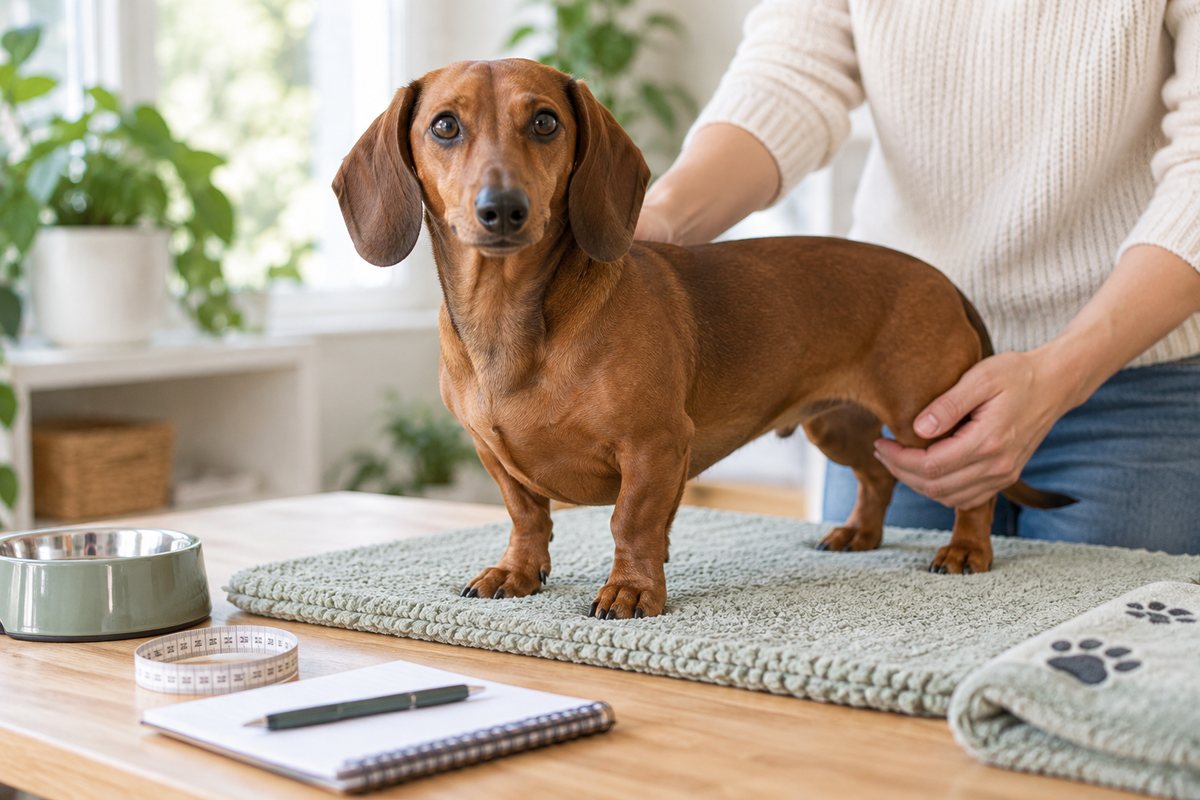
A feeding amount is a starting estimate, not a permanent rule. WSAVA and AAHA nutrition resources emphasize body condition, muscle condition, life stage, activity, and regular reassessment. For Dachshunds, that matters because a small daily surplus can show up as weight gain, reduced stamina, and more stress on the back over time.
| Signal | What it suggests | Owner response |
|---|---|---|
| Ribs are hard to feel | Portions may be too high | Measure food and reduce extras first |
| Visible waist is disappearing | Weight trend is drifting up | Recheck calories and treats |
| Always hungry but gaining | Food volume may not match satiety | Ask vet about diet type and fiber |
| Weight loss without trying | Possible health issue | Call your veterinarian |
Life stage and activity adjustments
Puppies, adults, seniors, intact dogs, spayed or neutered dogs, highly active dogs, and dogs recovering from injury do not all need the same feeding pattern. Puppies need growth-supporting nutrition and more frequent reassessment. Adults need stable body condition. Seniors may need closer monitoring of muscle, dental comfort, appetite, and medical conditions. A Dachshund who is walking less because of weather, back discomfort, or age may need a different calorie plan than the same dog during an active season.
Treats should be planned, not guessed. If you train often, set aside part of the daily food for rewards or choose very small training pieces. Dental chews and long-lasting chews can be useful for enrichment, but they still count. A food plan that ignores treats is usually the plan that quietly fails.
When the chart or portion estimate is wrong
A chart can be wrong for an individual dog. If your Dachshund gains weight on the suggested amount, the amount is too high for that dog or the extras are too high. If your dog loses weight without a planned reduction, seems hungry in a new way, vomits, has diarrhea, or changes energy suddenly, do not simply add or remove food without checking for a health reason.
| Problem | Likely next step | Do not |
|---|---|---|
| Slow weight gain | Measure meals and reduce extras first | Switch foods every few days |
| No weight loss on a diet | Recheck calories with your vet | Cut food aggressively |
| Soft stool after change | Slow the transition and call vet if persistent | Add many toppers at once |
| Begging after meals | Use enrichment and check satiety | Assume hunger means more calories |
Real-life feeding examples
Example one: a miniature Dachshund eats a measured breakfast and dinner but gets several training treats, a dental chew, and bites of cheese each day. The meals may look reasonable, yet the extras may be the reason body condition is drifting upward. The fix is to count extras first, not to switch foods immediately.
Example two: a young adult Dachshund becomes less active during rainy weeks but keeps the same food amount. A small temporary reduction in extras, more indoor enrichment, and a body-condition check may be enough. If weight changes continue or appetite changes suddenly, that is a veterinary conversation rather than a spreadsheet problem.
Example three: a puppy seems hungry all the time. That does not automatically mean the puppy should get random snacks. Puppies need life-stage appropriate nutrition, scheduled meals, growth monitoring, and veterinary guidance if growth, stool, appetite, or energy seems off.
Decision rules for Dachshund owners
- If weight is stable and body condition is healthy, keep the plan steady and reassess monthly.
- If weight is rising, measure food and treats before changing brands.
- If your dog needs to lose weight, ask for a target weight and calorie plan instead of guessing.
- If appetite changes suddenly, treat it as a health signal.
- If a feeding chart conflicts with your veterinarian’s plan, follow the veterinary plan.
How to keep the plan sustainable
The feeding plan that works is the one the household can repeat. Keep the measuring tool next to the food, write treat rules where everyone can see them, and decide in advance who feeds each meal. Many Dachshund portion problems come from two people feeding the same dog, children sharing snacks, or training treats being added on top of full meals. A simple written routine prevents that.
Review the plan after grooming, vet visits, weather changes, vacations, and schedule changes. Those are the moments when activity and treats often shift. A small adjustment made early is easier than trying to correct months of gradual weight change later.
Common mistakes
- Using the front of the food bag as the only decision tool.
- Changing food and portion size at the same time, then not knowing what worked.
- Forgetting dental chews, training treats, toppers, and table scraps.
- Feeding a puppy, adult, senior, and overweight dog with the same assumptions.
- Trying to force a medical weight-loss plan without veterinary guidance.
Internal links for the next step
Read next: how much should a Dachshund eat, best food for Dachshunds, healthy treats for Dachshunds. These related articles should be used as support pages, not duplicate answers to this keyword.
FAQ
Should I follow the bag exactly?
Use the bag as a starting point. Then adjust based on body condition, weight trend, activity, age, treats, and your veterinarian’s advice.
Do treats count?
Yes. Training treats, chews, toppers, and table snacks all count toward daily calories. For a small Dachshund, extras add up fast.
When should I call the vet?
Call for sudden appetite change, vomiting, diarrhea, weight loss without trying, rapid weight gain, or any diet change tied to a medical condition.
Owner checklist
- Measure meals with a cup or scale instead of guessing.
- Track treats separately for three days.
- Check body condition every two to four weeks.
- Change one variable at a time.
- Keep this article’s intent separate from the broader food hub.
Sources
- WSAVA: Global Nutrition Guidelines and Toolkit
- AAHA: Nutrition and Weight Management Guidelines
- AAFCO: Selecting the Right Pet Food
- Merck Veterinary Manual: Nutritional Requirements of Small Animals
Bottom line
Use dachshund feeding chart as a practical decision tool, not as a rigid rule. Start with the food label or veterinary calorie target, measure consistently, count treats, and adjust based on body condition over time. That approach keeps this page distinct from general food selection and makes it much more useful for real Dachshund owners. Recheck the plan whenever weight, activity, appetite, stool quality, medication, or daily routine changes. Keep notes so future adjustments are based on evidence.