
Dachshund Weight Loss Diet: Complete Dachshund Owner Guide should help Dachshund owners make a practical feeding decision without turning one article into a full nutrition textbook. The focus keyword is dachshund weight loss diet, so this draft keeps the answer narrow: treats, body condition, meal planning, training rewards, and how to avoid quietly overfeeding a small long-backed dog.
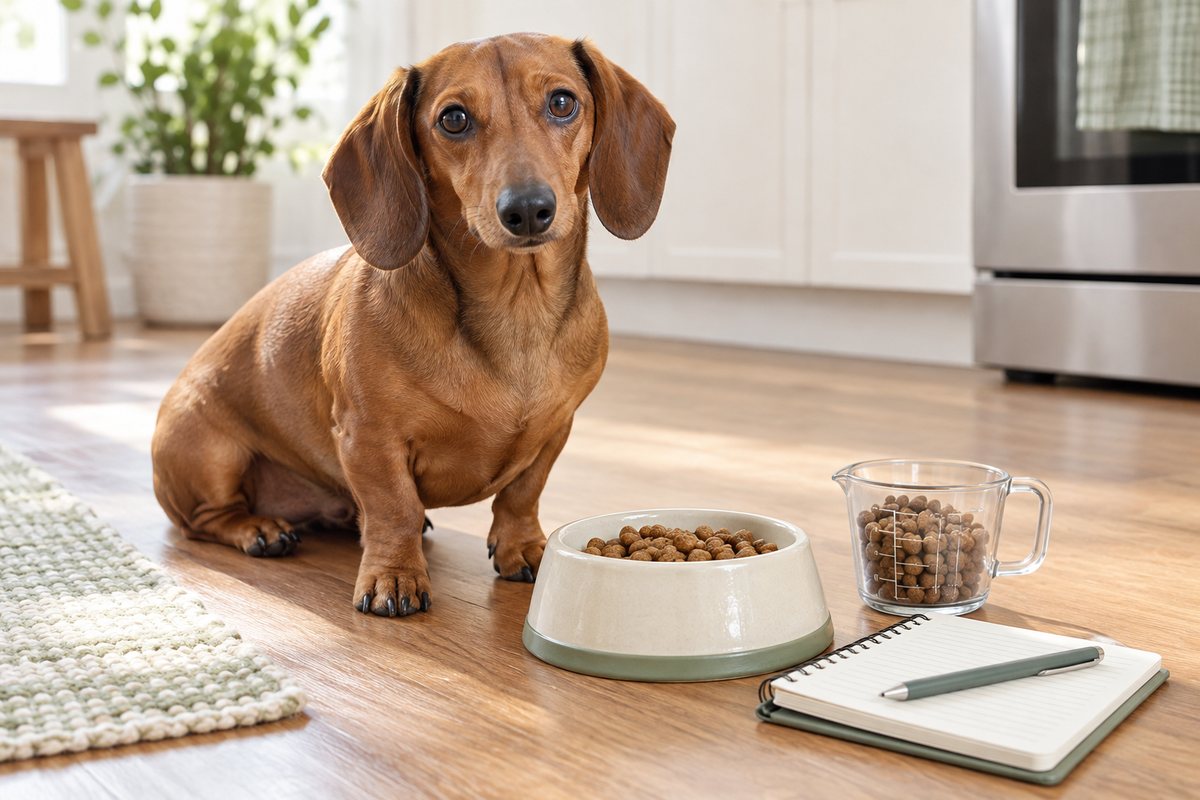
Quick answer
A Dachshund weight loss diet should be planned around target weight, body condition, calories, treats, activity, and veterinary guidance. Do not crash diet a small dog. Measure meals, count extras, and reassess every two to four weeks.
| Situation | Best starting move | Why it matters |
|---|---|---|
| Slow weight gain | Measure meals and treats for seven days | Guessing usually misses extras |
| Overweight body condition | Ask vet for target calories | Small dogs can be over-restricted easily |
| Begging during diet | Use enrichment and low-calorie volume with vet approval | Do not add random snacks |
| No progress | Recheck calories, chews, and household feeding | Do not switch foods repeatedly |
Search intent boundary
This page is about weight-loss structure, not a replacement for the broad best-food guide or the feeding-chart page. That boundary matters because the site already has broader food, treat, feeding-chart, and portion articles. This draft should answer the exact owner job and then route readers to the correct supporting page.

How to make the decision
- Start with the dog’s current body condition, not the front of a food bag.
- Write down meals, treats, chews, toppers, and table food for three normal days.
- Choose treats or diet changes that fit the dog’s size, stomach, training plan, and health history.
- Measure portions instead of estimating by eye.
- Ask your veterinarian before weight-loss diets, puppy diet changes, medical diets, or major calorie restriction.
A simple tracking table
| What to track | Good sign | Needs adjustment |
|---|---|---|
| Meal amount | Same measured amount each day | Scoops change from person to person |
| Treat count | Small rewards are planned | Chews and snacks are forgotten |
| Body condition | Ribs can be felt and waist is visible | Waist disappears or ribs are hard to feel |
| Digestion | Stool and appetite stay normal | Vomiting, diarrhea, or appetite change appears |
Dachshund-specific considerations
Dachshunds do not have much room for calorie drift. A few extra bites can matter when the dog weighs far less than a person. Their long backs also make body condition important because excess weight can make normal movement harder. That does not mean every Dachshund needs a strict diet. It means the household should know what is being fed and why.
Treats are part of the food plan. Training rewards, dental chews, lick mats, toppers, and table scraps all count. If several people feed the dog, write the rules down where everyone can see them. Consistency is usually more effective than trying a new product every week.
Common mistakes
- Choosing treats by marketing label instead of size, calorie load, and digestibility.
- Adding training rewards on top of full meals without adjusting anything.
- Changing food, treats, and portion size at the same time.
- Treating begging as proof that the dog needs more calories.
- Skipping veterinary advice for puppies, seniors, overweight dogs, or dogs with medical conditions.

Real-life examples
Example one: a Dachshund is learning a new cue and gets twenty pea-sized rewards in ten minutes. That can be fine if the pieces are tiny and part of the day’s food plan. It becomes a problem when those rewards are added to full meals, a dental chew, and table snacks.
Example two: an overweight Dachshund seems hungry after every meal. The first step is not to add more food. Check whether the meal is measured, whether treats are counted, and whether enrichment can slow eating. If weight loss is needed, ask the veterinarian for a target and calorie plan.
Internal links for the next step
Read next: best food for dachshunds, healthy treats for dachshunds, best treats for dachshund training, best food for Dachshunds. These supporting pages should help readers move deeper without merging this keyword into a broader food hub.
FAQ
Can I use human food as treats?
Sometimes, but keep pieces tiny, avoid unsafe foods, and count them as calories. Ask your veterinarian if your Dachshund has pancreatitis risk, allergies, obesity, or a medical diet.
How many treats are too many?
There is no single number for every dog. The practical answer is to keep treats planned, small, and limited so they do not crowd out complete nutrition or push body condition upward.
Should I change food if my Dachshund gains weight?
Not immediately. First measure meals and count extras. If weight still trends up, talk with your veterinarian about calories, diet type, and a safe plan.
Publish-ready owner workflow
To make dachshund weight loss diet useful at publish time, the article should guide the reader from observation to action. Start with the dog’s current body condition, then the actual daily intake, then the household routine. Many food problems are not caused by the main meal alone. They come from training rewards, dental chews, toppers, leftovers, and several people feeding the same dog without a shared rule. A publish-ready version should help the owner find those hidden calories without making them feel blamed.
The practical workflow is simple: measure what is currently happening, change one variable, then review the result. If the dog is a puppy, senior, overweight, underweight, on medication, or eating a veterinary diet, the article should send the owner toward veterinary guidance before recommending major changes. That keeps the content helpful and safe while still answering the searcher’s immediate question.
| Workflow step | Owner task | Publish-ready note |
|---|---|---|
| Measure | Record meals, treats, chews, and toppers | Do this before changing brands |
| Compare | Check waist, ribs, activity, and appetite | Use body condition, not one photo |
| Adjust | Change one part of the plan at a time | Avoid diet whiplash |
| Review | Recheck in two to four weeks | Escalate if health signs appear |
Extra examples for real households
A common household example is the Dachshund who receives a measured breakfast and dinner but also gets rewards during training, a chew after lunch, and a few bites while someone cooks. On paper the meals look reasonable. In real life the extras may be the reason weight, stool quality, or appetite becomes confusing. The article should make that pattern visible and give the owner a calm way to fix it.
Another example is a dog whose family changes treats every few days because the Dachshund seems bored. That makes it harder to know which food caused soft stool, which reward works for training, and which snack is pushing calories too high. A better plan is to choose a small set of safe rewards, keep pieces tiny, and reserve richer rewards for harder training moments.
Pre-upload QA checklist
| QA item | Pass condition | Why it matters |
|---|---|---|
| Keyword focus | Title, intro, H2s, FAQ, and meta can support dachshund weight loss diet | Improves Rank Math alignment |
| Cannibalization | Intent boundary is clear and internal links route to sibling pages | Avoids competing with existing URLs |
| Media | At least three relevant images with keyword-aware alt text | Meets site image standard |
| WordPress QA | Category, slug, featured image, preview, and public 200 checked | Keeps upload workflow consistent |
Before publishing dachshund weight loss diet, compare it against the closest existing article in the same cluster. If the new draft answers the same primary question as an existing URL, merge the useful sections into the stronger URL and do not publish a second competing page. If the intent is distinct, keep the slug, title, meta description, featured image, and internal links aligned with this page’s narrower job.
Final depth pass before upload
For dachshund weight loss diet, the final editorial check should make sure the advice stays practical rather than product-heavy. The article should help a reader make a decision with the food, treats, schedule, and dog they already have. It should not push a single product, promise a fixed portion, or repeat the broader food hub. The best version gives the owner a way to measure today, make one small adjustment, and know when a veterinarian should be involved.
Add context for multi-person households. Many Dachshunds are not overfed by one obvious large meal. They are overfed by several kind people each giving something small. A publish-ready article should suggest a visible treat rule, a shared measuring tool, and a simple note for anyone who feeds the dog. That gives the reader a system, not just a warning.
The article should also avoid making hunger sound simple. Begging may reflect habit, speed of eating, boredom, routine, or a food plan that needs professional adjustment. If the dog has a medical condition, is a puppy, is losing weight without trying, or needs weight loss, the safest recommendation is to work with the veterinary team and measure changes over time.
| Final review question | Keep as separate article if | Merge or revise if |
|---|---|---|
| Intent | The page answers a distinct search job | It gives the same answer as an existing URL |
| Depth | Examples and steps match the exact keyword | Sections are generic and could fit any page |
| Risk | Warnings and vet/trainer guidance are clear | Advice could delay needed help |
| Internal links | Links point to true next steps | Links are only added for SEO |
After this depth pass, dachshund weight loss diet should be treated as a local draft ready for WordPress QA, not automatic publication. The next workflow is still: check duplicate slug, compare closest keyword, assign category, set Rank Math focus keyword and meta, choose featured image, preview, then publish only after the page passes visual and cannibalization checks.
Sources
- WSAVA: Global Nutrition Guidelines and Toolkit
- AAHA: Nutrition and Weight Management Guidelines
- AAFCO: Selecting the Right Pet Food
- Merck Veterinary Manual: Nutritional Requirements of Small Animals
Bottom line
Use dachshund weight loss diet as a focused decision page. Keep the article practical, measured, and linked to the broader food cluster without repeating the same answer. The safest plan is consistent measuring, treat accounting, body-condition checks, and veterinary guidance when health or weight is part of the question.