Category: Health

Back safety, IVDD awareness, weight, common health issues, prevention, and vet-informed owner checklists.

  • Dachshund Health Problems: Complete Dachshund Owner Guide

    Dachshund Health Problems: Complete Dachshund Owner Guide

    Dachshunds are bold, affectionate dogs with a body shape that needs thoughtful care. Their long backs, short legs, and big personalities make them wonderful companions, but owners should understand a few breed-related health risks.
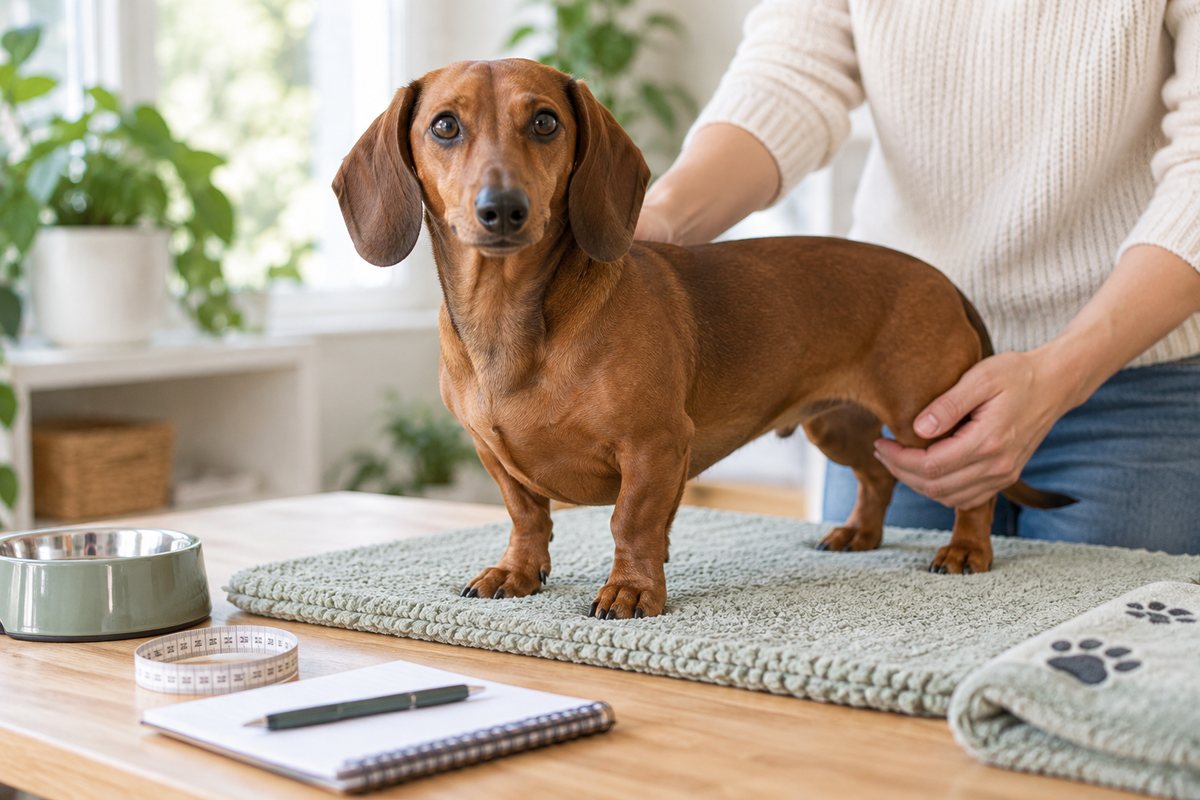
    Dachshund during a calm home wellness check

    This guide is educational and cannot diagnose your dog. If your Dachshund seems painful, weak, suddenly different, or unwell, contact your veterinarian.

    Quick answer

    Common Dachshund health concerns include back problems such as intervertebral disc disease, weight gain, dental disease, skin and ear issues, eye problems, and age-related heart or mobility changes. Back safety and weight management are especially important.

    Key takeaways

    • Back pain signs in Dachshunds should be taken seriously.
    • Keeping your Dachshund lean helps reduce strain on the spine and joints.
    • Dental, ear, skin, and weight checks should be part of routine care.
    • Sudden weakness, paralysis, severe pain, or loss of bladder control is urgent.

    Back problems and IVDD

    Dachshunds are one of the breeds associated with intervertebral disc disease. Signs can include back pain, a hunched posture, reluctance to jump, wobbling, weakness, dragging paws, crying when moved, or sudden paralysis. These signs need veterinary attention quickly.

    Weight gain

    Extra weight puts more strain on a Dachshund’s spine and joints. Measure meals, count treats, and ask your veterinarian what an ideal body condition looks like. You should be able to feel ribs with light pressure without seeing sharp bones.
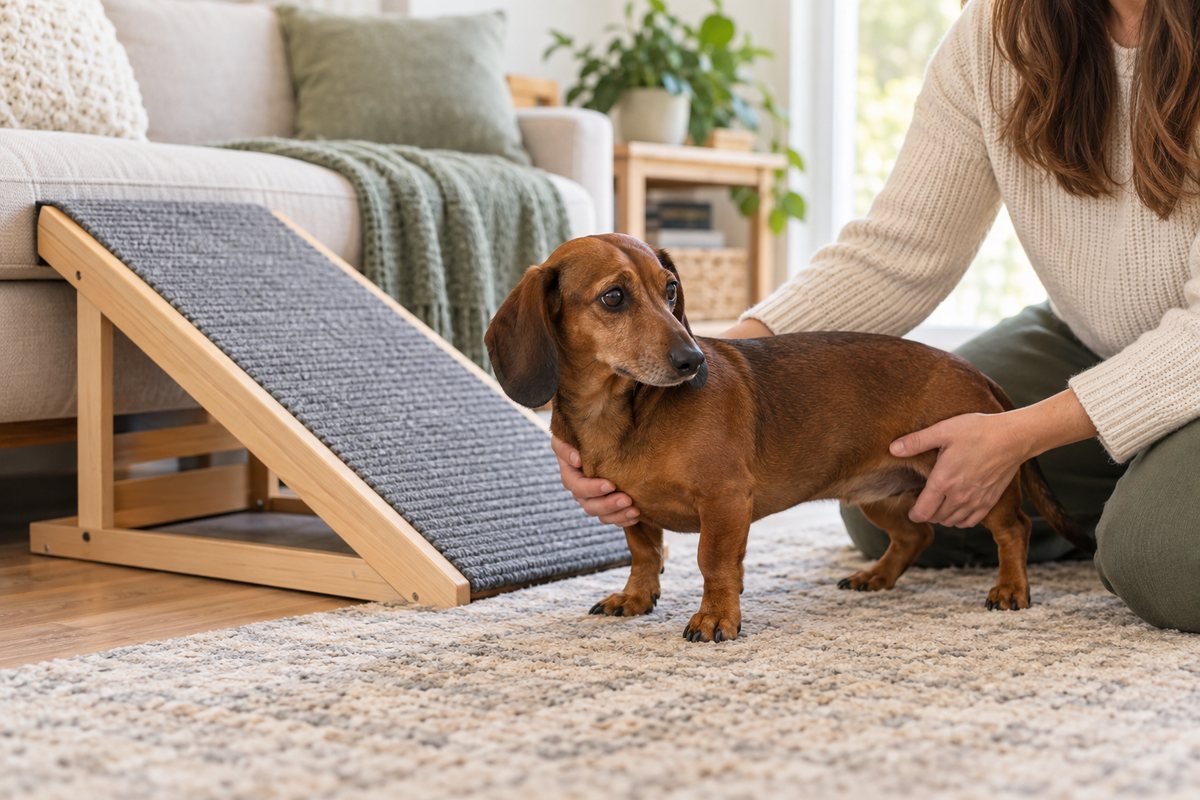
    Dachshund beside a sofa ramp for back safety

    Dental disease

    Small dogs often need consistent dental care. Brushing, dental checks, and safe dental products can help reduce plaque and discomfort. Bad breath, bleeding gums, loose teeth, or trouble chewing deserve a vet visit.

    Skin, ears, and coat issues

    Smooth, long-haired, and wire-haired Dachshunds have different grooming needs, but all Dachshunds benefit from regular skin and ear checks. Watch for itching, redness, odor, hair loss, head shaking, or discharge.

    Daily prevention habits

    • Keep your Dachshund lean and active.
    • Use ramps and block repeated jumping from furniture.
    • Choose a well-fitted harness for walks.
    • Schedule regular veterinary wellness exams.
    • Check teeth, ears, nails, coat, and skin weekly.
    • Call your vet promptly for pain, weakness, appetite loss, or sudden behavior change.

    When it is urgent

    Seek veterinary care urgently if your Dachshund cannot walk normally, drags a leg, cries in pain, loses bladder or bowel control, collapses, struggles to breathe, or suddenly becomes very weak.

    Related guides

    For spine-specific signs, read Dachshund back pain signs. For diet support, see best food for Dachshunds.

    FAQ

    What is the biggest health concern for Dachshunds?

    Back problems, including IVDD, are one of the most important concerns because they can become urgent quickly.

    Can a Dachshund live a long healthy life?

    Yes. Many Dachshunds live long lives with good weight management, routine vet care, dental care, and safer movement habits.

    Should Dachshunds avoid stairs?

    Repeated jumping and stairs can add strain for some dogs. Many owners use ramps and gates to reduce risky movement.

    Dachshund in a back-safe home environment

    Sources and further reading


    Related Dachshund guides

  • Dachshund Back Pain Signs: Complete Dachshund Owner Guide

    Dachshund Back Pain Signs: Complete Dachshund Owner Guide

    Back pain signs in a Dachshund should always be taken seriously. Some signs are obvious, like crying or weakness. Others are subtle, like refusing stairs, standing with a hunched back, or acting suddenly withdrawn.

    Dachshund beside a sofa ramp for back safety

    This article is educational, not a diagnosis. If your Dachshund may have back pain, contact your veterinarian. If your dog cannot walk, drags a leg, or loses bladder control, treat it as urgent.

    Quick answer

    Dachshund back pain signs can include a hunched back, trembling, yelping when picked up, reluctance to jump, stiff movement, wobbling, weakness, dragging paws, loss of coordination, or sudden paralysis. Pain can also look like hiding, snapping, or refusing food.

    Key takeaways

    • Do not wait if your Dachshund shows weakness, dragging paws, or loss of coordination.
    • Restrict movement and call your veterinarian if you suspect back pain.
    • Do not give human pain medicine unless your vet specifically tells you to.
    • Support both chest and rear when lifting a Dachshund.

    Early signs to watch for

    • Moving more slowly than usual
    • Refusing stairs, sofas, beds, or car jumps
    • Crying when lifted
    • A tight belly or hunched posture
    • Shaking or trembling without an obvious reason
    • Restlessness or inability to get comfortable
    • Less interest in walks, food, or play

    Neurological warning signs

    More serious signs can include wobbling, crossing back legs, knuckling paws, dragging nails, weakness, collapse, or paralysis. These signs may indicate pressure on the spinal cord and should be handled quickly by a veterinarian.

    What to do right away

    1. Restrict movement. Prevent running, jumping, stairs, and rough handling.
    2. Carry your Dachshund carefully with the chest and rear supported.
    3. Call your veterinarian or emergency clinic and describe the signs clearly.
    4. Do not give human pain medicine unless your veterinarian specifically tells you to.
    5. Keep your dog calm and confined until you receive professional guidance.

    How to lift a Dachshund with possible back pain

    Use two hands: one supporting the chest and one supporting the rear. Keep the spine as level as possible. Avoid letting the back end dangle. If your dog cries, growls, or resists being touched, stop and ask your vet how to move them safely.

    Dachshund during a gentle home health check

    Reducing future strain

    You cannot prevent every back problem, but you can reduce everyday strain. Keep your Dachshund lean, use ramps, block repeated furniture jumping, avoid high-impact games, choose controlled walks, and keep nails trimmed.

    Related guides

    For broader health context, read common Dachshund health problems. For walking gear, start with best harness for Dachshunds.

    FAQ

    Is Dachshund back pain an emergency?

    It can be. Weakness, wobbling, dragging paws, paralysis, or loss of bladder control should be treated as urgent.

    Can I let my Dachshund rest and see if it improves?

    Call your veterinarian for guidance. Waiting can be risky if neurological signs are present.

    Can ramps help Dachshunds?

    Ramps can reduce repeated jumping, which may lower everyday strain for many Dachshunds.

    Dachshund using a cozy home setup designed for back safety

    Sources and further reading


    Related Dachshund guides