Category: Health

Back safety, IVDD awareness, weight, common health issues, prevention, and vet-informed owner checklists.

  • How to Keep a Dachshund’s Back Safe at Home

    How to Keep a Dachshund’s Back Safe at Home

    Direct answer

    How to keep Dachshund back safe starts with daily systems: traction on slick floors, controlled access to furniture, regular age-appropriate movement, and healthy body condition matter more than any one gadget. No arrangement can guarantee that a Dachshund will never develop intervertebral disc disease (IVDD). The American College of Veterinary Surgeons (ACVS) identifies Dachshunds as highly predisposed to disc problems and lists weight loss and minimizing jumps among possible lifestyle changes. Sudden weakness, pain, or loss of normal movement needs veterinary care; a ramp cannot treat a spinal condition.

    This guide covers daily routines for a dog moving normally. If symptoms have already appeared, start with our Dachshund back pain signs guide.

    Home layout

    Look at the dog’s actual daily route: sofa, bed, stairs, slick hallways, car, and favorite lookout spots. Reduce repeated jumps and frantic sprints by changing access, adding traction, and giving the dog an easy path to rest. A ramp can help in some homes only when the dog uses it willingly and it is stable; it is not a treatment for pain. VCA’s mobility-at-home guidance discusses non-slip surfaces and changing access. That advice can inform a practical layout, but it is not proof that a rug or ramp prevents IVDD in an otherwise healthy dog.

    Watch for the routes the dog repeats, not only the dramatic occasional leap. A Dachshund may jump off the couch ten times a day to follow people, then skid around a hard-floor corner. Put a comfortable bed at floor level near the family, add traction at turning points, and use a barrier where the dog can still jump around a ramp. Recheck after a week: the safer path only helps when the dog actually takes it.

    Exercise and weight

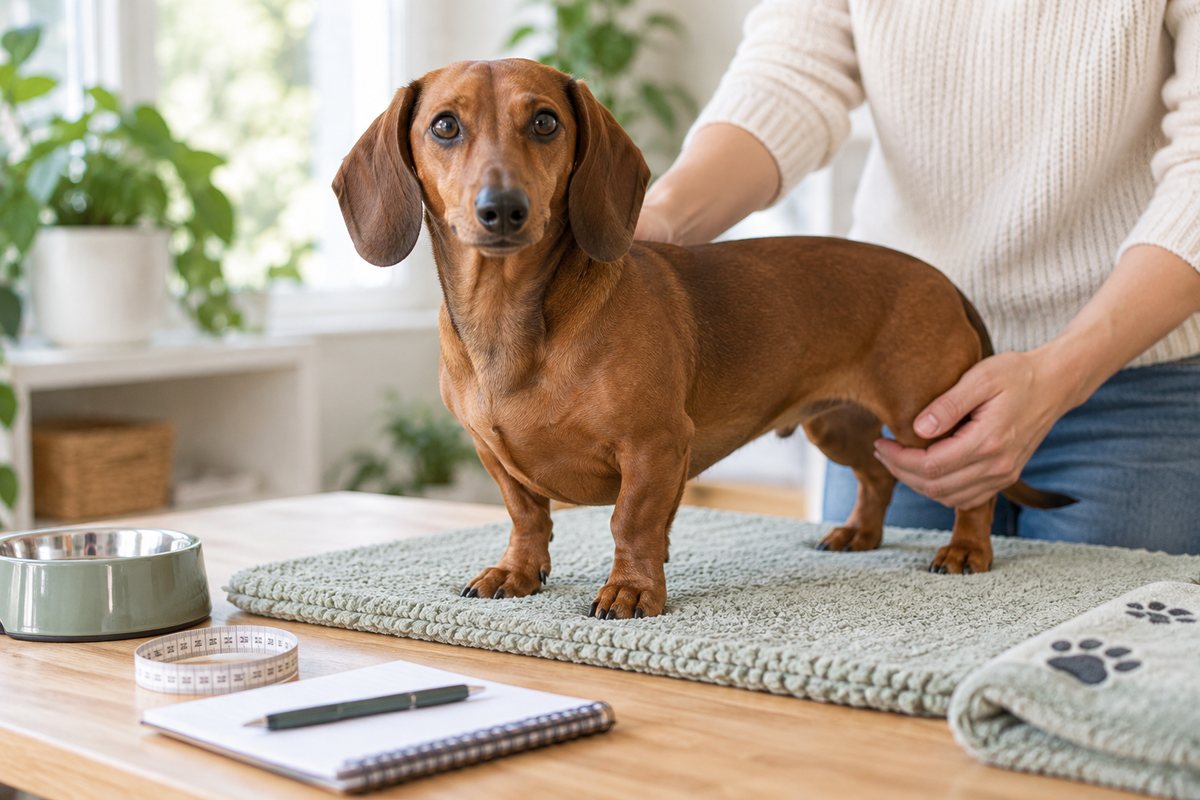
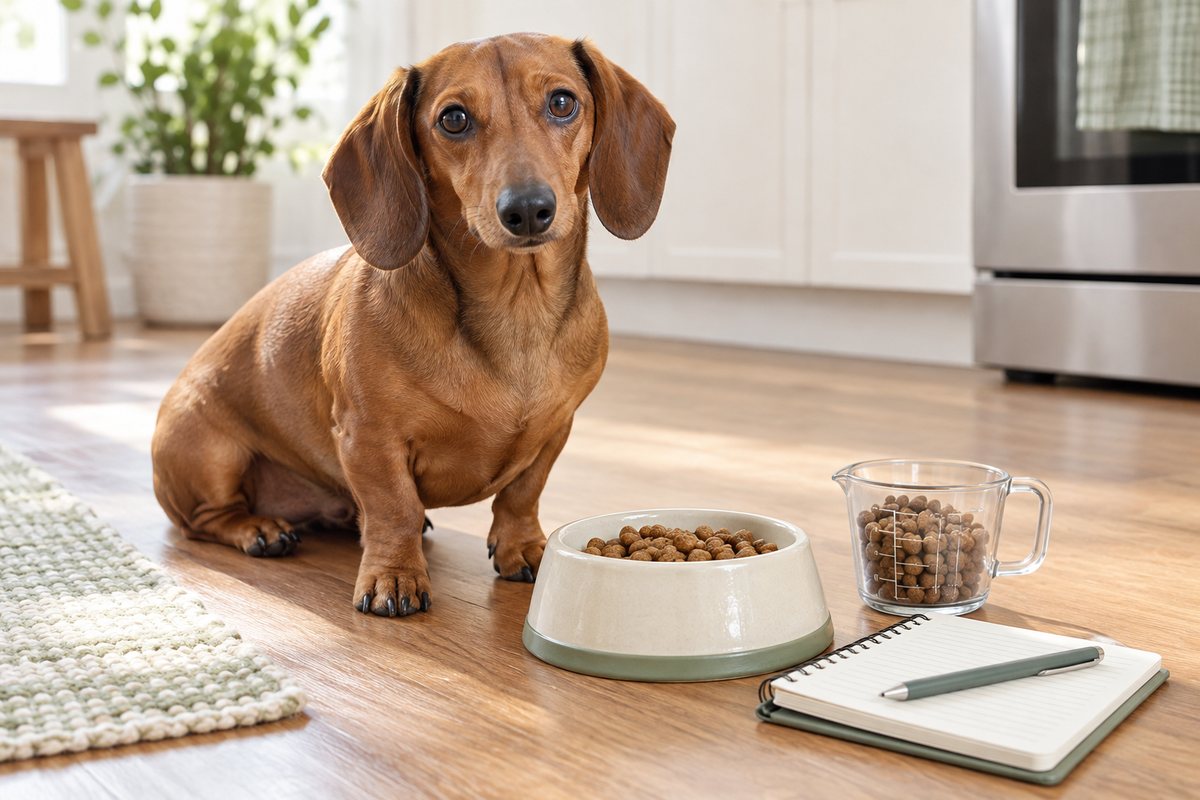
    To keep a Dachshund back safe over time, regular, appropriate activity and healthy body condition support the muscles that help a Dachshund move. The AKC Dachshund breed guide recommends routine walks for fitness and muscle tone and warns against excess weight. Ask your veterinarian to assess body condition rather than using one target weight for both miniature and standard Dachshunds. Measure food, count treats, and ask for a tailored feeding plan if weight loss is needed.

    Avoid swinging between inactivity and occasional intense play. The amount and type of exercise should suit age, conditioning, weather, and veterinary advice. Increase activity gradually and notice whether the dog moves and recovers normally afterward rather than relying on a rigid distance target. If the dog begins to hesitate, hunch, or walk differently, stop the activity and seek advice instead of trying to condition through pain.

    Furniture and stair access

    The ACVS IVDD overview mentions minimizing jumps from furniture. A stable, wide, grippy ramp may replace a repeated sofa jump, but only if the dog learns to use it calmly and cannot simply jump over the side. A floor-level resting spot or closed-off furniture may work better. Our ramp guide covers product fit; this article is about the larger household routine.
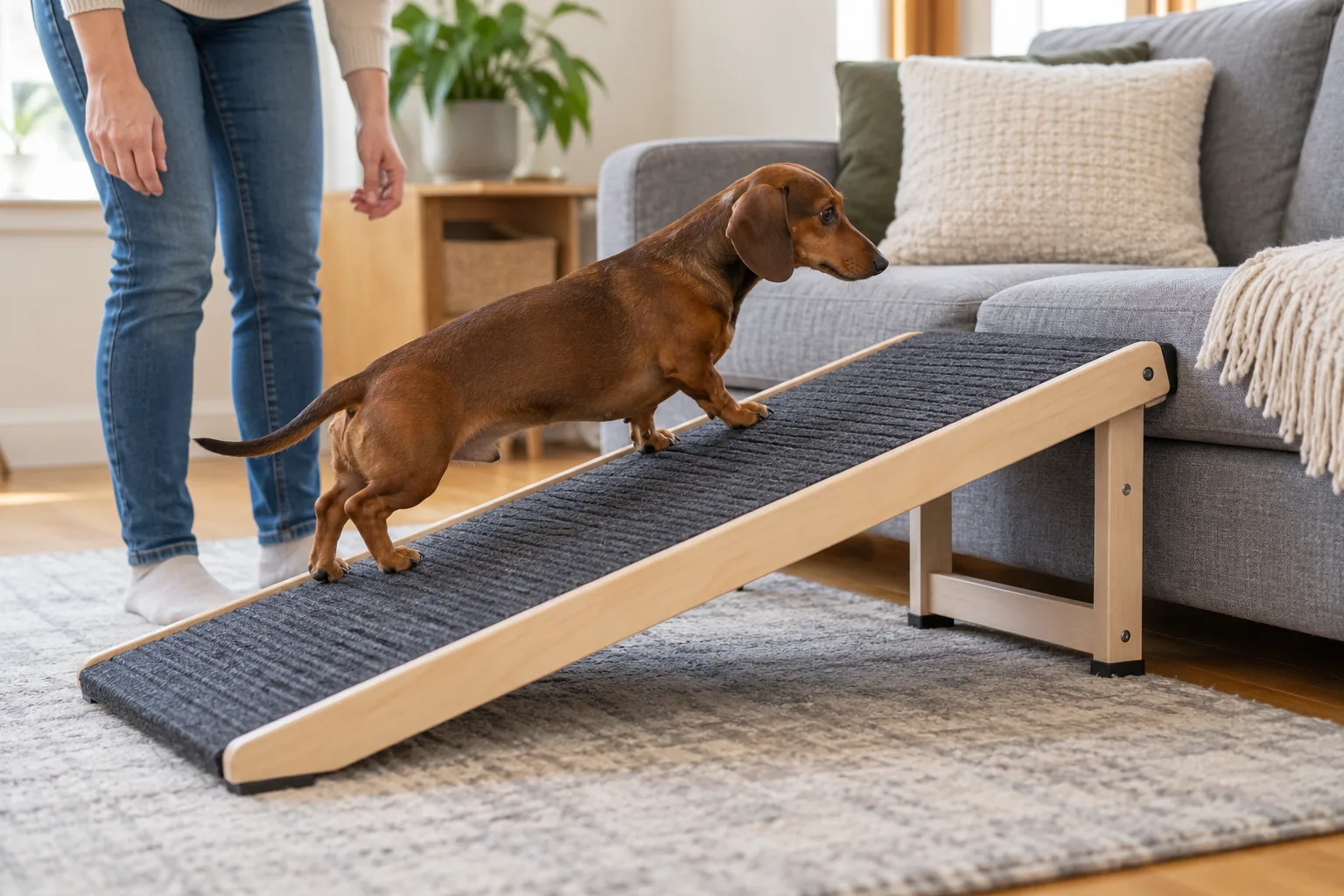
    How to keep Dachshund back safe: a Dachshund using a wide non-slip ramp to approach a sofa

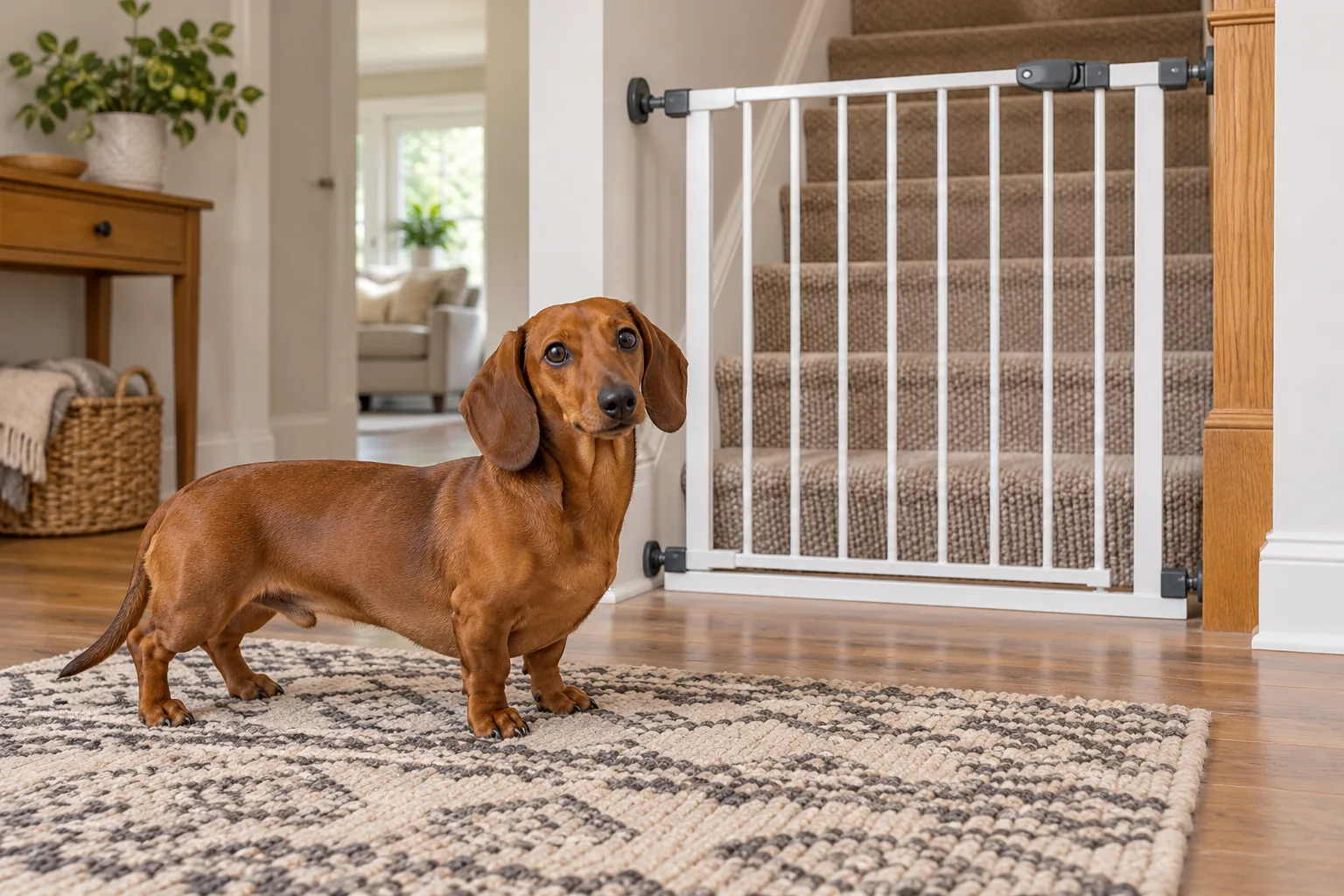
    Stairs have a separate hazard: speed, multiple landings, and slips. The AKC advises against running up and down them, and the VCA Dachshund profile recommends restricting stair access. A gate can prevent unsupervised sprints, especially at the top of a flight. Decide in advance how the dog will move between floors. Never force a painful or weak dog to climb stairs. , the separate stair-safety article, should handle the detailed multilevel-home plan without repeating this whole guide.

    The evidence is not as simple as “all stairs cause IVDD.” A 2016 observational study of Dachshund lifestyles could not establish that avoiding stairs prevents the disease. Nor could it prove that using stairs is protective. Manage speed, footing, and each dog’s medical history without treating one household rule as a guaranteed prevention method.

    Carrying and car transitions

    When you must lift a comfortable Dachshund, support the chest and hindquarters, keep the body close, and set the dog down on a stable surface. Avoid lifting by the front legs or allowing the rear to hang. If the dog is painful, weak, or has a known spinal condition, ask a veterinarian how to transport it safely rather than practicing a new lift. The same controlled transition applies when leaving a high car seat or cargo area. Do not let a dog launch itself out just because the home furniture is managed carefully.
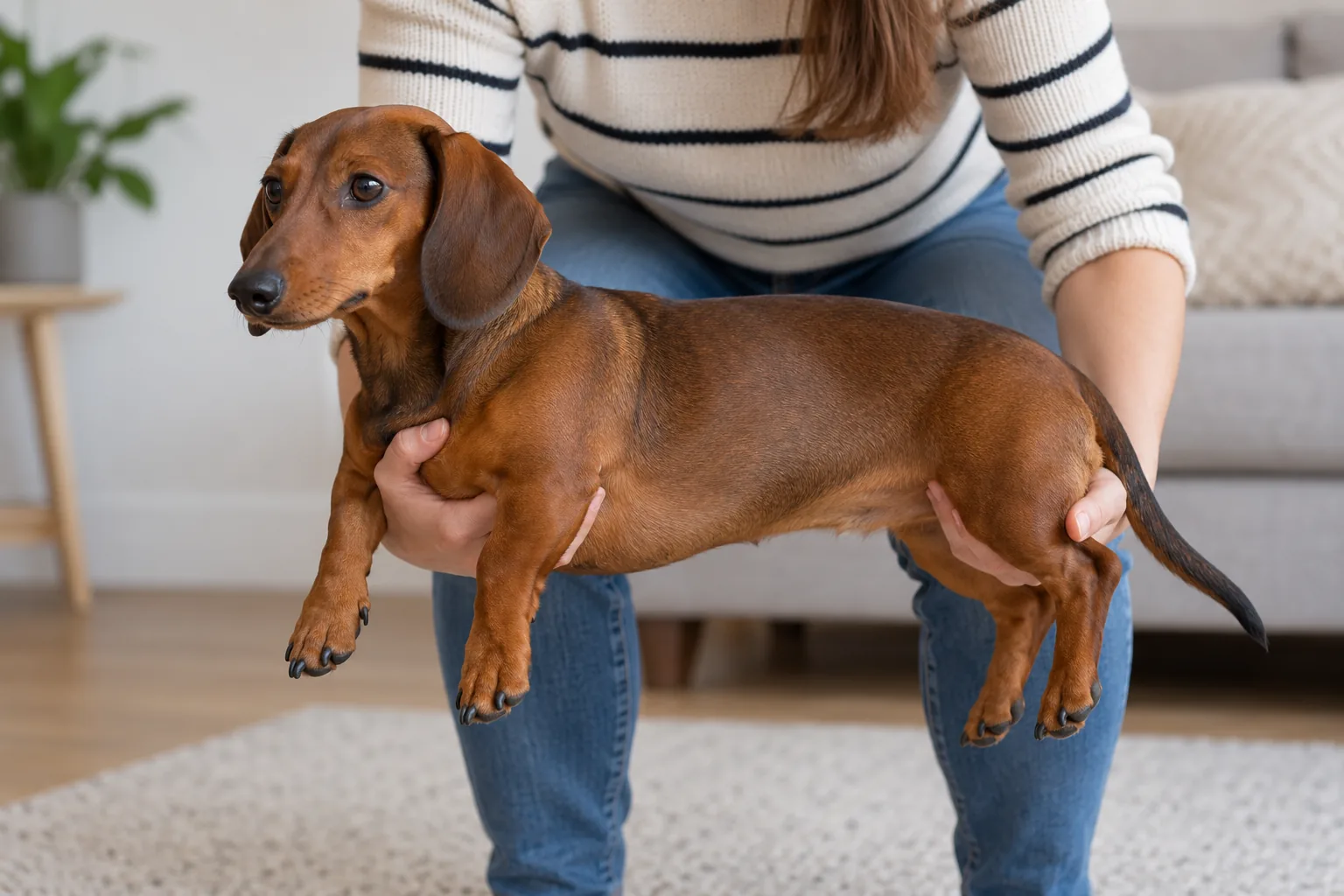
    Owner supporting a Dachshund's chest and hindquarters while lifting from floor level

    Car restraint is a different safety question: a ramp for entry does not secure the dog during a drive. Keep the car plan consistent with the broader back-safety routine, but do not make an unsupported claim that one restraint type prevents IVDD.

    When movement warrants a vet

    Write down changes in gait, appetite, posture, and toileting if the dog seems uncomfortable. The ACVS symptom overview describes pain, a wobbly hind-end gait, loss of limb movement, and inability to urinate among possible disc-disease signs. These signs can have other causes; a veterinarian must assess them. Sudden inability to walk, severe pain, progressive weakness, or bladder changes need urgent veterinary attention. Limit movement while arranging transport; do not test the dog on stairs or give human pain medicine unless instructed by a veterinarian.

    A practical example

    Walk through a typical day and count the repeated jumps the dog makes to follow people. Changing one favorite sleeping spot or blocking an unsafe shortcut can reduce those repetitions without making the home restrictive. Then review the setup after a week to see whether the dog uses the safer route voluntarily. Add one change at a time so you can tell what is working.

    A one-week back-safety reset

    1. Observe the dog’s two most repeated jumps, slips, or stair routes.
    2. Add a floor-level bed near the family and traction where the dog turns sharply.
    3. Decide on a stair rule and install a gate where unsupervised access is risky.
    4. Replace one high furniture jump with a trained access route or remove access.
    5. Review food portions, treats, and a realistic daily walking routine.
    6. Watch whether the dog voluntarily follows the new route; change the layout if it keeps taking a shortcut.

    The aim is to preserve comfortable, normal activity while reducing avoidable high-impact transitions. It is not to make the dog afraid of movement.

    Frequently asked questions

    Can a ramp prevent IVDD?

    No ramp can guarantee prevention. It may replace a repeated high jump if it is stable and the dog uses it. The ACVS discusses minimizing furniture jumps as one lifestyle change, not a cure.

    Should a Dachshund avoid all exercise?

    No. The AKC emphasizes regular walks and muscle tone. The right activity depends on the individual dog’s age, condition, and medical history.

    When should I call a vet?

    New pain, reluctance to move, an altered gait, or weakness merits veterinary advice. Sudden inability to stand, worsening weakness, or bladder problems are urgent. The ACVS symptom list is a useful reference, but it cannot diagnose your dog remotely.

    Sources

  • Dachshund Stairs Safety: A Plan for Multilevel Homes

    Dachshund Stairs Safety: A Plan for Multilevel Homes

    Direct answer

    Dachshund stairs safety starts with the actual staircase and the actual dog. It requires a useful stair plan for that individual home. Prevent unsupervised rushing and slips, keep essential food and resting spaces accessible, and decide how the dog will move between floors before closing a gate. A dog with pain, weakness, or previous spinal disease needs an individual veterinary plan. General advice does not prove that every healthy Dachshund must avoid every step.

    The AKC Dachshund breed guide advises owners not to allow the breed to run up and down stairs; the VCA breed profile recommends restricting stair access. These are conservative breed-care recommendations. A 2016 observational Dachshund study did not establish that stair avoidance prevents IVDD. Its stair-use finding must not be read as proof that climbing stairs protects a dog either: activity, previous disease, and owner behavior can affect a survey result.

    Dachshund stairs safety: access control

    Start with the floor plan: which stairs are unavoidable, how frequently the dog uses them, and who can supervise. A gate can prevent unsupervised rushing; a sleeping area on the same level can remove repeated trips. Consider traction and lighting for the person carrying the dog as well as the dog’s footing. The safest rule is one that the household can actually follow every day.

    Make a simple map of the dog’s morning, workday, and night. If food, water, toileting access, and the usual bed can all stay on one level, the dog may have no reason to use the stairs while home alone. If people spend the evening upstairs, plan how the dog will join them or remain comfortable downstairs. Do not gate the dog away from water or a safe resting place.

    Dachshund stairs safety plan with a ground-floor bed, water, and gated stairs

    At the top of a steep flight, a properly installed barrier prevents a sudden dash toward the edge. Check the gate’s fit and closure every day; a small Dachshund may squeeze under or around a poorly fitted barrier. Avoid leaving a loose temporary obstacle where people may trip while carrying the dog. These are general household safety steps, not claims that a particular gate design prevents disc disease.

    Grip, lighting, and pace

    Slippery treads, narrow turns, poor lighting, and excitement can make any staircase more difficult. Keep the route well lit and free of shoes, toys, and loose runners. If you use a stair covering, it should lie flat and provide dependable traction rather than creating a new trip hazard. Trim nails to a comfortable length, because poor nail contact can alter footing. If the dog repeatedly slips, stop asking it to use those stairs until the environment or transfer plan changes.

    Clean indoor staircase with secure non-slip tread covers and a closed gate while a Dachshund rests nearby

    Avoid making the stairs part of a chasing game. Call the dog to a calm stop before opening the gate, and reward waiting. A cue can help you control a transition; it cannot make a steep, slick staircase physically safe. Young, elderly, overweight, or unsteady dogs may need a stricter arrangement than a fit adult. The VCA breed profile supports restricting access, but it does not supply a universal number of permitted trips per day.

    Training alternatives

    If stair access cannot be eliminated, ask the veterinarian about the dog’s individual risk, especially after back pain or surgery. Do not assume that training alone makes repeated fast stair runs harmless. Reward calm movement and prevent chasing games on steps. This is a household-management decision, distinct from choosing between a ramp and pet stairs as products.

    For a dog that is comfortable being carried, support the chest and rear, hold the body close, and use the handrail if possible. The person carrying the dog must have secure footing and a free view of the steps. If the dog wriggles, is too heavy to carry confidently, or reacts painfully, do not force the lift. Ask a veterinarian or rehabilitation professional about a safer way to transfer that individual dog. A spinal patient under activity restriction may need a very different plan from a healthy dog.

    If people cannot safely carry the dog, rethink the household layout before choosing a product. A main-floor sleeping space, baby gate, or closed door can remove the need for repeated transfers. Pet steps designed for a sofa are not a substitute for a safe route between building floors; our ramp-versus-stairs buyer guide covers furniture-access products, not this multilevel-home routine.

    What the stair evidence does and does not show

    The DachsLife 2015 study published in 2016 asked owners about lifestyle and veterinary-diagnosed IVDD. It reported associations between several activity measures and IVDD risk, but the design cannot prove that using stairs causes or prevents disease. Owners of dogs with prior back trouble may already be limiting activity, and recall or selection effects can distort a retrospective survey. The stair finding should therefore not be turned into a prescription to make a dog climb flights of steps.

    That matters because two simplistic messages circulate: “one stair flight causes IVDD” and “daily stairs prevent IVDD.” Neither follows from the evidence. Conservative breed guidance still supports controlling high-speed, unsupervised stair use; an active, fit dog also needs normal exercise. Your veterinarian can weigh the dog’s body condition, history, gait, home layout, and any previous IVDD episode.

    When to ask a veterinarian

    Revisit the setup as a puppy grows or an adult ages. A dog that pauses, trembles, yelps, slips, or changes its stair habit may be showing discomfort. Stop the activity and seek veterinary advice when the change is sudden or painful. The ACVS IVDD overview describes pain, a wobbly hind-end gait, loss of movement, and bladder dysfunction as concerning signs. Sudden weakness or inability to walk is urgent; do not test the dog by asking it to climb another flight.

    Give family members one consistent rule so the dog is not encouraged up the stairs by one person and blocked by another. If a dog recovering from IVDD has an activity-restriction plan, follow the treating veterinarian’s directions rather than a general web article.

    A practical example

    In a two-story home, a gate at the foot of the stairs may solve unsupervised rushing, but it also means the family must plan where the dog sleeps and how it joins people upstairs. A safety rule works only when everyone follows it and the dog has a comfortable alternative. Write the rule on a family note: “Gate closed unless an adult is managing the transfer.” Then check it for a week. If the dog waits anxiously at the gate each evening, the rest location or people schedule may need to change.

    Quick household checklist

    • Can the dog access water, a resting place, and toilet breaks without using the stairs alone?
    • Does a gate reliably prevent a dash onto the flight?
    • Are steps dry, uncluttered, and well lit?
    • Is the person carrying the dog physically able to do so without falling?
    • Does everyone know what to do when the dog appears painful or unsteady?

    This checklist is a management aid, not a medical clearance test.

    Frequently asked questions

    Must every Dachshund be carried on every staircase?

    No universal rule can be derived from current evidence. The AKC and VCA advise restricting risky stair use, while the DachsLife study cannot prove that complete avoidance prevents IVDD. Discuss an individual plan with a veterinarian, especially when there is pain or prior disc disease.

    Will a baby gate prevent IVDD?

    No. A gate controls access and can prevent an unsupervised dash; it cannot change a dog’s underlying predisposition. It also needs a practical alternative route or resting area.

    My dog suddenly refuses stairs. Is that stubbornness?

    Do not assume so. New reluctance, yelping, wobbliness, or weakness can be a sign of pain or neurological trouble. Stop stair use and contact a veterinarian. Sudden inability to walk or bladder problems need urgent attention per the ACVS.

    Sources

  • Dachshund Dental Problems: Complete Dachshund Owner Guide

    Dachshund Dental Problems: Complete Dachshund Owner Guide

    Dachshund Dental Problems: Complete Dachshund Owner Guide is a health article, so it needs a careful, source-backed, veterinary-first tone. The focus keyword is dachshund dental problems. This local draft should help owners recognize patterns, protect the dog, and know when to call a veterinarian, not diagnose from a blog post.

    Dachshund health check context for dachshund dental problems

    Quick answer

    Dachshund dental problems often show up as bad breath, tartar, red gums, chewing changes, drooling, pawing at the mouth, or tooth pain. Daily care and veterinary dental exams matter because dental disease can hide until it hurts.

    SignOwner actionDo not
    Mild or gradual signTrack timing, activity, appetite, and comfortSchedule a veterinary check if it persists
    Sudden pain or weaknessRestrict movement and call your vetDo not wait to see if it passes
    Back or leg changeAvoid stairs, jumping, and rough handlingUse a carrier if needed
    Emergency red flagCollapse, paralysis, severe pain, eye trauma, or loss of bladder controlGo to emergency care

    Search intent boundary

    This page should answer the exact health concern in the keyword. It should not duplicate the general Dachshund health hub, the feeding chart, the weight chart, or the back-problems article. When the query is urgent, the article should route to veterinary care quickly.

    Calm recovery setup for dachshund dental problems

    What to check first

    1. Is the problem sudden, painful, worsening, or linked to weakness?
    2. Can your Dachshund walk normally, eat, drink, rest, and toilet?
    3. Did the sign appear after jumping, stairs, play, grooming, chewing, or an accident?
    4. Are there changes in appetite, stool, urination, eyes, gums, breathing, or energy?
    5. Can you safely restrict activity while you call your veterinarian?

    Dachshund-specific risk context

    Dachshunds are long-backed dogs, so movement changes deserve respect. Limping, wobbling, reluctance to move, sudden hiding, pain when lifted, or a change in toileting can be more than a minor training issue. Protect the dog from stairs, jumping, and rough handling until you know what is happening.

    Weight also affects comfort. A small gain can matter for a small dog. If the article topic involves obesity, healthy weight, or overweight signs, the practical path is measured meals, treat accounting, body-condition scoring, and veterinary guidance rather than guessing from photos.

    When to call the vet

    Call soonCall urgentlyEmergency now
    Mild limp lasting more than a daySudden painful limp or repeated skippingCannot walk or drags legs
    Bad breath or tartarMouth pain, swelling, or not eatingTrauma or heavy bleeding
    Gradual weight gainRapid weight change or appetite shiftCollapse or severe weakness
    Mild eye dischargeSquinting, redness, cloudinessEye trauma or sudden vision loss

    Common mistakes

    • Waiting too long when a Dachshund suddenly cannot walk normally.
    • Letting the dog use stairs or jump while movement is abnormal.
    • Assuming weight or dental issues are only cosmetic.
    • Trying supplements or home remedies before a diagnosis.
    • Using this narrow health page to answer every Dachshund health query.
    Body condition and health planning for dachshund dental problems

    Read next: dachshund health problems, dachshund back problems, Dachshund health problems, Dachshund weight chart. These pages should support the health cluster while this draft stays focused on the exact concern.

    FAQ

    Can I diagnose this at home?

    No. You can observe signs and protect your Dachshund, but diagnosis and treatment should come from a veterinarian, especially for pain, weakness, eyes, teeth, or movement changes.

    Should I restrict activity?

    For limping, weakness, back concern, sudden pain, or not walking, restrict movement and prevent stairs or jumping while contacting your veterinarian.

    Is weight really part of health?

    Yes. Body condition can affect comfort, stamina, mobility, and long-term risk. Use measured feeding and veterinary guidance rather than guessing.

    Publish-ready owner workflow

    To make dachshund dental problems publish-ready, the article should stay veterinary-first. It can help owners observe signs, protect the dog, and decide how urgent the situation is, but it should not diagnose or prescribe treatment. Dachshunds have breed-specific movement and weight considerations, so sudden changes deserve a cautious tone.

    The strongest health content is specific about red flags. Pain, weakness, paralysis, eye trauma, severe dental pain, rapid weight change, and sudden inability to walk should be routed to veterinary care quickly. Milder signs can still be tracked, but the article should make clear when waiting is risky.

    Health content layerWhat the article can doWhat it should not do
    ObservationList signs and timing to recordClaim a diagnosis from symptoms
    ProtectionSuggest rest, movement restriction, and safer handling when appropriateEncourage stairs or jumping through pain
    UrgencyExplain red flags and when to callMinimize sudden neurologic or eye signs
    Follow-upLink to weight, back, dental, or vet-care pagesReplace veterinary care

    Extra examples for safer decisions

    If a Dachshund is suddenly reluctant to move, the article should not frame that as stubbornness. The safer first step is to restrict activity and call a veterinarian. If the topic is weight, the owner should measure meals and treats before making aggressive changes. If the topic is dental or eye discomfort, visible signs may already mean the dog needs care.

    A publish-ready health page should also avoid alarming readers unnecessarily. It can say that some signs are mild and some are urgent, then give a clear decision path. That balance is more useful than either panic or reassurance without context.

    Pre-upload QA checklist

    QA itemPass conditionWhy it matters
    Keyword focusTitle, intro, H2s, FAQ, and meta can support dachshund dental problemsImproves Rank Math alignment
    CannibalizationIntent boundary is clear and internal links route to sibling pagesAvoids competing with existing URLs
    MediaAt least three relevant images with keyword-aware alt textMeets site image standard
    WordPress QACategory, slug, featured image, preview, and public 200 checkedKeeps upload workflow consistent

    Before publishing dachshund dental problems, compare it against the closest existing article in the same cluster. If the new draft answers the same primary question as an existing URL, merge the useful sections into the stronger URL and do not publish a second competing page. If the intent is distinct, keep the slug, title, meta description, featured image, and internal links aligned with this page’s narrower job.

    Final depth pass before upload

    For dachshund dental problems, the final editorial check should put safety first. Health pages should help owners observe and act, not self-diagnose. The page should tell readers what to record, what to prevent, and when the next step is a veterinarian or emergency clinic. That is especially important for Dachshunds because movement changes, back pain, eye signs, dental pain, and weight problems can affect comfort quickly.

    The article should use calm urgency. Not every sign is an emergency, but sudden inability to walk, severe pain, dragging legs, eye trauma, collapse, heavy bleeding, or loss of bladder control should never be softened into a wait-and-see suggestion. For slower concerns like weight or dental buildup, the article can give measured next steps and explain why prevention matters.

    Before upload, compare the article against the health hub and related weight, back, dental, or eye pages. If this draft answers a narrower symptom or decision, keep it. If it merely repeats the hub, merge the useful sections into the stronger URL instead of publishing a duplicate.

    Final review questionKeep as separate article ifMerge or revise if
    IntentThe page answers a distinct search jobIt gives the same answer as an existing URL
    DepthExamples and steps match the exact keywordSections are generic and could fit any page
    RiskWarnings and vet/trainer guidance are clearAdvice could delay needed help
    Internal linksLinks point to true next stepsLinks are only added for SEO

    After this depth pass, dachshund dental problems should be treated as a local draft ready for WordPress QA, not automatic publication. The next workflow is still: check duplicate slug, compare closest keyword, assign category, set Rank Math focus keyword and meta, choose featured image, preview, then publish only after the page passes visual and cannibalization checks.

    Editorial note for upload

    For WordPress upload, treat dachshund dental problems as a finished local draft but not an automatic publish. The final editor should compare the live search intent against the nearest existing Dachshund Compass URL, keep the stronger page if two URLs answer the same primary question, and only publish when the article adds a distinct job for the reader. That final check is especially important in close clusters such as food, size, training, behavior, and health, where a small wording overlap can turn into keyword cannibalization after indexing.

    Short upload note

    This short upload note also helps the final reviewer confirm that the draft has enough standalone value for readers before it is moved from local storage to WordPress. Keep the page focused, useful, and distinct.

    Sources

    Bottom line

    dachshund dental problems should be a focused health page with clear next steps. Protect the dog, avoid risky movement, document signs, and contact a veterinarian when pain, weakness, eyes, teeth, weight, or sudden changes are involved.


    Related Dachshund guides

  • Dachshund Eye Problems: Complete Dachshund Owner Guide

    Dachshund Eye Problems: Complete Dachshund Owner Guide

    Dachshund Eye Problems: Complete Dachshund Owner Guide is a health article, so it needs a careful, source-backed, veterinary-first tone. The focus keyword is dachshund eye problems. This local draft should help owners recognize patterns, protect the dog, and know when to call a veterinarian, not diagnose from a blog post.

    Dachshund health check context for dachshund eye problems

    Quick answer

    Dachshund eye problems can include redness, squinting, discharge, cloudiness, rubbing, vision changes, or sudden pain. Eye issues can worsen quickly, so contact your veterinarian promptly for pain, trauma, cloudiness, or sudden vision changes.

    SignOwner actionDo not
    Mild or gradual signTrack timing, activity, appetite, and comfortSchedule a veterinary check if it persists
    Sudden pain or weaknessRestrict movement and call your vetDo not wait to see if it passes
    Back or leg changeAvoid stairs, jumping, and rough handlingUse a carrier if needed
    Emergency red flagCollapse, paralysis, severe pain, eye trauma, or loss of bladder controlGo to emergency care

    Search intent boundary

    This page should answer the exact health concern in the keyword. It should not duplicate the general Dachshund health hub, the feeding chart, the weight chart, or the back-problems article. When the query is urgent, the article should route to veterinary care quickly.

    Calm recovery setup for dachshund eye problems

    What to check first

    1. Is the problem sudden, painful, worsening, or linked to weakness?
    2. Can your Dachshund walk normally, eat, drink, rest, and toilet?
    3. Did the sign appear after jumping, stairs, play, grooming, chewing, or an accident?
    4. Are there changes in appetite, stool, urination, eyes, gums, breathing, or energy?
    5. Can you safely restrict activity while you call your veterinarian?

    Dachshund-specific risk context

    Dachshunds are long-backed dogs, so movement changes deserve respect. Limping, wobbling, reluctance to move, sudden hiding, pain when lifted, or a change in toileting can be more than a minor training issue. Protect the dog from stairs, jumping, and rough handling until you know what is happening.

    Weight also affects comfort. A small gain can matter for a small dog. If the article topic involves obesity, healthy weight, or overweight signs, the practical path is measured meals, treat accounting, body-condition scoring, and veterinary guidance rather than guessing from photos.

    When to call the vet

    Call soonCall urgentlyEmergency now
    Mild limp lasting more than a daySudden painful limp or repeated skippingCannot walk or drags legs
    Bad breath or tartarMouth pain, swelling, or not eatingTrauma or heavy bleeding
    Gradual weight gainRapid weight change or appetite shiftCollapse or severe weakness
    Mild eye dischargeSquinting, redness, cloudinessEye trauma or sudden vision loss

    Common mistakes

    • Waiting too long when a Dachshund suddenly cannot walk normally.
    • Letting the dog use stairs or jump while movement is abnormal.
    • Assuming weight or dental issues are only cosmetic.
    • Trying supplements or home remedies before a diagnosis.
    • Using this narrow health page to answer every Dachshund health query.
    Body condition and health planning for dachshund eye problems

    Read next: dachshund health problems, dachshund luxating patella, dachshund back problems, Dachshund health problems. These pages should support the health cluster while this draft stays focused on the exact concern.

    FAQ

    Can I diagnose this at home?

    No. You can observe signs and protect your Dachshund, but diagnosis and treatment should come from a veterinarian, especially for pain, weakness, eyes, teeth, or movement changes.

    Should I restrict activity?

    For limping, weakness, back concern, sudden pain, or not walking, restrict movement and prevent stairs or jumping while contacting your veterinarian.

    Is weight really part of health?

    Yes. Body condition can affect comfort, stamina, mobility, and long-term risk. Use measured feeding and veterinary guidance rather than guessing.

    Publish-ready owner workflow

    To make dachshund eye problems publish-ready, the article should stay veterinary-first. It can help owners observe signs, protect the dog, and decide how urgent the situation is, but it should not diagnose or prescribe treatment. Dachshunds have breed-specific movement and weight considerations, so sudden changes deserve a cautious tone.

    The strongest health content is specific about red flags. Pain, weakness, paralysis, eye trauma, severe dental pain, rapid weight change, and sudden inability to walk should be routed to veterinary care quickly. Milder signs can still be tracked, but the article should make clear when waiting is risky.

    Health content layerWhat the article can doWhat it should not do
    ObservationList signs and timing to recordClaim a diagnosis from symptoms
    ProtectionSuggest rest, movement restriction, and safer handling when appropriateEncourage stairs or jumping through pain
    UrgencyExplain red flags and when to callMinimize sudden neurologic or eye signs
    Follow-upLink to weight, back, dental, or vet-care pagesReplace veterinary care

    Extra examples for safer decisions

    If a Dachshund is suddenly reluctant to move, the article should not frame that as stubbornness. The safer first step is to restrict activity and call a veterinarian. If the topic is weight, the owner should measure meals and treats before making aggressive changes. If the topic is dental or eye discomfort, visible signs may already mean the dog needs care.

    A publish-ready health page should also avoid alarming readers unnecessarily. It can say that some signs are mild and some are urgent, then give a clear decision path. That balance is more useful than either panic or reassurance without context.

    Pre-upload QA checklist

    QA itemPass conditionWhy it matters
    Keyword focusTitle, intro, H2s, FAQ, and meta can support dachshund eye problemsImproves Rank Math alignment
    CannibalizationIntent boundary is clear and internal links route to sibling pagesAvoids competing with existing URLs
    MediaAt least three relevant images with keyword-aware alt textMeets site image standard
    WordPress QACategory, slug, featured image, preview, and public 200 checkedKeeps upload workflow consistent

    Before publishing dachshund eye problems, compare it against the closest existing article in the same cluster. If the new draft answers the same primary question as an existing URL, merge the useful sections into the stronger URL and do not publish a second competing page. If the intent is distinct, keep the slug, title, meta description, featured image, and internal links aligned with this page’s narrower job.

    Final depth pass before upload

    For dachshund eye problems, the final editorial check should put safety first. Health pages should help owners observe and act, not self-diagnose. The page should tell readers what to record, what to prevent, and when the next step is a veterinarian or emergency clinic. That is especially important for Dachshunds because movement changes, back pain, eye signs, dental pain, and weight problems can affect comfort quickly.

    The article should use calm urgency. Not every sign is an emergency, but sudden inability to walk, severe pain, dragging legs, eye trauma, collapse, heavy bleeding, or loss of bladder control should never be softened into a wait-and-see suggestion. For slower concerns like weight or dental buildup, the article can give measured next steps and explain why prevention matters.

    Before upload, compare the article against the health hub and related weight, back, dental, or eye pages. If this draft answers a narrower symptom or decision, keep it. If it merely repeats the hub, merge the useful sections into the stronger URL instead of publishing a duplicate.

    Final review questionKeep as separate article ifMerge or revise if
    IntentThe page answers a distinct search jobIt gives the same answer as an existing URL
    DepthExamples and steps match the exact keywordSections are generic and could fit any page
    RiskWarnings and vet/trainer guidance are clearAdvice could delay needed help
    Internal linksLinks point to true next stepsLinks are only added for SEO

    After this depth pass, dachshund eye problems should be treated as a local draft ready for WordPress QA, not automatic publication. The next workflow is still: check duplicate slug, compare closest keyword, assign category, set Rank Math focus keyword and meta, choose featured image, preview, then publish only after the page passes visual and cannibalization checks.

    Editorial note for upload

    For WordPress upload, treat dachshund eye problems as a finished local draft but not an automatic publish. The final editor should compare the live search intent against the nearest existing Dachshund Compass URL, keep the stronger page if two URLs answer the same primary question, and only publish when the article adds a distinct job for the reader. That final check is especially important in close clusters such as food, size, training, behavior, and health, where a small wording overlap can turn into keyword cannibalization after indexing.

    Short upload note

    This short upload note also helps the final reviewer confirm that the draft has enough standalone value for readers before it is moved from local storage to WordPress. Keep the page focused, useful, and distinct.

    Sources

    Bottom line

    dachshund eye problems should be a focused health page with clear next steps. Protect the dog, avoid risky movement, document signs, and contact a veterinarian when pain, weakness, eyes, teeth, weight, or sudden changes are involved.


    Related Dachshund guides

  • Dachshund Luxating Patella: Complete Dachshund Owner Guide

    Dachshund Luxating Patella: Complete Dachshund Owner Guide

    Dachshund Luxating Patella: Complete Dachshund Owner Guide is a health article, so it needs a careful, source-backed, veterinary-first tone. The focus keyword is dachshund luxating patella. This local draft should help owners recognize patterns, protect the dog, and know when to call a veterinarian, not diagnose from a blog post.

    Dachshund health check context for dachshund luxating patella

    Quick answer

    Dachshund luxating patella means the kneecap can move out of normal position. Signs can include skipping, intermittent limping, holding a leg up, or gait changes. A veterinarian should diagnose severity and discuss management or surgery when needed.

    SignOwner actionDo not
    Mild or gradual signTrack timing, activity, appetite, and comfortSchedule a veterinary check if it persists
    Sudden pain or weaknessRestrict movement and call your vetDo not wait to see if it passes
    Back or leg changeAvoid stairs, jumping, and rough handlingUse a carrier if needed
    Emergency red flagCollapse, paralysis, severe pain, eye trauma, or loss of bladder controlGo to emergency care

    Search intent boundary

    This page should answer the exact health concern in the keyword. It should not duplicate the general Dachshund health hub, the feeding chart, the weight chart, or the back-problems article. When the query is urgent, the article should route to veterinary care quickly.

    Calm recovery setup for dachshund luxating patella

    What to check first

    1. Is the problem sudden, painful, worsening, or linked to weakness?
    2. Can your Dachshund walk normally, eat, drink, rest, and toilet?
    3. Did the sign appear after jumping, stairs, play, grooming, chewing, or an accident?
    4. Are there changes in appetite, stool, urination, eyes, gums, breathing, or energy?
    5. Can you safely restrict activity while you call your veterinarian?

    Dachshund-specific risk context

    Dachshunds are long-backed dogs, so movement changes deserve respect. Limping, wobbling, reluctance to move, sudden hiding, pain when lifted, or a change in toileting can be more than a minor training issue. Protect the dog from stairs, jumping, and rough handling until you know what is happening.

    Weight also affects comfort. A small gain can matter for a small dog. If the article topic involves obesity, healthy weight, or overweight signs, the practical path is measured meals, treat accounting, body-condition scoring, and veterinary guidance rather than guessing from photos.

    When to call the vet

    Call soonCall urgentlyEmergency now
    Mild limp lasting more than a daySudden painful limp or repeated skippingCannot walk or drags legs
    Bad breath or tartarMouth pain, swelling, or not eatingTrauma or heavy bleeding
    Gradual weight gainRapid weight change or appetite shiftCollapse or severe weakness
    Mild eye dischargeSquinting, redness, cloudinessEye trauma or sudden vision loss

    Common mistakes

    • Waiting too long when a Dachshund suddenly cannot walk normally.
    • Letting the dog use stairs or jump while movement is abnormal.
    • Assuming weight or dental issues are only cosmetic.
    • Trying supplements or home remedies before a diagnosis.
    • Using this narrow health page to answer every Dachshund health query.
    Body condition and health planning for dachshund luxating patella

    Read next: dachshund health problems, dachshund eye problems, dachshund back problems, Dachshund health problems. These pages should support the health cluster while this draft stays focused on the exact concern.

    FAQ

    Can I diagnose this at home?

    No. You can observe signs and protect your Dachshund, but diagnosis and treatment should come from a veterinarian, especially for pain, weakness, eyes, teeth, or movement changes.

    Should I restrict activity?

    For limping, weakness, back concern, sudden pain, or not walking, restrict movement and prevent stairs or jumping while contacting your veterinarian.

    Is weight really part of health?

    Yes. Body condition can affect comfort, stamina, mobility, and long-term risk. Use measured feeding and veterinary guidance rather than guessing.

    Publish-ready owner workflow

    To make dachshund luxating patella publish-ready, the article should stay veterinary-first. It can help owners observe signs, protect the dog, and decide how urgent the situation is, but it should not diagnose or prescribe treatment. Dachshunds have breed-specific movement and weight considerations, so sudden changes deserve a cautious tone.

    The strongest health content is specific about red flags. Pain, weakness, paralysis, eye trauma, severe dental pain, rapid weight change, and sudden inability to walk should be routed to veterinary care quickly. Milder signs can still be tracked, but the article should make clear when waiting is risky.

    Health content layerWhat the article can doWhat it should not do
    ObservationList signs and timing to recordClaim a diagnosis from symptoms
    ProtectionSuggest rest, movement restriction, and safer handling when appropriateEncourage stairs or jumping through pain
    UrgencyExplain red flags and when to callMinimize sudden neurologic or eye signs
    Follow-upLink to weight, back, dental, or vet-care pagesReplace veterinary care

    Extra examples for safer decisions

    If a Dachshund is suddenly reluctant to move, the article should not frame that as stubbornness. The safer first step is to restrict activity and call a veterinarian. If the topic is weight, the owner should measure meals and treats before making aggressive changes. If the topic is dental or eye discomfort, visible signs may already mean the dog needs care.

    A publish-ready health page should also avoid alarming readers unnecessarily. It can say that some signs are mild and some are urgent, then give a clear decision path. That balance is more useful than either panic or reassurance without context.

    Pre-upload QA checklist

    QA itemPass conditionWhy it matters
    Keyword focusTitle, intro, H2s, FAQ, and meta can support dachshund luxating patellaImproves Rank Math alignment
    CannibalizationIntent boundary is clear and internal links route to sibling pagesAvoids competing with existing URLs
    MediaAt least three relevant images with keyword-aware alt textMeets site image standard
    WordPress QACategory, slug, featured image, preview, and public 200 checkedKeeps upload workflow consistent

    Before publishing dachshund luxating patella, compare it against the closest existing article in the same cluster. If the new draft answers the same primary question as an existing URL, merge the useful sections into the stronger URL and do not publish a second competing page. If the intent is distinct, keep the slug, title, meta description, featured image, and internal links aligned with this page’s narrower job.

    Final depth pass before upload

    For dachshund luxating patella, the final editorial check should put safety first. Health pages should help owners observe and act, not self-diagnose. The page should tell readers what to record, what to prevent, and when the next step is a veterinarian or emergency clinic. That is especially important for Dachshunds because movement changes, back pain, eye signs, dental pain, and weight problems can affect comfort quickly.

    The article should use calm urgency. Not every sign is an emergency, but sudden inability to walk, severe pain, dragging legs, eye trauma, collapse, heavy bleeding, or loss of bladder control should never be softened into a wait-and-see suggestion. For slower concerns like weight or dental buildup, the article can give measured next steps and explain why prevention matters.

    Before upload, compare the article against the health hub and related weight, back, dental, or eye pages. If this draft answers a narrower symptom or decision, keep it. If it merely repeats the hub, merge the useful sections into the stronger URL instead of publishing a duplicate.

    Final review questionKeep as separate article ifMerge or revise if
    IntentThe page answers a distinct search jobIt gives the same answer as an existing URL
    DepthExamples and steps match the exact keywordSections are generic and could fit any page
    RiskWarnings and vet/trainer guidance are clearAdvice could delay needed help
    Internal linksLinks point to true next stepsLinks are only added for SEO

    After this depth pass, dachshund luxating patella should be treated as a local draft ready for WordPress QA, not automatic publication. The next workflow is still: check duplicate slug, compare closest keyword, assign category, set Rank Math focus keyword and meta, choose featured image, preview, then publish only after the page passes visual and cannibalization checks.

    Editorial note for upload

    For WordPress upload, treat dachshund luxating patella as a finished local draft but not an automatic publish. The final editor should compare the live search intent against the nearest existing Dachshund Compass URL, keep the stronger page if two URLs answer the same primary question, and only publish when the article adds a distinct job for the reader. That final check is especially important in close clusters such as food, size, training, behavior, and health, where a small wording overlap can turn into keyword cannibalization after indexing.

    Short upload note

    This short upload note also helps the final reviewer confirm that the draft has enough standalone value for readers before it is moved from local storage to WordPress. Keep the page focused, useful, and distinct.

    Sources

    Bottom line

    dachshund luxating patella should be a focused health page with clear next steps. Protect the dog, avoid risky movement, document signs, and contact a veterinarian when pain, weakness, eyes, teeth, weight, or sudden changes are involved.


    Related Dachshund guides

  • Overweight Dachshund Signs: Complete Dachshund Owner Guide

    Overweight Dachshund Signs: Complete Dachshund Owner Guide

    Overweight Dachshund Signs: Complete Dachshund Owner Guide is a health article, so it needs a careful, source-backed, veterinary-first tone. The focus keyword is overweight dachshund signs. This local draft should help owners recognize patterns, protect the dog, and know when to call a veterinarian, not diagnose from a blog post.

    Dachshund health check context for overweight dachshund signs

    Quick answer

    A healthy weight for a Dachshund is best judged by body condition, waist, rib feel, muscle, age, and veterinary guidance, not by one number on a chart. Watch trends and adjust meals before small gains become larger problems.

    SignOwner actionDo not
    Mild or gradual signTrack timing, activity, appetite, and comfortSchedule a veterinary check if it persists
    Sudden pain or weaknessRestrict movement and call your vetDo not wait to see if it passes
    Back or leg changeAvoid stairs, jumping, and rough handlingUse a carrier if needed
    Emergency red flagCollapse, paralysis, severe pain, eye trauma, or loss of bladder controlGo to emergency care

    Search intent boundary

    This page should answer the exact health concern in the keyword. It should not duplicate the general Dachshund health hub, the feeding chart, the weight chart, or the back-problems article. When the query is urgent, the article should route to veterinary care quickly.

    Calm recovery setup for overweight dachshund signs

    What to check first

    1. Is the problem sudden, painful, worsening, or linked to weakness?
    2. Can your Dachshund walk normally, eat, drink, rest, and toilet?
    3. Did the sign appear after jumping, stairs, play, grooming, chewing, or an accident?
    4. Are there changes in appetite, stool, urination, eyes, gums, breathing, or energy?
    5. Can you safely restrict activity while you call your veterinarian?

    Dachshund-specific risk context

    Dachshunds are long-backed dogs, so movement changes deserve respect. Limping, wobbling, reluctance to move, sudden hiding, pain when lifted, or a change in toileting can be more than a minor training issue. Protect the dog from stairs, jumping, and rough handling until you know what is happening.

    Weight also affects comfort. A small gain can matter for a small dog. If the article topic involves obesity, healthy weight, or overweight signs, the practical path is measured meals, treat accounting, body-condition scoring, and veterinary guidance rather than guessing from photos.

    When to call the vet

    Call soonCall urgentlyEmergency now
    Mild limp lasting more than a daySudden painful limp or repeated skippingCannot walk or drags legs
    Bad breath or tartarMouth pain, swelling, or not eatingTrauma or heavy bleeding
    Gradual weight gainRapid weight change or appetite shiftCollapse or severe weakness
    Mild eye dischargeSquinting, redness, cloudinessEye trauma or sudden vision loss

    Common mistakes

    • Waiting too long when a Dachshund suddenly cannot walk normally.
    • Letting the dog use stairs or jump while movement is abnormal.
    • Assuming weight or dental issues are only cosmetic.
    • Trying supplements or home remedies before a diagnosis.
    • Using this narrow health page to answer every Dachshund health query.
    Body condition and health planning for overweight dachshund signs

    Read next: dachshund health problems, healthy weight for dachshund, dachshund back problems, Dachshund health problems. These pages should support the health cluster while this draft stays focused on the exact concern.

    FAQ

    Can I diagnose this at home?

    No. You can observe signs and protect your Dachshund, but diagnosis and treatment should come from a veterinarian, especially for pain, weakness, eyes, teeth, or movement changes.

    Should I restrict activity?

    For limping, weakness, back concern, sudden pain, or not walking, restrict movement and prevent stairs or jumping while contacting your veterinarian.

    Is weight really part of health?

    Yes. Body condition can affect comfort, stamina, mobility, and long-term risk. Use measured feeding and veterinary guidance rather than guessing.

    Publish-ready owner workflow

    To make overweight dachshund signs publish-ready, the article should stay veterinary-first. It can help owners observe signs, protect the dog, and decide how urgent the situation is, but it should not diagnose or prescribe treatment. Dachshunds have breed-specific movement and weight considerations, so sudden changes deserve a cautious tone.

    The strongest health content is specific about red flags. Pain, weakness, paralysis, eye trauma, severe dental pain, rapid weight change, and sudden inability to walk should be routed to veterinary care quickly. Milder signs can still be tracked, but the article should make clear when waiting is risky.

    Health content layerWhat the article can doWhat it should not do
    ObservationList signs and timing to recordClaim a diagnosis from symptoms
    ProtectionSuggest rest, movement restriction, and safer handling when appropriateEncourage stairs or jumping through pain
    UrgencyExplain red flags and when to callMinimize sudden neurologic or eye signs
    Follow-upLink to weight, back, dental, or vet-care pagesReplace veterinary care

    Extra examples for safer decisions

    If a Dachshund is suddenly reluctant to move, the article should not frame that as stubbornness. The safer first step is to restrict activity and call a veterinarian. If the topic is weight, the owner should measure meals and treats before making aggressive changes. If the topic is dental or eye discomfort, visible signs may already mean the dog needs care.

    A publish-ready health page should also avoid alarming readers unnecessarily. It can say that some signs are mild and some are urgent, then give a clear decision path. That balance is more useful than either panic or reassurance without context.

    Pre-upload QA checklist

    QA itemPass conditionWhy it matters
    Keyword focusTitle, intro, H2s, FAQ, and meta can support overweight dachshund signsImproves Rank Math alignment
    CannibalizationIntent boundary is clear and internal links route to sibling pagesAvoids competing with existing URLs
    MediaAt least three relevant images with keyword-aware alt textMeets site image standard
    WordPress QACategory, slug, featured image, preview, and public 200 checkedKeeps upload workflow consistent

    Before publishing overweight dachshund signs, compare it against the closest existing article in the same cluster. If the new draft answers the same primary question as an existing URL, merge the useful sections into the stronger URL and do not publish a second competing page. If the intent is distinct, keep the slug, title, meta description, featured image, and internal links aligned with this page’s narrower job.

    Final depth pass before upload

    For overweight dachshund signs, the final editorial check should put safety first. Health pages should help owners observe and act, not self-diagnose. The page should tell readers what to record, what to prevent, and when the next step is a veterinarian or emergency clinic. That is especially important for Dachshunds because movement changes, back pain, eye signs, dental pain, and weight problems can affect comfort quickly.

    The article should use calm urgency. Not every sign is an emergency, but sudden inability to walk, severe pain, dragging legs, eye trauma, collapse, heavy bleeding, or loss of bladder control should never be softened into a wait-and-see suggestion. For slower concerns like weight or dental buildup, the article can give measured next steps and explain why prevention matters.

    Before upload, compare the article against the health hub and related weight, back, dental, or eye pages. If this draft answers a narrower symptom or decision, keep it. If it merely repeats the hub, merge the useful sections into the stronger URL instead of publishing a duplicate.

    Final review questionKeep as separate article ifMerge or revise if
    IntentThe page answers a distinct search jobIt gives the same answer as an existing URL
    DepthExamples and steps match the exact keywordSections are generic and could fit any page
    RiskWarnings and vet/trainer guidance are clearAdvice could delay needed help
    Internal linksLinks point to true next stepsLinks are only added for SEO

    After this depth pass, overweight dachshund signs should be treated as a local draft ready for WordPress QA, not automatic publication. The next workflow is still: check duplicate slug, compare closest keyword, assign category, set Rank Math focus keyword and meta, choose featured image, preview, then publish only after the page passes visual and cannibalization checks.

    Editorial note for upload

    For WordPress upload, treat overweight dachshund signs as a finished local draft but not an automatic publish. The final editor should compare the live search intent against the nearest existing Dachshund Compass URL, keep the stronger page if two URLs answer the same primary question, and only publish when the article adds a distinct job for the reader. That final check is especially important in close clusters such as food, size, training, behavior, and health, where a small wording overlap can turn into keyword cannibalization after indexing.

    Short upload note

    This short upload note also helps the final reviewer confirm that the draft has enough standalone value for readers before it is moved from local storage to WordPress. Keep the page focused, useful, and distinct.

    Sources

    Bottom line

    overweight dachshund signs should be a focused health page with clear next steps. Protect the dog, avoid risky movement, document signs, and contact a veterinarian when pain, weakness, eyes, teeth, weight, or sudden changes are involved.


    Related Dachshund guides

  • Healthy Weight for Dachshund: Complete Dachshund Owner Guide

    Healthy Weight for Dachshund: Complete Dachshund Owner Guide

    Healthy Weight for Dachshund: Complete Dachshund Owner Guide is a health article, so it needs a careful, source-backed, veterinary-first tone. The focus keyword is healthy weight for dachshund. This local draft should help owners recognize patterns, protect the dog, and know when to call a veterinarian, not diagnose from a blog post.

    Dachshund health check context for healthy weight for dachshund

    Quick answer

    A healthy weight for a Dachshund is best judged by body condition, waist, rib feel, muscle, age, and veterinary guidance, not by one number on a chart. Watch trends and adjust meals before small gains become larger problems.

    SignOwner actionDo not
    Mild or gradual signTrack timing, activity, appetite, and comfortSchedule a veterinary check if it persists
    Sudden pain or weaknessRestrict movement and call your vetDo not wait to see if it passes
    Back or leg changeAvoid stairs, jumping, and rough handlingUse a carrier if needed
    Emergency red flagCollapse, paralysis, severe pain, eye trauma, or loss of bladder controlGo to emergency care

    Search intent boundary

    This page should answer the exact health concern in the keyword. It should not duplicate the general Dachshund health hub, the feeding chart, the weight chart, or the back-problems article. When the query is urgent, the article should route to veterinary care quickly.

    Calm recovery setup for healthy weight for dachshund

    What to check first

    1. Is the problem sudden, painful, worsening, or linked to weakness?
    2. Can your Dachshund walk normally, eat, drink, rest, and toilet?
    3. Did the sign appear after jumping, stairs, play, grooming, chewing, or an accident?
    4. Are there changes in appetite, stool, urination, eyes, gums, breathing, or energy?
    5. Can you safely restrict activity while you call your veterinarian?

    Dachshund-specific risk context

    Dachshunds are long-backed dogs, so movement changes deserve respect. Limping, wobbling, reluctance to move, sudden hiding, pain when lifted, or a change in toileting can be more than a minor training issue. Protect the dog from stairs, jumping, and rough handling until you know what is happening.

    Weight also affects comfort. A small gain can matter for a small dog. If the article topic involves obesity, healthy weight, or overweight signs, the practical path is measured meals, treat accounting, body-condition scoring, and veterinary guidance rather than guessing from photos.

    When to call the vet

    Call soonCall urgentlyEmergency now
    Mild limp lasting more than a daySudden painful limp or repeated skippingCannot walk or drags legs
    Bad breath or tartarMouth pain, swelling, or not eatingTrauma or heavy bleeding
    Gradual weight gainRapid weight change or appetite shiftCollapse or severe weakness
    Mild eye dischargeSquinting, redness, cloudinessEye trauma or sudden vision loss

    Common mistakes

    • Waiting too long when a Dachshund suddenly cannot walk normally.
    • Letting the dog use stairs or jump while movement is abnormal.
    • Assuming weight or dental issues are only cosmetic.
    • Trying supplements or home remedies before a diagnosis.
    • Using this narrow health page to answer every Dachshund health query.
    Body condition and health planning for healthy weight for dachshund

    Read next: dachshund health problems, dachshund obesity, overweight dachshund signs, dachshund back problems. These pages should support the health cluster while this draft stays focused on the exact concern.

    FAQ

    Can I diagnose this at home?

    No. You can observe signs and protect your Dachshund, but diagnosis and treatment should come from a veterinarian, especially for pain, weakness, eyes, teeth, or movement changes.

    Should I restrict activity?

    For limping, weakness, back concern, sudden pain, or not walking, restrict movement and prevent stairs or jumping while contacting your veterinarian.

    Is weight really part of health?

    Yes. Body condition can affect comfort, stamina, mobility, and long-term risk. Use measured feeding and veterinary guidance rather than guessing.

    Publish-ready owner workflow

    To make healthy weight for dachshund publish-ready, the article should stay veterinary-first. It can help owners observe signs, protect the dog, and decide how urgent the situation is, but it should not diagnose or prescribe treatment. Dachshunds have breed-specific movement and weight considerations, so sudden changes deserve a cautious tone.

    The strongest health content is specific about red flags. Pain, weakness, paralysis, eye trauma, severe dental pain, rapid weight change, and sudden inability to walk should be routed to veterinary care quickly. Milder signs can still be tracked, but the article should make clear when waiting is risky.

    Health content layerWhat the article can doWhat it should not do
    ObservationList signs and timing to recordClaim a diagnosis from symptoms
    ProtectionSuggest rest, movement restriction, and safer handling when appropriateEncourage stairs or jumping through pain
    UrgencyExplain red flags and when to callMinimize sudden neurologic or eye signs
    Follow-upLink to weight, back, dental, or vet-care pagesReplace veterinary care

    Extra examples for safer decisions

    If a Dachshund is suddenly reluctant to move, the article should not frame that as stubbornness. The safer first step is to restrict activity and call a veterinarian. If the topic is weight, the owner should measure meals and treats before making aggressive changes. If the topic is dental or eye discomfort, visible signs may already mean the dog needs care.

    A publish-ready health page should also avoid alarming readers unnecessarily. It can say that some signs are mild and some are urgent, then give a clear decision path. That balance is more useful than either panic or reassurance without context.

    Pre-upload QA checklist

    QA itemPass conditionWhy it matters
    Keyword focusTitle, intro, H2s, FAQ, and meta can support healthy weight for dachshundImproves Rank Math alignment
    CannibalizationIntent boundary is clear and internal links route to sibling pagesAvoids competing with existing URLs
    MediaAt least three relevant images with keyword-aware alt textMeets site image standard
    WordPress QACategory, slug, featured image, preview, and public 200 checkedKeeps upload workflow consistent

    Before publishing healthy weight for dachshund, compare it against the closest existing article in the same cluster. If the new draft answers the same primary question as an existing URL, merge the useful sections into the stronger URL and do not publish a second competing page. If the intent is distinct, keep the slug, title, meta description, featured image, and internal links aligned with this page’s narrower job.

    Final depth pass before upload

    For healthy weight for dachshund, the final editorial check should put safety first. Health pages should help owners observe and act, not self-diagnose. The page should tell readers what to record, what to prevent, and when the next step is a veterinarian or emergency clinic. That is especially important for Dachshunds because movement changes, back pain, eye signs, dental pain, and weight problems can affect comfort quickly.

    The article should use calm urgency. Not every sign is an emergency, but sudden inability to walk, severe pain, dragging legs, eye trauma, collapse, heavy bleeding, or loss of bladder control should never be softened into a wait-and-see suggestion. For slower concerns like weight or dental buildup, the article can give measured next steps and explain why prevention matters.

    Before upload, compare the article against the health hub and related weight, back, dental, or eye pages. If this draft answers a narrower symptom or decision, keep it. If it merely repeats the hub, merge the useful sections into the stronger URL instead of publishing a duplicate.

    Final review questionKeep as separate article ifMerge or revise if
    IntentThe page answers a distinct search jobIt gives the same answer as an existing URL
    DepthExamples and steps match the exact keywordSections are generic and could fit any page
    RiskWarnings and vet/trainer guidance are clearAdvice could delay needed help
    Internal linksLinks point to true next stepsLinks are only added for SEO

    After this depth pass, healthy weight for dachshund should be treated as a local draft ready for WordPress QA, not automatic publication. The next workflow is still: check duplicate slug, compare closest keyword, assign category, set Rank Math focus keyword and meta, choose featured image, preview, then publish only after the page passes visual and cannibalization checks.

    Editorial note for upload

    For WordPress upload, treat healthy weight for dachshund as a finished local draft but not an automatic publish. The final editor should compare the live search intent against the nearest existing Dachshund Compass URL, keep the stronger page if two URLs answer the same primary question, and only publish when the article adds a distinct job for the reader. That final check is especially important in close clusters such as food, size, training, behavior, and health, where a small wording overlap can turn into keyword cannibalization after indexing.

    Short upload note

    This short upload note also helps the final reviewer confirm that the draft has enough standalone value for readers before it is moved from local storage to WordPress. Keep the page focused, useful, and distinct.

    Sources

    Bottom line

    healthy weight for dachshund should be a focused health page with clear next steps. Protect the dog, avoid risky movement, document signs, and contact a veterinarian when pain, weakness, eyes, teeth, weight, or sudden changes are involved.


    Related Dachshund guides

  • Dachshund Obesity: Complete Dachshund Owner Guide

    Dachshund Obesity: Complete Dachshund Owner Guide

    Dachshund Obesity: Complete Dachshund Owner Guide is a health article, so it needs a careful, source-backed, veterinary-first tone. The focus keyword is dachshund obesity. This local draft should help owners recognize patterns, protect the dog, and know when to call a veterinarian, not diagnose from a blog post.

    Dachshund health check context for dachshund obesity

    Quick answer

    Dachshund obesity is more than a cosmetic issue. Extra weight can affect comfort, stamina, mobility, and stress on the long back. Use body condition, measured meals, treat accounting, and veterinary weight-loss guidance.

    SignOwner actionDo not
    Mild or gradual signTrack timing, activity, appetite, and comfortSchedule a veterinary check if it persists
    Sudden pain or weaknessRestrict movement and call your vetDo not wait to see if it passes
    Back or leg changeAvoid stairs, jumping, and rough handlingUse a carrier if needed
    Emergency red flagCollapse, paralysis, severe pain, eye trauma, or loss of bladder controlGo to emergency care

    Search intent boundary

    This page should answer the exact health concern in the keyword. It should not duplicate the general Dachshund health hub, the feeding chart, the weight chart, or the back-problems article. When the query is urgent, the article should route to veterinary care quickly.

    Calm recovery setup for dachshund obesity

    What to check first

    1. Is the problem sudden, painful, worsening, or linked to weakness?
    2. Can your Dachshund walk normally, eat, drink, rest, and toilet?
    3. Did the sign appear after jumping, stairs, play, grooming, chewing, or an accident?
    4. Are there changes in appetite, stool, urination, eyes, gums, breathing, or energy?
    5. Can you safely restrict activity while you call your veterinarian?

    Dachshund-specific risk context

    Dachshunds are long-backed dogs, so movement changes deserve respect. Limping, wobbling, reluctance to move, sudden hiding, pain when lifted, or a change in toileting can be more than a minor training issue. Protect the dog from stairs, jumping, and rough handling until you know what is happening.

    Weight also affects comfort. A small gain can matter for a small dog. If the article topic involves obesity, healthy weight, or overweight signs, the practical path is measured meals, treat accounting, body-condition scoring, and veterinary guidance rather than guessing from photos.

    When to call the vet

    Call soonCall urgentlyEmergency now
    Mild limp lasting more than a daySudden painful limp or repeated skippingCannot walk or drags legs
    Bad breath or tartarMouth pain, swelling, or not eatingTrauma or heavy bleeding
    Gradual weight gainRapid weight change or appetite shiftCollapse or severe weakness
    Mild eye dischargeSquinting, redness, cloudinessEye trauma or sudden vision loss

    Common mistakes

    • Waiting too long when a Dachshund suddenly cannot walk normally.
    • Letting the dog use stairs or jump while movement is abnormal.
    • Assuming weight or dental issues are only cosmetic.
    • Trying supplements or home remedies before a diagnosis.
    • Using this narrow health page to answer every Dachshund health query.
    Body condition and health planning for dachshund obesity

    Read next: dachshund health problems, healthy weight for dachshund, dachshund back problems, Dachshund health problems. These pages should support the health cluster while this draft stays focused on the exact concern.

    FAQ

    Can I diagnose this at home?

    No. You can observe signs and protect your Dachshund, but diagnosis and treatment should come from a veterinarian, especially for pain, weakness, eyes, teeth, or movement changes.

    Should I restrict activity?

    For limping, weakness, back concern, sudden pain, or not walking, restrict movement and prevent stairs or jumping while contacting your veterinarian.

    Is weight really part of health?

    Yes. Body condition can affect comfort, stamina, mobility, and long-term risk. Use measured feeding and veterinary guidance rather than guessing.

    Publish-ready owner workflow

    To make dachshund obesity publish-ready, the article should stay veterinary-first. It can help owners observe signs, protect the dog, and decide how urgent the situation is, but it should not diagnose or prescribe treatment. Dachshunds have breed-specific movement and weight considerations, so sudden changes deserve a cautious tone.

    The strongest health content is specific about red flags. Pain, weakness, paralysis, eye trauma, severe dental pain, rapid weight change, and sudden inability to walk should be routed to veterinary care quickly. Milder signs can still be tracked, but the article should make clear when waiting is risky.

    Health content layerWhat the article can doWhat it should not do
    ObservationList signs and timing to recordClaim a diagnosis from symptoms
    ProtectionSuggest rest, movement restriction, and safer handling when appropriateEncourage stairs or jumping through pain
    UrgencyExplain red flags and when to callMinimize sudden neurologic or eye signs
    Follow-upLink to weight, back, dental, or vet-care pagesReplace veterinary care

    Extra examples for safer decisions

    If a Dachshund is suddenly reluctant to move, the article should not frame that as stubbornness. The safer first step is to restrict activity and call a veterinarian. If the topic is weight, the owner should measure meals and treats before making aggressive changes. If the topic is dental or eye discomfort, visible signs may already mean the dog needs care.

    A publish-ready health page should also avoid alarming readers unnecessarily. It can say that some signs are mild and some are urgent, then give a clear decision path. That balance is more useful than either panic or reassurance without context.

    Pre-upload QA checklist

    QA itemPass conditionWhy it matters
    Keyword focusTitle, intro, H2s, FAQ, and meta can support dachshund obesityImproves Rank Math alignment
    CannibalizationIntent boundary is clear and internal links route to sibling pagesAvoids competing with existing URLs
    MediaAt least three relevant images with keyword-aware alt textMeets site image standard
    WordPress QACategory, slug, featured image, preview, and public 200 checkedKeeps upload workflow consistent

    Before publishing dachshund obesity, compare it against the closest existing article in the same cluster. If the new draft answers the same primary question as an existing URL, merge the useful sections into the stronger URL and do not publish a second competing page. If the intent is distinct, keep the slug, title, meta description, featured image, and internal links aligned with this page’s narrower job.

    Final depth pass before upload

    For dachshund obesity, the final editorial check should put safety first. Health pages should help owners observe and act, not self-diagnose. The page should tell readers what to record, what to prevent, and when the next step is a veterinarian or emergency clinic. That is especially important for Dachshunds because movement changes, back pain, eye signs, dental pain, and weight problems can affect comfort quickly.

    The article should use calm urgency. Not every sign is an emergency, but sudden inability to walk, severe pain, dragging legs, eye trauma, collapse, heavy bleeding, or loss of bladder control should never be softened into a wait-and-see suggestion. For slower concerns like weight or dental buildup, the article can give measured next steps and explain why prevention matters.

    Before upload, compare the article against the health hub and related weight, back, dental, or eye pages. If this draft answers a narrower symptom or decision, keep it. If it merely repeats the hub, merge the useful sections into the stronger URL instead of publishing a duplicate.

    Final review questionKeep as separate article ifMerge or revise if
    IntentThe page answers a distinct search jobIt gives the same answer as an existing URL
    DepthExamples and steps match the exact keywordSections are generic and could fit any page
    RiskWarnings and vet/trainer guidance are clearAdvice could delay needed help
    Internal linksLinks point to true next stepsLinks are only added for SEO

    After this depth pass, dachshund obesity should be treated as a local draft ready for WordPress QA, not automatic publication. The next workflow is still: check duplicate slug, compare closest keyword, assign category, set Rank Math focus keyword and meta, choose featured image, preview, then publish only after the page passes visual and cannibalization checks.

    Editorial note for upload

    For WordPress upload, treat dachshund obesity as a finished local draft but not an automatic publish. The final editor should compare the live search intent against the nearest existing Dachshund Compass URL, keep the stronger page if two URLs answer the same primary question, and only publish when the article adds a distinct job for the reader. That final check is especially important in close clusters such as food, size, training, behavior, and health, where a small wording overlap can turn into keyword cannibalization after indexing.

    Short upload note

    This short upload note also helps the final reviewer confirm that the draft has enough standalone value for readers before it is moved from local storage to WordPress. Keep the page focused, useful, and distinct.

    Sources

    Bottom line

    dachshund obesity should be a focused health page with clear next steps. Protect the dog, avoid risky movement, document signs, and contact a veterinarian when pain, weakness, eyes, teeth, weight, or sudden changes are involved.


    Related Dachshund guides

  • Dachshund Limping: Complete Dachshund Owner Guide

    Dachshund Limping: Complete Dachshund Owner Guide

    Dachshund Limping: Complete Dachshund Owner Guide is a health article, so it needs a careful, source-backed, veterinary-first tone. The focus keyword is dachshund limping. This local draft should help owners recognize patterns, protect the dog, and know when to call a veterinarian, not diagnose from a blog post.

    Dachshund health check context for dachshund limping

    Quick answer

    Dachshund limping can come from paw injury, nail trouble, muscle strain, joint disease, back pain, or neurologic problems. Rest the dog, prevent jumping and stairs, and call your veterinarian if the limp is sudden, painful, repeated, or linked to weakness.

    SignOwner actionDo not
    Mild or gradual signTrack timing, activity, appetite, and comfortSchedule a veterinary check if it persists
    Sudden pain or weaknessRestrict movement and call your vetDo not wait to see if it passes
    Back or leg changeAvoid stairs, jumping, and rough handlingUse a carrier if needed
    Emergency red flagCollapse, paralysis, severe pain, eye trauma, or loss of bladder controlGo to emergency care

    Search intent boundary

    This page should answer the exact health concern in the keyword. It should not duplicate the general Dachshund health hub, the feeding chart, the weight chart, or the back-problems article. When the query is urgent, the article should route to veterinary care quickly.

    Calm recovery setup for dachshund limping

    What to check first

    1. Is the problem sudden, painful, worsening, or linked to weakness?
    2. Can your Dachshund walk normally, eat, drink, rest, and toilet?
    3. Did the sign appear after jumping, stairs, play, grooming, chewing, or an accident?
    4. Are there changes in appetite, stool, urination, eyes, gums, breathing, or energy?
    5. Can you safely restrict activity while you call your veterinarian?

    Dachshund-specific risk context

    Dachshunds are long-backed dogs, so movement changes deserve respect. Limping, wobbling, reluctance to move, sudden hiding, pain when lifted, or a change in toileting can be more than a minor training issue. Protect the dog from stairs, jumping, and rough handling until you know what is happening.

    Weight also affects comfort. A small gain can matter for a small dog. If the article topic involves obesity, healthy weight, or overweight signs, the practical path is measured meals, treat accounting, body-condition scoring, and veterinary guidance rather than guessing from photos.

    When to call the vet

    Call soonCall urgentlyEmergency now
    Mild limp lasting more than a daySudden painful limp or repeated skippingCannot walk or drags legs
    Bad breath or tartarMouth pain, swelling, or not eatingTrauma or heavy bleeding
    Gradual weight gainRapid weight change or appetite shiftCollapse or severe weakness
    Mild eye dischargeSquinting, redness, cloudinessEye trauma or sudden vision loss

    Common mistakes

    • Waiting too long when a Dachshund suddenly cannot walk normally.
    • Letting the dog use stairs or jump while movement is abnormal.
    • Assuming weight or dental issues are only cosmetic.
    • Trying supplements or home remedies before a diagnosis.
    • Using this narrow health page to answer every Dachshund health query.
    Body condition and health planning for dachshund limping

    Read next: dachshund health problems, dachshund suddenly not walking, dachshund back problems, Dachshund health problems. These pages should support the health cluster while this draft stays focused on the exact concern.

    FAQ

    Can I diagnose this at home?

    No. You can observe signs and protect your Dachshund, but diagnosis and treatment should come from a veterinarian, especially for pain, weakness, eyes, teeth, or movement changes.

    Should I restrict activity?

    For limping, weakness, back concern, sudden pain, or not walking, restrict movement and prevent stairs or jumping while contacting your veterinarian.

    Is weight really part of health?

    Yes. Body condition can affect comfort, stamina, mobility, and long-term risk. Use measured feeding and veterinary guidance rather than guessing.

    Publish-ready owner workflow

    To make dachshund limping publish-ready, the article should stay veterinary-first. It can help owners observe signs, protect the dog, and decide how urgent the situation is, but it should not diagnose or prescribe treatment. Dachshunds have breed-specific movement and weight considerations, so sudden changes deserve a cautious tone.

    The strongest health content is specific about red flags. Pain, weakness, paralysis, eye trauma, severe dental pain, rapid weight change, and sudden inability to walk should be routed to veterinary care quickly. Milder signs can still be tracked, but the article should make clear when waiting is risky.

    Health content layerWhat the article can doWhat it should not do
    ObservationList signs and timing to recordClaim a diagnosis from symptoms
    ProtectionSuggest rest, movement restriction, and safer handling when appropriateEncourage stairs or jumping through pain
    UrgencyExplain red flags and when to callMinimize sudden neurologic or eye signs
    Follow-upLink to weight, back, dental, or vet-care pagesReplace veterinary care

    Extra examples for safer decisions

    If a Dachshund is suddenly reluctant to move, the article should not frame that as stubbornness. The safer first step is to restrict activity and call a veterinarian. If the topic is weight, the owner should measure meals and treats before making aggressive changes. If the topic is dental or eye discomfort, visible signs may already mean the dog needs care.

    A publish-ready health page should also avoid alarming readers unnecessarily. It can say that some signs are mild and some are urgent, then give a clear decision path. That balance is more useful than either panic or reassurance without context.

    Pre-upload QA checklist

    QA itemPass conditionWhy it matters
    Keyword focusTitle, intro, H2s, FAQ, and meta can support dachshund limpingImproves Rank Math alignment
    CannibalizationIntent boundary is clear and internal links route to sibling pagesAvoids competing with existing URLs
    MediaAt least three relevant images with keyword-aware alt textMeets site image standard
    WordPress QACategory, slug, featured image, preview, and public 200 checkedKeeps upload workflow consistent

    Before publishing dachshund limping, compare it against the closest existing article in the same cluster. If the new draft answers the same primary question as an existing URL, merge the useful sections into the stronger URL and do not publish a second competing page. If the intent is distinct, keep the slug, title, meta description, featured image, and internal links aligned with this page’s narrower job.

    Final depth pass before upload

    For dachshund limping, the final editorial check should put safety first. Health pages should help owners observe and act, not self-diagnose. The page should tell readers what to record, what to prevent, and when the next step is a veterinarian or emergency clinic. That is especially important for Dachshunds because movement changes, back pain, eye signs, dental pain, and weight problems can affect comfort quickly.

    The article should use calm urgency. Not every sign is an emergency, but sudden inability to walk, severe pain, dragging legs, eye trauma, collapse, heavy bleeding, or loss of bladder control should never be softened into a wait-and-see suggestion. For slower concerns like weight or dental buildup, the article can give measured next steps and explain why prevention matters.

    Before upload, compare the article against the health hub and related weight, back, dental, or eye pages. If this draft answers a narrower symptom or decision, keep it. If it merely repeats the hub, merge the useful sections into the stronger URL instead of publishing a duplicate.

    Final review questionKeep as separate article ifMerge or revise if
    IntentThe page answers a distinct search jobIt gives the same answer as an existing URL
    DepthExamples and steps match the exact keywordSections are generic and could fit any page
    RiskWarnings and vet/trainer guidance are clearAdvice could delay needed help
    Internal linksLinks point to true next stepsLinks are only added for SEO

    After this depth pass, dachshund limping should be treated as a local draft ready for WordPress QA, not automatic publication. The next workflow is still: check duplicate slug, compare closest keyword, assign category, set Rank Math focus keyword and meta, choose featured image, preview, then publish only after the page passes visual and cannibalization checks.

    Editorial note for upload

    For WordPress upload, treat dachshund limping as a finished local draft but not an automatic publish. The final editor should compare the live search intent against the nearest existing Dachshund Compass URL, keep the stronger page if two URLs answer the same primary question, and only publish when the article adds a distinct job for the reader. That final check is especially important in close clusters such as food, size, training, behavior, and health, where a small wording overlap can turn into keyword cannibalization after indexing.

    Short upload note

    This short upload note also helps the final reviewer confirm that the draft has enough standalone value for readers before it is moved from local storage to WordPress. Keep the page focused, useful, and distinct.

    Sources

    Bottom line

    dachshund limping should be a focused health page with clear next steps. Protect the dog, avoid risky movement, document signs, and contact a veterinarian when pain, weakness, eyes, teeth, weight, or sudden changes are involved.


    Related Dachshund guides

  • Dachshund Suddenly Not Walking: Complete Dachshund Owner Guide

    Dachshund Suddenly Not Walking: Complete Dachshund Owner Guide

    Dachshund Suddenly Not Walking: Complete Dachshund Owner Guide is a health article, so it needs a careful, source-backed, veterinary-first tone. The focus keyword is dachshund suddenly not walking. This local draft should help owners recognize patterns, protect the dog, and know when to call a veterinarian, not diagnose from a blog post.

    Dachshund health check context for dachshund suddenly not walking

    Quick answer

    A Dachshund suddenly not walking is urgent. Keep your dog still, prevent stairs or jumping, and contact a veterinarian or emergency clinic immediately, especially if there is pain, dragging, weakness, wobbling, or loss of bladder or bowel control.

    SignOwner actionDo not
    Mild or gradual signTrack timing, activity, appetite, and comfortSchedule a veterinary check if it persists
    Sudden pain or weaknessRestrict movement and call your vetDo not wait to see if it passes
    Back or leg changeAvoid stairs, jumping, and rough handlingUse a carrier if needed
    Emergency red flagCollapse, paralysis, severe pain, eye trauma, or loss of bladder controlGo to emergency care

    Search intent boundary

    This page should answer the exact health concern in the keyword. It should not duplicate the general Dachshund health hub, the feeding chart, the weight chart, or the back-problems article. When the query is urgent, the article should route to veterinary care quickly.

    Calm recovery setup for dachshund suddenly not walking

    What to check first

    1. Is the problem sudden, painful, worsening, or linked to weakness?
    2. Can your Dachshund walk normally, eat, drink, rest, and toilet?
    3. Did the sign appear after jumping, stairs, play, grooming, chewing, or an accident?
    4. Are there changes in appetite, stool, urination, eyes, gums, breathing, or energy?
    5. Can you safely restrict activity while you call your veterinarian?

    Dachshund-specific risk context

    Dachshunds are long-backed dogs, so movement changes deserve respect. Limping, wobbling, reluctance to move, sudden hiding, pain when lifted, or a change in toileting can be more than a minor training issue. Protect the dog from stairs, jumping, and rough handling until you know what is happening.

    Weight also affects comfort. A small gain can matter for a small dog. If the article topic involves obesity, healthy weight, or overweight signs, the practical path is measured meals, treat accounting, body-condition scoring, and veterinary guidance rather than guessing from photos.

    When to call the vet

    Call soonCall urgentlyEmergency now
    Mild limp lasting more than a daySudden painful limp or repeated skippingCannot walk or drags legs
    Bad breath or tartarMouth pain, swelling, or not eatingTrauma or heavy bleeding
    Gradual weight gainRapid weight change or appetite shiftCollapse or severe weakness
    Mild eye dischargeSquinting, redness, cloudinessEye trauma or sudden vision loss

    Common mistakes

    • Waiting too long when a Dachshund suddenly cannot walk normally.
    • Letting the dog use stairs or jump while movement is abnormal.
    • Assuming weight or dental issues are only cosmetic.
    • Trying supplements or home remedies before a diagnosis.
    • Using this narrow health page to answer every Dachshund health query.
    Body condition and health planning for dachshund suddenly not walking

    Read next: dachshund health problems, dachshund back problems, dachshund limping, Dachshund health problems. These pages should support the health cluster while this draft stays focused on the exact concern.

    FAQ

    Can I diagnose this at home?

    No. You can observe signs and protect your Dachshund, but diagnosis and treatment should come from a veterinarian, especially for pain, weakness, eyes, teeth, or movement changes.

    Should I restrict activity?

    For limping, weakness, back concern, sudden pain, or not walking, restrict movement and prevent stairs or jumping while contacting your veterinarian.

    Is weight really part of health?

    Yes. Body condition can affect comfort, stamina, mobility, and long-term risk. Use measured feeding and veterinary guidance rather than guessing.

    Publish-ready owner workflow

    To make dachshund suddenly not walking publish-ready, the article should stay veterinary-first. It can help owners observe signs, protect the dog, and decide how urgent the situation is, but it should not diagnose or prescribe treatment. Dachshunds have breed-specific movement and weight considerations, so sudden changes deserve a cautious tone.

    The strongest health content is specific about red flags. Pain, weakness, paralysis, eye trauma, severe dental pain, rapid weight change, and sudden inability to walk should be routed to veterinary care quickly. Milder signs can still be tracked, but the article should make clear when waiting is risky.

    Health content layerWhat the article can doWhat it should not do
    ObservationList signs and timing to recordClaim a diagnosis from symptoms
    ProtectionSuggest rest, movement restriction, and safer handling when appropriateEncourage stairs or jumping through pain
    UrgencyExplain red flags and when to callMinimize sudden neurologic or eye signs
    Follow-upLink to weight, back, dental, or vet-care pagesReplace veterinary care

    Extra examples for safer decisions

    If a Dachshund is suddenly reluctant to move, the article should not frame that as stubbornness. The safer first step is to restrict activity and call a veterinarian. If the topic is weight, the owner should measure meals and treats before making aggressive changes. If the topic is dental or eye discomfort, visible signs may already mean the dog needs care.

    A publish-ready health page should also avoid alarming readers unnecessarily. It can say that some signs are mild and some are urgent, then give a clear decision path. That balance is more useful than either panic or reassurance without context.

    Pre-upload QA checklist

    QA itemPass conditionWhy it matters
    Keyword focusTitle, intro, H2s, FAQ, and meta can support dachshund suddenly not walkingImproves Rank Math alignment
    CannibalizationIntent boundary is clear and internal links route to sibling pagesAvoids competing with existing URLs
    MediaAt least three relevant images with keyword-aware alt textMeets site image standard
    WordPress QACategory, slug, featured image, preview, and public 200 checkedKeeps upload workflow consistent

    Before publishing dachshund suddenly not walking, compare it against the closest existing article in the same cluster. If the new draft answers the same primary question as an existing URL, merge the useful sections into the stronger URL and do not publish a second competing page. If the intent is distinct, keep the slug, title, meta description, featured image, and internal links aligned with this page’s narrower job.

    Final depth pass before upload

    For dachshund suddenly not walking, the final editorial check should put safety first. Health pages should help owners observe and act, not self-diagnose. The page should tell readers what to record, what to prevent, and when the next step is a veterinarian or emergency clinic. That is especially important for Dachshunds because movement changes, back pain, eye signs, dental pain, and weight problems can affect comfort quickly.

    The article should use calm urgency. Not every sign is an emergency, but sudden inability to walk, severe pain, dragging legs, eye trauma, collapse, heavy bleeding, or loss of bladder control should never be softened into a wait-and-see suggestion. For slower concerns like weight or dental buildup, the article can give measured next steps and explain why prevention matters.

    Before upload, compare the article against the health hub and related weight, back, dental, or eye pages. If this draft answers a narrower symptom or decision, keep it. If it merely repeats the hub, merge the useful sections into the stronger URL instead of publishing a duplicate.

    Final review questionKeep as separate article ifMerge or revise if
    IntentThe page answers a distinct search jobIt gives the same answer as an existing URL
    DepthExamples and steps match the exact keywordSections are generic and could fit any page
    RiskWarnings and vet/trainer guidance are clearAdvice could delay needed help
    Internal linksLinks point to true next stepsLinks are only added for SEO

    After this depth pass, dachshund suddenly not walking should be treated as a local draft ready for WordPress QA, not automatic publication. The next workflow is still: check duplicate slug, compare closest keyword, assign category, set Rank Math focus keyword and meta, choose featured image, preview, then publish only after the page passes visual and cannibalization checks.

    Editorial note for upload

    For WordPress upload, treat dachshund suddenly not walking as a finished local draft but not an automatic publish. The final editor should compare the live search intent against the nearest existing Dachshund Compass URL, keep the stronger page if two URLs answer the same primary question, and only publish when the article adds a distinct job for the reader. That final check is especially important in close clusters such as food, size, training, behavior, and health, where a small wording overlap can turn into keyword cannibalization after indexing.

    Short upload note

    This short upload note also helps the final reviewer confirm that the draft has enough standalone value for readers before it is moved from local storage to WordPress. Keep the page focused, useful, and distinct.

    Sources

    Bottom line

    dachshund suddenly not walking should be a focused health page with clear next steps. Protect the dog, avoid risky movement, document signs, and contact a veterinarian when pain, weakness, eyes, teeth, weight, or sudden changes are involved.


    Related Dachshund guides