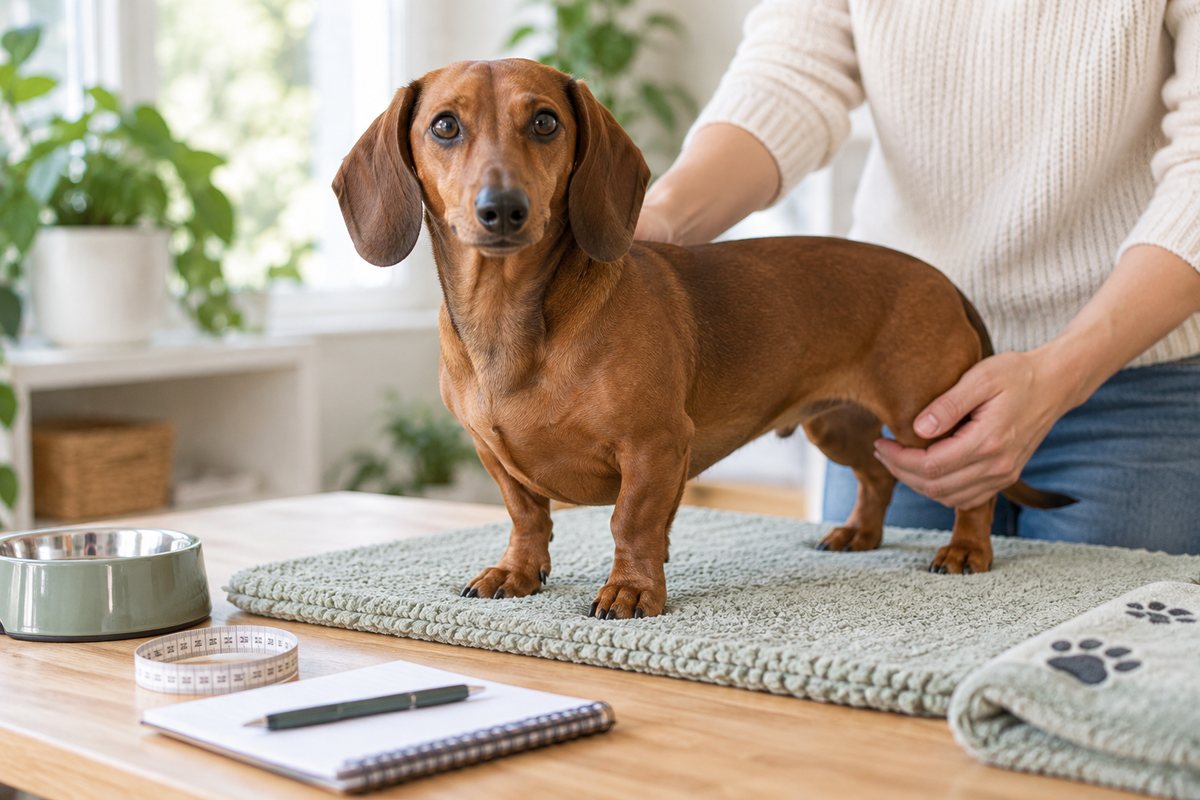
The best dog ramp for Dachshunds is long enough for a gentle slope, stable under your dog’s weight, wide enough for a straight path, and covered with a non-slip surface. For beds, couches, and cars, a good ramp helps reduce jumping and awkward landings. That matters because Dachshunds are long-backed dogs, and many owners use ramps as part of a back-aware home routine.
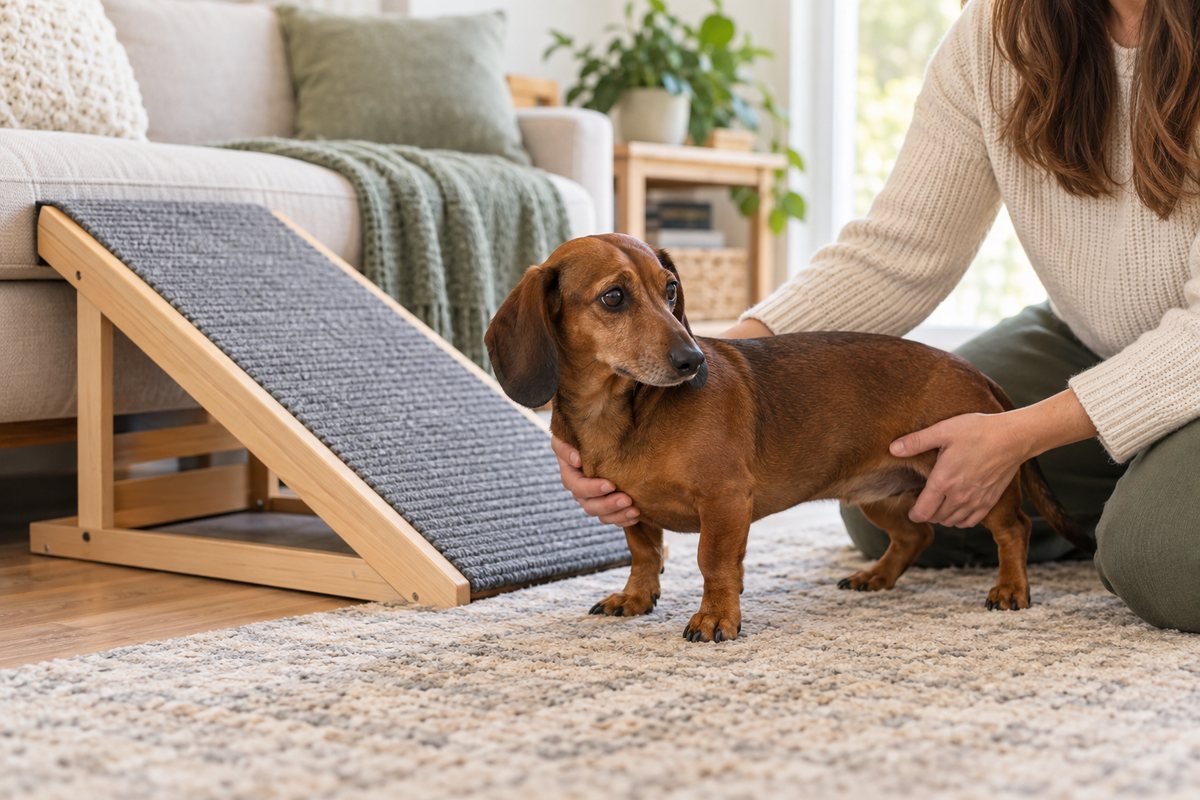
This guide explains what to look for in a Dachshund ramp, how to choose between bed, couch, and car ramps, how to train your dog to use it, and what ramp features to avoid. If your Dachshund has current back pain, weakness, wobbliness, yelping, or sudden reluctance to move, call your veterinarian before starting ramp training.
Table of Contents
Best dog ramp for Dachshunds: quick answer
Choose the longest ramp you can reasonably fit, with a stable frame, grippy surface, side edges or rails, and a weight rating above your dog’s weight. For high beds or vehicles, prioritize length and stability over compact storage. For low couches, a shorter ramp may work if the slope is still gentle.
Cornell’s IVDD guidance recommends minimizing jumping and stairs for dogs prone to disc problems. A ramp does not prevent every back issue, but it can reduce repeated furniture and car jumps when used consistently.
Best ramp features
| Feature | Why it matters | Dachshund tip |
|---|---|---|
| Gentle slope | Reduces effort and fear | Longer ramp for taller furniture |
| Non-slip surface | Prevents sliding | Traction should work for short legs |
| Stable frame | Builds trust | No wobble, bounce, or shifting |
| Enough width | Prevents twisting | Dog can walk straight |
| Side edges or rails | Helps nervous dogs stay centered | Useful for seniors |
| Easy placement | Encourages daily use | Must sit where your dog would jump |
If you are still deciding between a ramp and pet stairs, read dog ramp vs stairs for Dachshunds. This article assumes you already want a ramp and need to choose the right one.
Best ramp types by use
| Ramp type | Best for | Watch-out |
|---|---|---|
| Bed ramp | Nightly bedroom access | Needs length if bed is high |
| Couch ramp | Living room furniture | Must block the usual jump path |
| Car ramp | Vehicle entry | Needs grip and stable contact points |
| Foldable ramp | Storage and travel | Check wobble and hinge stability |
| Adjustable ramp | Multiple furniture heights | Locking mechanism must be secure |
| Foam ramp | Low furniture and small dogs | May be too soft or steep for some dogs |
For miniature Dachshunds, weight rating is rarely the issue. Stability, width, and slope matter more. For standard Dachshunds, still choose a ramp rated comfortably above your dog’s weight.
Slope and length
The higher the destination, the longer the ramp should be. A short ramp to a tall bed creates a steep climb that many Dachshunds avoid. If the ramp looks steep to you, it probably feels steeper to a dog with short legs.
- Use longer ramps for beds and cars.
- Use lower furniture or block access if you cannot fit a safe ramp.
- Add traction if the surface is slick.
- Place rugs at the bottom so your dog does not slide.
- Keep the ramp in the same place until the habit is strong.
Training your Dachshund
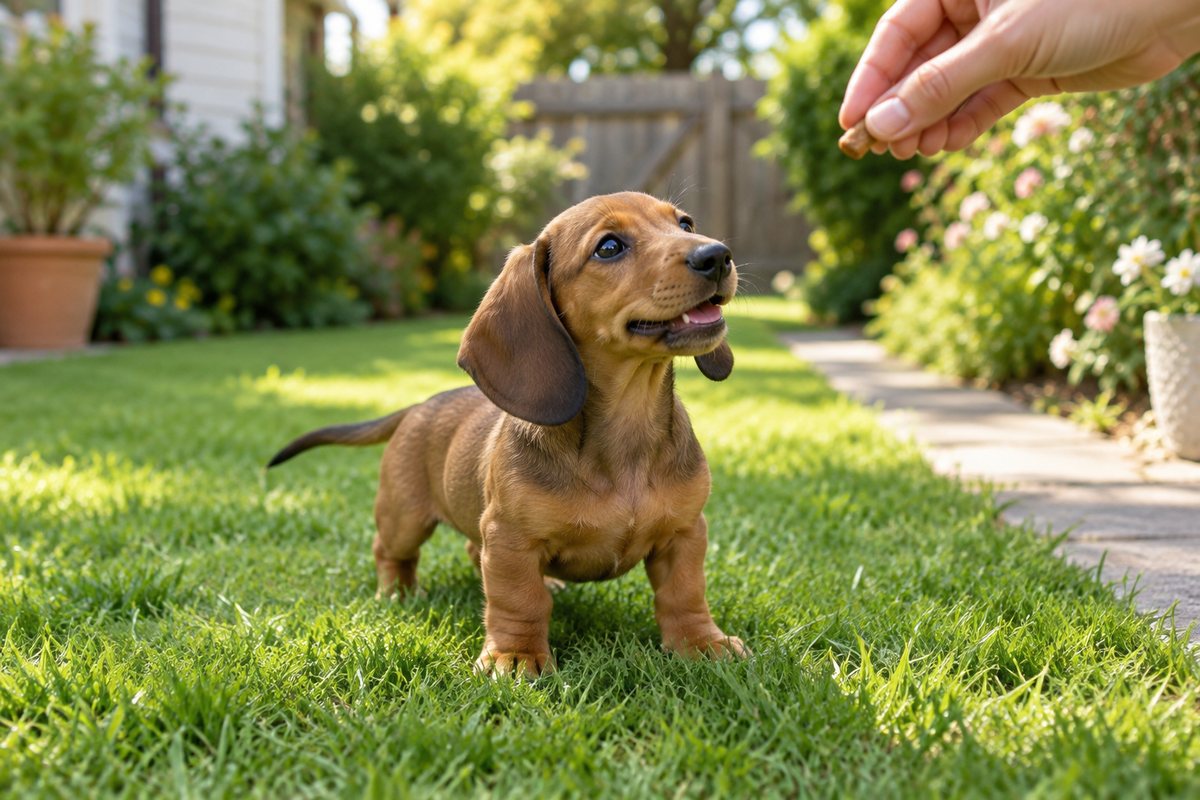
A good ramp still needs training. Start flat on the floor, reward your Dachshund for walking across it, then slowly add height. Do not drag your dog up the ramp by the harness or collar. That can make the ramp scary.
- Let your dog sniff the ramp.
- Reward one paw on the ramp.
- Practice walking across it flat.
- Raise it to a low height.
- Use a treat trail to guide slow steps.
- Block the jump path so the ramp becomes the normal route.
- Practice daily until your dog uses it without prompting.
Use tiny rewards and count calories. For reward ideas, see best treats for Dachshund training.
Mistakes to avoid
- Buying a ramp that is too short for the height.
- Choosing a slick surface because it looks easy to clean.
- Putting the ramp next to the jump path instead of replacing it.
- Using a wobbly foldable ramp without checking stability.
- Training only once and expecting permanent use.
- Allowing jumping sometimes and ramp use other times.
- Ignoring back pain signs because the ramp is available.
If your Dachshund is reluctant to use the ramp because of pain, fear, or weakness, do not force the issue. Review Dachshund back pain signs and call your veterinarian if symptoms fit.
FAQ
What kind of ramp is best for Dachshunds?
A long, stable, non-slip ramp with enough width and gentle slope is usually best. The right model depends on whether you need it for a bed, couch, or car.
Are foam ramps good for Dachshunds?
Foam ramps can work for low furniture and small dogs, but they must be stable, not too steep, and firm enough that your dog does not sink or wobble.
Why won’t my Dachshund use the ramp?
The ramp may be too steep, slippery, narrow, unstable, or unfamiliar. Start flat, reward small steps, and block the old jumping path.
Ramp buying scenarios
The best ramp depends on the exact place your Dachshund needs access. A bed ramp is not always a good car ramp. A couch ramp may not be long enough for a tall mattress. Before buying, measure the height, available floor space, and where the dog normally jumps.
| Scenario | Best ramp priority | Common mistake |
|---|---|---|
| High bed | Length and side rails | Buying too short |
| Low couch | Stable everyday placement | Moving it out of the way |
| SUV or car | Portable stability and grip | Ignoring contact point |
| Senior dog | Gentle slope and width | Choosing narrow travel ramp |
| Small room | Furniture rearrangement | Choosing steep compact ramp |
Ramp maintenance
- Check traction surface for wear.
- Tighten hinges or screws if the ramp folds.
- Clean fabric or carpet so it does not become slick.
- Confirm the ramp has not shifted away from furniture.
- Replace ramps that wobble, crack, or flex.
How to judge a Dachshund ramp before buying
The best dog ramp for Dachshunds is not always the most expensive one. It is the ramp your dog can use slowly and confidently every day. Length, traction, stability, and placement matter more than a cute product photo.
Before buying, measure the furniture or vehicle height and the floor space available. A compact ramp may store neatly but become too steep for a long-backed, short-legged dog. A longer ramp is often easier for cautious dogs to trust.
| Situation | What it suggests | Best next step |
|---|---|---|
| High bed | Steep slope risk | Choose longer ramp with rails |
| Couch | Daily habit formation | Place where the dog already approaches |
| Car | Portability and grip | Check contact points and folding stability |
| Senior dog | Confidence and width | Use gentle slope and non-slip surface |
| Small room | Space conflict | Rearrange furniture before buying steep ramp |
best dog ramp for Dachshunds: practical checklist
- Measure height from floor to target surface.
- Confirm the ramp weight rating exceeds your dog.
- Press on the ramp to test wobble.
- Touch the walking surface for real traction.
- Check whether side edges help your dog stay centered.
- Plan how you will block the old jumping path.
When to change course
If your Dachshund avoids a new ramp, do not assume the purchase failed. Lower the height, add traction, reward slow steps, and make the old jump path unavailable while the habit forms.
best dog ramp for Dachshunds: owner scenarios and fixes
The final step for best dog ramp for Dachshunds is matching the advice to the exact situation in front of you. Dachshunds are small, persistent, routine-sensitive dogs, so a plan that looks correct on paper can fail if the room setup, timing, gear, reward value, or health context is wrong. Before changing everything, choose the one pattern that happens most often and work there first.
This also helps prevent mixed signals. If you sometimes reward the unwanted pattern, sometimes interrupt it, and sometimes ignore it, your Dachshund may keep trying the behavior because the rules are unclear. A simple plan that everyone in the home follows for one week is usually more useful than a complicated plan that changes every day.
| Owner situation | How to handle it |
|---|---|
| When the main issue is high bed | Start with the practical fix: choose longer ramp with rails. Give it several calm repetitions before adding a second change. |
| When the pattern looks like couch | Assume the setup is slightly wrong for your Dachshund and adjust the environment before expecting better behavior. |
| When you see car | Slow the plan down. Dachshunds often improve faster when the next step is easier, clearer, and more predictable. |
| When senior dog keeps returning | Look for a trigger that happens before the problem. Changing that trigger usually works better than reacting afterward. |
| When small room is involved | Treat it as a sign to re-check fit, comfort, schedule, or health rather than assuming your dog is ignoring you. |
How to make the plan easier for your Dachshund
If progress stalls, make the next repetition easier instead of louder or longer. For best dog ramp for Dachshunds, easier can mean more distance, a shorter session, a lower height, a quieter room, softer handling, smaller rewards, or fewer choices. The easier version should let your dog succeed while still practicing the skill you want.
Watch recovery time. A Dachshund who can return to sniffing, eating, resting, or walking normally is usually in a workable zone. A dog who stays frantic, stiff, avoidant, or obsessed with the trigger is telling you the setup is too difficult. That is useful information, not a training failure.
7-day improvement plan
- Day 1: write down when the best dog ramp for Dachshunds problem happens, where it happens, and what happened right before it.
- Day 2: remove the easiest trigger or setup mistake connected to high bed.
- Day 3: practice the first checklist step: measure height from floor to target surface..
- Day 4: repeat the same plan at an easier level instead of adding a new rule.
- Day 5: add one support step from the checklist: confirm the ramp weight rating exceeds your dog..
- Day 6: ask whether your dog recovers faster than earlier in the week.
- Day 7: keep what improved, drop what confused your dog, and decide whether health or professional support is needed.
This seven-day plan will not solve every case of best dog ramp for Dachshunds, but it gives you cleaner information. If the pattern improves, keep building gradually. If it stays the same or worsens, the cause may be discomfort, fear, poor fit, too much freedom, or a trigger that needs a different article-specific plan.
Quality check before you rely on the advice
The safest version of the advice should be specific, observable, and easy to repeat. You should know what you are changing, what success looks like, and when to stop. For Dachshunds, stop signs include pain, limping, yelping, frantic barking, snapping, refusal to eat rewards, vomiting, repeated accidents, or sudden behavior changes.
When in doubt, choose the lower-risk version: more distance, better traction, shorter sessions, calmer rewards, clearer routines, and earlier veterinary input. That keeps the best dog ramp for Dachshunds plan helpful without pushing a small long-backed dog through stress, pain, or confusion.
Sources
- Cornell University College of Veterinary Medicine: Intervertebral Disc Disease
- VCA: Chondrodystrophy in Dogs
- AKC: Intervertebral Disc Disease in Dogs
- AKC: Dog Training Basics
- VCA: Cervical Intervertebral Disc Disease in Dogs