Category: Gear

Harnesses, ramps, stairs, beds, toys, crates, and product guides for Dachshund bodies and homes.

  • Best Leash for Dachshunds: Choose for Your Actual Route

    Best Leash for Dachshunds: Choose for Your Actual Route

    Direct answer

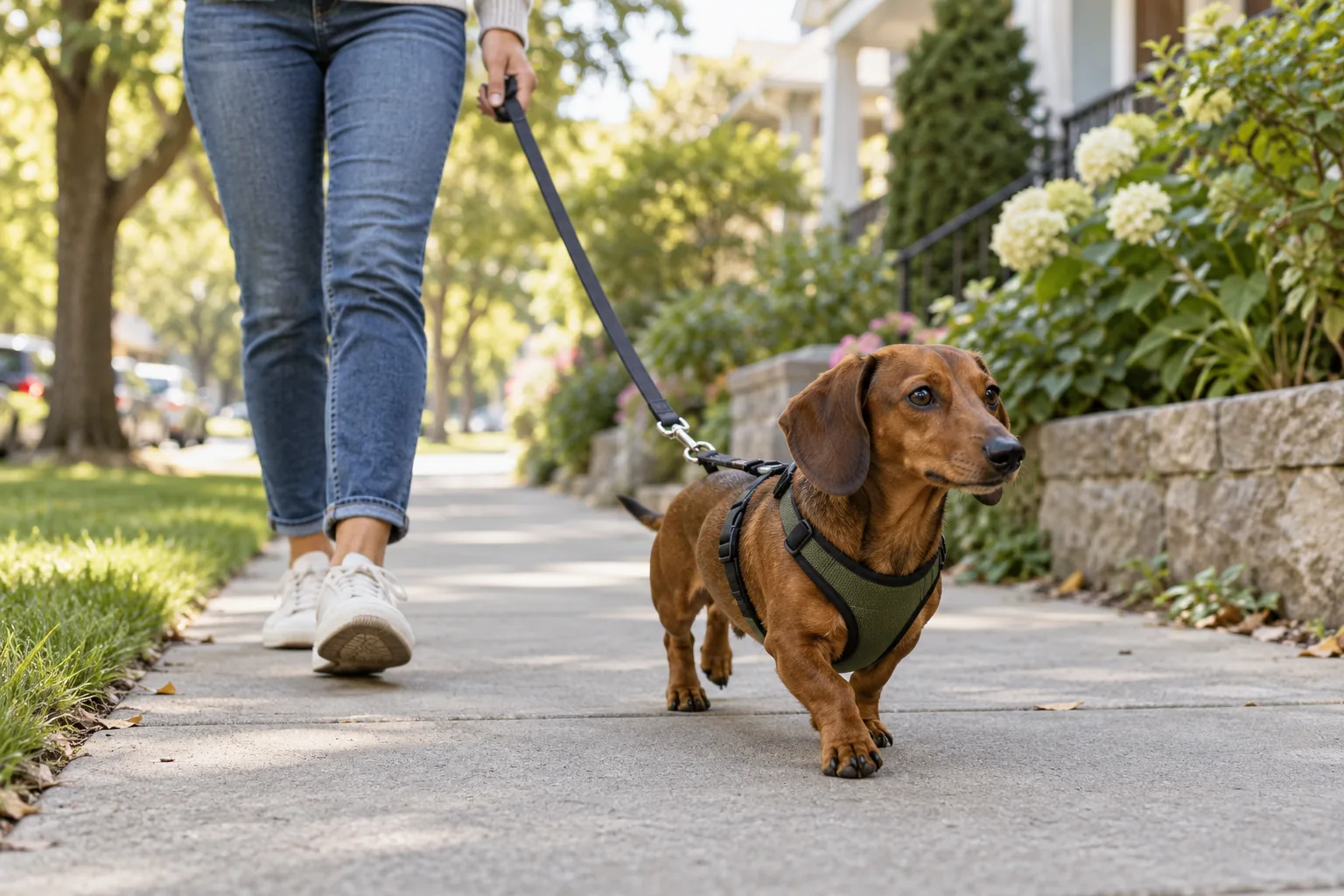
    The best leash for Dachshunds on most everyday walks is a fixed-length leash that you can hold securely and that has a clip proportionate to your Dachshund’s harness. Match its length to the setting: city sidewalks and busy paths require close, predictable control; a quiet open space may allow a longer line if the handler can manage it safely. A retractable leash is not an all-purpose replacement. AKC’s retractable-leash guidance recommends a standard leash around traffic, crowds, and other dogs, and explains why a long extending line can be difficult to control quickly.

    This is a buyer-criteria page, not a loose-leash training lesson. A leash will not teach a dog not to pull. The existing leash-training guide covers technique; the collar and harness guides cover those separate fit decisions. If product links are later added, verify the exact model and claims and place a clear affiliate disclosure nearby.

    Best leash for Dachshunds: pick the route before the material

    Imagine the place where the leash will be used most often. On a sidewalk with traffic, parked cars, other dogs, and people who do not want a greeting, a compact fixed length makes distance easier to manage. On a broad quiet field, a longer fixed line can permit sniffing while the dog remains attached. Check local leash laws first. The longest possible leash is not automatically the kindest choice if it exposes the dog to hazards you cannot reach in time.

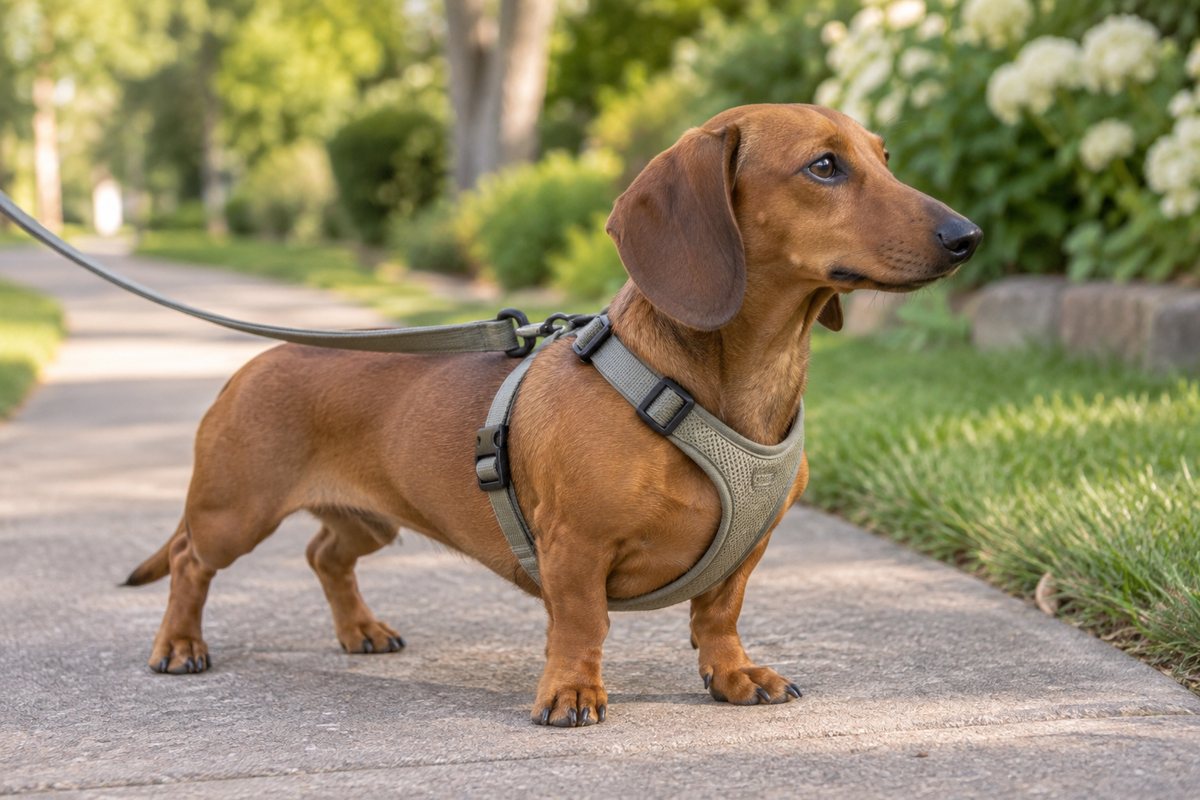
    For a Dachshund, observe where the clip hangs when the dog stands. A heavy metal clip can knock against a small chest or twist a light harness. Bring the actual harness to a store if possible; test whether the clip closes securely and swivels smoothly without opening under ordinary movement. Do not attach a heavy line to a delicate ID collar simply because the colors match.

    The handler matters too. A leash you cannot grip when wet, that tangles around your legs, or that cuts into your palm is a poor choice even if its advertised breaking strength is high. Try the handle with gloves if you use them. Confirm that any secondary traffic handle is positioned where you can use it without leaning awkwardly over a small dog.

    Fixed length, long line, and retractable are different tools
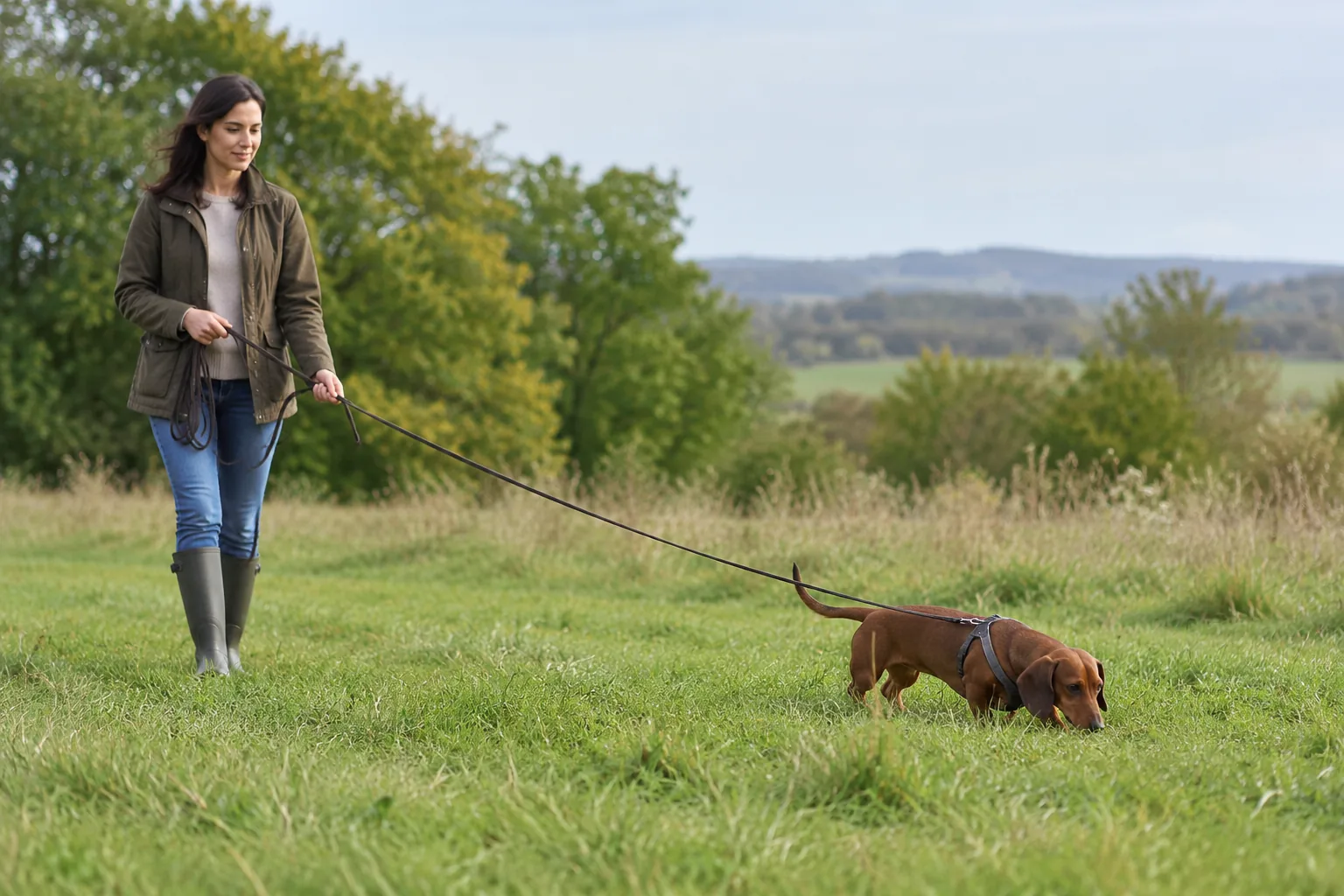
    Best leash for Dachshunds: a longer fixed training line in a quiet field

    Type Best considered for Main caution
    Standard fixed leash Everyday street and neighborhood walking Too short may keep constant tension; too long may drag
    Longer fixed line Open, low-traffic sniffing space where permitted Needs careful handling to avoid tangles and sudden stops
    Retractable line Limited suitable open contexts with trained handler Harder to regain control near traffic; cord and dropped-handle hazards

    AKC notes that a retractable handle’s lock does not reel in a pulling dog. A dog that runs to the end of the line can experience a sudden jolt, and thin cord can injure people or animals if it wraps or is grabbed while moving. A dropped handle may chase and frighten the dog. Those are reasons to choose a standard leash in many ordinary situations, not proof that all retractable products are always unsafe.

    A long fixed line can also cause tangles if allowed to trail through feet or brush. Learn to gather and release it in a controlled way and avoid wrapping it around your hand. In small spaces, shorten usable length before another dog approaches. If you have not practiced, start with a manageable standard leash.

    Inspect the hardware at the dog end
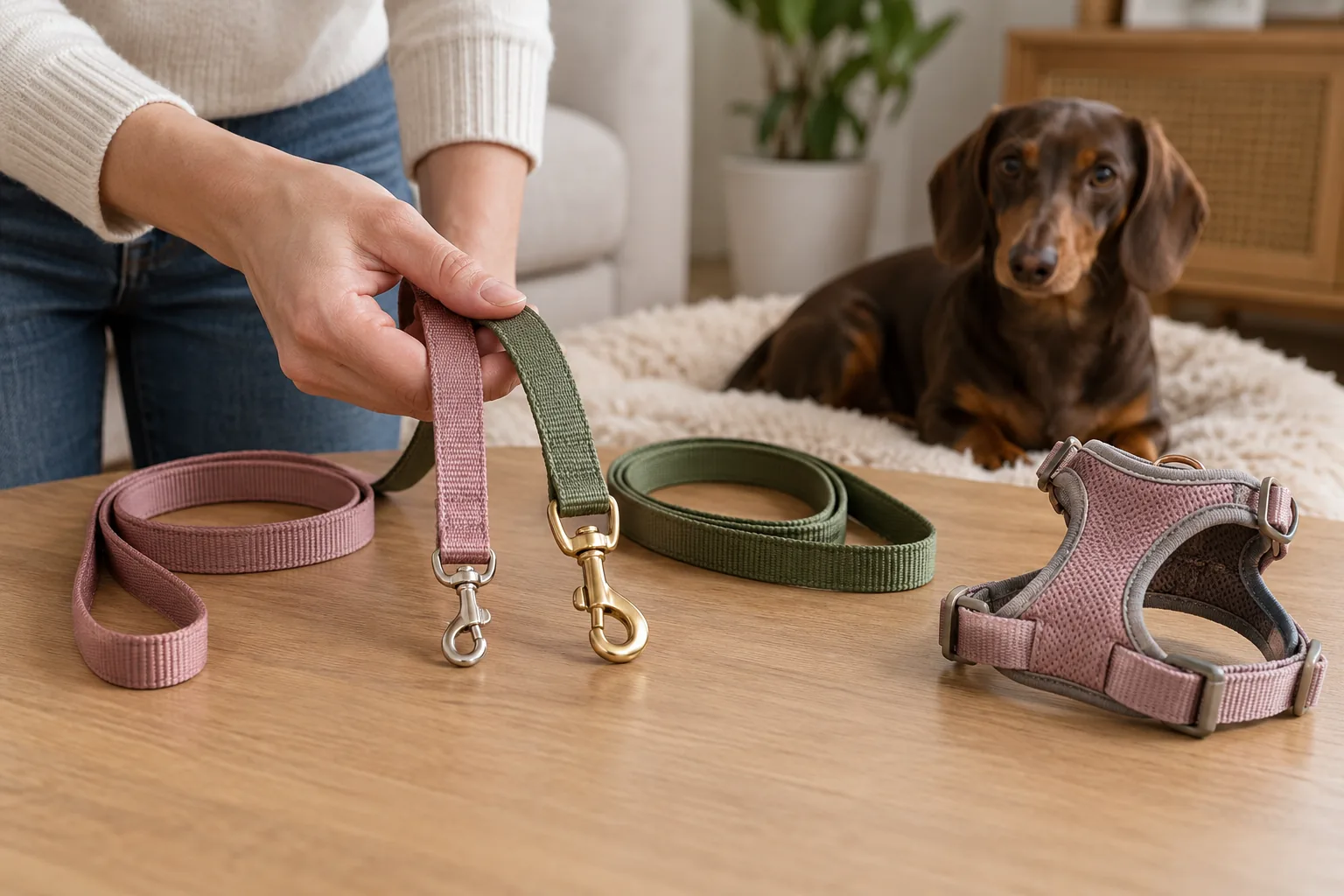
    Two fixed leashes with different clips beside a dog harness.

    The clip needs to be strong enough for the dog’s movements but not disproportionately heavy. Check the spring or locking action, any sharp edge, and whether the connector can rotate freely on the harness ring. A clip that can catch fur or fail to close is not acceptable. Look at the stitching where the clip joins the webbing or leather; this is a common wear point.

    Test the setup with the dog walking and turning. Does the leash drag under its legs? Does the clip swing into its chest? Does the line twist constantly? These fit issues are more informative than a product title claiming “for small breeds.” Adjust the combination rather than buying more of the same style.

    Replace a leash with frayed material, damaged stitching, a bent clip, or a handle that no longer closes. Do not rely on a repair knot for ordinary walks near traffic. A spare leash in the car or by the door can prevent a damaged one from being used “just this once.”

    Material, visibility, and maintenance

    Nylon webbing, leather, and coated webbing have different grip and cleaning characteristics. Choose the material you can hold and maintain. In rain, some smooth surfaces become slippery; in dirt, some fabrics take longer to dry. Wash and dry according to the maker’s guidance and inspect after beach or muddy trips. Reflective detail can improve visibility under light, but it does not replace a lit, safe walking route.

    Avoid buying only by maximum advertised strength. The Dachshund still needs a leash that is light and flexible enough to move naturally. The owner needs a dependable grip and compatible clip. If the dog chews leashes, manage the situation and teach an alternative; no label can promise chew-proof safety during unsupervised use.

    A five-point in-store or at-home test

    1. Clip it to the dog’s actual harness and check size, swivel, and closure.
    2. Walk ten steps, turn, and stop; watch for tangles or repeated clip impact.
    3. Grip the handle with dry and damp hands or gloves as relevant.
    4. Practice shortening the usable length before a doorway or crossing.
    5. Inspect stitching, line condition, and visibility in your normal light.

    Do this in a safe enclosed area before relying on new equipment in traffic. If the dog pulls, use the test to check comfort and control, then work on loose-leash skills separately. AKC’s leash guidance links equipment choice with training readiness.

    Three use-case decisions

    Urban walker: choose a manageable fixed leash with a comfortable handle and light compatible clip. Keep the dog close at crossings and when people pass, without holding the line taut the whole walk.

    Quiet-park explorer: a longer fixed line can provide sniffing room if rules permit and the handler can prevent tangles. Switch to a shorter usable length near other people, wildlife, or obstacles.

    Puppy learning leash manners: start with simple predictable equipment and short positive sessions. A retractable line can reward pulling as more line unspools, so it is not the best default teaching tool according to AKC.

    A practical example

    An owner buys a long retractable leash because it promises freedom. Near a crosswalk, the Dachshund reaches a curb before the handle lock stops the line; when the owner drops the bulky handle, it startles the dog. They switch to a fixed leash for city walks and reserve open-space sniffing for a separate longer line. They also practice a calm return cue. The improvement comes from matching tool and environment, not from declaring one leash universally best.

    Frequently asked questions

    What leash length is best for a Dachshund?

    There is no single perfect length. Choose enough for a comfortable walk but short enough to manage the most common route. A standard leash is a sensible starting point around streets and crowds; a longer line is a separate open-space tool.

    Are retractable leashes bad?

    They have limited appropriate uses but are poor choices near traffic, crowded paths, and unfamiliar dogs. AKC explains both useful contexts and control hazards.

    Should I attach the leash to a collar or harness?

    Consider pulling, neck comfort, and secure fit. A properly fitted harness may reduce neck pressure for a puller; a collar can carry ID. See the separate harness and collar guides for fitting.

    Does a leash stop pulling?

    No. It helps manage distance and safety. Loose-leash walking is trained through consistent practice, not purchased as a material feature.
    Sources

  • Best Life Jacket for Dachshunds: Fit, Flotation, and a Safe Trial

    Best Life Jacket for Dachshunds: Fit, Flotation, and a Safe Trial

    Direct answer

    The best life jacket for Dachshunds is the one that stays in place on your individual Dachshund, supports a comfortable horizontal position, permits paddling, and gives a handler a reliable way to assist the dog. A weight-range match alone is not enough for a long-backed dog. Measure the neck, chest, and body length; examine the straps and handle; then test the fit on land and in shallow calm water under close supervision. The AKC life-jacket guide recommends checking movement, strap fit, visibility, and a shallow-water float trial. This article explains how to buy and test the equipment. Swimming instruction and water supervision belong in the separate swimming guide.

    Best life jacket for Dachshunds: start with the intended use

    A dog walking beside a calm shoreline, riding in a boat, or learning to paddle faces different exposure. Choose the water setting before shopping. Open or deep water deserves a more conservative choice than a supervised shallow-water introduction. Even a strong swimmer can tire or become disoriented, so a jacket is a safety layer rather than permission to leave a dog unattended. The AKC swimming introduction advises using an appropriate flotation device and allowing the dog to approach water voluntarily.

    Consider how you will get the dog out of the water. A reachable exit, a person close enough to help, and a plan to stop when the dog tires matter as much as the jacket. Never use a product photo as proof that a Dachshund can be left alone near a pool or on a boat.

    Measure the dog, then compare the garment

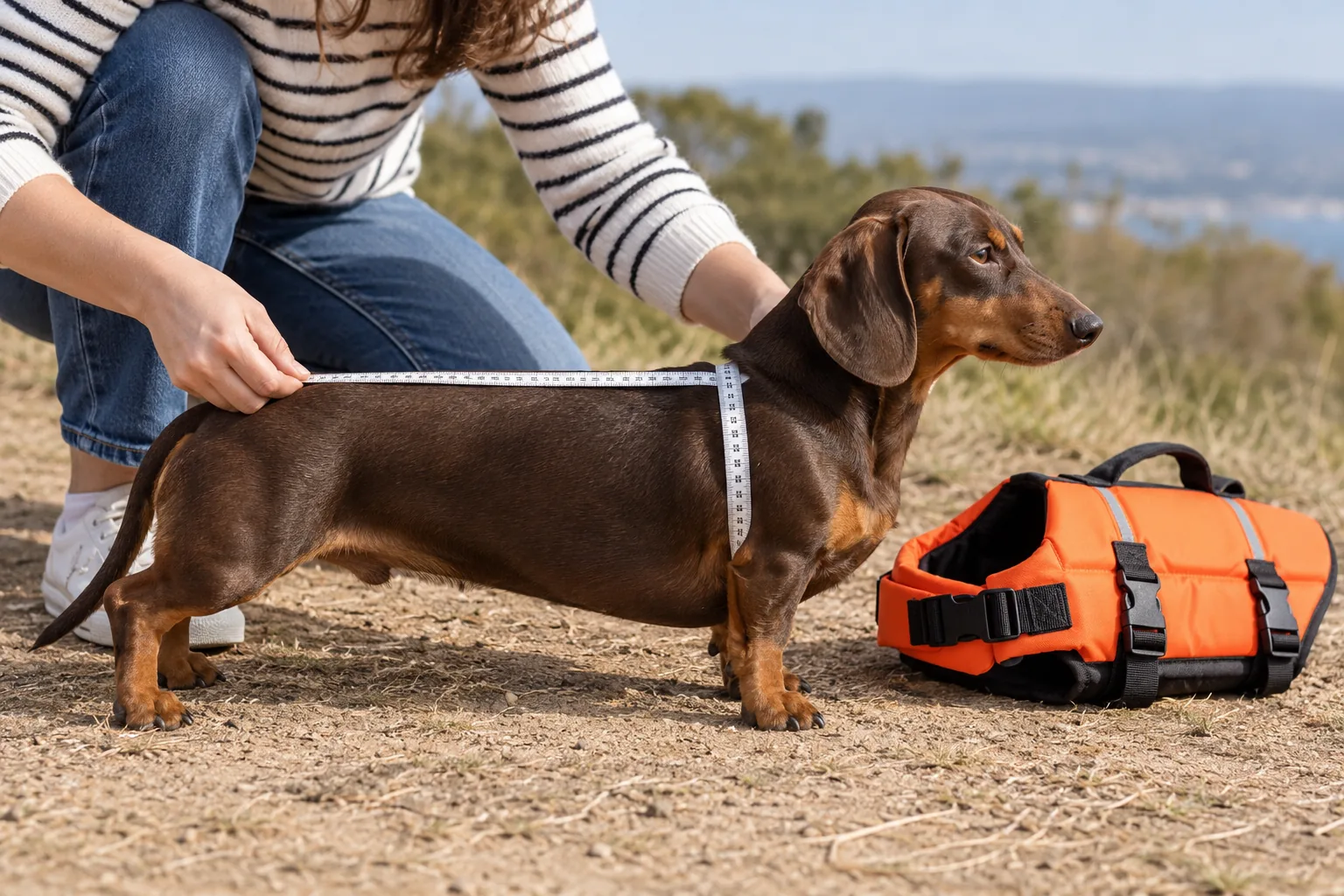
    Best life jacket for Dachshunds: measuring body length for fit

    Use a flexible tape on a standing dog. Record chest girth at the rib cage, neck circumference where the jacket closes, body length from the shoulder area toward the tail base, and current weight. Manufacturers define measurement points differently, so compare your numbers to the exact model’s chart and its return policy. Dachshunds may fit a weight bracket yet find the vest too short or too broad through the chest. The AKC fit advice specifically calls for body measurements and a snug fit without restricting movement.

    With the vest fastened on land, check that straps do not dig into the armpits, the front does not press into the throat, and the rear does not ride forward. The dog should be able to sit and lie down. A finger test is a starting point, not a substitute for watching the vest while the dog walks and turns. Recheck fit after the jacket is wet.

    Compare flotation and rescue features

    Look for buoyancy distributed to support the torso rather than a bulky panel that rolls the dog or tips the head awkwardly. Inspect the handle stitching and how the jacket supports the body when the handler lifts it briefly on land. A handle is for assistance, not a license to dangle the dog for long periods. Bright color and reflective trim make a dog easier to locate. A leash ring may help maintain control at the water edge, but a leash must not become an entanglement hazard. These are selection criteria identified in the AKC jacket guide, not an independent certification of any brand.

    Check seams, buckles, straps, and fabric after use. A damaged buckle or loose strap can turn a good fit into a poor one. Rinse according to the product instructions and dry fully before storage. For a puppy or a dog whose weight changes, repeat measurements rather than assuming the old jacket still fits.

    A staged try-on that respects the dog

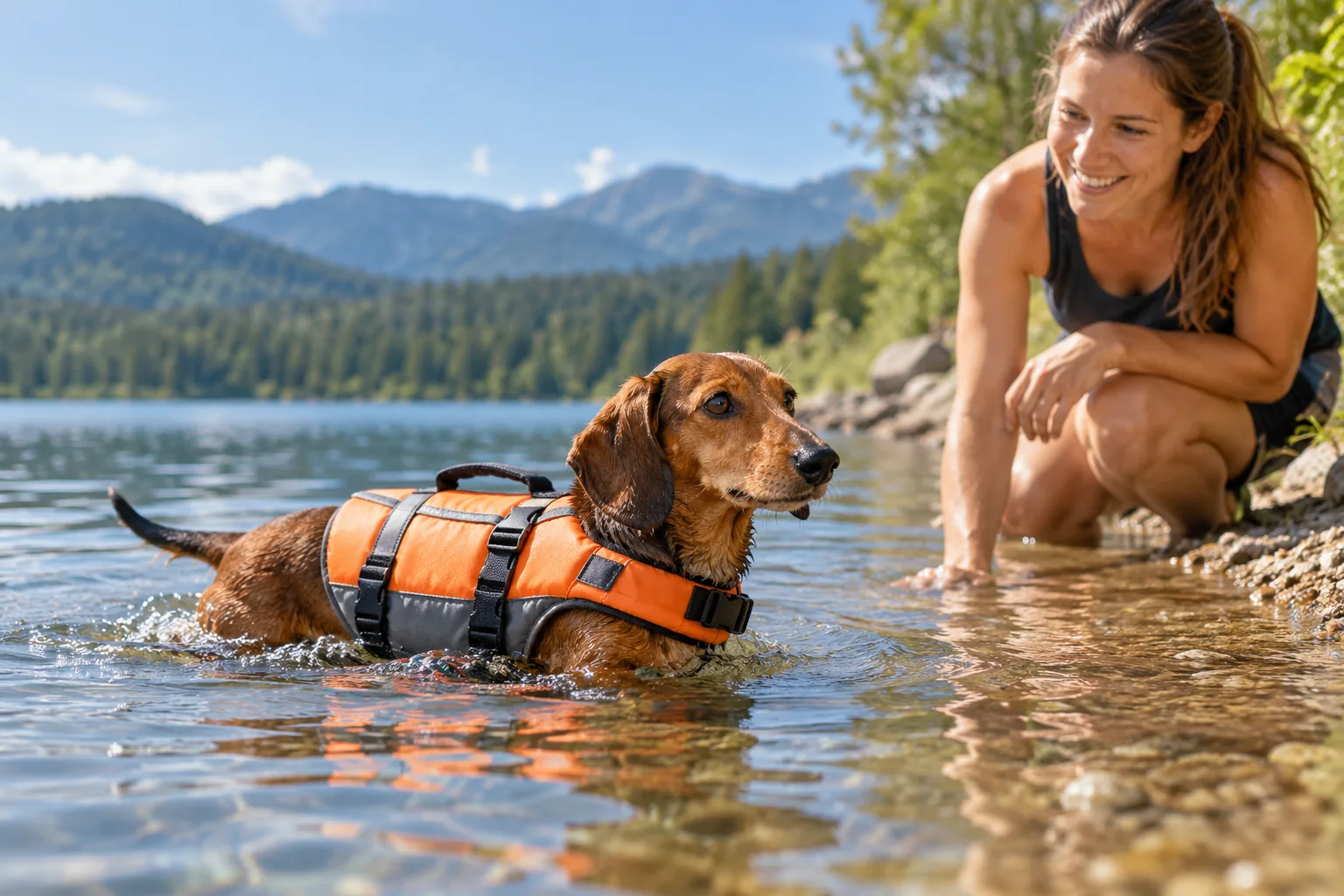
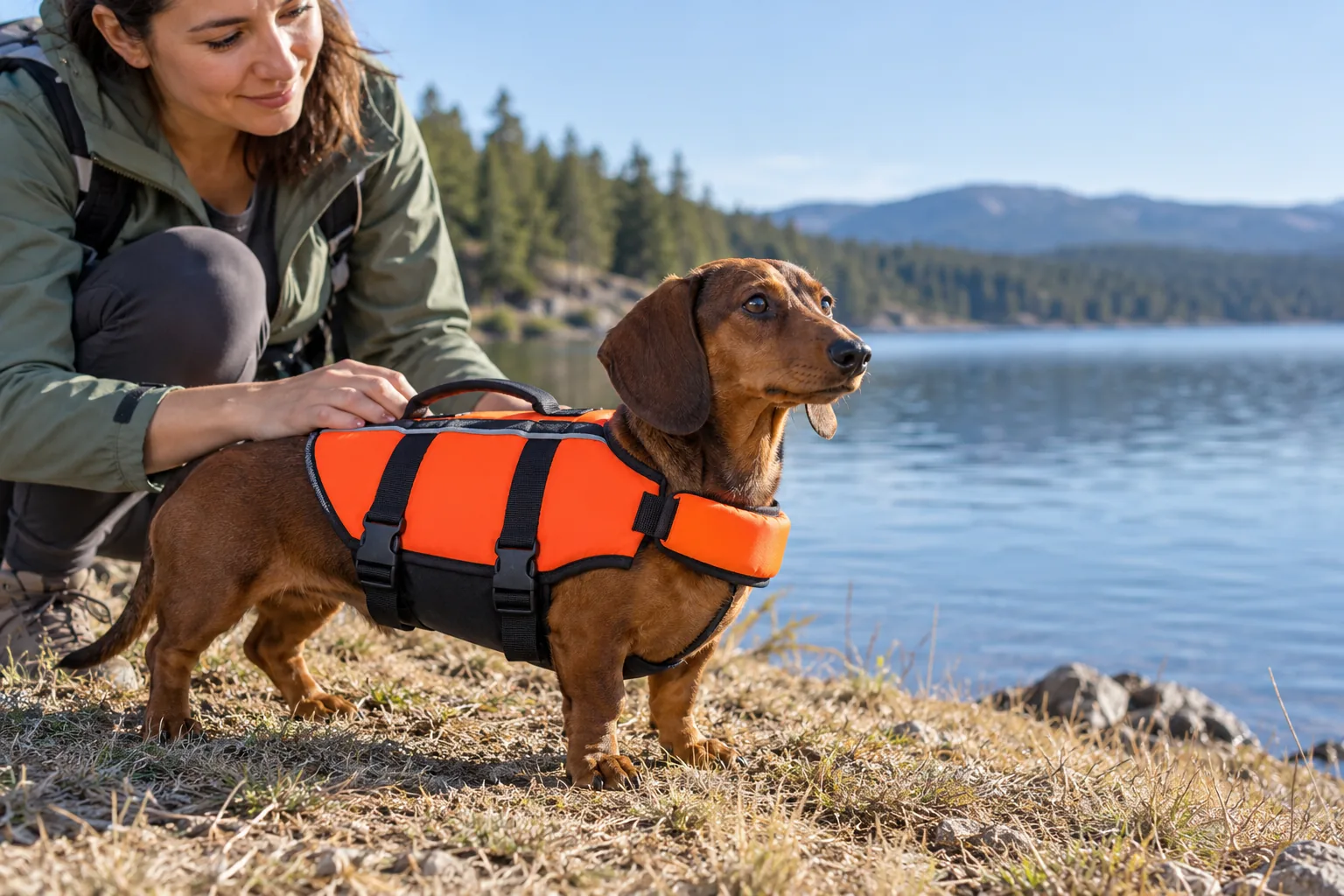
    Dachshund in a life jacket at a shallow lake edge with owner close by.

    First, let the dog sniff the jacket on dry ground and reward calm contact. Next, fasten it for a short indoor session, then take a brief walk and watch gait, rubbing, and any attempt to escape the garment. If the dog freezes or struggles, back up a step. Only after a good land fit should you try shallow calm water with a person next to the dog and an easy exit. Observe whether the torso floats level and the legs paddle freely. The AKC swimming lesson cautions against pulling a dog into water.

    Stop if the jacket shifts over the head, twists, restricts breathing or stroke, or leaves the dog struggling. A more expensive model is not a better model if it fails this individual fit test.

    Decision checklist before checkout

    1. Does the exact size chart cover neck, chest, length, and weight rather than weight alone?
    2. Is there room for natural shoulder and leg movement without a loose neck opening?
    3. Can the handler reach a sturdy, well-attached assistance handle?
    4. Is the dog visible against the intended water background?
    5. Can you return the jacket after an indoor fit check if the geometry is wrong?
    6. Do you have a safe, supervised shallow-water setting for the final test?

    Do not treat marketing phrases such as "best" or "rescue grade" as demonstrated performance. We have not independently tested or ranked current products. Verify materials, sizing, return terms, and any claimed standards against the exact model before adding a product recommendation or affiliate link.

    Three fit failures to look for during a trial

    The first failure is a loose neckline. When the dog steps forward, the body of the jacket may slide toward the head. Tightening every strap until the dog cannot move is not the solution; try a different cut. The second is a short flotation panel that leaves much of the long torso unsupported. Compare the garment’s usable length with the dog’s back and watch the actual water position. The third is rubbing at the armpits. Wet fabric and repetitive paddling may create friction that a two-minute dry fitting will not reveal. Inspect the skin after the supervised trial and stop if there is redness or reluctance to move.

    For a nervous dog, judge behavior as well as geometry. Freezing, repeated attempts to back out of the jacket, or refusal to approach water are reasons to return to land-based acclimation. They are not proof that the dog merely needs to be pushed into the lake. A successful fit test has a calm dog, normal breathing, usable limb movement, a stable jacket, and an immediate safe exit.

    Maintenance and replacement decisions

    After each outing, check buckles, handle stitching, straps, and buoyant panels for wear. Rinse and dry using the manufacturer’s directions. Store the jacket where damp material will not remain trapped. Re-measure after growth, weight change, or a long break from water activity. A damaged or poorly fitting jacket should be replaced rather than improvised with knots or extra straps. The AKC selection guide emphasizes fit and functional features, not a permanent one-size purchase. If a product is later added to this article, record its exact model, size range, inspection date, and any evidence for the safety claims made.

    Frequently asked questions

    Can a Dachshund swim without a life jacket?

    Some Dachshunds paddle, but individual comfort and endurance vary. Water entry, exit, temperature, current, and supervision remain important. This buying guide does not establish swimming ability; see the dedicated swimming-safety article.

    Should the handle support the entire dog’s weight?

    It should be securely attached and useful for brief assistance, but evaluate how the garment distributes the load across the dog’s body. Do not rely on an untested handle to suspend the dog or replace hands-on support.

    Is a vest the same as a life jacket?

    Names vary by seller. Compare actual flotation coverage and fit rather than trusting the label. The AKC guide distinguishes lighter vests from jackets intended for more substantial buoyancy.

  • Best Slow Feeder for Dachshunds: Choose a Bowl the Dog Can Actually Use

    Best Slow Feeder for Dachshunds: Choose a Bowl the Dog Can Actually Use

    Direct answer

    The best slow feeder for Dachshunds makes the usual meal easier to pace without makes the usual meal easier to pace without making it hard to reach, difficult to clean, or stressful. Begin with a simple, shallow pattern and observe a normal portion from start to finish. A more intricate maze is not automatically better. The AKC guide to slowing meals describes slow-feeding bowls as one practical option. A feeder changes presentation, not the prescribed quantity or the reason a dog suddenly eats differently.

    Best slow feeder for Dachshunds: what problem are you solving?

    Some dogs race through meals because the bowl is easy to empty; others may be anxious in a multi-dog household, competing for food, or newly hungrier than usual. A bowl can slow access, but it cannot diagnose the reason. Note when fast eating began, whether it happens with every food, and whether regurgitation, vomiting, weight change, or unusual thirst is present. Discuss new or persistent signs with a veterinarian. The AKC discussion of bloat and eating speed lists rapid eating as one possible risk factor, but buying a feeder does not prevent or treat gastric dilatation-volvulus.

    The product intent here is narrow: compare tools for a dog whose clinician has not identified a medical problem. Portion size and calorie targets belong in the feeding-quantity guides, not in a bowl review.

    Compare the shape, not just the marketing name

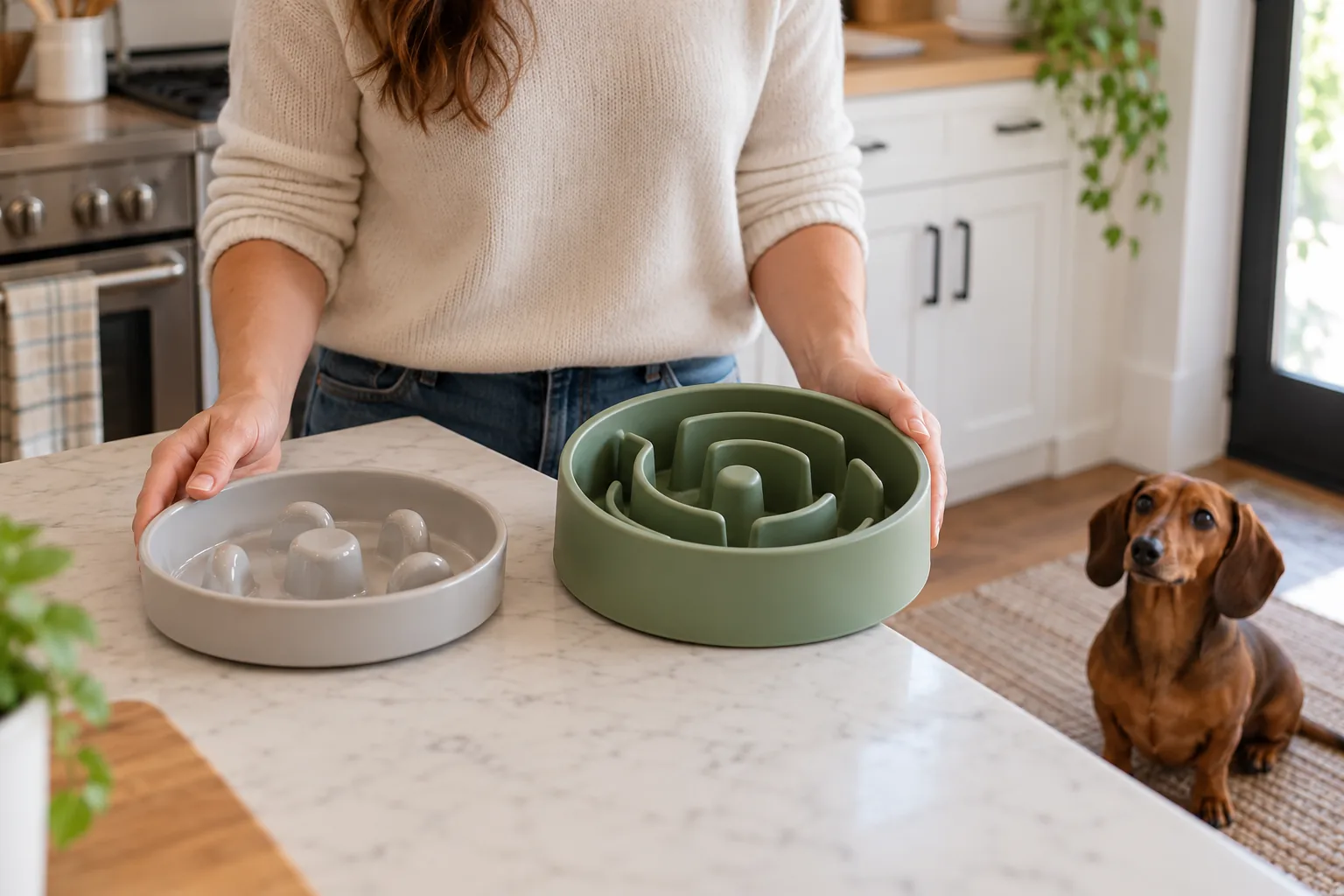
    Best slow feeder for Dachshunds: comparing shallow and deep maze patterns

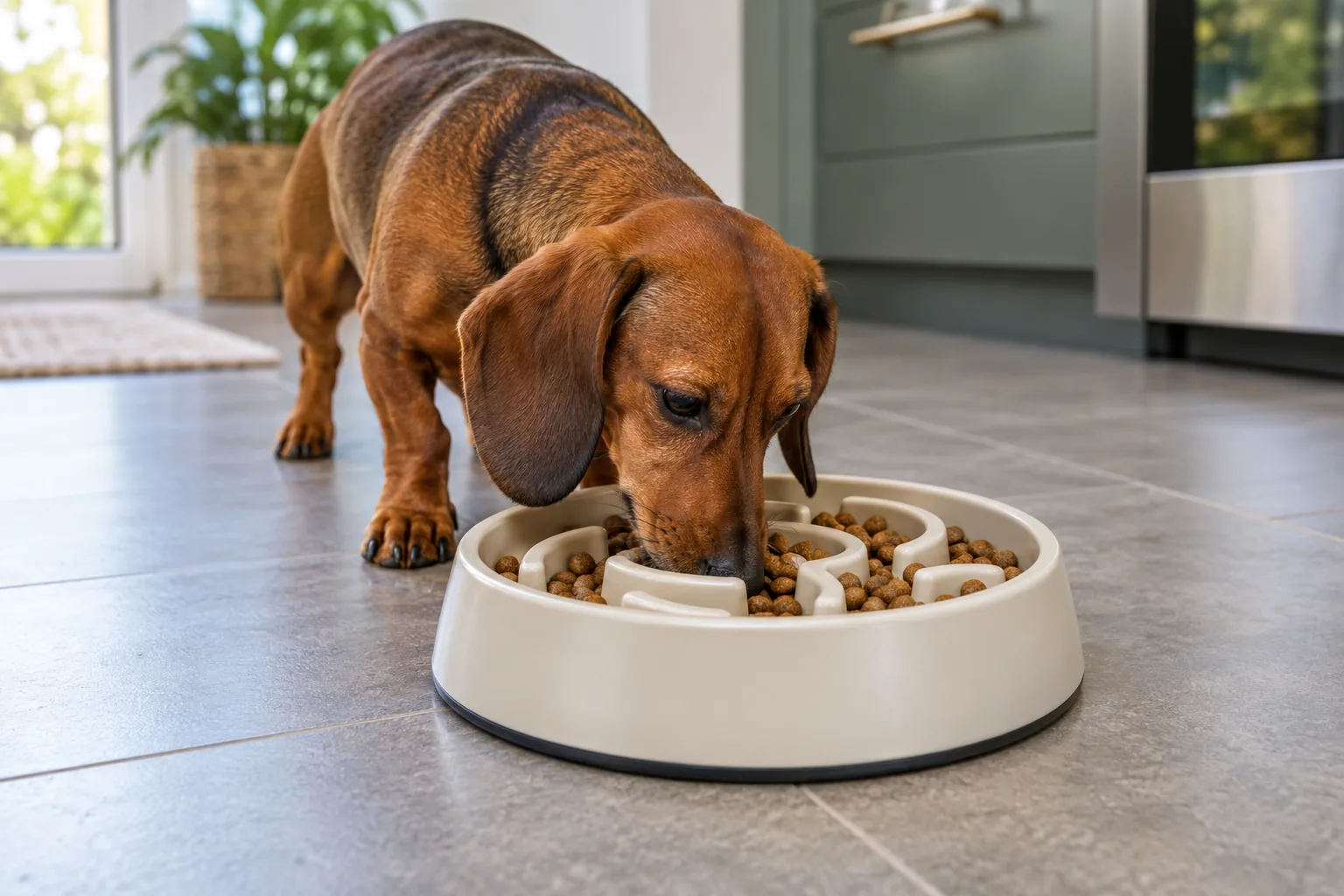
    A low, wide dish with broad channels can let a Dachshund reach food without digging the muzzle into deep pockets. Very tall ridges may scatter kibble, frustrate the dog, or be awkward for wet food. Look at the actual channel width and whether food can lodge where a brush cannot reach. For a dog that already pauses between bites, a slow feeder may be unnecessary.

    Test stability on the floor where meals happen. A sliding bowl can turn a calm meal into a chase across the kitchen. A nonslip base helps only if it stays attached and can be cleaned. The feeder should not tip easily when the dog noses one side. Avoid loose inserts or detachable parts that a determined chewer could remove and swallow.

    Cleaning is part of safety

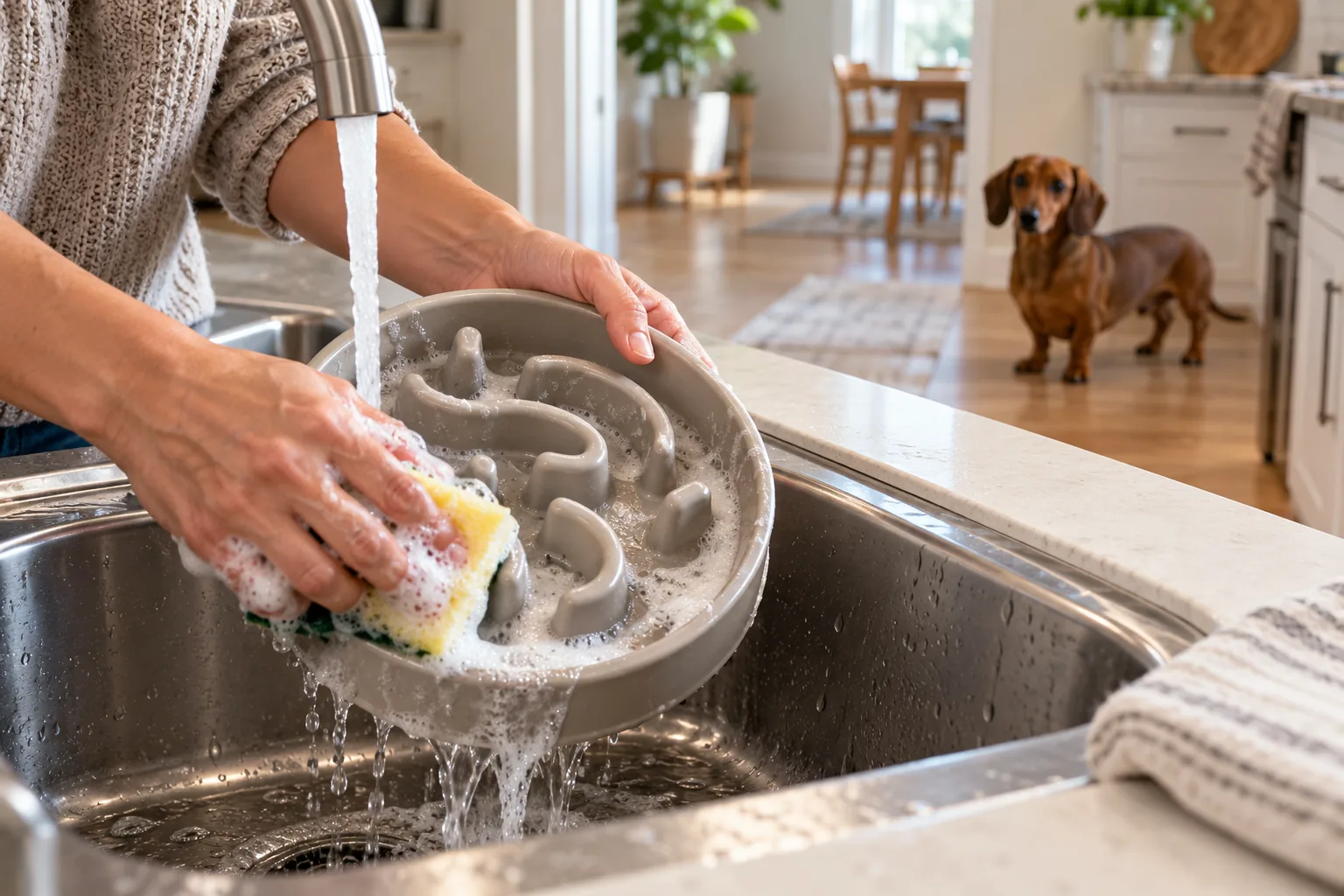
    Owner washing the channels of a slow-feeder bowl under running water.

    Look for smooth surfaces and corners you can reach with a sponge or brush. Check the manufacturer’s material and dishwasher instructions, including whether heat can warp the bowl or its rubber base. Wash after meals, especially with wet food, and dry fully. A bowl that adds ten minutes to every wash may not be the one the household will actually use consistently.

    Do not use a damaged plastic maze with gouges or chew marks. Replace a bowl if cracks, loose parts, or persistent residue make it impossible to clean. Product descriptions often say "food safe" without showing what that means; verify the exact material and seller documentation rather than borrowing claims from a different model.

    Run a controlled trial with the normal meal

    Offer the dog’s usual measured food, not a bonus serving. Watch the first few meals rather than leaving a new feeder unattended. Note whether the dog can reach all pieces, whether it is swallowing comfortably, whether food is scattered, and whether the meal ends in frustration. A phone timer can help compare ordinary mealtime with the feeder, but a target number of minutes is not the goal. Calm, complete intake is more useful than winning a speed contest.

    If the dog paws aggressively, tries to chew the bowl, walks away from inaccessible food, or guards it from another pet, simplify the pattern or choose another strategy. Feeding dogs separately may address competition better than a harder maze. The AKC bloat discussion also emphasizes the feeding environment, not only hardware.

    Alternatives when a bowl is not the right tool

    Smaller planned meals, scattering kibble in a safe supervised area, or a suitable food puzzle may help some dogs slow down. These should still use the same daily ration and suit the dog’s chewing habits and mobility. For a dog with dental pain, arthritis, or another condition that makes feeding awkward, ask the veterinarian before imposing a complex puzzle. A slow feeder is not a treatment for repeated vomiting, retching, bloating, or sudden appetite change. A swollen abdomen with unproductive retching is an emergency, per the AKC bloat overview.

    Buying checklist

    1. Can the dog reach every pocket without twisting its neck or scraping its face?
    2. Does the bowl stay steady on the actual floor?
    3. Can you clean every channel after wet or dry food?
    4. Are all parts secure and appropriate for a dog that chews?
    5. Does it fit the dog’s usual measured portion without encouraging an extra serving?
    6. Can you return it if the dog cannot use it comfortably?

    No current brand ranking is included because models and materials change. Product claims, price, and availability need a fresh check before a recommendation or affiliate link.

    Choose a pattern for the food you actually serve

    Dry kibble can move around broad channels; wet food can smear into narrow grooves and demand more cleaning. A design that works for one may be poor for the other. Try a few pieces in the empty bowl before committing a full meal. If the dog has dental discomfort or reduced mobility, a shallow, easy-to-reach pattern deserves priority over a dramatic maze. Measure the usual portion first, because visual bowl volume can encourage accidental extra feeding. For households with several dogs, separate feeding areas may solve competition better than a more difficult bowl.

    Keep the first trial simple: same food, same portion, same location, and only the bowl changes. If several factors change at once, it becomes hard to tell whether the dog dislikes the feeder, the new food, or the environment. A calm dog that finishes the full ration and leaves the bowl intact is a better outcome than a fixed stopwatch target. Save notes about which channels were repeatedly missed and whether the base slipped.

    A two-week check rather than a one-day verdict

    Observe the first meal closely, then revisit after several days. Is the dog still willing to eat from the bowl? Is food routinely trapped in corners? Has mealtime become calmer or more tense? Is the bowl easy enough to wash every day? A slow feeder can be useful temporarily or long term, but it should not hide a new appetite problem. If the dog vomits repeatedly, loses weight, develops a swollen abdomen, or seems unwell, stop treating this as a product-comparison problem and contact a veterinarian. Keep the normal ration and a simple meal log available for that conversation.

    Frequently asked questions

    Will a slow feeder prevent bloat?

    No bowl should be sold as a guarantee. If you suspect bloat, seek emergency veterinary help rather than trying another feeder. The concern is broader than eating speed alone.

    Should a Dachshund use the deepest maze available?

    No. Start with accessible ridges and observe the dog’s behavior. The best pattern is one that slows access without causing stress or leaving food behind.

    Does the feeder change daily calories?

    No. Measure the same ration under the feeding plan. For portion decisions, use the separate daily quantity guide and feeding chart after live-link QA.

  • Best Nail Grinder for Dachshunds: Control, Comfort, and Visibility

    Best Nail Grinder for Dachshunds: Control, Comfort, and Visibility

    Direct answer

    The best nail grinder for Dachshunds is one you can hold steadily, use in tiny increments, and introduce without frightening the dog. Compare speed control, vibration, noise, how clearly you can see the nail, and whether hair could catch in moving parts. A grinder is not automatically safer than clippers: either tool can reach the sensitive quick. The AKC nail-care discussion notes that some dogs prefer grinding while others do not. Choose for your Dachshund’s tolerance and your control, not a universal "best" label.

    Start with the dog’s comfort and the handler’s view

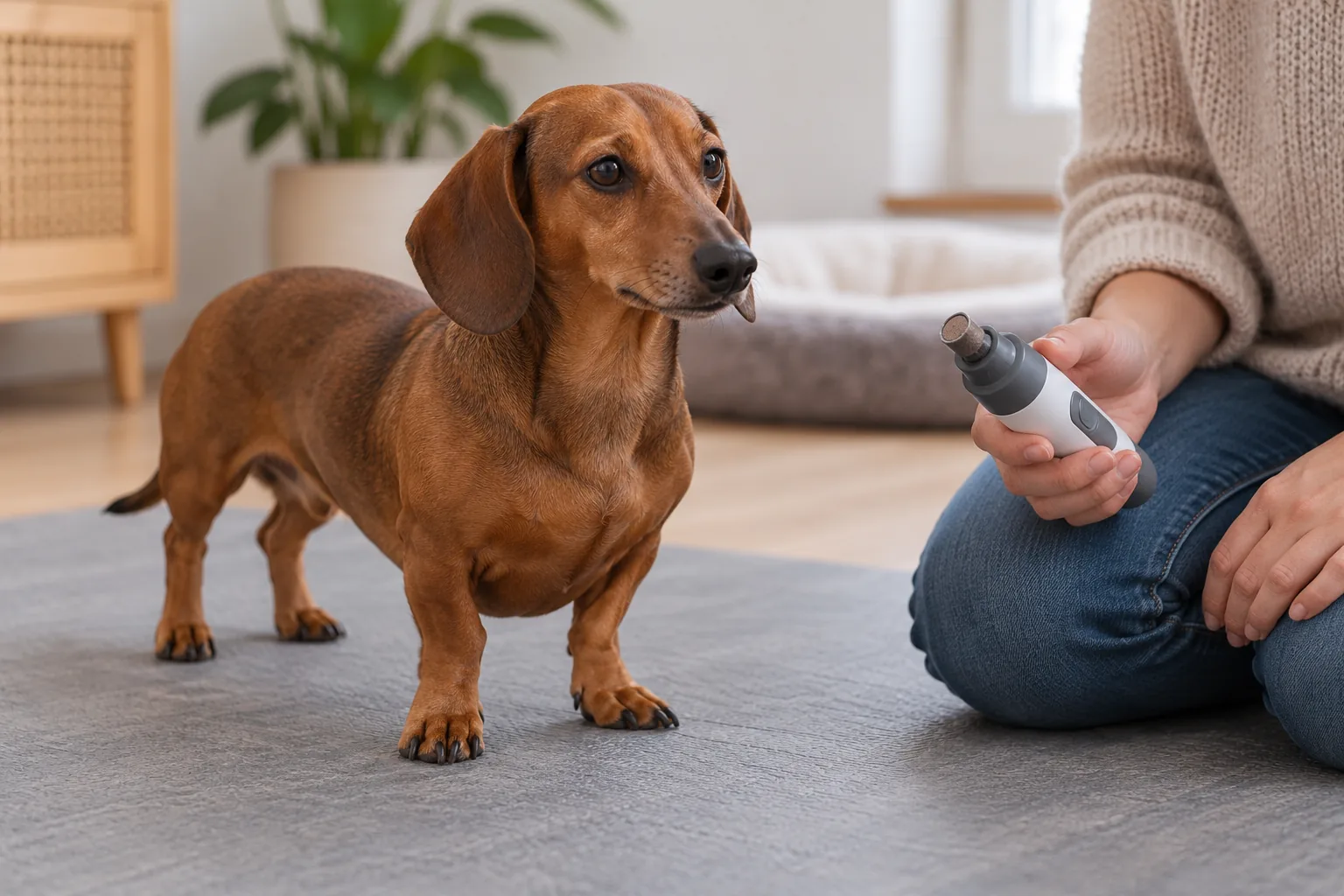
    Place the tool in your hand before selecting a model. A heavy or awkward grip makes precise work harder around small paws. Inspect how the sanding surface is exposed. A large protective cap may prevent accidental contact yet also hide the tip of a small nail; a fully exposed head may improve visibility but requires more care around fur and pads. Test the switch placement so you can stop promptly without changing your grip.

    Consider where grooming happens. A quiet, well-lit floor-level setup with nonslip footing gives the dog stability and lets the handler see each nail. A Dachshund should not be balanced on a high table unless it is professionally secured. Choose a device you can clean and maintain according to its instructions. Replacement heads and battery availability matter more over time than a decorative accessory kit.

    What the features actually change

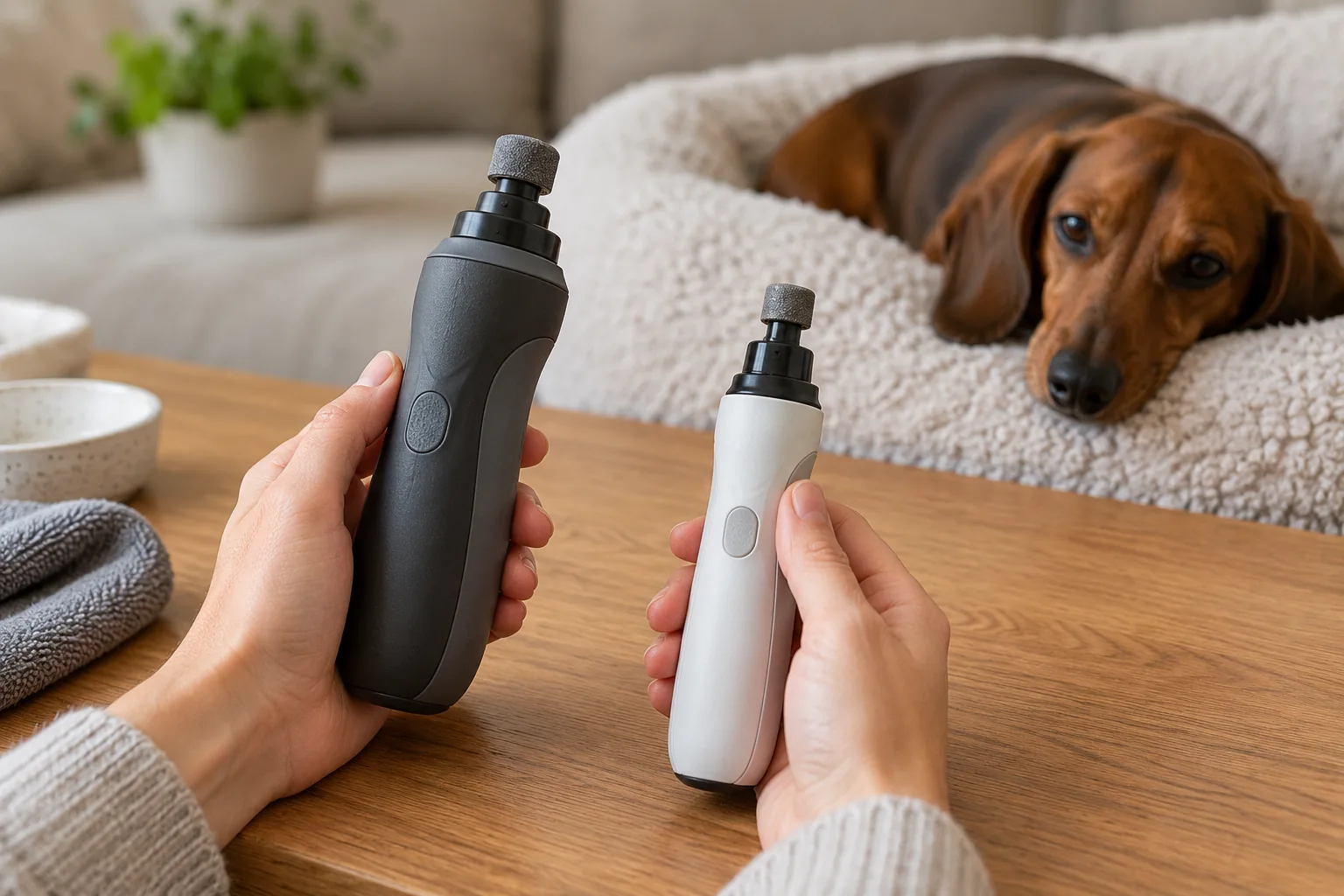
    Best nail grinder for Dachshunds: owner comparing the grip size of two compact dog nail grinders.

    For many owners, the best nail grinder for Dachshunds is the one that allows calm, precise, brief contact. Variable speed can help you find a setting that removes small amounts predictably, but "more powerful" does not mean more appropriate. Excess pressure or prolonged contact can heat the nail and cause discomfort. A quiet motor may still transmit vibration through the paw. Ask for a return policy where possible; no specification sheet can tell you exactly how your dog will feel. The AKC grooming guidance recommends pairing tool sound with rewards well before attempting a full trim.

    Keep long hair clear of rotating parts. This is especially relevant for long-haired Dachshunds, whose foot furnishings can catch. A helper can gently hold fur away while you work, but do not improvise restraints that make the dog panic. If a nail is cracked, bleeding, embedded, or painful, stop and call a veterinarian rather than grinding over injury.

    Introduce the grinder in small stages

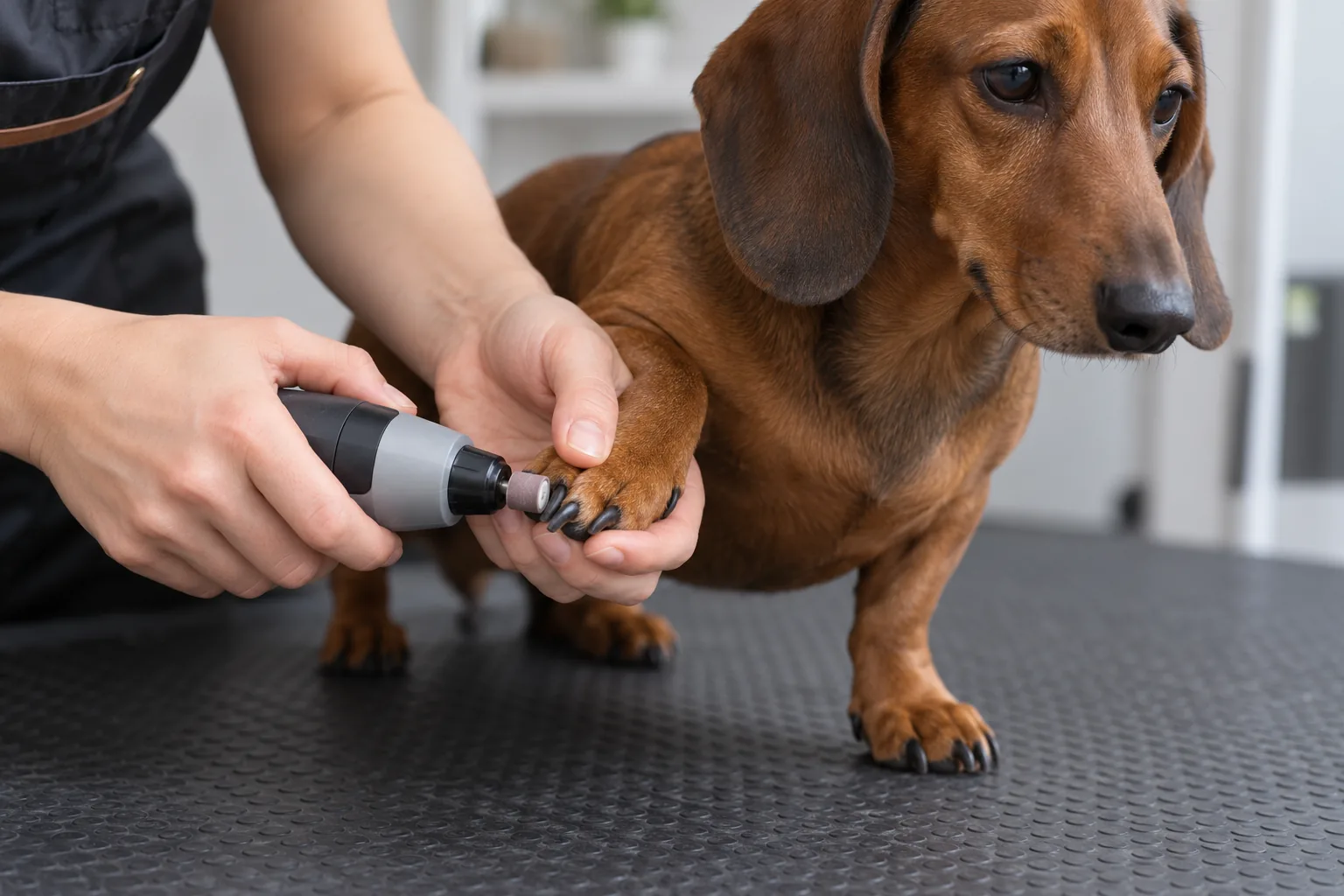
    Groomer briefly filing one Dachshund nail with a compact grinder.

    Begin with the switched-off tool near the dog and reward voluntary investigation. On another session, turn it on at a distance and reward calm behavior. Then bring it closer, touch the paw with the off tool, and eventually make a very brief contact with one nail. Stop while the dog is still comfortable. The AKC desensitization advice describes rewarding sound and paw handling over time; there is no requirement to finish every nail in one sitting.

    Look at the nail between brief contacts. On dark nails the quick is harder to see, so remove only small amounts and ask a groomer or veterinarian to demonstrate if uncertain. The AKC at-home grooming guide advises learning proper technique and having a plan for accidental bleeding. This article selects a tool; the separate trimming guide should explain anatomy and technique in more detail.

    A practical comparison test

    If shopping in person, compare a compact tool and a larger one in your hand. Can you see the exact point of contact? Can you reach the front dewclaws without twisting the dog? Is the switch easy to stop? Does the cap leave room for the dog’s nail size? If buying online, check the actual dimensions, head replacement options, and instructions rather than relying on star ratings from unrelated breeds. Do not claim a model is "silent" or "quick-proof" without evidence.

    At home, trial one nail after gradual acclimation. Record whether the dog accepts sound and vibration, and whether you can make a clean, controlled pass. If the dog strongly resists, a groomer or vet technician can help develop a handling plan. Forcing an anxious dog through a full session can make later grooming harder.

    Buying checklist

    1. Comfortable grip and switch placement for short, controlled contact.
    2. Nail clearly visible with any guard fitted.
    3. Manageable vibration and sound for this dog.
    4. A way to keep paw hair out of moving parts.
    5. Replaceable head and clear cleaning instructions.
    6. Suitable return terms if the dog’s response makes the tool unusable.

    This is a criteria guide, not a current product ranking or a medical procedure. Verify exact model claims and add an affiliate disclosure before monetized links.

    Prevent common handling mistakes

    Do not grasp a paw so tightly that the dog must fight to pull away. Support it gently in a natural position and use a nonslip surface. Keep the grinder moving in brief touches instead of holding it against one nail until heat builds. Watch the dog’s body language: pulling away, lip licking, yawning, or sudden stillness can mean the session is too hard. Pause and return to a step the dog can manage. Because a Dachshund is low to the ground, a floor-level setup often avoids the additional hazard of a fall from a grooming table.

    If the dog’s nails are dark, do not infer that the quick is always at the same depth across all nails. Ask a professional to show the relevant visual and tactile cues on this particular dog. The AKC grooming-at-home guidance recommends proper technique and appropriate tools, including a plan if a nail bleeds. This buying article does not replace that hands-on demonstration.

    When to stop using the tool

    Stop if the grinder stalls, vibrates unpredictably, becomes hot, catches hair, or makes the dog more distressed with repeated attempts. Inspect and replace a worn sanding head according to the manufacturer’s instructions. A cracked, bleeding, or painful nail needs veterinary or professional grooming assessment, not another pass with the grinder. If a dog tolerates clippers but not a grinder, using clippers with competent technique may be the kinder choice. The best tool is the one that enables regular, low-stress maintenance without injury, not the one with the most settings.

    Frequently asked questions

    Is a grinder safer than nail clippers?

    Not automatically. It allows gradual removal, but can still injure the quick or heat the nail if used carelessly. Choose the method you can use accurately and that the dog accepts.

    How many nails should I do at once?

    There is no fixed target. A single calm nail can be a better first session than a complete but stressful trim. Use the separate nail-trimming article for the ongoing schedule.

    What if the nails are already very long?

    Ask a veterinarian or groomer to assess the quick and demonstrate a safe reduction plan. Do not try to grind down a large amount in one session.

  • Best Treat Toys for Dachshunds: What to Look For + Top Picks

    Best Treat Toys for Dachshunds: What to Look For + Top Picks

    Best Treat Toys for Dachshunds should be chosen around Dachshund proportions, back safety, daily use, and the exact place or problem you are solving. This guide focuses on food puzzles, calorie control, cleaning, supervision, and reducing boredom. The goal is not to chase the fanciest product; it is to choose gear that is stable, correctly sized, easy to clean, and realistic for a long-backed dog.

    Dachshund gear fit and safety check for best treat toys for dachshunds

    Best Treat Toys for Dachshunds: quick answer

    For most owners, the best treat toys is the one your Dachshund can use calmly every day. Prioritize fit, stability, traction, washable materials, and a design that prevents jumping, twisting, slipping, or overexcitement. Measure your dog and your home before buying, because Dachshunds vary in length, chest depth, confidence, age, and mobility.

    CheckWhat to look forWhy it matters
    SizeLong enough or roomy enough for a Dachshund bodyPrevents cramped posture and awkward movement
    StabilityNo wobble, sliding, tipping, or flexingNervous dogs avoid unstable gear
    TractionGrippy surface or secure footingHelps protect short legs and long backs
    CleaningWashable cover or wipeable surfaceKeeps daily-use gear realistic
    Use caseMatches couch, bed, car, crate, or play routineAvoids buying the wrong style

    How to choose the right option

    Start with the problem you are trying to solve. A product for occasional travel is different from gear used ten times a day. If the treat toys will sit in the living room, it needs to stay in place and look simple enough that you will not move it away. If it is for sleep, it needs to be easy to access when your dog is tired. If it is for enrichment, it should challenge your dog without creating frustration or unsafe chewing.

    Dachshunds often make gear decisions more specific than general dog guides suggest. Their long backs, short legs, deep chests, and bold personalities mean that small fit issues matter. A tiny wobble, steep angle, slick fabric, oversized crate, or toy that encourages vertical leaping can turn a good idea into a daily problem.

    • Measure your Dachshund’s length, chest, and weight instead of guessing by breed name.
    • Measure the furniture, vehicle, crate space, or play area where the product will be used.
    • Choose low-impact movement and stable footing over cute styling.
    • Avoid products that require jumping, scrambling, twisting, or rough landings.
    • Supervise the first few uses and reward calm interaction.
    Dachshund back-safe home setup for best treat toys for dachshunds

    Best uses and common mistakes

    SituationGood choiceCommon mistake
    PuppyAdjustable or beginner-friendly setupBuying only for adult size and ignoring current safety
    SeniorLow entry, stable surface, gentle movementChoosing a steep or narrow product
    Confident jumperBlock the old jump path and train the new habitAssuming the product alone changes behavior
    Small homeMeasure footprint before buyingBuying gear that gets moved out of the way
    Food or toy useCount calories and superviseLeaving treat toys or chews unmanaged

    The biggest mistake is buying gear and expecting your Dachshund to understand it immediately. Introduce new items slowly. Place treats near the item, reward curiosity, and keep early sessions short. If your dog avoids it, check the slope, noise, smell, wobble, texture, and placement before assuming stubbornness.

    When to be more cautious

    Be more cautious with puppies, seniors, overweight Dachshunds, dogs with a history of back pain, and dogs who panic around new objects. If your Dachshund yelps, limps, drags the rear feet, refuses normal movement, or suddenly avoids stairs, furniture, or handling, pause the gear plan and contact your veterinarian.

    How to keep this choice specific

    This article should solve the specific question of best treat toys for dachshunds, not every Dachshund gear problem at once. Keep the decision centered on food puzzles, calorie control, cleaning, supervision, and reducing boredom. Use the general toy article for broad safe-play choices. Use chew, puzzle, and treat-toy articles for the specific job: chewing, problem-solving, or food-based enrichment.

    Related needBest focusAvoid this overlap
    Chew toyLegal chewing and supervised textureChoosing a toy that splinters or is swallowed
    Puzzle toyNose work and mental effortStarting with a puzzle that is too hard
    Treat toyFood pacing and boredom reductionIgnoring calories and cleaning

    A practical buying workflow

    Use a three-step workflow before you buy. First, measure the dog and the space. Second, decide how often the item will be used. Third, plan the training or introduction session before the package arrives. This prevents a common Dachshund-owner pattern: buying a reasonable product, placing it in the wrong spot, and then assuming the dog is being stubborn when they avoid it.

    For treat toys, the final test is daily behavior. Your Dachshund should be able to approach calmly, use the item without scrambling, and recover without excitement or fear. If the product creates more jumping, barking, chewing, guarding, or avoidance, change the setup before replacing it.

    • Measure first and keep those numbers in your phone.
    • Read return policies before buying bulky gear.
    • Choose washable materials for anything used with food, sleep, or outdoor dirt.
    • Introduce the item with rewards before expecting independent use.
    • Recheck fit after weight changes, puppy growth, or senior mobility changes.

    How this fits your Dachshund routine

    Use this article with best harness for dachshunds, best puzzle toys for dachshunds, best winter coat for dachshunds. Gear works best when it supports a broader routine: measured meals, calm training, safe handling, and predictable home setup. A good product should make the desired habit easier for both you and your dog.

    Dachshund using a calm home routine for best treat toys for dachshunds

    FAQ

    What matters most in a treat toys for Dachshunds?

    The most important features are correct size, stability, traction, and daily usability. If the product is awkward to use or easy for your dog to avoid, it will not solve the problem.

    Should I buy by weight label or measurements?

    Use measurements first. Weight labels are only a starting point. Dachshunds can have different body lengths, chest shapes, and confidence levels at the same weight.

    What if my Dachshund refuses to use it?

    Lower the difficulty. Make the product more stable, add traction, use tiny rewards, and practice away from pressure. If refusal is sudden or paired with pain signs, call your veterinarian.

    Is the most expensive option always better?

    No. The best choice is the one that fits your dog, your home, and your routine. A simple stable option is often better than an elaborate product that gets ignored.

    Can this replace training?

    No. Good gear supports training, but your Dachshund still needs a calm introduction, consistent cues, and repeated rewards for the safer habit.

    Owner decision checklist

    Use this checklist before buying anything for best treat toys for dachshunds. Keep the decision tied to one shopping job: food puzzles, calorie control, cleaning, supervision, and reducing boredom. No product can promise to prevent injury, cure anxiety, or replace training. The right item simply makes safer routines easier when it is measured, introduced, and used consistently.

    • Measure your dog and the furniture, car, crate area, or play space first.
    • Choose stability, traction, cleaning, and daily usability before color or style.
    • Plan the first training session before expecting independent use.
    • Watch for avoidance, rushing, slipping, chewing, or guarding during the first week.
    • Recheck the setup after puppy growth, weight changes, or senior mobility changes.
    SituationBest responseCommon mistake
    New puppyChoose adjustable, easy-to-clean gear and train slowlyBuying only for adult size
    Senior dogPrioritize low entry, stability, and predictable placementChoosing a steep or narrow option
    Small apartmentMeasure footprint and storage before buyingMoving the item so often the dog never learns it
    Excitable dogReward calm interaction before full useLetting the product create jumping or barking

    What to do today, this week, and next month

    WhenAction
    TodayMeasure the dog and the space, then list the exact job the product must do
    This weekCompare two or three options using stability, fit, cleaning, and training needs
    First useIntroduce the item with treats and calm praise before expecting full use
    After one monthCheck whether the item reduced the problem or simply moved it elsewhere

    The timeline matters because Dachshund problems often become habits through repetition. A single good purchase, one calm training session, or one careful grooming check is a start, but the result comes from repeating the same clear setup. Keep the routine small enough that you can actually follow it.

    Real-life example

    Imagine the problem happens on a normal weekday, not during a perfect training session. You are busy, your Dachshund is excited, and the old habit is easier than the new one. The useful plan is the one that still works in that moment. Set up the room, walk route, grooming surface, crate area, or product placement before your dog has a chance to rehearse the unwanted pattern. Reward the first small success, stop while the session is still calm, and repeat the same setup tomorrow. This is how a practical Dachshund routine becomes reliable. If the setup feels too complicated to repeat daily, simplify it until it fits normal life and your dog can predict it.

    A narrow plan is easier to follow than a long list of unrelated tips. Solve the exact problem in front of you first, then use related guides for nearby questions such as training, safe handling, grooming, toys, crates, ramps, or health warning signs.

    Dachshund topics often overlap because behavior, gear, grooming, and health all affect one another. The best plan is specific: name the trigger or task, make the setup easier, reward cooperation, and watch whether your dog becomes calmer and more comfortable over time.

    Sources


    Related Dachshund guides

  • Best Puzzle Toys for Dachshunds: What to Look For + Top Picks

    Best Puzzle Toys for Dachshunds: What to Look For + Top Picks

    Best Puzzle Toys for Dachshunds should be chosen around Dachshund proportions, back safety, daily use, and the exact place or problem you are solving. This guide focuses on scent work, difficulty levels, frustration signs, and meal-based enrichment. The goal is not to chase the fanciest product; it is to choose gear that is stable, correctly sized, easy to clean, and realistic for a long-backed dog.

    Dachshund gear fit and safety check for best puzzle toys for dachshunds

    Best Puzzle Toys for Dachshunds: quick answer

    For most owners, the best puzzle toys is the one your Dachshund can use calmly every day. Prioritize fit, stability, traction, washable materials, and a design that prevents jumping, twisting, slipping, or overexcitement. Measure your dog and your home before buying, because Dachshunds vary in length, chest depth, confidence, age, and mobility.

    CheckWhat to look forWhy it matters
    SizeLong enough or roomy enough for a Dachshund bodyPrevents cramped posture and awkward movement
    StabilityNo wobble, sliding, tipping, or flexingNervous dogs avoid unstable gear
    TractionGrippy surface or secure footingHelps protect short legs and long backs
    CleaningWashable cover or wipeable surfaceKeeps daily-use gear realistic
    Use caseMatches couch, bed, car, crate, or play routineAvoids buying the wrong style

    How to choose the right option

    Start with the problem you are trying to solve. A product for occasional travel is different from gear used ten times a day. If the puzzle toys will sit in the living room, it needs to stay in place and look simple enough that you will not move it away. If it is for sleep, it needs to be easy to access when your dog is tired. If it is for enrichment, it should challenge your dog without creating frustration or unsafe chewing.

    Dachshunds often make gear decisions more specific than general dog guides suggest. Their long backs, short legs, deep chests, and bold personalities mean that small fit issues matter. A tiny wobble, steep angle, slick fabric, oversized crate, or toy that encourages vertical leaping can turn a good idea into a daily problem.

    • Measure your Dachshund’s length, chest, and weight instead of guessing by breed name.
    • Measure the furniture, vehicle, crate space, or play area where the product will be used.
    • Choose low-impact movement and stable footing over cute styling.
    • Avoid products that require jumping, scrambling, twisting, or rough landings.
    • Supervise the first few uses and reward calm interaction.
    Dachshund back-safe home setup for best puzzle toys for dachshunds

    Best uses and common mistakes

    SituationGood choiceCommon mistake
    PuppyAdjustable or beginner-friendly setupBuying only for adult size and ignoring current safety
    SeniorLow entry, stable surface, gentle movementChoosing a steep or narrow product
    Confident jumperBlock the old jump path and train the new habitAssuming the product alone changes behavior
    Small homeMeasure footprint before buyingBuying gear that gets moved out of the way
    Food or toy useCount calories and superviseLeaving treat toys or chews unmanaged

    The biggest mistake is buying gear and expecting your Dachshund to understand it immediately. Introduce new items slowly. Place treats near the item, reward curiosity, and keep early sessions short. If your dog avoids it, check the slope, noise, smell, wobble, texture, and placement before assuming stubbornness.

    When to be more cautious

    Be more cautious with puppies, seniors, overweight Dachshunds, dogs with a history of back pain, and dogs who panic around new objects. If your Dachshund yelps, limps, drags the rear feet, refuses normal movement, or suddenly avoids stairs, furniture, or handling, pause the gear plan and contact your veterinarian.

    How to keep this choice specific

    This article should solve the specific question of best puzzle toys for dachshunds, not every Dachshund gear problem at once. Keep the decision centered on scent work, difficulty levels, frustration signs, and meal-based enrichment. Use the general toy article for broad safe-play choices. Use chew, puzzle, and treat-toy articles for the specific job: chewing, problem-solving, or food-based enrichment.

    Related needBest focusAvoid this overlap
    Chew toyLegal chewing and supervised textureChoosing a toy that splinters or is swallowed
    Puzzle toyNose work and mental effortStarting with a puzzle that is too hard
    Treat toyFood pacing and boredom reductionIgnoring calories and cleaning

    A practical buying workflow

    Use a three-step workflow before you buy. First, measure the dog and the space. Second, decide how often the item will be used. Third, plan the training or introduction session before the package arrives. This prevents a common Dachshund-owner pattern: buying a reasonable product, placing it in the wrong spot, and then assuming the dog is being stubborn when they avoid it.

    For puzzle toys, the final test is daily behavior. Your Dachshund should be able to approach calmly, use the item without scrambling, and recover without excitement or fear. If the product creates more jumping, barking, chewing, guarding, or avoidance, change the setup before replacing it.

    • Measure first and keep those numbers in your phone.
    • Read return policies before buying bulky gear.
    • Choose washable materials for anything used with food, sleep, or outdoor dirt.
    • Introduce the item with rewards before expecting independent use.
    • Recheck fit after weight changes, puppy growth, or senior mobility changes.

    How this fits your Dachshund routine

    Use this article with best harness for dachshunds, best chew toys for dachshunds, best treat toys for dachshunds. Gear works best when it supports a broader routine: measured meals, calm training, safe handling, and predictable home setup. A good product should make the desired habit easier for both you and your dog.

    Dachshund using a calm home routine for best puzzle toys for dachshunds

    FAQ

    What matters most in a puzzle toys for Dachshunds?

    The most important features are correct size, stability, traction, and daily usability. If the product is awkward to use or easy for your dog to avoid, it will not solve the problem.

    Should I buy by weight label or measurements?

    Use measurements first. Weight labels are only a starting point. Dachshunds can have different body lengths, chest shapes, and confidence levels at the same weight.

    What if my Dachshund refuses to use it?

    Lower the difficulty. Make the product more stable, add traction, use tiny rewards, and practice away from pressure. If refusal is sudden or paired with pain signs, call your veterinarian.

    Is the most expensive option always better?

    No. The best choice is the one that fits your dog, your home, and your routine. A simple stable option is often better than an elaborate product that gets ignored.

    Can this replace training?

    No. Good gear supports training, but your Dachshund still needs a calm introduction, consistent cues, and repeated rewards for the safer habit.

    Owner decision checklist

    Use this checklist before buying anything for best puzzle toys for dachshunds. Keep the decision tied to one shopping job: scent work, difficulty levels, frustration signs, and meal-based enrichment. No product can promise to prevent injury, cure anxiety, or replace training. The right item simply makes safer routines easier when it is measured, introduced, and used consistently.

    • Measure your dog and the furniture, car, crate area, or play space first.
    • Choose stability, traction, cleaning, and daily usability before color or style.
    • Plan the first training session before expecting independent use.
    • Watch for avoidance, rushing, slipping, chewing, or guarding during the first week.
    • Recheck the setup after puppy growth, weight changes, or senior mobility changes.
    SituationBest responseCommon mistake
    New puppyChoose adjustable, easy-to-clean gear and train slowlyBuying only for adult size
    Senior dogPrioritize low entry, stability, and predictable placementChoosing a steep or narrow option
    Small apartmentMeasure footprint and storage before buyingMoving the item so often the dog never learns it
    Excitable dogReward calm interaction before full useLetting the product create jumping or barking

    What to do today, this week, and next month

    WhenAction
    TodayMeasure the dog and the space, then list the exact job the product must do
    This weekCompare two or three options using stability, fit, cleaning, and training needs
    First useIntroduce the item with treats and calm praise before expecting full use
    After one monthCheck whether the item reduced the problem or simply moved it elsewhere

    The timeline matters because Dachshund problems often become habits through repetition. A single good purchase, one calm training session, or one careful grooming check is a start, but the result comes from repeating the same clear setup. Keep the routine small enough that you can actually follow it.

    Real-life example

    Imagine the problem happens on a normal weekday, not during a perfect training session. You are busy, your Dachshund is excited, and the old habit is easier than the new one. The useful plan is the one that still works in that moment. Set up the room, walk route, grooming surface, crate area, or product placement before your dog has a chance to rehearse the unwanted pattern. Reward the first small success, stop while the session is still calm, and repeat the same setup tomorrow. This is how a practical Dachshund routine becomes reliable. If the setup feels too complicated to repeat daily, simplify it until it fits normal life and your dog can predict it.

    A narrow plan is easier to follow than a long list of unrelated tips. Solve the exact problem in front of you first, then use related guides for nearby questions such as training, safe handling, grooming, toys, crates, ramps, or health warning signs.

    Dachshund topics often overlap because behavior, gear, grooming, and health all affect one another. The best plan is specific: name the trigger or task, make the setup easier, reward cooperation, and watch whether your dog becomes calmer and more comfortable over time.

    Sources


    Related Dachshund guides

  • Best Chew Toys for Dachshunds: What to Look For + Top Picks

    Best Chew Toys for Dachshunds: What to Look For + Top Picks

    Best Chew Toys for Dachshunds should be chosen around Dachshund proportions, back safety, daily use, and the exact place or problem you are solving. This guide focuses on legal chewing, tooth-safe texture, supervision, and avoiding swallowed pieces. The goal is not to chase the fanciest product; it is to choose gear that is stable, correctly sized, easy to clean, and realistic for a long-backed dog.

    Dachshund gear fit and safety check for best chew toys for dachshunds

    Best Chew Toys for Dachshunds: quick answer

    For most owners, the best chew toys is the one your Dachshund can use calmly every day. Prioritize fit, stability, traction, washable materials, and a design that prevents jumping, twisting, slipping, or overexcitement. Measure your dog and your home before buying, because Dachshunds vary in length, chest depth, confidence, age, and mobility.

    CheckWhat to look forWhy it matters
    SizeLong enough or roomy enough for a Dachshund bodyPrevents cramped posture and awkward movement
    StabilityNo wobble, sliding, tipping, or flexingNervous dogs avoid unstable gear
    TractionGrippy surface or secure footingHelps protect short legs and long backs
    CleaningWashable cover or wipeable surfaceKeeps daily-use gear realistic
    Use caseMatches couch, bed, car, crate, or play routineAvoids buying the wrong style

    How to choose the right option

    Start with the problem you are trying to solve. A product for occasional travel is different from gear used ten times a day. If the chew toys will sit in the living room, it needs to stay in place and look simple enough that you will not move it away. If it is for sleep, it needs to be easy to access when your dog is tired. If it is for enrichment, it should challenge your dog without creating frustration or unsafe chewing.

    Dachshunds often make gear decisions more specific than general dog guides suggest. Their long backs, short legs, deep chests, and bold personalities mean that small fit issues matter. A tiny wobble, steep angle, slick fabric, oversized crate, or toy that encourages vertical leaping can turn a good idea into a daily problem.

    • Measure your Dachshund’s length, chest, and weight instead of guessing by breed name.
    • Measure the furniture, vehicle, crate space, or play area where the product will be used.
    • Choose low-impact movement and stable footing over cute styling.
    • Avoid products that require jumping, scrambling, twisting, or rough landings.
    • Supervise the first few uses and reward calm interaction.
    Dachshund back-safe home setup for best chew toys for dachshunds

    Best uses and common mistakes

    SituationGood choiceCommon mistake
    PuppyAdjustable or beginner-friendly setupBuying only for adult size and ignoring current safety
    SeniorLow entry, stable surface, gentle movementChoosing a steep or narrow product
    Confident jumperBlock the old jump path and train the new habitAssuming the product alone changes behavior
    Small homeMeasure footprint before buyingBuying gear that gets moved out of the way
    Food or toy useCount calories and superviseLeaving treat toys or chews unmanaged

    The biggest mistake is buying gear and expecting your Dachshund to understand it immediately. Introduce new items slowly. Place treats near the item, reward curiosity, and keep early sessions short. If your dog avoids it, check the slope, noise, smell, wobble, texture, and placement before assuming stubbornness.

    When to be more cautious

    Be more cautious with puppies, seniors, overweight Dachshunds, dogs with a history of back pain, and dogs who panic around new objects. If your Dachshund yelps, limps, drags the rear feet, refuses normal movement, or suddenly avoids stairs, furniture, or handling, pause the gear plan and contact your veterinarian.

    How to keep this choice specific

    This article should solve the specific question of best chew toys for dachshunds, not every Dachshund gear problem at once. Keep the decision centered on legal chewing, tooth-safe texture, supervision, and avoiding swallowed pieces. Use the general toy article for broad safe-play choices. Use chew, puzzle, and treat-toy articles for the specific job: chewing, problem-solving, or food-based enrichment.

    Related needBest focusAvoid this overlap
    Chew toyLegal chewing and supervised textureChoosing a toy that splinters or is swallowed
    Puzzle toyNose work and mental effortStarting with a puzzle that is too hard
    Treat toyFood pacing and boredom reductionIgnoring calories and cleaning

    A practical buying workflow

    Use a three-step workflow before you buy. First, measure the dog and the space. Second, decide how often the item will be used. Third, plan the training or introduction session before the package arrives. This prevents a common Dachshund-owner pattern: buying a reasonable product, placing it in the wrong spot, and then assuming the dog is being stubborn when they avoid it.

    For chew toys, the final test is daily behavior. Your Dachshund should be able to approach calmly, use the item without scrambling, and recover without excitement or fear. If the product creates more jumping, barking, chewing, guarding, or avoidance, change the setup before replacing it.

    • Measure first and keep those numbers in your phone.
    • Read return policies before buying bulky gear.
    • Choose washable materials for anything used with food, sleep, or outdoor dirt.
    • Introduce the item with rewards before expecting independent use.
    • Recheck fit after weight changes, puppy growth, or senior mobility changes.

    How this fits your Dachshund routine

    Use this article with best harness for dachshunds, best toys for dachshunds, best puzzle toys for dachshunds. Gear works best when it supports a broader routine: measured meals, calm training, safe handling, and predictable home setup. A good product should make the desired habit easier for both you and your dog.

    Dachshund using a calm home routine for best chew toys for dachshunds

    FAQ

    What matters most in a chew toys for Dachshunds?

    The most important features are correct size, stability, traction, and daily usability. If the product is awkward to use or easy for your dog to avoid, it will not solve the problem.

    Should I buy by weight label or measurements?

    Use measurements first. Weight labels are only a starting point. Dachshunds can have different body lengths, chest shapes, and confidence levels at the same weight.

    What if my Dachshund refuses to use it?

    Lower the difficulty. Make the product more stable, add traction, use tiny rewards, and practice away from pressure. If refusal is sudden or paired with pain signs, call your veterinarian.

    Is the most expensive option always better?

    No. The best choice is the one that fits your dog, your home, and your routine. A simple stable option is often better than an elaborate product that gets ignored.

    Can this replace training?

    No. Good gear supports training, but your Dachshund still needs a calm introduction, consistent cues, and repeated rewards for the safer habit.

    Owner decision checklist

    Use this checklist before buying anything for best chew toys for dachshunds. Keep the decision tied to one shopping job: legal chewing, tooth-safe texture, supervision, and avoiding swallowed pieces. No product can promise to prevent injury, cure anxiety, or replace training. The right item simply makes safer routines easier when it is measured, introduced, and used consistently.

    • Measure your dog and the furniture, car, crate area, or play space first.
    • Choose stability, traction, cleaning, and daily usability before color or style.
    • Plan the first training session before expecting independent use.
    • Watch for avoidance, rushing, slipping, chewing, or guarding during the first week.
    • Recheck the setup after puppy growth, weight changes, or senior mobility changes.
    SituationBest responseCommon mistake
    New puppyChoose adjustable, easy-to-clean gear and train slowlyBuying only for adult size
    Senior dogPrioritize low entry, stability, and predictable placementChoosing a steep or narrow option
    Small apartmentMeasure footprint and storage before buyingMoving the item so often the dog never learns it
    Excitable dogReward calm interaction before full useLetting the product create jumping or barking

    What to do today, this week, and next month

    WhenAction
    TodayMeasure the dog and the space, then list the exact job the product must do
    This weekCompare two or three options using stability, fit, cleaning, and training needs
    First useIntroduce the item with treats and calm praise before expecting full use
    After one monthCheck whether the item reduced the problem or simply moved it elsewhere

    The timeline matters because Dachshund problems often become habits through repetition. A single good purchase, one calm training session, or one careful grooming check is a start, but the result comes from repeating the same clear setup. Keep the routine small enough that you can actually follow it.

    Real-life example

    Imagine the problem happens on a normal weekday, not during a perfect training session. You are busy, your Dachshund is excited, and the old habit is easier than the new one. The useful plan is the one that still works in that moment. Set up the room, walk route, grooming surface, crate area, or product placement before your dog has a chance to rehearse the unwanted pattern. Reward the first small success, stop while the session is still calm, and repeat the same setup tomorrow. This is how a practical Dachshund routine becomes reliable. If the setup feels too complicated to repeat daily, simplify it until it fits normal life and your dog can predict it.

    A narrow plan is easier to follow than a long list of unrelated tips. Solve the exact problem in front of you first, then use related guides for nearby questions such as training, safe handling, grooming, toys, crates, ramps, or health warning signs.

    Dachshund topics often overlap because behavior, gear, grooming, and health all affect one another. The best plan is specific: name the trigger or task, make the setup easier, reward cooperation, and watch whether your dog becomes calmer and more comfortable over time.

    Sources


    Related Dachshund guides

  • Best Toys for Dachshunds: What to Look For + Top Picks

    Best Toys for Dachshunds: What to Look For + Top Picks

    Best Toys for Dachshunds should be chosen around Dachshund proportions, back safety, daily use, and the exact place or problem you are solving. This guide focuses on safe enrichment, low-impact play, durability, and avoiding jumping-heavy games. The goal is not to chase the fanciest product; it is to choose gear that is stable, correctly sized, easy to clean, and realistic for a long-backed dog.

    Dachshund gear fit and safety check for best toys for dachshunds

    Best Toys for Dachshunds: quick answer

    For most owners, the best toys is the one your Dachshund can use calmly every day. Prioritize fit, stability, traction, washable materials, and a design that prevents jumping, twisting, slipping, or overexcitement. Measure your dog and your home before buying, because Dachshunds vary in length, chest depth, confidence, age, and mobility.

    CheckWhat to look forWhy it matters
    SizeLong enough or roomy enough for a Dachshund bodyPrevents cramped posture and awkward movement
    StabilityNo wobble, sliding, tipping, or flexingNervous dogs avoid unstable gear
    TractionGrippy surface or secure footingHelps protect short legs and long backs
    CleaningWashable cover or wipeable surfaceKeeps daily-use gear realistic
    Use caseMatches couch, bed, car, crate, or play routineAvoids buying the wrong style

    How to choose the right option

    Start with the problem you are trying to solve. A product for occasional travel is different from gear used ten times a day. If the toys will sit in the living room, it needs to stay in place and look simple enough that you will not move it away. If it is for sleep, it needs to be easy to access when your dog is tired. If it is for enrichment, it should challenge your dog without creating frustration or unsafe chewing.

    Dachshunds often make gear decisions more specific than general dog guides suggest. Their long backs, short legs, deep chests, and bold personalities mean that small fit issues matter. A tiny wobble, steep angle, slick fabric, oversized crate, or toy that encourages vertical leaping can turn a good idea into a daily problem.

    • Measure your Dachshund’s length, chest, and weight instead of guessing by breed name.
    • Measure the furniture, vehicle, crate space, or play area where the product will be used.
    • Choose low-impact movement and stable footing over cute styling.
    • Avoid products that require jumping, scrambling, twisting, or rough landings.
    • Supervise the first few uses and reward calm interaction.
    Dachshund back-safe home setup for best toys for dachshunds

    Best uses and common mistakes

    SituationGood choiceCommon mistake
    PuppyAdjustable or beginner-friendly setupBuying only for adult size and ignoring current safety
    SeniorLow entry, stable surface, gentle movementChoosing a steep or narrow product
    Confident jumperBlock the old jump path and train the new habitAssuming the product alone changes behavior
    Small homeMeasure footprint before buyingBuying gear that gets moved out of the way
    Food or toy useCount calories and superviseLeaving treat toys or chews unmanaged

    The biggest mistake is buying gear and expecting your Dachshund to understand it immediately. Introduce new items slowly. Place treats near the item, reward curiosity, and keep early sessions short. If your dog avoids it, check the slope, noise, smell, wobble, texture, and placement before assuming stubbornness.

    When to be more cautious

    Be more cautious with puppies, seniors, overweight Dachshunds, dogs with a history of back pain, and dogs who panic around new objects. If your Dachshund yelps, limps, drags the rear feet, refuses normal movement, or suddenly avoids stairs, furniture, or handling, pause the gear plan and contact your veterinarian.

    How to keep this choice specific

    This article should solve the specific question of best toys for dachshunds, not every Dachshund gear problem at once. Keep the decision centered on safe enrichment, low-impact play, durability, and avoiding jumping-heavy games. Use the general toy article for broad safe-play choices. Use chew, puzzle, and treat-toy articles for the specific job: chewing, problem-solving, or food-based enrichment.

    Related needBest focusAvoid this overlap
    Chew toyLegal chewing and supervised textureChoosing a toy that splinters or is swallowed
    Puzzle toyNose work and mental effortStarting with a puzzle that is too hard
    Treat toyFood pacing and boredom reductionIgnoring calories and cleaning

    A practical buying workflow

    Use a three-step workflow before you buy. First, measure the dog and the space. Second, decide how often the item will be used. Third, plan the training or introduction session before the package arrives. This prevents a common Dachshund-owner pattern: buying a reasonable product, placing it in the wrong spot, and then assuming the dog is being stubborn when they avoid it.

    For toys, the final test is daily behavior. Your Dachshund should be able to approach calmly, use the item without scrambling, and recover without excitement or fear. If the product creates more jumping, barking, chewing, guarding, or avoidance, change the setup before replacing it.

    • Measure first and keep those numbers in your phone.
    • Read return policies before buying bulky gear.
    • Choose washable materials for anything used with food, sleep, or outdoor dirt.
    • Introduce the item with rewards before expecting independent use.
    • Recheck fit after weight changes, puppy growth, or senior mobility changes.

    How this fits your Dachshund routine

    Use this article with best harness for dachshunds, best stroller for dachshunds, best chew toys for dachshunds. Gear works best when it supports a broader routine: measured meals, calm training, safe handling, and predictable home setup. A good product should make the desired habit easier for both you and your dog.

    Dachshund using a calm home routine for best toys for dachshunds

    FAQ

    What matters most in a toys for Dachshunds?

    The most important features are correct size, stability, traction, and daily usability. If the product is awkward to use or easy for your dog to avoid, it will not solve the problem.

    Should I buy by weight label or measurements?

    Use measurements first. Weight labels are only a starting point. Dachshunds can have different body lengths, chest shapes, and confidence levels at the same weight.

    What if my Dachshund refuses to use it?

    Lower the difficulty. Make the product more stable, add traction, use tiny rewards, and practice away from pressure. If refusal is sudden or paired with pain signs, call your veterinarian.

    Is the most expensive option always better?

    No. The best choice is the one that fits your dog, your home, and your routine. A simple stable option is often better than an elaborate product that gets ignored.

    Can this replace training?

    No. Good gear supports training, but your Dachshund still needs a calm introduction, consistent cues, and repeated rewards for the safer habit.

    Owner decision checklist

    Use this checklist before buying anything for best toys for dachshunds. Keep the decision tied to one shopping job: safe enrichment, low-impact play, durability, and avoiding jumping-heavy games. No product can promise to prevent injury, cure anxiety, or replace training. The right item simply makes safer routines easier when it is measured, introduced, and used consistently.

    • Measure your dog and the furniture, car, crate area, or play space first.
    • Choose stability, traction, cleaning, and daily usability before color or style.
    • Plan the first training session before expecting independent use.
    • Watch for avoidance, rushing, slipping, chewing, or guarding during the first week.
    • Recheck the setup after puppy growth, weight changes, or senior mobility changes.
    SituationBest responseCommon mistake
    New puppyChoose adjustable, easy-to-clean gear and train slowlyBuying only for adult size
    Senior dogPrioritize low entry, stability, and predictable placementChoosing a steep or narrow option
    Small apartmentMeasure footprint and storage before buyingMoving the item so often the dog never learns it
    Excitable dogReward calm interaction before full useLetting the product create jumping or barking

    What to do today, this week, and next month

    WhenAction
    TodayMeasure the dog and the space, then list the exact job the product must do
    This weekCompare two or three options using stability, fit, cleaning, and training needs
    First useIntroduce the item with treats and calm praise before expecting full use
    After one monthCheck whether the item reduced the problem or simply moved it elsewhere

    The timeline matters because Dachshund problems often become habits through repetition. A single good purchase, one calm training session, or one careful grooming check is a start, but the result comes from repeating the same clear setup. Keep the routine small enough that you can actually follow it.

    Real-life example

    Imagine the problem happens on a normal weekday, not during a perfect training session. You are busy, your Dachshund is excited, and the old habit is easier than the new one. The useful plan is the one that still works in that moment. Set up the room, walk route, grooming surface, crate area, or product placement before your dog has a chance to rehearse the unwanted pattern. Reward the first small success, stop while the session is still calm, and repeat the same setup tomorrow. This is how a practical Dachshund routine becomes reliable. If the setup feels too complicated to repeat daily, simplify it until it fits normal life and your dog can predict it.

    A narrow plan is easier to follow than a long list of unrelated tips. Solve the exact problem in front of you first, then use related guides for nearby questions such as training, safe handling, grooming, toys, crates, ramps, or health warning signs.

    Dachshund topics often overlap because behavior, gear, grooming, and health all affect one another. The best plan is specific: name the trigger or task, make the setup easier, reward cooperation, and watch whether your dog becomes calmer and more comfortable over time.

    Sources


    Related Dachshund guides

  • Best Crate Size for Standard Dachshund: What to Look For + Top Picks

    Best Crate Size for Standard Dachshund: What to Look For + Top Picks

    Best Crate Size for Standard Dachshund should be chosen around Dachshund proportions, back safety, daily use, and the exact place or problem you are solving. This guide focuses on standard measurements, length, turning space, divider setup, and bedding. The goal is not to chase the fanciest product; it is to choose gear that is stable, correctly sized, easy to clean, and realistic for a long-backed dog.

    Dachshund gear fit and safety check for best crate size for standard dachshund

    Best Crate Size for Standard Dachshund: quick answer

    For most owners, the best standard Dachshund crate size is the one your Dachshund can use calmly every day. Prioritize fit, stability, traction, washable materials, and a design that prevents jumping, twisting, slipping, or overexcitement. Measure your dog and your home before buying, because Dachshunds vary in length, chest depth, confidence, age, and mobility.

    CheckWhat to look forWhy it matters
    SizeLong enough or roomy enough for a Dachshund bodyPrevents cramped posture and awkward movement
    StabilityNo wobble, sliding, tipping, or flexingNervous dogs avoid unstable gear
    TractionGrippy surface or secure footingHelps protect short legs and long backs
    CleaningWashable cover or wipeable surfaceKeeps daily-use gear realistic
    Use caseMatches couch, bed, car, crate, or play routineAvoids buying the wrong style

    How to choose the right option

    Start with the problem you are trying to solve. A product for occasional travel is different from gear used ten times a day. If the standard Dachshund crate size will sit in the living room, it needs to stay in place and look simple enough that you will not move it away. If it is for sleep, it needs to be easy to access when your dog is tired. If it is for enrichment, it should challenge your dog without creating frustration or unsafe chewing.

    Dachshunds often make gear decisions more specific than general dog guides suggest. Their long backs, short legs, deep chests, and bold personalities mean that small fit issues matter. A tiny wobble, steep angle, slick fabric, oversized crate, or toy that encourages vertical leaping can turn a good idea into a daily problem.

    • Measure your Dachshund’s length, chest, and weight instead of guessing by breed name.
    • Measure the furniture, vehicle, crate space, or play area where the product will be used.
    • Choose low-impact movement and stable footing over cute styling.
    • Avoid products that require jumping, scrambling, twisting, or rough landings.
    • Supervise the first few uses and reward calm interaction.
    Dachshund back-safe home setup for best crate size for standard dachshund

    Best uses and common mistakes

    SituationGood choiceCommon mistake
    PuppyAdjustable or beginner-friendly setupBuying only for adult size and ignoring current safety
    SeniorLow entry, stable surface, gentle movementChoosing a steep or narrow product
    Confident jumperBlock the old jump path and train the new habitAssuming the product alone changes behavior
    Small homeMeasure footprint before buyingBuying gear that gets moved out of the way
    Food or toy useCount calories and superviseLeaving treat toys or chews unmanaged

    The biggest mistake is buying gear and expecting your Dachshund to understand it immediately. Introduce new items slowly. Place treats near the item, reward curiosity, and keep early sessions short. If your dog avoids it, check the slope, noise, smell, wobble, texture, and placement before assuming stubbornness.

    When to be more cautious

    Be more cautious with puppies, seniors, overweight Dachshunds, dogs with a history of back pain, and dogs who panic around new objects. If your Dachshund yelps, limps, drags the rear feet, refuses normal movement, or suddenly avoids stairs, furniture, or handling, pause the gear plan and contact your veterinarian.

    How to keep this choice specific

    This article should solve the specific question of best crate size for standard dachshund, not every Dachshund gear problem at once. Keep the decision centered on standard measurements, length, turning space, divider setup, and bedding. Use the general crate article for product selection. Use the mini and standard crate-size articles only when the reader needs measurements and fit logic for that size class.

    Related needBest focusAvoid this overlap
    General crateMaterial, doors, divider, cleaningShopping only by breed label
    Mini sizeSmall body, puppy growth, divider useBuying a crate so large it becomes a potty area
    Standard sizeLength, turning room, stronger frameChoosing a crate too short for the dog’s back

    A practical buying workflow

    Use a three-step workflow before you buy. First, measure the dog and the space. Second, decide how often the item will be used. Third, plan the training or introduction session before the package arrives. This prevents a common Dachshund-owner pattern: buying a reasonable product, placing it in the wrong spot, and then assuming the dog is being stubborn when they avoid it.

    For standard Dachshund crate size, the final test is daily behavior. Your Dachshund should be able to approach calmly, use the item without scrambling, and recover without excitement or fear. If the product creates more jumping, barking, chewing, guarding, or avoidance, change the setup before replacing it.

    • Measure first and keep those numbers in your phone.
    • Read return policies before buying bulky gear.
    • Choose washable materials for anything used with food, sleep, or outdoor dirt.
    • Introduce the item with rewards before expecting independent use.
    • Recheck fit after weight changes, puppy growth, or senior mobility changes.

    How this fits your Dachshund routine

    Use this article with best harness for dachshunds, best crate size for miniature dachshund, best carrier for dachshunds. Gear works best when it supports a broader routine: measured meals, calm training, safe handling, and predictable home setup. A good product should make the desired habit easier for both you and your dog.

    Dachshund using a calm home routine for best crate size for standard dachshund

    FAQ

    What matters most in a standard Dachshund crate size for Dachshunds?

    The most important features are correct size, stability, traction, and daily usability. If the product is awkward to use or easy for your dog to avoid, it will not solve the problem.

    Should I buy by weight label or measurements?

    Use measurements first. Weight labels are only a starting point. Dachshunds can have different body lengths, chest shapes, and confidence levels at the same weight.

    What if my Dachshund refuses to use it?

    Lower the difficulty. Make the product more stable, add traction, use tiny rewards, and practice away from pressure. If refusal is sudden or paired with pain signs, call your veterinarian.

    Is the most expensive option always better?

    No. The best choice is the one that fits your dog, your home, and your routine. A simple stable option is often better than an elaborate product that gets ignored.

    Can this replace training?

    No. Good gear supports training, but your Dachshund still needs a calm introduction, consistent cues, and repeated rewards for the safer habit.

    Owner decision checklist

    Use this checklist before buying anything for best crate size for standard dachshund. Keep the decision tied to one shopping job: standard measurements, length, turning space, divider setup, and bedding. No product can promise to prevent injury, cure anxiety, or replace training. The right item simply makes safer routines easier when it is measured, introduced, and used consistently.

    • Measure your dog and the furniture, car, crate area, or play space first.
    • Choose stability, traction, cleaning, and daily usability before color or style.
    • Plan the first training session before expecting independent use.
    • Watch for avoidance, rushing, slipping, chewing, or guarding during the first week.
    • Recheck the setup after puppy growth, weight changes, or senior mobility changes.
    SituationBest responseCommon mistake
    New puppyChoose adjustable, easy-to-clean gear and train slowlyBuying only for adult size
    Senior dogPrioritize low entry, stability, and predictable placementChoosing a steep or narrow option
    Small apartmentMeasure footprint and storage before buyingMoving the item so often the dog never learns it
    Excitable dogReward calm interaction before full useLetting the product create jumping or barking

    What to do today, this week, and next month

    WhenAction
    TodayMeasure the dog and the space, then list the exact job the product must do
    This weekCompare two or three options using stability, fit, cleaning, and training needs
    First useIntroduce the item with treats and calm praise before expecting full use
    After one monthCheck whether the item reduced the problem or simply moved it elsewhere

    The timeline matters because Dachshund problems often become habits through repetition. A single good purchase, one calm training session, or one careful grooming check is a start, but the result comes from repeating the same clear setup. Keep the routine small enough that you can actually follow it.

    Real-life example

    Imagine the problem happens on a normal weekday, not during a perfect training session. You are busy, your Dachshund is excited, and the old habit is easier than the new one. The useful plan is the one that still works in that moment. Set up the room, walk route, grooming surface, crate area, or product placement before your dog has a chance to rehearse the unwanted pattern. Reward the first small success, stop while the session is still calm, and repeat the same setup tomorrow. This is how a practical Dachshund routine becomes reliable. If the setup feels too complicated to repeat daily, simplify it until it fits normal life and your dog can predict it.

    A narrow plan is easier to follow than a long list of unrelated tips. Solve the exact problem in front of you first, then use related guides for nearby questions such as training, safe handling, grooming, toys, crates, ramps, or health warning signs.

    Dachshund topics often overlap because behavior, gear, grooming, and health all affect one another. The best plan is specific: name the trigger or task, make the setup easier, reward cooperation, and watch whether your dog becomes calmer and more comfortable over time.

    Sources


    Related Dachshund guides

  • Best Crate Size for Miniature Dachshund: What to Look For + Top Picks

    Best Crate Size for Miniature Dachshund: What to Look For + Top Picks

    Best Crate Size for Miniature Dachshund should be chosen around Dachshund proportions, back safety, daily use, and the exact place or problem you are solving. This guide focuses on mini measurements, divider setup, puppy growth, and avoiding oversized crates. The goal is not to chase the fanciest product; it is to choose gear that is stable, correctly sized, easy to clean, and realistic for a long-backed dog.

    Dachshund gear fit and safety check for best crate size for miniature dachshund

    Best Crate Size for Miniature Dachshund: quick answer

    For most owners, the best miniature Dachshund crate size is the one your Dachshund can use calmly every day. Prioritize fit, stability, traction, washable materials, and a design that prevents jumping, twisting, slipping, or overexcitement. Measure your dog and your home before buying, because Dachshunds vary in length, chest depth, confidence, age, and mobility.

    CheckWhat to look forWhy it matters
    SizeLong enough or roomy enough for a Dachshund bodyPrevents cramped posture and awkward movement
    StabilityNo wobble, sliding, tipping, or flexingNervous dogs avoid unstable gear
    TractionGrippy surface or secure footingHelps protect short legs and long backs
    CleaningWashable cover or wipeable surfaceKeeps daily-use gear realistic
    Use caseMatches couch, bed, car, crate, or play routineAvoids buying the wrong style

    How to choose the right option

    Start with the problem you are trying to solve. A product for occasional travel is different from gear used ten times a day. If the miniature Dachshund crate size will sit in the living room, it needs to stay in place and look simple enough that you will not move it away. If it is for sleep, it needs to be easy to access when your dog is tired. If it is for enrichment, it should challenge your dog without creating frustration or unsafe chewing.

    Dachshunds often make gear decisions more specific than general dog guides suggest. Their long backs, short legs, deep chests, and bold personalities mean that small fit issues matter. A tiny wobble, steep angle, slick fabric, oversized crate, or toy that encourages vertical leaping can turn a good idea into a daily problem.

    • Measure your Dachshund’s length, chest, and weight instead of guessing by breed name.
    • Measure the furniture, vehicle, crate space, or play area where the product will be used.
    • Choose low-impact movement and stable footing over cute styling.
    • Avoid products that require jumping, scrambling, twisting, or rough landings.
    • Supervise the first few uses and reward calm interaction.
    Dachshund back-safe home setup for best crate size for miniature dachshund

    Best uses and common mistakes

    SituationGood choiceCommon mistake
    PuppyAdjustable or beginner-friendly setupBuying only for adult size and ignoring current safety
    SeniorLow entry, stable surface, gentle movementChoosing a steep or narrow product
    Confident jumperBlock the old jump path and train the new habitAssuming the product alone changes behavior
    Small homeMeasure footprint before buyingBuying gear that gets moved out of the way
    Food or toy useCount calories and superviseLeaving treat toys or chews unmanaged

    The biggest mistake is buying gear and expecting your Dachshund to understand it immediately. Introduce new items slowly. Place treats near the item, reward curiosity, and keep early sessions short. If your dog avoids it, check the slope, noise, smell, wobble, texture, and placement before assuming stubbornness.

    When to be more cautious

    Be more cautious with puppies, seniors, overweight Dachshunds, dogs with a history of back pain, and dogs who panic around new objects. If your Dachshund yelps, limps, drags the rear feet, refuses normal movement, or suddenly avoids stairs, furniture, or handling, pause the gear plan and contact your veterinarian.

    How to keep this choice specific

    This article should solve the specific question of best crate size for miniature dachshund, not every Dachshund gear problem at once. Keep the decision centered on mini measurements, divider setup, puppy growth, and avoiding oversized crates. Use the general crate article for product selection. Use the mini and standard crate-size articles only when the reader needs measurements and fit logic for that size class.

    Related needBest focusAvoid this overlap
    General crateMaterial, doors, divider, cleaningShopping only by breed label
    Mini sizeSmall body, puppy growth, divider useBuying a crate so large it becomes a potty area
    Standard sizeLength, turning room, stronger frameChoosing a crate too short for the dog’s back

    A practical buying workflow

    Use a three-step workflow before you buy. First, measure the dog and the space. Second, decide how often the item will be used. Third, plan the training or introduction session before the package arrives. This prevents a common Dachshund-owner pattern: buying a reasonable product, placing it in the wrong spot, and then assuming the dog is being stubborn when they avoid it.

    For miniature Dachshund crate size, the final test is daily behavior. Your Dachshund should be able to approach calmly, use the item without scrambling, and recover without excitement or fear. If the product creates more jumping, barking, chewing, guarding, or avoidance, change the setup before replacing it.

    • Measure first and keep those numbers in your phone.
    • Read return policies before buying bulky gear.
    • Choose washable materials for anything used with food, sleep, or outdoor dirt.
    • Introduce the item with rewards before expecting independent use.
    • Recheck fit after weight changes, puppy growth, or senior mobility changes.

    How this fits your Dachshund routine

    Use this article with best harness for dachshunds, best crate for dachshunds, best crate size for standard dachshund. Gear works best when it supports a broader routine: measured meals, calm training, safe handling, and predictable home setup. A good product should make the desired habit easier for both you and your dog.

    Dachshund using a calm home routine for best crate size for miniature dachshund

    FAQ

    What matters most in a miniature Dachshund crate size for Dachshunds?

    The most important features are correct size, stability, traction, and daily usability. If the product is awkward to use or easy for your dog to avoid, it will not solve the problem.

    Should I buy by weight label or measurements?

    Use measurements first. Weight labels are only a starting point. Dachshunds can have different body lengths, chest shapes, and confidence levels at the same weight.

    What if my Dachshund refuses to use it?

    Lower the difficulty. Make the product more stable, add traction, use tiny rewards, and practice away from pressure. If refusal is sudden or paired with pain signs, call your veterinarian.

    Is the most expensive option always better?

    No. The best choice is the one that fits your dog, your home, and your routine. A simple stable option is often better than an elaborate product that gets ignored.

    Can this replace training?

    No. Good gear supports training, but your Dachshund still needs a calm introduction, consistent cues, and repeated rewards for the safer habit.

    Owner decision checklist

    Use this checklist before buying anything for best crate size for miniature dachshund. Keep the decision tied to one shopping job: mini measurements, divider setup, puppy growth, and avoiding oversized crates. No product can promise to prevent injury, cure anxiety, or replace training. The right item simply makes safer routines easier when it is measured, introduced, and used consistently.

    • Measure your dog and the furniture, car, crate area, or play space first.
    • Choose stability, traction, cleaning, and daily usability before color or style.
    • Plan the first training session before expecting independent use.
    • Watch for avoidance, rushing, slipping, chewing, or guarding during the first week.
    • Recheck the setup after puppy growth, weight changes, or senior mobility changes.
    SituationBest responseCommon mistake
    New puppyChoose adjustable, easy-to-clean gear and train slowlyBuying only for adult size
    Senior dogPrioritize low entry, stability, and predictable placementChoosing a steep or narrow option
    Small apartmentMeasure footprint and storage before buyingMoving the item so often the dog never learns it
    Excitable dogReward calm interaction before full useLetting the product create jumping or barking

    What to do today, this week, and next month

    WhenAction
    TodayMeasure the dog and the space, then list the exact job the product must do
    This weekCompare two or three options using stability, fit, cleaning, and training needs
    First useIntroduce the item with treats and calm praise before expecting full use
    After one monthCheck whether the item reduced the problem or simply moved it elsewhere

    The timeline matters because Dachshund problems often become habits through repetition. A single good purchase, one calm training session, or one careful grooming check is a start, but the result comes from repeating the same clear setup. Keep the routine small enough that you can actually follow it.

    Real-life example

    Imagine the problem happens on a normal weekday, not during a perfect training session. You are busy, your Dachshund is excited, and the old habit is easier than the new one. The useful plan is the one that still works in that moment. Set up the room, walk route, grooming surface, crate area, or product placement before your dog has a chance to rehearse the unwanted pattern. Reward the first small success, stop while the session is still calm, and repeat the same setup tomorrow. This is how a practical Dachshund routine becomes reliable. If the setup feels too complicated to repeat daily, simplify it until it fits normal life and your dog can predict it.

    A narrow plan is easier to follow than a long list of unrelated tips. Solve the exact problem in front of you first, then use related guides for nearby questions such as training, safe handling, grooming, toys, crates, ramps, or health warning signs.

    Dachshund topics often overlap because behavior, gear, grooming, and health all affect one another. The best plan is specific: name the trigger or task, make the setup easier, reward cooperation, and watch whether your dog becomes calmer and more comfortable over time.

    Sources


    Related Dachshund guides