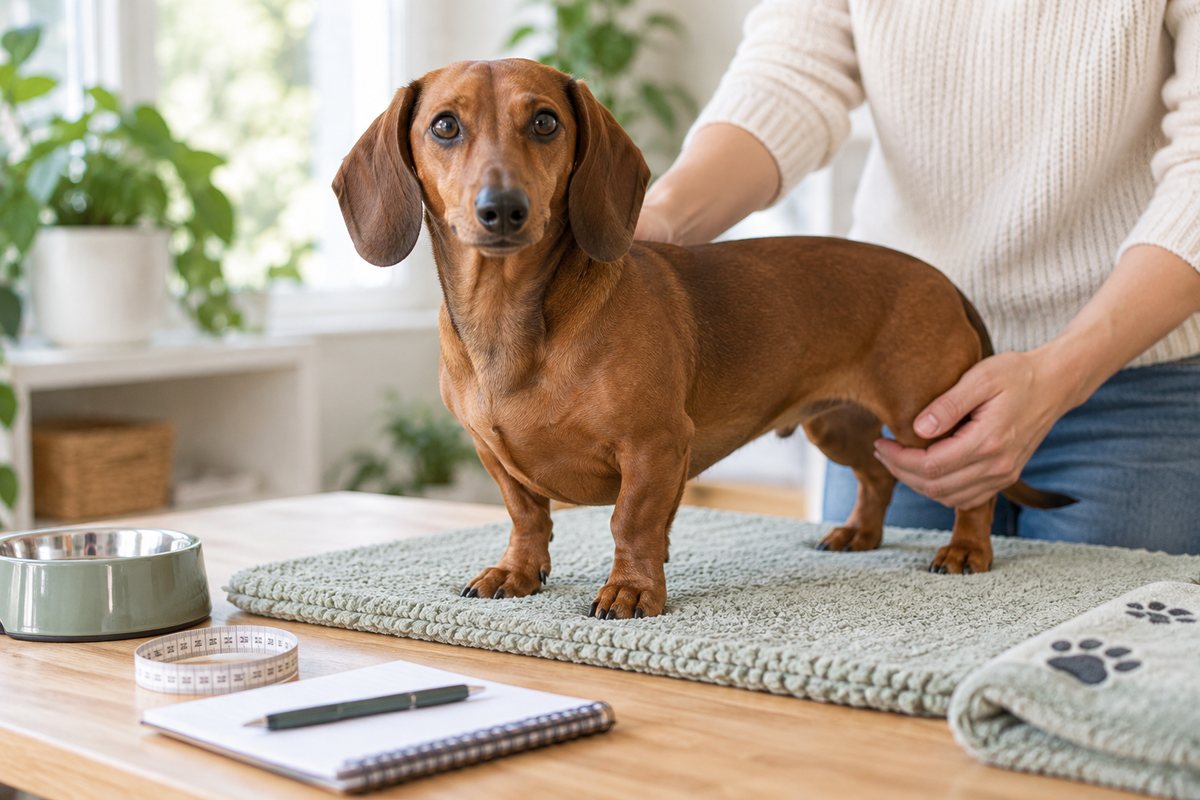
Best Crate for Dachshunds should be chosen around Dachshund proportions, back safety, daily use, and the exact place or problem you are solving. This guide focuses on safe crate size, divider use, doors, bedding, and calm crate routines. The goal is not to chase the fanciest product; it is to choose gear that is stable, correctly sized, easy to clean, and realistic for a long-backed dog.
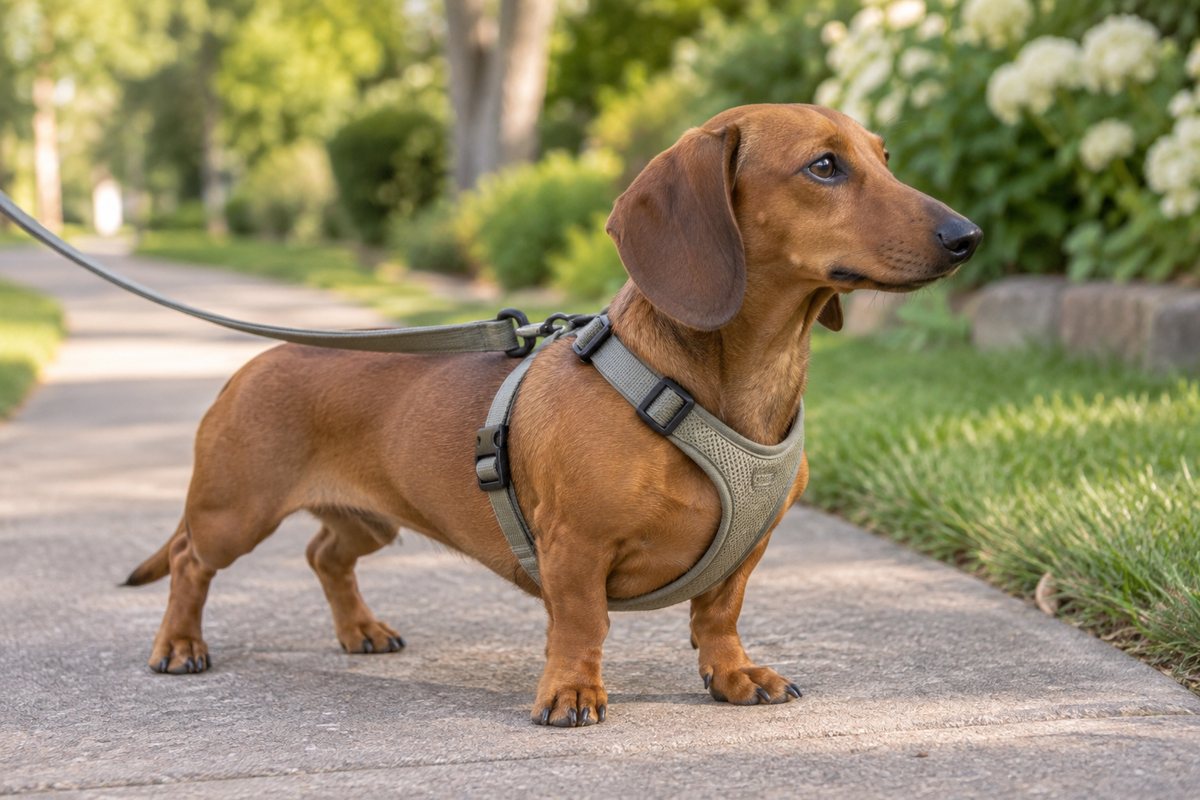
Best Crate for Dachshunds: quick answer
For most owners, the best crate is the one your Dachshund can use calmly every day. Prioritize fit, stability, traction, washable materials, and a design that prevents jumping, twisting, slipping, or overexcitement. Measure your dog and your home before buying, because Dachshunds vary in length, chest depth, confidence, age, and mobility.
| Check | What to look for | Why it matters |
|---|---|---|
| Size | Long enough or roomy enough for a Dachshund body | Prevents cramped posture and awkward movement |
| Stability | No wobble, sliding, tipping, or flexing | Nervous dogs avoid unstable gear |
| Traction | Grippy surface or secure footing | Helps protect short legs and long backs |
| Cleaning | Washable cover or wipeable surface | Keeps daily-use gear realistic |
| Use case | Matches couch, bed, car, crate, or play routine | Avoids buying the wrong style |
How to choose the right option
Start with the problem you are trying to solve. A product for occasional travel is different from gear used ten times a day. If the crate will sit in the living room, it needs to stay in place and look simple enough that you will not move it away. If it is for sleep, it needs to be easy to access when your dog is tired. If it is for enrichment, it should challenge your dog without creating frustration or unsafe chewing.
Dachshunds often make gear decisions more specific than general dog guides suggest. Their long backs, short legs, deep chests, and bold personalities mean that small fit issues matter. A tiny wobble, steep angle, slick fabric, oversized crate, or toy that encourages vertical leaping can turn a good idea into a daily problem.
- Measure your Dachshund’s length, chest, and weight instead of guessing by breed name.
- Measure the furniture, vehicle, crate space, or play area where the product will be used.
- Choose low-impact movement and stable footing over cute styling.
- Avoid products that require jumping, scrambling, twisting, or rough landings.
- Supervise the first few uses and reward calm interaction.
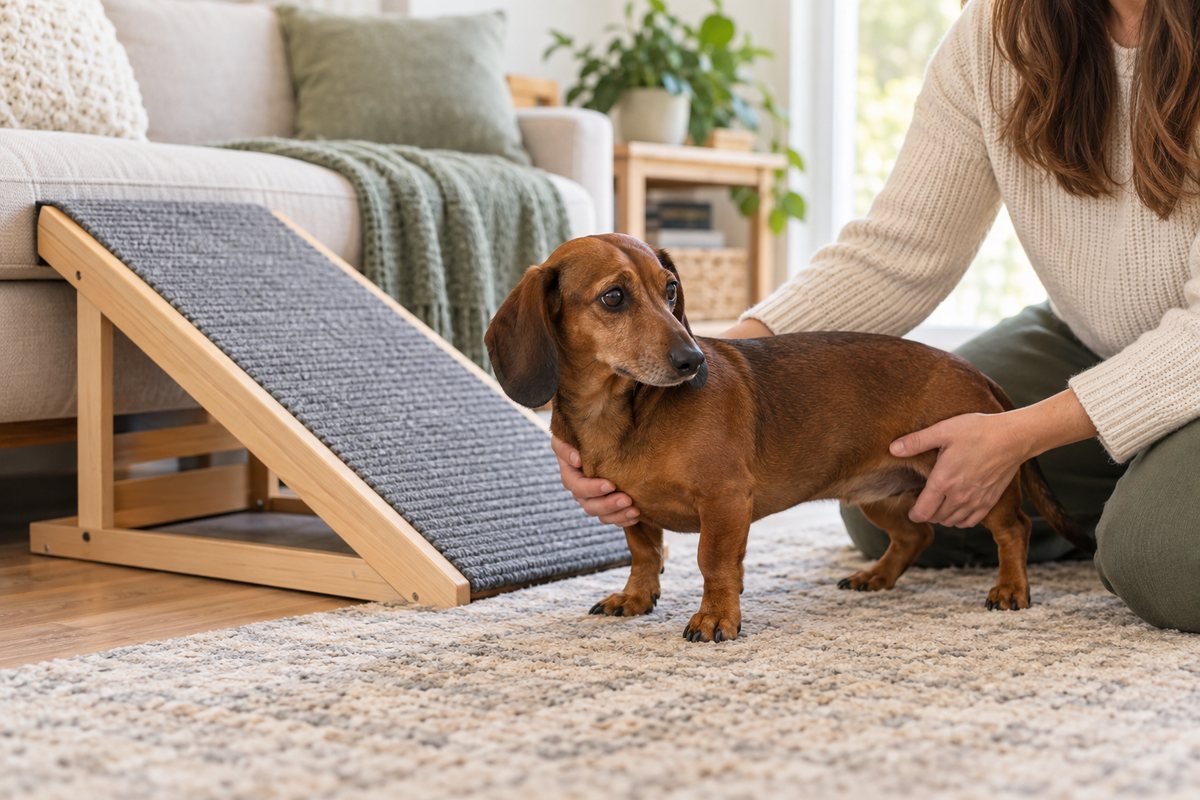
Best uses and common mistakes
| Situation | Good choice | Common mistake |
|---|---|---|
| Puppy | Adjustable or beginner-friendly setup | Buying only for adult size and ignoring current safety |
| Senior | Low entry, stable surface, gentle movement | Choosing a steep or narrow product |
| Confident jumper | Block the old jump path and train the new habit | Assuming the product alone changes behavior |
| Small home | Measure footprint before buying | Buying gear that gets moved out of the way |
| Food or toy use | Count calories and supervise | Leaving treat toys or chews unmanaged |
The biggest mistake is buying gear and expecting your Dachshund to understand it immediately. Introduce new items slowly. Place treats near the item, reward curiosity, and keep early sessions short. If your dog avoids it, check the slope, noise, smell, wobble, texture, and placement before assuming stubbornness.
When to be more cautious
Be more cautious with puppies, seniors, overweight Dachshunds, dogs with a history of back pain, and dogs who panic around new objects. If your Dachshund yelps, limps, drags the rear feet, refuses normal movement, or suddenly avoids stairs, furniture, or handling, pause the gear plan and contact your veterinarian.
How to keep this choice specific
This article should solve the specific question of best crate for dachshunds, not every Dachshund gear problem at once. Keep the decision centered on safe crate size, divider use, doors, bedding, and calm crate routines. Use the general crate article for product selection. Use the mini and standard crate-size articles only when the reader needs measurements and fit logic for that size class.
| Related need | Best focus | Avoid this overlap |
|---|---|---|
| General crate | Material, doors, divider, cleaning | Shopping only by breed label |
| Mini size | Small body, puppy growth, divider use | Buying a crate so large it becomes a potty area |
| Standard size | Length, turning room, stronger frame | Choosing a crate too short for the dog’s back |
A practical buying workflow
Use a three-step workflow before you buy. First, measure the dog and the space. Second, decide how often the item will be used. Third, plan the training or introduction session before the package arrives. This prevents a common Dachshund-owner pattern: buying a reasonable product, placing it in the wrong spot, and then assuming the dog is being stubborn when they avoid it.
For crate, the final test is daily behavior. Your Dachshund should be able to approach calmly, use the item without scrambling, and recover without excitement or fear. If the product creates more jumping, barking, chewing, guarding, or avoidance, change the setup before replacing it.
- Measure first and keep those numbers in your phone.
- Read return policies before buying bulky gear.
- Choose washable materials for anything used with food, sleep, or outdoor dirt.
- Introduce the item with rewards before expecting independent use.
- Recheck fit after weight changes, puppy growth, or senior mobility changes.
How this fits your Dachshund routine
Use this article with best harness for dachshunds, best orthopedic bed for dachshunds, best crate size for miniature dachshund. Gear works best when it supports a broader routine: measured meals, calm training, safe handling, and predictable home setup. A good product should make the desired habit easier for both you and your dog.
FAQ
What matters most in a crate for Dachshunds?
The most important features are correct size, stability, traction, and daily usability. If the product is awkward to use or easy for your dog to avoid, it will not solve the problem.
Should I buy by weight label or measurements?
Use measurements first. Weight labels are only a starting point. Dachshunds can have different body lengths, chest shapes, and confidence levels at the same weight.
What if my Dachshund refuses to use it?
Lower the difficulty. Make the product more stable, add traction, use tiny rewards, and practice away from pressure. If refusal is sudden or paired with pain signs, call your veterinarian.
Is the most expensive option always better?
No. The best choice is the one that fits your dog, your home, and your routine. A simple stable option is often better than an elaborate product that gets ignored.
Can this replace training?
No. Good gear supports training, but your Dachshund still needs a calm introduction, consistent cues, and repeated rewards for the safer habit.
Owner decision checklist
Use this checklist before buying anything for best crate for dachshunds. Keep the decision tied to one shopping job: safe crate size, divider use, doors, bedding, and calm crate routines. No product can promise to prevent injury, cure anxiety, or replace training. The right item simply makes safer routines easier when it is measured, introduced, and used consistently.
- Measure your dog and the furniture, car, crate area, or play space first.
- Choose stability, traction, cleaning, and daily usability before color or style.
- Plan the first training session before expecting independent use.
- Watch for avoidance, rushing, slipping, chewing, or guarding during the first week.
- Recheck the setup after puppy growth, weight changes, or senior mobility changes.
| Situation | Best response | Common mistake |
|---|---|---|
| New puppy | Choose adjustable, easy-to-clean gear and train slowly | Buying only for adult size |
| Senior dog | Prioritize low entry, stability, and predictable placement | Choosing a steep or narrow option |
| Small apartment | Measure footprint and storage before buying | Moving the item so often the dog never learns it |
| Excitable dog | Reward calm interaction before full use | Letting the product create jumping or barking |
What to do today, this week, and next month
| When | Action |
|---|---|
| Today | Measure the dog and the space, then list the exact job the product must do |
| This week | Compare two or three options using stability, fit, cleaning, and training needs |
| First use | Introduce the item with treats and calm praise before expecting full use |
| After one month | Check whether the item reduced the problem or simply moved it elsewhere |
The timeline matters because Dachshund problems often become habits through repetition. A single good purchase, one calm training session, or one careful grooming check is a start, but the result comes from repeating the same clear setup. Keep the routine small enough that you can actually follow it.
Real-life example
Imagine the problem happens on a normal weekday, not during a perfect training session. You are busy, your Dachshund is excited, and the old habit is easier than the new one. The useful plan is the one that still works in that moment. Set up the room, walk route, grooming surface, crate area, or product placement before your dog has a chance to rehearse the unwanted pattern. Reward the first small success, stop while the session is still calm, and repeat the same setup tomorrow. This is how a practical Dachshund routine becomes reliable. If the setup feels too complicated to repeat daily, simplify it until it fits normal life and your dog can predict it.
A narrow plan is easier to follow than a long list of unrelated tips. Solve the exact problem in front of you first, then use related guides for nearby questions such as training, safe handling, grooming, toys, crates, ramps, or health warning signs.
Dachshund topics often overlap because behavior, gear, grooming, and health all affect one another. The best plan is specific: name the trigger or task, make the setup easier, reward cooperation, and watch whether your dog becomes calmer and more comfortable over time.
Sources
- AKC: Dachshund Breed Information
- AKC: Intervertebral Disc Disease in Dogs
- AKC: Crate Training Benefits
- AKC: How to Choose Safe Dog Toys
- AVMA: Selecting a Pet Carrier