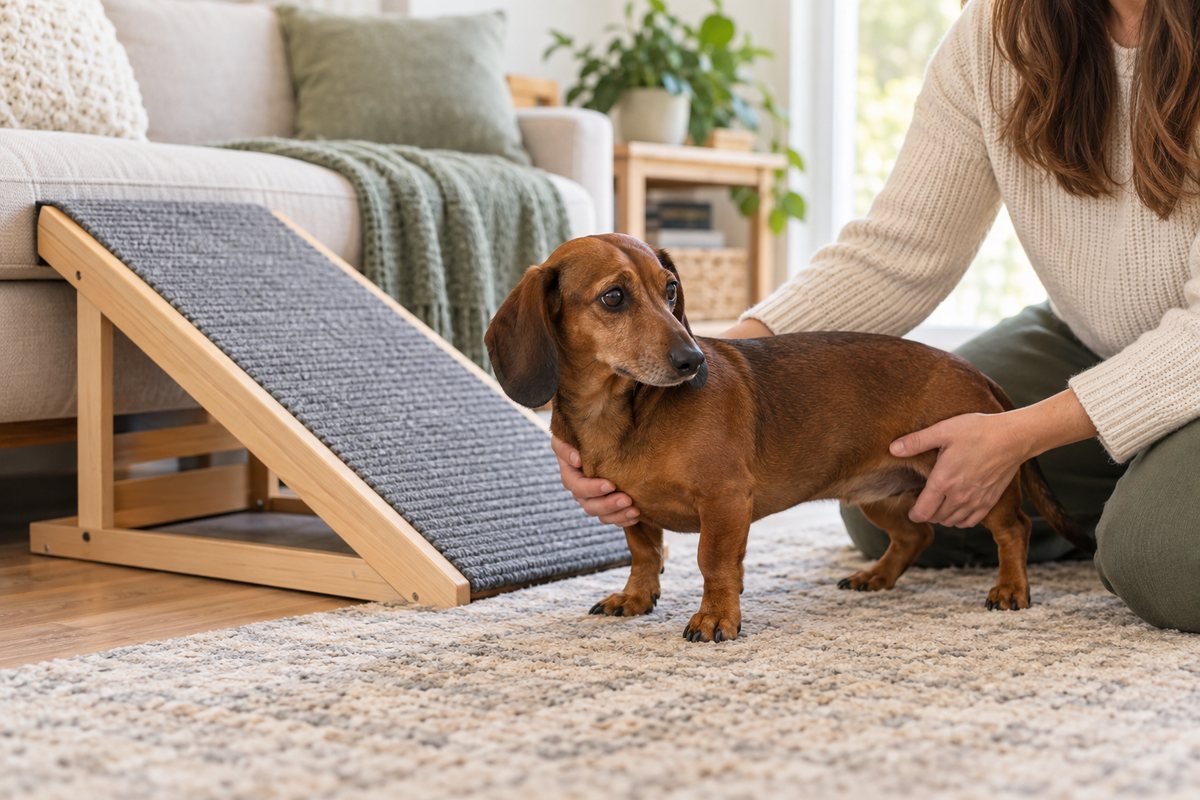
Dachshund winter coat care is about warmth, dry skin, clean paws, and safe walks. Smooth Dachshunds may feel cold quickly because they have short coats and low bodies. Long-haired Dachshunds can collect snow, mud, and mats. Wire-haired Dachshunds may look rugged, but they still need paw checks, brushing, and weather-aware routines. The goal is not to overdress every Dachshund. It is to match care to coat type, temperature, wind, moisture, age, and health.
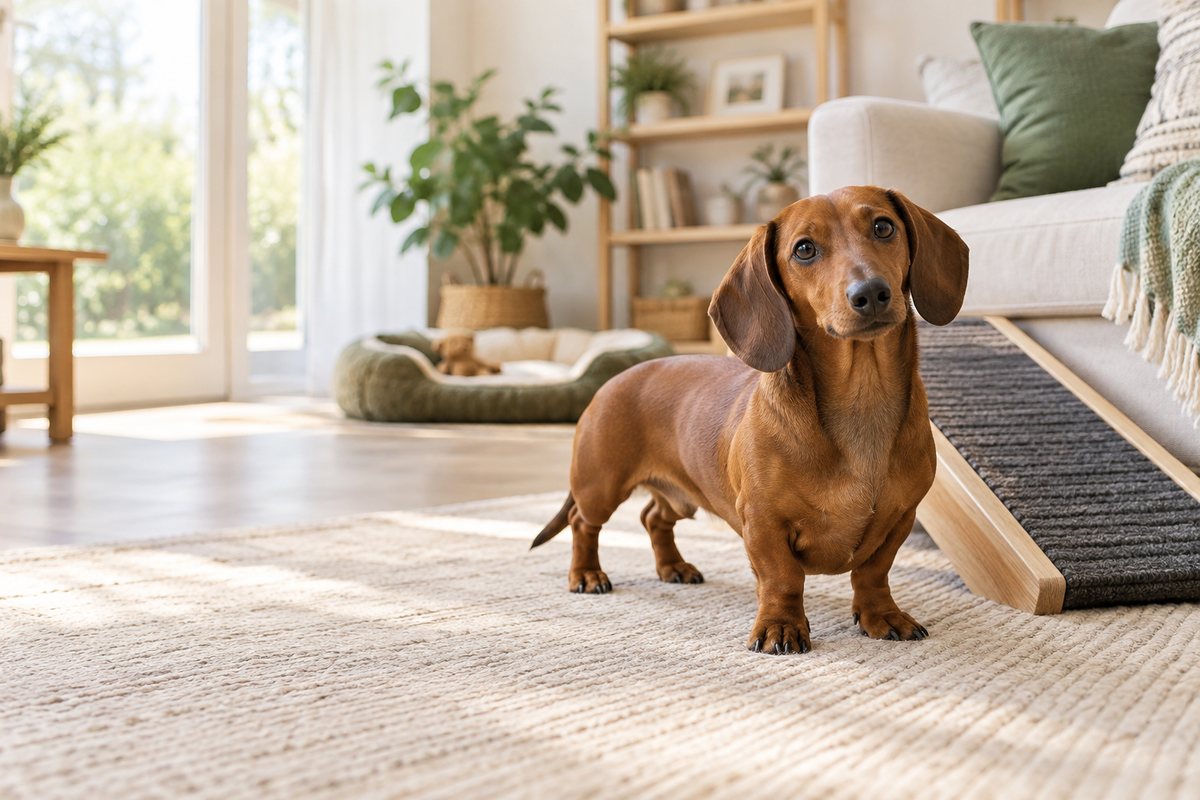
This guide covers winter brushing, bathing, sweaters, paw protection, snow cleanup, and when cold weather should shorten walks. If your Dachshund is very young, senior, underweight, has heart or endocrine disease, has back pain, or shivers even indoors, ask your veterinarian for a cold-weather plan.
Table of Contents
Dachshund winter coat care: quick answer
In winter, keep your Dachshund dry, warm enough, and mat-free. Brush long-haired and wire-haired coats more often, wipe paws after walks, dry the belly and chest, and use a well-fitted sweater or coat when your dog is cold. Shorten walks in harsh weather and avoid forcing a shivering Dachshund to continue.
AKC cold-weather safety guidance notes that small, short-coated, senior, and very young dogs can be more vulnerable to cold. Dachshunds often fit more than one of those categories, especially smooth-coated miniatures and seniors.
Winter care by coat type
| Coat type | Winter risk | Care priority |
|---|---|---|
| Smooth | Gets cold easily, little natural insulation | Sweater or coat, quick drying, shorter walks |
| Long-haired | Mats, wet feathering, snow clumps | Brush ears, chest, legs, belly, and tail |
| Wire-haired | Debris, dry skin, coat texture changes | Regular brushing and coat-specific grooming |
| Puppy | Less tolerance and less routine | Short outings and gentle handling practice |
| Senior | Cold sensitivity and mobility changes | Warmth, traction, and vet guidance if stiff |
For a broader look at coat types, use Dachshund coat types. For full grooming structure, save how to groom a Dachshund once that hub is live.
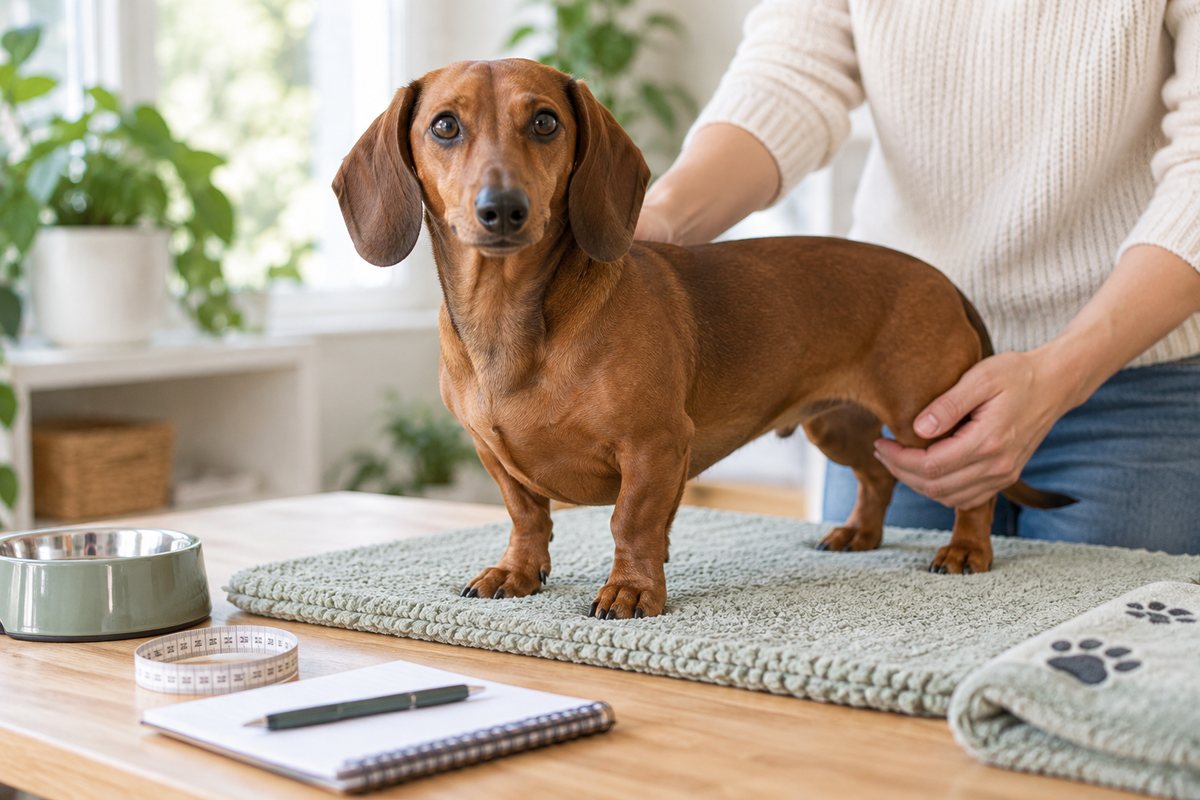
Does your Dachshund need a coat?
A Dachshund may need a sweater or coat if they shiver, tuck their tail, lift paws, try to go home, or refuse to walk normally in cold weather. Smooth and miniature Dachshunds often need help sooner than large, thick-coated breeds. The coat should fit the long body without rubbing the front legs or blocking potty movement.
- Choose warmth without bulk around the shoulders.
- Check that the chest and belly are covered but not soaked.
- Avoid tight straps behind the elbows.
- Remove wet clothing after the walk.
- Do not leave a sweater on if it causes rubbing or matting.
Paw care in winter
Dachshunds walk close to the ground, so the belly, chest, and paws collect slush and road residue quickly. After walks, wipe and dry the paws, check between toes, and remove snow clumps gently. If sidewalks are treated with salt or de-icer, paw wiping becomes even more important.
| Winter paw issue | What to do | When to call the vet |
|---|---|---|
| Snow packed between toes | Warm towel and gentle removal | Limping or bleeding |
| Salt or de-icer exposure | Wipe paws after walks | Redness, cracking, licking that persists |
| Dry pads | Ask your vet about paw balm | Deep cracks or pain |
| Slipping indoors | Use rugs or traction paths | Sudden weakness or wobbliness |
Brushing and mat prevention
VCA grooming guidance notes that long, silky, or curly coats may need daily brushing to prevent tangles and mats, especially around the ears, armpits, and backs of the legs. Those are exactly the places a long-haired Dachshund can mat in winter because moisture and clothing create friction.
- Brush before bathing because water can tighten mats.
- Pay attention behind ears, under harness straps, armpits, belly, and tail feathering.
- Use a comb after brushing to check that you reached the skin.
- Keep sessions short and reward calm handling.
- Ask a groomer for help if mats are tight or close to skin.
Bathing and dry skin
Winter air can be drying, but over-bathing can also irritate skin. Bathe when your Dachshund is dirty or smelly, use dog-safe shampoo, rinse thoroughly, and dry the coat well before cold exposure. Long-haired dogs should be brushed out before the bath.
If your Dachshund has flaking, redness, bald patches, odor, frequent scratching, ear problems, or greasy skin, do not assume it is normal winter dryness. Skin issues need a veterinary check.
Cold-weather walk routine
- Check temperature, wind, rain, snow, and ground conditions.
- Add a coat if your Dachshund needs one.
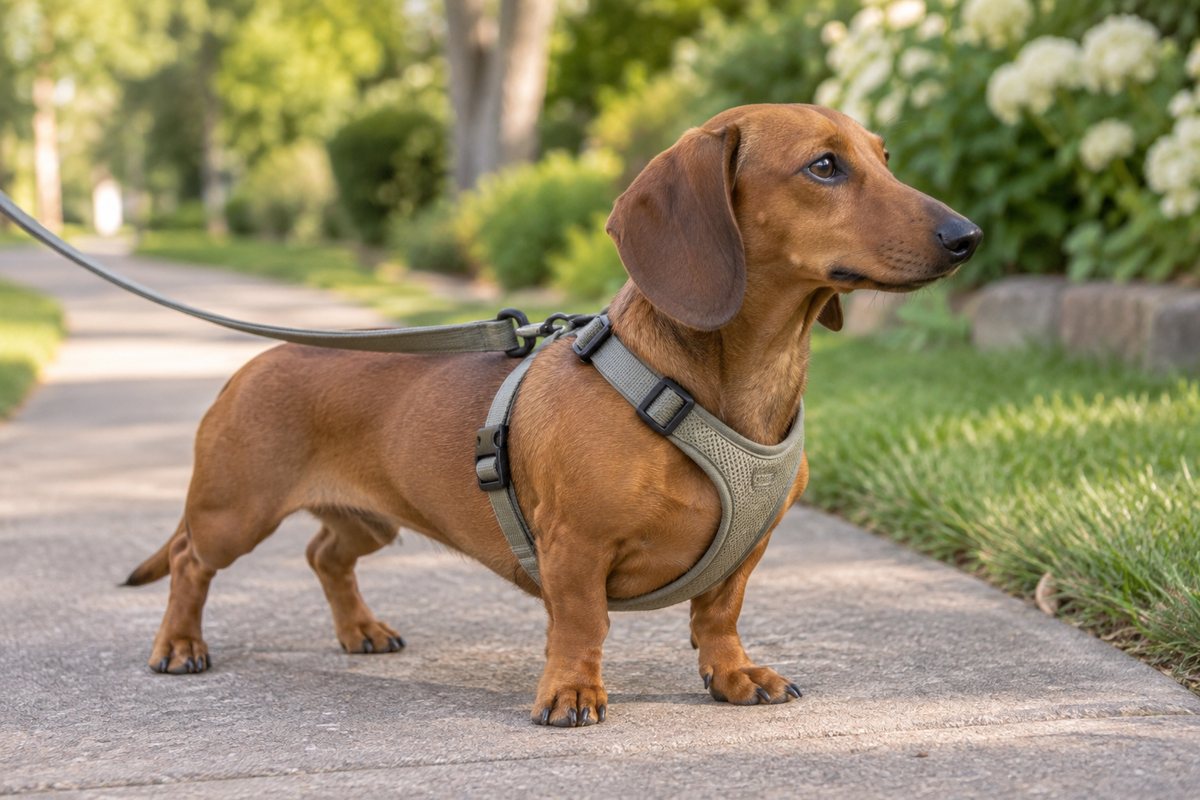
- Use a secure harness instead of neck pressure.
- Keep the walk shorter in harsh weather.
- Watch for shivering, paw lifting, slowing, or refusal.
- Wipe paws, chest, belly, and legs after returning.
- Brush damp long hair before it mats.
For safe walking gear, see best harness for Dachshunds. If your dog moves stiffly or seems painful after cold walks, review Dachshund back pain signs.
FAQ
Do Dachshunds need winter coats?
Many smooth, miniature, senior, or cold-sensitive Dachshunds benefit from a winter coat. Watch your dog, not just the temperature. Shivering, paw lifting, and trying to turn home are signs they may be too cold.
How often should I brush a long-haired Dachshund in winter?
Brush problem areas daily if your dog gets wet, wears clothing, or mats easily. At minimum, check behind ears, armpits, legs, belly, and tail feathering several times per week.
Can Dachshunds walk in snow?
Some can, but keep outings short, avoid deep icy conditions, wipe paws afterward, and stop if your dog is shivering, limping, or refusing to move.
A winter coat care routine for Dachshunds
Winter coat care is about more than buying a sweater. Dachshunds ride low to the ground, so their chest, belly, ears, and paws can get wet, salty, and cold quickly. Smooth coats may lose heat fast, while long and wire coats can trap moisture and debris.
The best routine is simple: protect before the walk, clean after the walk, and check skin weekly. If your dog shivers, refuses to move, lifts paws, or seems stiff after cold outings, shorten the trip and improve warmth and traction.
| Situation | What it suggests | Best next step |
|---|---|---|
| Cold dry day | Heat loss | Use fitted sweater or coat |
| Wet sidewalks | Belly and chest moisture | Dry underside after walks |
| Salted paths | Paw irritation | Rinse or wipe paws |
| Long hair | Mats behind ears and legs | Comb after wet walks |
| Senior dog | Stiffness risk | Shorter trips and warm recovery |
Dachshund winter coat care: practical checklist
- Choose a coat that covers the chest without blocking movement.
- Check armpits for rubbing after the first wear.
- Dry belly, paws, and ears after wet walks.
- Comb feathering before small tangles tighten.
- Use traction rugs inside if paws are wet.
- Stop the walk if your dog shivers or lifts feet repeatedly.
When to change course
If skin becomes flaky, red, itchy, or smelly during winter, look beyond weather. Over-bathing, allergies, parasites, and infection can all look like simple dryness at first.
Dachshund winter coat care: owner scenarios and fixes
The final step for Dachshund winter coat care is matching the advice to the exact situation in front of you. Dachshunds are small, persistent, routine-sensitive dogs, so a plan that looks correct on paper can fail if the room setup, timing, gear, reward value, or health context is wrong. Before changing everything, choose the one pattern that happens most often and work there first.
This also helps prevent mixed signals. If you sometimes reward the unwanted pattern, sometimes interrupt it, and sometimes ignore it, your Dachshund may keep trying the behavior because the rules are unclear. A simple plan that everyone in the home follows for one week is usually more useful than a complicated plan that changes every day.
| Owner situation | How to handle it |
|---|---|
| When the main issue is cold dry day | Start with the practical fix: use fitted sweater or coat. Give it several calm repetitions before adding a second change. |
| When the pattern looks like wet sidewalks | Assume the setup is slightly wrong for your Dachshund and adjust the environment before expecting better behavior. |
| When you see salted paths | Slow the plan down. Dachshunds often improve faster when the next step is easier, clearer, and more predictable. |
| When long hair keeps returning | Look for a trigger that happens before the problem. Changing that trigger usually works better than reacting afterward. |
| When senior dog is involved | Treat it as a sign to re-check fit, comfort, schedule, or health rather than assuming your dog is ignoring you. |
How to make the plan easier for your Dachshund
If progress stalls, make the next repetition easier instead of louder or longer. For Dachshund winter coat care, easier can mean more distance, a shorter session, a lower height, a quieter room, softer handling, smaller rewards, or fewer choices. The easier version should let your dog succeed while still practicing the skill you want.
Watch recovery time. A Dachshund who can return to sniffing, eating, resting, or walking normally is usually in a workable zone. A dog who stays frantic, stiff, avoidant, or obsessed with the trigger is telling you the setup is too difficult. That is useful information, not a training failure.
7-day improvement plan
- Day 1: write down when the Dachshund winter coat care problem happens, where it happens, and what happened right before it.
- Day 2: remove the easiest trigger or setup mistake connected to cold dry day.
- Day 3: practice the first checklist step: choose a coat that covers the chest without blocking movement..
- Day 4: repeat the same plan at an easier level instead of adding a new rule.
- Day 5: add one support step from the checklist: check armpits for rubbing after the first wear..
- Day 6: ask whether your dog recovers faster than earlier in the week.
- Day 7: keep what improved, drop what confused your dog, and decide whether health or professional support is needed.
This seven-day plan will not solve every case of Dachshund winter coat care, but it gives you cleaner information. If the pattern improves, keep building gradually. If it stays the same or worsens, the cause may be discomfort, fear, poor fit, too much freedom, or a trigger that needs a different article-specific plan.
Quality check before you rely on the advice
The safest version of the advice should be specific, observable, and easy to repeat. You should know what you are changing, what success looks like, and when to stop. For Dachshunds, stop signs include pain, limping, yelping, frantic barking, snapping, refusal to eat rewards, vomiting, repeated accidents, or sudden behavior changes.
When in doubt, choose the lower-risk version: more distance, better traction, shorter sessions, calmer rewards, clearer routines, and earlier veterinary input. That keeps the Dachshund winter coat care plan helpful without pushing a small long-backed dog through stress, pain, or confusion.
Sources
- VCA: Grooming and Coat Care for Your Dog
- AKC: Dog Grooming at Home
- AKC: Winter Safety Tips for Dogs
- AVMA: Cold Weather Animal Safety
- VCA: First Aid for Paw Pad Injuries in Dogs