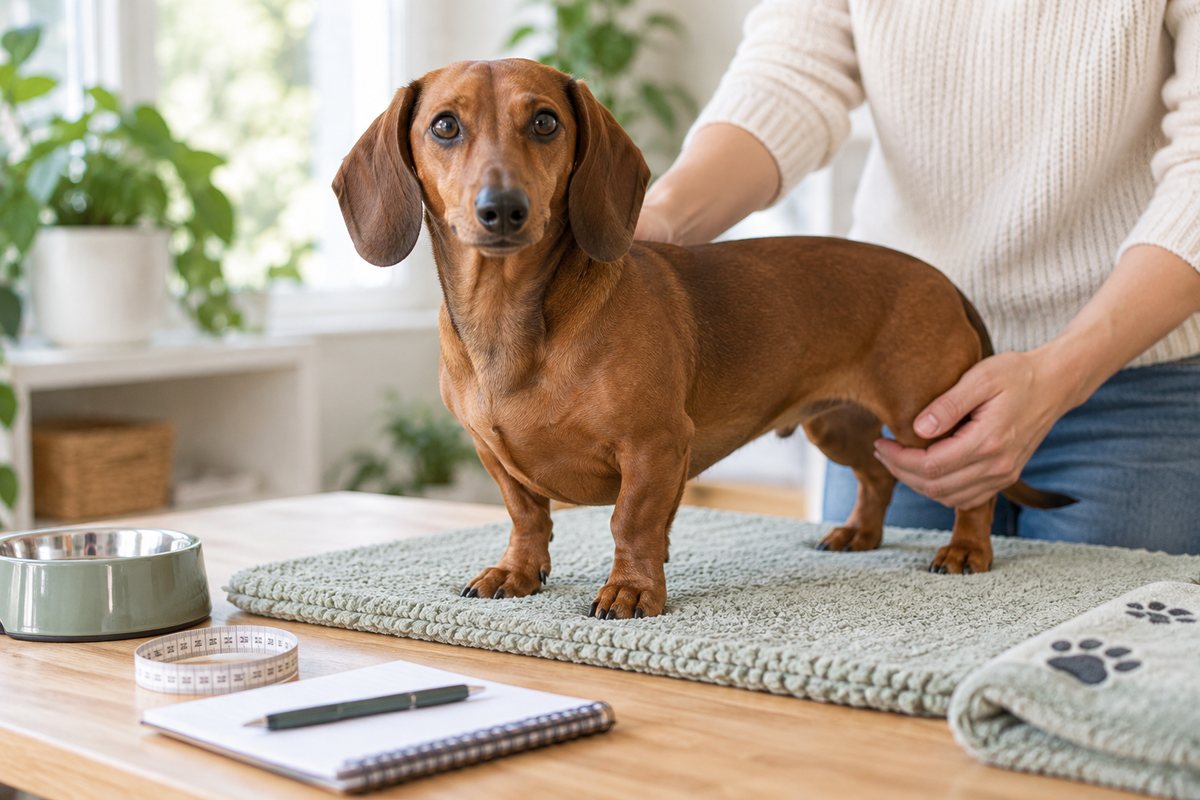
For most Dachshunds, a dog ramp is usually safer than stairs when the goal is reducing jumping on and off furniture, beds, cars, or couches. A ramp gives a gradual path, while stairs still require repeated stepping, turning, and impact. That said, the best choice depends on your Dachshund’s age, confidence, back history, home layout, and whether they will actually use the tool every time.
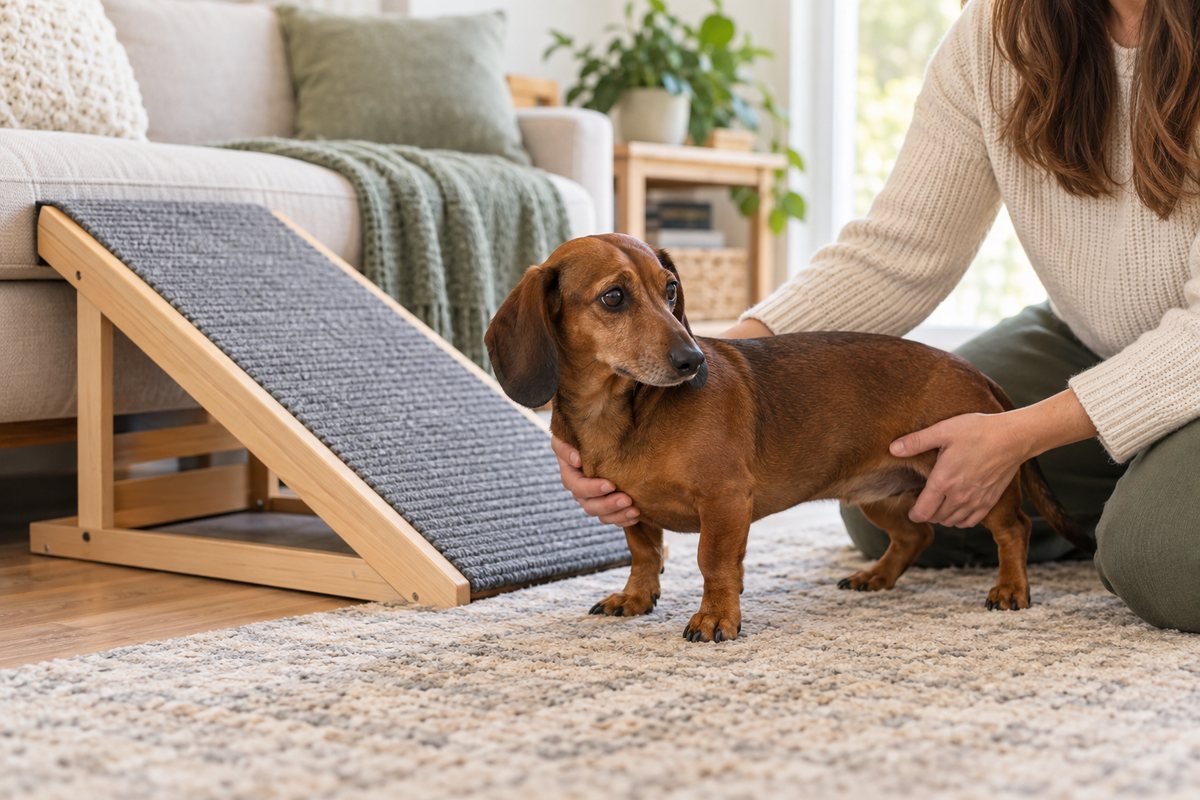
This dog ramp vs stairs for Dachshunds guide compares safety, training, space, slope, surface grip, and when to avoid both. It is not medical advice. If your Dachshund has back pain, weakness, wobbliness, reluctance to move, yelping, or sudden behavior change, contact your veterinarian before asking them to use stairs or a ramp.
Table of Contents
Dog ramp vs stairs for Dachshunds: quick answer
If you are choosing between a ramp and stairs for a Dachshund, choose a ramp first for beds, couches, and cars when space allows. Pick a low slope, non-slip surface, stable frame, and enough width for your dog to walk without twisting. Stairs may be acceptable for some young, healthy, confident dogs, but they are not the first choice for dogs with back history, senior changes, weak coordination, or jumpy behavior.
Dachshunds are one of the breeds commonly associated with intervertebral disc disease. Cornell’s canine health resources describe IVDD as a condition involving spinal discs that can cause pain and neurologic signs. Because jumping and awkward movement can be hard on long-backed dogs, many Dachshund owners use ramps as part of a back-aware home setup.
Ramp vs stairs comparison
| Factor | Ramp | Stairs |
|---|---|---|
| Back-friendly movement | Usually better because movement is gradual | Can still require stepping and impact |
| Space needed | Needs more floor length | Compact footprint |
| Training difficulty | Some dogs need confidence practice | Some dogs understand quickly |
| Senior dogs | Often easier when slope is gentle | May be harder with weakness or vision changes |
| Furniture access | Good for beds and couches if stable | May work for low couches |
| Car access | Usually better | Often too steep or awkward |
| Risk if ignored | Dog may jump beside it | Dog may jump from top step |
The real winner is the option your Dachshund uses consistently. A perfect ramp in the corner is less helpful than a decent ramp placed exactly where your dog would otherwise jump.
Why back-safe access matters
Dachshunds have a long body and short legs, and many owners worry about repeated jumping from furniture or vehicles. Not every jump causes injury, and not every back problem comes from a jump, but reducing unnecessary impact is a sensible home-management step for a breed with back concerns.
- Use ramps for beds, couches, and cars when possible.
- Block furniture access if your dog refuses the ramp and keeps jumping.
- Keep floors non-slip around landing areas.
- Watch for changes in movement, appetite, mood, or posture.
- Call your veterinarian if your Dachshund shows back pain signs.
For warning signs, read Dachshund back pain signs. For a broader health overview, see Dachshund health problems.
When a ramp is better
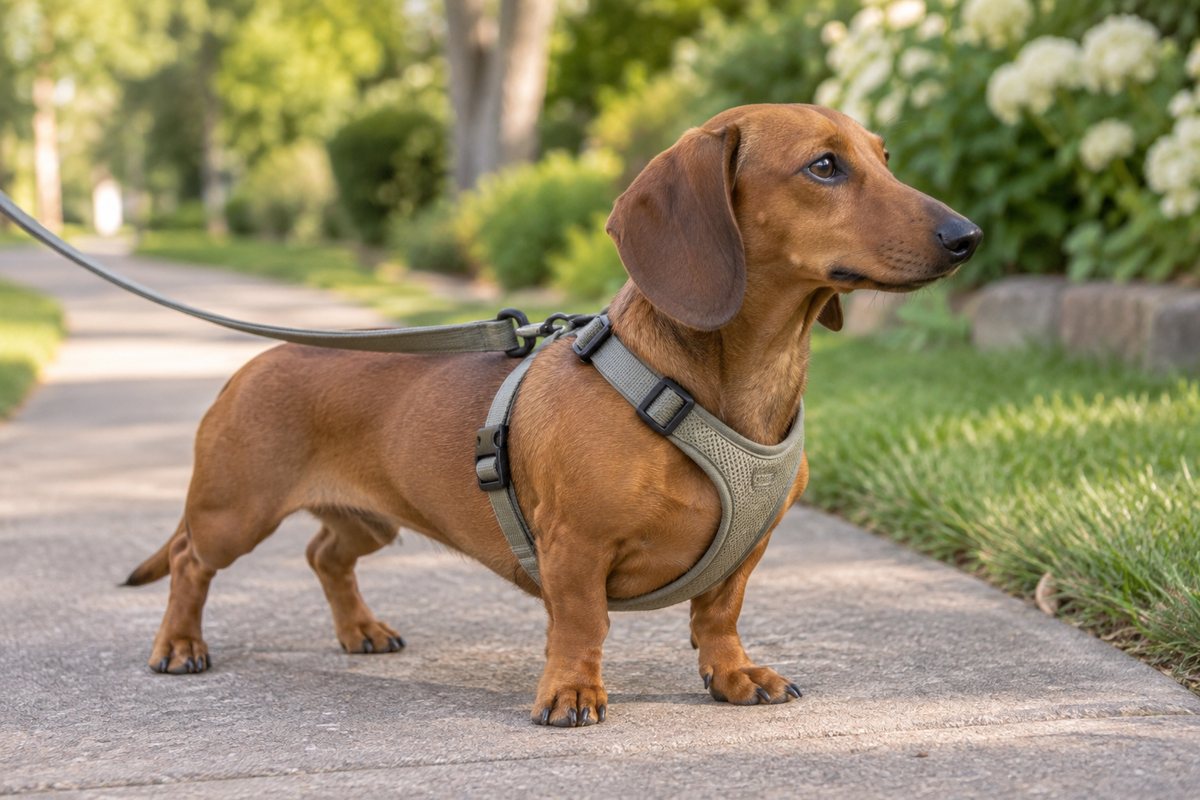
A ramp is usually the better option when the access point is high, the dog is older, the dog has a back history, or the dog tends to launch off furniture. Ramps also help with car access because the height difference is often too much for stairs to solve safely.
| Use a ramp when | Why | Setup tip |
|---|---|---|
| Bed or couch is high | Reduces jumping down | Choose a long ramp with gentle slope |
| Dog has back history | Minimizes awkward impact | Ask your vet what movement is allowed |
| Dog is senior | May be easier than steps | Use non-slip surface and side rails if needed |
| Car entry is needed | Stairs may be too steep | Use a stable, wide travel ramp |
| Dog jumps over stairs | Stairs are not solving behavior | Block jumping path and train the ramp |
The ramp must feel safe to the dog. A narrow, slippery, bouncy ramp can scare a Dachshund and teach them to avoid it. Stability matters as much as the word “ramp.”
When stairs may work
Pet stairs may work for a young, healthy Dachshund accessing a low couch, especially if the dog already moves slowly and does not leap from the top. They are also more compact for small rooms. But stairs are not ideal if each step is tall, narrow, slippery, or placed at a steep angle.
- Choose low, deep steps rather than tall, narrow ones.
- Use a non-slip covering.
- Place stairs flush against the furniture.
- Train slow stepping instead of jumping from the top.
- Block access if your dog skips the stairs and launches anyway.
If your Dachshund has any current back pain or neurologic sign, do not decide between ramp and stairs on your own. Ask your veterinarian what movement restrictions are appropriate.
How to choose a Dachshund ramp
The best dog ramp for a Dachshund is stable, gentle, and easy to use every day. A ramp that is too steep can feel like climbing a wall. A ramp that slides on the floor can make your dog distrust it.
| Feature | Why it matters | What to check |
|---|---|---|
| Gentle slope | Reduces strain and fear | Longer ramp for higher furniture |
| Non-slip surface | Prevents sliding | Traction that works for short legs |
| Stable frame | Builds confidence | No wobble or flex under weight |
| Enough width | Prevents twisting | Dog can walk straight comfortably |
| Side rails or edges | Help some dogs feel secure | Useful for seniors or nervous dogs |
| Easy placement | Encourages daily use | Fits where the dog actually jumps |
For a buying-focused version of this topic, use best dog ramp for Dachshunds once that article is live. This comparison is about choosing ramp versus stairs before you shop.
How to train ramp or stair use
Many Dachshunds will not use a ramp just because you bought it. Train it like a skill. Start flat on the floor if needed, then gradually raise the ramp. Use small treats and avoid dragging your dog by the collar or harness.
- Let your Dachshund sniff the ramp or stairs.
- Reward looking at it, stepping near it, and placing one paw on it.
- Practice across a flat ramp before adding height.
- Add a low height and reward slow walking.
- Guide with a treat at nose level, not high above the head.
- Block jumping routes so the ramp becomes the obvious path.
- Practice daily until use becomes automatic.
If your Dachshund is fearful, keep sessions short. For general training structure, read how to train a Dachshund puppy and Dachshund commands to teach.
Common mistakes
- Buying a ramp that is too short and steep.
- Using slick plastic or bare wood without traction.
- Putting the ramp beside the jump path instead of blocking the jump path.
- Expecting instant use without training.
- Letting the dog jump down “just this once.”
- Using stairs for a dog already showing back pain signs.
- Ignoring slippery floors at the bottom.
Consistency matters. If your Dachshund sometimes uses the ramp and sometimes jumps, the back-safe habit is not built yet. Manage the environment until the ramp or stair routine is reliable.
FAQ
Are ramps or stairs better for Dachshunds?
Ramps are usually better because they provide a gradual path and can reduce jumping. Stairs may work for some healthy dogs and low furniture, but they are less ideal for dogs with back concerns or poor coordination.
Should Dachshunds use stairs at all?
Some healthy Dachshunds can use low, safe pet stairs, but repeated stairs and jumping are not ideal for every dog. If your dog has pain, weakness, wobbliness, or a back history, ask your veterinarian.
What slope is best for a Dachshund ramp?
Gentler is better. The higher the furniture or vehicle, the longer the ramp should be. If the ramp looks steep to you, it probably feels steep to a short-legged Dachshund.
What if my Dachshund refuses the ramp?
Start flat on the floor, reward tiny steps, add height slowly, and block the jumping route. Also check that the ramp is stable, non-slip, wide enough, and not too steep.
Final decision: ramp or stairs
The best choice is the one your Dachshund uses slowly and consistently. A ramp is often better for high furniture and dogs with short legs, while very shallow stairs may work for low furniture when the dog moves carefully. The wrong version is the one that encourages rushing, slipping, twisting, or jumping off the side.
Use the warning signs below as a practical filter before you decide the plan is working. If one of these signs appears repeatedly, the next step is not more pressure; it is a clearer setup, a smaller training step, or a health check when comfort may be involved.
- Furniture is high
- Dog rushes down steps
- Room has little floor space
- Senior dog hesitates before climbing
For Dachshunds, the best plan is usually the one that reduces jumping, slipping, confusion, stress, or repeated rehearsal. Keep the routine boring enough to repeat, specific enough to measure, and flexible enough to change when your dog gives you new information.
Sources
- Cornell University College of Veterinary Medicine: Intervertebral Disc Disease
- VCA: Chondrodystrophy in Dogs
- VCA: Cervical Intervertebral Disc Disease in Dogs
- AKC: Intervertebral Disc Disease in Dogs
- AKC: Dog Training Basics