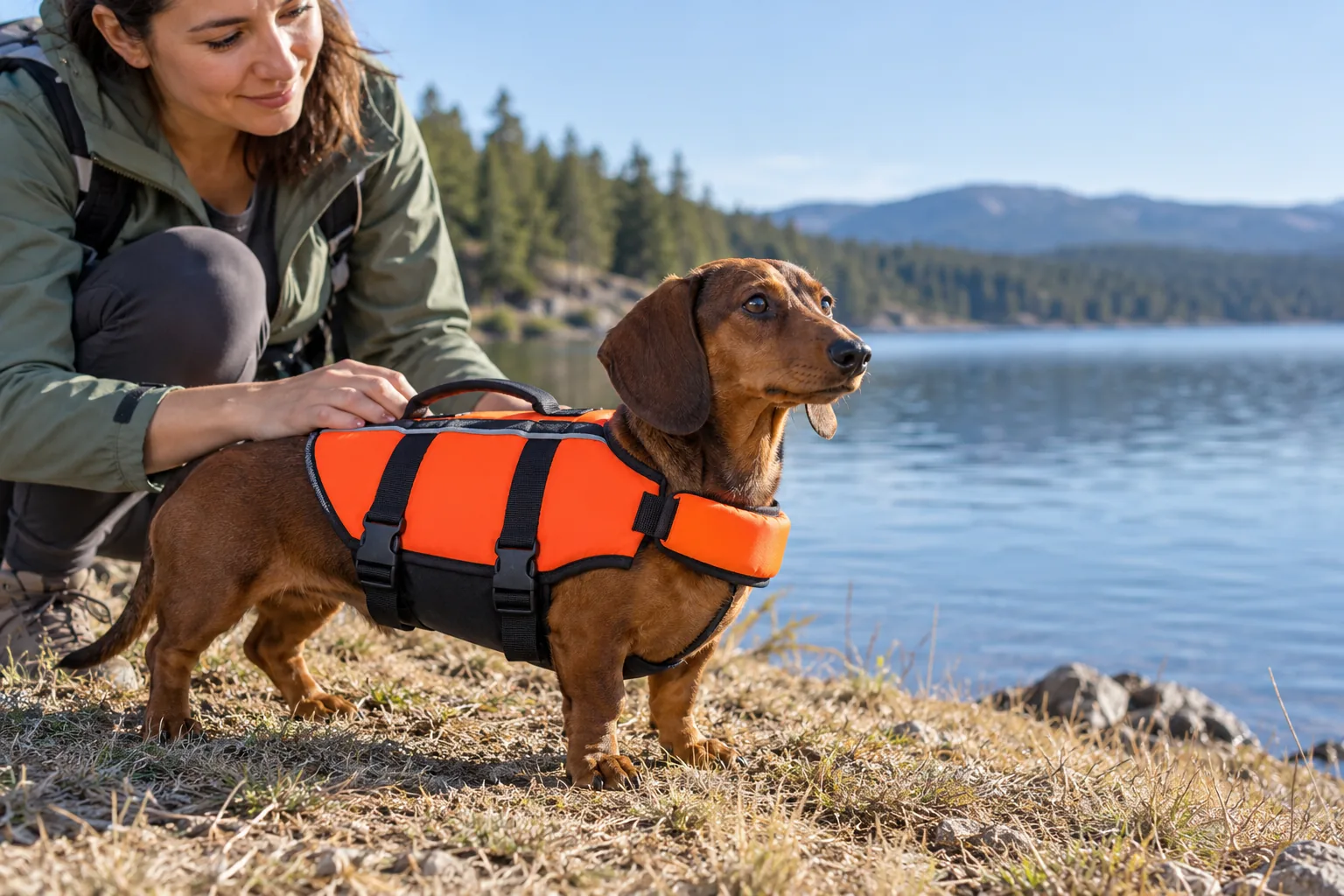
Direct answer
The best life jacket for Dachshunds is the one that stays in place on your individual Dachshund, supports a comfortable horizontal position, permits paddling, and gives a handler a reliable way to assist the dog. A weight-range match alone is not enough for a long-backed dog. Measure the neck, chest, and body length; examine the straps and handle; then test the fit on land and in shallow calm water under close supervision. The AKC life-jacket guide recommends checking movement, strap fit, visibility, and a shallow-water float trial. This article explains how to buy and test the equipment. Swimming instruction and water supervision belong in the separate swimming guide.
Best life jacket for Dachshunds: start with the intended use
A dog walking beside a calm shoreline, riding in a boat, or learning to paddle faces different exposure. Choose the water setting before shopping. Open or deep water deserves a more conservative choice than a supervised shallow-water introduction. Even a strong swimmer can tire or become disoriented, so a jacket is a safety layer rather than permission to leave a dog unattended. The AKC swimming introduction advises using an appropriate flotation device and allowing the dog to approach water voluntarily.
Consider how you will get the dog out of the water. A reachable exit, a person close enough to help, and a plan to stop when the dog tires matter as much as the jacket. Never use a product photo as proof that a Dachshund can be left alone near a pool or on a boat.
Measure the dog, then compare the garment
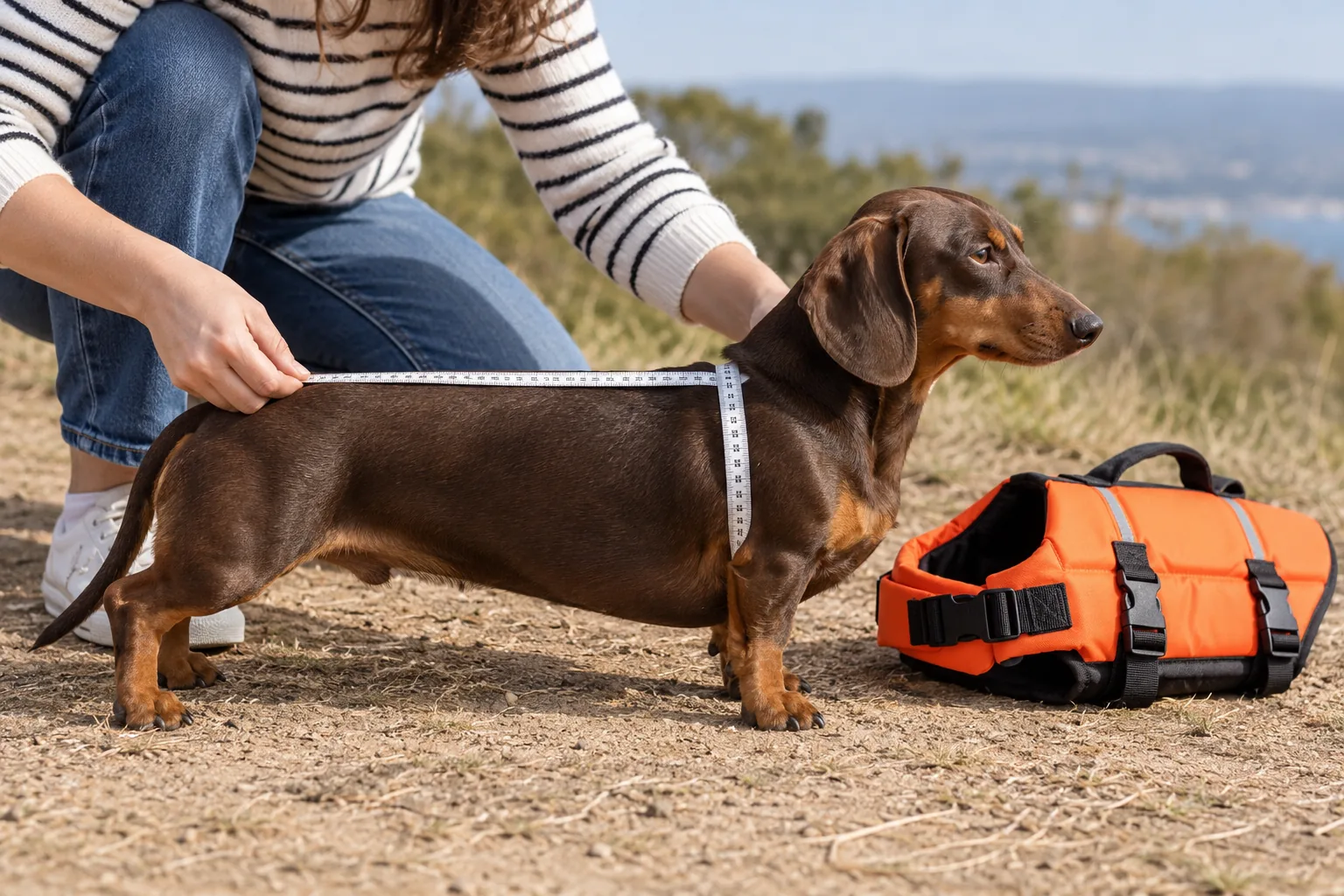
Use a flexible tape on a standing dog. Record chest girth at the rib cage, neck circumference where the jacket closes, body length from the shoulder area toward the tail base, and current weight. Manufacturers define measurement points differently, so compare your numbers to the exact model’s chart and its return policy. Dachshunds may fit a weight bracket yet find the vest too short or too broad through the chest. The AKC fit advice specifically calls for body measurements and a snug fit without restricting movement.
With the vest fastened on land, check that straps do not dig into the armpits, the front does not press into the throat, and the rear does not ride forward. The dog should be able to sit and lie down. A finger test is a starting point, not a substitute for watching the vest while the dog walks and turns. Recheck fit after the jacket is wet.
Compare flotation and rescue features
Look for buoyancy distributed to support the torso rather than a bulky panel that rolls the dog or tips the head awkwardly. Inspect the handle stitching and how the jacket supports the body when the handler lifts it briefly on land. A handle is for assistance, not a license to dangle the dog for long periods. Bright color and reflective trim make a dog easier to locate. A leash ring may help maintain control at the water edge, but a leash must not become an entanglement hazard. These are selection criteria identified in the AKC jacket guide, not an independent certification of any brand.
Check seams, buckles, straps, and fabric after use. A damaged buckle or loose strap can turn a good fit into a poor one. Rinse according to the product instructions and dry fully before storage. For a puppy or a dog whose weight changes, repeat measurements rather than assuming the old jacket still fits.
A staged try-on that respects the dog
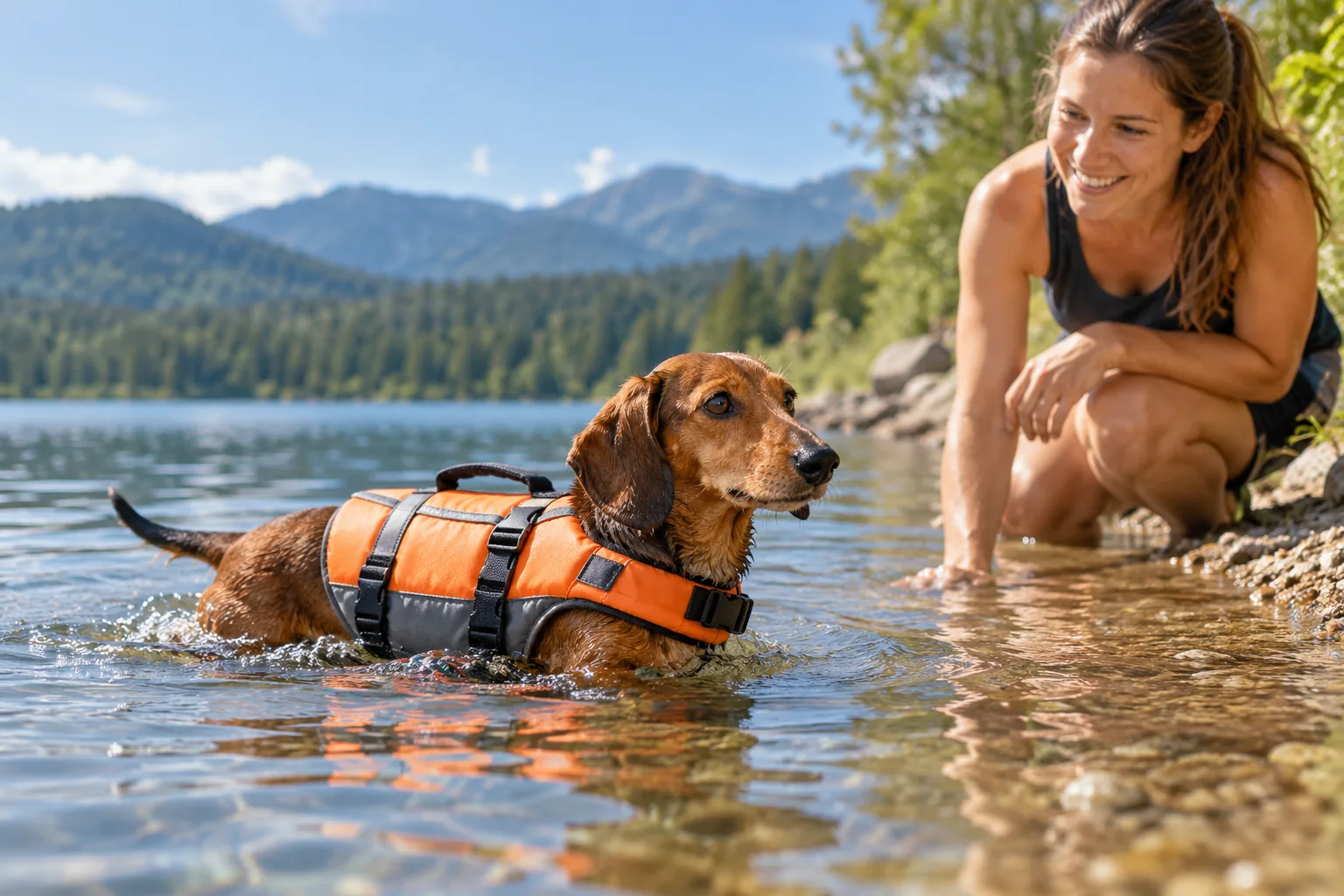
First, let the dog sniff the jacket on dry ground and reward calm contact. Next, fasten it for a short indoor session, then take a brief walk and watch gait, rubbing, and any attempt to escape the garment. If the dog freezes or struggles, back up a step. Only after a good land fit should you try shallow calm water with a person next to the dog and an easy exit. Observe whether the torso floats level and the legs paddle freely. The AKC swimming lesson cautions against pulling a dog into water.
Stop if the jacket shifts over the head, twists, restricts breathing or stroke, or leaves the dog struggling. A more expensive model is not a better model if it fails this individual fit test.
Decision checklist before checkout
- Does the exact size chart cover neck, chest, length, and weight rather than weight alone?
- Is there room for natural shoulder and leg movement without a loose neck opening?
- Can the handler reach a sturdy, well-attached assistance handle?
- Is the dog visible against the intended water background?
- Can you return the jacket after an indoor fit check if the geometry is wrong?
- Do you have a safe, supervised shallow-water setting for the final test?
Do not treat marketing phrases such as "best" or "rescue grade" as demonstrated performance. We have not independently tested or ranked current products. Verify materials, sizing, return terms, and any claimed standards against the exact model before adding a product recommendation or affiliate link.
Three fit failures to look for during a trial
The first failure is a loose neckline. When the dog steps forward, the body of the jacket may slide toward the head. Tightening every strap until the dog cannot move is not the solution; try a different cut. The second is a short flotation panel that leaves much of the long torso unsupported. Compare the garment’s usable length with the dog’s back and watch the actual water position. The third is rubbing at the armpits. Wet fabric and repetitive paddling may create friction that a two-minute dry fitting will not reveal. Inspect the skin after the supervised trial and stop if there is redness or reluctance to move.
For a nervous dog, judge behavior as well as geometry. Freezing, repeated attempts to back out of the jacket, or refusal to approach water are reasons to return to land-based acclimation. They are not proof that the dog merely needs to be pushed into the lake. A successful fit test has a calm dog, normal breathing, usable limb movement, a stable jacket, and an immediate safe exit.
Maintenance and replacement decisions
After each outing, check buckles, handle stitching, straps, and buoyant panels for wear. Rinse and dry using the manufacturer’s directions. Store the jacket where damp material will not remain trapped. Re-measure after growth, weight change, or a long break from water activity. A damaged or poorly fitting jacket should be replaced rather than improvised with knots or extra straps. The AKC selection guide emphasizes fit and functional features, not a permanent one-size purchase. If a product is later added to this article, record its exact model, size range, inspection date, and any evidence for the safety claims made.
Frequently asked questions
Can a Dachshund swim without a life jacket?
Some Dachshunds paddle, but individual comfort and endurance vary. Water entry, exit, temperature, current, and supervision remain important. This buying guide does not establish swimming ability; see the dedicated swimming-safety article.
Should the handle support the entire dog’s weight?
It should be securely attached and useful for brief assistance, but evaluate how the garment distributes the load across the dog’s body. Do not rely on an untested handle to suspend the dog or replace hands-on support.
Is a vest the same as a life jacket?
Names vary by seller. Compare actual flotation coverage and fit rather than trusting the label. The AKC guide distinguishes lighter vests from jackets intended for more substantial buoyancy.