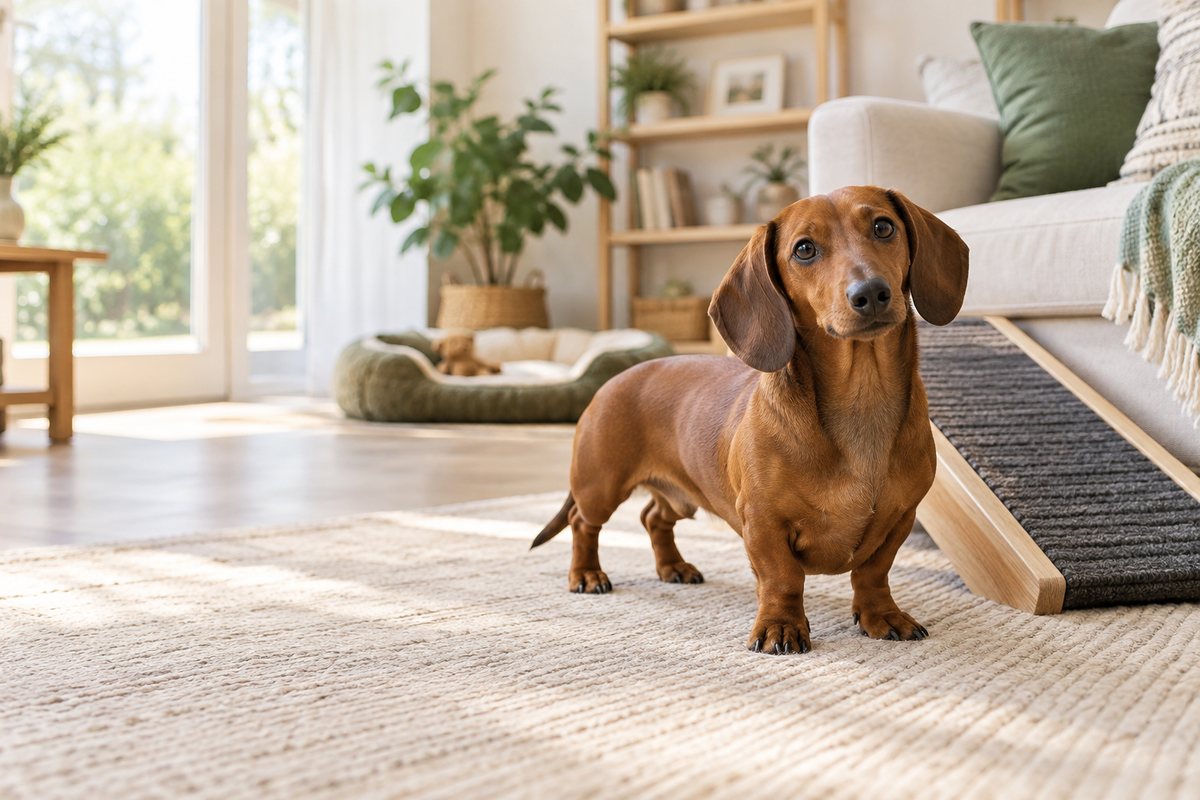
Crate training can give a Dachshund puppy a safe place to sleep, rest, and decompress. It can also support potty training and make travel or vet visits less stressful. The crate should feel like a calm bedroom, not a punishment box.
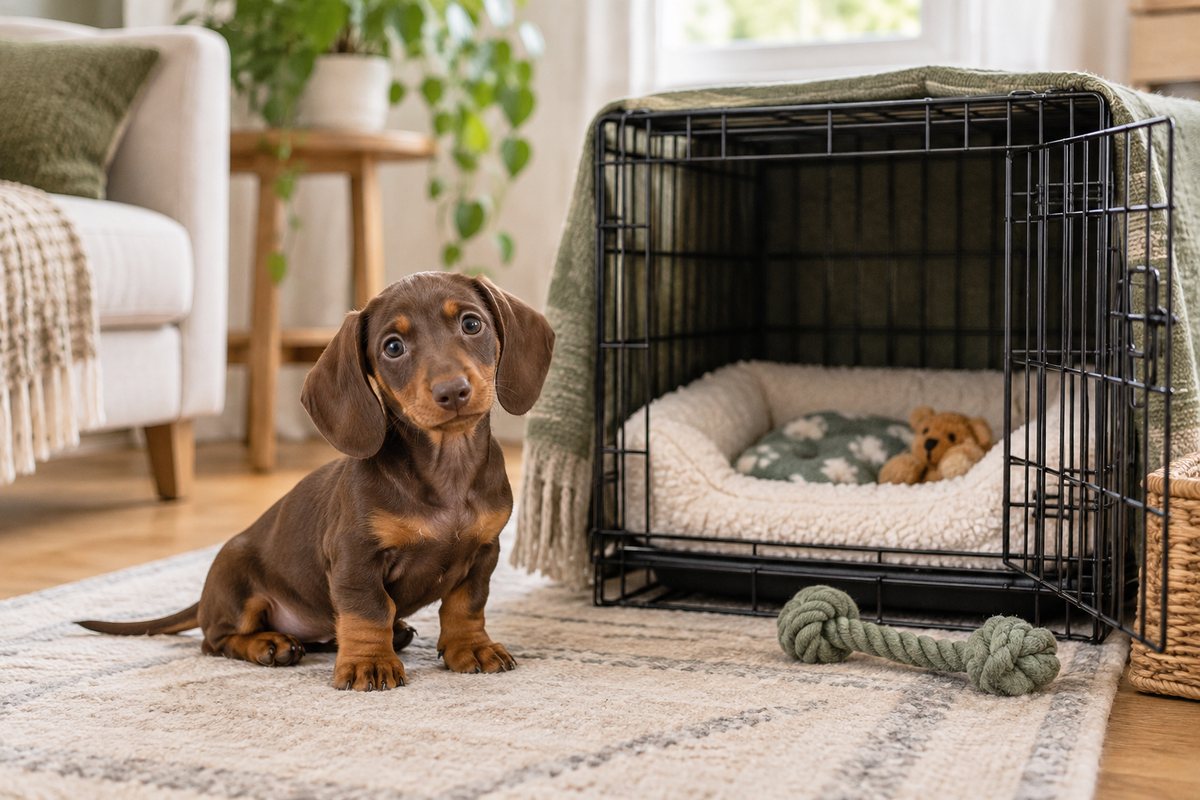
Dachshunds can be vocal and persistent, so rushing crate training often backfires. Go slowly, reward calm behavior, and build time in tiny steps.
Quick answer
Choose a correctly sized crate, keep it near normal family activity, feed meals inside, reward calm moments, and increase crate time gradually. Always give your puppy a potty break, movement, and connection before expecting them to settle.
Key takeaways
- The crate should be safe, comfortable, and predictable.
- Start with the door open and build positive associations.
- Crying can mean potty need, fear, boredom, or over-tiredness.
- Never use the crate as punishment.
Best crate setup for a Dachshund puppy
- A crate large enough to stand, turn, and lie down.
- A divider if the crate is too large for a small puppy.
- Soft bedding if your puppy does not chew it.
- A safe chew or food-stuffed toy for calm practice.
- A location near people during the day and near your bedroom at night.
Step-by-step crate training plan
- Leave the door open and toss treats inside.
- Feed meals in the crate with the door open.
- Close the door for one or two seconds during a meal, then open it before your puppy worries.
- Add short calm sessions after potty and play.
- Increase time slowly while rewarding quiet behavior.
- Practice leaving the room for a few seconds and returning calmly.
Night crate training
At night, keep the crate close enough that you can hear your puppy. If they wake after sleeping, take them out for a quiet potty break. Keep it boring: potty, calm praise, back to bed. Avoid turning every wake-up into playtime.
If your Dachshund cries in the crate
First check basic needs: potty, temperature, hunger, thirst, exercise, and comfort. If those needs are met, wait for even a tiny pause before opening the door. If the crying is frantic or panicked, make the next session easier and shorter.
What not to do
- Do not shut the door and leave for a long period on day one.
- Do not punish crate noise.
- Do not ignore panic, drooling, frantic digging, or escape attempts.
- Do not place the crate far away from people all day.
Related guides
Crate training supports Dachshund potty training. If noise is the main problem, read why Dachshunds bark so much.
FAQ
How long can a Dachshund puppy stay in a crate?
It depends on age, bladder control, and training. Young puppies need frequent potty breaks and should not be crated for long stretches.
Should the crate be in the bedroom?
For many puppies, yes at first. Being near you can reduce panic and help you hear potty needs.
What if my puppy hates the crate?
Slow down. Use open-door meals, tiny sessions, and a pen or safe room if the crate is too stressful at first.