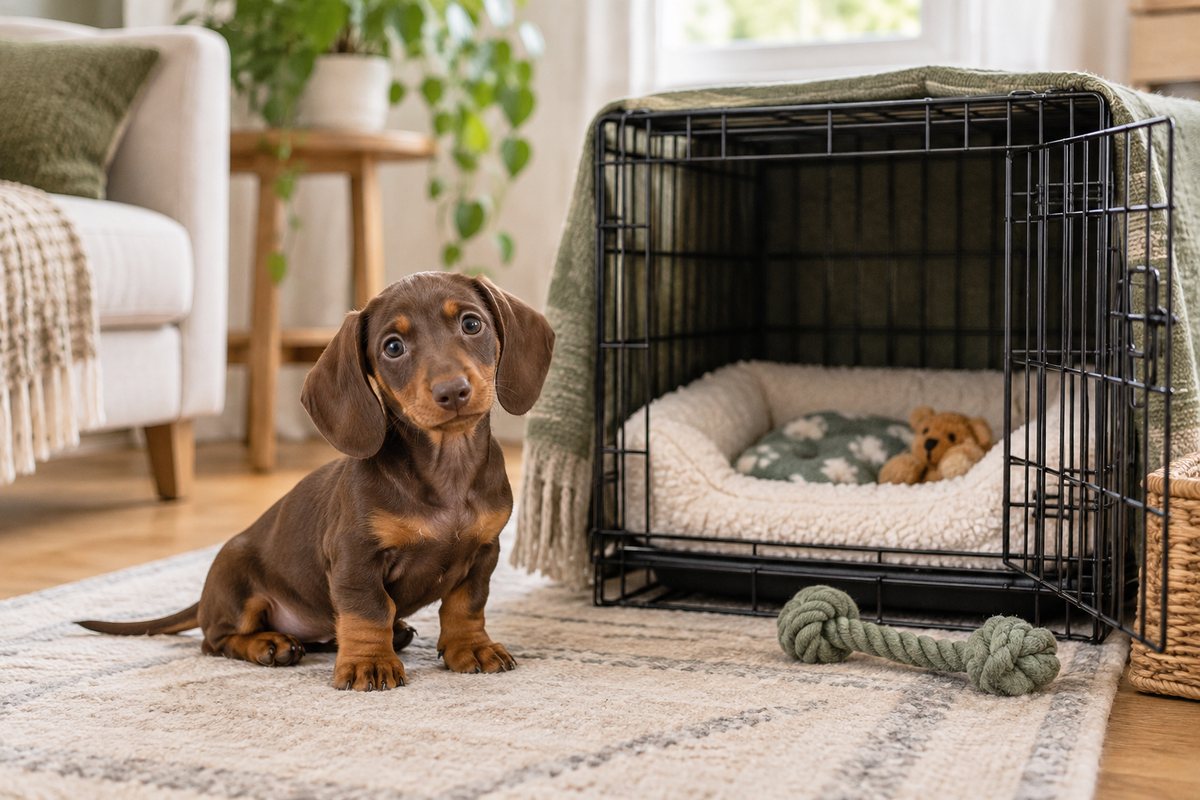
Your Dachshund may stare at you because they want information, attention, food, reassurance, direction, or a chance to predict what happens next. Dachshunds are people-focused dogs, and staring often means, “What are we doing?” It can be sweet, pushy, anxious, or learned behavior depending on the situation.
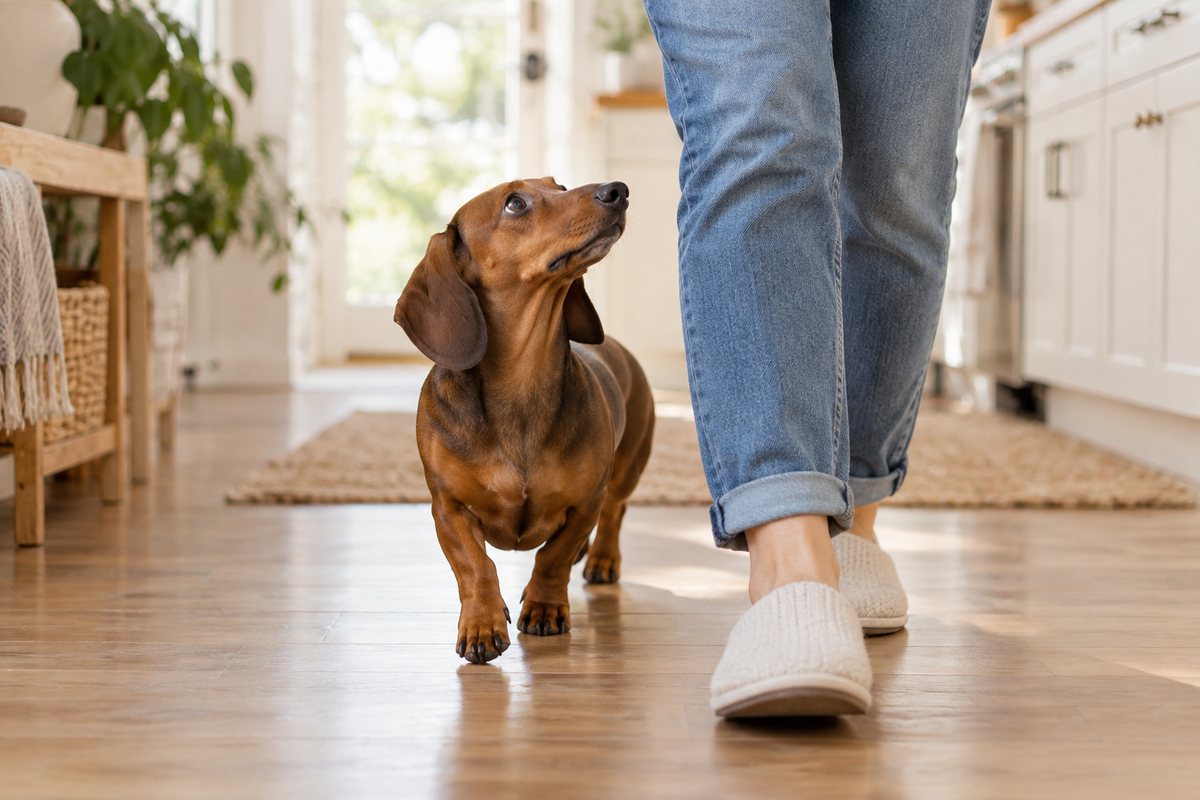
This guide explains normal staring, attention staring, food begging, anxious staring, training check-ins, and when staring may point to discomfort. If your Dachshund suddenly stares into space, seems confused, bumps into things, has seizure-like signs, or acts unlike themselves, call your veterinarian.
Why does my Dachshund stare at me?
Most Dachshund staring is communication. Your dog may be watching your body language, asking for food, waiting for a cue, seeking reassurance, or trying a behavior that has earned attention before. AKC describes dog eye contact as context-dependent: it can be affectionate, trained, expectant, or a sign that the dog is watching for information.
| Staring pattern | Likely meaning | What to do |
|---|---|---|
| Soft eyes, relaxed body | Affection or connection | Enjoy it and reward calm |
| Stares near food | Begging | Do not feed from the table |
| Stares before walks | Anticipation | Reward calm waiting |
| Stares and follows constantly | Attention or anxiety | Teach independent settle |
| Hard stare with stiffness | Resource guarding or stress | Give space and get help if needed |
| Sudden blank staring | Possible medical concern | Call your veterinarian |
Attention and food staring
Dachshunds learn patterns fast. If staring at you leads to snacks, play, being picked up, or going outside, your dog may stare more often. That does not mean they are manipulating you in a dramatic way. It means the behavior works.
- Reward calm sitting or lying down instead of intense staring.
- Use scheduled meals and training treats, not table begging.
- Give your Dachshund clear cues instead of guessing every stare.
- Teach “go to mat” for dinner time.
- Use puzzle feeders when boredom drives attention-seeking.
Anxious staring
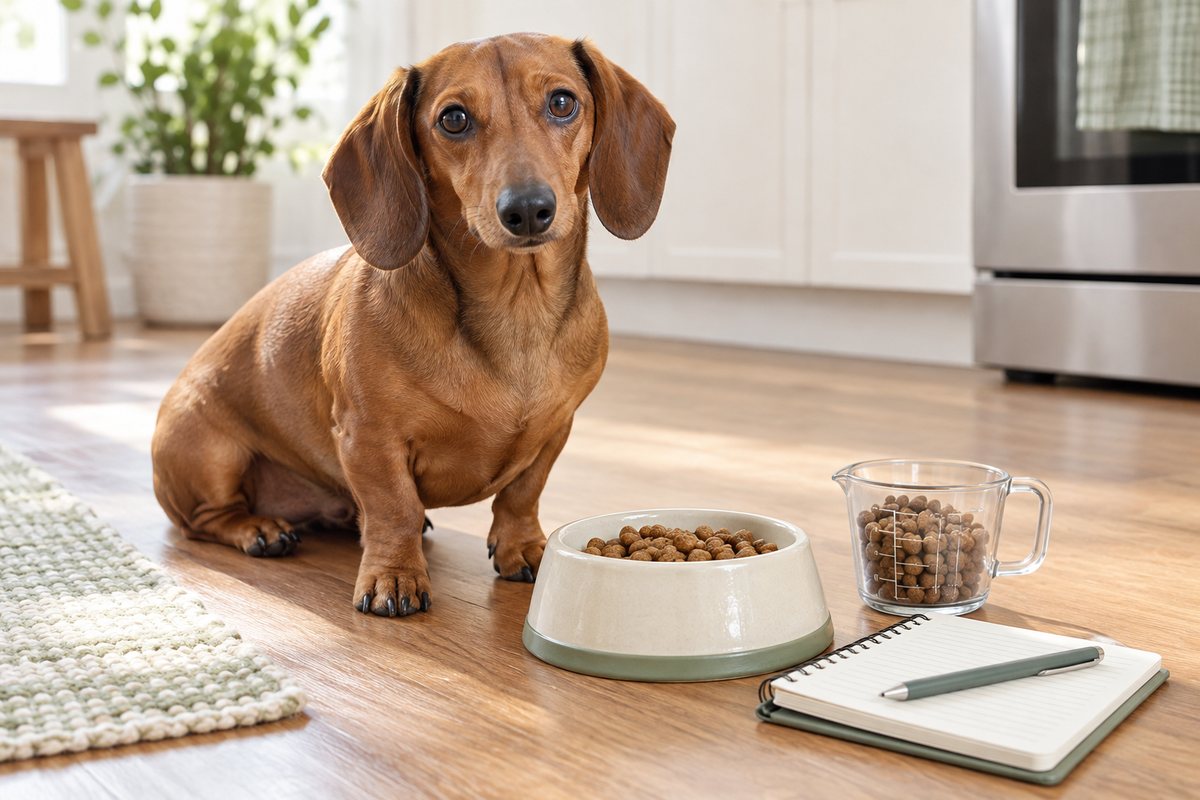
If your Dachshund stares while pacing, whining, trembling, following you from room to room, or barking when separated, anxiety may be part of the pattern. VCA separation anxiety guidance emphasizes predictable routines and reinforcing calm independence rather than reinforcing constant attention-seeking.
For a related pattern, read why Dachshunds follow you everywhere. For calming enrichment, see best games for Dachshunds.
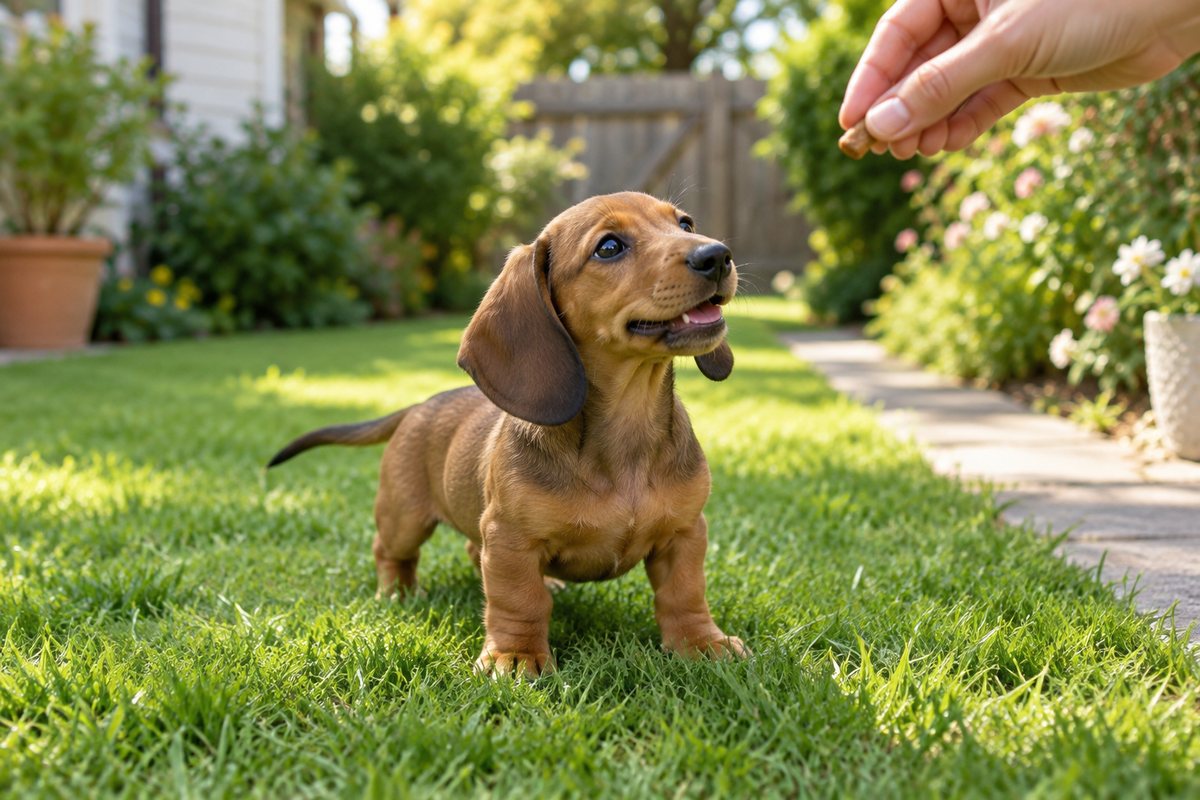
Turn staring into a useful check-in
- Say your dog’s name once.
- Mark eye contact with “yes.”
- Reward with a tiny treat.
- Add distractions slowly.
- Reward looking at you during walks before barking starts.
- Do not reward intense begging at the table.
Eye contact can be helpful in training when it is relaxed and voluntary. It should not be forced by grabbing your dog’s face or staring them down.
FAQ
Is it bad if my Dachshund stares at me?
Usually no. Relaxed staring is often communication or affection. Be more concerned if it is sudden, blank, paired with confusion, or part of guarding or anxiety.
Why does my Dachshund stare while I eat?
Because food has probably paid off before, or because your dog hopes it will. Use a mat cue, food puzzle, or separate resting spot during meals.
Decode the stare by context
The same stare can mean different things in different moments. A soft stare while resting beside you is different from a fixed stare at dinner or a hard stare over a chew. Read the body, the setting, and what usually happens next.
| Context | Likely meaning | Best response |
|---|---|---|
| You pick up keys | Predicting a walk or departure | Reward calm waiting |
| You eat dinner | Begging | Send to mat |
| Dog holds toy | Invitation to play | Start a short game if appropriate |
| Dog guards chew | Concern or guarding | Give space and train trades |
| Dog stares blankly | Possible medical concern | Record and call vet if abnormal |
Build a useful check-in cue
Instead of discouraging all staring, turn relaxed eye contact into a useful check-in. Say your dog’s name once, mark the glance, and reward. This helps on walks, at the door, and around triggers. The goal is not intense staring. The goal is a quick voluntary look that says your Dachshund can still think and respond.
- Practice in quiet rooms first.
- Reward one-second glances.
- Add mild distractions gradually.
- Use it before barking starts.
- Do not force eye contact with your hands.
When staring needs boundaries
Some staring is sweet communication. Some staring becomes demanding. If your Dachshund stares until you feed, play, pick them up, or share food, the behavior can become pushy. Teach a polite request pattern instead: one cue, one calm behavior, then a reward when appropriate.
- For dinner staring, use a mat during human meals.
- For toy staring, ask for sit before play starts.
- For walk staring, reward calm waiting while you get ready.
- For anxious staring, add predictable routines and independence practice.
- For hard staring over objects, avoid confrontation and train trades.
When staring may be medical
A blank stare, confusion, bumping into objects, sudden disorientation, or staring paired with weakness is different from normal attention. Senior Dachshunds may also show behavior changes as senses or comfort change. If the staring is new, strange, or paired with other symptoms, record details and call your veterinarian.
| Normal context | Concerning context |
|---|---|
| Soft eyes before a walk | Blank stare and confusion |
| Watching you prepare food | Staring at walls repeatedly |
| Waiting for a cue | Staring with weakness or wobbling |
| Inviting play | Sudden behavior change in senior dog |
Dachshund staring FAQ
Why does my Dachshund stare at me while I eat?
Food staring usually means the behavior has been rewarded before, even once in a while. Send your Dachshund to a mat before you sit down, reward calm waiting, and avoid feeding from the table. Intermittent scraps make staring more persistent.
Why does my Dachshund stare before bedtime?
Your dog may be predicting a routine: potty trip, blanket, bed, crate, or cuddle. If the stare is relaxed, it may be simple communication. If it comes with pacing, whining, or restlessness, check potty needs, comfort, temperature, and evening activity.
Should I stare back at my Dachshund?
Soft eye contact during training and affection can be fine. Hard staring over food, toys, or space is different. Avoid challenging your dog with intense eye contact if their body is stiff. Instead, create space and use reward-based training for trades or calm check-ins.
What your Dachshund's stare is asking for
A Dachshund stare can mean affection, anticipation, learned begging, confusion, anxiety, or a request. The clue is the rest of the body. Soft eyes and loose posture feel different from a frozen body, hard eyes, or a stare over food.
Ask what usually happens after the stare. If you feed, pet, walk, or talk every time, your dog may be using eye contact as a button. That is not bad, but it helps to teach a clearer way to ask.
| Situation | What it suggests | Best next step |
|---|---|---|
| Stares near food | Begging history | Use mat cue before meals |
| Stares by door | Potty or walk request | Confirm schedule and teach bell or cue |
| Stares at night | Routine prediction | Check comfort and bedtime pattern |
| Hard stare over item | Guarding concern | Do not challenge; trade safely |
| Stares during training | Engagement | Reward focus and clarity |
why does my Dachshund stare at me: practical checklist
- Look at ears, tail, mouth, and body tension.
- Decide which stare requests you want to answer.
- Teach a mat, bell, or sit cue for common requests.
- Avoid feeding from the table after staring.
- Give reassurance if staring comes with anxiety signs.
- Get help for hard staring around food, toys, or space.
When to change course
If the stare is new and paired with confusion, pacing, pain, or changed appetite, consider health and age-related causes before treating it as a cute habit.
why does my Dachshund stare at me: owner scenarios and fixes
The final step for why does my Dachshund stare at me is matching the advice to the exact situation in front of you. Dachshunds are small, persistent, routine-sensitive dogs, so a plan that looks correct on paper can fail if the room setup, timing, gear, reward value, or health context is wrong. Before changing everything, choose the one pattern that happens most often and work there first.
This also helps prevent mixed signals. If you sometimes reward the unwanted pattern, sometimes interrupt it, and sometimes ignore it, your Dachshund may keep trying the behavior because the rules are unclear. A simple plan that everyone in the home follows for one week is usually more useful than a complicated plan that changes every day.
| Owner situation | How to handle it |
|---|---|
| When the main issue is stares near food | Start with the practical fix: use mat cue before meals. Give it several calm repetitions before adding a second change. |
| When the pattern looks like stares by door | Assume the setup is slightly wrong for your Dachshund and adjust the environment before expecting better behavior. |
| When you see stares at night | Slow the plan down. Dachshunds often improve faster when the next step is easier, clearer, and more predictable. |
| When hard stare over item keeps returning | Look for a trigger that happens before the problem. Changing that trigger usually works better than reacting afterward. |
| When stares during training is involved | Treat it as a sign to re-check fit, comfort, schedule, or health rather than assuming your dog is ignoring you. |
How to make the plan easier for your Dachshund
If progress stalls, make the next repetition easier instead of louder or longer. For why does my Dachshund stare at me, easier can mean more distance, a shorter session, a lower height, a quieter room, softer handling, smaller rewards, or fewer choices. The easier version should let your dog succeed while still practicing the skill you want.
Watch recovery time. A Dachshund who can return to sniffing, eating, resting, or walking normally is usually in a workable zone. A dog who stays frantic, stiff, avoidant, or obsessed with the trigger is telling you the setup is too difficult. That is useful information, not a training failure.
7-day improvement plan
- Day 1: write down when the why does my Dachshund stare at me problem happens, where it happens, and what happened right before it.
- Day 2: remove the easiest trigger or setup mistake connected to stares near food.
- Day 3: practice the first checklist step: look at ears, tail, mouth, and body tension..
- Day 4: repeat the same plan at an easier level instead of adding a new rule.
- Day 5: add one support step from the checklist: decide which stare requests you want to answer..
- Day 6: ask whether your dog recovers faster than earlier in the week.
- Day 7: keep what improved, drop what confused your dog, and decide whether health or professional support is needed.
This seven-day plan will not solve every case of why does my Dachshund stare at me, but it gives you cleaner information. If the pattern improves, keep building gradually. If it stays the same or worsens, the cause may be discomfort, fear, poor fit, too much freedom, or a trigger that needs a different article-specific plan.
Quality check before you rely on the advice
The safest version of the advice should be specific, observable, and easy to repeat. You should know what you are changing, what success looks like, and when to stop. For Dachshunds, stop signs include pain, limping, yelping, frantic barking, snapping, refusal to eat rewards, vomiting, repeated accidents, or sudden behavior changes.
When in doubt, choose the lower-risk version: more distance, better traction, shorter sessions, calmer rewards, clearer routines, and earlier veterinary input. That keeps the why does my Dachshund stare at me plan helpful without pushing a small long-backed dog through stress, pain, or confusion.
Sources
- AKC: Why Does My Dog Stare at Me?
- VCA: Separation Anxiety in Dogs
- AKC: Dog Training Basics
- AKC: Signs of Pain in Dogs