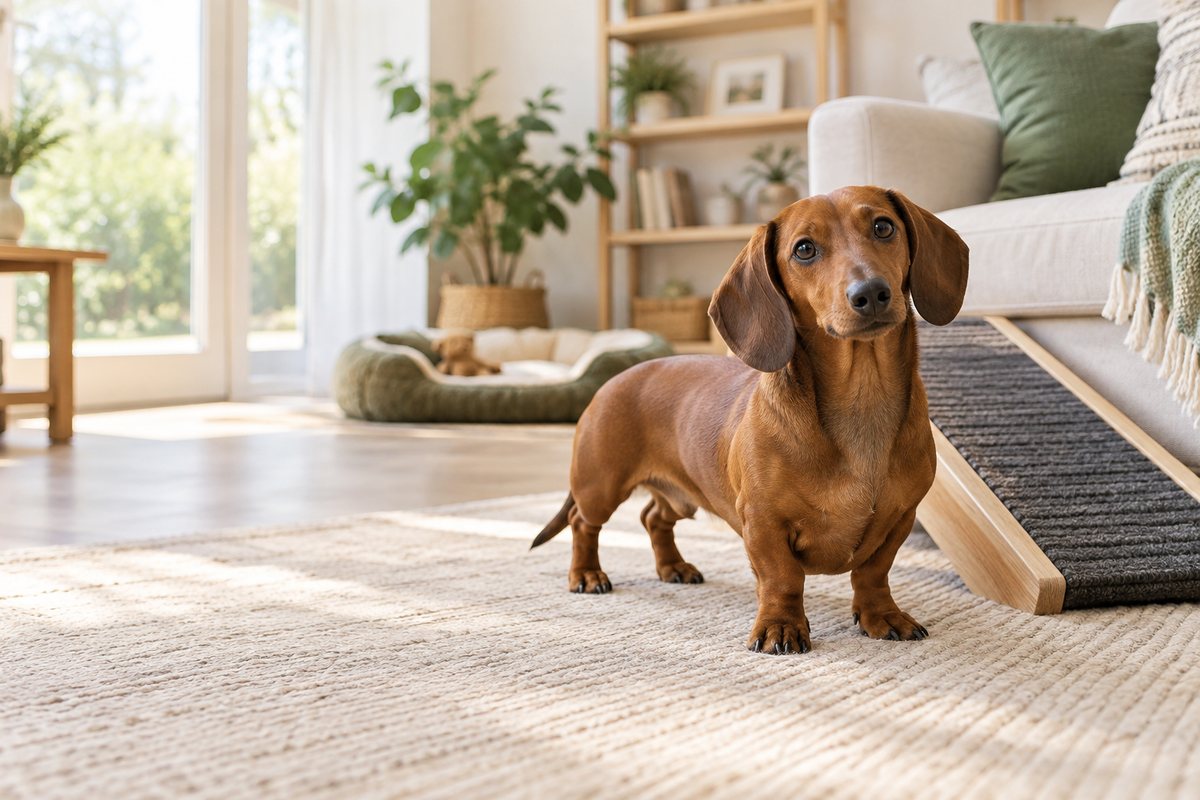
Dachshunds may lick so much because licking feels rewarding, gets attention, relieves stress, explores taste and scent, or soothes an itchy, painful, or irritated area. Occasional licking is normal. Persistent licking of paws, skin, objects, air, bedding, or people can signal boredom, anxiety, allergies, parasites, pain, nausea, dental discomfort, or a habit that has been reinforced.
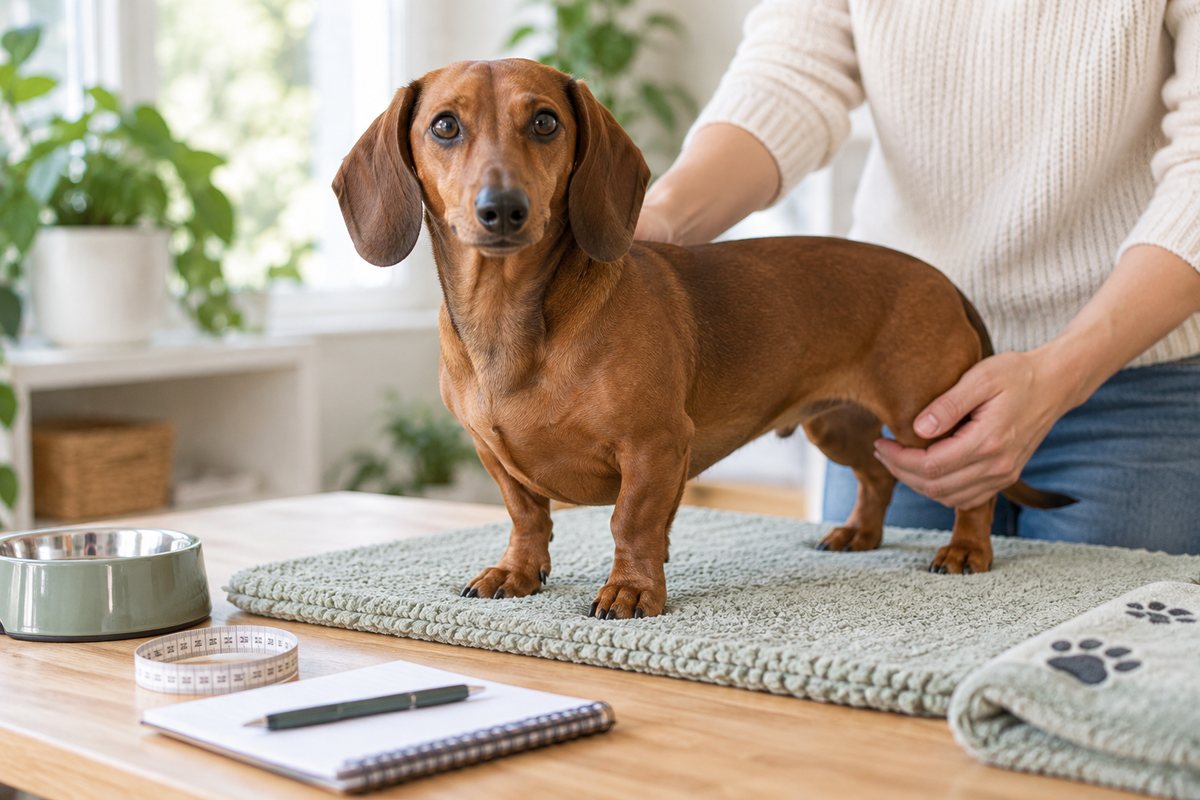
This article focuses on excessive licking. If your dog mainly licks you during greetings or cuddles, read why Dachshunds lick people once live.
Why do Dachshunds lick so much?
Dachshunds may lick excessively for behavioral or medical reasons. AKC notes that dogs lick for communication, grooming, exploration, and attention. PetMD notes that persistent licking, chewing, or grooming that causes irritation, hair loss, or behavior change usually deserves veterinary evaluation because allergies, infections, parasites, pain, and nausea can all be involved.
| Licking target | Possible cause | What to check |
|---|---|---|
| Paws | Allergy, irritation, pain, habit | Redness, odor, swelling, wounds |
| One body spot | Pain, wound, insect bite | Localized tenderness or hair loss |
| Air or lips | Nausea, dental issue, stress | Drooling, appetite, vomiting |
| Objects or bedding | Anxiety, boredom, compulsion | Pattern and ability to interrupt |
| People | Attention, taste, affection | Whether your response reinforces it |
Medical causes to rule out
- Allergies or itchy skin.
- Fleas, mites, or other parasites.
- Paw irritation from surfaces or chemicals.
- Dental discomfort or mouth pain.
- Nausea or gastrointestinal upset.
- Back, joint, or localized pain.
- Wounds, hot spots, or infections.
If licking creates redness, sores, hair loss, odor, bleeding, or swelling, call your veterinarian. Do not cover the problem with bitter spray while ignoring the cause.

Behavior and stress licking
Some Dachshunds lick because it calms them or because it has become a habit. More enrichment, predictable routines, and teaching alternate behaviors can help when medical causes have been ruled out.
- Offer sniffing games and food puzzles.
- Use lick mats for controlled licking if your vet approves.
- Teach settle on a mat.
- Increase calm exercise and training.
- Reduce triggers that create stress.
For enrichment ideas, see best games for Dachshunds. For food safety, see what Dachshunds can eat.
FAQ
Is excessive licking anxiety?
It can be, but do not assume anxiety until medical causes such as itch, pain, nausea, parasites, or dental discomfort are considered.
When should I call the vet?
Call if licking is sudden, intense, focused on one spot, causes skin damage, comes with vomiting or appetite changes, or cannot be interrupted.
Use a licking log before guessing
A simple log helps you separate habit from health clues. Write down where your Dachshund licks, when it happens, what happened before, and whether you can interrupt it. Bring photos or video to your veterinarian if there is skin damage, paw redness, or air licking that looks unusual.
| What to track | Why it helps | Example |
|---|---|---|
| Location | Points to itch or pain | Left front paw only |
| Timing | Shows routine or trigger | After meals or bedtime |
| Skin changes | Supports vet diagnosis | Redness, odor, hair loss |
| Interruptibility | Behavior vs compulsion clue | Stops for treat or cannot stop |
| Other symptoms | Finds medical patterns | Vomiting, ear odor, limping |
Safe ways to reduce licking
- Use veterinary treatment for itch, infection, pain, or nausea first.
- Add enrichment if boredom is part of the pattern.
- Use a cone or recovery suit only when needed to protect damaged skin.
- Teach settle and mat work for stress licking.
- Keep paws clean and dry after walks.
- Avoid punishment because it can increase stress and hide symptoms.
If licking is medical, training alone will not fix it. If licking is stress-based, medical treatment alone may not teach a new coping pattern. Many dogs need both the cause addressed and a new routine.
Health licking vs behavior licking
The key difference is pattern. Behavior licking often appears in predictable social moments: greeting, bedtime, boredom, or after you stop giving attention. Health-related licking may focus on one paw, one joint, the belly, the air, or the lips. It may come with redness, odor, limping, vomiting, appetite change, or restlessness.
| Clue | More behavioral | More medical |
|---|---|---|
| Location | Hands, face, blanket | One paw, belly, lips, air |
| Timing | When bored or greeting | After meals, at night, after walks |
| Skin | Normal | Red, wet, smelly, thinning hair |
| Interrupts | Stops for cue or treat | Returns immediately or cannot stop |
| Other signs | Normal energy | Pain, nausea, itch, anxiety signs |
A practical plan for heavy licking
- Check skin, paws, ears, mouth, appetite, and stool.
- Book a vet visit for sudden, severe, or body-focused licking.
- Add predictable enrichment before the licking usually starts.
- Teach a replacement behavior such as mat, chin rest, or chew time.
- Avoid rewarding pushy licking with instant attention every time.
Excessive Dachshund licking FAQ
Why does my Dachshund lick paws so much?
Paw licking can come from allergies, irritation, injury, yeast, boredom, anxiety, or pain. Check between the toes, nails, pads, and fur for redness, odor, swelling, burrs, or broken nails. If one paw is targeted or the skin changes, a vet check is the safer next step.
Why does my Dachshund lick the air?
Air licking can happen with stress or anticipation, but it can also appear with nausea, dental discomfort, or other medical issues. If it is new, frequent, or paired with drooling, swallowing, appetite change, or vomiting, record a video and contact your veterinarian.
Can I use a cone to stop licking?
A cone or recovery collar can prevent damage temporarily, but it does not solve the cause. Use it only as management while you address itch, pain, wounds, anxiety, or habit. If licking has already caused sores or hair loss, get veterinary guidance.
How to separate normal licking from a problem
Some licking is normal communication and grooming. The concern starts when licking becomes repetitive, hard to interrupt, focused on one body part, or linked with redness, hair loss, odor, stomach signs, or anxiety. Excessive licking is a pattern, not a single behavior.
Track where the licking happens. Paw licking can suggest irritation, allergies, or habit. Lip licking can show stress or nausea. Blanket licking may be self-soothing or learned. Owner licking is often social, but it can become demanding if it always earns attention.
| Situation | What it suggests | Best next step |
|---|---|---|
| Paws | Irritation, allergy, habit | Check redness and contact your vet if persistent |
| Lips | Stress, nausea, anticipation | Look for drooling or appetite changes |
| Blankets | Comfort or repetitive habit | Add enrichment and interrupt gently |
| Air licking | Nausea or discomfort possible | Track frequency and other symptoms |
| People | Attention or affection | Reward calm alternatives |
why do Dachshunds lick so much: practical checklist
- Identify the exact target of the licking.
- Photograph irritated skin so changes are easier to see.
- Wash bedding and remove possible irritants.
- Add a chew, sniff game, or settle mat before peak licking times.
- Teach a cue for chin rest or mat instead of licking for attention.
- Book a vet check if skin, ears, mouth, or stomach signs appear.
When to change course
If licking leaves wet spots, sores, brown staining, limping, or interrupted sleep, treat it as a welfare issue. Redirecting alone will not solve itch, pain, dental trouble, or nausea.
why do Dachshunds lick so much: owner scenarios and fixes
The final step for why do Dachshunds lick so much is matching the advice to the exact situation in front of you. Dachshunds are small, persistent, routine-sensitive dogs, so a plan that looks correct on paper can fail if the room setup, timing, gear, reward value, or health context is wrong. Before changing everything, choose the one pattern that happens most often and work there first.
This also helps prevent mixed signals. If you sometimes reward the unwanted pattern, sometimes interrupt it, and sometimes ignore it, your Dachshund may keep trying the behavior because the rules are unclear. A simple plan that everyone in the home follows for one week is usually more useful than a complicated plan that changes every day.
| Owner situation | How to handle it |
|---|---|
| When the main issue is paws | Start with the practical fix: check redness and contact your vet if persistent. Give it several calm repetitions before adding a second change. |
| When the pattern looks like lips | Assume the setup is slightly wrong for your Dachshund and adjust the environment before expecting better behavior. |
| When you see blankets | Slow the plan down. Dachshunds often improve faster when the next step is easier, clearer, and more predictable. |
| When air licking keeps returning | Look for a trigger that happens before the problem. Changing that trigger usually works better than reacting afterward. |
| When people is involved | Treat it as a sign to re-check fit, comfort, schedule, or health rather than assuming your dog is ignoring you. |
How to make the plan easier for your Dachshund
If progress stalls, make the next repetition easier instead of louder or longer. For why do Dachshunds lick so much, easier can mean more distance, a shorter session, a lower height, a quieter room, softer handling, smaller rewards, or fewer choices. The easier version should let your dog succeed while still practicing the skill you want.
Watch recovery time. A Dachshund who can return to sniffing, eating, resting, or walking normally is usually in a workable zone. A dog who stays frantic, stiff, avoidant, or obsessed with the trigger is telling you the setup is too difficult. That is useful information, not a training failure.
7-day improvement plan
- Day 1: write down when the why do Dachshunds lick so much problem happens, where it happens, and what happened right before it.
- Day 2: remove the easiest trigger or setup mistake connected to paws.
- Day 3: practice the first checklist step: identify the exact target of the licking..
- Day 4: repeat the same plan at an easier level instead of adding a new rule.
- Day 5: add one support step from the checklist: photograph irritated skin so changes are easier to see..
- Day 6: ask whether your dog recovers faster than earlier in the week.
- Day 7: keep what improved, drop what confused your dog, and decide whether health or professional support is needed.
This seven-day plan will not solve every case of why do Dachshunds lick so much, but it gives you cleaner information. If the pattern improves, keep building gradually. If it stays the same or worsens, the cause may be discomfort, fear, poor fit, too much freedom, or a trigger that needs a different article-specific plan.
Quality check before you rely on the advice
The safest version of the advice should be specific, observable, and easy to repeat. You should know what you are changing, what success looks like, and when to stop. For Dachshunds, stop signs include pain, limping, yelping, frantic barking, snapping, refusal to eat rewards, vomiting, repeated accidents, or sudden behavior changes.
When in doubt, choose the lower-risk version: more distance, better traction, shorter sessions, calmer rewards, clearer routines, and earlier veterinary input. That keeps the why do Dachshunds lick so much plan helpful without pushing a small long-backed dog through stress, pain, or confusion.
Sources
- AKC: Why Do Dogs Lick?
- AKC: Why Does My Dog Lick My Feet?
- AKC: Why Does My Dog Lick the Air?
- PetMD: Excessive Licking, Chewing, and Grooming in Dogs
- PetMD: Why Do Dogs Lick You?