This Dachshund size chart gives you a practical way to read adult Dachshund weight, height, and size labels without guessing from photos. In the American Kennel Club standard, Dachshunds are shown in two sizes: miniature and standard. Miniatures are 11 pounds and under at 12 months of age or older, while standards usually weigh 16 to 32 pounds.
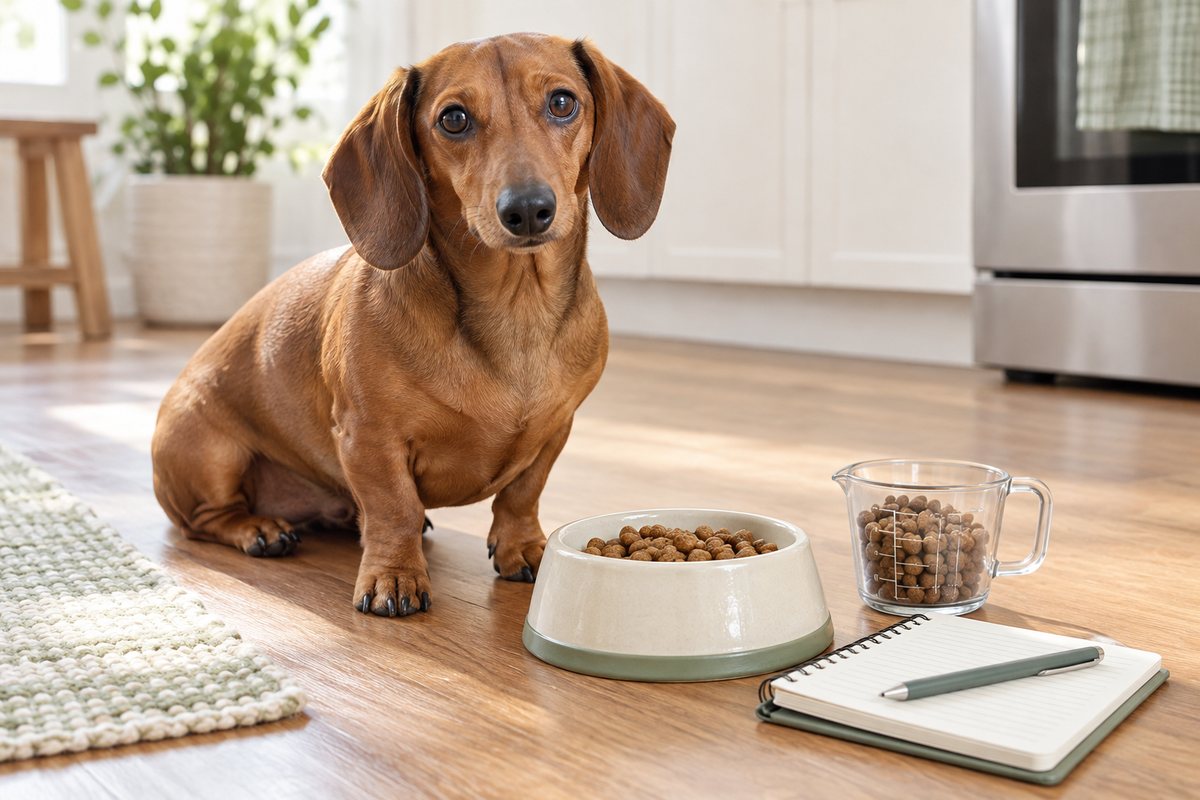
The tricky part is the middle. Many family Dachshunds mature above 11 pounds but below the usual standard range. Owners often call those dogs “tweenies,” but that is an informal nickname, not an official AKC size division. Your dog’s healthy weight also depends on frame, muscle, age, and body condition, so this chart should guide your next question rather than replace your veterinarian’s advice.
Table of Contents
Dachshund size chart quick answer
For most U.S. owners, the simplest Dachshund size chart is this: a miniature Dachshund is 11 pounds or under at 12 months or older; a standard Dachshund is usually 16 to 32 pounds. AKC breed information commonly lists standard Dachshunds around 8 to 9 inches tall at the shoulder and miniatures around 5 to 6 inches tall.
Those numbers are useful, but they are not the whole story. A lean 13-pound Dachshund may be healthier than an overweight 10-pound Dachshund. If your dog falls between official ranges, use body condition, veterinary guidance, and your dog’s individual structure to decide whether their size is healthy.
Adult Dachshund size chart
| Size label | Adult weight reference | Typical height reference | What it means for owners |
|---|---|---|---|
| Miniature Dachshund | 11 lb and under at 12 months or older | About 5-6 in at the shoulder | Smaller gear, smaller portions, easier to carry, but still needs back-safe handling |
| Informal “tweenie” | Commonly used by owners for dogs between miniature and standard ranges | Varies | Not an official AKC size division; judge health by body condition, not the nickname |
| Standard Dachshund | Usually 16-32 lb | About 8-9 in at the shoulder | Larger gear, more body weight to lift safely, and stronger leash handling needs |
This adult Dachshund size chart is best used after a dog is mature. The AKC miniature weight reference is tied to 12 months of age or older, so a puppy’s current weight does not always settle the final size label. A young Dachshund can grow unevenly, fill out slowly, or look long and thin before adult muscle develops.
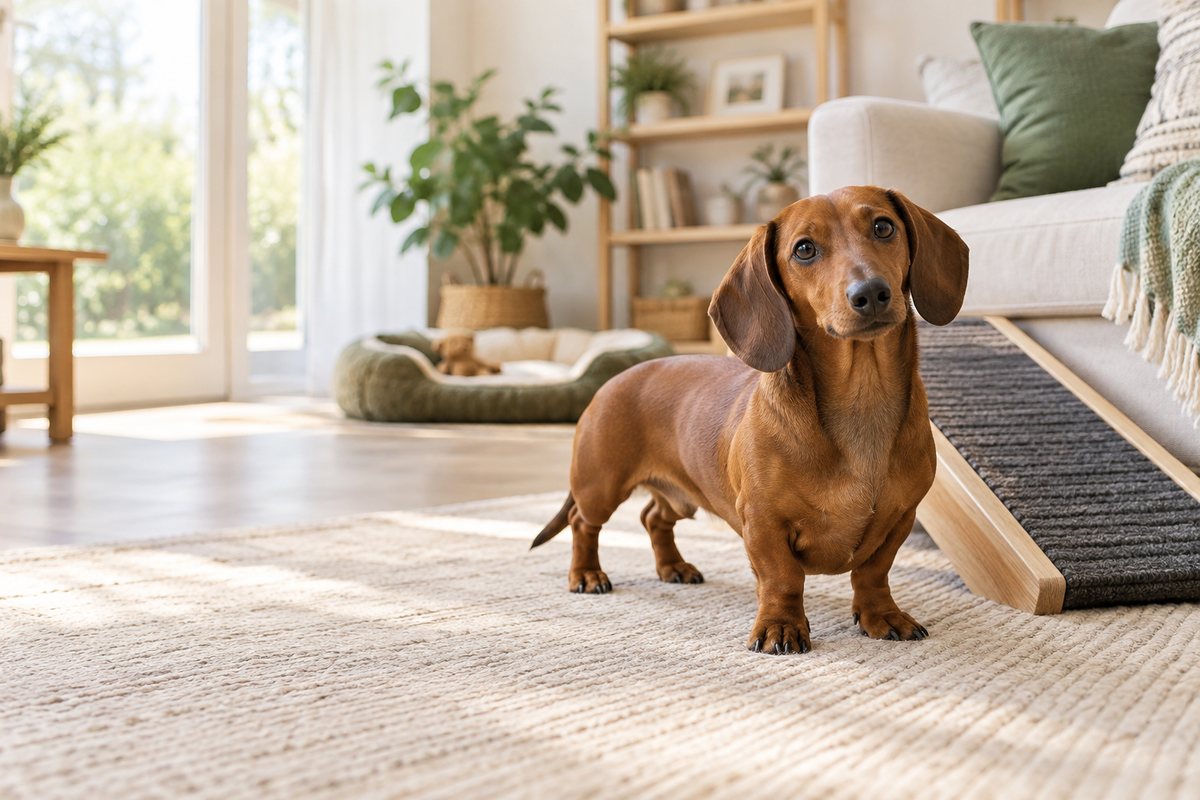
Miniature vs standard Dachshund size
Miniature and standard Dachshunds are not different breeds. They are size divisions within the same breed. That means coat type, color pattern, personality, and training needs do not automatically change just because a dog is miniature or standard.
The size difference does change daily life. Miniatures are easier to lift, travel with, and fit into small harnesses, but they can be easier to mishandle because they feel so small. Standards feel sturdier, but they are heavier to lift and may pull harder on leash. Both sizes need ramps or controlled lifting when furniture and car access become a jumping habit.
If you are comparing the two sizes before choosing a dog, read Miniature Dachshund vs Standard Dachshund after this chart. It goes deeper into temperament, gear, training, and owner fit.
Dachshund weight chart by size and care impact
| Weight range | Likely label | Care note |
|---|---|---|
| Under 11 lb as an adult | Miniature range | Watch tiny portion changes; a small weight gain can be a big percentage increase |
| 11-16 lb as an adult | Often called tweenie by owners | Focus on body condition and frame; avoid forcing the dog into a label |
| 16-32 lb as an adult | Standard range | Use secure lifting, sturdy ramps, and well-fitted harnesses |
| Over the expected range | Needs context | Ask your vet whether this is frame, muscle, excess fat, or another health issue |
Do not use this Dachshund size chart to decide that a dog should lose weight just because they are over a number. Some Dachshunds are larger-framed. Others are overweight at a number that looks “normal.” The scale is one tool; body condition is the second tool.
Dachshund puppy size chart notes
A Dachshund puppy size chart can help you track growth, but it cannot guarantee final adult size. Genetics, litter size, diet, neuter timing, activity, illness, and frame all affect growth. The most reliable thing you can do is weigh your puppy regularly, record the trend, and ask your veterinarian whether the growth curve looks healthy.
| Puppy age | What to track | What not to assume |
|---|---|---|
| 8-12 weeks | Starting weight, appetite, stool quality, and body shape | Do not assume adult size from one early weigh-in |
| 3-6 months | Steady weight gain, waist shape, and whether ribs can be felt | Do not overfeed to “catch up” without veterinary advice |
| 6-12 months | Slower growth, muscle development, and ideal body condition | Do not label a dog too early if they are still filling out |
| 12 months and older | Adult weight range, body condition score, and gear fit | Do not judge health from the size label alone |
For training routines that fit a growing puppy, use the guide on how to train a Dachshund puppy. For house-training specifically, see how to potty train a Dachshund puppy.
Healthy weight check: ribs, waist, and tuck
The World Small Animal Veterinary Association body condition chart groups dogs into under-ideal, ideal, and over-ideal body condition. In the ideal range, ribs should be easy to feel without excess fat, a waist should be visible from above, and the abdomen should tuck up when viewed from the side. That matters for Dachshunds because excess body weight can make lifting, jumping, harness fit, and back-safe movement harder.
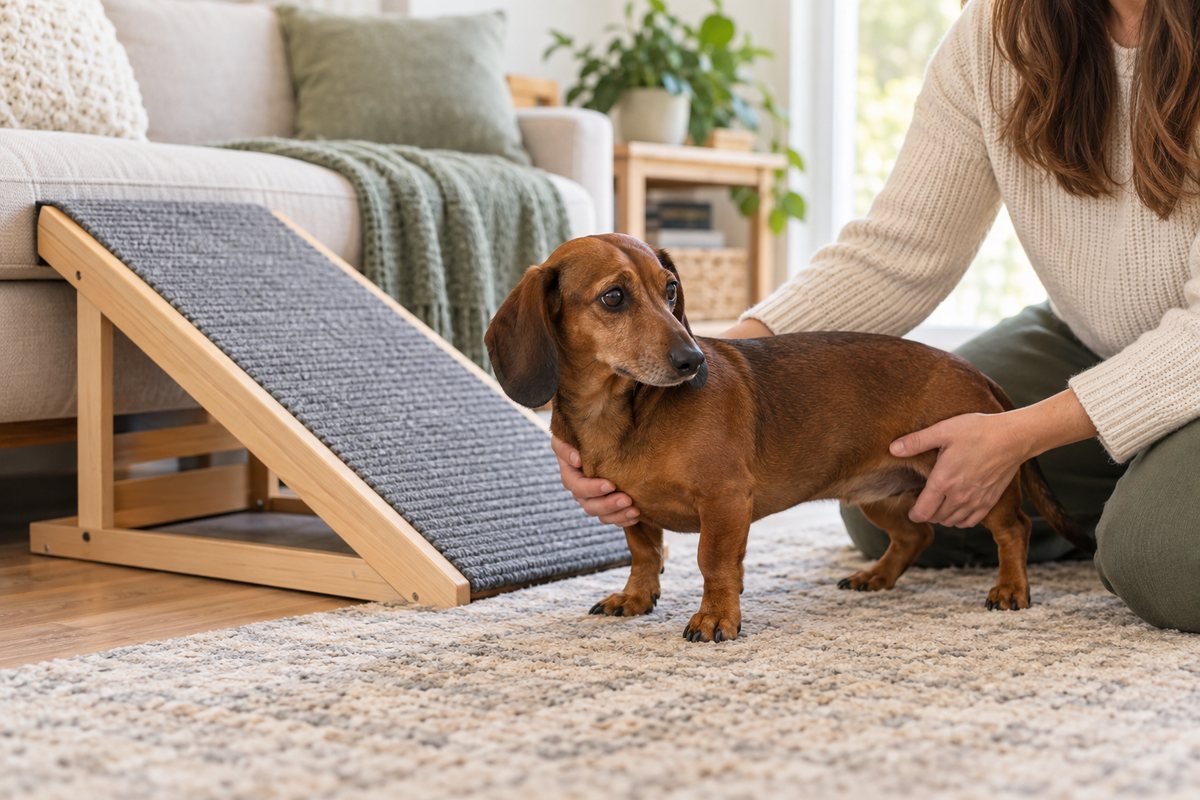
- From above: look for a visible waist behind the ribs.
- From the side: look for an abdominal tuck instead of a flat or sagging belly line.
- With your hands: feel ribs under a light fat covering, not a hard ridge and not a thick pad.
- With your vet: ask for a body condition score and a target weight range for your dog’s frame.
If your Dachshund has pain, weakness, reluctance to jump, a hunched posture, or sudden movement changes, do not treat it as a simple size issue. Read Dachshund back pain signs and contact your veterinarian promptly.
How to measure your Dachshund at home
- Weight: use a pet scale or weigh yourself holding the dog, then subtract your own weight.
- Height: measure from the floor to the top of the shoulders, not the top of the head.
- Length: measure from the breastbone area to the rear of the thigh if you are fitting coats, crates, or ramps.
- Chest: measure the deepest part of the chest for harness fit.
For gear, the chest measurement often matters more than the size label. Dachshunds have a deep chest, short legs, and a long body, so generic small-dog gear may rub or slip. Start with best harness for Dachshunds if you are fitting walking equipment.
Food portions and size
Miniatures need smaller portions than standards, but the right amount is still individual. Treats, age, neuter status, activity, and current body condition can change daily calories. If your Dachshund is gaining weight, measure meals instead of guessing and count training treats as part of the day.
For food decisions, use best food for Dachshunds and what Dachshunds can eat as next steps. For a size chart article, the safest rule is simple: feed the dog in front of you, not the average dog in a table.
FAQ
What size is a full-grown Dachshund?
A full-grown standard Dachshund usually weighs 16 to 32 pounds. A full-grown miniature Dachshund is 11 pounds or under at 12 months or older under the AKC size reference.
How tall is a Dachshund?
AKC breed information commonly lists standard Dachshunds around 8 to 9 inches at the shoulder and miniature Dachshunds around 5 to 6 inches. Individual dogs can vary.
Is a 12-pound Dachshund a miniature or standard?
In AKC terms, miniature class language is 11 pounds and under at 12 months or older. A 12-pound adult Dachshund sits just above that line, but many owners would informally call a dog in the middle range a tweenie. Health matters more than the nickname.
Can a miniature Dachshund become a standard?
A puppy sold as miniature can mature larger than expected. Size is influenced by genetics and growth, and adult classification is clearer once the dog is at least 12 months old.
What is the healthiest Dachshund weight?
The healthiest weight is the weight that matches your dog’s frame and ideal body condition. You should be able to feel ribs, see a waist from above, and see an abdominal tuck from the side. Ask your veterinarian for a target range.
Sources
- American Kennel Club: Dachshund Dog Breed Information
- American Kennel Club: Official Standard of the Dachshund
- Dachshund Club of America: Breed Standard
- The Royal Kennel Club: Dachshund Miniature Wire Haired Breed Standard
- WSAVA Global Nutrition Guidelines and Body Condition Score Tools