Category: Breed

Dachshund breed traits, mini vs standard comparisons, coat types, history, temperament, and owner expectations.

  • Mini Dachshund Size: Complete Dachshund Owner Guide

    Mini Dachshund Size: Complete Dachshund Owner Guide

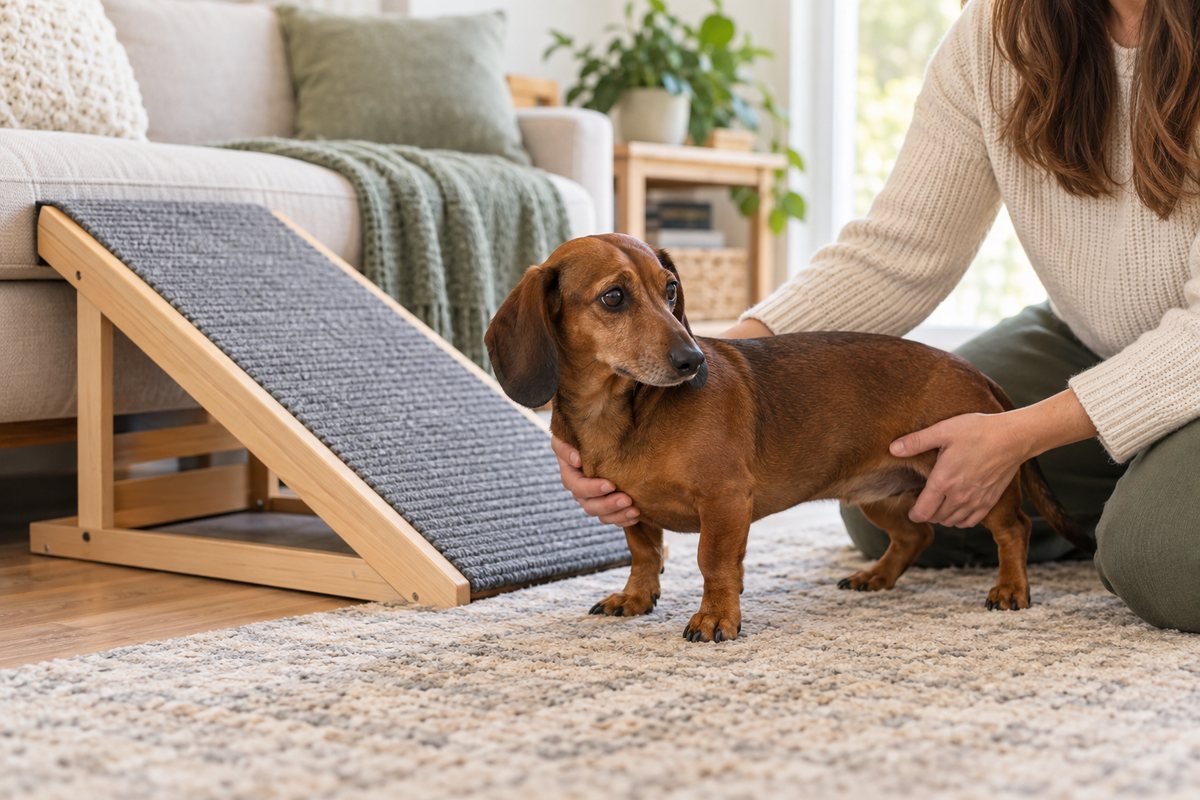
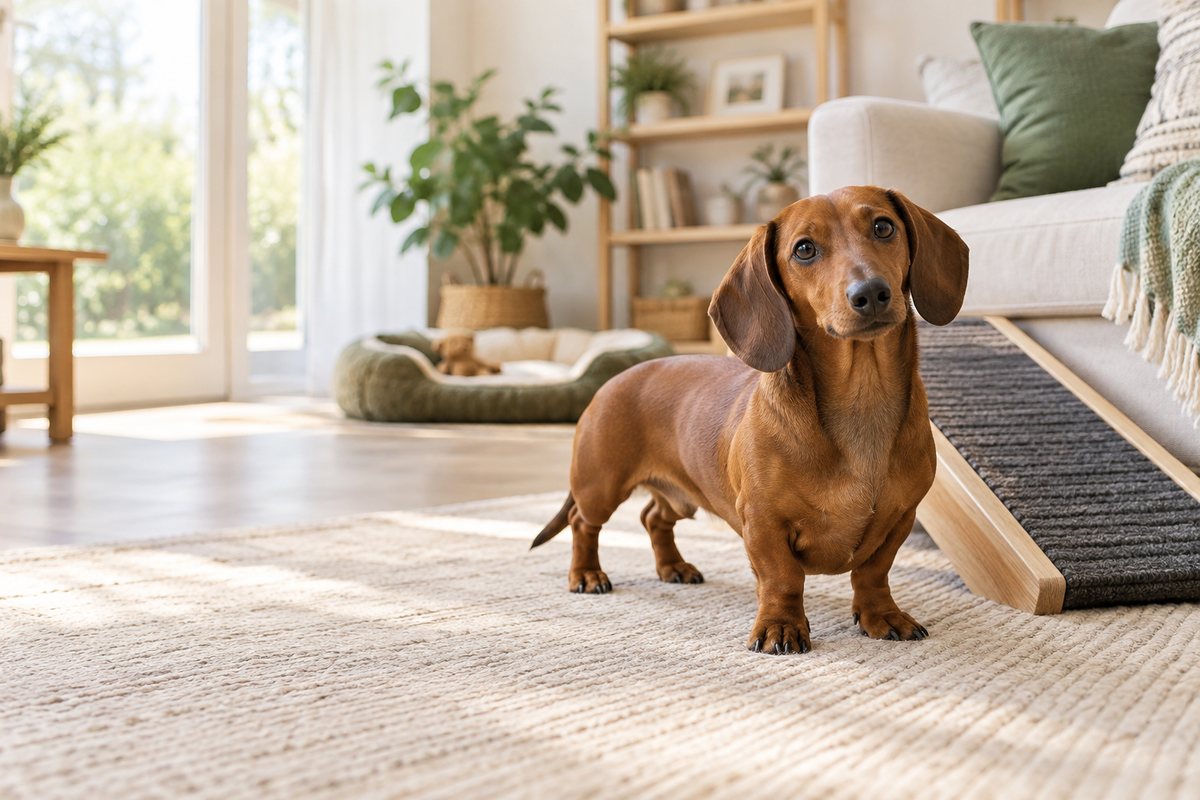
    Mini Dachshund size is usually defined by adult weight, not puppy guesses. In AKC terms, miniature Dachshunds are 11 pounds and under at 12 months of age and older. AKC lists miniature Dachshunds at 5 to 6 inches tall and 11 pounds or under, while standard Dachshunds are usually 16 to 32 pounds.
    Mini Dachshund size compared with standard Dachshund proportions

    Mini Dachshund size: quick answer

    MeasurementMini Dachshund
    Adult weight11 pounds and under
    HeightAbout 5 to 6 inches at the shoulder
    Age for size class12 months and older
    Coat typesSmooth, long-haired, wire-haired
    Unofficial middle sizeOften called tweenie by owners, not an AKC size class

    For direct comparison, see miniature Dachshund vs standard Dachshund and Dachshund size chart.
    Mini Dachshund weight management and measured food portions

    Can you predict mini size from a puppy?

    You can estimate, but you cannot know with certainty until maturity. Parent size, breeder records, growth rate, and body condition help, but some Dachshunds land between common owner expectations. If your dog is over 11 pounds as an adult, they may not fit the AKC miniature class even if sold as a mini.
    Mini Dachshund wellness check for healthy adult size

    Mini size vs healthy weight

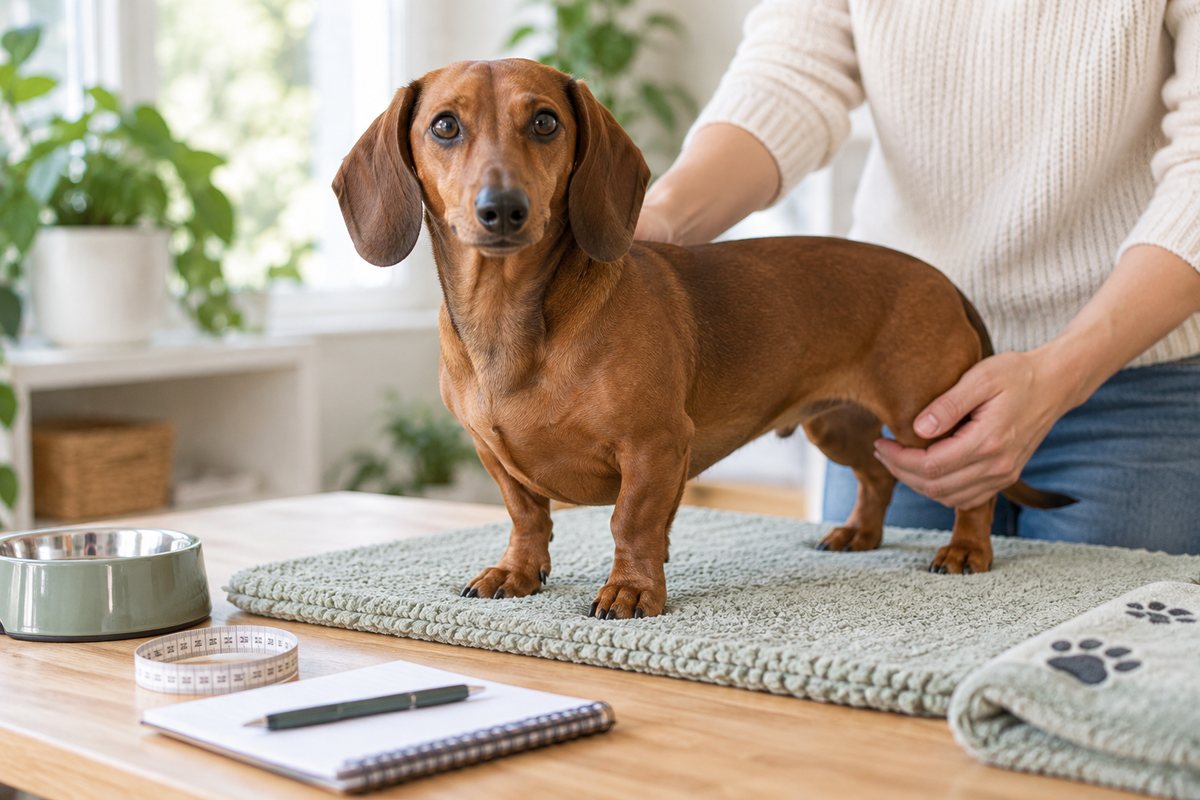
    A miniature Dachshund can be small and still overweight. Size class tells you weight category, not body condition. You should be able to feel the ribs under light cover, see a waist from above, and notice comfortable movement. If your mini is over 11 pounds, the question is not only label accuracy. The question is whether your veterinarian considers the body condition healthy.

    Owner checks

    • Track weight monthly during puppy growth.
    • Ask your vet for ideal adult weight range.
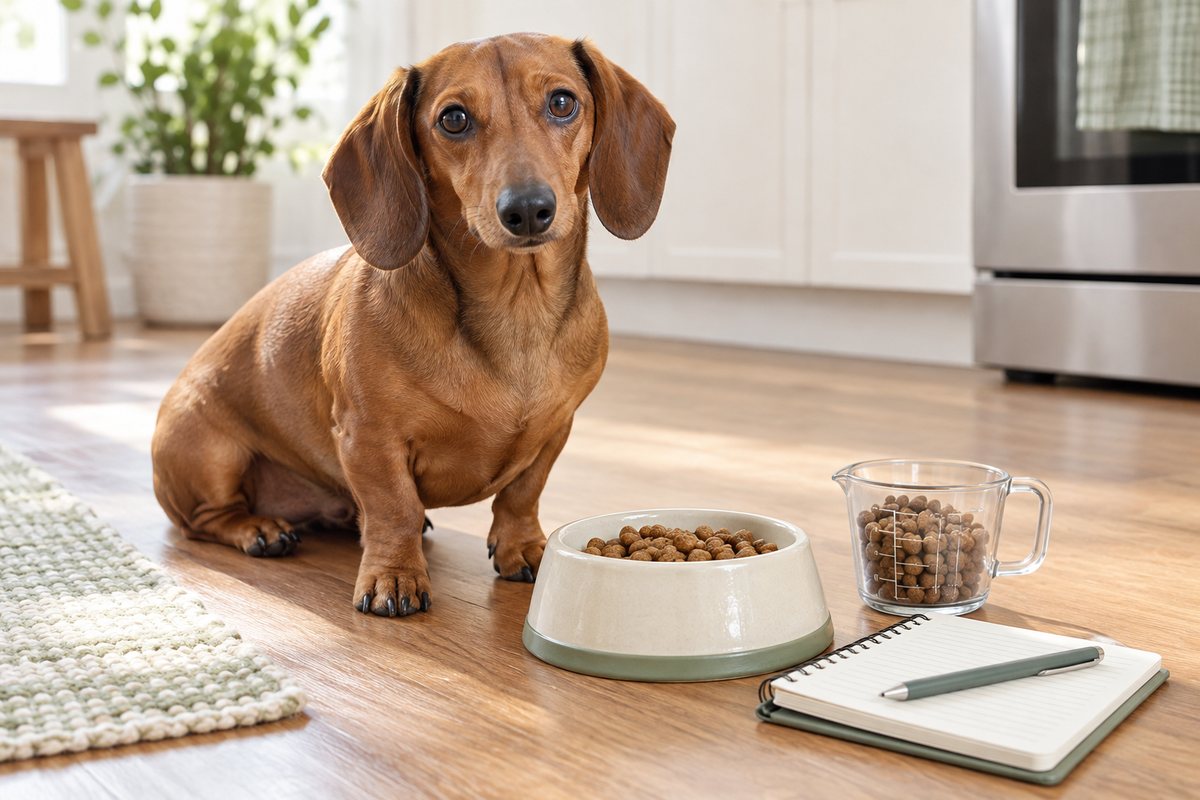
    • Use measured meals rather than free feeding.
    • Choose harnesses by girth, not by weight label.
    • Compare size with standards, but judge health by body condition.

    Mini Dachshund size chart context

    Mini Dachshund size is best understood as an adult classification, not a promise about a young puppy. A puppy may look tiny at 8 weeks and still mature above 11 pounds. Another puppy may grow quickly early and then level off. Breeders can estimate from parent size and past litters, but adult weight is the clearer measurement.

    AgeWhat you can knowWhat you cannot know yet
    8 to 12 weeksCurrent weight and body conditionFinal class with certainty
    4 to 6 monthsGrowth directionExact adult weight
    9 to 12 monthsCloser adult estimateFinal muscle and body condition
    12 months and olderMore reliable size classFuture weight changes from diet

    Why mini size matters for daily care

    Mini size affects more than labels. Harnesses need smaller neck and girth adjustment. Food portions need tighter measuring. Ramps and stairs should have traction for shorter legs. Dental care matters because small mouths can crowd teeth. Training treats should be tiny because a few extra calories matter more for a small dog.

    • Choose harnesses by chest girth, not by the word mini.
    • Measure food instead of guessing from bowl size.
    • Use small training rewards or pieces of daily kibble.
    • Watch weight gain after neutering or activity changes.
    • Ask your veterinarian for a body condition score, not just a scale number.

    How to measure a mini Dachshund at home

    Use a home scale for regular weight checks and your veterinarian’s scale for the most reliable number. For height, measure from the floor to the top of the shoulder, not to the head. For harnesses and clothing, measure chest girth behind the front legs because two mini Dachshunds with the same weight can have very different ribcage shapes.

    1. Weigh yourself, then weigh yourself holding your Dachshund.
    2. Subtract the first number from the second number.
    3. Measure chest girth with a soft tape while your dog is standing.
    4. Measure neck only for collars and some harness styles.
    5. Write the date, weight, and body condition notes together.

    Mini Dachshund size myths

    A mini Dachshund is not healthier just because the scale number is low. Very small puppies still need normal growth, muscle, dental care, and safe exercise. A heavier mini is not automatically overweight either, because frame, muscle, and body condition matter. The useful question is whether your dog is at a healthy weight for their body, not whether the label sounds cute.

    MythBetter answer
    All minis stay tiny foreverAdult size varies and may pass 11 pounds
    A mini needs very little exerciseThey still need daily movement and enrichment
    Small means fragile onlyUse safe handling, but build normal confidence
    Weight alone proves healthUse body condition, movement, and vet guidance

    Mini Dachshund size FAQ

    Is a 12-pound Dachshund still miniature?

    Under AKC classification, miniature Dachshunds are 11 pounds and under at 12 months and older. A 12-pound adult is just above that line. In everyday life, the more important question is whether your dog is healthy, lean, mobile, and at an appropriate weight for their frame.

    What is a tweenie Dachshund?

    Owners often use “tweenie” for Dachshunds that fall between miniature and standard expectations. It is a common informal term, not an official AKC size class. If your dog is a tweenie, shop by actual measurements and ask your vet for a healthy target weight instead of relying on the label.

    Does coat type change mini Dachshund size?

    Coat type can change how big a dog appears, especially with long hair, but it does not change the size class. A fluffy long-haired mini may look larger than a smooth mini of the same weight. Use the scale, girth measurement, and body condition rather than visual fluff.

    Final mini-size tip

    For owners, the mini label is useful only when it leads to better care: smaller treats, careful weight control, correctly fitted gear, and safer furniture access. A healthy mini Dachshund should still be active, confident, and well muscled.

    Mini Dachshund size in daily decisions

    Mini Dachshund size is useful when it guides safer choices: carrier size, harness fit, ramp slope, calorie control, and puppy growth expectations. A mini can be small but sturdy, or tiny and delicate, so actual measurements matter more than the label on a product page.

    Because mini Dachshunds are close to the floor and have long bodies, small changes in weight or muscle can be noticeable. A one-pound gain on a small dog can affect waist shape, stamina, and how easily you can feel the ribs.

    SituationWhat it suggestsBest next step
    HarnessTiny neck and deeper chestMeasure girth before buying
    CarrierLength mattersDog should turn without curling tightly
    RampShort legs make steep slopes harderUse gentle incline and traction
    FoodSmall calorie marginMeasure meals and treats
    GrowthPuppies change quicklyRe-check fit often

    mini Dachshund size: practical checklist

    1. Track weight monthly for adults and more often for puppies.
    2. Measure chest girth, neck base, and back length.
    3. Choose gear by measurements, not only mini labels.
    4. Watch waist shape from above.
    5. Adjust treats when training increases.
    6. Ask your vet if your mini is above size expectations but lean.

    When to change course

    If your mini Dachshund is over the breed-size line but has a visible waist and good body condition, the label matters less than health. If ribs are hard to feel, the conversation shifts from size to weight management.

    mini Dachshund size: owner scenarios and fixes

    The final step for mini Dachshund size is matching the advice to the exact situation in front of you. Dachshunds are small, persistent, routine-sensitive dogs, so a plan that looks correct on paper can fail if the room setup, timing, gear, reward value, or health context is wrong. Before changing everything, choose the one pattern that happens most often and work there first.

    This also helps prevent mixed signals. If you sometimes reward the unwanted pattern, sometimes interrupt it, and sometimes ignore it, your Dachshund may keep trying the behavior because the rules are unclear. A simple plan that everyone in the home follows for one week is usually more useful than a complicated plan that changes every day.

    Owner situationHow to handle it
    When the main issue is harnessStart with the practical fix: measure girth before buying. Give it several calm repetitions before adding a second change.
    When the pattern looks like carrierAssume the setup is slightly wrong for your Dachshund and adjust the environment before expecting better behavior.
    When you see rampSlow the plan down. Dachshunds often improve faster when the next step is easier, clearer, and more predictable.
    When food keeps returningLook for a trigger that happens before the problem. Changing that trigger usually works better than reacting afterward.
    When growth is involvedTreat it as a sign to re-check fit, comfort, schedule, or health rather than assuming your dog is ignoring you.

    How to make the plan easier for your Dachshund

    If progress stalls, make the next repetition easier instead of louder or longer. For mini Dachshund size, easier can mean more distance, a shorter session, a lower height, a quieter room, softer handling, smaller rewards, or fewer choices. The easier version should let your dog succeed while still practicing the skill you want.

    Watch recovery time. A Dachshund who can return to sniffing, eating, resting, or walking normally is usually in a workable zone. A dog who stays frantic, stiff, avoidant, or obsessed with the trigger is telling you the setup is too difficult. That is useful information, not a training failure.

    7-day improvement plan

    1. Day 1: write down when the mini Dachshund size problem happens, where it happens, and what happened right before it.
    2. Day 2: remove the easiest trigger or setup mistake connected to harness.
    3. Day 3: practice the first checklist step: track weight monthly for adults and more often for puppies..
    4. Day 4: repeat the same plan at an easier level instead of adding a new rule.
    5. Day 5: add one support step from the checklist: measure chest girth, neck base, and back length..
    6. Day 6: ask whether your dog recovers faster than earlier in the week.
    7. Day 7: keep what improved, drop what confused your dog, and decide whether health or professional support is needed.

    This seven-day plan will not solve every case of mini Dachshund size, but it gives you cleaner information. If the pattern improves, keep building gradually. If it stays the same or worsens, the cause may be discomfort, fear, poor fit, too much freedom, or a trigger that needs a different article-specific plan.

    Quality check before you rely on the advice

    The safest version of the advice should be specific, observable, and easy to repeat. You should know what you are changing, what success looks like, and when to stop. For Dachshunds, stop signs include pain, limping, yelping, frantic barking, snapping, refusal to eat rewards, vomiting, repeated accidents, or sudden behavior changes.

    When in doubt, choose the lower-risk version: more distance, better traction, shorter sessions, calmer rewards, clearer routines, and earlier veterinary input. That keeps the mini Dachshund size plan helpful without pushing a small long-backed dog through stress, pain, or confusion.

    Sources


    Related Dachshund guides

  • Standard Dachshund Size: Complete Dachshund Owner Guide

    Standard Dachshund Size: Complete Dachshund Owner Guide

    Standard Dachshund size is usually 16 to 32 pounds as an adult, with a height of about 8 to 9 inches at the shoulder according to AKC breed information. Standards are larger than miniatures, but they should still look long, low, balanced, and athletic rather than heavy or bulky.

    Standard Dachshund size and long low body proportions

    Standard Dachshund size: quick answer

    MeasurementStandard Dachshund
    Adult weightUsually 16 to 32 pounds
    HeightAbout 8 to 9 inches at the shoulder
    Coat typesSmooth, long-haired, wire-haired
    Breed groupHound Group
    Life expectancyOften listed around 12 to 16 years

    AKC’s official Dachshund standard states that the standard size is usually between 16 and 32 pounds, while miniature Dachshunds compete in a class division for 11 pounds and under at 12 months of age and older.

    Standard Dachshund body condition and back-aware care

    Healthy size vs overweight

    A standard Dachshund over 16 pounds is not automatically overweight, and a smaller Dachshund is not automatically healthier. Look at body condition: visible waist from above, ribs that can be felt under light cover, and comfortable movement. Extra weight can make daily movement and back comfort harder.

    For comparison, see miniature Dachshund vs standard Dachshund, mini Dachshund size, and Dachshund size chart.

    Standard Dachshund feeding portions for healthy adult weight

    When does a standard Dachshund reach full size?

    Many Dachshunds are close to adult height before they are fully mature in muscle and body condition. The official miniature class is assessed at 12 months and older, but healthy adult shape continues to depend on diet, exercise, neuter status, and genetics. If your young standard Dachshund looks narrow or lanky, ask your veterinarian about growth and body condition instead of trying to force weight gain.

    Care differences for standard Dachshunds

    • Use ramps and back-safe habits even though the dog is larger.
    • Choose harnesses by chest girth and body length.
    • Measure food because standards can still become overweight.
    • Keep nails short for traction and posture.
    • Watch for reluctance to jump, stairs, or walk normally.

    Standard size vs overweight

    A standard Dachshund is naturally larger than a miniature, but larger does not mean unlimited weight. A healthy standard should still have a visible waist from above and ribs that can be felt under light cover. If your Dachshund is above the usual range, your veterinarian can help decide whether your dog is a large-framed standard, overweight, or both.

    CheckHealthy signConcern sign
    WaistVisible from aboveStraight or bulging sides
    RibsEasy to feel under light coverHard to feel
    MovementComfortable walking and risingReluctance, stiffness, or panting
    FoodMeasured portionsFree feeding and many treats
    Back comfortNo pain signsHunched posture or yelping

    Why standard size changes shopping and care

    Standard Dachshunds often need sturdier ramps, larger harnesses, and more careful lifting than miniatures. They may also need different food portions, but portion size should still be measured. Bigger Dachshunds can gain weight just as easily when treats, chews, and table scraps are not counted.

    • Check ramp weight ratings and width.
    • Measure harness girth instead of guessing medium or large.
    • Use back-safe lifting with chest and rear support.
    • Keep nails trimmed for traction.
    • Review food portions after activity or neuter changes.

    How to judge standard Dachshund size correctly

    Standard Dachshunds can look surprisingly different from one another. Some are long and lean, while others have heavier bone and a broader chest. Start with adult weight, then look at body condition and movement. A dog that is within the common range can still be overweight, and a dog above the range may need an individual veterinary target.

    For practical care, measurements matter more than labels. Measure girth for harnesses, back length for coats, and furniture height for ramps. A standard Dachshund that jumps from a high bed many times a day may need more environmental support than a smaller dog with a lower couch.

    Standard Dachshund care checklist

    • Use a sturdy ramp with enough width for confident turning.
    • Choose harnesses with adjustable neck and chest points.
    • Keep treats small even though the dog is larger than a mini.
    • Support both chest and rear when lifting.
    • Keep nails short so the dog has traction on hard floors.
    • Ask your vet for an ideal weight range after growth is complete.

    This article should support the general size-chart article, not compete with it. The focus here is standard-specific care: what changes when the Dachshund is the larger recognized size, how to shop for gear, and how to avoid confusing “standard” with “overweight.”

    Standard Dachshund size FAQ

    How big is a standard Dachshund compared with a mini?

    Standard Dachshunds are the larger recognized size and are commonly listed around 16 to 32 pounds, while miniatures are 11 pounds and under at maturity. Height and length vary, so use weight class plus body condition, not appearance alone.

    Can a standard Dachshund still be too heavy?

    Yes. A standard Dachshund can be naturally larger and still carry excess weight. Because the breed has a long back and short legs, keeping a healthy body condition matters. If ribs are hard to feel, the waist is gone, or movement becomes harder, ask your veterinarian about a weight plan.

    Does standard size change training?

    The training principles are the same, but handling can feel different. A larger Dachshund may pull harder, need sturdier gear, and be harder to lift safely. Use the same reward-based training approach, but choose equipment and home setup for the dog’s actual size.

    Final standard-size tip

    When in doubt, treat the size label as a starting point and your dog’s measurements as the truth. A standard Dachshund needs gear, food portions, ramps, and lifting habits chosen for their actual body, not for a generic size name.

    How to use standard Dachshund size in real life

    Standard Dachshund size matters most when it helps you make better daily choices: food portions, harness size, crate length, ramp strength, and healthy weight conversations with your veterinarian. The label by itself is less useful than a lean body, easy movement, and gear that actually fits.

    A standard Dachshund can be naturally larger than a mini and still be healthy. They can also be overweight while still falling inside a familiar size range. Use the size category as context, then check body condition, waist shape, rib feel, and energy.

    SituationWhat it suggestsBest next step
    Harness shoppingWeight alone is incompleteMeasure girth and neck base
    Crate setupToo small limits comfortChoose standing, turning, and lying room
    Ramp choiceLarger dogs need stronger supportCheck weight rating and wobble
    FeedingPortions vary by body conditionTrack waist and vet guidance
    Health watchExtra pounds stress movementRespond early to stiffness or reluctance

    standard Dachshund size: practical checklist

    1. Record current weight and date.
    2. Take chest, neck, and back length measurements.
    3. Photograph your dog from side and above for body condition comparison.
    4. Check whether gear still fits after weight changes.
    5. Use a ramp or lifted setup for high furniture when needed.
    6. Ask your vet for a target range if ribs are hard to feel.

    When to change course

    If your standard Dachshund gains weight quickly, avoids jumping, tires faster, or looks stiff after rest, treat that as a health and comfort signal rather than a normal size difference.

    standard Dachshund size: owner scenarios and fixes

    The final step for standard Dachshund size is matching the advice to the exact situation in front of you. Dachshunds are small, persistent, routine-sensitive dogs, so a plan that looks correct on paper can fail if the room setup, timing, gear, reward value, or health context is wrong. Before changing everything, choose the one pattern that happens most often and work there first.

    This also helps prevent mixed signals. If you sometimes reward the unwanted pattern, sometimes interrupt it, and sometimes ignore it, your Dachshund may keep trying the behavior because the rules are unclear. A simple plan that everyone in the home follows for one week is usually more useful than a complicated plan that changes every day.

    Owner situationHow to handle it
    When the main issue is harness shoppingStart with the practical fix: measure girth and neck base. Give it several calm repetitions before adding a second change.
    When the pattern looks like crate setupAssume the setup is slightly wrong for your Dachshund and adjust the environment before expecting better behavior.
    When you see ramp choiceSlow the plan down. Dachshunds often improve faster when the next step is easier, clearer, and more predictable.
    When feeding keeps returningLook for a trigger that happens before the problem. Changing that trigger usually works better than reacting afterward.
    When health watch is involvedTreat it as a sign to re-check fit, comfort, schedule, or health rather than assuming your dog is ignoring you.

    How to make the plan easier for your Dachshund

    If progress stalls, make the next repetition easier instead of louder or longer. For standard Dachshund size, easier can mean more distance, a shorter session, a lower height, a quieter room, softer handling, smaller rewards, or fewer choices. The easier version should let your dog succeed while still practicing the skill you want.

    Watch recovery time. A Dachshund who can return to sniffing, eating, resting, or walking normally is usually in a workable zone. A dog who stays frantic, stiff, avoidant, or obsessed with the trigger is telling you the setup is too difficult. That is useful information, not a training failure.

    7-day improvement plan

    1. Day 1: write down when the standard Dachshund size problem happens, where it happens, and what happened right before it.
    2. Day 2: remove the easiest trigger or setup mistake connected to harness shopping.
    3. Day 3: practice the first checklist step: record current weight and date..
    4. Day 4: repeat the same plan at an easier level instead of adding a new rule.
    5. Day 5: add one support step from the checklist: take chest, neck, and back length measurements..
    6. Day 6: ask whether your dog recovers faster than earlier in the week.
    7. Day 7: keep what improved, drop what confused your dog, and decide whether health or professional support is needed.

    This seven-day plan will not solve every case of standard Dachshund size, but it gives you cleaner information. If the pattern improves, keep building gradually. If it stays the same or worsens, the cause may be discomfort, fear, poor fit, too much freedom, or a trigger that needs a different article-specific plan.

    Quality check before you rely on the advice

    The safest version of the advice should be specific, observable, and easy to repeat. You should know what you are changing, what success looks like, and when to stop. For Dachshunds, stop signs include pain, limping, yelping, frantic barking, snapping, refusal to eat rewards, vomiting, repeated accidents, or sudden behavior changes.

    When in doubt, choose the lower-risk version: more distance, better traction, shorter sessions, calmer rewards, clearer routines, and earlier veterinary input. That keeps the standard Dachshund size plan helpful without pushing a small long-backed dog through stress, pain, or confusion.

    Sources


    Related Dachshund guides