Direct answer
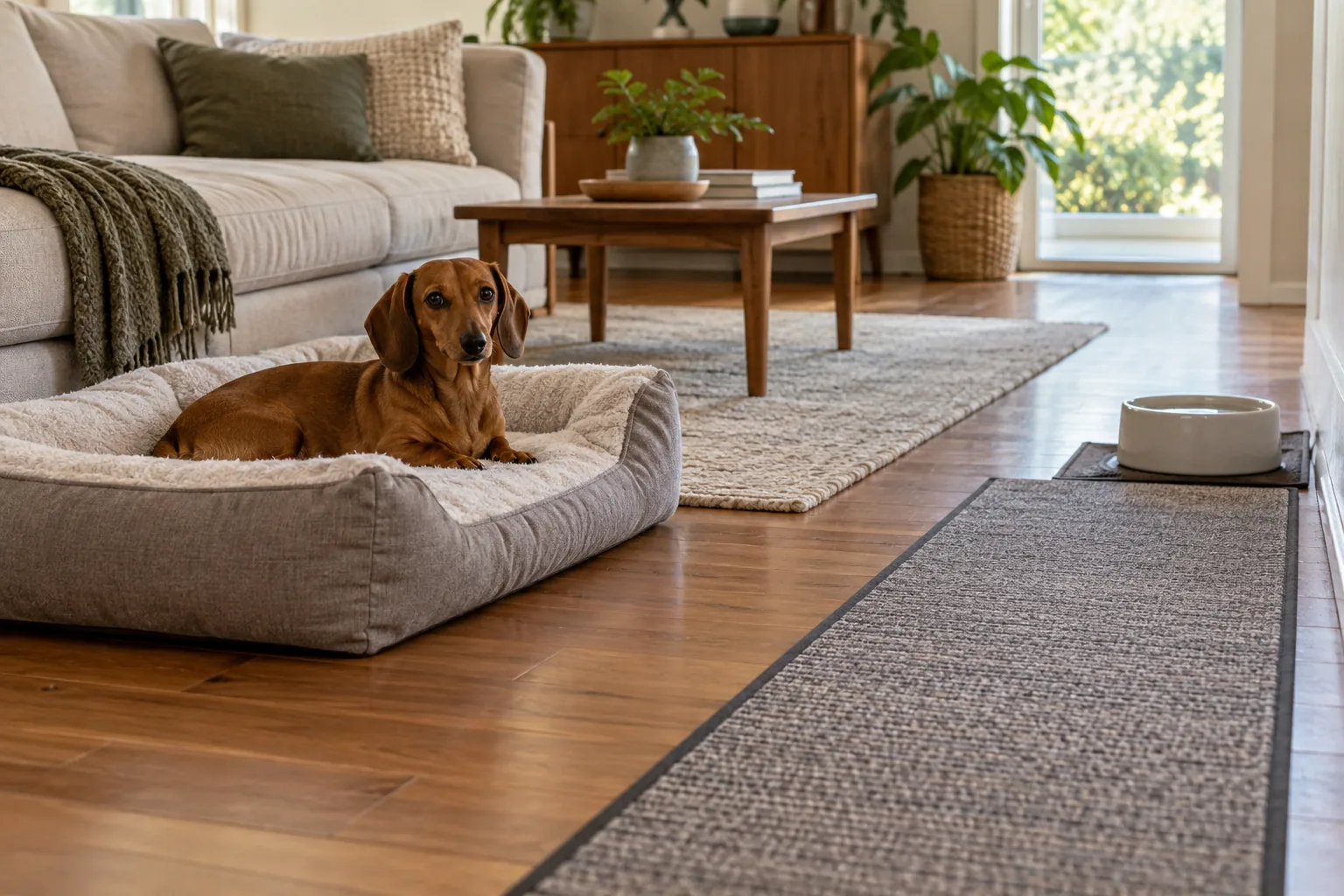
A useful Dachshund home setup is not a shopping list of ramps. It is a repeatable layout that lets the dog reach water, rest, people, and the outdoor door without frequent leaps, slippery turns, or confusing barriers. Start by watching where your dog actually walks during a normal day. Place a comfortable quiet bed, water, and other essentials on a practical route; manage stairs and high furniture; add traction where feet slide; and test whether the dog uses the changes. AKC’s Dachshund breed guide advises managing stairs and furniture jumps, while its flooring guide discusses rugs and runners for traction.
This is a whole-home routine for an adult dog. The separate guide focuses on urgent puppy hazards such as cords and small objects; focuses on daily back-risk choices; is specifically about stair logistics. They should not all become near-identical “Dachshund-proof your house” pages.
Dachshund home setup: map one ordinary day at dog height
Follow the dog from the bed to the water bowl, feeding spot, favored person, door, and place it watches the room. Where does it jump to keep up? Where does it skid while turning? Does it take a slippery shortcut because the safer path is too far away? Record the repeated behaviors, not only the obvious hazard. A dog may use a ramp once for a treat but jump from the sofa every evening when someone arrives.
In a practical Dachshund home setup, choose the highest-frequency problem first. Move a bed closer to the family if that reduces repeated furniture jumps, or place a runner through a slick turn between the hallway and door. A home need not be fully redesigned in a weekend. Change one route, observe for a week, then decide whether it actually helps.
Measure spaces before buying equipment. A rug that curls at the edge can introduce a trip hazard; a ramp too steep or unstable may be avoided. No accessory is useful merely because it is installed. Reward the dog for choosing the intended path and keep blocking unsafe shortcuts while it learns.
Make rest easy and predictable
Give the Dachshund at least one quiet place to sleep where it is not constantly stepped around, interrupted by children, or exposed to a draft. The bed should be easy to enter and leave and have stable footing nearby. In a busy home, a second rest spot close to family activity can reduce a dog’s urge to climb onto high furniture just to stay involved. Do not force a dog to sleep in isolation if that creates distress; arrange both access and quiet.
Place water where it is reliably reachable. In a multilevel home, consider how the dog will access water without repeatedly using stairs. A non-slip mat around bowls can help on smooth floors, but clean spills promptly. Food storage should be secure and separate from household chemicals and medicines. A dog with mobility changes may need bowl, bed, and toilet access on one level; discuss new difficulty bending or moving with a veterinarian rather than assuming a layout change alone is enough.
Improve traction where it matters
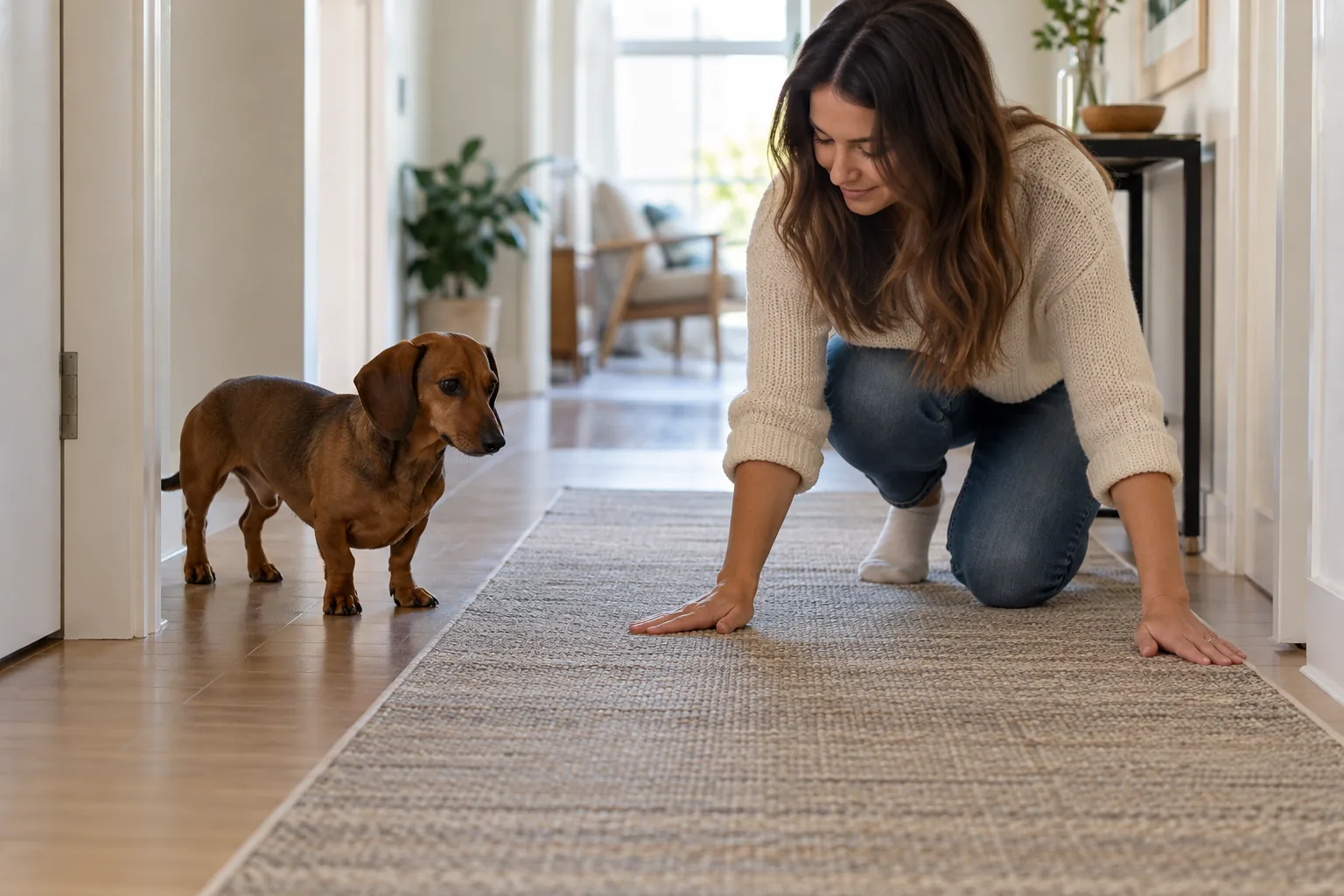
Hardwood and tile can be easy to clean but may be slippery. AKC’s flooring advice suggests rugs or runners at high-use routes and around food bowls or entryways. Choose low-profile pieces that lie flat, stay fixed, and can be cleaned. A mat at the door can also absorb wet paws before the dog runs onto smooth flooring.
Focus on launch and landing zones, tight corners, and the route to outdoors. A single decorative rug in the center of a room may do little if the dog skids between it and the sofa. Watch whether the dog actually feels confident on the surface. Keep nails appropriately maintained, since overlong nails may affect grip; ask a groomer or veterinarian if handling is difficult.
Do not treat rugs as an IVDD prevention guarantee. Back problems have multiple factors, and the evidence for any one household change is not a promise of protection. Traction is a practical way to make movement more controlled. Dachshund Health UK’s back-disease factsheet encourages care around furniture jumps and running down stairs but does not make a no-risk claim.
Manage heights and stairs with a real plan
Decide which furniture access is allowed. If the dog is allowed on a sofa or bed, provide a stable, usable access route and teach it; block the edge where the dog tends to leap. If access is not allowed, give an appealing floor-level bed near people and keep the rule consistent. A ramp is not a safety improvement when it is too steep, slides, or the dog ignores it. The dedicated stair and back-safety guides handle technique and evidence in more detail.
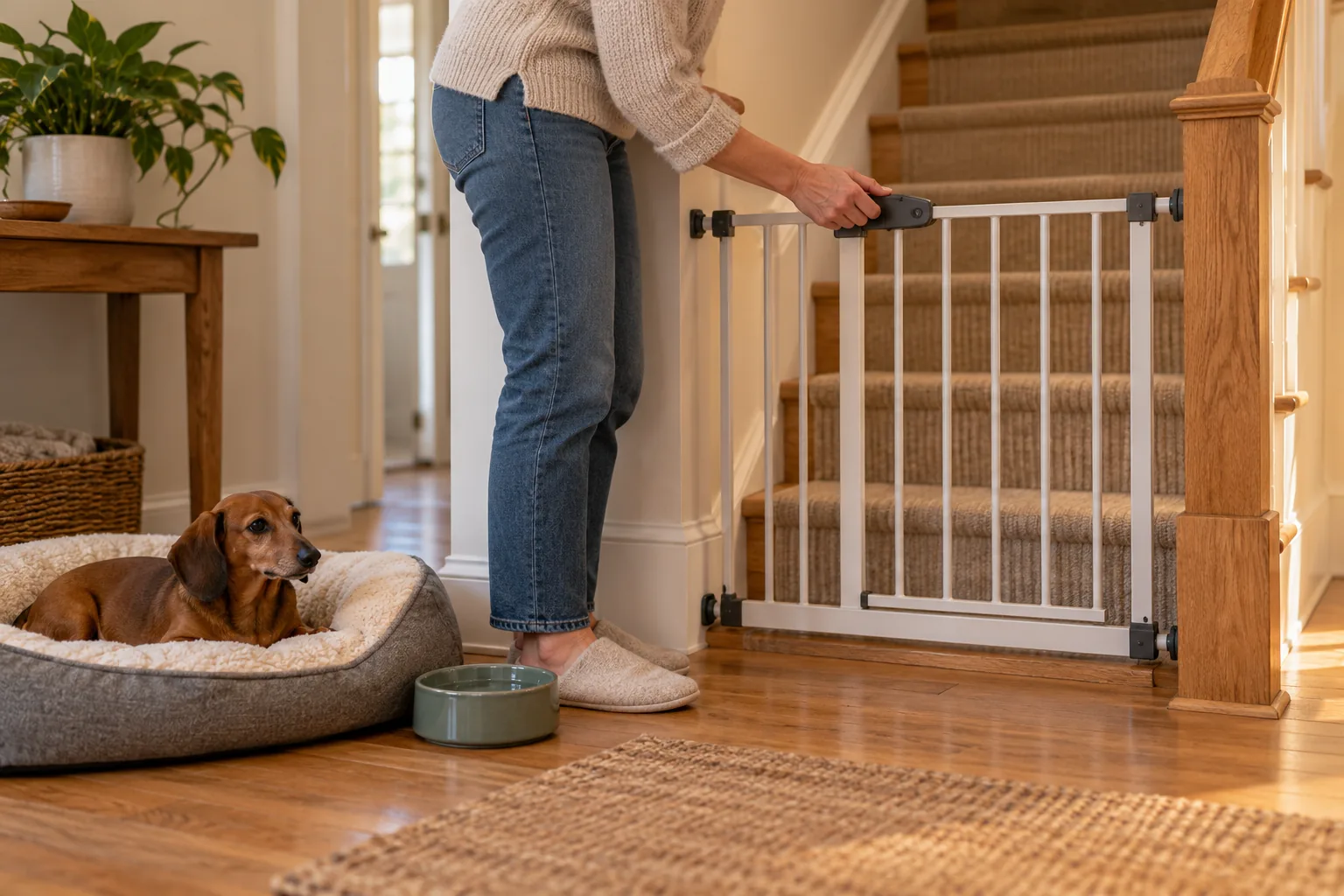
At stairs, use a secure gate or supervision where appropriate. Consider where the dog sleeps, eats, and toilets so routine care does not require many trips between levels. A gate should be installed correctly and checked for gaps a low dog can squeeze through. Never step over a gate while carrying a wiggling dog if that creates a fall risk. For a dog with pain, weakness, or recent IVDD, use the treating veterinarian’s mobility instructions.
An apartment may have no interior stairs but a shared elevator, lobby, and busy door. Plan how the dog gets outside without bolting through an entrance or meeting other dogs at close quarters. A small home can work well if its paths are clear and the dog has predictable rest and activity.
Create management zones, not isolation
Gates and doors can make visitor arrivals, cleaning, and meals calmer. Set up a space with bedding and water where the dog can relax during temporary management. Introduce it gradually; a dog that panics behind a gate needs training and possibly professional help, not simply a stronger barrier. The aim is predictable access, not confinement throughout the day.
Keep electrical cords, medication, cleaning products, and human food stored securely regardless of the dog’s age. AKC’s household-hazards overview notes that common products and small items can be chewed or swallowed. The puppy-specific guide gives a room-by-room sweep, but adults can also explore a dropped pill or open trash.
If you share the home with other dogs or cats, provide separate feeding and rest options and ensure each animal can retreat. Do not place all resources in one narrow passage. This is part of home function, not a claim that every pet pairing will succeed without a separate introduction plan.
Adapt the setup as the dog changes
Revisit the layout after a move, new furniture, weight change, injury, or aging. A dog that once bounded across a room may later need shorter, non-slip routes and more accessible rest areas. AKC’s senior-home guidance discusses traction and accessible furniture, but a new refusal to move or sudden weakness should still be assessed medically.
Use a short monthly walkthrough: are rug edges flat, gates secure, routes clear, water accessible, and ramps stable? Check whether the dog uses the intended path when excited, sleepy, and alone with family. The behavior during ordinary life is more informative than a single demonstration while holding treats.
A practical room-by-room audit
| Area | Watch for | Practical adjustment |
|---|---|---|
| Living room | Sofa leaps, slick turns, crowded pathways | Floor-level rest near people, stable access plan, secured runner |
| Bedroom | Repeated bed jumps or inaccessible water | Decide furniture rule; add accessible bed and water as needed |
| Entry | Bolting, wet paws on smooth floor | Leash station, secure door routine, flat non-slip mat |
| Stairs | Unplanned repeated trips | Gate or supervised access; organize essentials on one level |
| Kitchen | Spills, food scraps, chemicals | Secure storage, clean footing, separate meal spot |
This table is a starting point. A dog with an injury needs an individualized veterinary plan, not merely generic home modifications.
Frequently asked questions
Does every Dachshund need a ramp?
No single product fits every home. The question is whether the dog is repeatedly jumping from a height and whether a stable trained alternative will actually be used. Some households choose to keep the dog at floor level instead.
Is a slippery floor dangerous?
Poor traction can make movement less controlled. AKC suggests rugs and runners in high-use areas. This does not mean a rug guarantees prevention of back disease.
Where should the bed go?
Choose a quiet, accessible place where the dog can rest without being constantly disturbed, and consider another floor-level spot near family life if that helps reduce high-furniture access.
Should food and water be on every floor?
Make water reliably accessible without unnecessary stair use. The best layout depends on the home’s levels and the dog’s mobility. If a new difficulty reaching essentials appears, consult a veterinarian.