Direct answer
Dachshund puppy proofing home starts from the floor up, before the puppy arrives. A Dachshund puppy can reach under furniture and find items adults overlook: cords, pills, wrappers, children’s toys, cleaning products, plant leaves, and gaps behind appliances. Move hazards out of reach, secure storage, block unsafe areas, and create one supervised exploration zone. Recheck it as the puppy grows and learns to climb or chew. AKC’s puppy-proofing guidance identifies cords, medication, cleaning supplies, food hazards, windows, and blind cords among common risks.
This is an urgent hazard-removal checklist for a curious young dog. The adult-home guide is about sustainable routes, rest, and traction; the potty and crate guides teach specific routines. Gates and pens support management but do not make a room safe unless the contents are safe too.
Start with a puppy-height inspection
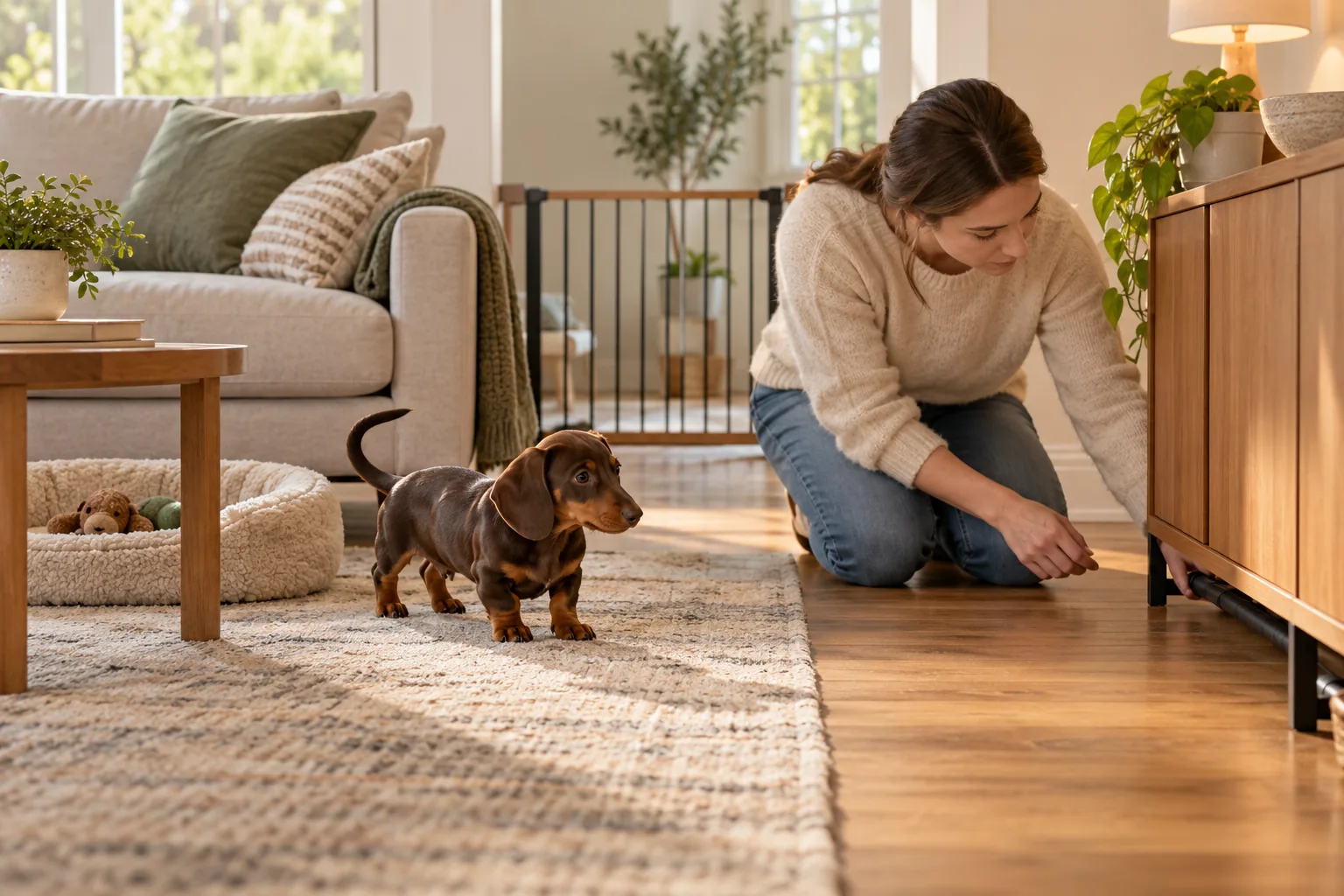
Get down to the level of a small dog and scan along baseboards, behind the sofa, under low cabinets, and near the front door. Ask what can be chewed, swallowed, pulled down, trapped around a neck, or used as an escape route. A puppy can squeeze behind furniture that an adult dog cannot. Move furniture or block the gap if you cannot supervise access.
Do a first sweep before arrival, then repeat after a week and again whenever the puppy gains confidence. A cord ignored on day one may become attractive during teething. Visitors, children, and delivery boxes add new items to the floor. Do not rely on a single “puppy-proofed” sticker or a verbal “leave it” cue to prevent contact with serious hazards.
Separate high-priority risks from less urgent inconvenience. Exposed wiring, medication, toxic food, unstable furniture, open balconies, and escape gaps need physical prevention. A slipper taken from the floor is a training and storage problem, but it should not distract from the danger of a dropped tablet.
Living room: cords, tiny objects, and heights
Unplug and reroute cords or cover them with suitable cord protection; do not simply put a toy in front. AKC warns that chewing electrical cords can cause burns or shock. Collect batteries, remote controls, coins, beads, toy parts, hair ties, and loose packaging from floor level. Check under couches and cushions, not only the visible carpet.
Secure blind cords and hanging fabric that could wrap around the puppy. Move unstable lamps and small tables that might topple if the puppy pulls a cable or cloth. Plan a low, stable resting area so the puppy need not leap from furniture to follow people. A Dachshund’s long back warrants thoughtful handling and access choices, but no one household arrangement eliminates IVDD risk.
Rugs should lie flat and provide traction rather than creating trip edges. Teach family members to look before moving chairs or opening recliners; a small dog can rest out of sight. Supervise any new puzzle or chew toy until you know the puppy cannot break off pieces.
Kitchen and dining: food is not automatically safe
Close trash, clear counters and low shelves, and do not leave plates where a puppy can reach them by climbing. AKC’s puppy-proofing article specifically highlights chocolate, raisins, and xylitol-containing foods among hazards. ASPCA’s xylitol warning notes that the sweetener can appear in products beyond gum and candy. Store all human food securely rather than trying to remember only a few dangerous examples.
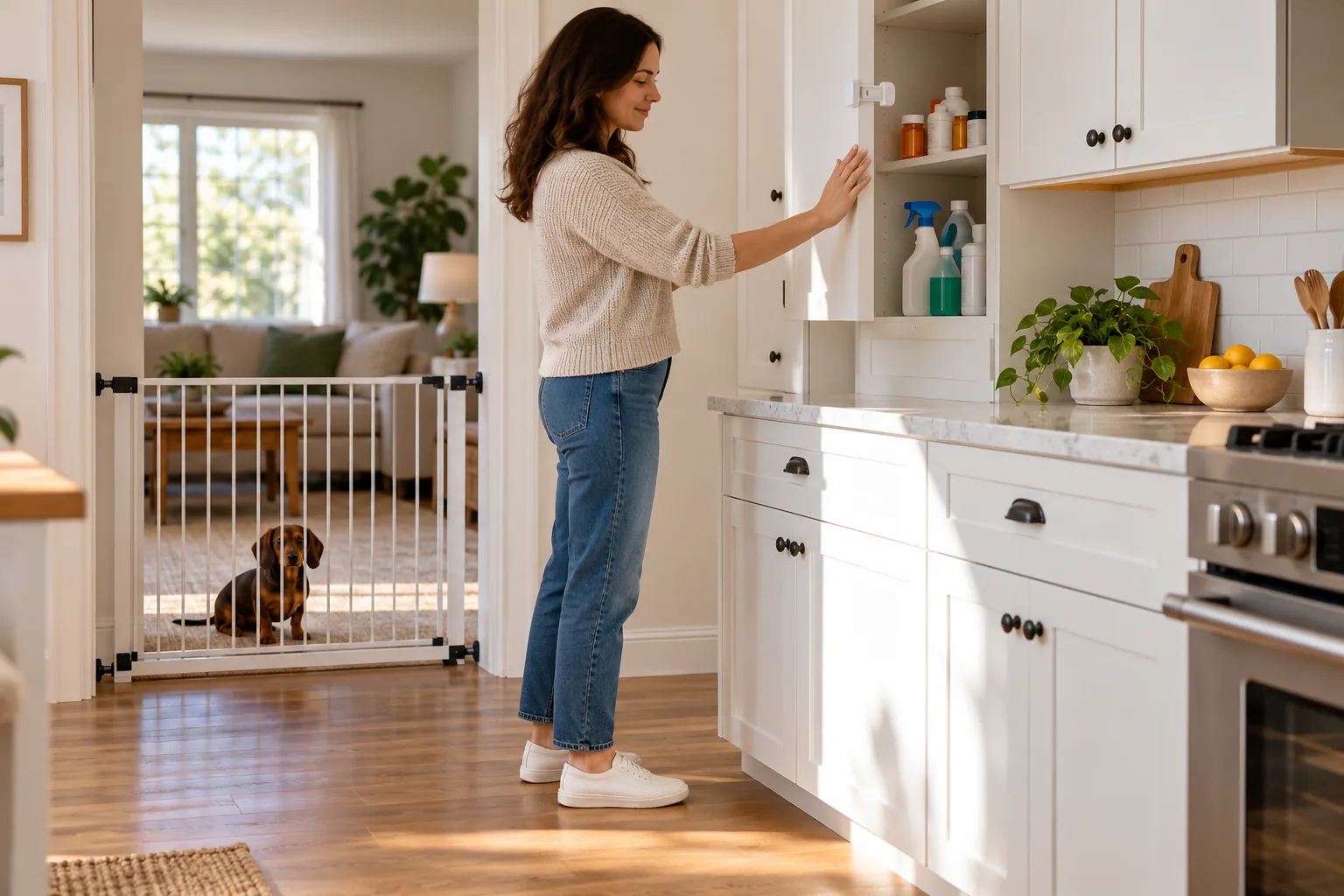
Keep cleaners, dishwasher products, sharp tools, and bins behind secure doors or high enough that a puppy cannot reach them. Childproof latches can help, but test whether the door actually remains closed. During cleaning, keep the dog out of the area until products are used and dried according to their directions. Do not leave a wet chemical bucket or laundry pod where a puppy can investigate.
Give the puppy a consistent feeding area away from foot traffic and hot cooking surfaces. Remove food spills promptly. Teach household members not to hand out scraps without checking whether an ingredient is suitable and whether it disrupts the puppy’s diet.
Bedroom and bathroom: pills and small items
Put human medication, supplements, and pet medication in secure cabinets, not on a bedside table, bathroom counter, or in an open handbag. AKC warns that even pill bottles or dispensers are unsafe at low or accessible locations. Close laundry hampers if socks and underwear are being chewed. Store razors, cotton buds, dental floss, cosmetics, and hair ties beyond reach.
Keep toilet lids closed and manage bathroom bins. Check plug-in devices and cords. A puppy can enter while someone showers and find a dropped item before it is noticed. Make door rules clear: either the room is prepared and supervised, or it stays shut.
If the puppy may sleep in the bedroom, plan how it will reach a safe bed and be taken out for toileting without jumping from adult furniture. The exact crate or sleep routine belongs to its own guide; this page is about preventing access to hazards.
Doors, stairs, and outside access
Install gates according to the maker’s instructions and check for a gap a low puppy could slip through. A gate is not a substitute for closing the exterior door. Set a household routine in which the puppy is behind a barrier or held securely before anyone opens the front door. Update microchip and ID information promptly according to your veterinarian’s advice.
Check windows, balconies, deck rails, garden fences, and gaps under gates. A small Dachshund may fit through openings that appear too narrow for a larger dog. Inspect the yard for toxic plants, fertilizers, pesticides, standing water, sharp debris, and escape routes. AKC’s puppy-proofing guide addresses both house and yard hazards. Supervise the puppy outside even after the fence passes inspection.
Manage stairs and furniture access from day one so repeated leaps are not practiced. Do not assume the puppy will wait for help when excited. A gate or closed door is more reliable than calling “stay” while carrying groceries.
Create a safe exploration zone
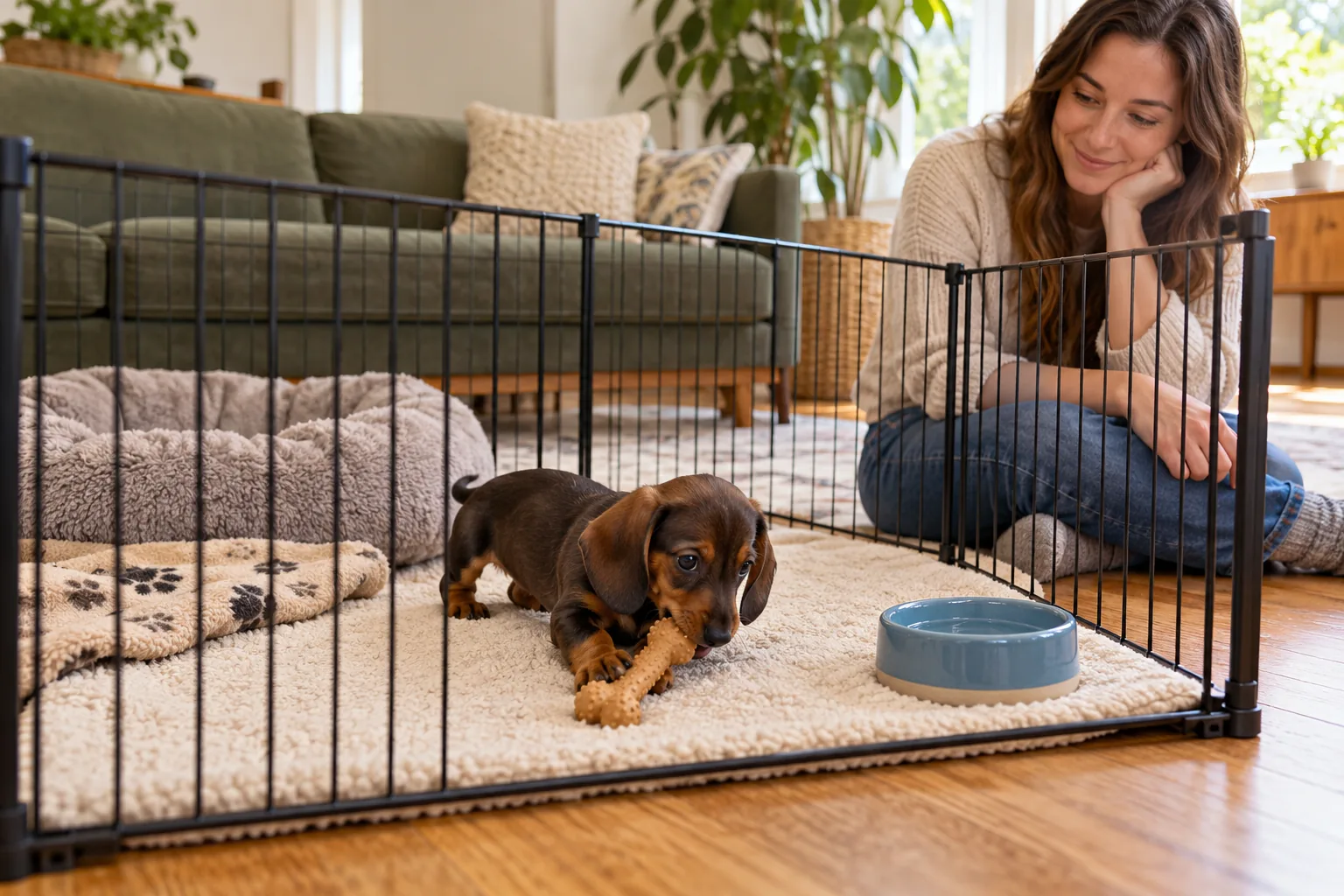
For a Dachshund puppy proofing home plan, choose one manageable area with a comfortable rest place, suitable chew options, and water as appropriate to the puppy’s schedule. Clear cords and toxins before adding a pen or gate. Give the puppy supervised time to explore, then rest; do not use a pen as all-day isolation. AKC’s management guidance describes gates and a prepared room as ways to control access while the puppy learns.
Introduce any enclosure gradually with rewards and calm exits. If the puppy becomes distressed, reassess the setup and training rather than merely adding another lock. Check toys and bedding for damage daily. A product safe under supervision may not be safe left alone if the puppy tears or swallows parts.
Establish shared rules for every person in the household: shoes and medications go away, the bin closes, doors are checked, and the puppy is watched during free exploration. Puppy-proofing succeeds when the whole home follows the same physical system, not when one person remembers a checklist once.
What to do after a suspected ingestion
Move the puppy away from the substance and contact a veterinarian or animal poison service promptly. Save the package and estimate what, how much, and when exposure occurred. Do not induce vomiting or offer a home remedy unless a veterinary professional instructs you to do so. ASPCA Poison Control says its general information cannot assess a specific exposure and urges immediate professional contact for suspected poisoning. In the U.S., its Animal Poison Control Center is 888-426-4435; elsewhere, use a local veterinarian or poison service.
If the puppy has chewed a live electrical cord, do not touch the puppy or wire until the power is safely disconnected. Seek urgent veterinary care. If a small object may have been swallowed, contact the veterinarian even if the puppy initially seems normal; do not wait for a blockage to become obvious.
A practical pre-arrival sweep
| Area | Remove or secure first | Recheck after arrival |
|---|---|---|
| Living room | Cords, batteries, small toys, unstable lamps | Under furniture; chew damage |
| Kitchen | Toxic foods, cleaning products, trash | Dropped scraps and open bins |
| Bedroom/bath | Medicines, floss, socks, cosmetics | Bags left on the floor |
| Entry/stairs | Escape gaps, stair access, open-door routine | Gate fit and visitor habits |
| Yard | Fence gaps, chemicals, plants, sharp items | New holes and seasonal treatments |
Frequently asked questions
Is one baby gate enough?
Only if the area behind it has been checked and the gate fits securely. A gate does not remove cords, medicines, or small objects from the puppy’s reach.
Can I rely on “leave it” training?
Teach it as a valuable skill, but use physical prevention for high-consequence hazards. A new puppy is not reliable around a dropped pill or live cord.
When should I recheck the home?
After the first week, during teething, whenever the puppy gains access to a new room, and after furniture or household routines change. Curiosity and reach change rapidly.
What if the puppy eats something unknown?
Contact a veterinarian or animal poison service promptly. Keep packaging and timing information, and do not attempt treatment based on a generic article.