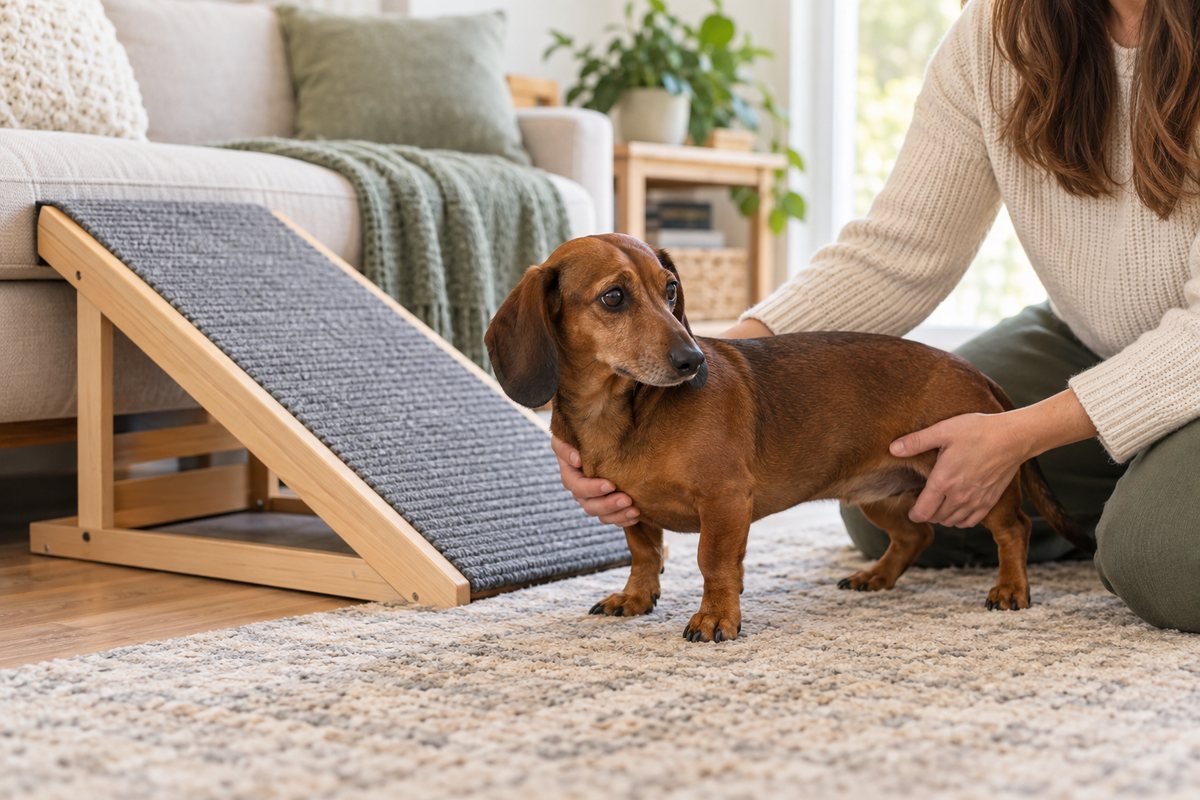
To brush a long haired Dachshund, work in small sections, lift the coat in layers, brush gently from the skin outward, and finish each section with a metal comb to catch hidden tangles. The most important areas are behind the ears, armpits, chest, belly, backs of the legs, tail feathering, and anywhere a harness or sweater rubs. Short, calm sessions beat one long wrestling match.
This step-by-step guide explains tools, brushing order, mat prevention, how often to brush, and what not to do. If your Dachshund already has tight mats, irritated skin, sores, or pain when touched, ask a professional groomer or veterinarian for help instead of pulling through the mats at home.
Table of Contents
How to brush a long haired Dachshund: quick answer
Use a slicker brush or pin brush gently, then check with a stainless-steel comb. Brush in layers instead of only smoothing the top coat. Keep one hand on the skin near the hair you are brushing so you do not tug. Reward often and stop before your Dachshund becomes frustrated.
VCA grooming guidance says dogs with long, silky, or curly coats may need daily brushing to prevent tangles and mats, especially around ears, armpits, and backs of legs. Long-haired Dachshunds commonly mat in exactly those spots.
Tools you need
| Tool | Use | Tip |
|---|---|---|
| Slicker brush | Lifts loose hair and small tangles | Use light pressure, not scraping |
| Pin brush | Gentle brushing for feathering | Useful for sensitive dogs |
| Metal comb | Checks whether the coat is tangle-free | If the comb catches, brush that section again |
| Detangling spray | Helps reduce tugging | Use dog-safe product only |
| Treats | Builds cooperation | Use tiny pieces to avoid overfeeding |
| Non-slip mat | Improves comfort and safety | Especially useful for low-backed dogs |
Avoid scissors near the skin unless you are trained. Mats can pull skin upward, making accidental cuts more likely. If a mat is tight, close to the skin, or painful, professional help is safer.
Step-by-step brushing routine
- Place your Dachshund on a non-slip surface.
- Start with calm touch and reward.
- Brush one small area at a time.
- Lift the coat so you can brush near the skin, not just the top layer.
- Hold the hair close to the skin to reduce pulling.
- Brush in the direction the coat grows.
- Use the comb to check the section before moving on.
- Pause if your dog pulls away, scratches, or tenses.
- End with praise and a small reward.
If your Dachshund is new to grooming, make the first sessions almost too easy. Brush for one minute, reward, and stop. Build duration gradually.
Mat-prone areas
Long-haired Dachshunds often look smooth on top while tangles hide underneath. Check friction areas every time.
| Area | Why it mats | How to manage it |
|---|---|---|
| Behind ears | Fine hair and scratching | Comb gently in small sections |
| Armpits | Leg movement and harness friction | Lift leg gently and use light brushing |
| Chest and belly | Low body collects moisture and debris | Dry after walks, then brush |
| Back legs | Feathering tangles from movement | Comb after brushing |
| Tail | Long feathering catches burrs | Start at ends and work inward |
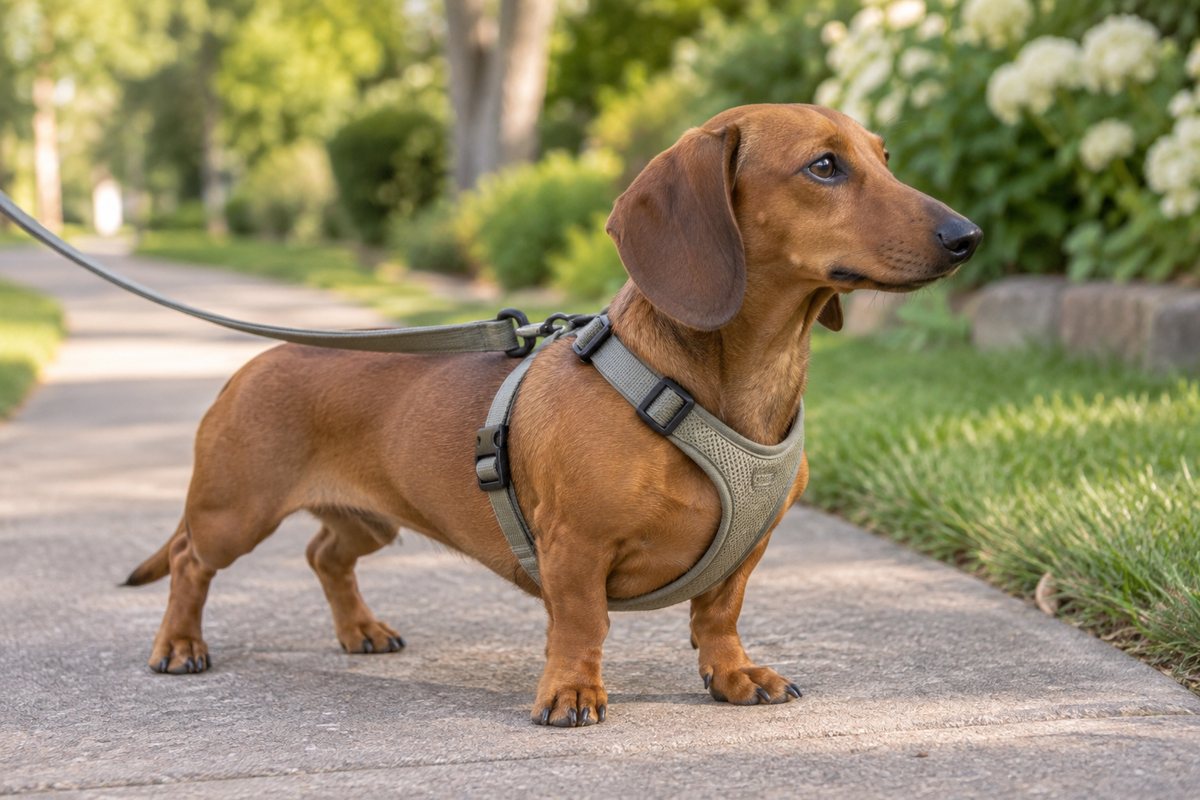
| Harness straps | Friction compresses coat | Brush after walks and adjust fit |
Harness friction is common. For gear that fits the Dachshund body better, see best harness for Dachshunds.
How often to brush
Many long-haired Dachshunds need a quick brush several times per week and a deeper line-brushing session weekly. Dogs with soft coats, winter clothing, wet walks, or easy matting may need daily attention in problem areas.
- Daily: ears, armpits, belly, and harness areas if your dog mats easily.
- Several times weekly: full-body brush for most long-haired Dachshunds.
- Before baths: remove tangles first.
- After wet walks: dry and brush feathering.
- After grooming appointments: maintain the coat before mats return.
What to do about mats
Small loose tangles may come out with detangling spray, gentle brushing, and a comb. Tight mats are different. They can pull skin, hide irritation, and become painful. VCA warns that brushing burrs and tangles before bathing matters because water can make tangles harder to remove.
- Do not yank through a mat.
- Do not bathe a matted coat first.
- Do not cut close mats with household scissors.
- Ask a groomer if mats are tight, widespread, or close to skin.
- Call your veterinarian if skin is red, bleeding, smelly, or painful.
FAQ
Do long haired Dachshunds need daily brushing?
Some do, especially around ears, armpits, belly, and tail feathering. Others do well with several brush sessions per week. If mats form between sessions, brush more often.
Should I brush before or after a bath?
Brush before bathing. Water can tighten tangles and make mats harder to remove.
What brush is best for a long haired Dachshund?
Many owners use a slicker brush or pin brush plus a metal comb. The comb is important because it confirms whether hidden tangles remain near the skin.
Line brushing for long-haired Dachshunds
Line brushing means you do not just brush the outside of the coat. You lift a small layer of hair, brush from the base outward, then let down the next layer. This matters for long-haired Dachshunds because the top can look smooth while mats form underneath around the chest, belly, ears, and legs.
- Start at a small area such as one side of the chest.
- Lift the top layer with your fingers.
- Brush the lower layer gently.
- Comb that section to check for snags.
- Move to the next small layer.
- Stop if the skin looks red or your dog is uncomfortable.
Post-walk coat check
After wet or muddy walks, check the belly, armpits, tail, and feathering before the coat dries into tangles. Remove burrs and debris gently. If your Dachshund wears a harness, comb under the straps after long walks because friction can start mats even when the rest of the coat looks fine.
A long-haired Dachshund brushing system
Long-haired Dachshunds need brushing that reaches the coat areas most likely to tangle: behind the ears, under the collar, armpits, chest feathering, belly, tail, and rear legs. A quick surface brush can make the coat look nice while leaving small mats underneath.
Use calm, short sessions. Put your dog on a non-slip surface, reward stillness, and work in sections. If your Dachshund hates brushing, start with the easiest area and stop before frustration builds.
| Situation | What it suggests | Best next step |
|---|---|---|
| Behind ears | Fine hair mats quickly | Comb gently in small sections |
| Armpits | Harness friction | Lift leg only as comfortable |
| Tail feathering | Debris and tangles | Hold base to avoid pulling skin |
| Belly | Low to ground dirt | Check after wet walks |
| Paws | Burrs and mats | Trim pad hair if needed |
how to brush a long haired Dachshund: practical checklist
- Mist lightly if the coat has static or small tangles.
- Brush with the coat, then check with a comb.
- Hold hair near the skin when working through tangles.
- Reward after each small section.
- Do not yank mats loose.
- Schedule a groomer if mats are tight or painful.
When to change course
If your dog suddenly resists brushing in one area, check for skin irritation, burrs, sores, ear pain, or harness rubbing before continuing.
how to brush a long haired Dachshund: owner scenarios and fixes
The final step for how to brush a long haired Dachshund is matching the advice to the exact situation in front of you. Dachshunds are small, persistent, routine-sensitive dogs, so a plan that looks correct on paper can fail if the room setup, timing, gear, reward value, or health context is wrong. Before changing everything, choose the one pattern that happens most often and work there first.
This also helps prevent mixed signals. If you sometimes reward the unwanted pattern, sometimes interrupt it, and sometimes ignore it, your Dachshund may keep trying the behavior because the rules are unclear. A simple plan that everyone in the home follows for one week is usually more useful than a complicated plan that changes every day.
| Owner situation | How to handle it |
|---|---|
| When the main issue is behind ears | Start with the practical fix: comb gently in small sections. Give it several calm repetitions before adding a second change. |
| When the pattern looks like armpits | Assume the setup is slightly wrong for your Dachshund and adjust the environment before expecting better behavior. |
| When you see tail feathering | Slow the plan down. Dachshunds often improve faster when the next step is easier, clearer, and more predictable. |
| When belly keeps returning | Look for a trigger that happens before the problem. Changing that trigger usually works better than reacting afterward. |
| When paws is involved | Treat it as a sign to re-check fit, comfort, schedule, or health rather than assuming your dog is ignoring you. |
How to make the plan easier for your Dachshund
If progress stalls, make the next repetition easier instead of louder or longer. For how to brush a long haired Dachshund, easier can mean more distance, a shorter session, a lower height, a quieter room, softer handling, smaller rewards, or fewer choices. The easier version should let your dog succeed while still practicing the skill you want.
Watch recovery time. A Dachshund who can return to sniffing, eating, resting, or walking normally is usually in a workable zone. A dog who stays frantic, stiff, avoidant, or obsessed with the trigger is telling you the setup is too difficult. That is useful information, not a training failure.
7-day improvement plan
- Day 1: write down when the how to brush a long haired Dachshund problem happens, where it happens, and what happened right before it.
- Day 2: remove the easiest trigger or setup mistake connected to behind ears.
- Day 3: practice the first checklist step: mist lightly if the coat has static or small tangles..
- Day 4: repeat the same plan at an easier level instead of adding a new rule.
- Day 5: add one support step from the checklist: brush with the coat, then check with a comb..
- Day 6: ask whether your dog recovers faster than earlier in the week.
- Day 7: keep what improved, drop what confused your dog, and decide whether health or professional support is needed.
This seven-day plan will not solve every case of how to brush a long haired Dachshund, but it gives you cleaner information. If the pattern improves, keep building gradually. If it stays the same or worsens, the cause may be discomfort, fear, poor fit, too much freedom, or a trigger that needs a different article-specific plan.
Quality check before you rely on the advice
The safest version of the advice should be specific, observable, and easy to repeat. You should know what you are changing, what success looks like, and when to stop. For Dachshunds, stop signs include pain, limping, yelping, frantic barking, snapping, refusal to eat rewards, vomiting, repeated accidents, or sudden behavior changes.
When in doubt, choose the lower-risk version: more distance, better traction, shorter sessions, calmer rewards, clearer routines, and earlier veterinary input. That keeps the how to brush a long haired Dachshund plan helpful without pushing a small long-backed dog through stress, pain, or confusion.
Sources
- VCA: Grooming and Coat Care for Your Dog
- AKC: Dog Grooming at Home
- VCA: How to Prevent Matting
- AKC: Dachshund Breed Information