How to train Dachshund not to jump starts with one clear rule: jumping no longer earns attention, and calm paws on the floor always pay. For Dachshunds, this is not just a manners issue. Their long backs make repeated sofa launches, door greetings, and excited visitor jumping worth managing carefully. The goal is not to scare your dog or punish excitement. The goal is to teach a safer way to greet people, ask for attention, and move around furniture.
The fastest plan is simple: prevent rehearsals, reward “four paws on the floor,” teach an alternative like sit or go to mat, and make every person in the home follow the same rule. AKC and VCA both emphasize that jumping often continues because it gets attention, even when that attention is scolding, touching, or pushing. With a Dachshund, consistency also protects their body because furniture jumping and stair racing can add extra stress to the back.
Table of Contents
How to train Dachshund not to jump
To train a Dachshund not to jump, choose a replacement behavior, usually four paws on the floor, sit, or go to bed. Reward that behavior before your dog jumps. If jumping happens, remove attention calmly and reset the situation. Use a leash, gate, crate, or mat while your Dachshund is learning, so the old habit does not keep getting rewarded.
For a puppy or excited adult, start with low-energy practice sessions. Walk in, say hello calmly, drop a treat low between the front paws, and pet only when the paws stay down. If your dog jumps, turn away or step behind a gate for a moment, then try again at an easier level. That is the core of how to train Dachshund not to jump without creating fear or confusion.
Why Dachshunds jump
Dachshunds usually jump because it works. They want your face, your hands, your voice, or a fast greeting. If jumping makes people laugh, bend down, push them away, pick them up, or talk to them, the dog may count that as success. VCA explains that social dogs naturally try to get closer to face level and that behaviors that earn interaction tend to repeat.
- Excitement: greetings, food bowls, leashes, and visitors raise arousal.
- Attention seeking: even “no” and pushing can be rewarding to a social dog.
- Access: your dog may jump onto legs, couches, beds, or car seats to reach something.
- Anxiety: some dogs jump because greetings feel conflicted or overwhelming.
- Habit: if it worked yesterday, your Dachshund will try it today.
Dachshunds are also short, people-focused, and often determined. That combination can make jumping look cute at first. But a behavior that is adorable at 10 weeks can become painful, muddy, unsafe for children, and risky around furniture later.
7 step training plan
Use this plan for people jumping first. Once your Dachshund understands the rule around greetings, apply the same idea to furniture, doors, and leash excitement.
1. Pick one greeting rule
Choose the behavior you want before you begin. “Four paws on the floor” is easiest for many Dachshunds because they can stand naturally and still greet. “Sit” also works, but only if your dog already knows sit when excited. “Go to bed” is excellent for doorbells and guests.
2. Prepare tiny rewards
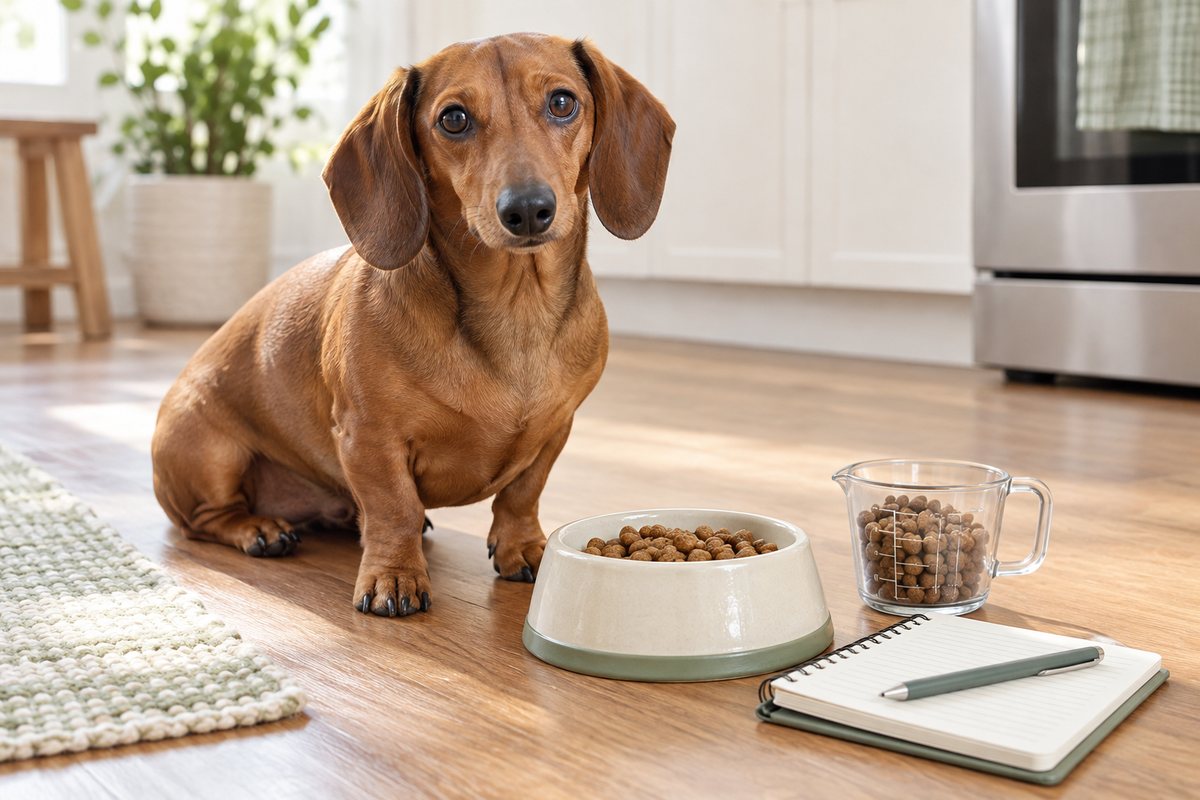
Use soft, tiny treats that your Dachshund can swallow quickly. Keep a jar near the door and another near the sofa. If calories are a concern, use part of the daily food allowance or very small training pieces. The guide to best treats for Dachshund training can help you choose reward sizes.
3. Reward before the jump
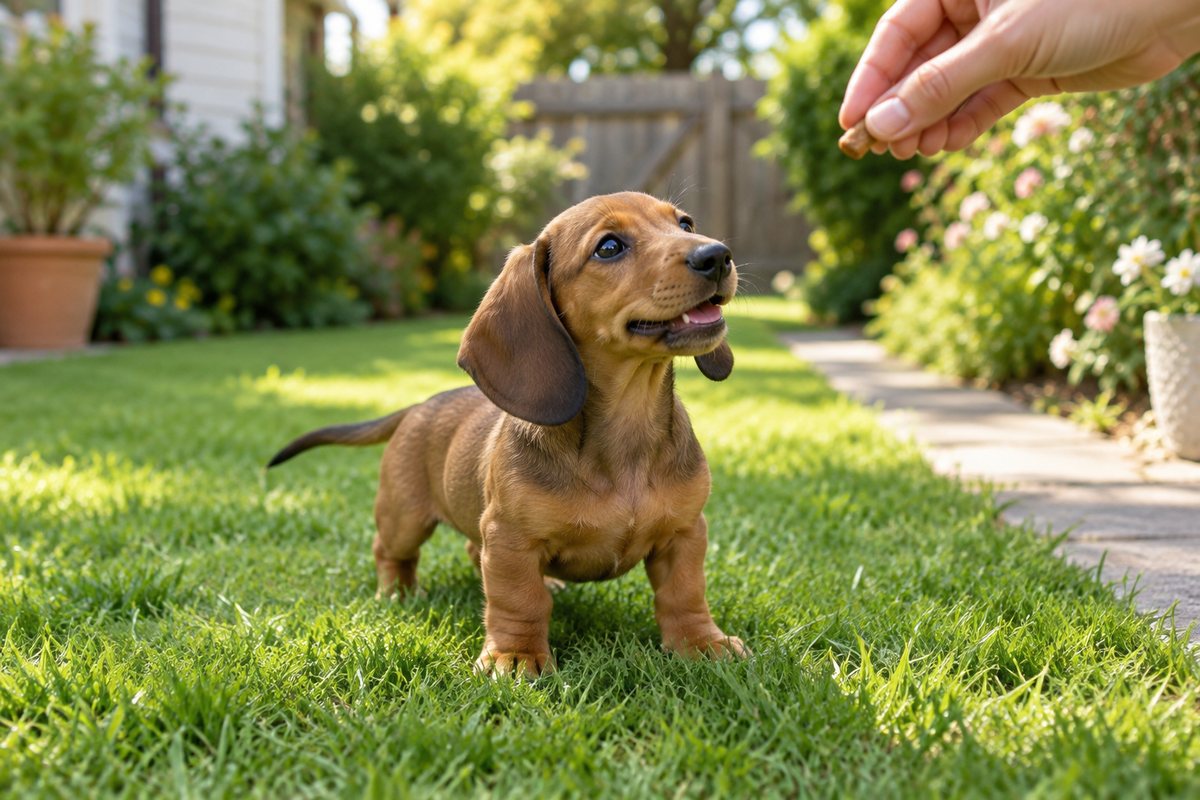
Have your Dachshund on leash or behind a gate. A helper approaches calmly. Before your dog springs upward, drop treats low on the floor. Low rewards keep the head down and the feet grounded. AKC describes this “four on the floor” idea as rewarding the dog before jumping can start, then gradually making greetings longer and harder.
4. Remove attention when jumping happens
If your Dachshund jumps, do not yell, push, grab paws, or make it a wrestling game. Quietly turn away, step behind a baby gate, or have the visitor step back. The moment all four paws return to the floor, calmly re-engage and reward. The lesson is clean: paws down makes people appear; jumping makes people pause.
5. Add sit only after paws-down is easy
Some owners ask for sit too early. If your Dachshund is still launching at every hello, focus on four paws first. Once your dog can approach without jumping, ask for sit and reward. The article on Dachshund commands to teach fits well here because “sit,” “off,” “wait,” and “go to bed” all support polite greetings.
6. Practice with real-life distractions
Move from easy to harder: one calm family member, then a familiar guest, then the doorbell, then a visitor with a bag, then a quiet sidewalk greeting. Change only one thing at a time. If your dog fails three times in a row, the setup is too hard. Make it easier and build again.
7. Make the rule universal
AKC warns that training becomes difficult when one person allows jumping and another does not. For Dachshunds, the family rule should be simple: no attention for jumping, rewards for calm greetings, and no rough sofa launch games. Everyone should use the same cue and the same reset.
Visitor and door routine
Door greetings are where many Dachshunds lose their minds. Do not wait until the doorbell rings to invent a plan. Set up the environment before guests arrive.
| Situation | Management | Reward the moment |
|---|---|---|
| You come home | Enter calmly and keep hands high | Four paws on the floor |
| Guest at the door | Leash, baby gate, crate, or mat | Looking at guest without jumping |
| Dog gets too excited | Increase distance or close gate | Quiet standing, sit, or go to bed |
| Visitor wants to pet | Explain the rule first | Pet only while paws stay down |
| Jumping starts again | Visitor turns away or steps back | Re-engage after paws return down |
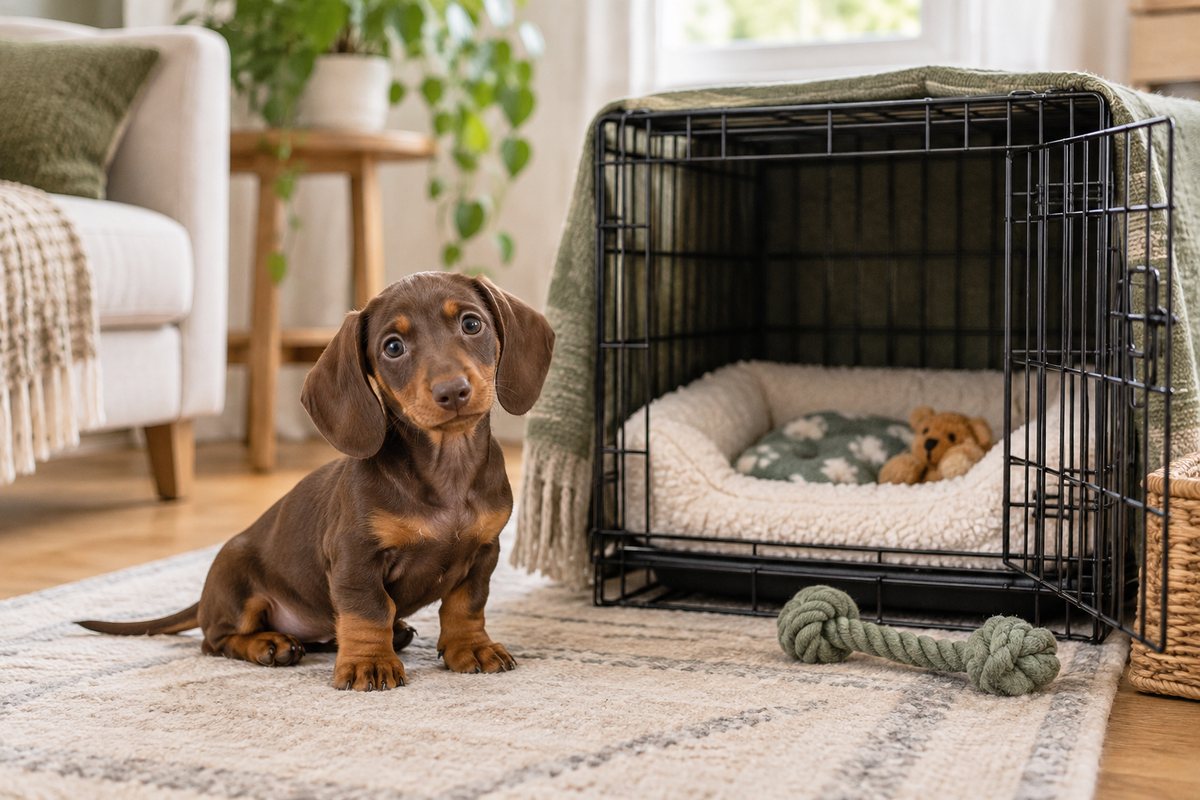
A crate or mat is not punishment. It is a rehearsal-free waiting zone. If your Dachshund is crate trained, send them to the crate before opening the door, reward calm behavior, then release for a controlled greeting. Use Dachshund crate training if the crate is not yet a calm place.
Furniture jumping and back safety
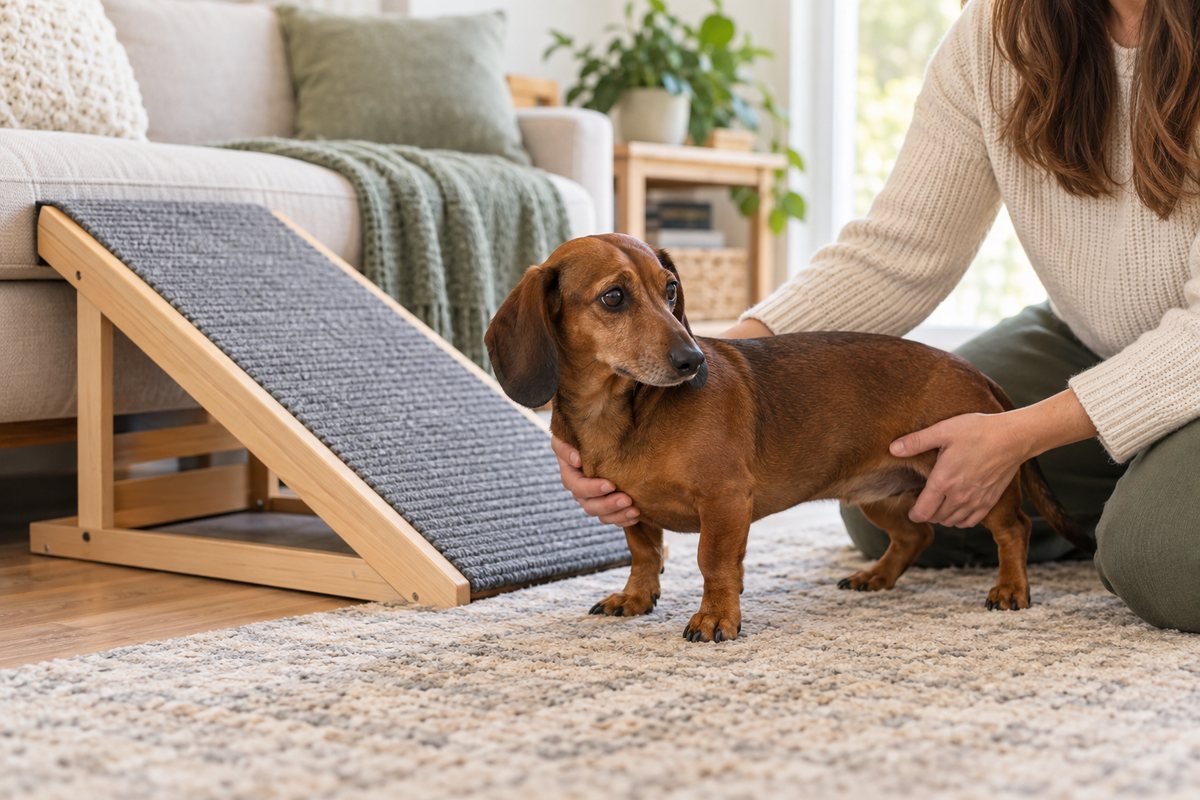
How to train Dachshund not to jump should include furniture habits. The Dachshund Club of America FAQ notes that Dachshunds should not do things that put extra stress on the back, such as jumping off furniture or running downstairs, and recommends ramps when dogs are allowed on sofas or beds.
- Block furniture you do not want your Dachshund to use.
- Use a stable ramp or steps for furniture you do allow.
- Teach “wait” before lifting your dog down.
- Reward using the ramp every time at first.
- Keep exciting play on the floor instead of the couch.
- Use gates for stairs when your dog is unsupervised.
If your dog suddenly refuses to jump, yelps, trembles, arches the back, drags a leg, or seems painful, stop training and call your veterinarian. That is not a manners issue. Review Dachshund back pain signs for warning symptoms.
Common mistakes
| Mistake | Why it backfires | Better option |
|---|---|---|
| Pushing the dog off | Touch may feel like attention or play | Turn away and reward paws down |
| Only saying “no” | It does not teach what to do instead | Teach sit, four paws, or go to bed |
| Letting some guests allow jumping | Mixed rules strengthen the habit | Give visitors a simple script |
| Practicing first with exciting visitors | The setup is too hard | Start with calm family practice |
| Ignoring furniture jumping | The dog keeps rehearsing risky movement | Use ramps, gates, and reward safe access |
Training timeline
Most Dachshunds improve fastest when you practice in short sessions every day. Think in weeks, not one long afternoon. An established jumping habit has a reinforcement history, so it may get worse briefly when attention disappears. Stay steady.
- Days 1-3: manage greetings with leash, gate, crate, or mat. Reward paws down every time.
- Week 1: practice calm hellos with family members and low excitement.
- Week 2: add familiar visitors and doorbell practice.
- Weeks 3-4: reduce treats gradually while keeping praise and attention consistent.
- Ongoing: maintain furniture rules and refresh training after holidays, moves, or schedule changes.
When to get help
Get professional help if your Dachshund jumps with growling, snapping, panic, guarding, intense barking, or body language that looks fearful. Also ask your veterinarian about sudden behavior changes, pain signs, weakness, or reluctance to move. Some dogs jump because they are overexcited; others jump because greetings are stressful. The plan should match the reason.
If your Dachshund is also struggling when left alone, pair this plan with how long can a Dachshund be left alone. Overarousal, boredom, and separation stress can all spill into jumping, barking, and door chaos.
FAQ
How do I stop my Dachshund from jumping on visitors?
Use a leash, gate, crate, or mat before visitors enter. Tell visitors to ignore jumping and reward only four paws on the floor or a sit. Practice with calm people first before trying exciting guests.
Should I say “off” or “down”?
Use “off” for paws leaving a person or furniture. Save “down” for lying down if you teach that cue. Clear words help your Dachshund understand the rule faster.
Can Dachshunds jump off couches?
It is better to reduce repeated furniture jumping. Dachshunds have long backs, and breed guidance recommends minimizing back stress from jumping off furniture and using ramps when dogs are allowed on sofas or beds.
How long does it take to train a Dachshund not to jump?
Many dogs improve within a few weeks if everyone is consistent. Older habits can take longer, especially if visitors sometimes reward jumping. Daily short sessions work better than occasional long sessions.
What is the simplest way for how to train Dachshund not to jump?
The simplest way is to reward four paws on the floor before the jump happens, remove attention calmly when jumping happens, and manage greetings so your Dachshund cannot keep practicing the old behavior.
Sources
- American Kennel Club: How to Stop Your Dog From Jumping Up on People
- VCA Animal Hospitals: Greeting Behavior – Jumping Up
- American Kennel Club: The Importance of Consistency in Training Your Family Dog
- American Kennel Club: Dos and Don’ts for Effective Training
- American Kennel Club: How to Train a Dachshund Puppy
- Dachshund Club of America: Dachshund FAQs