How long can a Dachshund be left alone? For a healthy adult Dachshund, a realistic target is usually 4 to 6 hours, with 6 to 8 hours as an upper limit only when your dog is comfortable, has had a potty break, and is not showing distress. Puppies, seniors, newly adopted dogs, and Dachshunds with separation anxiety, back pain, bladder issues, or medical needs need much shorter absences.
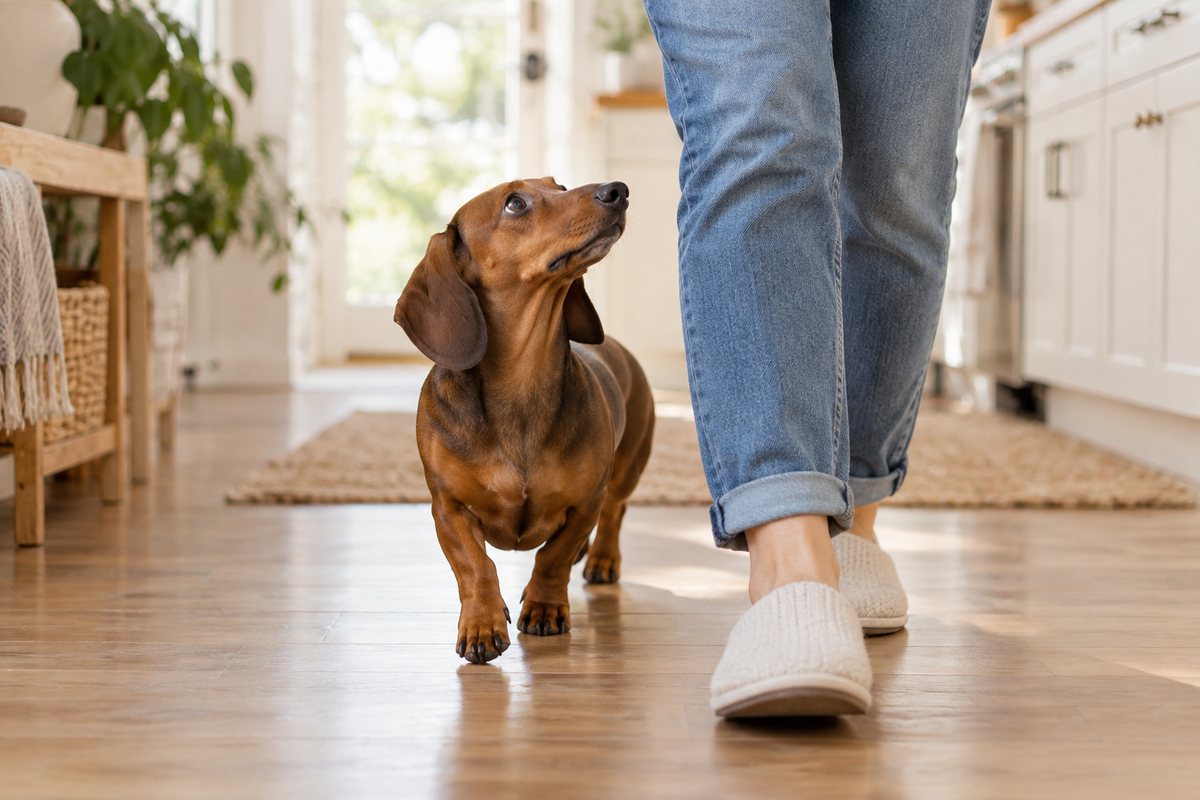
The honest answer is not one number. Dachshunds are small, people-focused dogs with short legs, long backs, and strong routines. A Dachshund who naps calmly while you run errands is different from a puppy who needs potty breaks every two hours or a rescue dog who panics when the door closes. Use this guide to set a safe baseline, then adjust based on your dog’s age, bladder control, training, health, and behavior on camera.
Table of Contents
How long can a Dachshund be left alone?
Most healthy adult Dachshunds should not be left alone all day without a break. AKC guidance for adult dogs gives a maximum of about 6 to 8 hours without a chance to relieve themselves, while UK welfare guidance commonly recommends a more conservative 4-hour target for routine alone time. For Dachshund owners, the safer daily plan is this: aim for 4 to 6 hours, arrange a midday potty/social break for longer days, and use 6 to 8 hours only as an occasional upper limit for dogs who have already proved they cope well.
If you are asking about a puppy, the answer is much shorter. AKC’s puppy guideline starts at about 1 hour for puppies under 10 weeks, about 2 hours for 10 to 12 weeks, then roughly one hour per month of age until around 6 months. That is about bladder control and emotional comfort, not just convenience.
Dachshund alone time by age
Use this table as a starting point, then adjust for your individual dog. A Dachshund who barks, claws, soils, or tries to escape is telling you the current duration is too hard.
| Dachshund age or stage | Suggested alone time | What matters most |
|---|---|---|
| Under 10 weeks | About 1 hour | Very frequent potty breaks and gentle settling practice |
| 10-12 weeks | About 2 hours | Crate or pen comfort, predictable naps, potty timing |
| 3 months | About 3 hours | Short departures, safe confinement, no punishment for accidents |
| 4-5 months | About 4-5 hours if trained | Midday help is still useful for many puppies |
| 6 months and older | Up to 6 hours for many dogs | Gradual training, exercise, potty break before leaving |
| Healthy adult | Usually 4-6 hours; 6-8 hours max when coping well | Comfort on camera, no distress signs, reliable bladder control |
| Senior or medical dog | Often shorter than adult limits | Pain, medication timing, bladder control, confusion, mobility |
Why Dachshunds need a careful plan
Dachshunds are not fragile, but they are not a great match for casual all-day isolation either. Many are deeply attached to their people, alert to hallway noises, and quick to bark when bored or worried. Their long backs also make home setup important: the wrong couch access, slippery floor, or frantic jumping at a gate can turn alone time into a back-safety risk.
- Small bladder: puppies and seniors often need more frequent potty breaks.
- Attachment: some Dachshunds follow their person room to room and struggle with sudden absences.
- Barking tendency: outside noises can trigger alert barking when no one is home to redirect.
- Back safety: jumping on/off furniture while unsupervised is not ideal for a long-backed dog.
- Boredom: under-exercised Dachshunds may chew, dig, or pace.
If your Dachshund already shadows you everywhere, pair this article with why does my Dachshund follow me everywhere. If crate comfort is part of your plan, use Dachshund crate training alongside this guide.
Safe home setup before you leave
Before increasing alone time, make the environment boring, safe, and predictable. A calm Dachshund should be able to rest, drink, chew something safe, and avoid risky jumping.
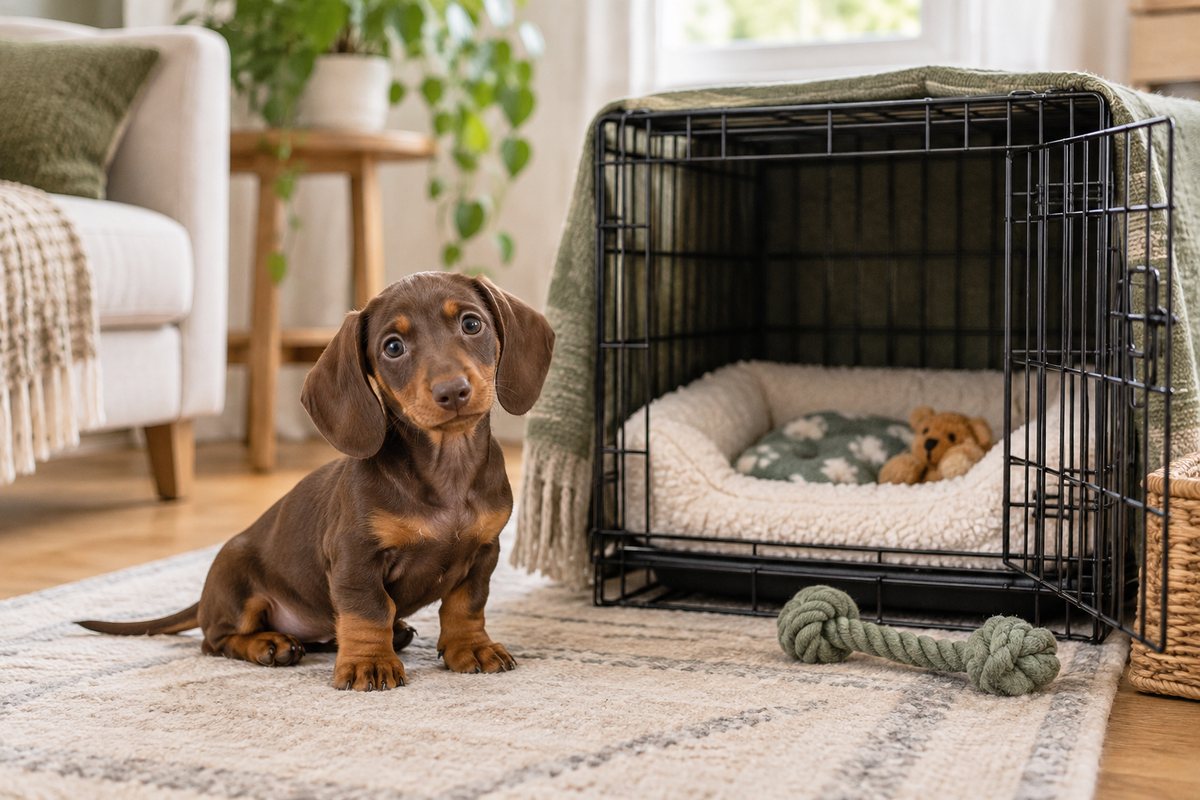
- Use a crate, exercise pen, or Dachshund-proofed room if your dog is not reliable loose.
- Block stairs, couches, beds, and windowsills if your dog jumps or climbs.
- Give a potty break immediately before leaving.
- Leave fresh water unless your veterinarian gives a different plan.
- Use safe enrichment, such as a stuffed food toy your dog has already used under supervision.
- Keep trash, cords, medications, bags, and chew hazards out of reach.
- Use a camera for the first longer absences so you can see what actually happens.
How to build alone time gradually
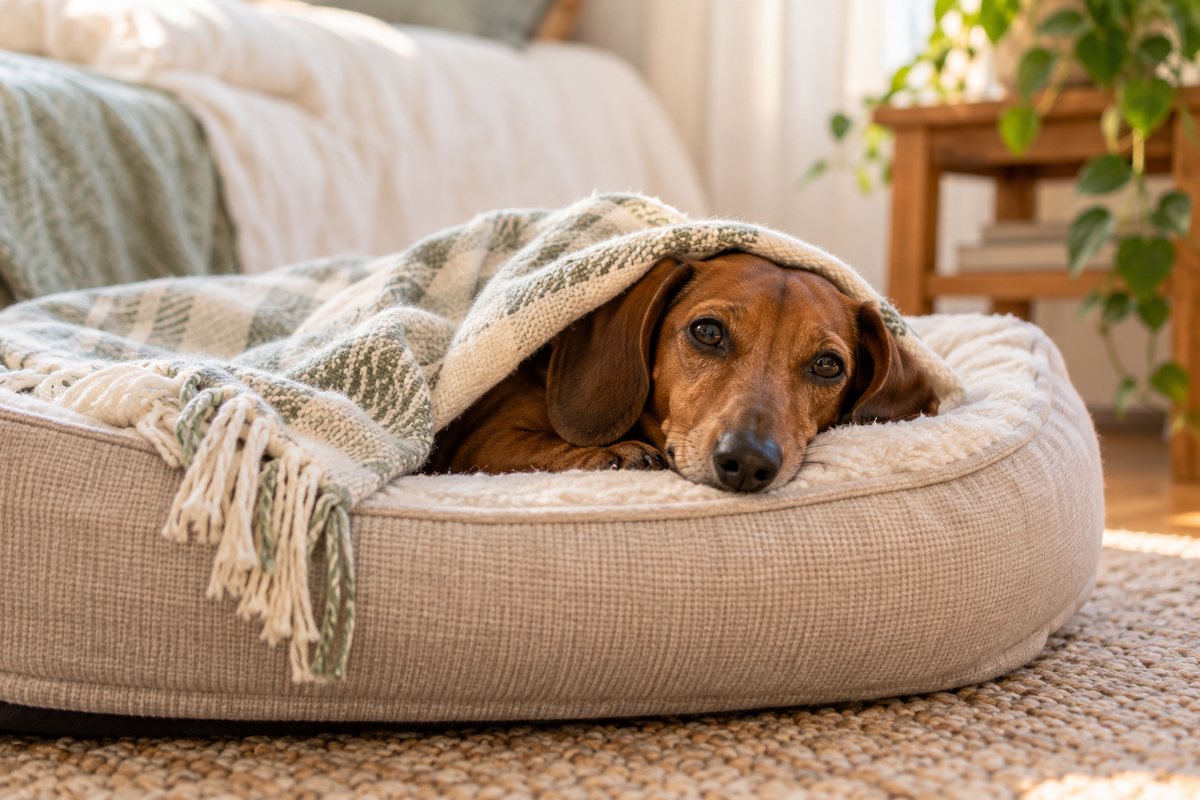
The best way to leave a Dachshund alone longer is to train the skill before you need it. PDSA and VCA both emphasize gradual practice and predictable routines. Do not jump from never alone to a full workday.
- Start after exercise, food, and a potty break.
- Settle your Dachshund in the crate, pen, or safe room.
- Leave for 30 seconds to 2 minutes while your dog is calm.
- Return quietly before panic starts.
- Repeat several times, then build to 5, 10, 20, and 30 minutes.
- Mix in real-life absences like taking out trash or walking to the mailbox.
- Use a camera to check whether your dog sleeps, chews calmly, barks, or panics.
- Increase time only when the previous level looks boring.
If your Dachshund cries briefly and then sleeps, you may be able to keep building. If they bark continuously, drool, scratch, try to escape, or soil after being otherwise potty trained, pause the plan and shorten the duration.
Signs your Dachshund is alone too long
Do not judge alone time only by what you see when you get home. A Dachshund may look fine at the door after spending an hour barking, pacing, or clawing at a gate. ASPCA and VCA both list vocalizing, destruction, elimination, pacing, escape attempts, and distress around departures as warning signs of separation-related problems.
| What you see | What it may mean | What to do next |
|---|---|---|
| Barking or howling for more than a few minutes | Stress, boredom, outside triggers, or separation distress | Use camera notes, shorten absences, add exercise and training |
| Chewing doors, gates, crates, or window areas | Escape behavior or panic, not simple mischief | Stop long absences and ask a qualified trainer or vet |
| Potty accidents only when alone | Too long, anxiety, or medical issue | Reduce time and rule out health problems |
| Refusing food toy until you return | Stress may be too high to eat | Go back to easier departures |
| Calm sleep on camera | Good coping at that duration | Increase slowly if needed |
What to do during a full workday
If you work outside the home for a full day, plan the day around breaks instead of hoping your Dachshund powers through. For many adult Dachshunds, a midday visit is the difference between a manageable routine and too much isolation. For families asking how long can a Dachshund be left alone during work, the answer often depends on whether a real midday break is available.
- Hire a dog walker or pet sitter for a potty break.
- Ask a trusted neighbor or family member to visit.
- Use dog daycare if your Dachshund enjoys other dogs and the facility is safe for small breeds.
- Come home at lunch if possible.
- Split work-from-home days and office days during puppy stages.
- Exercise before leaving and again after you return.
When not to leave your Dachshund alone
Some situations need supervision or outside help. Do not leave your Dachshund alone for long periods if they are recovering from surgery, showing back pain signs, vomiting, having diarrhea, taking medication that changes bathroom needs, newly adopted and panicking, or actively trying to escape confinement.
Also be careful after major routine changes, such as moving house, a new baby, schedule changes, the loss of another pet, or a long period where someone was home all day. Dogs can develop separation distress after routine shifts, even if they were previously fine.
FAQ
Can a Dachshund be left alone for 8 hours?
Some healthy adult Dachshunds can cope with 8 hours occasionally, but it should not be the casual daily default. If you are asking how long can a Dachshund be left alone every day, choose the lower end and add a midday potty and social break, especially for small dogs, seniors, puppies, and anxious Dachshunds.
Can a Dachshund puppy be left alone while I work?
Not for a full workday without help. Young puppies need frequent potty breaks, meals, naps, and gradual alone-time training. Arrange work-from-home time, a sitter, a neighbor, or daycare when appropriate.
Are Dachshunds prone to separation anxiety?
Many Dachshunds are very people-focused, so they can struggle if alone time is introduced suddenly. Following, barking, destructive escape attempts, and potty accidents only when alone can point to separation-related distress.
Should I crate my Dachshund when I leave?
A crate can be helpful if your Dachshund is crate trained and relaxed there. It is not a fix for panic. If your dog tries to escape or injures themselves in a crate, use professional help and a safer management plan.
How long can a Dachshund be left alone safely at first?
Start with a short camera-monitored absence after exercise and a potty break. If your Dachshund settles, you can build slowly. If they panic, shorten the time and train smaller steps.
Sources
- American Kennel Club: How Long Can a Puppy Be Left Alone?
- American Kennel Club: Alone Time for Dogs: How Much Is Too Much?
- VCA Animal Hospitals: Separation Anxiety in Dogs
- PDSA: Home Alone – Preventing Separation Anxiety
- ASPCA: Separation Anxiety
- RSPCA: Getting Ready for Your Rescue Dog