Direct answer
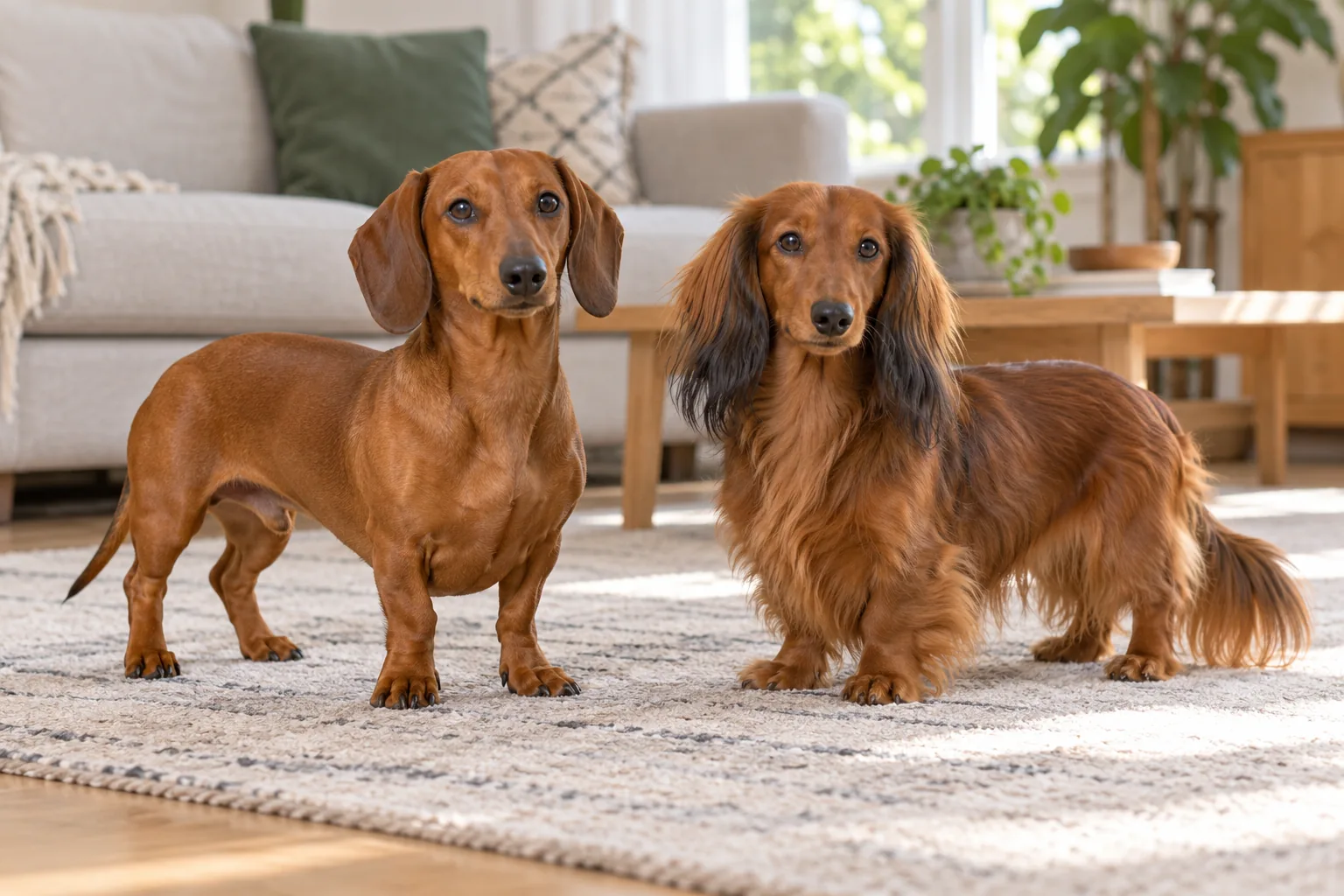
Long haired vs short haired Dachshund is mainly a grooming-time decision, not a different breed. A smooth (short-haired) Dachshund has a short, close coat that is quick to wipe and inspect. A long-haired Dachshund has longer, often silky hair with feathering that needs more frequent attention, especially behind the ears, under the legs, and along the tail. Both need nail care, skin checks, suitable exercise, and back-aware handling. The Dachshund Club of America breed standard defines these as two of the breed’s three coat varieties; the AKC breed guide distinguishes their everyday grooming needs.
Do not choose by a claim that long-haired Dachshunds are always calmer or smooth dogs are always bolder. The breed standard describes one Dachshund temperament across varieties. Individual personality, early experience, health, and training matter more to a household than a coat label alone.
| Question | Smooth / short-haired | Long-haired |
|---|---|---|
| Daily look | Close, smooth coat | Longer, often silky hair with feathering |
| Main maintenance | Wipe, occasional brushing, skin inspection | Brush and comb feathering; inspect for tangles |
| After a wet walk | Dry low chest, belly, and feet | Dry those areas plus hair around ears, legs, and tail |
| Visible debris | Easy to spot on the surface | Can hide in longer hair |
| Best fit | Owner who wants a simpler coat routine | Owner willing to maintain a longer coat consistently |
These are care tendencies, not fixed schedules. Coat density and lifestyle vary from dog to dog.
Coat feel
The Dachshund Club of America standard describes the smooth coat as short, smooth, and shining. Long-haired dogs have a sleek coat with longer hair and feathering, not a uniformly floor-length coat. Those details matter because the hair most likely to tangle is often where a harness rubs or where a low Dachshund brushes against grass and mud.
Both varieties share the breed’s general body shape and needs, but their coats create different routines. A smooth coat is quicker to inspect for dirt or skin changes after a walk. Run a hand along the chest, belly, and ears rather than assuming short hair means no grooming. The AKC breed guide describes a smooth Dachshund as relatively low maintenance, often needing a wipe or hound glove to look tidy.
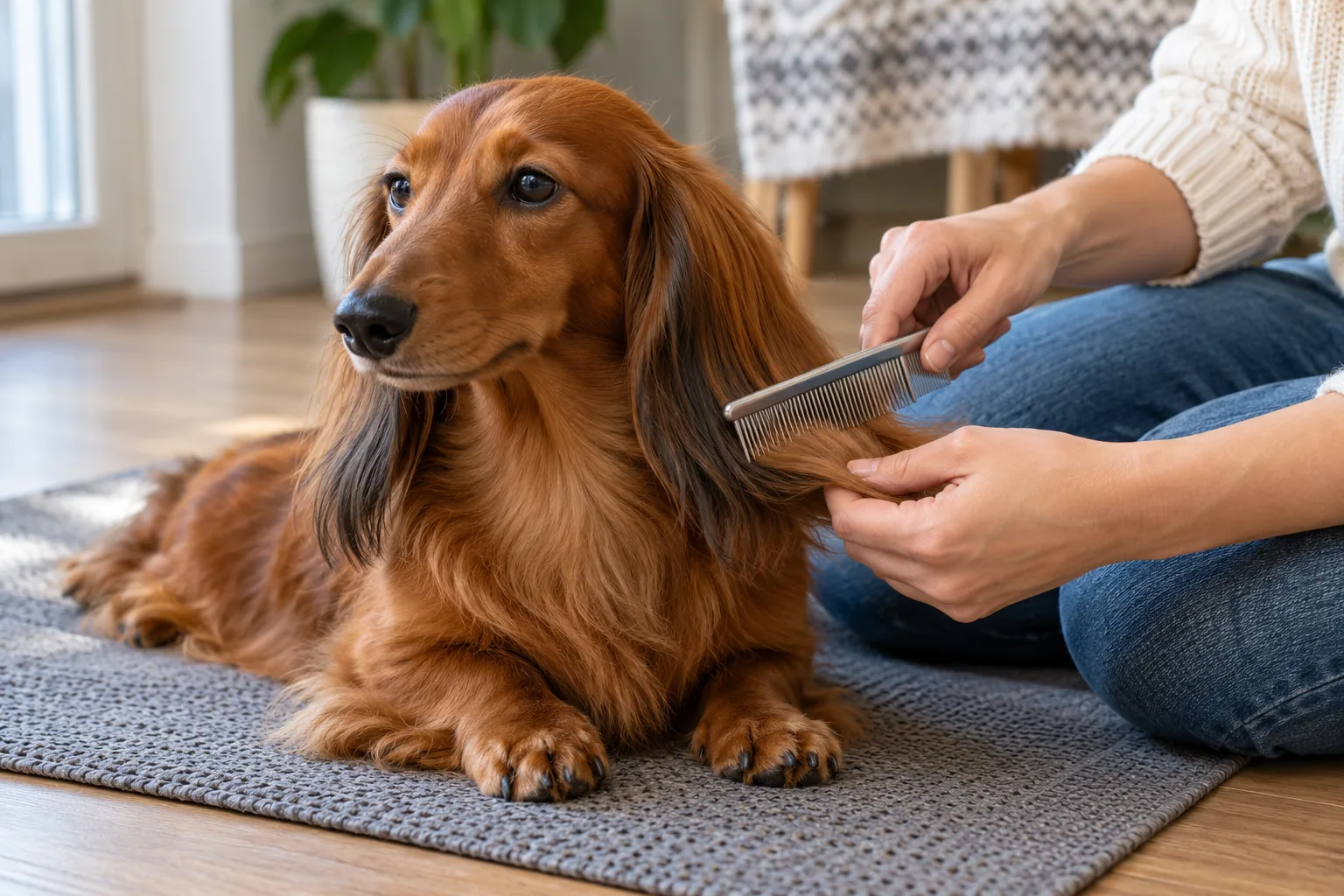
For the long-haired dog, check the ears, armpits, chest feathering, backs of legs, and tail after wet or brushy walks. Separate the hair gently to look for debris or early knots. A small tangle is easier to address before it tightens into a mat. If the dog resists grooming or has painful skin, stop and ask a groomer or veterinarian how to proceed rather than pulling through it.
A realistic weekly routine
For a long haired vs short haired Dachshund comparison, a smooth-coat routine can be brief: wipe after muddy walks, use a soft grooming tool when loose hair builds up, inspect the skin, and check nails and ears. Short hair still sheds; “low maintenance” does not mean “hypoallergenic.” The AKC Dachshund guide calls Dachshunds moderate shedders across the breed and notes that grooming differs by variety.
A long-haired routine needs more deliberate brush-and-comb sessions. Focus on feathering instead of repeatedly brushing the easy-to-reach back while missing hidden knots. Use a tool suited to the coat and follow with a comb to confirm it moves through the hair without snagging. The separate brush-selection guide covers tools; add its public link only after that article is live.
Do not promise a universal number of brushing sessions per week. An adult with light feathering that walks on pavement may need less than one with a heavy coat that explores wet grass daily. Check the dog, then adjust the routine. A groomer can demonstrate a gentle technique for the individual coat.
Grooming workload
Choose based on the grooming work the household can sustain, not a promise that one coat has a better personality. A long-haired dog may benefit from regular brush-and-comb sessions and occasional professional help; a smooth dog still needs nail care, bathing when needed, and skin checks. The AKC’s lifestyle overview says long-haired and wire-haired varieties require more regular grooming than smooth dogs.
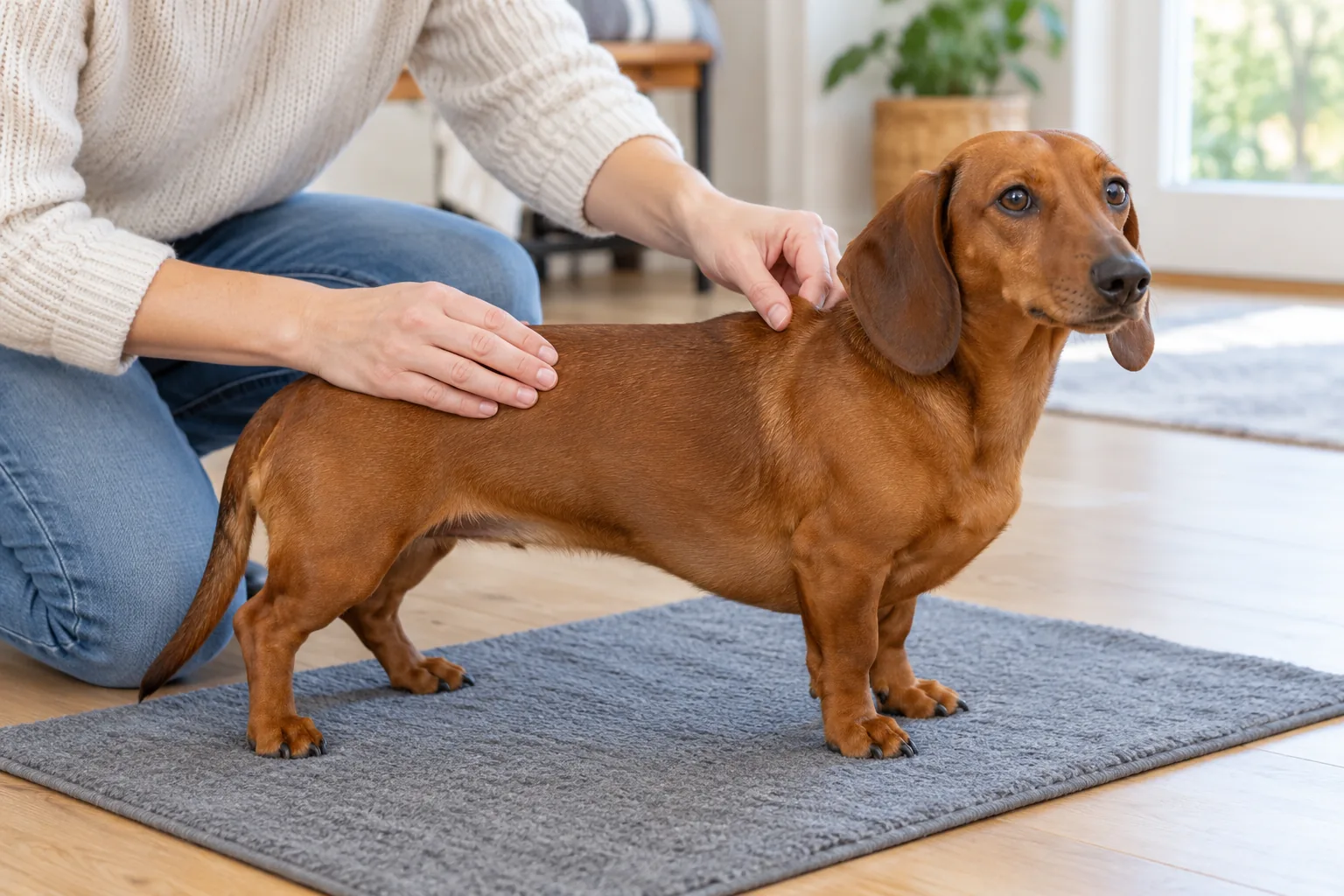
In both coats, short legs put the chest and belly close to rain, mud, and road debris. A smooth dog may dry quickly after a light shower, while longer feathering can stay damp or hold grit. Towel the paws and underside, feel close to the skin, and let the coat dry fully. The separate rain-care guide can provide the step-by-step routine after that article is live.
Cold or hot weather needs individual judgment. A long coat does not make a Dachshund immune to cold, and a smooth coat does not mean the dog always needs clothing. Watch for shivering, overheating, reluctance to walk, and discomfort. Dry wet clothing and coat rather than leaving moisture trapped under a jacket. Ask a veterinarian when weather tolerance or skin health is a concern.
Choosing a match
Meet adult examples of both coats if possible. Ask a breeder or rescue how often the particular dog needs brushing, whether the coat tangles, and how the dog responds to handling. For a puppy, plan for the adult coat rather than judging by one photo. The Dachshund Club of America’s breed standard can help you recognize what “smooth” and “long-haired” mean, but a breed standard does not tell you the exact grooming workload of one dog.
Ask to watch a routine grooming session. Can the person show you how they check behind the ears and beneath the harness area? What does the dog do during brushing? Has the dog had ear or skin problems that require veterinary care? These questions are more useful than asking which coat is universally “better.”
For a rescue dog, observe the current coat and comfort with touch rather than assuming a history from appearance. A neglected smooth dog may need medical skin care; a well-maintained long-haired dog may have an easy routine. Coat type is one part of the adoption decision, not a substitute for health and behavior assessment.
A practical example
An owner who walks in brushy parks might spend more time removing debris from a long coat than expected. Another may enjoy the routine and the appearance. Suppose two families both have 20 minutes before work: one wants a quick wipe after a city walk, while the other is happy to comb feathering after a park outing. Smooth may suit the first family’s routine, long-haired the second. Neither choice changes the need for training, exercise, weight management, or veterinary care.
Frequently asked questions
Do smooth Dachshunds shed?
Yes. Their hair is shorter, but that does not mean a shed-free home. The AKC Dachshund guide describes the breed as moderate shedders. Regular cleaning and grooming still matter.
Is a long-haired Dachshund always calmer?
No coat label guarantees a temperament. The Dachshund Club of America standard sets a common breed temperament, not a separate personality for each coat. Meet the individual dog and ask about its behavior and upbringing.
Which coat is easiest for a first-time owner?
Smooth is usually the simpler grooming commitment, but the easiest dog depends on temperament, training needs, and household fit. A long-haired Dachshund is manageable if the owner can maintain the coat and seek grooming help when needed.
Is this the same choice as miniature versus standard?
No. Coat variety and size are separate breed dimensions. The breed standard recognizes three coats and two sizes. Compare size, exercise, handling, and housing needs separately.