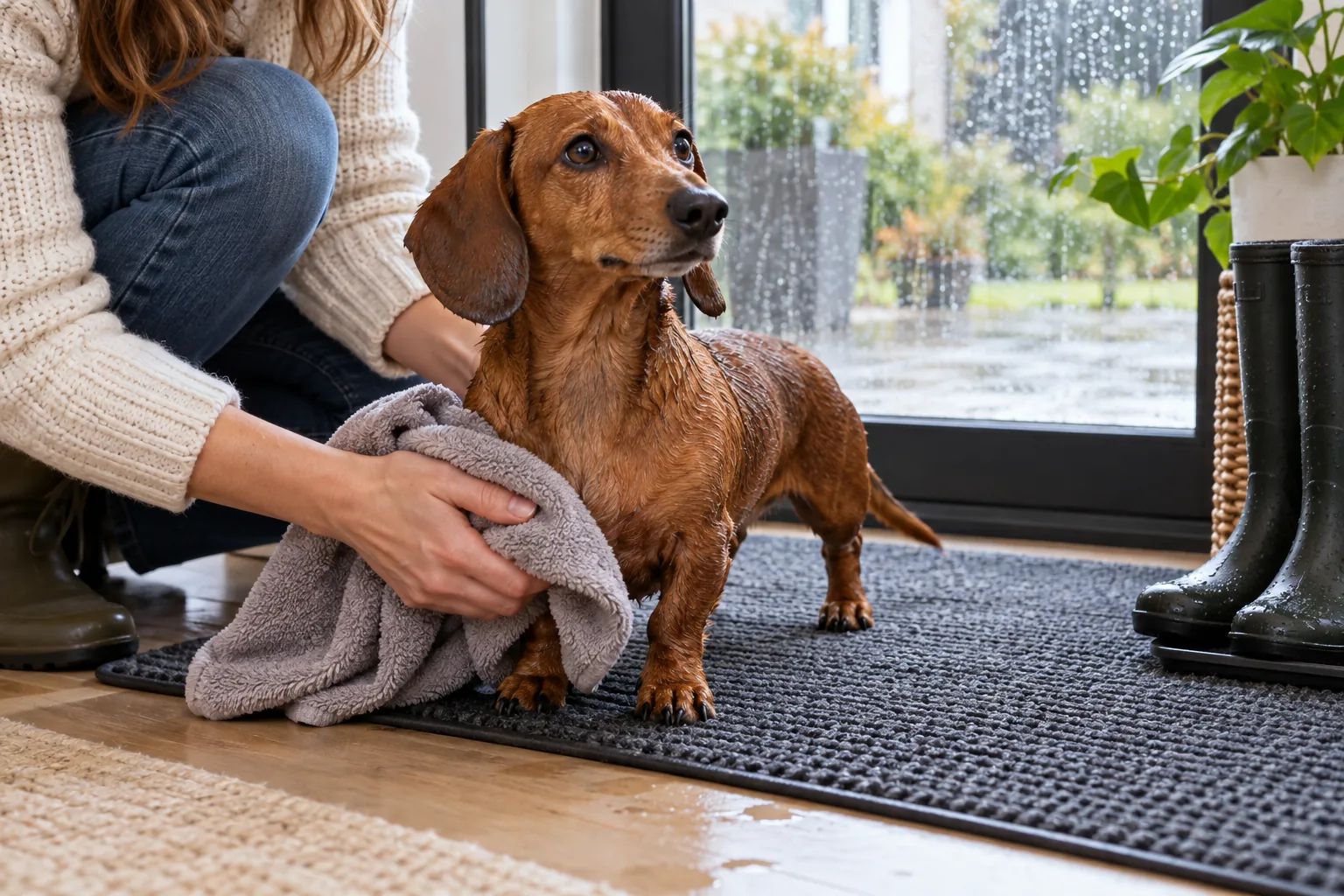
Dachshund rain care does not require a full bath after every rainy walk. Most of the time, the useful routine is simpler: remove mud from the paws and low underside, dry the coat all the way through, check the outer ears, and keep the dog somewhere warm until dry. A long-haired dog needs particular attention to damp feathering that can tangle. The AKC guide to drying dogs explains that drying after damp-weather walks helps with comfort and gives owners a chance to inspect the skin.
This Dachshund rain care guide is about wet-weather care after going outside, not about entertaining a dog indoors on a rainy day or treating a skin condition. If your dog has persistent itching, a strong odor, sore skin, head shaking, or ear discharge, cleaning alone is not an answer. The AKC at-home grooming guide identifies ear redness, swelling, debris, discharge, and bad odor as reasons to contact a veterinarian.
Before the walk: make the return easy
Place a towel and a non-slip mat by the door before you go out. Keep a second dry towel nearby if the rain is heavy or the dog has long feathering. Having supplies at the entryway means you can stop muddy paws from crossing the home without holding an anxious dog in place while searching for a cloth. It also gives a low, secure surface for a Dachshund’s long back and short legs; there is no need to lift the dog onto a slippery counter.
Look at the conditions, not just the forecast label. Light rain on a mild day is different from cold wind, standing water, or a thunderstorm. Shorten or postpone the walk when conditions make the dog cold, frightened, or unsafe. A properly fitted waterproof coat may make some dogs more comfortable for a necessary toilet trip. The AKC guidance on toileting in bad weather suggests a waterproof coat as one possible way to reduce rain discomfort, but it is optional rather than a requirement.
Fit matters more than the clothing label. A coat should not rub the underarms, restrict the shoulders, trap muddy water against the belly, or prevent the dog from toileting. Remove it when you come inside and dry the hair beneath it. A coat can reduce how wet the back becomes; it cannot replace cleaning the paws and low chest. If the dog freezes or struggles in clothing, work on gradual acceptance or skip the coat and make the outdoor trip shorter.
Choose the least messy, safest route available. Avoid puddles of unknown depth and places where a small dog cannot step securely. In cold-weather regions, de-icing chemicals are an additional paw concern; the ASPCA’s cold-weather advice warns about salt and chemicals on paws and recommends cleaning them after walks. The same post-walk habit is useful for ordinary mud even when no chemicals are present.
A five-minute return-home sequence
- Let the dog stand on the non-slip mat and remove any wet coat or harness.
- Wipe or rinse visible mud from each paw, including between the toes and around the pads, then dry it.
- Towel the low chest, belly, underarms, legs, and tail before the dog lies down on furniture.
- Check the outer ears and dry visible moisture gently; do not insert a swab into the ear canal.
- Feel the coat close to the skin in damp patches, and continue drying until it is no longer clammy.
This is a sequence, not a rigid timer. A short-haired Dachshund caught in a brief shower may be dry quickly; a long-haired dog soaked through its chest and tail needs more attention. The AKC drying guide distinguishes towel drying from the extra drying that a longer or thicker coat may need. The AKC bathing guidance also recommends keeping a wet dog warm until completely dry.
Paws: clean first, then dry
Start with the feet because mud and grit can be carried into the house and held between toes. Use a soft damp cloth for ordinary dirt, or a small amount of clean, comfortably warm water if the mud is thick. Spread the toes gently enough to see what you are cleaning; do not dig at the skin. Blot each paw with a dry towel, paying attention to the spaces between toes. The AKC discussion of yeast dermatitis specifically recommends cleaning and drying feet after rain or mud.
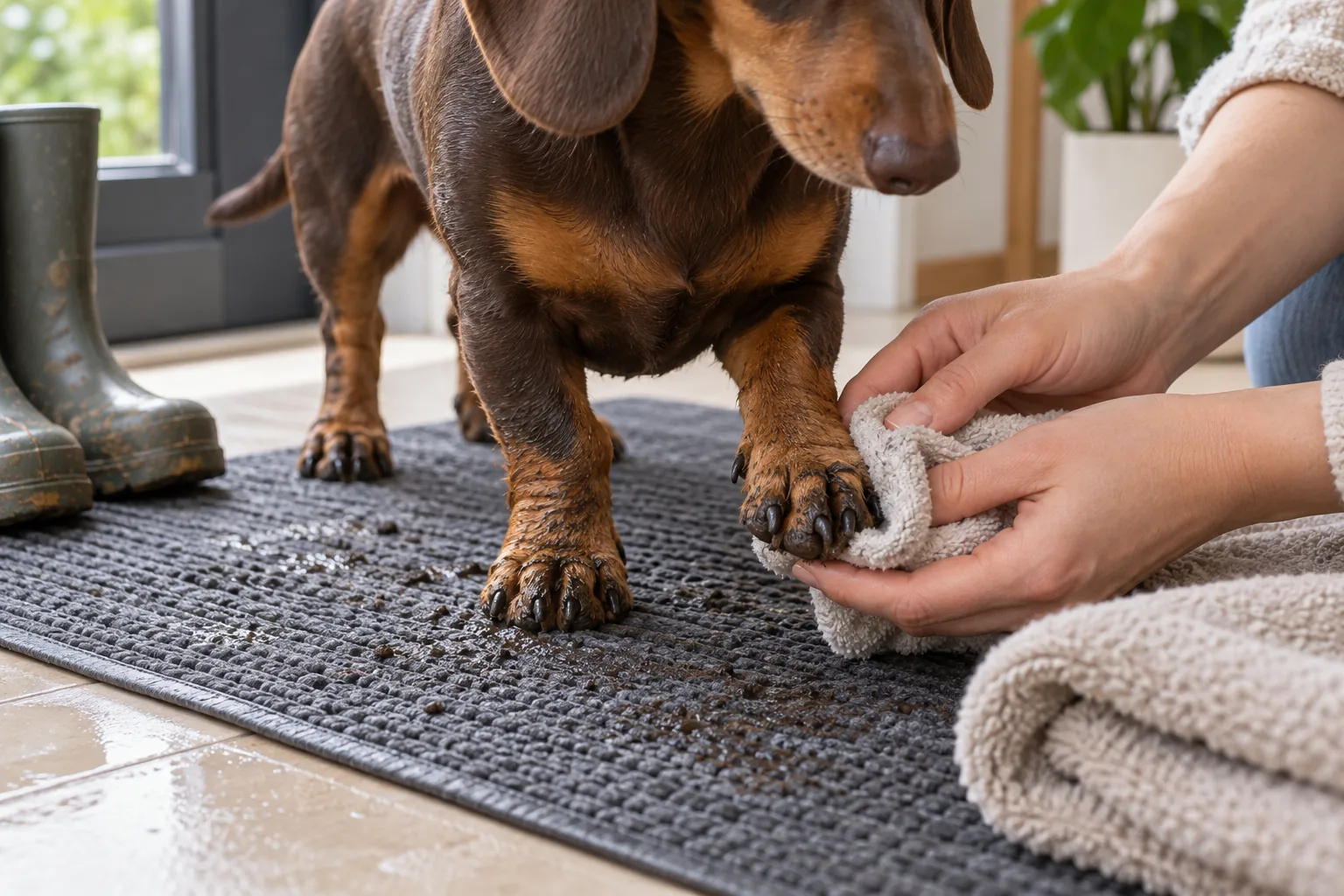
While cleaning, look for a pebble, thorn, cut, swelling, or a dog that repeatedly licks one foot. If a foreign object is embedded or the dog is clearly painful, ask a veterinarian for help. The AKC at-home grooming guide recommends veterinary advice rather than trying to remove foreign material from paw pads yourself.
There is no reason to shampoo healthy paws every time they get wet. Frequent washing with an unsuitable product can complicate a skin-care routine, and clean water or a damp cloth is usually enough for simple mud. If the dog walked through salt, chemicals, or an unknown substance, rinse the feet thoroughly and prevent licking until clean; ASPCA cold-weather guidance is particularly clear about the risk from ice melts. Call a veterinarian or pet poison service promptly if you suspect exposure to a hazardous substance.
Dry the Dachshund’s low underside, not just its back
Because a Dachshund is low to the ground, the chest, belly, forelegs, and tail can be wetter than the back. Work from the upper coat down and blot rather than rubbing vigorously. Lift the front leg only as much as the dog comfortably allows so you can reach the underarm. Keep the dog standing securely instead of twisting its body to reach a patch. AKC’s drying guide recommends towel drying in a way that reaches the coat thoroughly and uses the process to inspect the skin.
On a smooth-haired Dachshund, a towel may be enough after a light shower. Feel the low chest and belly to be sure. On a long-haired Dachshund, separate the hair gently at the chest, underarms, behind the ears, and tail feathering; those areas can remain damp beneath a dry-looking surface. The AKC guide notes that longer, thicker coats may need a towel first and a suitable dog dryer to finish. Use only a setting and distance the dog tolerates, and never aim hot air at the skin.
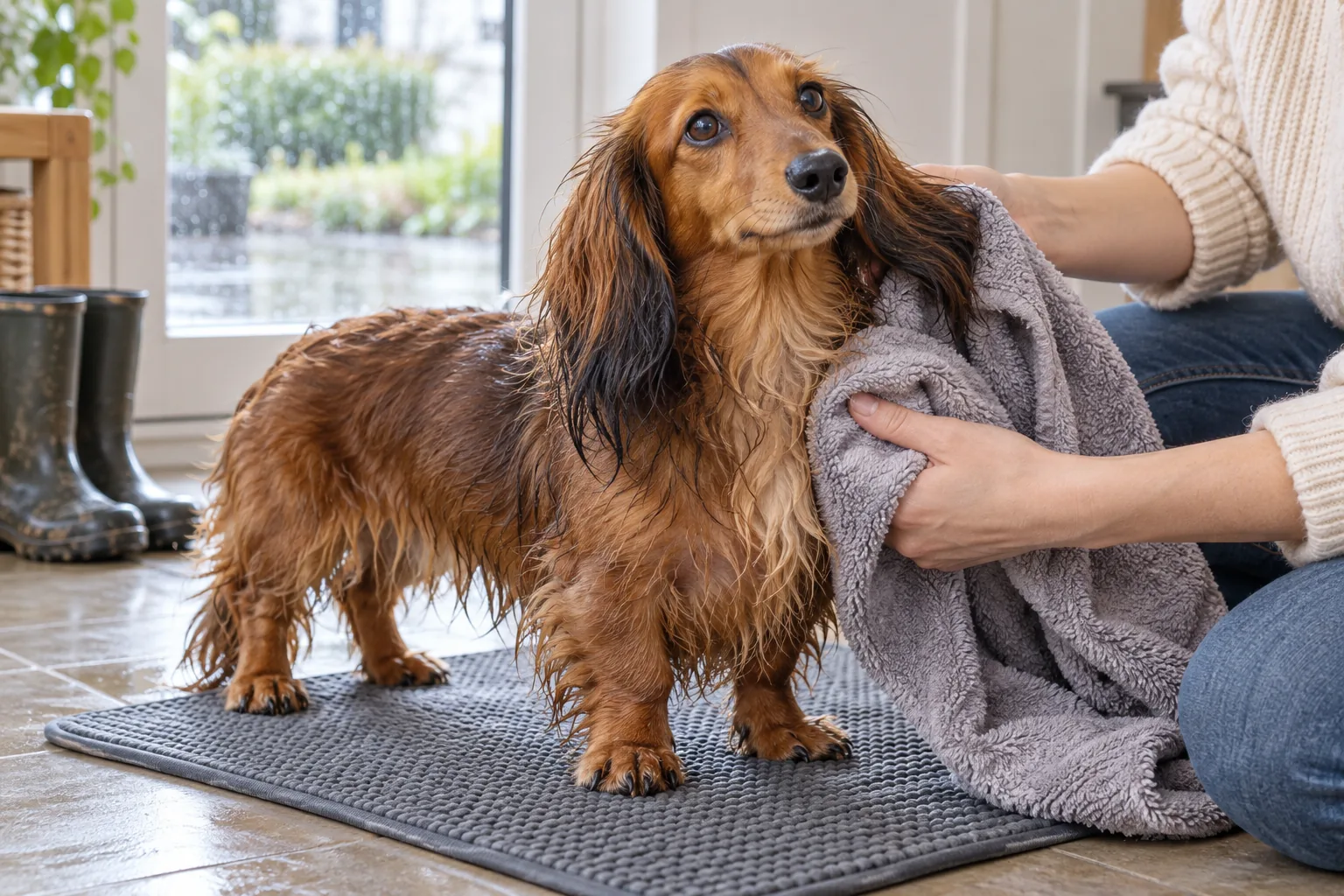
Once the coat is dry enough to handle comfortably, check feathering for tangles. Damp hair can mat when it is rubbed by a harness or left bunched against the body. Do not pull through a knot. The AKC drying article identifies mat prevention as one reason to dry thoroughly. For the brushing routine and tools, see the existing long-haired Dachshund brushing guide.
Ears: dry the outside and watch for symptoms
Dachshunds have hanging ears that can hold moisture on the outer flap. After rain, blot the visible outer ear and the hair around it with a soft towel. Do not push cotton swabs into the canal or pour in a cleaning solution simply because the dog was outdoors. The AKC at-home grooming guide says ears should be dried after they get wet and lists signs that warrant veterinary assessment.
An occasional head shake immediately after a damp walk may simply be the dog clearing water from its coat, but repeated head shaking, scratching, marked redness, discharge, swelling, or a strong smell is different. Contact a veterinarian rather than trying to mask the odor. The AKC ear-care discussion links those signs with possible ear trouble requiring examination.
Does the dog need a bath after rain?
Not automatically. A shower that wets an otherwise clean coat calls for drying, not necessarily shampoo. A dog covered in sticky mud or an unknown contaminant may need a more thorough rinse or bath. Use a dog-formulated shampoo according to its instructions and rinse completely; the AKC bathing guide stresses thorough rinsing and drying. Avoid turning every wet walk into a full bath that the dog dreads.
If the coat repeatedly smells strong after drying, the skin is greasy, or the dog scratches a great deal, do not solve it by bathing more often. Those are reasons for a veterinary conversation. The AKC yeast-dermatitis article describes how moist environments and underlying conditions can contribute to skin problems; it is not a basis for diagnosing your own dog from a smell alone.
When weather changes the plan
A dog that hates rain still needs humane, predictable toilet opportunities. Try a sheltered spot, a shorter trip, or a coat that the dog accepts. The AKC bad-weather potty guide discusses helping dogs feel comfortable outdoors rather than punishing avoidance. A frightening storm or dangerous conditions are reasons to prioritize safety and resume the routine when conditions improve.
Watch for shivering, reluctance to move, or a dog that seems unwell after getting soaked, particularly in cold wind. Move the dog to a warm dry place and seek veterinary advice if symptoms persist or are severe. The ASPCA cold-weather safety guidance notes that cold rain and winter exposure can be hard on pets; it does not supply a single temperature threshold for every Dachshund.
Frequently asked questions
Should I use a hair dryer after every rainy walk?
No. A towel may be sufficient for a lightly wet smooth coat. A longer or soaked coat may need further drying, using equipment and settings the dog tolerates. AKC’s drying guide describes both methods. Avoid hot air close to skin.
Is a raincoat enough to keep my Dachshund dry?
A coat may reduce water on the back, but the paws, low chest, belly, and hair beneath straps can still be wet. Remove the coat and check those areas after the walk. AKC’s rainy potty-training advice frames a coat as a comfort aid, not a replacement for post-walk care.
Can I leave a wet harness on while the dog dries?
Remove a wet harness when you get inside so you can check and dry the coat beneath it. This is a practical inference from the AKC’s recommendation to dry the coat thoroughly, especially where fabric holds moisture against the chest and underarms.
What if the dog keeps licking a paw after a muddy walk?
Clean and dry the paw, look for visible irritation or debris, and contact a veterinarian if licking continues, there is pain, swelling, a wound, or something embedded. The AKC grooming guide advises veterinary help for foreign objects in paw pads.
Related guides and editorial boundary
Use how often to bathe a Dachshund for routine bath frequency and Dachshund grooming for the broader coat-care routine. This page answers a narrower question: what to do before and after a wet, muddy outing. is about indoor activities on rainy days, not cleaning the dog after going outside.