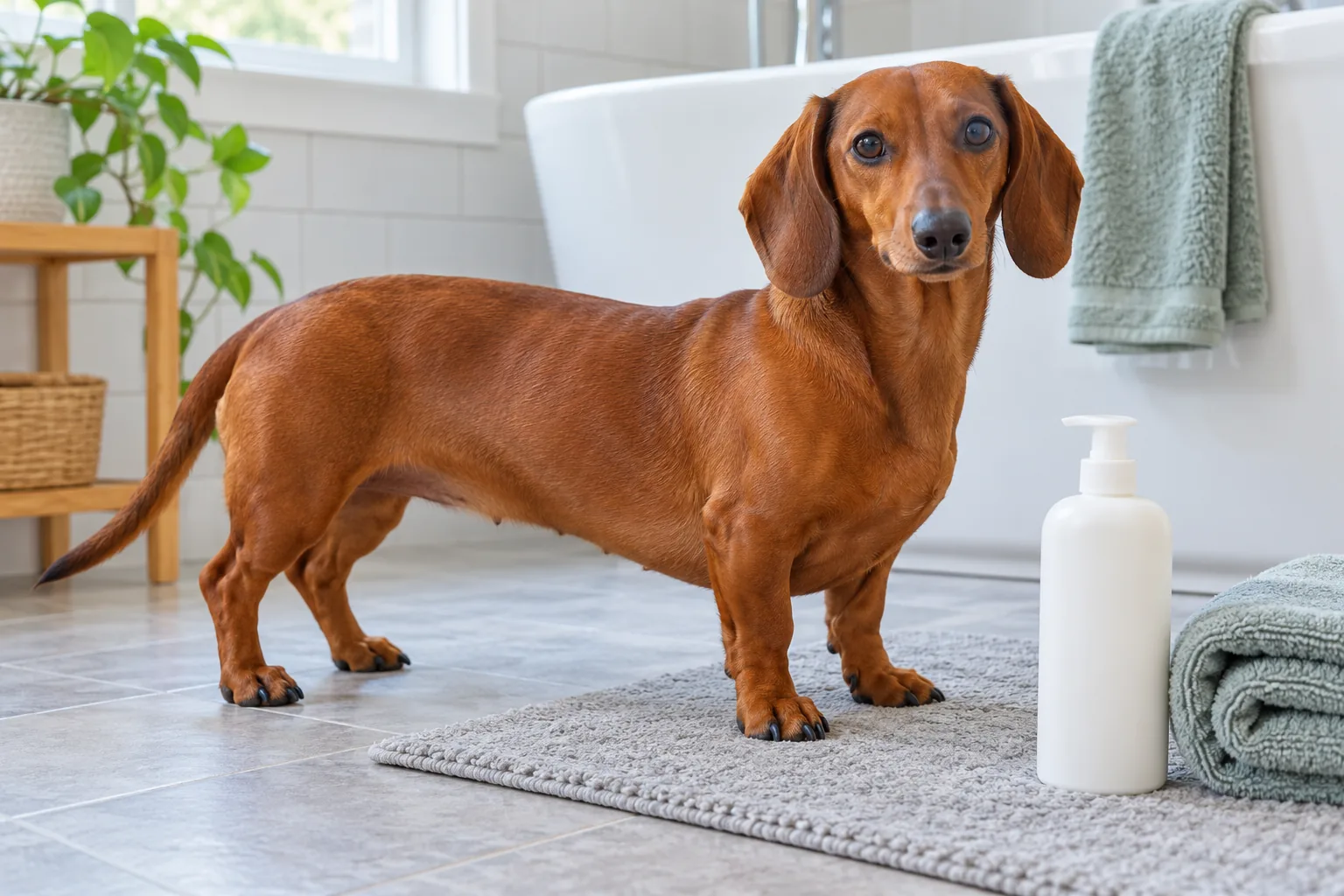
The best shampoo for Dachshunds is a dog-formulated product that cleans without leaving the individual dog’s skin irritated. Start with a gentle routine formula if the skin is healthy. A dog with persistent itching, redness, greasy patches, a recurring odor, or repeated ear trouble needs a veterinary assessment before you try to solve the problem by switching shampoos. The American Kennel Club’s shampoo guide recommends matching the product to the dog’s skin needs and rinsing it out thoroughly; the AAHA allergy guide explains why persistent itch can have several underlying causes.
There is no one bottle that is best for every Dachshund. A smooth coat, a long coat that holds water around the chest and tail, and a wire coat with furnishings can all be washed, but the brushing and drying work around the bath differs. The AKC Dachshund breed profile identifies the three coat varieties and their different grooming needs. That is a reason to plan the whole bath, not a reason to buy three different shampoos automatically.
A quick selection guide
| Your Dachshund | Sensible starting point | What would change the decision |
|---|---|---|
| Healthy skin, occasional dirt | Gentle dog shampoo with clear directions and a scent you can tolerate | Redness, scratching, or a coat that feels dry after a well-rinsed bath |
| Long-haired coat with tangles | Brush and separate knots before bathing; choose a formula that rinses easily | Tight mats, persistent dampness near skin, or discomfort during grooming |
| Sensitive or itchy skin | Ask your veterinarian whether a fragrance-free routine product is appropriate | Recurrent itch, rash, ear signs, odor, or suspected infection |
| Diagnosed skin disease | Follow the veterinarian’s prescribed product and contact time | Worsening symptoms or uncertainty about whether to combine products |
This table is a selection framework, not a diagnosis. Merck Veterinary Manual notes that medicated products have specific directions and that shampoo residue can irritate skin. The important distinction is routine cleaning versus treatment: a cosmetic label cannot tell you which infection, allergy, or other condition a dog has.
Read the label before the price tag
When comparing the best shampoo for Dachshunds, look first for a product intended for dogs and directions you can follow. Check whether it is a routine cleanser, a medicated product, or a concentrate that needs dilution. A pleasant fragrance is not evidence that it will suit your dog. Strong scent can also make it harder to notice a recurring odor after bathing. AKC explains why shampoos formulated for people are a poor default for repeated dog baths and recommends a dog-specific product.
Next, read how long the product should remain on the coat. Routine shampoos are generally rinsed after washing, while a prescribed medicated shampoo may have a contact time chosen for a particular skin problem. Do not copy a medicated schedule from another dog or an old bottle. If your Dachshund is already under treatment, ask the prescribing veterinarian whether any additional routine shampoo is appropriate. Merck’s skin-treatment guidance describes why application and thorough rinsing matter.
Finally, assess practical details. Can you wet the coat completely, distribute the product without a large amount, and rinse every area? Is the bottle easy to handle with one hand while the other supports a small dog on a non-slip surface? A product that is difficult to rinse may be a poor fit for a long-haired dog even if its marketing sounds appealing.
Check the skin before bathing
Part the coat at the chest, belly, underarms, and around any area your dog scratches. Look for redness, flaky or greasy patches, sores, unusual hair loss, or a strong odor. Note whether the ears are red or the dog shakes its head. A bath may remove surface dirt, but it does not identify the cause of a skin or ear problem. AAHA’s overview of canine allergies describes itching and recurrent ear or skin problems as reasons to seek veterinary care.
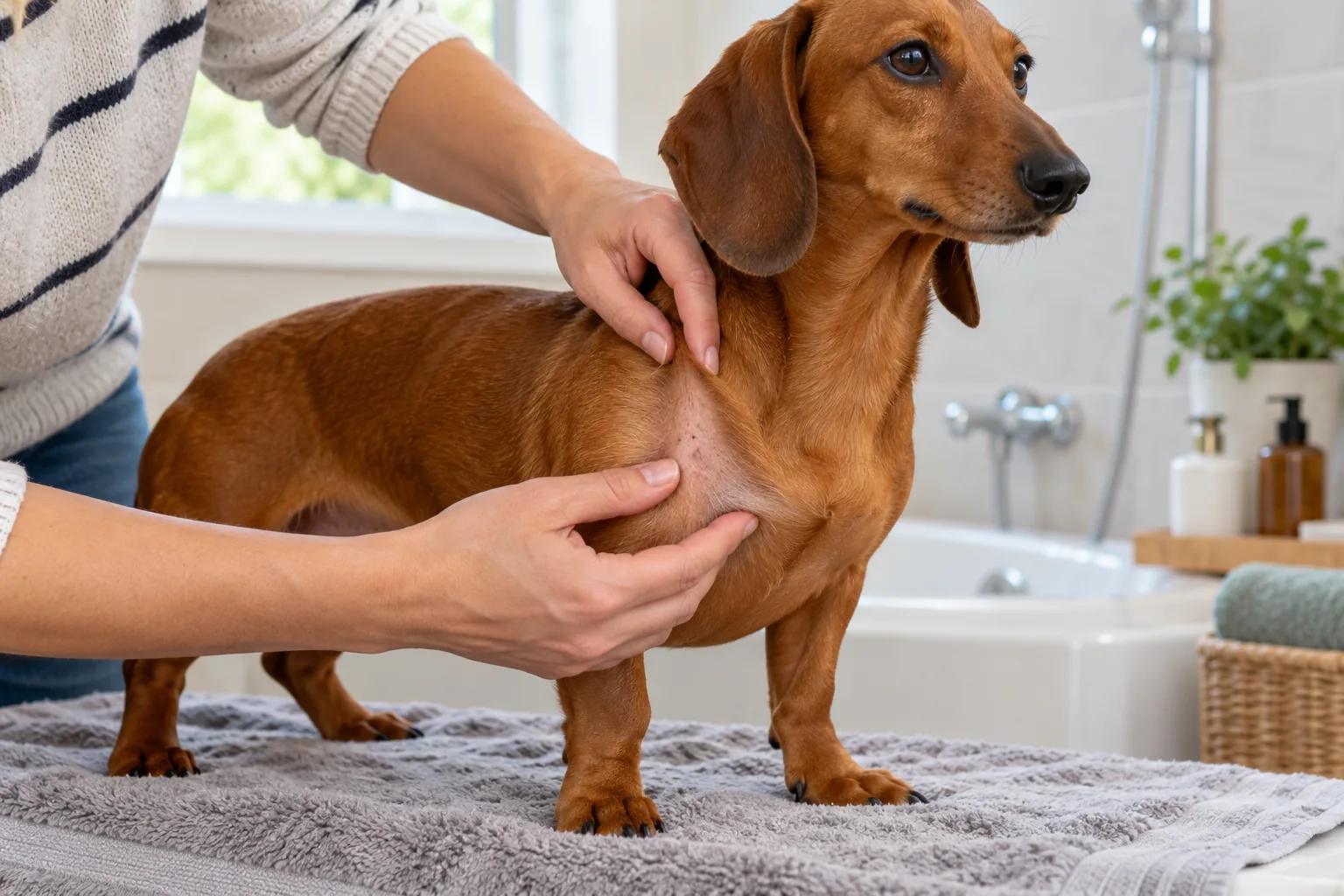
If the skin looks healthy and the dog simply needs cleaning, brush out loose hair and tangles first. Water can tighten an existing mat, and a wet knot is harder to work through without pulling. The AKC bathing guide advises brushing before a bath. A painful, tight mat close to the skin is a reason to ask a groomer for help rather than cutting at it with household scissors.
Wash and rinse without leaving residue
Prepare towels, a non-slip surface, and the product before bringing the dog into the bathing area. Use comfortably warm water, wet the body, and work the shampoo through the coat as directed on its label. Keep lather away from the eyes and avoid flooding the ear canals. Move slowly enough that the dog can stand securely; a Dachshund should not need to twist or leap to escape the tub.
Rinsing is often the deciding step. Work from the upper body down, then check the low chest, belly, underarms, feet, and tail where foam can remain. On a long-haired dog, separate feathering gently so water reaches through the hair. Continue until the coat no longer feels slippery and you cannot find trapped suds. Merck specifically warns that leftover shampoo can irritate skin.
There is no useful universal rule that every Dachshund must be bathed on a fixed calendar date. Dirt, coat type, activity, skin health, and any veterinary treatment plan all matter. If a dog becomes itchy after frequent bathing, review the product and routine with a veterinarian rather than simply increasing the number of baths.
Dry the whole coat, not only the back
Blot with a towel instead of rubbing long feathering into knots. Check the chest, belly, feet, tail, and behind the ears. Let the dog finish drying in a warm, comfortable space and replace damp bedding. A smooth coat may feel dry quickly while a long coat remains damp close to the skin. The AKC Dachshund profile notes that long-haired dogs can require more brushing; post-bath detangling should be gentle and done when the dog is comfortable.
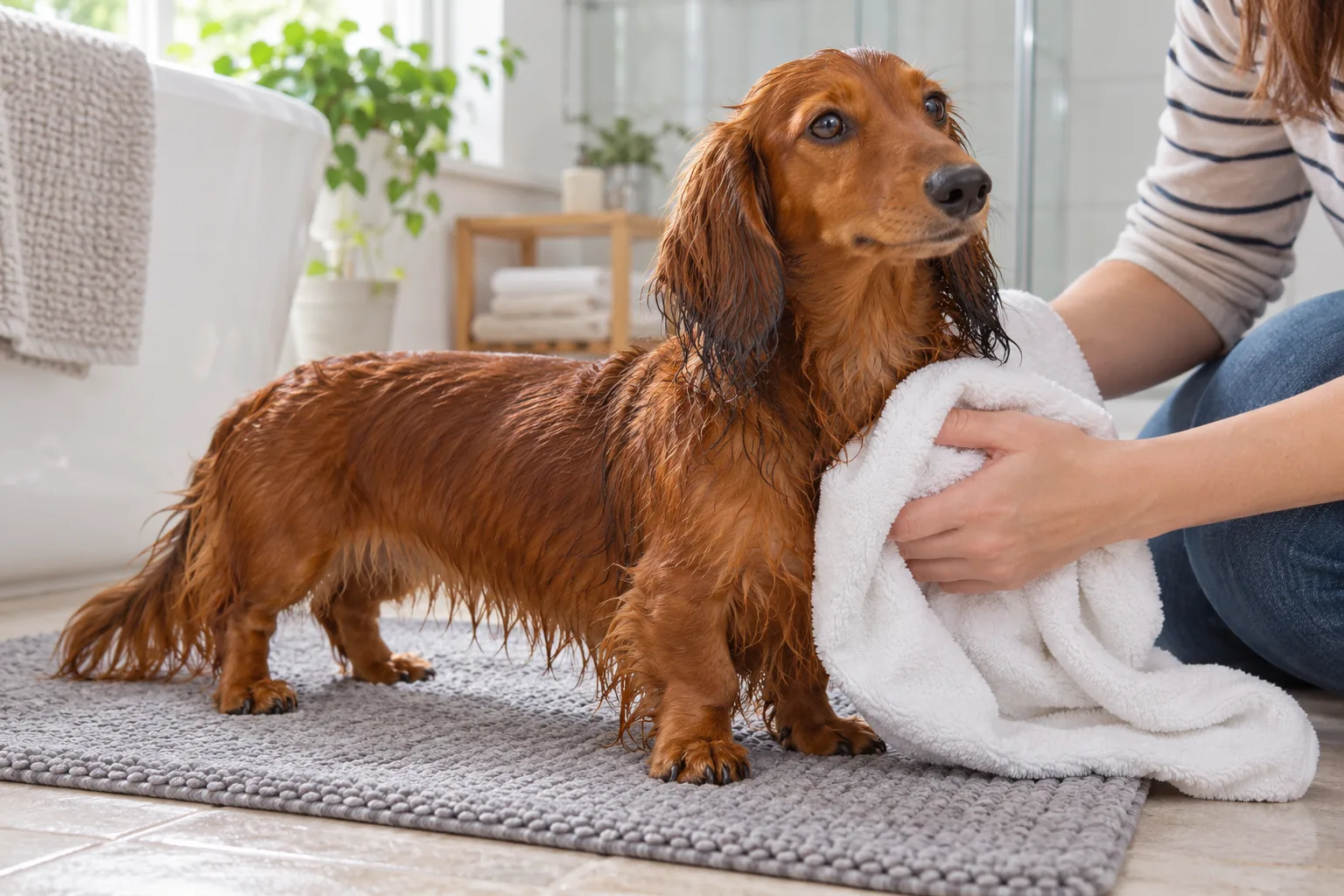
Watch the dog after the bath. A brief shake is ordinary, but persistent scratching, new redness, a return of strong odor, or discomfort when a particular area is touched needs attention. Record the shampoo name and the timing of the signs so the veterinary team can assess the pattern. Do not cover a returning odor with perfume.
Three common buying mistakes
Choosing by fragrance alone. A scented coat can still be irritated or damp underneath. Judge the result by comfort, skin appearance, and how thoroughly the product rinses.
Using a medicated shampoo without a diagnosis. Different problems need different approaches. A label that says “antifungal” or “allergy relief” is not proof that it matches your dog’s condition. See your veterinarian for recurrent signs; AAHA outlines why allergy-like symptoms need a proper workup.
Blaming the formula for a rushed bath. Even a suitable shampoo can leave the dog uncomfortable if knots were not brushed, suds remain, or a long coat stays damp. Check the whole process before buying another bottle.
Frequently asked questions
Can I use human shampoo once?
A dog-formulated shampoo is the better routine choice. Human shampoos are formulated for different skin conditions and may contain additives that irritate canine skin. If you have already used one and your dog shows redness or itch, rinse thoroughly and seek veterinary advice if symptoms persist. AKC discusses the distinction here.
Does a long-haired Dachshund need a special shampoo?
Not automatically. The long coat changes the amount of brushing, rinsing, and drying you may need to do. Start with the individual dog’s skin condition and choose a dog shampoo you can rinse completely. Use the long-haired brushing guide for coat technique; this article focuses on shampoo selection.
What if the dog still smells after bathing?
Check whether the coat or bedding stayed damp and whether the odor comes from one area, such as the ears, mouth, or skin. A recurring or strong odor, especially with itch or redness, deserves a veterinary exam. The site’s Dachshund grooming guide covers routine care, while this guide helps choose and use shampoo.
The decision in one minute
For a Dachshund with healthy skin, buy a gentle dog shampoo whose directions you can follow, brush before bathing, rinse fully, and dry the entire coat. If itch, redness, recurring odor, or ear signs are already present, make the veterinary question the first step. The best shampoo is the one that fits this dog’s skin and this owner’s bath routine, not the bottle with the loudest promise.