
Direct answer
Are Dachshunds good with cats? Some can live peacefully with cats, but compatibility must be assessed and introductions managed. The breed’s hunting background means movement may capture a dog’s attention; that does not prove every Dachshund will chase a cat. Start with separate safe areas, let both animals settle, and progress through scent and controlled visual exposure before any close contact. Cats Protection recommends a cat-only safe room and gradual introductions rather than forcing the animals together.
Whether Dachshunds are good with cats depends on the individual dog, cat, and management plan. The success standard is calm coexistence, not a dramatic photo of them cuddling on day one. Some pairs may never be safe without barriers when unsupervised. The individual dog’s history and ability to disengage, along with the cat’s comfort, matter more than a simple “good with cats” breed label.
Check the dog’s history before adoption
Ask the breeder, rescue, or foster home what the Dachshund has actually done around cats. Has it lived with a cat calmly, only seen one outdoors, or never been assessed? Did it stare, stalk, lunge, bark, or ignore the cat? A dog that is quiet while fixed on a cat is not necessarily relaxed. Ask how it responds when redirected and whether the cat had an escape route during any previous test.
The Dachshund Club of America breed standard describes a hunting dog with a good nose and persistence. That history makes careful management sensible, but it cannot predict one dog’s behavior. A puppy that is gentle today still needs practice and supervision as it matures. An adult with a proven calm history may offer clearer information, though a new home changes context.
Ask about the cat too. A confident adult cat with high resting places may cope differently from a fearful cat or fragile kitten. Do not expect the cat to “teach the dog a lesson.” Cats Protection advises against that kind of forced confrontation because it can stress both animals.
Prepare the home before they meet
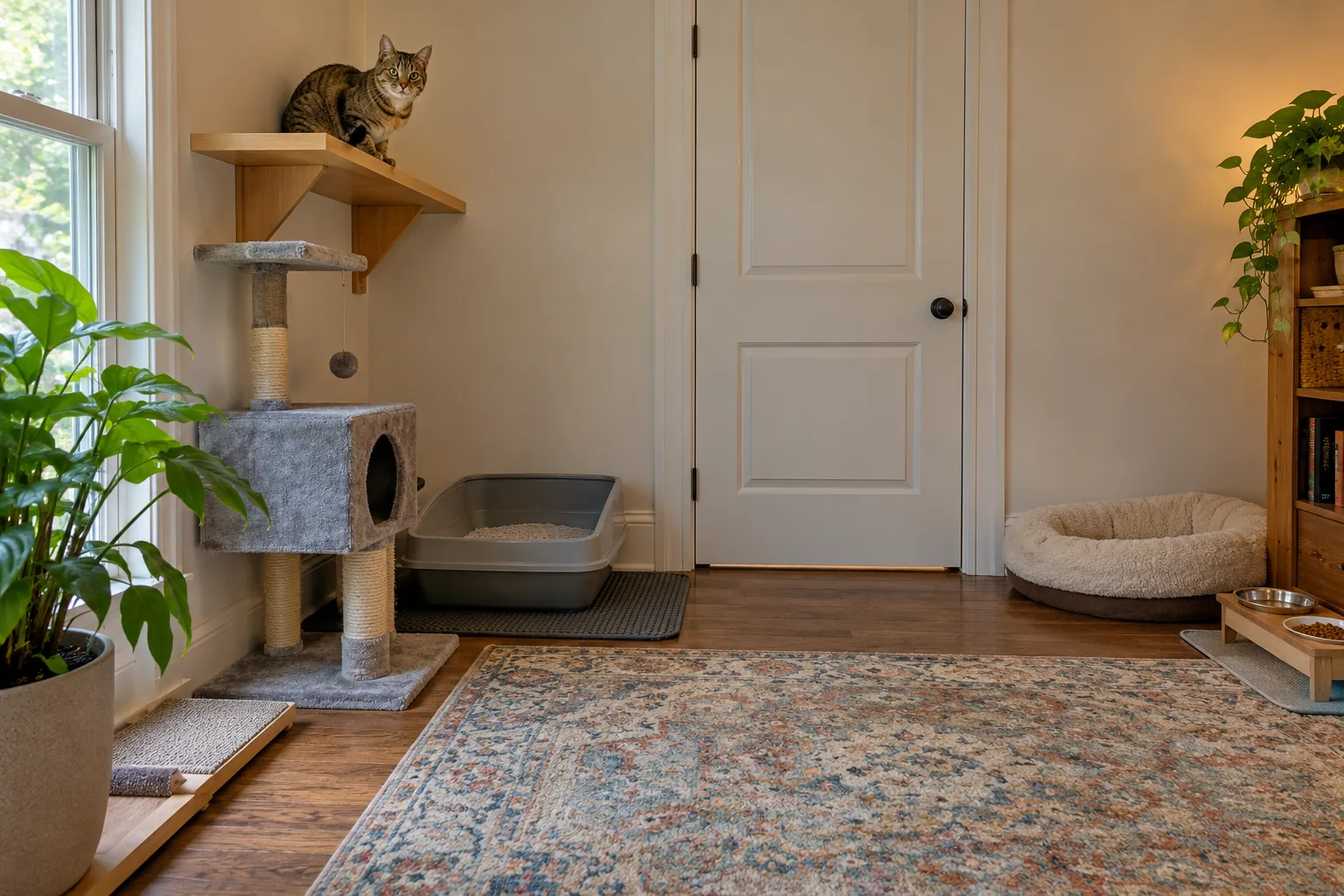
Set up a cat-only room with food, water, litter tray, resting place, and hiding options. The dog should not be able to enter. Provide secure high routes or shelves in shared areas so the cat can leave without running past the dog. Use a door or well-fitted gate to control access; check that a small Dachshund cannot squeeze through gaps. Cats Protection recommends distinct spaces so a new cat can settle safely.
The dog also needs its own rest area and routine. Keep the cat’s food and litter inaccessible to the dog. Plan where each animal will be when you are cooking, working, or asleep. Management is not a failure of training; it keeps both animals from rehearsing a frightening encounter while trust develops.
If the dog is new to the home, allow it to settle before expecting cat introductions. If the cat is new, let it establish its safe room. Cats Protection’s introduction guidance recommends separation in the initial stages. There is no fixed number of days that suits every pair.
Stage the introduction
Stage 1: Separate routines and scent. Let each animal eat, rest, and explore its own space. Exchange bedding or allow supervised access to a room after the other animal has left. If either stops eating or seems distressed, pause and reduce intensity.
Stage 2: Brief visual contact through a secure barrier. Let the cat choose whether to approach or leave. Keep the dog on lead or behind a secure barrier and reward calm attention to the handler. End sessions while both animals are still coping. Do not hold the cat in someone’s arms for a forced face-to-face meeting.
Stage 3: Carefully managed shared space. Only when repeated barrier sessions are calm, allow a short session with the dog controlled and the cat free to retreat. Maintain distance. Reward the dog for looking away from the cat or settling. End before excitement rises. Return to the previous stage if either animal becomes tense.
The Cats Protection guide supports gradual introductions, escape routes, and ongoing supervision. A successful moment does not justify leaving them loose together when no one is present.
Watch both animals, not just the dog
For the Dachshund, watch for fixed staring, stalking, lunging, repeated chasing attempts, or inability to respond to a familiar cue. A wagging tail alone does not prove harmless intent. For the cat, watch for persistent hiding, not using normal resources, crouching, hissing, or frantic attempts to escape. Stress may show in appetite and toileting routines, so check those as well.
If either animal is overwhelmed, increase distance or return to separate rooms. Do not scold the dog for noticing the cat; teach and reward disengagement at a distance where learning is possible. The AVSAB humane-training statement supports reward-based behavior change rather than aversive methods. If the dog has chased or grabbed cats before, or cannot disengage even at a safe distance, consult a qualified behavior professional. Management may remain permanent.

Prevent the first chase
Chasing can be exciting for a dog and terrifying for a cat. Do not wait for a chase to learn whether the animals are compatible. Check doors and gates before each session, use a secure lead where appropriate, and have one adult focus on the dog while another monitors the cat’s exits. Avoid introductions in a narrow hallway where the cat could be trapped.
If a chase happens, separate calmly and check for injury. Do not immediately repeat the encounter to “end on a good note.” Give both animals time to settle and reassess the setup. The cat may need a veterinary check after contact even if no wound is obvious. A behavior professional can help create a safer plan, but no plan can guarantee every pair will become friends.
Life after introductions
Once the pair is calm in several settings, maintain separate resources and the cat’s escape options. Continue to supervise shared time. Cats Protection advises that dogs and cats should not be left together unsupervised. Households differ in how they use barriers over the long term; base your decision on observed behavior and professional guidance, not wishful thinking.
Changes can unsettle a previously stable relationship: a new kitten, visitors, illness, pain, or a move. Reintroduce management when needed. A cat that suddenly hides or a dog that newly stalks deserves a closer look, including veterinary assessment where behavior changes abruptly.
A practical example
A resident cat watches from a high shelf while a newly adopted Dachshund explores the living room on lead behind a gate. The dog notices the cat, then takes a treat and turns back to the handler. After a short calm session, the dog leaves and the cat continues its normal routine. That is a better first step than placing them nose to nose. If the dog fixates and cannot turn away, increase distance and slow the plan.
Frequently asked questions
Are Dachshunds naturally bad with cats?
No breed label determines every outcome. Their hunting history makes careful introductions sensible, but individual experience and management matter. Ask for actual cat history rather than a generic promise.
How long should introductions take?
There is no universal timetable. Progress only when both animals remain comfortable at the current stage. Cats Protection emphasizes settling and gradual exposure.
Can a Dachshund and cat be left alone together?
Do not assume so after a few calm meetings. Cats Protection recommends supervision and separate safe spaces. Some households will need permanent barriers during absences.
What if my Dachshund chases the cat?
Separate safely, check for injury, stop further rehearsal, and return to a more distant stage. Seek qualified help if the dog fixates, grabs, or repeatedly chases. Do not punish either animal for being frightened.