Direct answer
Are Dachshunds good with other dogs? A Dachshund can live well with another dog, but the match depends on both individuals and careful management. Breed alone cannot predict whether two dogs will share space comfortably. Ask about each dog’s history with other dogs, begin on neutral ground, and watch whether both can relax and disengage. Humane World for Animals recommends a neutral outdoor introduction with separate handlers and attention to body language. The AKC’s new-dog guidance similarly advises a neutral first meeting and supervised transitions at home.
Are Dachshunds good with other dogs when they share a home? It depends on the household pairing and management. This article is about living together, not barking at passing dogs on walks. A Dachshund may be sociable outdoors but guard a bed or food bowl indoors; another may be noisy on lead yet settle near a housemate. The household relationship must be assessed in the situations where the dogs will actually live.
Evaluate both dogs before arranging a meeting
Ask the breeder, shelter, or foster home what the Dachshund has done around dogs of different sizes, ages, and energy levels. Has it lived with another dog, only met dogs briefly, or struggled when one approached a resource? Ask the same questions about the resident dog. A friendly greeting at a park is useful information, but it is not a guarantee of sharing a kitchen and family attention.
Look at age and physical comfort. A young, energetic dog may overwhelm a senior Dachshund. A dog with back pain may react defensively when bumped or chased. If either dog has pain, sudden irritability, or a history of biting, consult a veterinarian and a qualified behavior professional before staging introductions. Dog-dog selectivity varies with individual genetics, socialization, and experience, as AKC’s discussion of selectivity notes.
Size is not a compatibility test. A larger dog may play gently, while two similarly sized dogs may conflict. For a Dachshund, pay attention to play style and whether each dog can stop when the other needs space. Do not assume a second Dachshund is automatically the easiest companion.
Meet on neutral ground
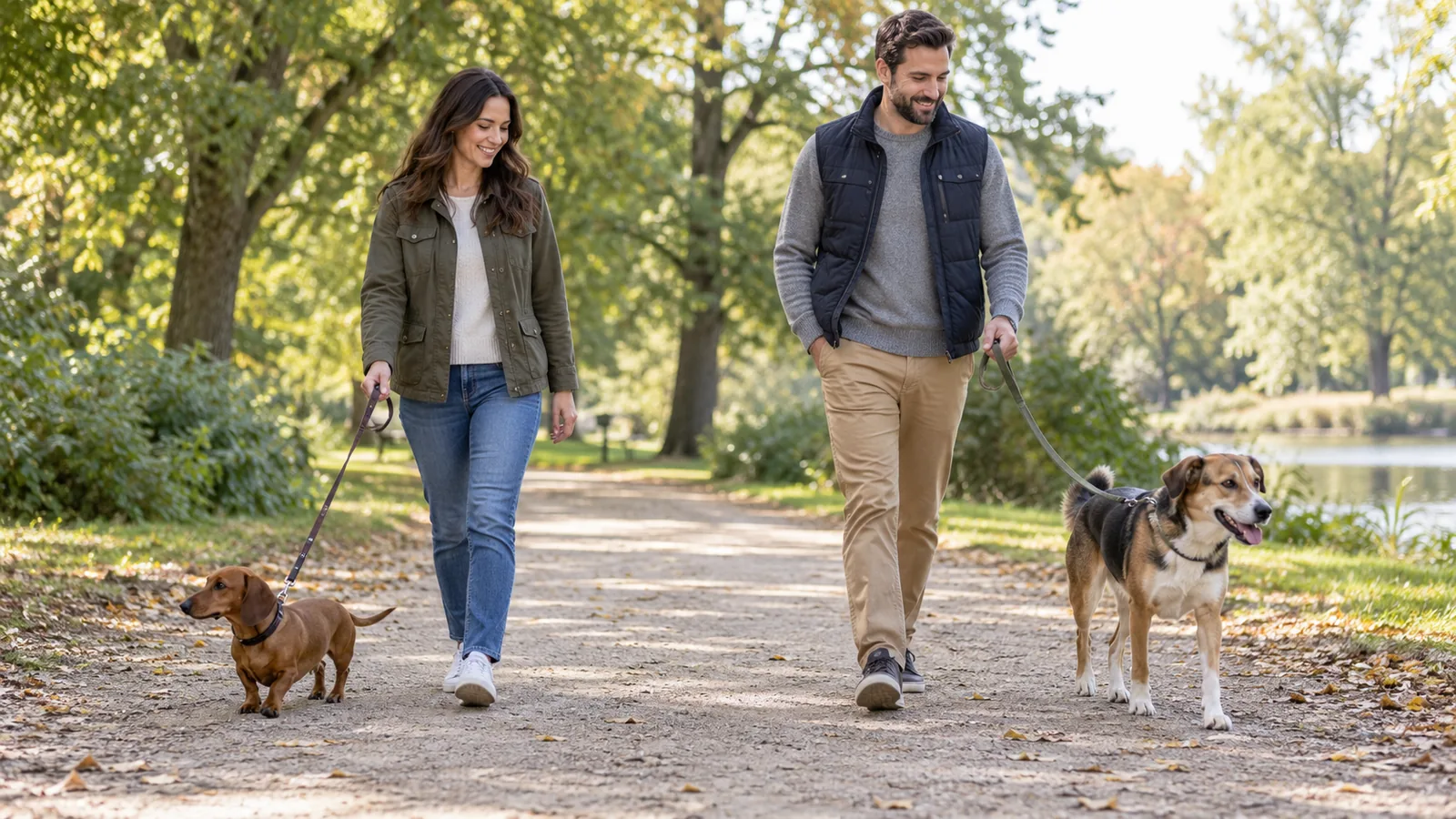
Choose a quiet outdoor place unfamiliar to both dogs. Have one calm adult handle each dog on a secure lead. Begin far enough apart that both can notice the other and still respond to their handlers. Walk in the same direction, allow sniffing of the environment, and reward calm check-ins. Humane World recommends rewarding calm observation rather than forcing immediate contact.
If both dogs remain loose-bodied and interested, decrease distance gradually. A brief greeting can be followed by moving apart again. Watch for stiff posture, prolonged staring, blocking, growling, or one dog repeatedly trying to get away. Those signs call for more distance or ending the session, not insisting that the dogs “work it out.” If the dogs cannot relax even with distance, seek professional guidance before deciding to house them together.
Avoid a first meeting at the resident dog’s front door or over a food bowl. The AKC advises neutral territory because a home entrance can add pressure. A good first walk is a beginning, not permission to remove every barrier indoors.
Prepare the house before the newcomer arrives
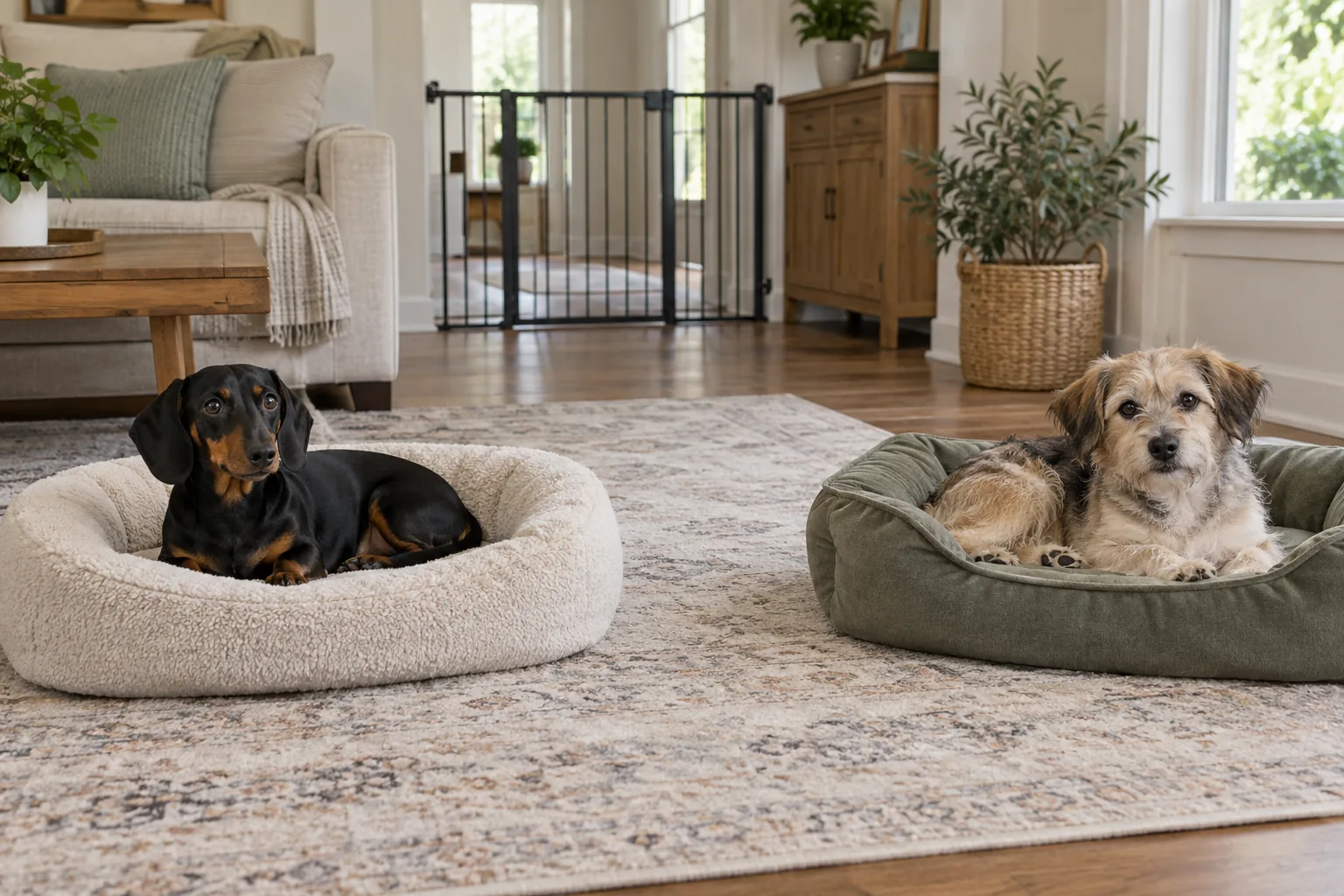
Give each dog its own bed, feeding place, and quiet area. Pick up high-value chews, favorite toys, and food bowls during early shared time. Use gates or pens so the dogs can rest separately and so an adult can manage transitions. AKC’s introduction guidance specifically recommends gates, crates, or pens as management tools and close supervision.
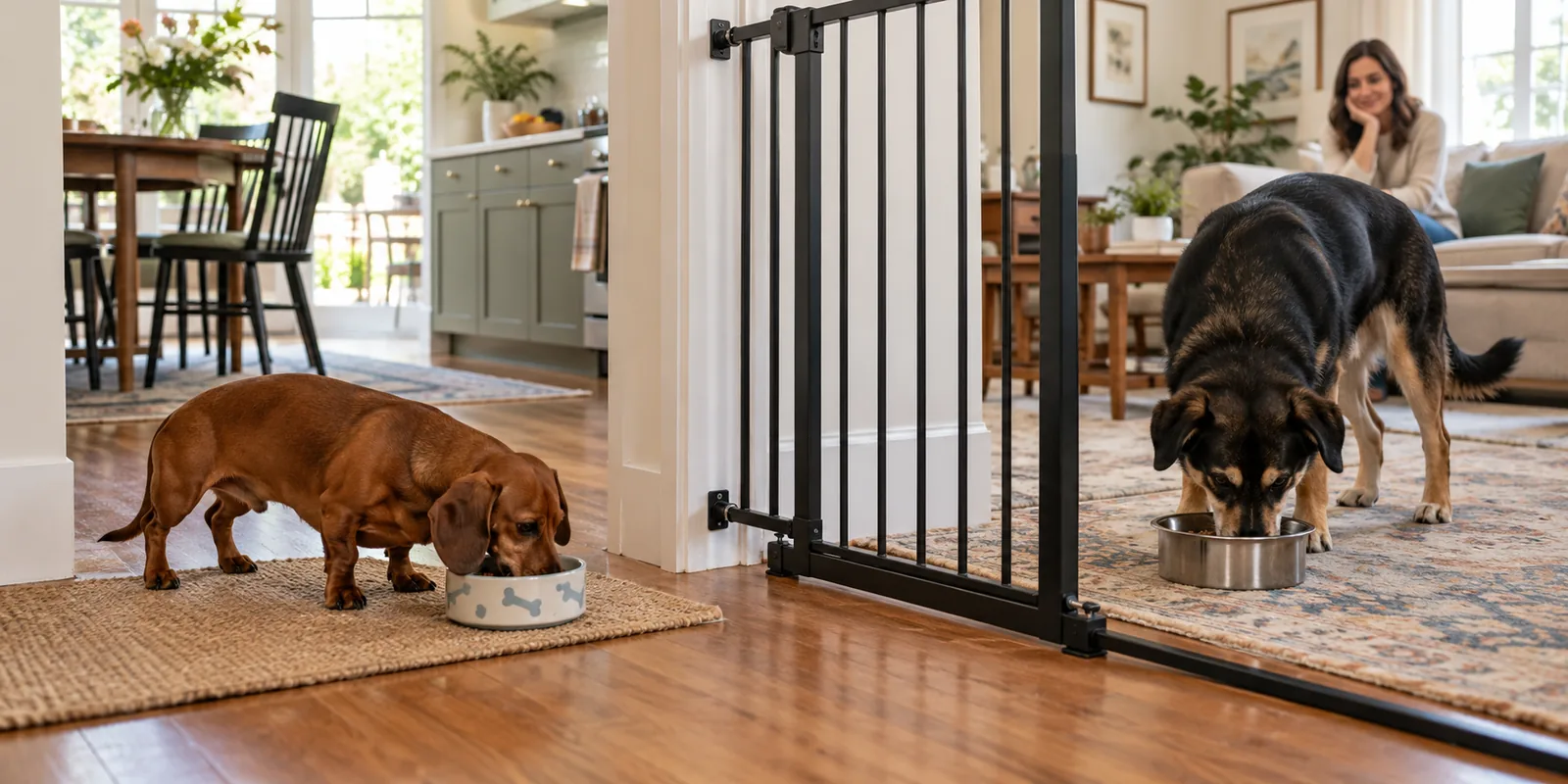
Feed separately at first, with doors or barriers closed if needed. A dog that has never guarded a bowl may still feel pressure when a stranger enters its home. Avoid testing whether the dogs can share a chew. Keep human attention predictable too; a dog should not have to push another away to access its owner.
Walk the dogs separately sometimes, even after they become housemates. Each needs individual training and rest. A second dog is not a substitute for the first dog’s enrichment or companionship from people.
Read the relationship over weeks
Look beyond whether the dogs play. Can they stop play and rest? Can one walk past the other without tension? Does either block doorways, follow relentlessly, or prevent access to water or a resting place? Does the resident dog’s appetite or sleep change? An apparently quiet dog may be avoiding conflict rather than enjoying the arrangement.
Short supervised sessions with breaks are often easier than a full day together. Increase freedom only after repeated calm behavior in several contexts. Return to separation if stress rises. The AKC notes that puppies may not understand an older dog’s communication, so adult management is important even when the puppy wants to play.
Some pairs become close companions; others coexist peacefully with separate spaces; some should not share a home. Accepting that range is more humane than forcing a “best friends” story.
Play, conflict, and when to get help
Healthy play often includes loose bodies, pauses, and role changes. Intervene if one dog continually chases or pins the other, if the smaller dog cannot escape, or if play continues despite clear avoidance. Do not put hands between fighting dogs. Make a safety plan with a qualified professional if there has been serious conflict.
Growling or a stiff body is information. Separate and investigate the trigger instead of punishing the warning. The AVSAB humane-training statement favors reward-based behavior support and discourages aversive methods. Repeated guarding, bites, or inability to settle deserve veterinary and professional behavior input; online advice cannot assess the dogs in person.
A practical example
Two dogs walk calmly side by side in a park. At home, the new Dachshund freezes whenever the resident dog approaches a sofa. Their outdoor meeting did not reveal a conflict over indoor resting space. The owner should separate the dogs, provide distinct beds, prevent competition around the sofa, and rebuild short calm sessions. Ignoring the freezing because “they got along outside” would miss a useful early signal.
Frequently asked questions
Are Dachshunds better with another Dachshund?
Not necessarily. Similar size or breed does not guarantee compatible play, resource sharing, or rest. Evaluate both individuals and their histories.
Should dogs meet off lead for the first time?
Not by default. Humane World recommends separate handlers and controlled, neutral introductions. A qualified professional can advise when greater freedom is appropriate.
Can I leave them alone after one good meeting?
No. Use separate spaces when no one can supervise until a stable relationship has been observed over time. Some pairs may always need separation during absences.
What if my Dachshund barks at dogs on walks?
That is a separate trigger and training question. See the existing barking-at-other-dogs guide, while assessing household compatibility independently.