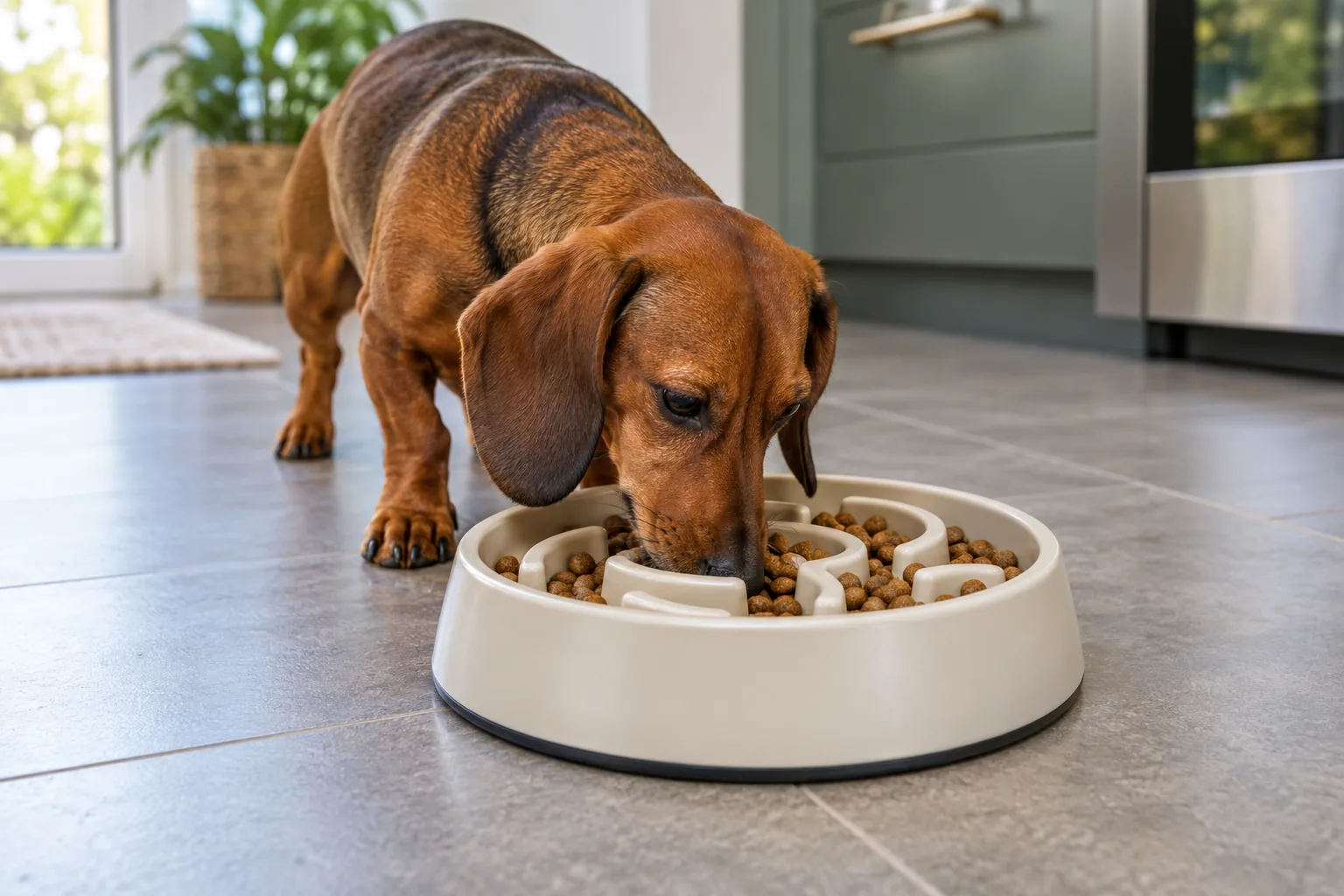
Direct answer
The best slow feeder for Dachshunds makes the usual meal easier to pace without makes the usual meal easier to pace without making it hard to reach, difficult to clean, or stressful. Begin with a simple, shallow pattern and observe a normal portion from start to finish. A more intricate maze is not automatically better. The AKC guide to slowing meals describes slow-feeding bowls as one practical option. A feeder changes presentation, not the prescribed quantity or the reason a dog suddenly eats differently.
Best slow feeder for Dachshunds: what problem are you solving?
Some dogs race through meals because the bowl is easy to empty; others may be anxious in a multi-dog household, competing for food, or newly hungrier than usual. A bowl can slow access, but it cannot diagnose the reason. Note when fast eating began, whether it happens with every food, and whether regurgitation, vomiting, weight change, or unusual thirst is present. Discuss new or persistent signs with a veterinarian. The AKC discussion of bloat and eating speed lists rapid eating as one possible risk factor, but buying a feeder does not prevent or treat gastric dilatation-volvulus.
The product intent here is narrow: compare tools for a dog whose clinician has not identified a medical problem. Portion size and calorie targets belong in the feeding-quantity guides, not in a bowl review.
Compare the shape, not just the marketing name
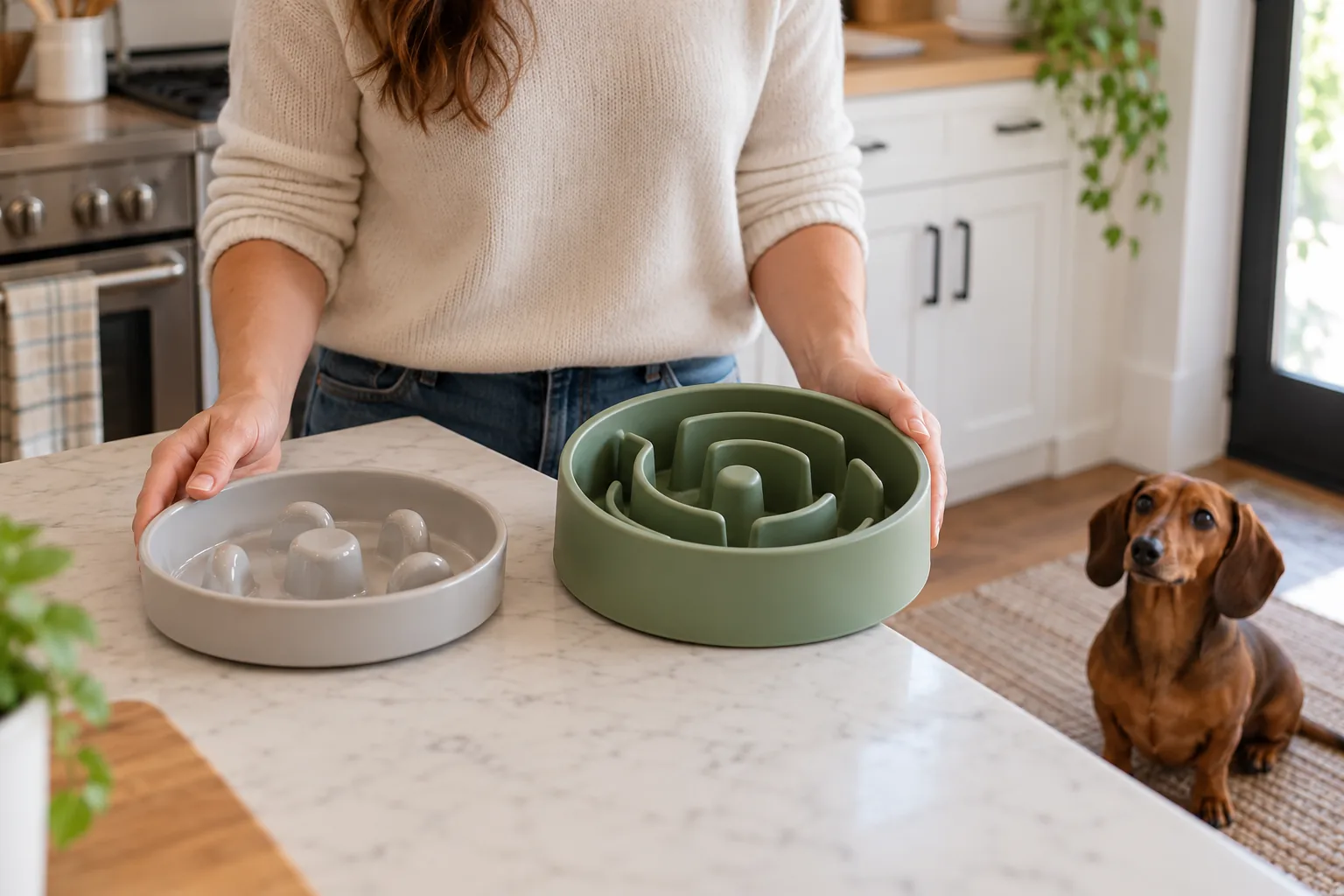
A low, wide dish with broad channels can let a Dachshund reach food without digging the muzzle into deep pockets. Very tall ridges may scatter kibble, frustrate the dog, or be awkward for wet food. Look at the actual channel width and whether food can lodge where a brush cannot reach. For a dog that already pauses between bites, a slow feeder may be unnecessary.
Test stability on the floor where meals happen. A sliding bowl can turn a calm meal into a chase across the kitchen. A nonslip base helps only if it stays attached and can be cleaned. The feeder should not tip easily when the dog noses one side. Avoid loose inserts or detachable parts that a determined chewer could remove and swallow.
Cleaning is part of safety
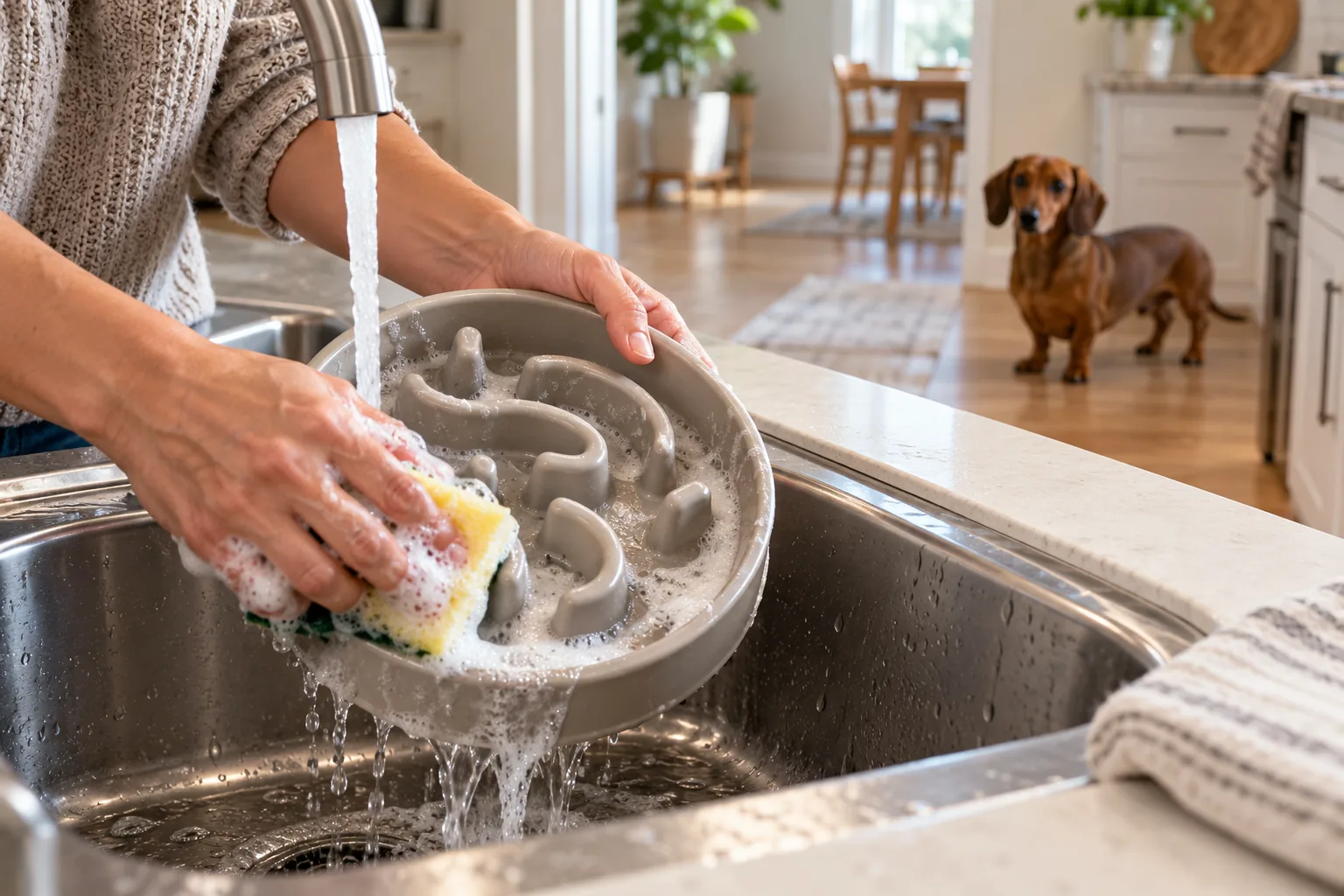
Look for smooth surfaces and corners you can reach with a sponge or brush. Check the manufacturer’s material and dishwasher instructions, including whether heat can warp the bowl or its rubber base. Wash after meals, especially with wet food, and dry fully. A bowl that adds ten minutes to every wash may not be the one the household will actually use consistently.
Do not use a damaged plastic maze with gouges or chew marks. Replace a bowl if cracks, loose parts, or persistent residue make it impossible to clean. Product descriptions often say "food safe" without showing what that means; verify the exact material and seller documentation rather than borrowing claims from a different model.
Run a controlled trial with the normal meal
Offer the dog’s usual measured food, not a bonus serving. Watch the first few meals rather than leaving a new feeder unattended. Note whether the dog can reach all pieces, whether it is swallowing comfortably, whether food is scattered, and whether the meal ends in frustration. A phone timer can help compare ordinary mealtime with the feeder, but a target number of minutes is not the goal. Calm, complete intake is more useful than winning a speed contest.
If the dog paws aggressively, tries to chew the bowl, walks away from inaccessible food, or guards it from another pet, simplify the pattern or choose another strategy. Feeding dogs separately may address competition better than a harder maze. The AKC bloat discussion also emphasizes the feeding environment, not only hardware.
Alternatives when a bowl is not the right tool
Smaller planned meals, scattering kibble in a safe supervised area, or a suitable food puzzle may help some dogs slow down. These should still use the same daily ration and suit the dog’s chewing habits and mobility. For a dog with dental pain, arthritis, or another condition that makes feeding awkward, ask the veterinarian before imposing a complex puzzle. A slow feeder is not a treatment for repeated vomiting, retching, bloating, or sudden appetite change. A swollen abdomen with unproductive retching is an emergency, per the AKC bloat overview.
Buying checklist
- Can the dog reach every pocket without twisting its neck or scraping its face?
- Does the bowl stay steady on the actual floor?
- Can you clean every channel after wet or dry food?
- Are all parts secure and appropriate for a dog that chews?
- Does it fit the dog’s usual measured portion without encouraging an extra serving?
- Can you return it if the dog cannot use it comfortably?
No current brand ranking is included because models and materials change. Product claims, price, and availability need a fresh check before a recommendation or affiliate link.
Choose a pattern for the food you actually serve
Dry kibble can move around broad channels; wet food can smear into narrow grooves and demand more cleaning. A design that works for one may be poor for the other. Try a few pieces in the empty bowl before committing a full meal. If the dog has dental discomfort or reduced mobility, a shallow, easy-to-reach pattern deserves priority over a dramatic maze. Measure the usual portion first, because visual bowl volume can encourage accidental extra feeding. For households with several dogs, separate feeding areas may solve competition better than a more difficult bowl.
Keep the first trial simple: same food, same portion, same location, and only the bowl changes. If several factors change at once, it becomes hard to tell whether the dog dislikes the feeder, the new food, or the environment. A calm dog that finishes the full ration and leaves the bowl intact is a better outcome than a fixed stopwatch target. Save notes about which channels were repeatedly missed and whether the base slipped.
A two-week check rather than a one-day verdict
Observe the first meal closely, then revisit after several days. Is the dog still willing to eat from the bowl? Is food routinely trapped in corners? Has mealtime become calmer or more tense? Is the bowl easy enough to wash every day? A slow feeder can be useful temporarily or long term, but it should not hide a new appetite problem. If the dog vomits repeatedly, loses weight, develops a swollen abdomen, or seems unwell, stop treating this as a product-comparison problem and contact a veterinarian. Keep the normal ration and a simple meal log available for that conversation.
Frequently asked questions
Will a slow feeder prevent bloat?
No bowl should be sold as a guarantee. If you suspect bloat, seek emergency veterinary help rather than trying another feeder. The concern is broader than eating speed alone.
Should a Dachshund use the deepest maze available?
No. Start with accessible ridges and observe the dog’s behavior. The best pattern is one that slows access without causing stress or leaving food behind.
Does the feeder change daily calories?
No. Measure the same ration under the feeding plan. For portion decisions, use the separate daily quantity guide and feeding chart after live-link QA.