Signs Your Dachshund Is Happy is a behavior question, but it should not be answered by counting one cute signal in isolation. For Dachshunds, the useful answer comes from context: body language, recovery time, appetite, sleep, interest in people, and what happened right before the behavior. This guide focuses on daily welfare and contentment signals, with clear boundaries so it does not compete with other Dachshund behavior pages.

Quick answer
Signs your Dachshund is happy include loose body language, normal appetite, interest in walks or play, restful sleep, curiosity, relaxed greetings, and the ability to calm down after excitement. A happy Dachshund does not need to be energetic all day. Contentment often looks like predictable routines, comfortable rest, and easy recovery.
| Signal | What it may mean | What to check next |
|---|---|---|
| Loose posture | Soft eyes, normal movement, flexible body | Stiffness or repeated hiding |
| Healthy interest | Enjoys food, sniffing, play, or training | Loss of interest or sudden change |
| Good recovery | Can settle after excitement | Stays wound up or cannot rest |
| Predictable rest | Sleeps comfortably in normal places | Restless, restless pacing, or avoidance |
What this article should and should not answer
This page is about overall happiness and welfare. It should not compete with the love-signs page, which focuses on the owner bond, or the stress page, which focuses on warning signs and recovery plans. Happiness is the bigger daily pattern.
Dachshunds are expressive dogs. They can stare, lean, burrow, bark, lick, paw, follow, or freeze for different reasons depending on the room, the person, the reward history, and the dog’s physical comfort. That is why a good behavior article needs more than a list of signs. It needs a way to decide whether the pattern is normal, joyful, attached, stressed, painful, or learned through repetition.
How to read the pattern
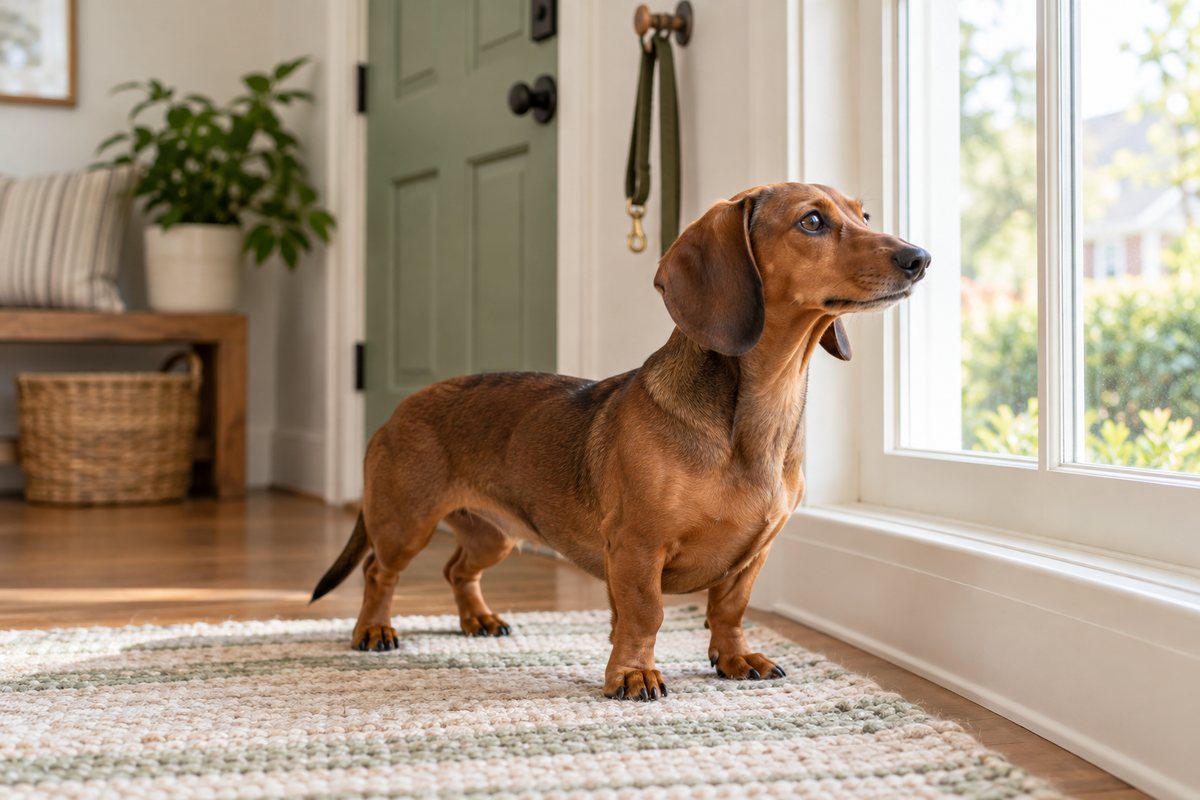
Look at the whole dog before you name the emotion. A relaxed Dachshund usually has softer eyes, normal breathing, flexible posture, and the ability to disengage. A worried Dachshund may show tension, avoidance, repeated lip licking, yawning out of context, pacing, hiding, trembling, or sudden clinginess. A dog who is simply asking for something may look intense but still recover quickly when the routine changes.
Dachshund-specific context
Generic dog advice often misses why Dachshund signals can look dramatic. These dogs were bred to be persistent, vocal, close to the ground, and quick to notice movement. A small change in the room can trigger a big-looking response, especially if your Dachshund has learned that staring, barking, leaning, or pawing makes people react. That does not make the behavior fake. It means the owner has to separate emotional meaning from reward history.
Body shape also matters. A Dachshund who suddenly avoids stairs, resists being picked up, stops jumping onto a favorite spot, or becomes tense during handling may be showing discomfort rather than a personality change. When affection, happiness, or stress signals change at the same time as movement, appetite, sleep, or toileting, treat the pattern as a health clue until your veterinarian says otherwise.
| Question | More reassuring | Needs attention |
|---|---|---|
| Can your dog disengage? | Looks away, rests, or responds to a cue | Fixates, freezes, or escalates |
| Does the behavior repeat? | Appears in predictable happy routines | Appears in many unrelated situations |
| Is the body loose? | Soft eyes, normal movement, easy breathing | Tucked posture, hard stare, trembling, panting |
| Any health change? | Normal appetite, movement, and sleep | Limping, pain, appetite change, hiding |
First steps for owners
- Compare your Dachshund’s current routine to their own normal baseline.
- Give daily sniffing, gentle movement, training, rest, and social contact.
- Use enrichment that fits the dog’s age, back comfort, and confidence.
- Watch for changes in sleep, appetite, mobility, or social tolerance.
- Ask your veterinarian about sudden behavior or energy changes.
A 7-day observation plan
Use a simple seven-day note instead of trying to solve everything from memory. Write down the trigger, the body language, the intensity, what you did, and how quickly your Dachshund recovered. Patterns become much easier to see when you compare normal mornings, departures, meals, walks, guests, grooming, and bedtime. The goal is not to label every moment perfectly. The goal is to find repeatable clues.
| Day | What to record | Why it matters |
|---|---|---|
| 1-2 | Most common time and place | Shows whether routine is part of the pattern |
| 3-4 | Body posture and recovery time | Separates calm communication from stress |
| 5 | Food, sleep, exercise, and handling | Flags health or arousal influences |
| 6 | What the dog gets afterward | Reveals accidental reinforcement |
| 7 | One setup change to test | Turns observation into a plan |
Training without confusing the signal
Once you understand the pattern, teach one replacement behavior. For affection and happiness topics, that might be a calm check-in, a settle cue, or bringing a toy instead of jumping. For stress topics, the first replacement may simply be moving away, going to a mat, taking food at a distance, or choosing a safe resting place. Keep the replacement easier than the old behavior.
Reward early. Dachshunds are quick learners, but they also rehearse habits strongly. If you wait until barking, pawing, freezing, or frantic following is already intense, you are training at the hardest moment. Catch the first soft glance, the first relaxed breath, the first step away from a trigger, or the first quiet settle. Small rewards at the right time are more useful than big corrections after the behavior peaks.
What owners often get wrong
- Assuming constant excitement is the same as happiness.
- Ignoring a quiet dog who is actually withdrawn or sore.
- Measuring happiness only by tail movement.
- Skipping rest because the dog keeps asking for attention.

When to involve a veterinarian or trainer
Get help sooner if the behavior changes suddenly, appears with pain signs, includes growling or biting, disrupts sleep, or makes your Dachshund unable to settle. A veterinarian should rule out pain or illness when behavior changes quickly. A qualified reward-based trainer can help when fear, guarding, reactivity, or separation distress is part of the pattern.
How this fits with other behavior pages
This article should stay narrow. It answers one emotional or body-language question and then points readers to the next step. If the dog panics when left alone, the separation anxiety page is the better fit. If the dog growls over food, the resource guarding page is the better fit. If the dog shows pain, the health pages are the better fit. Clear routing keeps the reader moving and keeps search engines from seeing several pages trying to answer the same query.
Real-life examples
Example one: your Dachshund curls beside you after dinner, sighs, and falls asleep while you read. The body is loose, the routine is predictable, and the dog can stay calm if you stand up. That pattern points toward comfort. You can reinforce it by keeping the routine gentle and giving your dog a quiet resting place nearby.
Example two: your Dachshund follows you from room to room, pants, ignores food, and barks when a door closes. That may look like devotion, but the recovery pattern is poor. The better response is not more cuddling every second. It is gradual independence training, predictable departures, and professional help if panic is involved.
Example three: your Dachshund suddenly stops enjoying touch around the back, growls when lifted, or hides during a routine they used to like. Do not treat that as a training attitude. Sudden changes deserve a health check, especially in a long-backed breed where pain can change behavior quickly.
Internal links for the next step
Read next: best games for Dachshunds, Dachshund enrichment ideas, signs your Dachshund is stressed. These pages keep related behavior intents separate instead of forcing every emotional signal into one article.
FAQ
Is signs your dachshund is happy always a good sign?
No. The same visible behavior can mean different things depending on posture, timing, and recovery. Use the whole pattern, not one signal.
Should I correct the behavior?
Start by changing the setup and rewarding the behavior you want. Avoid punishment when the behavior may be linked to fear, pain, or stress.
What should I track?
Write down the trigger, time of day, body language, what your dog got afterward, and whether food, sleep, pain, or routine changes were involved.
Owner checklist
- Name the situation, not just the behavior.
- Check for loose versus tense body language.
- Look for sudden changes in appetite, movement, sleep, or tolerance.
- Reward calm choices before the behavior becomes intense.
- Keep this page’s focus keyword separate from sibling behavior pages.
Sources
- AKC: Understanding Dog Body Language
- AKC: Signs Your Dog Is Stressed
- VCA: Fears and Phobias in Dogs
- VCA: Separation Anxiety in Dogs
Bottom line
The safest way to answer signs your dachshund is happy is to combine affection, welfare, stress, training history, and health clues. One signal can be sweet, neutral, learned, or worrying depending on the rest of the pattern. Start with observation, support the behavior you want, and get help when the signal is sudden, intense, painful, or hard for your Dachshund to recover from.