The best games for Dachshunds use their nose, brain, and short bursts of movement without encouraging risky jumping. Dachshunds were bred to track, investigate, dig, and solve problems, so many of the best games are scent games, food puzzles, low-impact training games, hide-and-seek, and controlled fetch alternatives. The goal is a calmer, happier dog, not a frantic dog with a sore back.
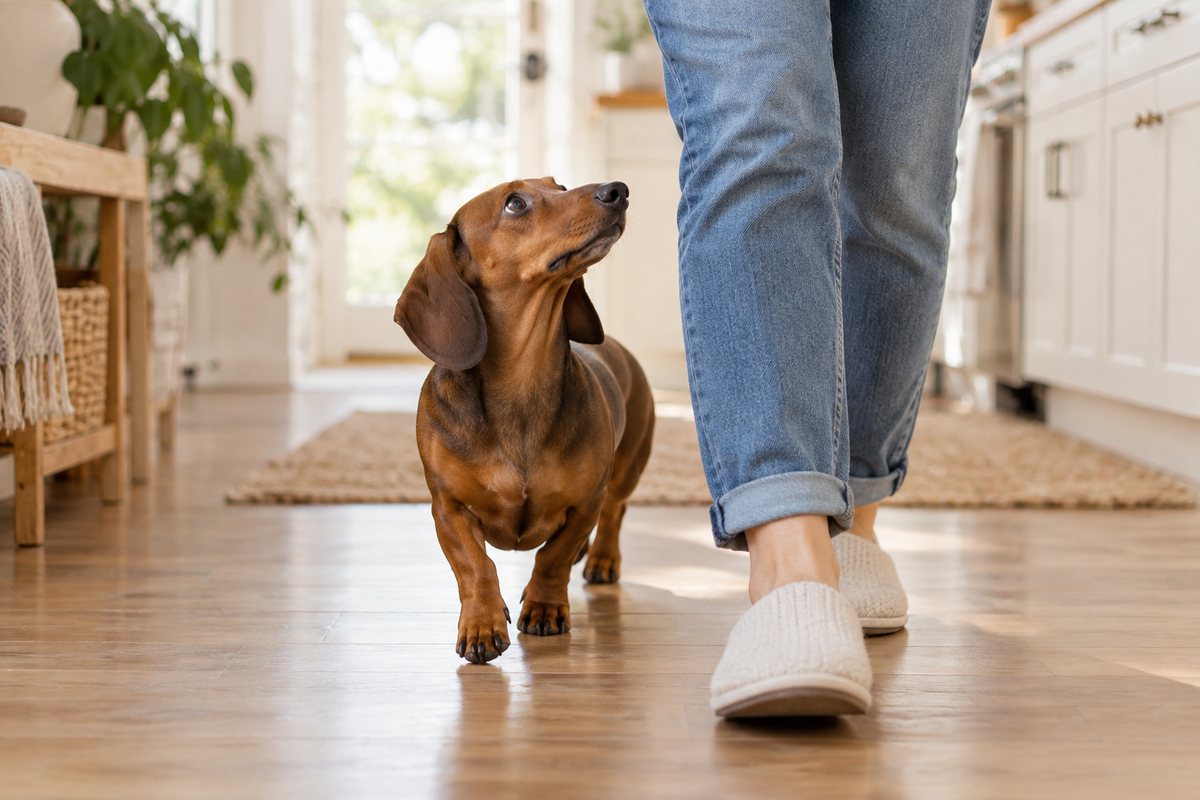
This guide gives you safe Dachshund game ideas for puppies, adults, seniors, apartment living, rainy days, and training sessions. If your Dachshund has back pain, limping, weakness, wobbliness, or a recent injury, ask your veterinarian what activities are safe before adding new games.
Table of Contents
Best games for Dachshunds: quick answer
Start with find-it games, snuffle mats, treat trails, toy hide-and-seek, short trick sessions, name-the-toy, gentle tug with rules, and low-impact fetch on non-slip floors. Avoid repeated jumping, twisting catches, and stairs-based games. Cornell’s IVDD guidance recommends minimizing jumping and time spent going up and down stairs for dogs prone to disc problems, which is directly relevant to Dachshund play choices.
Best games by goal
| Goal | Best game | Why it fits Dachshunds |
|---|---|---|
| Calm mental work | Snuffle mat | Uses the nose and slows eating |
| Rainy day energy | Find the treat | Low impact and easy indoors |
| Training focus | Name response and hand target | Builds useful everyday skills |
| Confidence | Easy puzzle feeder | Rewards problem solving |
| Bonding | Hide-and-seek with owner | Encourages check-ins |
| Safe movement | Low rolling fetch | Movement without high jumps |
If your Dachshund gets overexcited, choose nose work before movement. Sniffing can be tiring in a good way, especially for dogs that bark, pace, or demand attention.
Scent games
AKC highlights scent work and jobs at home as ways to channel a dog’s natural instincts. Dachshunds are natural investigators, so scent games often feel more satisfying than endless ball chasing.
- Let your Dachshund watch you place a treat under one cup.
- Say “find it” and let them sniff.
- Reward when they choose the right cup.
- Add two empty cups.
- Move the game to another room once they understand.
- Hide treats under towels, in boxes, or along a safe trail.
Keep treats tiny. For food-motivated dogs, use part of the meal as game rewards. See best treats for Dachshund training for low-calorie reward strategy.
Puzzle and food games
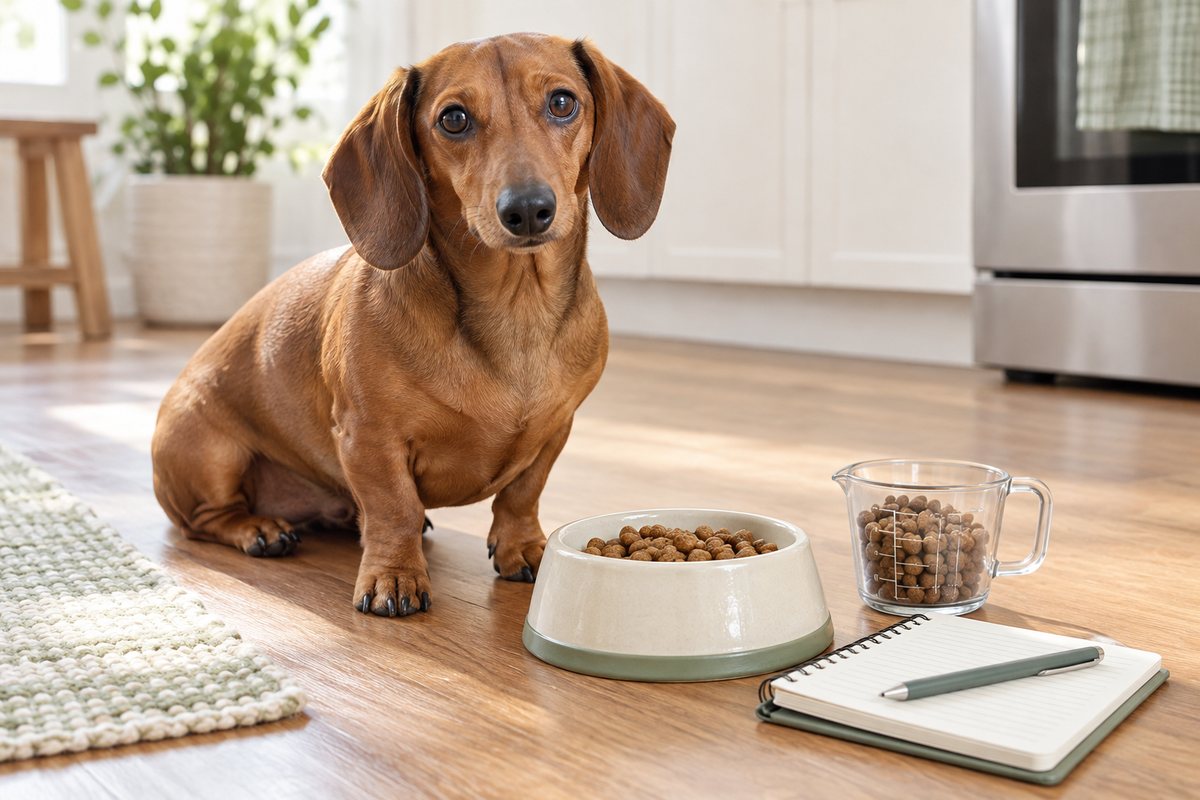
Puzzle toys are useful when they are easy enough to prevent frustration and sturdy enough for your dog’s chewing style. Start simple. A beginner puzzle that your Dachshund can solve calmly is better than an expert toy that creates barking and pawing.
- Snuffle mat with kibble.
- Muffin tin with tennis balls over treats.
- Treats rolled in a towel.
- Cardboard box search with supervision.
- Slow feeder at meal time.
- Frozen lick mat if your dog tolerates it and calories are counted.
Training games
Training games are enrichment because they make your Dachshund think. Use short sessions and clear rewards. Good games include hand target, go to mat, find your toy, touch, spin slowly, wait, and recall between two people.
For a skills list, use Dachshund commands to teach. For puppies, connect games to your Dachshund puppy schedule so play does not replace naps.
Games to avoid or modify
| Game | Risk | Safer version |
|---|---|---|
| High ball throws | Jumping and twisting | Roll toy along floor |
| Stair fetch | Repeated stairs and impact | Flat hallway find-it |
| Rough tug | Neck and back twisting | Gentle tug with drop cue |
| Chasing on slick floors | Slipping | Use rugs or play on traction |
| Jumping tricks | Impact | Teach nose target or mat work |
Daily game routine
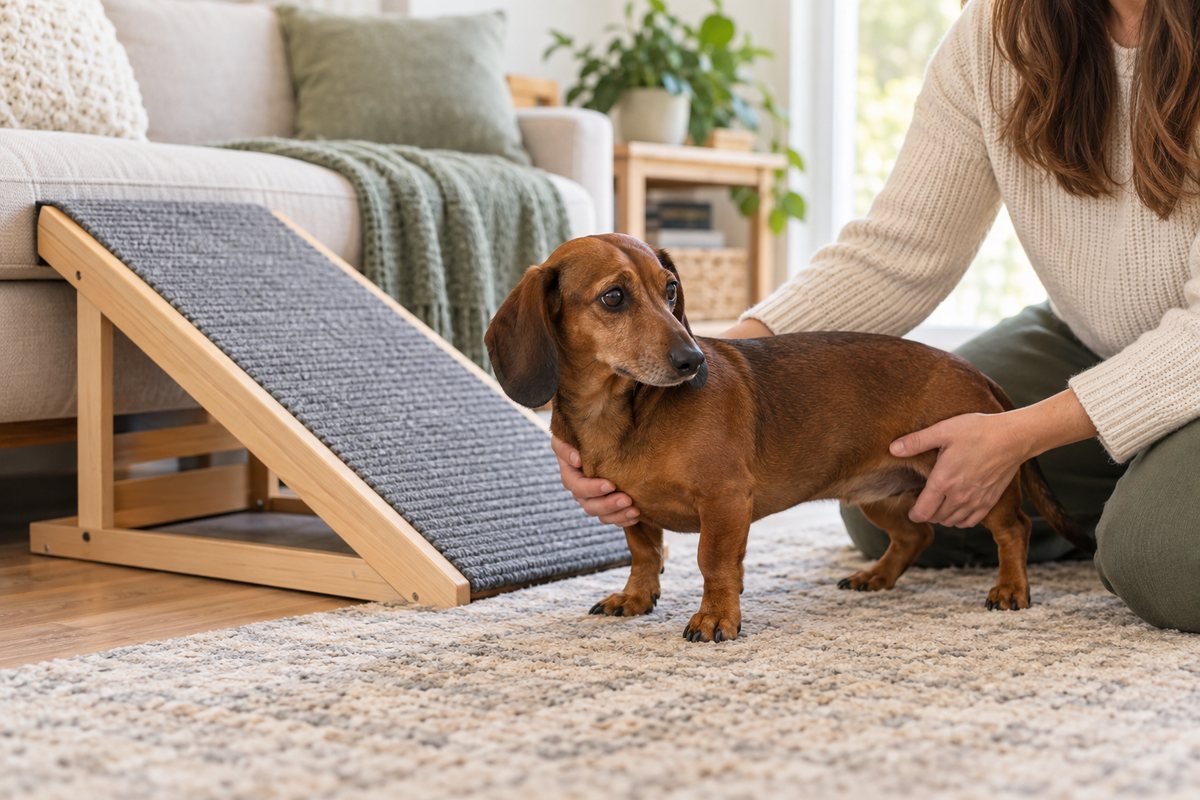
- Morning: 5 minutes of find-it after potty break.
- Midday: puzzle feeder or snuffle mat.
- Afternoon: short training game.
- Evening: calm hide-and-seek or chew time.
- Before bed: quiet sniffing or settle mat, not wild chase.
If games cause barking, nipping, frantic zooming, or refusal to settle, simplify. Many Dachshunds need better-paced enrichment, not more intensity.
FAQ
What games do Dachshunds like most?
Many love scent games, food puzzles, hide-and-seek, gentle tug, and short training games. Nose work is often more satisfying than high-impact chasing.
Is fetch bad for Dachshunds?
Fetch can be okay if it is low, short, and controlled. Avoid high throws, twisting catches, slick floors, and stair fetch.
How much play does a Dachshund need?
Several short sessions usually work better than one long session. Puppies also need plenty of sleep, and seniors may need gentler games.
A weekly Dachshund game menu
Rotate games so your Dachshund does not get bored or over-aroused. Nose work can happen most days. Movement games should stay low-impact. Training games can be very short because mental effort adds up quickly for a clever, food-motivated dog.
| Day | Game | Goal |
|---|---|---|
| Monday | Find-it treats | Scent work |
| Tuesday | Name the toy | Listening and memory |
| Wednesday | Snuffle dinner | Slow feeding |
| Thursday | Hand target course | Focus and movement |
| Friday | Hide-and-seek | Recall and bonding |
| Saturday | Low rolling fetch | Safe activity |
| Sunday | Calm chew and settle | Recovery |
Games for multi-dog homes
If you have more than one dog, run food games separately unless you know there is no guarding. Dachshunds can be intense around food and toys. Separate puzzle time prevents competition and lets each dog work at their own level. Group games should be simple, low-value, and supervised.
Game safety rules for Dachshunds
The best Dachshund games use the nose and brain without turning every session into high-impact jumping. Avoid repeated leaps, sharp turns on slick floors, and tug games that twist the neck or back. Use rugs, keep fetch low and short, and choose sniffing games when your dog is already excited.
| Game type | Good choice | Skip or modify |
|---|---|---|
| Fetch | Low rolling toy | High bouncing throws |
| Hide and seek | Person hides in easy spot | Stairs or jumping onto furniture |
| Tug | Gentle side-to-side control | Hard lifting or shaking |
| Puzzles | Beginner level first | Frustrating hard puzzles |
| Scent work | Food scatter or find-it | Unsafe objects to chew |
Best games by life stage
- Puppies: short find-it games, name response, gentle toy play.
- Adults: scent trails, toy names, low-impact fetch, training games.
- Seniors: slow sniff walks, easy puzzle meals, calm handling games.
- Over-aroused dogs: sniffing and chewing before active games.
- Shy dogs: simple wins that build confidence without pressure.
Low-impact game plan for Dachshunds
The best games for Dachshunds use their nose, brain, and problem-solving without turning every play session into jumping, twisting, or frantic chasing. Think scent games, hide-and-seek, trick training, gentle tug rules, and food puzzles.
A good game should leave your dog satisfied, not overstimulated. If your Dachshund barks more, mouths harder, or cannot settle after play, the game may be too intense or too long.
| Situation | What it suggests | Best next step |
|---|---|---|
| Rainy day | Indoor energy | Use scent boxes or towel scatter |
| Puppy | Short focus | Play two-minute training games |
| Senior | Mobility limits | Use nose work and easy puzzle toys |
| Barker | Arousal control | Choose sniffing before window triggers |
| Food-motivated dog | Calorie risk | Use meal portions as rewards |
best games for Dachshunds: practical checklist
- Keep high-energy games short.
- Avoid repeated jumping for toys.
- Use rugs or traction for indoor games.
- Let your dog sniff and search instead of only run.
- End with a calm chew or settle cue.
- Rotate games so your dog does not become frustrated.
When to change course
If a game triggers guarding, frantic barking, or body soreness, remove that version and choose a calmer activity. Enrichment should improve daily life, not create a new problem.
best games for Dachshunds: owner scenarios and fixes
The final step for best games for Dachshunds is matching the advice to the exact situation in front of you. Dachshunds are small, persistent, routine-sensitive dogs, so a plan that looks correct on paper can fail if the room setup, timing, gear, reward value, or health context is wrong. Before changing everything, choose the one pattern that happens most often and work there first.
This also helps prevent mixed signals. If you sometimes reward the unwanted pattern, sometimes interrupt it, and sometimes ignore it, your Dachshund may keep trying the behavior because the rules are unclear. A simple plan that everyone in the home follows for one week is usually more useful than a complicated plan that changes every day.
| Owner situation | How to handle it |
|---|---|
| When the main issue is rainy day | Start with the practical fix: use scent boxes or towel scatter. Give it several calm repetitions before adding a second change. |
| When the pattern looks like puppy | Assume the setup is slightly wrong for your Dachshund and adjust the environment before expecting better behavior. |
| When you see senior | Slow the plan down. Dachshunds often improve faster when the next step is easier, clearer, and more predictable. |
| When barker keeps returning | Look for a trigger that happens before the problem. Changing that trigger usually works better than reacting afterward. |
| When food-motivated dog is involved | Treat it as a sign to re-check fit, comfort, schedule, or health rather than assuming your dog is ignoring you. |
How to make the plan easier for your Dachshund
If progress stalls, make the next repetition easier instead of louder or longer. For best games for Dachshunds, easier can mean more distance, a shorter session, a lower height, a quieter room, softer handling, smaller rewards, or fewer choices. The easier version should let your dog succeed while still practicing the skill you want.
Watch recovery time. A Dachshund who can return to sniffing, eating, resting, or walking normally is usually in a workable zone. A dog who stays frantic, stiff, avoidant, or obsessed with the trigger is telling you the setup is too difficult. That is useful information, not a training failure.
7-day improvement plan
- Day 1: write down when the best games for Dachshunds problem happens, where it happens, and what happened right before it.
- Day 2: remove the easiest trigger or setup mistake connected to rainy day.
- Day 3: practice the first checklist step: keep high-energy games short..
- Day 4: repeat the same plan at an easier level instead of adding a new rule.
- Day 5: add one support step from the checklist: avoid repeated jumping for toys..
- Day 6: ask whether your dog recovers faster than earlier in the week.
- Day 7: keep what improved, drop what confused your dog, and decide whether health or professional support is needed.
This seven-day plan will not solve every case of best games for Dachshunds, but it gives you cleaner information. If the pattern improves, keep building gradually. If it stays the same or worsens, the cause may be discomfort, fear, poor fit, too much freedom, or a trigger that needs a different article-specific plan.
Quality check before you rely on the advice
The safest version of the advice should be specific, observable, and easy to repeat. You should know what you are changing, what success looks like, and when to stop. For Dachshunds, stop signs include pain, limping, yelping, frantic barking, snapping, refusal to eat rewards, vomiting, repeated accidents, or sudden behavior changes.
When in doubt, choose the lower-risk version: more distance, better traction, shorter sessions, calmer rewards, clearer routines, and earlier veterinary input. That keeps the best games for Dachshunds plan helpful without pushing a small long-backed dog through stress, pain, or confusion.
Sources
- AKC: How to Give Your Dog Jobs to Do at Home
- AKC: Dachshund Field Trials
- AKC: How to Teach Your Dog Scent Work
- Cornell University College of Veterinary Medicine: Intervertebral Disc Disease
- AKC: Dog Training Basics