
Dachshunds can sleep in your bed if it is safe, clean, and not worsening behavior, allergies, sleep quality, or back risk. The biggest Dachshund-specific concern is jumping on and off the bed. A dog that launches from a high bed every day may be better sleeping in a dog bed, crate, pen, or on the bed only with a ramp and rules.
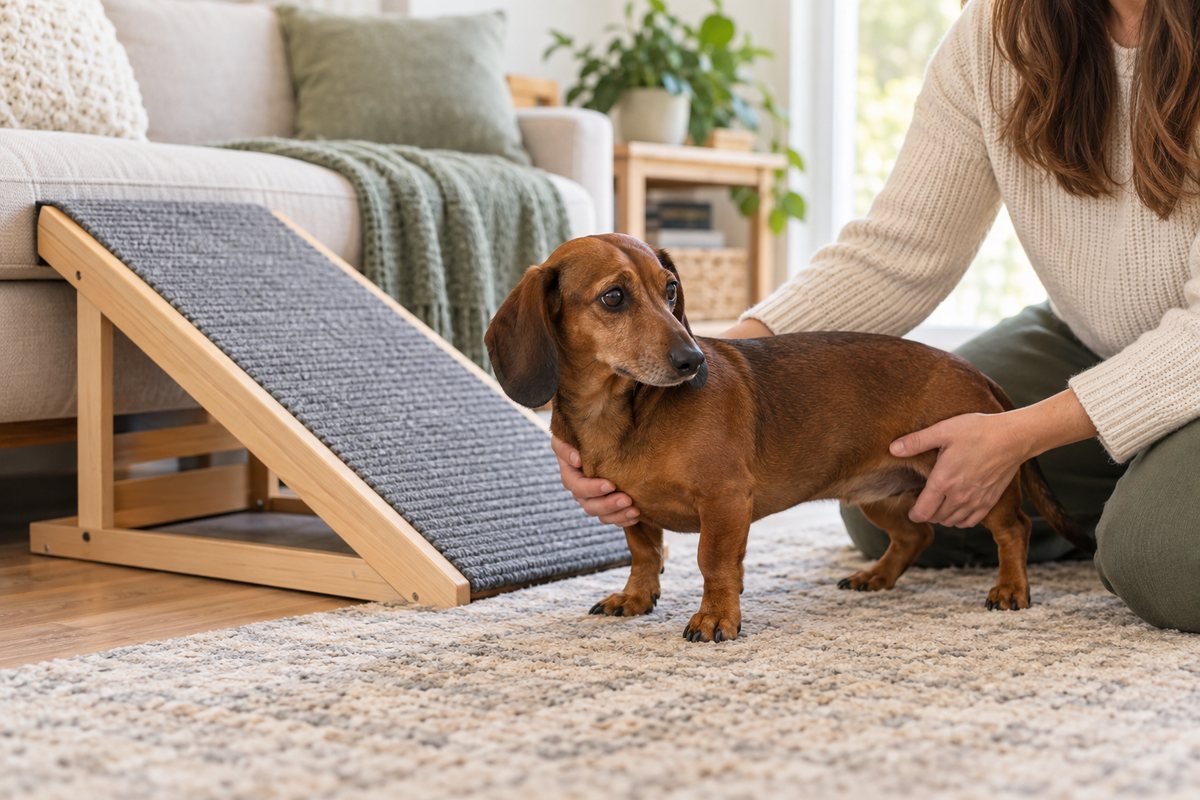
Can Dachshunds sleep in your bed?
Yes, many adult Dachshunds can sleep in bed with their owners. AKC notes that bed sharing may be fine when allergies, sleep disruption, and safety are not problems, but puppies should generally sleep somewhere safer until housebroken and mature enough to avoid risky jumping. For Dachshunds, a ramp, low bed, or separate dog bed beside yours can reduce jumping.
| Situation | Bed sharing? | Better setup |
|---|---|---|
| Housebroken adult | Usually possible | Use ramp and rules |
| Young puppy | Usually not yet | Crate or pen near bed |
| Back pain history | Use caution | Floor bed or ramp-only access |
| Allergies/asthma | May be a problem | Separate dog bed |
| Guarding/growling | No until trained | Behavior plan and own bed |

Bed rules for Dachshunds
- No jumping on or off the bed.
- Use a ramp or lift carefully if your vet approves.
- Keep a washable blanket for hygiene.
- Do not allow growling or guarding space.
- Move to a floor bed if sleep quality suffers.
- Use crate training for puppies that are not ready.
For ramp selection, see best dog ramp for Dachshunds. For back warning signs, see Dachshund back pain signs.

When your Dachshund should not sleep in your bed
- Your puppy is not house trained yet.
- Your Dachshund jumps on and off a high bed.
- Your dog growls, guards pillows, or snaps when moved.
- You have allergies or asthma that worsen overnight.
- Your sleep is poor because your dog wakes, licks, barks, or crowds you.
- Your veterinarian recommended restricted movement because of back pain.
A separate bed does not mean your Dachshund is less loved. Many dogs sleep better in a predictable spot beside the bed, especially if that spot has a soft surface, warmth, and a consistent bedtime routine.
How to transition to a dog bed
- Place the dog bed close to your bed at first.
- Reward your Dachshund for stepping onto it.
- Add a chew or safe bedtime enrichment item.
- Use the same bedtime cue every night.
- Block bed access if jumping is the problem.
- Move the dog bed gradually only after the routine is calm.
Dachshund-specific bed sharing risks
The biggest breed-specific risk is not the sleeping itself. It is the jumping before and after sleep. A sleepy Dachshund may leap from the bed before you can help. A young dog may jump up and down many times per evening. A senior dog may misjudge the edge. If bed sharing leads to repeated jumping, the setup needs to change.
| Risk | Why it matters | Safer option |
|---|---|---|
| Jumping down | Impact and awkward landing | Ramp, low bed, or floor bed |
| Night waking | Poor sleep for people and dog | Separate bed beside yours |
| Resource guarding | Growling or snapping over space | No bed access until behavior plan |
| Puppy accidents | House training setback | Crate or pen near bed |
| Allergies | Worse sleep and symptoms | Washable dog bed outside bed |
Back-safe bedtime routine
- Final potty trip before bed.
- Use the ramp every time, not only sometimes.
- Block direct jumping paths if needed.
- Keep water and bedding predictable.
- Teach a cue for going to the dog bed.
- Move restless dogs to a safer sleep spot before frustration builds.
Should your Dachshund sleep in your bed?
The answer depends on sleep quality, safety, and behavior. Bed sharing can be fine for a calm adult Dachshund who uses a ramp, sleeps through the night, and does not guard space. It is a poor choice for a puppy still having accidents, a dog who jumps off the bed repeatedly, or a dog who growls when moved.
| Good candidate | Wait or choose separate bed |
|---|---|
| Uses ramp reliably | Jumps on and off furniture |
| House trained | Still has night accidents |
| Settles calmly | Paces, whines, or guards space |
| People sleep well | Allergies or broken sleep worsen |
| No pain signs | Recent back pain or mobility concern |
How to transition to a dog bed if needed
If bed sharing is not working, make the new spot attractive before bedtime. Place the dog bed beside your bed, reward calm settling during the day, and use the same bedtime routine every night. Do not wait until everyone is exhausted to introduce the change.
- Practice mat or bed settling before bedtime.
- Use a low-value chew only if your dog does not guard it.
- Keep the bed warm, stable, and easy to access.
- Reward quiet moments before whining starts.
- Move gradually farther away only after several calm nights.
Dachshund bed sharing FAQ
Is it bad for a Dachshund to sleep under the covers?
Many Dachshunds like burrowing, but comfort and safety matter. Make sure your dog can move freely, does not overheat, and is not trapped under heavy bedding. If your dog pants, struggles, or startles when touched under blankets, use a lighter blanket or a separate dog bed.
Will bed sharing cause separation anxiety?
Bed sharing does not automatically cause separation anxiety. Problems are more likely when a dog cannot settle anywhere else, panics when alone, or receives no independence practice. Teach your Dachshund to relax on a dog bed, in a crate, or behind a gate during the day even if they sleep near you at night.
What is the safest setup if I allow bed sharing?
Use a stable ramp, block jumping paths, keep the bed surface uncluttered, and teach a calm up-and-down routine. If your dog has back pain history, mobility concerns, or night restlessness, ask your veterinarian whether a floor-level dog bed is safer.
Rules that make bed sharing safer
Bed sharing is a lifestyle choice, not an automatic training failure. The risk comes from jumping on and off the bed, poor sleep boundaries, guarding, or a dog who cannot settle anywhere else. A safe setup matters more than the simple yes-or-no answer.
If your Dachshund sleeps in your bed, make the path predictable. Use a ramp, block jump routes, and teach a cue for where your dog sleeps. If your dog has back pain history or nighttime restlessness, a floor-level bed may be the kinder option.
| Situation | What it suggests | Best next step |
|---|---|---|
| High mattress | Jump impact | Use ramp and block shortcuts |
| Restless sleeper | Falls or startled reactions | Offer separate dog bed nearby |
| Resource guarding | Tension around space | Use management and training help |
| Puppy | Potty and chewing risk | Use crate or pen until reliable |
| Senior dog | Mobility and comfort | Choose low, supportive sleeping setup |
can Dachshunds sleep in your bed: practical checklist
- Decide whether bed access is always allowed or invitation-only.
- Add a stable ramp before bed sharing becomes routine.
- Teach a bed cue for your dog's spot.
- Keep nighttime exits calm and supervised.
- Practice daytime independence even if nights are shared.
- Move to a separate bed if guarding, falls, or pain signs appear.
When to change course
If bed sharing leads to worse separation distress, poor sleep, guarding, or unsafe jumping, change the setup gradually instead of waiting for a crisis.
can Dachshunds sleep in your bed: owner scenarios and fixes
The final step for can Dachshunds sleep in your bed is matching the advice to the exact situation in front of you. Dachshunds are small, persistent, routine-sensitive dogs, so a plan that looks correct on paper can fail if the room setup, timing, gear, reward value, or health context is wrong. Before changing everything, choose the one pattern that happens most often and work there first.
This also helps prevent mixed signals. If you sometimes reward the unwanted pattern, sometimes interrupt it, and sometimes ignore it, your Dachshund may keep trying the behavior because the rules are unclear. A simple plan that everyone in the home follows for one week is usually more useful than a complicated plan that changes every day.
| Owner situation | How to handle it |
|---|---|
| When the main issue is high mattress | Start with the practical fix: use ramp and block shortcuts. Give it several calm repetitions before adding a second change. |
| When the pattern looks like restless sleeper | Assume the setup is slightly wrong for your Dachshund and adjust the environment before expecting better behavior. |
| When you see resource guarding | Slow the plan down. Dachshunds often improve faster when the next step is easier, clearer, and more predictable. |
| When puppy keeps returning | Look for a trigger that happens before the problem. Changing that trigger usually works better than reacting afterward. |
| When senior dog is involved | Treat it as a sign to re-check fit, comfort, schedule, or health rather than assuming your dog is ignoring you. |
How to make the plan easier for your Dachshund
If progress stalls, make the next repetition easier instead of louder or longer. For can Dachshunds sleep in your bed, easier can mean more distance, a shorter session, a lower height, a quieter room, softer handling, smaller rewards, or fewer choices. The easier version should let your dog succeed while still practicing the skill you want.
Watch recovery time. A Dachshund who can return to sniffing, eating, resting, or walking normally is usually in a workable zone. A dog who stays frantic, stiff, avoidant, or obsessed with the trigger is telling you the setup is too difficult. That is useful information, not a training failure.
7-day improvement plan
- Day 1: write down when the can Dachshunds sleep in your bed problem happens, where it happens, and what happened right before it.
- Day 2: remove the easiest trigger or setup mistake connected to high mattress.
- Day 3: practice the first checklist step: decide whether bed access is always allowed or invitation-only..
- Day 4: repeat the same plan at an easier level instead of adding a new rule.
- Day 5: add one support step from the checklist: add a stable ramp before bed sharing becomes routine..
- Day 6: ask whether your dog recovers faster than earlier in the week.
- Day 7: keep what improved, drop what confused your dog, and decide whether health or professional support is needed.
This seven-day plan will not solve every case of can Dachshunds sleep in your bed, but it gives you cleaner information. If the pattern improves, keep building gradually. If it stays the same or worsens, the cause may be discomfort, fear, poor fit, too much freedom, or a trigger that needs a different article-specific plan.
Quality check before you rely on the advice
The safest version of the advice should be specific, observable, and easy to repeat. You should know what you are changing, what success looks like, and when to stop. For Dachshunds, stop signs include pain, limping, yelping, frantic barking, snapping, refusal to eat rewards, vomiting, repeated accidents, or sudden behavior changes.
When in doubt, choose the lower-risk version: more distance, better traction, shorter sessions, calmer rewards, clearer routines, and earlier veterinary input. That keeps the can Dachshunds sleep in your bed plan helpful without pushing a small long-backed dog through stress, pain, or confusion.
Sources
- AKC: Should I Let Our Dog Sleep in Bed With Us?
- AKC: Do You Snooze With Your Pooch?
- Cornell: Intervertebral Disc Disease
- AKC: Step-by-Step Crate Training