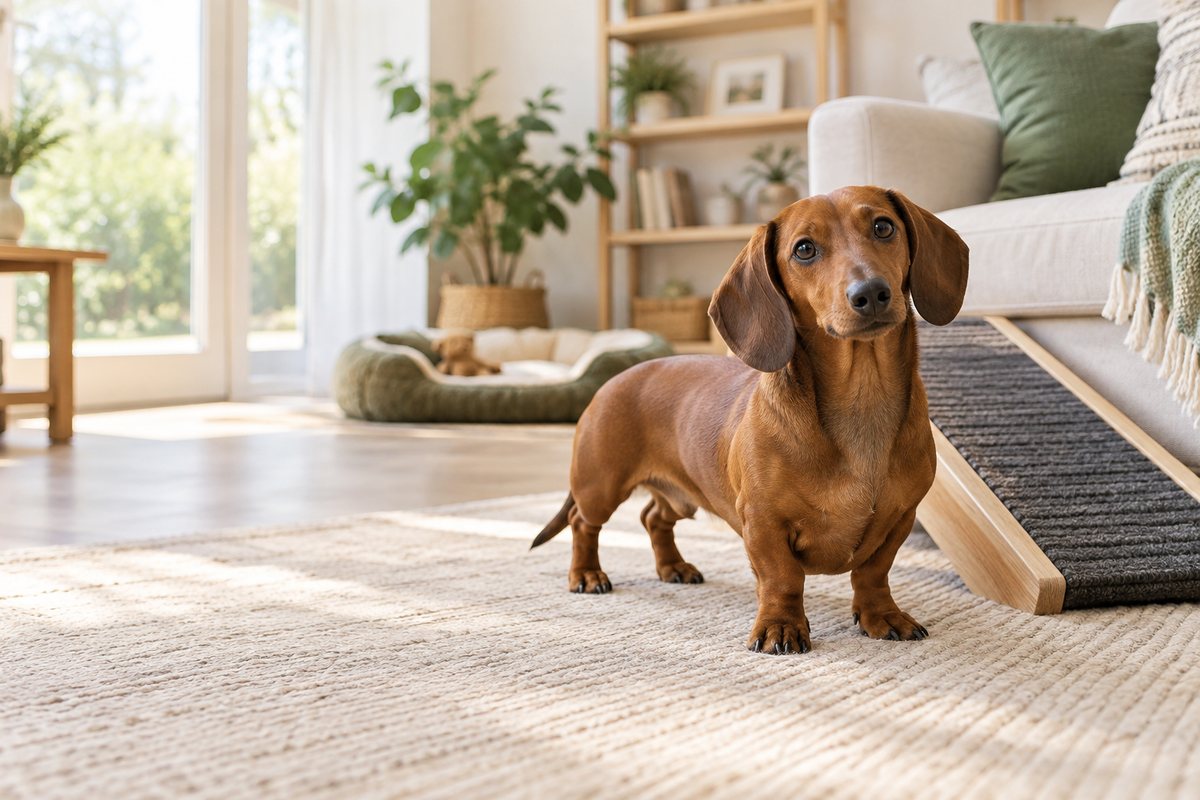
Dachshund puppy schedule planning is easiest when you build the day around five repeatable needs: potty breaks, meals, naps, short training sessions, and calm social time. A Dachshund puppy does not need a perfect military timetable. They need a predictable rhythm that prevents accidents, protects their long back, and gives them enough sleep to avoid overtired biting and barking.
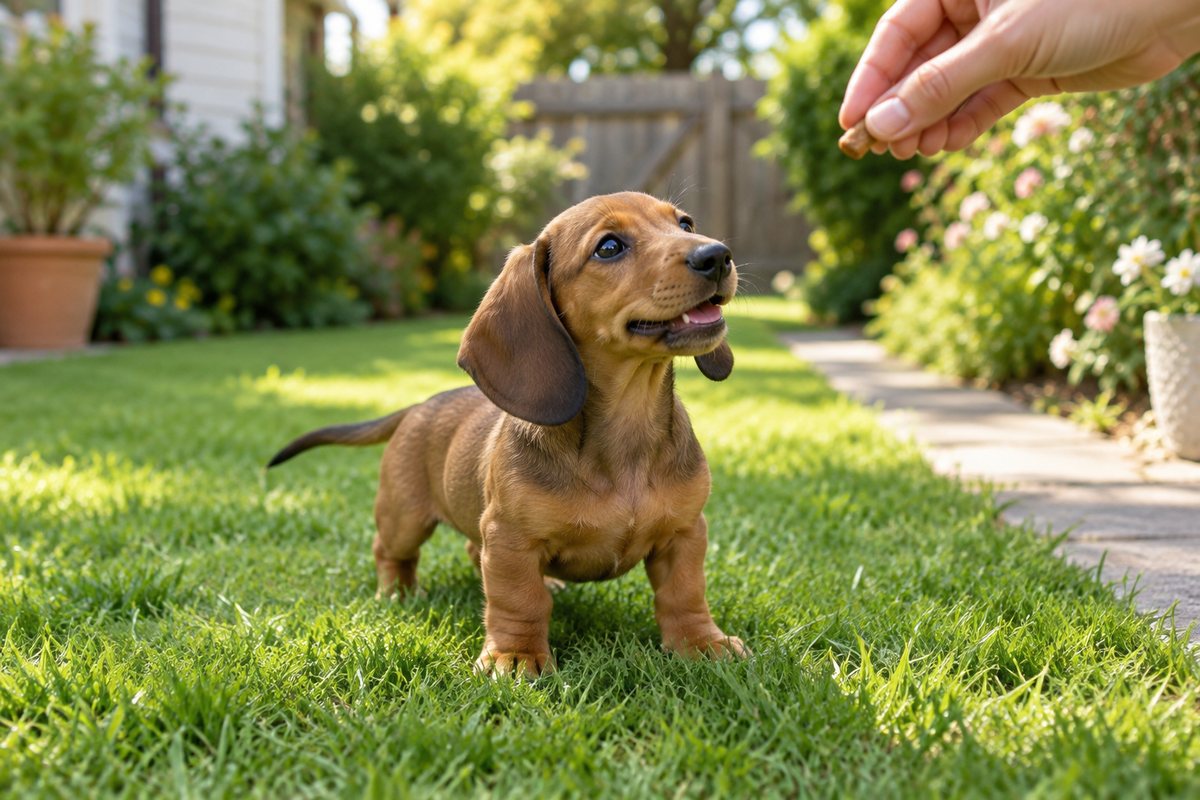
This guide gives you a practical Dachshund puppy schedule from morning to bedtime, plus age-based adjustments for 8-week, 10-week, 12-week, and older puppies. Use it as a framework, then adjust for your puppy’s bladder control, appetite, energy, vaccination status, and your veterinarian’s advice.
Table of Contents
Dachshund puppy schedule quick answer
A good Dachshund puppy schedule starts with a potty break immediately after waking, meals at consistent times, potty trips after meals and play, short training sessions, several naps, and a calm bedtime routine. Young puppies usually need outdoor chances at least every two to four hours and after major activity changes. AKC puppy routine guidance also recommends predictable feeding, potty, play, and rest blocks instead of leaving the day completely random.
For Dachshunds, add one more rule: keep the schedule back-safe. Do not build a daily routine around stairs, sofa jumping, or rough high-impact play. Short walks, sniffing, food puzzles, handling practice, and gentle games are better than repetitive jumping for a long-bodied puppy.
Sample daily Dachshund puppy schedule
This example works well for many 8- to 16-week Dachshund puppies when someone is home or can arrange help. The exact clock times can shift. Keep the order more consistent than the minute-by-minute timing.
| Time block | What to do | Why it helps |
|---|---|---|
| 6:30-7:00 am | Carry or guide puppy outside for potty, then quiet praise | Prevents wake-up accidents |
| 7:00-7:30 am | Breakfast, water, then another potty chance | Meals often trigger elimination |
| 7:30-8:15 am | Short play, name practice, handling, or leash practice | Uses morning energy without overdoing exercise |
| 8:15-10:00 am | Nap in crate, pen, or puppy-safe area | Protects sleep and prevents overtired behavior |
| 10:00 am | Potty, brief training, supervised free time | Builds routine and house-training success |
| Midday | Lunch, potty, calm play, nap | Keeps digestion and bladder timing predictable |
| Afternoon | Potty, socialization outing or indoor enrichment, nap | Adds confidence without overwhelming the puppy |
| Evening | Dinner, potty, gentle play, family time | Lets the puppy wind down gradually |
| Bedtime | Final potty trip, crate or sleep area, lights low | Creates an overnight pattern |
If you work away from home, do not expect a young puppy to simply “hold it” through a full workday. Arrange a family member, neighbor, dog walker, or safe puppy area with a planned potty solution. The full Dachshund potty training guide explains how to build the house-training part in more detail.
Dachshund puppy schedule by age
Your schedule should loosen as your puppy matures. Age matters because bladder control, attention span, sleep needs, teething behavior, and confidence all change quickly during the first months at home.
| Puppy age | Main schedule goal | Daily focus |
|---|---|---|
| 8 weeks | Safety, bonding, potty rhythm, naps | Very frequent potty breaks, gentle handling, short crate comfort sessions |
| 10 weeks | Predictable meals and short training | Name, recall games, sit, calm crate time, supervised exploration |
| 12 weeks | More confidence outside the home | Vet-approved socialization, leash practice, fewer accidents through better timing |
| 4 months | Longer awake windows and clearer cues | More structured training, chew management, polite greetings |
| 5-6 months | Adolescent-proof routines | Consistency, impulse control, back-safe exercise, continued potty reliability |
The schedule is not a punishment chart. It is a prevention system. If accidents or frantic behavior increase, your puppy may need shorter awake windows, more potty trips, or calmer transitions.
Potty breaks and meals
Potty timing is the backbone of a Dachshund puppy schedule. Take your puppy out after waking, after eating, after drinking, after play, after training, before crate naps, after crate naps, and before bed. AKC house-training guidance emphasizes that schedules help puppies learn where to go and reduce accidents because owners are offering success at predictable times.
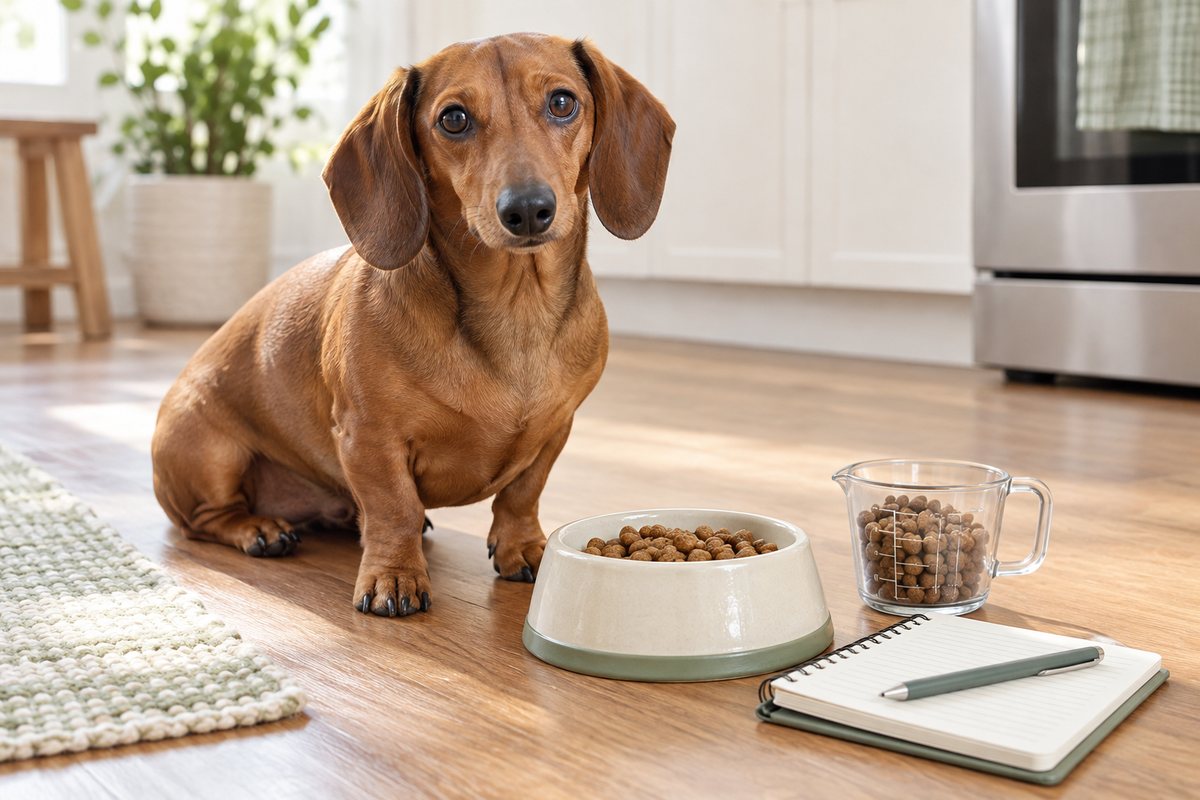
Most puppies do better with scheduled meals instead of all-day grazing. AKC puppy schedule guidance notes that many puppies eat three meals per day. Scheduled meals make potty patterns easier to predict. Keep water available, but pay attention to heavy drinking before bedtime and ask your veterinarian if thirst seems excessive.
Crate naps and sleep
Puppies sleep a lot, and many behavior problems get worse when they are overtired. AKC sleep guidance explains that puppies may need substantial daily sleep and that a sleep routine helps the puppy and owner adjust. For Dachshunds, planned naps are especially useful because they reduce wild jumping, ankle chasing, and frantic evening behavior.
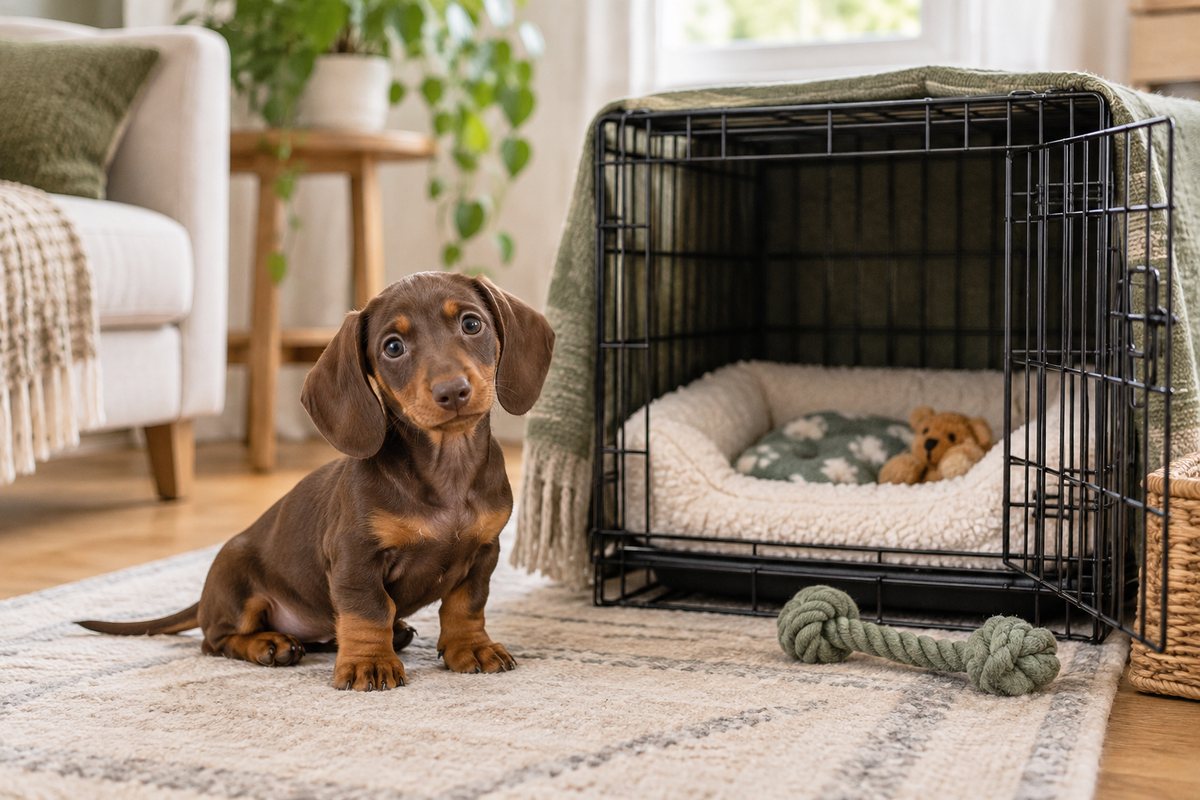
If you use a crate, keep it positive. The crate should predict rest, treats, meals, and calm separation practice, not punishment. Pair this schedule with Dachshund crate training and how to crate train a Dachshund puppy if crate time is still stressful.
Training, play, and socialization
Training blocks should be short. A few minutes of reward-based practice several times per day is more realistic than one long session. Work on name response, coming when called, sit, handling, leash pressure, settling on a mat, and trading toys. The broader guide on how to train a Dachshund puppy covers the foundation skills.
Socialization belongs in the schedule too, but it must be controlled. AVSAB’s puppy socialization position statement supports early, well-managed socialization and puppy classes while also advising owners to manage disease risk. AAHA also recommends asking your veterinarian about safe local exposure based on vaccine status and area risk. That means your schedule can include car rides, carried outings, invited visitors, safe surfaces, household sounds, and positive handling without rushing into dog parks.
Common schedule mistakes
Keeping the puppy awake too long
A tired Dachshund puppy may look “naughty” when they are actually exhausted. If biting, barking, and zooming spike after a busy block, try a potty break followed by a nap.
Waiting too long between potty trips
Young puppies need repetition. If accidents happen daily, tighten the schedule before assuming stubbornness. Reward outdoor success immediately and clean indoor accidents thoroughly.
Over-exercising a small long-backed puppy
Dachshund puppies need movement, sniffing, and play, but they do not need repetitive stair climbing, sofa launches, or long forced runs. If your puppy seems stiff, reluctant to move, yelps, drags a leg, or changes posture, read Dachshund back pain signs and contact your veterinarian.
FAQ
What is the best Dachshund puppy schedule?
The best Dachshund puppy schedule is a repeatable routine of potty, meal, potty, short activity, potty, nap, and repeat. The exact times should fit your home, but the order should stay predictable.
How often should a Dachshund puppy go potty?
Most young puppies need very frequent chances, especially after waking, eating, drinking, playing, and napping. Many schedules start with outdoor breaks every two to four hours, then adjust based on age and progress.
How many naps does a Dachshund puppy need?
Many puppies need several naps per day. If your puppy becomes bitey, frantic, or unable to settle, add a calm potty break and a nap instead of more stimulation.
Should my Dachshund puppy follow a strict clock schedule?
No. A consistent order matters more than exact clock times. Keep the pattern predictable while allowing flexibility for growth, weather, vet appointments, and your puppy’s individual needs.
When can I reduce potty breaks?
Reduce breaks gradually only after your puppy has a reliable accident-free pattern. If accidents return, shorten the interval again and rebuild success.
Sources
- American Kennel Club: Puppy Schedule and Daily Routine
- American Kennel Club: Puppy Potty Training Schedule
- American Kennel Club: How Much Do Puppies Sleep?
- VCA Animal Hospitals: How to Potty Train Your Puppy
- VCA Animal Hospitals: Puppy Training Schedule
- American Veterinary Society of Animal Behavior: Puppy Socialization Position Statement
- AAHA: What to Do When You First Bring Home a New Puppy