Dachshund potty training works best when you make the right choice easy, fast, and rewarding. Because Dachshunds are clever, scent-driven, and often stubborn about bad weather, the winning plan is not a lecture after accidents. It is a simple routine: frequent potty breaks, close supervision, a small safe area, immediate rewards outside, and very little freedom until the habit is reliable.
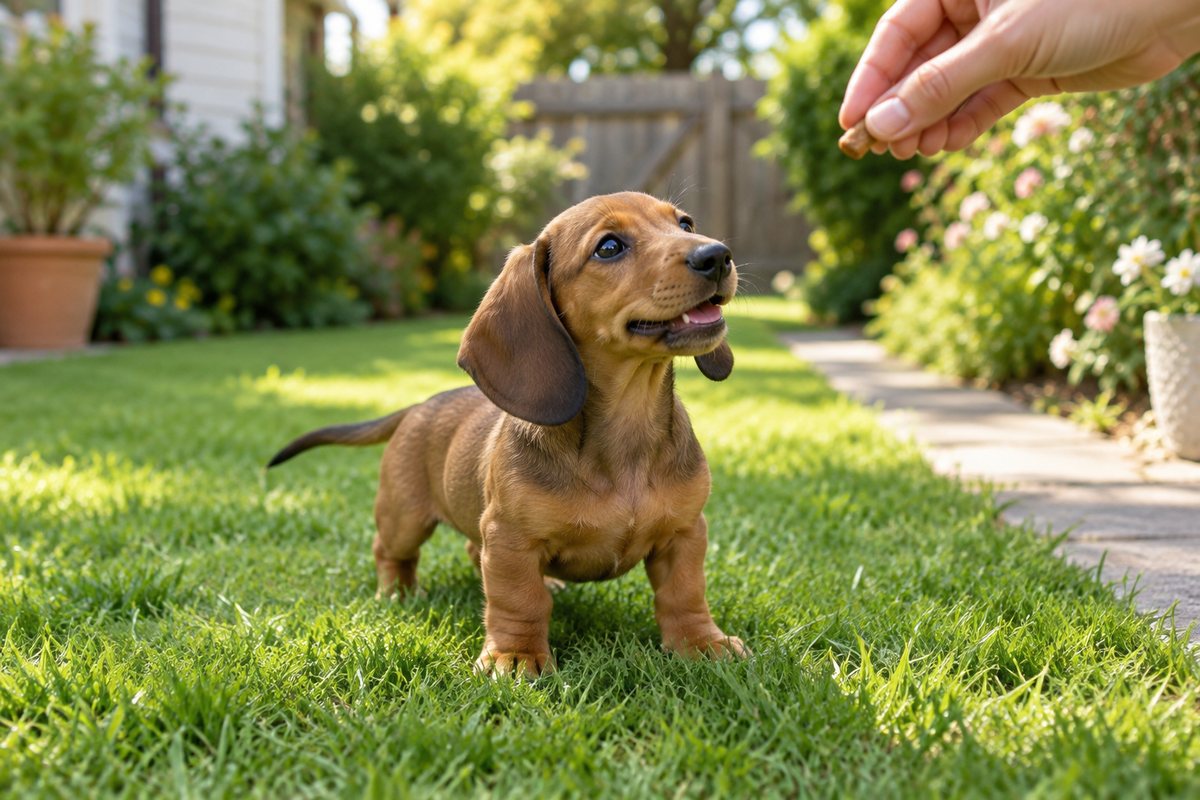
This guide gives you a practical Dachshund potty training plan for puppies, rescue dogs, and adults who need a reset. You will learn when to go outside, how to use a crate without turning it into punishment, what to do after accidents, and how to handle classic Dachshund problems like rain refusal, hidden corner accidents, and going potty right after coming back inside.
Table of Contents
Dachshund potty training quick answer
The fastest Dachshund potty training plan is to take your dog to the same potty area first thing in the morning, after meals, after drinking, after naps, after play, after crate time, and before bed. Keep your Dachshund on leash, use one cue such as “go potty,” reward immediately after they finish, and supervise or confine them indoors when you cannot watch closely.
Most accidents happen because the dog had too much freedom too soon, the schedule was too loose, the reward came too late, or old accident odors were left behind. For Dachshunds, weather resistance and sneaky bathroom spots can add another layer, so prevention matters more than correction.
Set up the house before training
Before you begin, shrink the world. A Dachshund who can roam the whole house can quietly choose a hallway, bedroom rug, laundry pile, or hidden corner. Start with a puppy pen, gated kitchen, crate, or one washable room. As your dog earns reliability, expand access slowly.
- Choose one potty door: use the same exit so your dog learns where the routine starts.
- Choose one potty spot: scent helps dogs understand the target area.
- Use a leash: even in a fenced yard, a leash keeps your Dachshund from sniffing for ten minutes and forgetting the job.
- Prepare tiny rewards: reward outside, within seconds of finishing.
- Block tempting rooms: rugs, bedrooms, and low-traffic corners should wait until habits are stable.
AKC potty training guidance emphasizes consistency, supervision, a predictable schedule, and positive reinforcement. That matches Dachshunds especially well because they learn patterns quickly, including patterns you did not mean to teach.
Dachshund potty training schedule
The schedule is the heart of Dachshund potty training. Young puppies need many trips because their bladder control is still developing. Adults can usually wait longer, but a rescue dog or a dog with a history of accidents may need a temporary puppy-style schedule while you rebuild the habit.
| Time or trigger | What to do | Why it helps |
|---|---|---|
| First thing in the morning | Carry or walk straight outside before breakfast or phone checks | Prevents the first easy accident of the day |
| After meals | Go outside within a few minutes, then again if your dog is still restless | Meals often trigger bowel movement timing |
| After drinking | Offer a potty break soon after big water intake | Small dogs can need quicker bathroom access |
| After naps or crate time | Outside immediately after release | Prevents accidents during excited wake-up moments |
| After play | Pause play and go outside | Activity can trigger urgency |
| Before bed | Quiet final trip, then straight to sleep routine | Builds a predictable overnight pattern |
AKC notes that young puppies often need breaks after waking, eating, drinking, playing, chewing, and crate time. A common guideline is that many puppies can hold their bladder for roughly their age in months in hours, but individual puppies vary. For a tiny Dachshund puppy, assume you need more prevention, not less.
Use crate training the right way
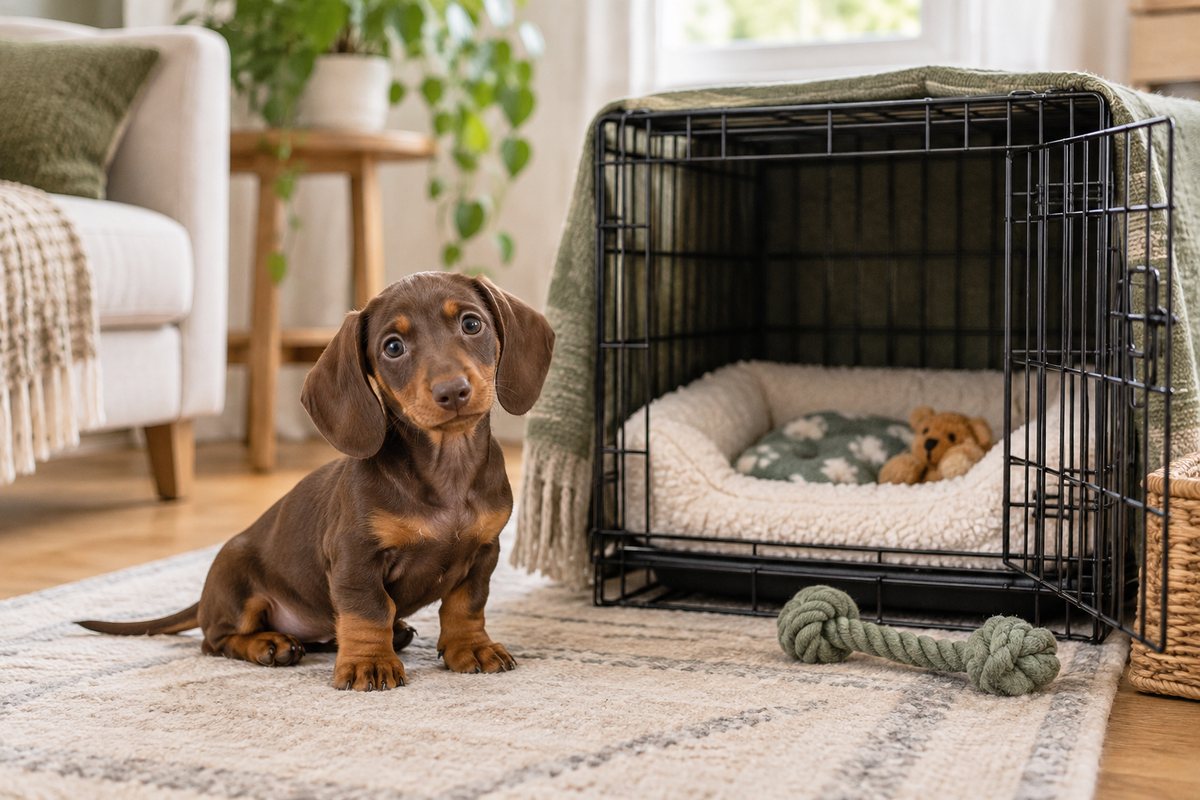
A crate can help with Dachshund potty training because many dogs prefer not to soil the place where they sleep. The crate should be big enough for your Dachshund to stand, turn around, and lie down comfortably, but not so large that one end becomes a bathroom and the other end stays clean.
Crate training should feel calm and safe. Feed meals near or inside the crate, add a comfortable bed if your dog does not chew bedding, and practice short rests before expecting longer confinement. Do not use the crate as punishment after accidents. If you need a detailed setup, use the guide on how to crate train a Dachshund puppy.
A 7-step Dachshund potty training plan
- Start with a written schedule. Track food, water, naps, play, potty trips, and accidents for one week.
- Take your Dachshund out before they ask. Waiting for signals is harder than preventing urgency.
- Use one cue. Say “go potty” when your dog begins, not twenty times while they sniff.
- Reward outside immediately. Praise and treat right after the correct potty, before going back indoors.
- Supervise indoors. If you cannot watch, use a crate, pen, tether, or gated room.
- Clean accidents completely. Use an enzymatic cleaner so old smells do not invite repeat accidents.
- Expand freedom slowly. Add one room at a time after several accident-free weeks.
If your Dachshund is a young puppy, pair this plan with broader training foundations such as name response, gentle handling, crate comfort, and short reward-based lessons. The full puppy overview is here: how to train a Dachshund puppy. For the narrower puppy-only version of this topic, read how to potty train a Dachshund puppy.
How to handle accidents
Accidents are information. They tell you the schedule was too long, supervision slipped, the dog had too much freedom, the area still smelled like a bathroom, or a medical issue may be involved. Do not yell, rub your dog’s nose in it, or punish them after the fact. Your Dachshund will not connect the punishment to the earlier accident in the useful way you want.
If you catch your Dachshund starting to go indoors, interrupt calmly, take them outside, and reward if they finish in the correct spot. If you find the accident later, clean it thoroughly and adjust the plan. AKC guidance also stresses cleaning accident areas well because lingering odor can pull a dog back to the same place.
| Problem | Likely cause | Fix |
|---|---|---|
| Accidents right after coming inside | The outdoor trip turned into sniffing, not potty time | Use a leash, stand still, reward outside, then play after success |
| Hidden accidents in another room | Too much house freedom too soon | Return to gates, pen, tether, or direct supervision |
| Repeating one indoor spot | Old odor remains | Use enzymatic cleaner and block access during retraining |
| Rain refusal | Weather discomfort or habit | Use a covered spot, coat if needed, and reward fast outdoor success |
| Crate accidents | Crate too large, schedule too long, stress, or medical issue | Adjust crate size, shorten intervals, and call your vet if persistent |
Common Dachshund potty training problems
Why is Dachshund potty training so hard?
Dachshund potty training can feel hard because the breed is independent, low to the ground, quick to sneak away, and often unimpressed by rain or cold grass. That does not mean your Dachshund is impossible. It means the plan needs to be more consistent than the dog’s alternatives. Less freedom, better timing, and faster rewards usually fix more than stricter punishment.
Should you use puppy pads?
Puppy pads can help in apartments, bad weather, or when a young puppy cannot safely wait for a midday break. They can also slow outdoor training if the dog learns that indoor potty is always an option. If your long-term goal is outdoor potty only, use pads as a temporary management tool and gradually move toward outdoor rewards.
What if your adult Dachshund is having accidents?
For an adult Dachshund, treat accidents as either a training reset or a health clue. Return to a puppy-style schedule for two weeks: supervised freedom, frequent breaks, rewards outside, and careful cleaning. If accidents start suddenly, happen during sleep, include straining, blood, diarrhea, increased thirst, weakness, or pain, call your veterinarian.
Back-safe potty routines for Dachshunds
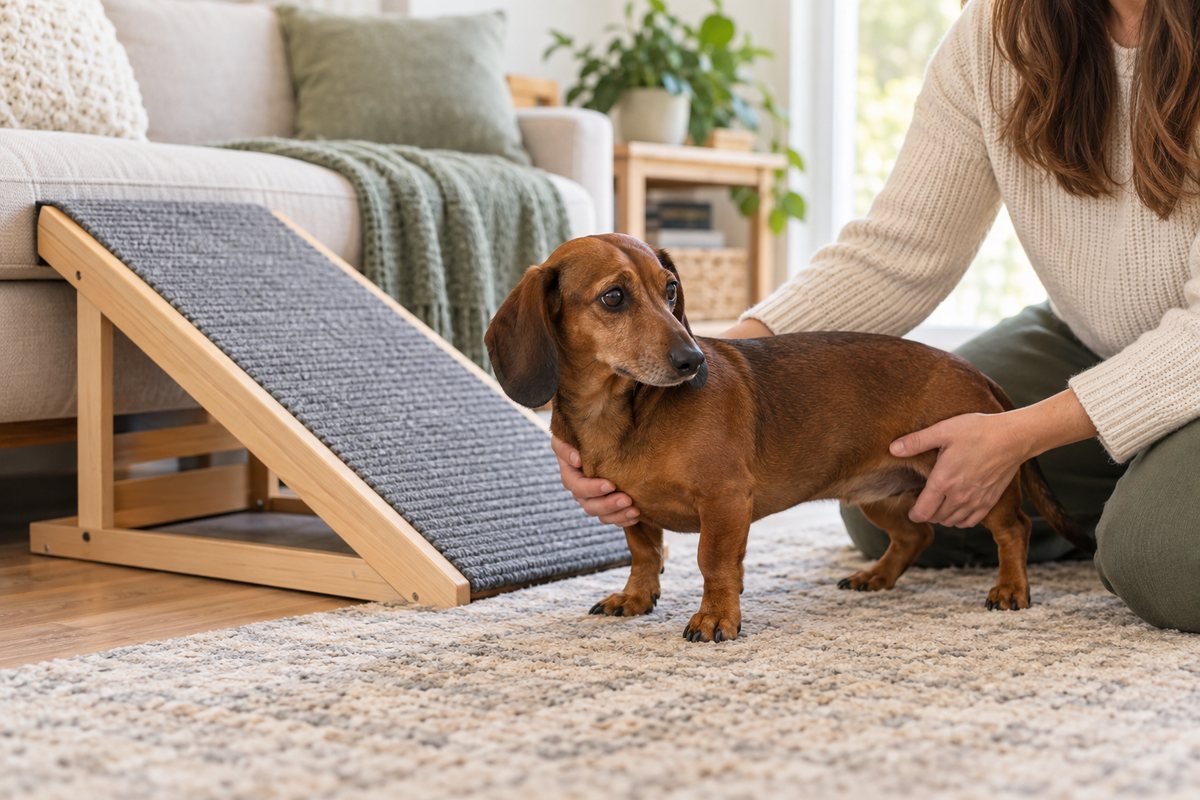
Potty training is also a chance to build safer movement habits. Dachshunds should not be launching off beds, couches, porch steps, or car seats every time they need to go outside. Use ramps where needed, lift with support under the chest and rear, and make the path to the potty area simple. If your dog hesitates on stairs, arches their back, trembles, yelps, or changes gait, read Dachshund back pain signs and contact your veterinarian.
For walks, use a secure harness that fits a long body and deep chest. The guide to the best harness for Dachshunds can help if your dog pulls or slips gear during bathroom walks. Food also affects bathroom timing, so keep meals predictable and review best food for Dachshunds if loose stool is making potty training harder.
FAQ
How long does Dachshund potty training take?
Some Dachshunds improve within days, but reliable house training often takes weeks or months depending on age, previous routine, supervision, health, and consistency. Expect progress, not perfection, especially with puppies.
How often should I take my Dachshund puppy out?
Take a young puppy out first thing in the morning, after meals, after drinking, after naps, after play, after crate time, and before bed. During waking hours, many puppies need trips every one to two hours at first.
Why does my Dachshund pee inside after going outside?
Often, the outdoor trip was too distracting or too short. Use a leash, go to the same spot, stand quietly, reward the moment they finish, and give playtime only after the potty job is done.
Are Dachshunds harder to potty train than other dogs?
They can be more challenging because they are independent, small, and sometimes weather-sensitive. The fix is not harshness. It is tighter management, better timing, and consistent rewards.
Should I punish my Dachshund for accidents?
No. Punishment after an accident can increase stress and does not teach the correct bathroom location. Clean the area, tighten the schedule, supervise more closely, and reward outdoor success.
Sources
- American Kennel Club: How to Potty Train a Puppy
- American Kennel Club: Puppy Potty Training Timeline and Tips
- American Kennel Club: Help with Housebreaking
- American Kennel Club: Step-by-Step Crate Training for Your Dog
- VCA Animal Hospitals: Housetraining for Puppies and Dogs
Affiliate disclosure: If you buy through links on this page, I may earn a commission at no extra cost to you.
For owners who want a structured, positive-reinforcement training plan at home, Brain Training for Dogs is an online course that can pair well with short daily Dachshund training sessions.