
Your Dachshund may shake because they are cold, excited, scared, stressed, in pain, nauseated, weak, or dealing with a medical issue. Some shaking is brief and harmless, such as trembling before a favorite walk. Other shaking deserves urgent attention, especially if it is sudden, intense, paired with weakness, vomiting, collapse, pain, or possible toxin exposure.
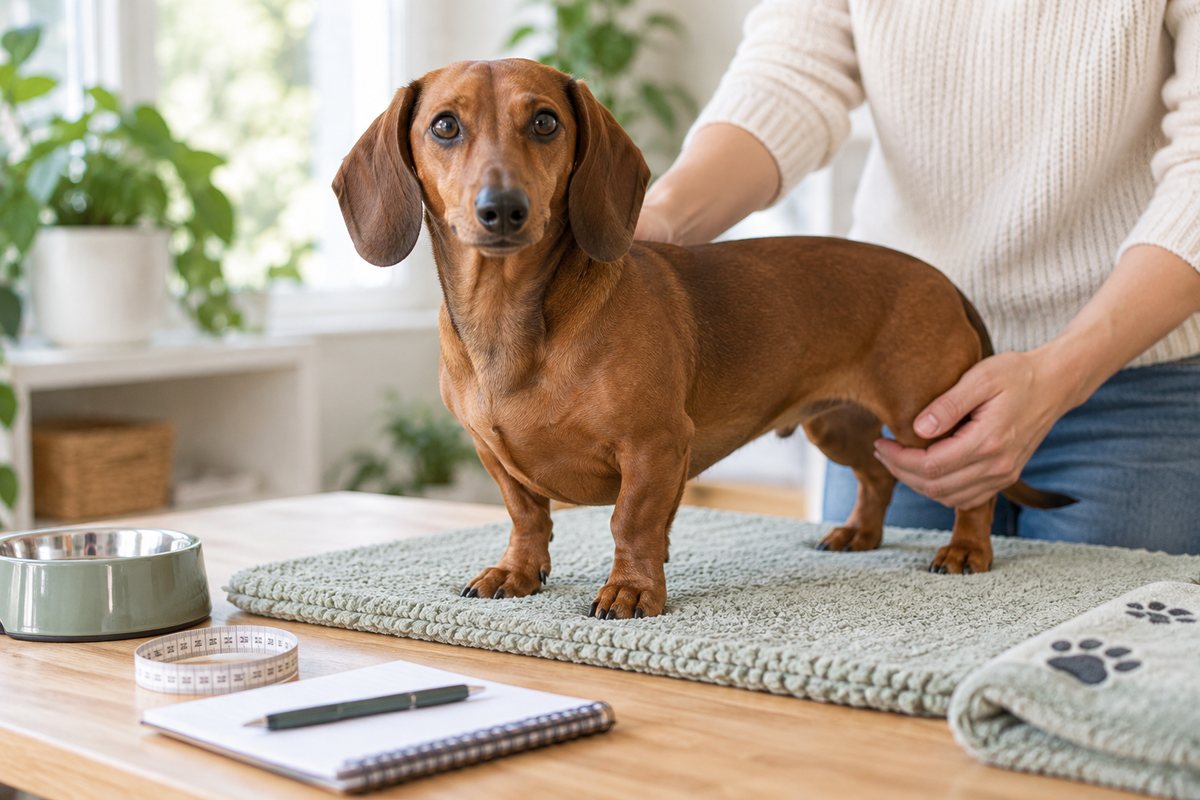
This guide explains common reasons Dachshunds shake and how to tell a normal shiver from a reason to call the vet. Dachshunds are long-backed dogs, so shaking paired with reluctance to move, yelping, hunched posture, or wobbliness should be treated seriously.
Why does my Dachshund shake?
Common reasons include cold, fear, excitement, pain, nausea, low blood sugar in small puppies, toxin exposure, and neurologic problems. AKC lists pain, stress, cold, illness, and toxins among possible causes of dog shaking. AKC’s pain guidance also includes shaking or trembling among possible signs of pain.
| Shaking pattern | Possible cause | What to do |
|---|---|---|
| Cold weather shiver | Low temperature | Warm gently and shorten walks |
| Shakes near triggers | Fear or stress | Add distance and reduce pressure |
| Shakes with yelping or hunched back | Pain or back issue | Call veterinarian |
| Shakes with vomiting | Nausea, illness, toxin | Call vet promptly |
| Violent tremors or collapse | Emergency | Seek urgent care |
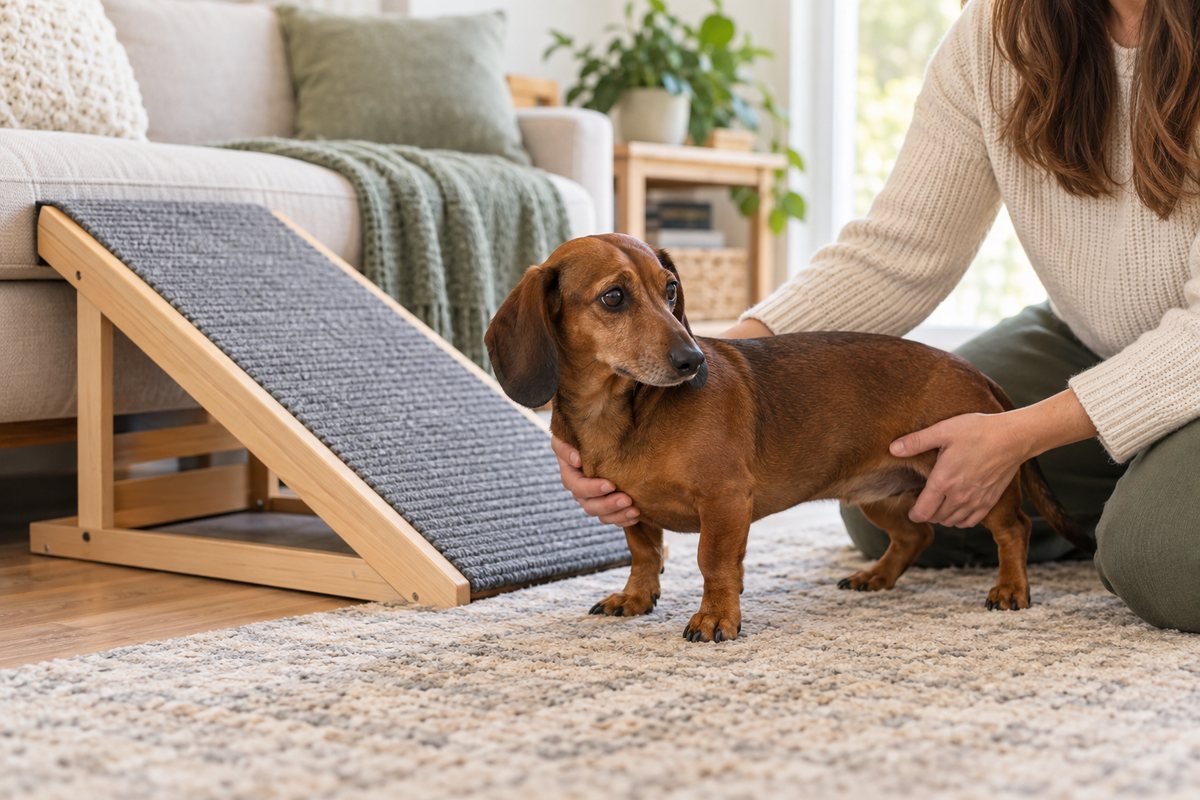
Cold, fear, and excitement
Smooth and miniature Dachshunds may shiver in cold weather because they have small bodies and less coat protection. Fear can also cause trembling, especially around strangers, storms, fireworks, vet visits, or other dogs. Excitement shaking usually resolves once the event passes.
- Warm a cold dog with a coat or blanket.
- Move a fearful dog away from the trigger.
- Keep your voice calm and avoid crowding.
- Use predictable routines and gentle training.
- Track when shaking happens.
For winter care, see Dachshund winter coat care. For fear periods in young dogs, see Dachshund puppy fear stages.
Pain and back concerns
Shaking can be a pain sign. In Dachshunds, take shaking seriously if it comes with a hunched back, tense belly, yelping, reluctance to jump, trouble walking, wobbliness, or hiding. Do not massage, stretch, or force activity if you suspect back pain.
Review Dachshund back pain signs and contact your veterinarian. If your dog cannot walk normally, seems weak, or loses bladder or bowel control, seek urgent care.
Urgent red flags
- Collapse or severe weakness.
- Seizure-like activity.
- Repeated vomiting or diarrhea.
- Possible chocolate, xylitol, medication, or toxin exposure.
- Severe pain, yelping, or inability to move normally.
- Pale gums, trouble breathing, or extreme lethargy.

FAQ
Is it normal for Dachshunds to shake?
Brief shaking from cold or excitement can be normal. Sudden, intense, painful, or repeated shaking should be checked.
Can back pain make a Dachshund shake?
Yes. Pain can cause trembling. Shaking with hunched posture, yelping, wobbliness, or reluctance to move deserves veterinary attention.
Home check before you decide it is normal
When a Dachshund shakes, look at the whole dog. Check temperature, posture, walking, appetite, gums, breathing, and recent events. Did your dog go out in cold rain? Did they eat something unusual? Did they jump from furniture? Did the shaking begin after a stressful noise? These clues help you decide whether to warm, calm, observe, or call the vet.
| Check | Reassuring sign | Concern sign |
|---|---|---|
| Temperature context | Shakes after cold walk | Shakes indoors while warm |
| Movement | Walks normally | Wobbly, hunched, reluctant |
| Appetite | Normal interest in food | Refuses food or vomits |
| Behavior | Settles after trigger passes | Cannot settle or hides |
| Exposure | No toxin risk | Possible chocolate, xylitol, medication |
What to do in the moment
- Move your Dachshund to a quiet, safe place.
- Warm gently if cold, but do not overheat.
- Prevent jumping, stairs, and rough movement.
- Check for vomiting, diarrhea, weakness, or pain.
- Call your veterinarian if shaking is sudden, severe, unexplained, or paired with other symptoms.
When shaking is urgent
Some shaking is mild and temporary, but Dachshunds should not be asked to “walk it off” when shaking appears with pain, weakness, vomiting, toxin risk, pale gums, collapse, or a hunched back. Because Dachshunds are at risk for back problems, sudden shaking with reluctance to move or yelping deserves prompt veterinary advice.
- Call your vet if shaking starts suddenly and your dog seems painful.
- Seek urgent help if there is weakness, collapse, seizures, or suspected toxin exposure.
- Prevent stairs, jumping, and rough handling while you assess.
- Use video to show your vet the episode if it stops before the appointment.
- Do not give human pain medicine unless your veterinarian instructs you.
Context examples
| Scenario | Likely next step |
|---|---|
| Cold after rain walk | Dry, warm, observe |
| Fireworks or thunder | Quiet space and calming routine |
| Hunched back and shaking | Call veterinarian promptly |
| Vomiting and trembling | Veterinary advice |
| Shaking after possible toxin | Emergency guidance |
Dachshund shaking FAQ
Do Dachshunds shake because they are cold?
They can. Dachshunds have low bodies and may feel cold or wet weather quickly, especially smooth-coated dogs, puppies, seniors, and small minis. Dry your dog, warm them gently, and watch whether the shaking stops. Shaking while warm indoors needs a closer look.
Can anxiety make a Dachshund shake?
Yes. Loud noises, vet visits, car rides, strangers, or conflict can trigger trembling. Look for tucked tail, hiding, panting, pacing, whale eye, or refusal to eat. Help by adding distance, lowering pressure, and using calm routines. Do not force the dog toward the scary thing.
How do I know if shaking is back pain?
Watch for a hunched back, yelping, reluctance to move, weakness, wobbling, dragging feet, or sudden refusal to jump or climb. If you see these signs, restrict movement and call your veterinarian promptly. Dachshunds need extra caution with back-related symptoms.
How to read Dachshund shaking by context
Shaking can mean something minor, such as cold or excitement, but it can also point to pain, nausea, fear, or a medical problem. The useful question is not just whether your Dachshund shakes, but when it happens, how long it lasts, and what else changes at the same time.
Look at the whole picture: appetite, posture, walking, bathroom habits, temperature, recent stress, and whether your dog wants to be touched. A Dachshund shaking after a bath is different from one shaking while hunched, refusing food, or yelping.
| Situation | What it suggests | Best next step |
|---|---|---|
| After bath or rain | Cold or wet coat | Warm and dry your dog calmly |
| During storms | Noise fear | Use safe space and sound management |
| With hunched posture | Possible pain | Call your veterinarian |
| With vomiting | Nausea or illness | Monitor closely and seek care |
| Before walks | Excitement or stress | Slow the routine and reward calm |
why does my Dachshund shake: practical checklist
- Note the time, trigger, and duration.
- Check whether your dog can walk normally.
- Look for appetite, vomiting, diarrhea, or panting changes.
- Offer warmth if the dog is wet or cold.
- Avoid forcing handling if pain is possible.
- Call the vet for shaking with weakness, yelping, collapse, or back signs.
When to change course
If shaking is new, repeated, or paired with behavior changes, do not label it as drama. Dachshunds can hide discomfort until movement or rest makes the signs more obvious.
why does my Dachshund shake: owner scenarios and fixes
The final step for why does my Dachshund shake is matching the advice to the exact situation in front of you. Dachshunds are small, persistent, routine-sensitive dogs, so a plan that looks correct on paper can fail if the room setup, timing, gear, reward value, or health context is wrong. Before changing everything, choose the one pattern that happens most often and work there first.
This also helps prevent mixed signals. If you sometimes reward the unwanted pattern, sometimes interrupt it, and sometimes ignore it, your Dachshund may keep trying the behavior because the rules are unclear. A simple plan that everyone in the home follows for one week is usually more useful than a complicated plan that changes every day.
| Owner situation | How to handle it |
|---|---|
| When the main issue is after bath or rain | Start with the practical fix: warm and dry your dog calmly. Give it several calm repetitions before adding a second change. |
| When the pattern looks like during storms | Assume the setup is slightly wrong for your Dachshund and adjust the environment before expecting better behavior. |
| When you see with hunched posture | Slow the plan down. Dachshunds often improve faster when the next step is easier, clearer, and more predictable. |
| When with vomiting keeps returning | Look for a trigger that happens before the problem. Changing that trigger usually works better than reacting afterward. |
| When before walks is involved | Treat it as a sign to re-check fit, comfort, schedule, or health rather than assuming your dog is ignoring you. |
How to make the plan easier for your Dachshund
If progress stalls, make the next repetition easier instead of louder or longer. For why does my Dachshund shake, easier can mean more distance, a shorter session, a lower height, a quieter room, softer handling, smaller rewards, or fewer choices. The easier version should let your dog succeed while still practicing the skill you want.
Watch recovery time. A Dachshund who can return to sniffing, eating, resting, or walking normally is usually in a workable zone. A dog who stays frantic, stiff, avoidant, or obsessed with the trigger is telling you the setup is too difficult. That is useful information, not a training failure.
7-day improvement plan
- Day 1: write down when the why does my Dachshund shake problem happens, where it happens, and what happened right before it.
- Day 2: remove the easiest trigger or setup mistake connected to after bath or rain.
- Day 3: practice the first checklist step: note the time, trigger, and duration..
- Day 4: repeat the same plan at an easier level instead of adding a new rule.
- Day 5: add one support step from the checklist: check whether your dog can walk normally..
- Day 6: ask whether your dog recovers faster than earlier in the week.
- Day 7: keep what improved, drop what confused your dog, and decide whether health or professional support is needed.
This seven-day plan will not solve every case of why does my Dachshund shake, but it gives you cleaner information. If the pattern improves, keep building gradually. If it stays the same or worsens, the cause may be discomfort, fear, poor fit, too much freedom, or a trigger that needs a different article-specific plan.
Quality check before you rely on the advice
The safest version of the advice should be specific, observable, and easy to repeat. You should know what you are changing, what success looks like, and when to stop. For Dachshunds, stop signs include pain, limping, yelping, frantic barking, snapping, refusal to eat rewards, vomiting, repeated accidents, or sudden behavior changes.
When in doubt, choose the lower-risk version: more distance, better traction, shorter sessions, calmer rewards, clearer routines, and earlier veterinary input. That keeps the why does my Dachshund shake plan helpful without pushing a small long-backed dog through stress, pain, or confusion.
Sources
- AKC: Why Is My Dog Shaking?
- AKC: Signs of Pain in Dogs
- AKC: Why Does My Dog Pant?
- VCA: Pet Emergency Care Handbook
- Cornell: Intervertebral Disc Disease