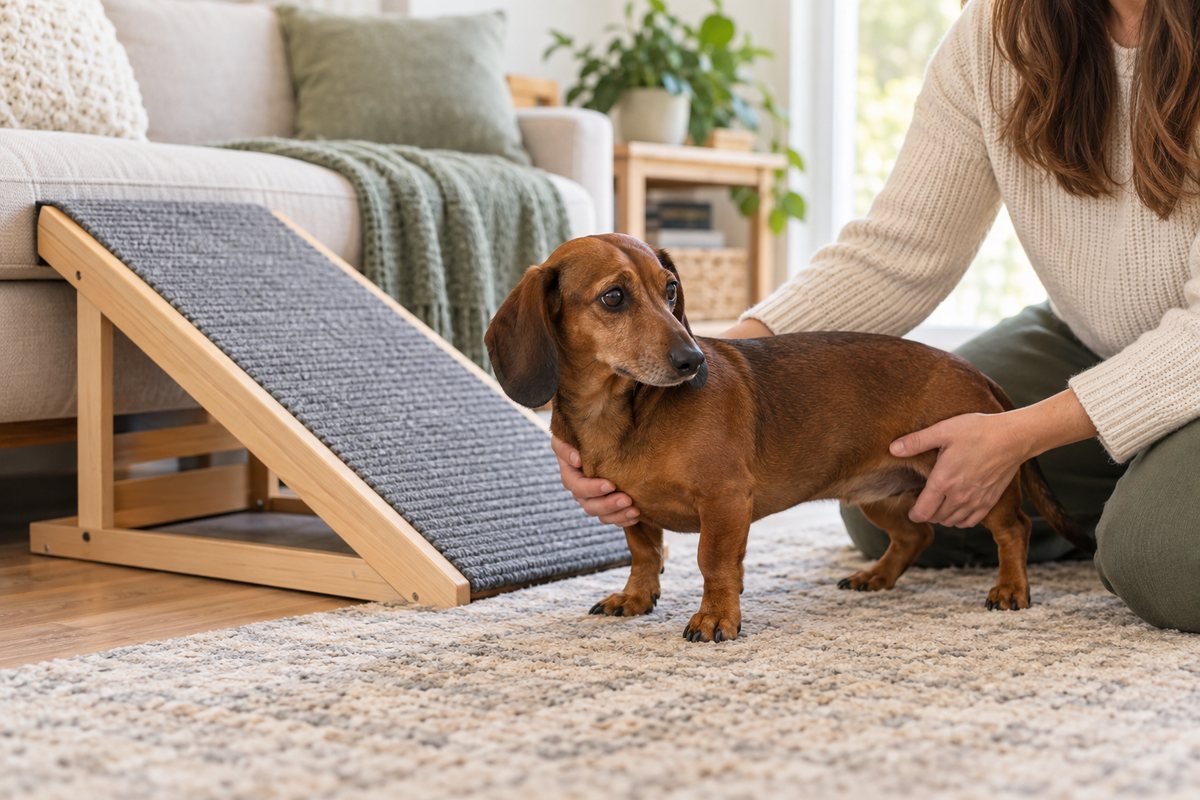
Mini Dachshund size is usually defined by adult weight, not puppy guesses. In AKC terms, miniature Dachshunds are 11 pounds and under at 12 months of age and older. AKC lists miniature Dachshunds at 5 to 6 inches tall and 11 pounds or under, while standard Dachshunds are usually 16 to 32 pounds.
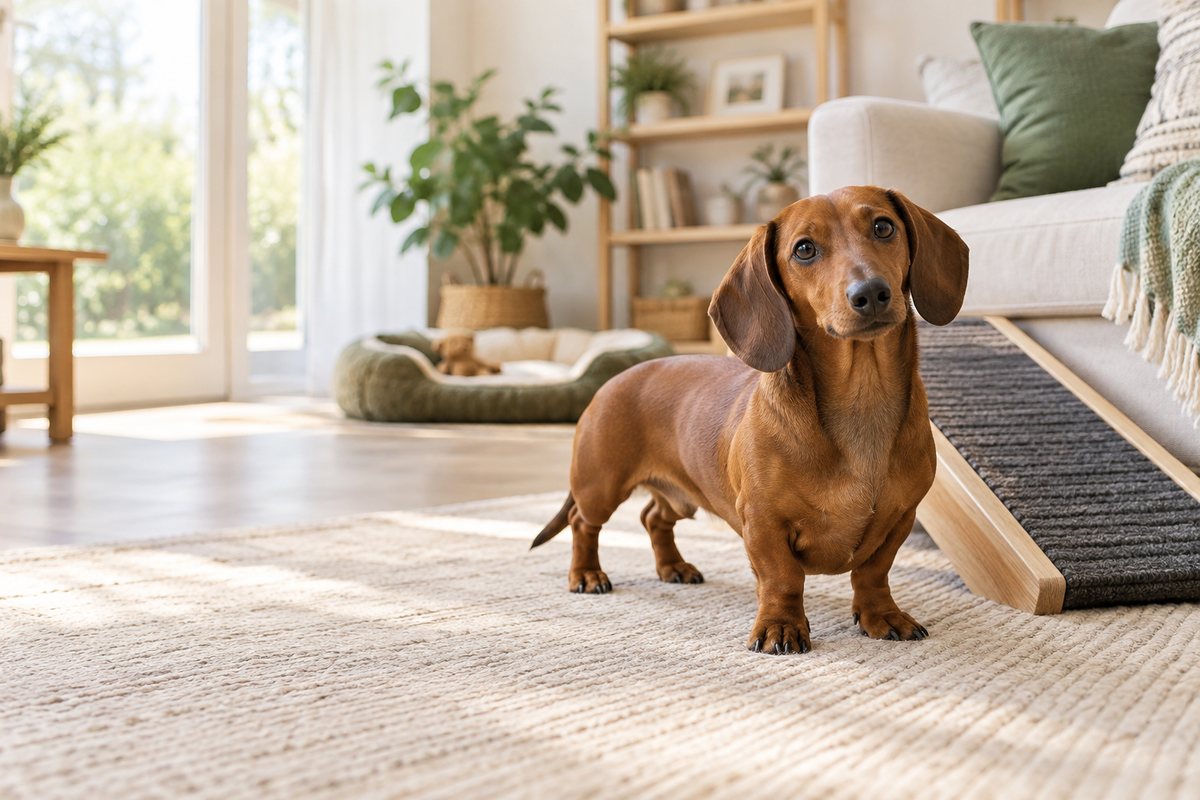
Mini Dachshund size: quick answer
| Measurement | Mini Dachshund |
|---|---|
| Adult weight | 11 pounds and under |
| Height | About 5 to 6 inches at the shoulder |
| Age for size class | 12 months and older |
| Coat types | Smooth, long-haired, wire-haired |
| Unofficial middle size | Often called tweenie by owners, not an AKC size class |
For direct comparison, see miniature Dachshund vs standard Dachshund and Dachshund size chart.
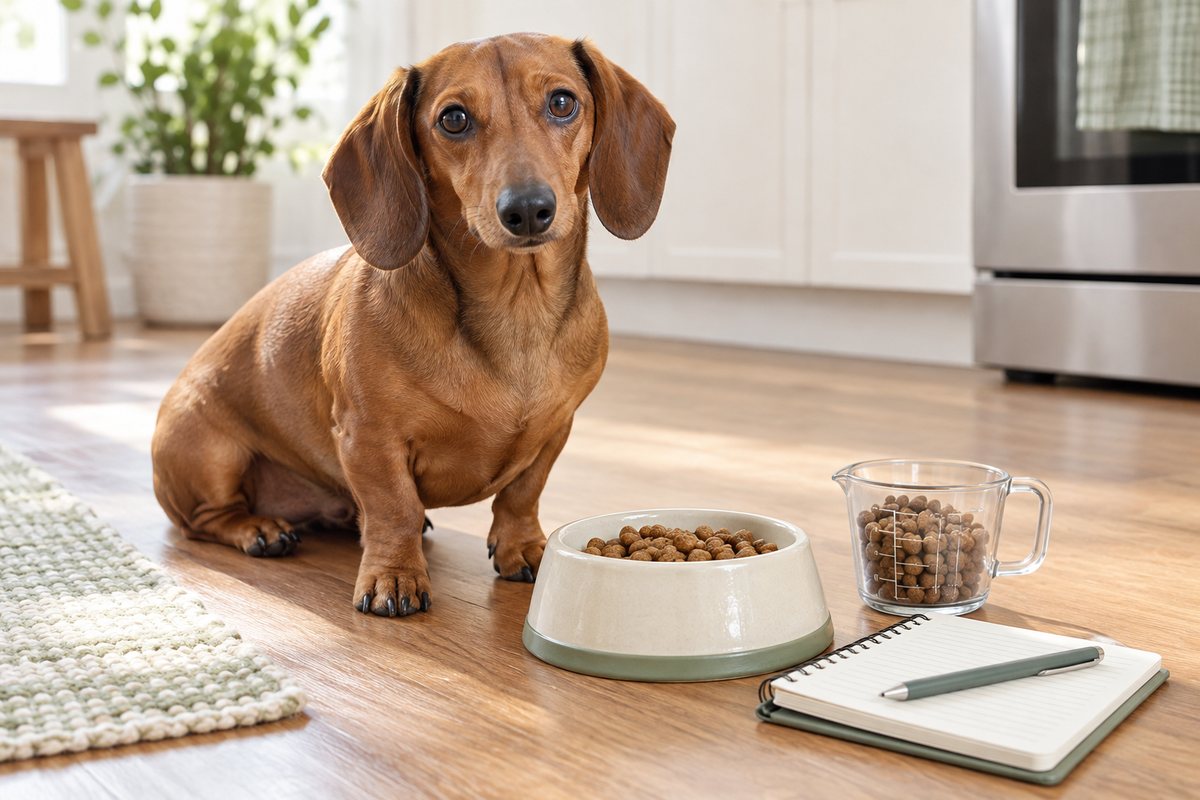
Can you predict mini size from a puppy?
You can estimate, but you cannot know with certainty until maturity. Parent size, breeder records, growth rate, and body condition help, but some Dachshunds land between common owner expectations. If your dog is over 11 pounds as an adult, they may not fit the AKC miniature class even if sold as a mini.
Mini size vs healthy weight
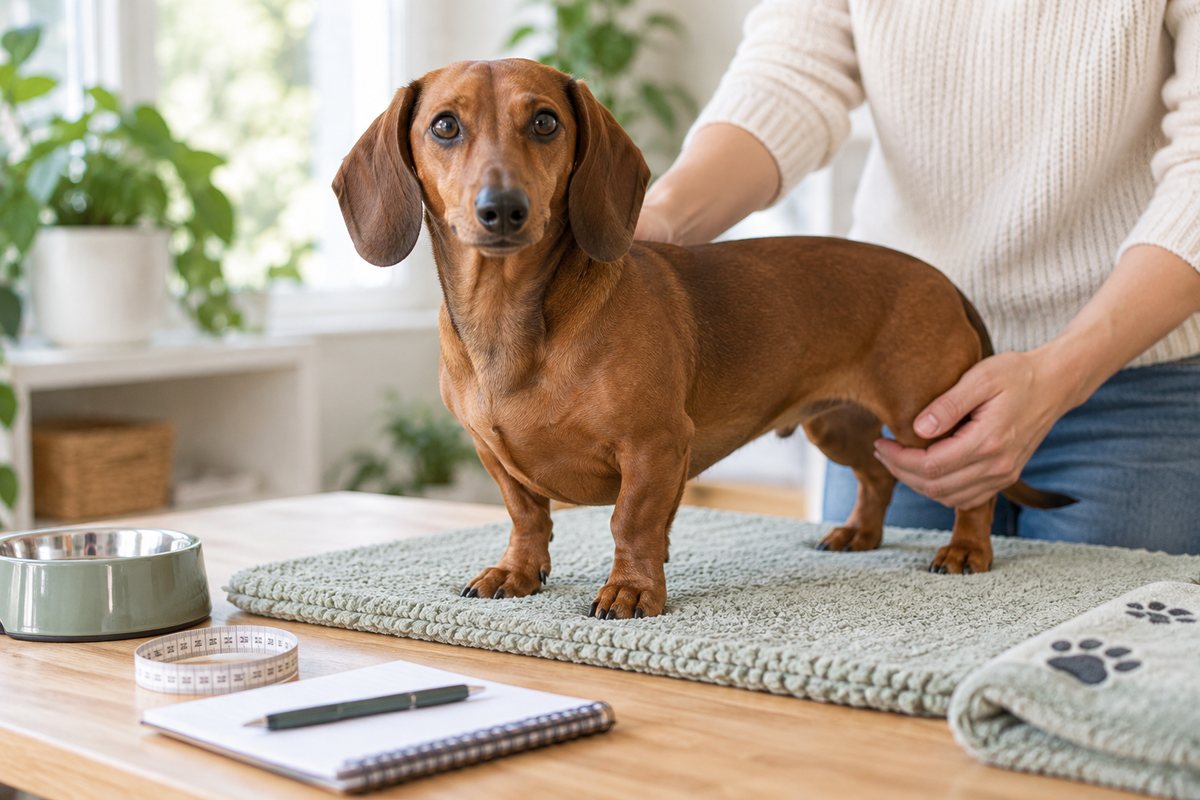
A miniature Dachshund can be small and still overweight. Size class tells you weight category, not body condition. You should be able to feel the ribs under light cover, see a waist from above, and notice comfortable movement. If your mini is over 11 pounds, the question is not only label accuracy. The question is whether your veterinarian considers the body condition healthy.
Owner checks
- Track weight monthly during puppy growth.
- Ask your vet for ideal adult weight range.
- Use measured meals rather than free feeding.
- Choose harnesses by girth, not by weight label.
- Compare size with standards, but judge health by body condition.
Mini Dachshund size chart context
Mini Dachshund size is best understood as an adult classification, not a promise about a young puppy. A puppy may look tiny at 8 weeks and still mature above 11 pounds. Another puppy may grow quickly early and then level off. Breeders can estimate from parent size and past litters, but adult weight is the clearer measurement.
| Age | What you can know | What you cannot know yet |
|---|---|---|
| 8 to 12 weeks | Current weight and body condition | Final class with certainty |
| 4 to 6 months | Growth direction | Exact adult weight |
| 9 to 12 months | Closer adult estimate | Final muscle and body condition |
| 12 months and older | More reliable size class | Future weight changes from diet |
Why mini size matters for daily care
Mini size affects more than labels. Harnesses need smaller neck and girth adjustment. Food portions need tighter measuring. Ramps and stairs should have traction for shorter legs. Dental care matters because small mouths can crowd teeth. Training treats should be tiny because a few extra calories matter more for a small dog.
- Choose harnesses by chest girth, not by the word mini.
- Measure food instead of guessing from bowl size.
- Use small training rewards or pieces of daily kibble.
- Watch weight gain after neutering or activity changes.
- Ask your veterinarian for a body condition score, not just a scale number.
How to measure a mini Dachshund at home
Use a home scale for regular weight checks and your veterinarian’s scale for the most reliable number. For height, measure from the floor to the top of the shoulder, not to the head. For harnesses and clothing, measure chest girth behind the front legs because two mini Dachshunds with the same weight can have very different ribcage shapes.
- Weigh yourself, then weigh yourself holding your Dachshund.
- Subtract the first number from the second number.
- Measure chest girth with a soft tape while your dog is standing.
- Measure neck only for collars and some harness styles.
- Write the date, weight, and body condition notes together.
Mini Dachshund size myths
A mini Dachshund is not healthier just because the scale number is low. Very small puppies still need normal growth, muscle, dental care, and safe exercise. A heavier mini is not automatically overweight either, because frame, muscle, and body condition matter. The useful question is whether your dog is at a healthy weight for their body, not whether the label sounds cute.
| Myth | Better answer |
|---|---|
| All minis stay tiny forever | Adult size varies and may pass 11 pounds |
| A mini needs very little exercise | They still need daily movement and enrichment |
| Small means fragile only | Use safe handling, but build normal confidence |
| Weight alone proves health | Use body condition, movement, and vet guidance |
Mini Dachshund size FAQ
Is a 12-pound Dachshund still miniature?
Under AKC classification, miniature Dachshunds are 11 pounds and under at 12 months and older. A 12-pound adult is just above that line. In everyday life, the more important question is whether your dog is healthy, lean, mobile, and at an appropriate weight for their frame.
What is a tweenie Dachshund?
Owners often use “tweenie” for Dachshunds that fall between miniature and standard expectations. It is a common informal term, not an official AKC size class. If your dog is a tweenie, shop by actual measurements and ask your vet for a healthy target weight instead of relying on the label.
Does coat type change mini Dachshund size?
Coat type can change how big a dog appears, especially with long hair, but it does not change the size class. A fluffy long-haired mini may look larger than a smooth mini of the same weight. Use the scale, girth measurement, and body condition rather than visual fluff.
Final mini-size tip
For owners, the mini label is useful only when it leads to better care: smaller treats, careful weight control, correctly fitted gear, and safer furniture access. A healthy mini Dachshund should still be active, confident, and well muscled.
Mini Dachshund size in daily decisions
Mini Dachshund size is useful when it guides safer choices: carrier size, harness fit, ramp slope, calorie control, and puppy growth expectations. A mini can be small but sturdy, or tiny and delicate, so actual measurements matter more than the label on a product page.
Because mini Dachshunds are close to the floor and have long bodies, small changes in weight or muscle can be noticeable. A one-pound gain on a small dog can affect waist shape, stamina, and how easily you can feel the ribs.
| Situation | What it suggests | Best next step |
|---|---|---|
| Harness | Tiny neck and deeper chest | Measure girth before buying |
| Carrier | Length matters | Dog should turn without curling tightly |
| Ramp | Short legs make steep slopes harder | Use gentle incline and traction |
| Food | Small calorie margin | Measure meals and treats |
| Growth | Puppies change quickly | Re-check fit often |
mini Dachshund size: practical checklist
- Track weight monthly for adults and more often for puppies.
- Measure chest girth, neck base, and back length.
- Choose gear by measurements, not only mini labels.
- Watch waist shape from above.
- Adjust treats when training increases.
- Ask your vet if your mini is above size expectations but lean.
When to change course
If your mini Dachshund is over the breed-size line but has a visible waist and good body condition, the label matters less than health. If ribs are hard to feel, the conversation shifts from size to weight management.
mini Dachshund size: owner scenarios and fixes
The final step for mini Dachshund size is matching the advice to the exact situation in front of you. Dachshunds are small, persistent, routine-sensitive dogs, so a plan that looks correct on paper can fail if the room setup, timing, gear, reward value, or health context is wrong. Before changing everything, choose the one pattern that happens most often and work there first.
This also helps prevent mixed signals. If you sometimes reward the unwanted pattern, sometimes interrupt it, and sometimes ignore it, your Dachshund may keep trying the behavior because the rules are unclear. A simple plan that everyone in the home follows for one week is usually more useful than a complicated plan that changes every day.
| Owner situation | How to handle it |
|---|---|
| When the main issue is harness | Start with the practical fix: measure girth before buying. Give it several calm repetitions before adding a second change. |
| When the pattern looks like carrier | Assume the setup is slightly wrong for your Dachshund and adjust the environment before expecting better behavior. |
| When you see ramp | Slow the plan down. Dachshunds often improve faster when the next step is easier, clearer, and more predictable. |
| When food keeps returning | Look for a trigger that happens before the problem. Changing that trigger usually works better than reacting afterward. |
| When growth is involved | Treat it as a sign to re-check fit, comfort, schedule, or health rather than assuming your dog is ignoring you. |
How to make the plan easier for your Dachshund
If progress stalls, make the next repetition easier instead of louder or longer. For mini Dachshund size, easier can mean more distance, a shorter session, a lower height, a quieter room, softer handling, smaller rewards, or fewer choices. The easier version should let your dog succeed while still practicing the skill you want.
Watch recovery time. A Dachshund who can return to sniffing, eating, resting, or walking normally is usually in a workable zone. A dog who stays frantic, stiff, avoidant, or obsessed with the trigger is telling you the setup is too difficult. That is useful information, not a training failure.
7-day improvement plan
- Day 1: write down when the mini Dachshund size problem happens, where it happens, and what happened right before it.
- Day 2: remove the easiest trigger or setup mistake connected to harness.
- Day 3: practice the first checklist step: track weight monthly for adults and more often for puppies..
- Day 4: repeat the same plan at an easier level instead of adding a new rule.
- Day 5: add one support step from the checklist: measure chest girth, neck base, and back length..
- Day 6: ask whether your dog recovers faster than earlier in the week.
- Day 7: keep what improved, drop what confused your dog, and decide whether health or professional support is needed.
This seven-day plan will not solve every case of mini Dachshund size, but it gives you cleaner information. If the pattern improves, keep building gradually. If it stays the same or worsens, the cause may be discomfort, fear, poor fit, too much freedom, or a trigger that needs a different article-specific plan.
Quality check before you rely on the advice
The safest version of the advice should be specific, observable, and easy to repeat. You should know what you are changing, what success looks like, and when to stop. For Dachshunds, stop signs include pain, limping, yelping, frantic barking, snapping, refusal to eat rewards, vomiting, repeated accidents, or sudden behavior changes.
When in doubt, choose the lower-risk version: more distance, better traction, shorter sessions, calmer rewards, clearer routines, and earlier veterinary input. That keeps the mini Dachshund size plan helpful without pushing a small long-backed dog through stress, pain, or confusion.
Sources
- AKC: Dachshund Breed Information
- AKC Official Standard of the Dachshund
- Dachshund Club of America: Breed Standard