Standard Dachshund size is usually 16 to 32 pounds as an adult, with a height of about 8 to 9 inches at the shoulder according to AKC breed information. Standards are larger than miniatures, but they should still look long, low, balanced, and athletic rather than heavy or bulky.
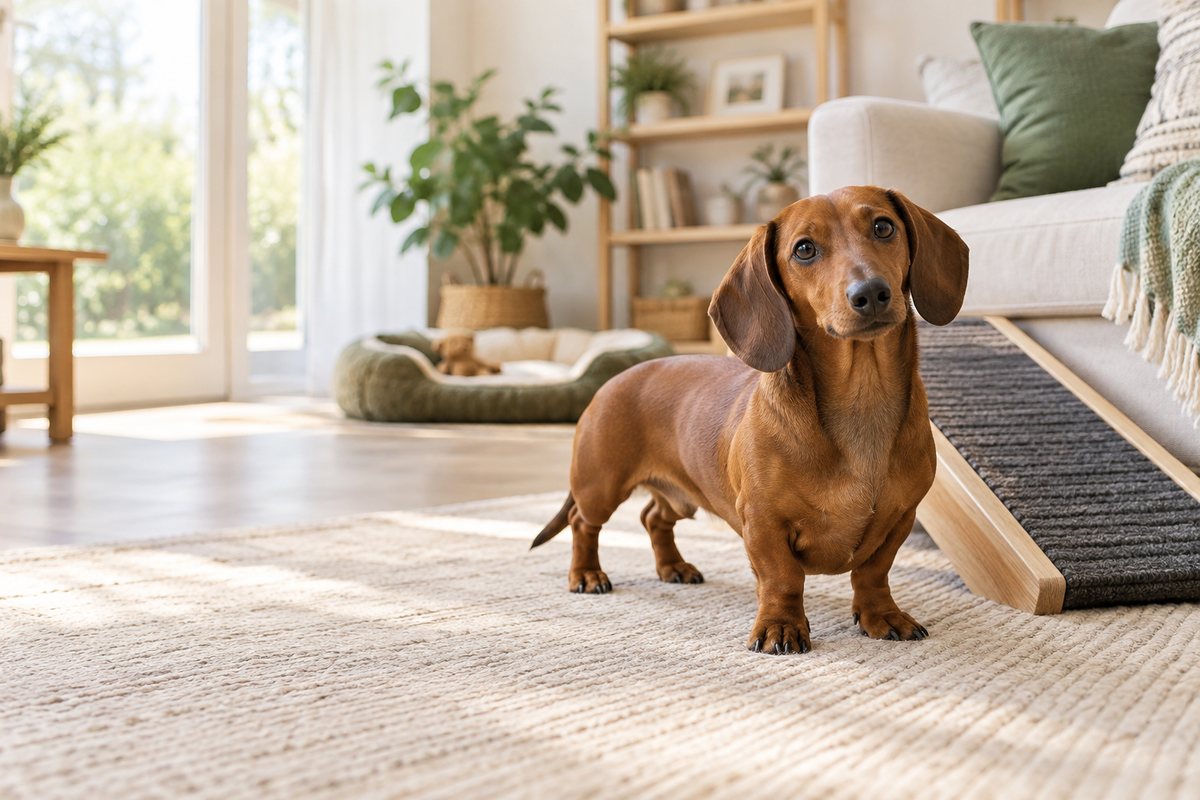
Standard Dachshund size: quick answer
| Measurement | Standard Dachshund |
|---|---|
| Adult weight | Usually 16 to 32 pounds |
| Height | About 8 to 9 inches at the shoulder |
| Coat types | Smooth, long-haired, wire-haired |
| Breed group | Hound Group |
| Life expectancy | Often listed around 12 to 16 years |
AKC’s official Dachshund standard states that the standard size is usually between 16 and 32 pounds, while miniature Dachshunds compete in a class division for 11 pounds and under at 12 months of age and older.
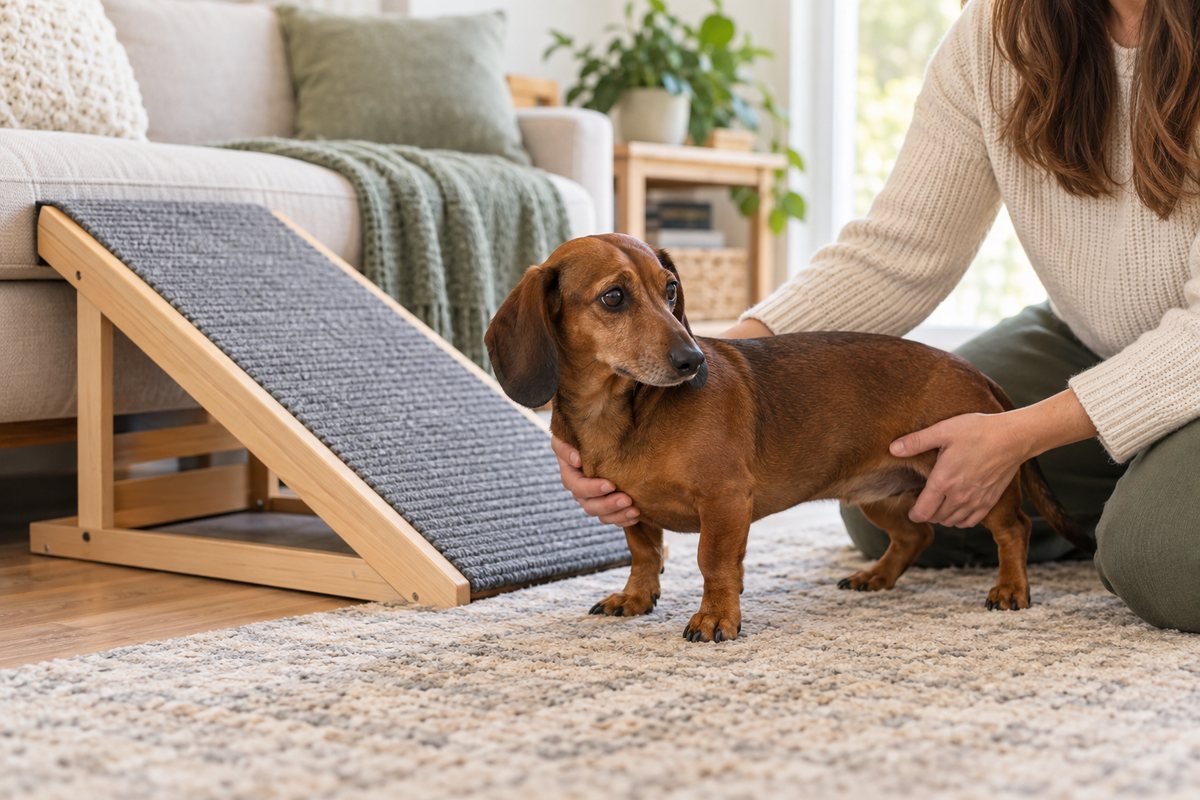
Healthy size vs overweight
A standard Dachshund over 16 pounds is not automatically overweight, and a smaller Dachshund is not automatically healthier. Look at body condition: visible waist from above, ribs that can be felt under light cover, and comfortable movement. Extra weight can make daily movement and back comfort harder.
For comparison, see miniature Dachshund vs standard Dachshund, mini Dachshund size, and Dachshund size chart.
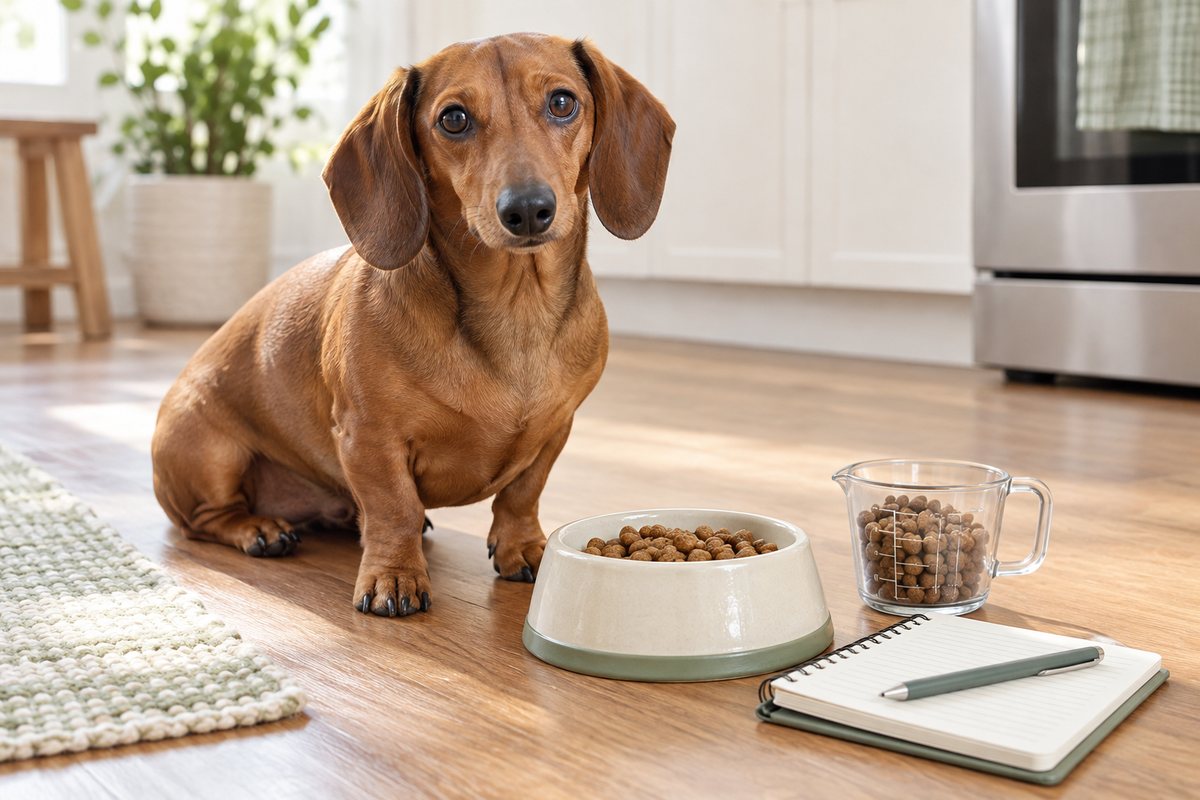
When does a standard Dachshund reach full size?
Many Dachshunds are close to adult height before they are fully mature in muscle and body condition. The official miniature class is assessed at 12 months and older, but healthy adult shape continues to depend on diet, exercise, neuter status, and genetics. If your young standard Dachshund looks narrow or lanky, ask your veterinarian about growth and body condition instead of trying to force weight gain.
Care differences for standard Dachshunds
- Use ramps and back-safe habits even though the dog is larger.
- Choose harnesses by chest girth and body length.
- Measure food because standards can still become overweight.
- Keep nails short for traction and posture.
- Watch for reluctance to jump, stairs, or walk normally.
Standard size vs overweight
A standard Dachshund is naturally larger than a miniature, but larger does not mean unlimited weight. A healthy standard should still have a visible waist from above and ribs that can be felt under light cover. If your Dachshund is above the usual range, your veterinarian can help decide whether your dog is a large-framed standard, overweight, or both.
| Check | Healthy sign | Concern sign |
|---|---|---|
| Waist | Visible from above | Straight or bulging sides |
| Ribs | Easy to feel under light cover | Hard to feel |
| Movement | Comfortable walking and rising | Reluctance, stiffness, or panting |
| Food | Measured portions | Free feeding and many treats |
| Back comfort | No pain signs | Hunched posture or yelping |
Why standard size changes shopping and care
Standard Dachshunds often need sturdier ramps, larger harnesses, and more careful lifting than miniatures. They may also need different food portions, but portion size should still be measured. Bigger Dachshunds can gain weight just as easily when treats, chews, and table scraps are not counted.
- Check ramp weight ratings and width.
- Measure harness girth instead of guessing medium or large.
- Use back-safe lifting with chest and rear support.
- Keep nails trimmed for traction.
- Review food portions after activity or neuter changes.
How to judge standard Dachshund size correctly
Standard Dachshunds can look surprisingly different from one another. Some are long and lean, while others have heavier bone and a broader chest. Start with adult weight, then look at body condition and movement. A dog that is within the common range can still be overweight, and a dog above the range may need an individual veterinary target.
For practical care, measurements matter more than labels. Measure girth for harnesses, back length for coats, and furniture height for ramps. A standard Dachshund that jumps from a high bed many times a day may need more environmental support than a smaller dog with a lower couch.
Standard Dachshund care checklist
- Use a sturdy ramp with enough width for confident turning.
- Choose harnesses with adjustable neck and chest points.
- Keep treats small even though the dog is larger than a mini.
- Support both chest and rear when lifting.
- Keep nails short so the dog has traction on hard floors.
- Ask your vet for an ideal weight range after growth is complete.
This article should support the general size-chart article, not compete with it. The focus here is standard-specific care: what changes when the Dachshund is the larger recognized size, how to shop for gear, and how to avoid confusing “standard” with “overweight.”
Standard Dachshund size FAQ
How big is a standard Dachshund compared with a mini?
Standard Dachshunds are the larger recognized size and are commonly listed around 16 to 32 pounds, while miniatures are 11 pounds and under at maturity. Height and length vary, so use weight class plus body condition, not appearance alone.
Can a standard Dachshund still be too heavy?
Yes. A standard Dachshund can be naturally larger and still carry excess weight. Because the breed has a long back and short legs, keeping a healthy body condition matters. If ribs are hard to feel, the waist is gone, or movement becomes harder, ask your veterinarian about a weight plan.
Does standard size change training?
The training principles are the same, but handling can feel different. A larger Dachshund may pull harder, need sturdier gear, and be harder to lift safely. Use the same reward-based training approach, but choose equipment and home setup for the dog’s actual size.
Final standard-size tip
When in doubt, treat the size label as a starting point and your dog’s measurements as the truth. A standard Dachshund needs gear, food portions, ramps, and lifting habits chosen for their actual body, not for a generic size name.
How to use standard Dachshund size in real life
Standard Dachshund size matters most when it helps you make better daily choices: food portions, harness size, crate length, ramp strength, and healthy weight conversations with your veterinarian. The label by itself is less useful than a lean body, easy movement, and gear that actually fits.
A standard Dachshund can be naturally larger than a mini and still be healthy. They can also be overweight while still falling inside a familiar size range. Use the size category as context, then check body condition, waist shape, rib feel, and energy.
| Situation | What it suggests | Best next step |
|---|---|---|
| Harness shopping | Weight alone is incomplete | Measure girth and neck base |
| Crate setup | Too small limits comfort | Choose standing, turning, and lying room |
| Ramp choice | Larger dogs need stronger support | Check weight rating and wobble |
| Feeding | Portions vary by body condition | Track waist and vet guidance |
| Health watch | Extra pounds stress movement | Respond early to stiffness or reluctance |
standard Dachshund size: practical checklist
- Record current weight and date.
- Take chest, neck, and back length measurements.
- Photograph your dog from side and above for body condition comparison.
- Check whether gear still fits after weight changes.
- Use a ramp or lifted setup for high furniture when needed.
- Ask your vet for a target range if ribs are hard to feel.
When to change course
If your standard Dachshund gains weight quickly, avoids jumping, tires faster, or looks stiff after rest, treat that as a health and comfort signal rather than a normal size difference.
standard Dachshund size: owner scenarios and fixes
The final step for standard Dachshund size is matching the advice to the exact situation in front of you. Dachshunds are small, persistent, routine-sensitive dogs, so a plan that looks correct on paper can fail if the room setup, timing, gear, reward value, or health context is wrong. Before changing everything, choose the one pattern that happens most often and work there first.
This also helps prevent mixed signals. If you sometimes reward the unwanted pattern, sometimes interrupt it, and sometimes ignore it, your Dachshund may keep trying the behavior because the rules are unclear. A simple plan that everyone in the home follows for one week is usually more useful than a complicated plan that changes every day.
| Owner situation | How to handle it |
|---|---|
| When the main issue is harness shopping | Start with the practical fix: measure girth and neck base. Give it several calm repetitions before adding a second change. |
| When the pattern looks like crate setup | Assume the setup is slightly wrong for your Dachshund and adjust the environment before expecting better behavior. |
| When you see ramp choice | Slow the plan down. Dachshunds often improve faster when the next step is easier, clearer, and more predictable. |
| When feeding keeps returning | Look for a trigger that happens before the problem. Changing that trigger usually works better than reacting afterward. |
| When health watch is involved | Treat it as a sign to re-check fit, comfort, schedule, or health rather than assuming your dog is ignoring you. |
How to make the plan easier for your Dachshund
If progress stalls, make the next repetition easier instead of louder or longer. For standard Dachshund size, easier can mean more distance, a shorter session, a lower height, a quieter room, softer handling, smaller rewards, or fewer choices. The easier version should let your dog succeed while still practicing the skill you want.
Watch recovery time. A Dachshund who can return to sniffing, eating, resting, or walking normally is usually in a workable zone. A dog who stays frantic, stiff, avoidant, or obsessed with the trigger is telling you the setup is too difficult. That is useful information, not a training failure.
7-day improvement plan
- Day 1: write down when the standard Dachshund size problem happens, where it happens, and what happened right before it.
- Day 2: remove the easiest trigger or setup mistake connected to harness shopping.
- Day 3: practice the first checklist step: record current weight and date..
- Day 4: repeat the same plan at an easier level instead of adding a new rule.
- Day 5: add one support step from the checklist: take chest, neck, and back length measurements..
- Day 6: ask whether your dog recovers faster than earlier in the week.
- Day 7: keep what improved, drop what confused your dog, and decide whether health or professional support is needed.
This seven-day plan will not solve every case of standard Dachshund size, but it gives you cleaner information. If the pattern improves, keep building gradually. If it stays the same or worsens, the cause may be discomfort, fear, poor fit, too much freedom, or a trigger that needs a different article-specific plan.
Quality check before you rely on the advice
The safest version of the advice should be specific, observable, and easy to repeat. You should know what you are changing, what success looks like, and when to stop. For Dachshunds, stop signs include pain, limping, yelping, frantic barking, snapping, refusal to eat rewards, vomiting, repeated accidents, or sudden behavior changes.
When in doubt, choose the lower-risk version: more distance, better traction, shorter sessions, calmer rewards, clearer routines, and earlier veterinary input. That keeps the standard Dachshund size plan helpful without pushing a small long-backed dog through stress, pain, or confusion.
Sources
- AKC: Dachshund Breed Information
- AKC Official Standard of the Dachshund
- Dachshund Club of America: Breed Standard