A good Dachshund harness should help you walk safely without putting unnecessary pressure on the neck or encouraging awkward movement. Because Dachshunds have long backs, short legs, and deep chests, fit matters more than cute styling.
Disclosure: This post may contain affiliate links in the future. If you buy through those links, Dachshund Compass may earn a commission at no extra cost to you.
Quick answer
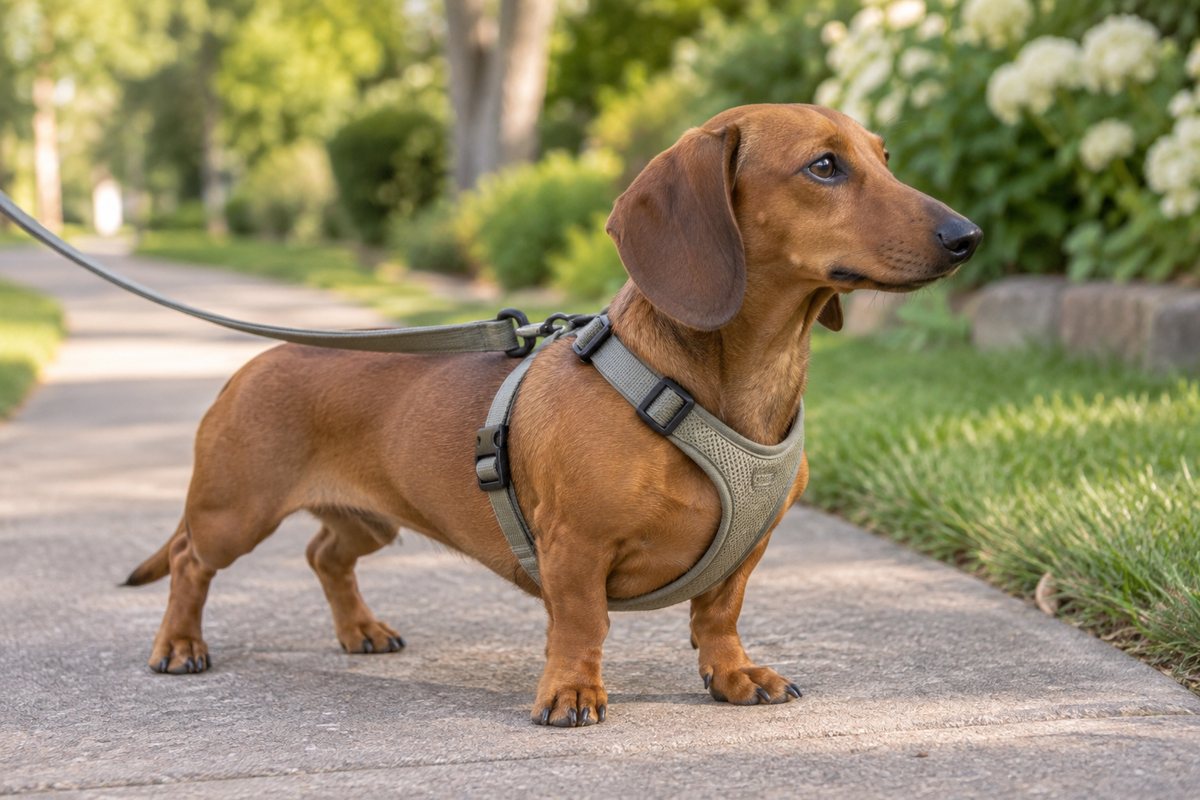
The best harness for most Dachshunds is lightweight, adjustable at the neck and chest, comfortable behind the front legs, secure enough to prevent slipping, and shaped so it does not restrict shoulder movement. Many Dachshunds do well with a Y-front or well-fitted step-in harness.
Key takeaways
- Fit is the most important feature for Dachshunds.
- A harness should not rub behind the front legs or press tightly on the neck.
- A front-clip can help with pulling, but training still matters.
- Do not lift your Dachshund by a harness unless the product is specifically rated for lifting.
What to look for
- Multiple adjustment points for a long, narrow body.
- Soft edges where the harness touches the chest and armpits.
- A secure buckle system that does not sit directly under the belly.
- A leash attachment that suits your dog’s walking style.
- Lightweight material for daily walks.
- Easy on and off without twisting your Dachshund’s body.
Fit check
You should be able to slide two fingers under the straps, but the harness should not rotate, gap, or let your Dachshund back out. Watch your dog walk from the side. The front legs should move freely without rubbing.
Harness types for Dachshunds
Y-front harness
A Y-front design can leave the shoulders freer than some straight-across chest straps. It is a good style to consider for active Dachshunds who walk daily.
Step-in harness
A step-in harness can be easy for dogs who dislike gear going over the head. Make sure your Dachshund does not have to twist awkwardly to get into it.
No-pull harness
A front-clip harness can help redirect a pulling dog, but it is not a training plan by itself. Pair it with reward-based leash training so your Dachshund learns where to walk.
What to avoid
- Harnesses that rub behind the front legs.
- Very bulky designs that change your dog’s stride.
- Loose fits that allow backing out.
- Neck-only pressure for dogs that pull.
- Relying on gear instead of training.
Back safety note
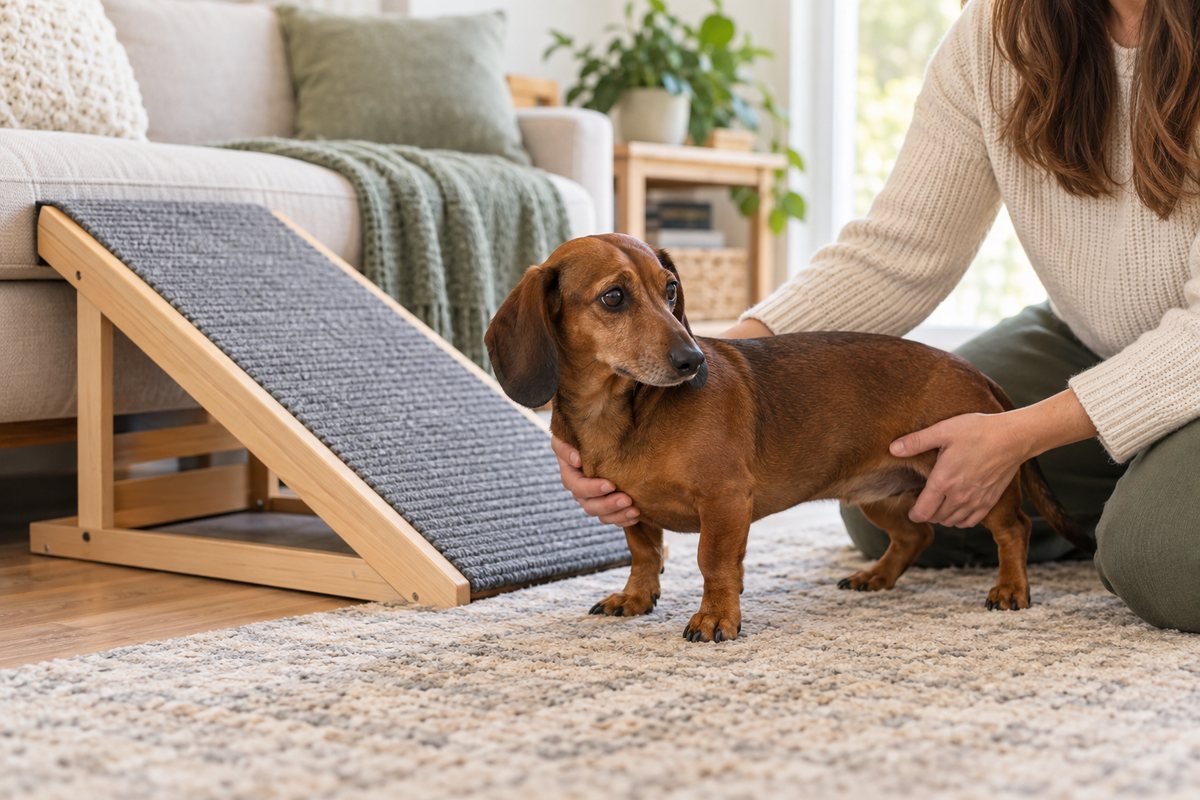
A harness can support safer walks, but it does not prevent all back injuries. Keep your Dachshund lean, use ramps where helpful, avoid repeated jumping, and watch for pain or weakness.
Related guides
For warning signs, read Dachshund back pain signs. For wider health context, see common Dachshund health problems.
FAQ
Is a collar or harness better for Dachshunds?
Many owners prefer a well-fitted harness for walks because it avoids direct pulling pressure on the neck. A collar can still hold ID tags.
Can a Dachshund escape a harness?
Yes, especially if the harness is loose or shaped poorly for a deep chest. Check fit and consider escape-resistant designs for dogs who back out.
Should a Dachshund use a no-pull harness?
It can help some dogs, but training is still needed. Reward loose-leash walking and avoid constant tension.
Sources and further reading
- Dachshund Club of America: Health
- Cornell: Intervertebral Disc Disease
- FTC: Affiliate Disclosure Guidance