Dachshund apartment training is about building a quiet, predictable routine in a small space. Your dog needs to know where to potty, where to settle, how to handle hallway noises, and how to move safely around furniture without turning every elevator ride or neighbor sound into a big event. The best plan is not harsher discipline. It is better management, short training sessions, and rewards for the exact apartment behaviors you want.
The challenge is that apartments add delays and distractions. A puppy may need to wait for an elevator. An adult rescue may hear footsteps outside the door. A Dachshund may bark at hallway sounds, rush guests, or jump from the sofa because the whole home is compact and exciting. This guide gives you a practical seven-step system for potty training, crate routines, barking prevention, leash exits, guest greetings, alone time, and back-safe apartment habits.
Table of Contents
Dachshund apartment training quick answer
For Dachshund apartment training, start with a fixed potty route, a small safe zone, a crate or pen, and a calm exit routine. Reward quiet behavior before barking starts. Practice short hallway, elevator, and lobby sessions when the building is calm. Use ramps or blocked furniture to protect your Dachshund’s back, and build alone time gradually so your dog does not rehearse barking or panic when you leave.
The biggest mistake is trying to solve everything during real-life chaos. Train when the building is quiet first. Then add harder pieces: a closing elevator door, a neighbor passing, a doorbell, a longer absence, or a visitor. Dachshunds learn faster when each apartment routine has one clear cue and one clear reward.
Apartment setup
A small apartment can actually help training if the layout is simple. Your Dachshund should have a sleep place, a calm confinement option, a potty route, a chew station, and a safe way onto approved furniture. Keep the setup boring and repeatable for the first few weeks.
- Sleep zone: crate, pen, or bed in a low-traffic spot.
- Potty station: leash, bags, treats, and shoes by the door.
- Calm station: mat or bed away from the front door.
- Chew station: legal chews and food toys for quiet enrichment.
- Back-safety setup: ramp, blocked sofa access, or no-furniture rule.
- Sound buffer: white noise or a fan near the hallway wall if noises trigger barking.
AKC’s apartment potty training guidance highlights the special problem of distance: apartment dogs may have to wait through hallways, stairs, elevators, and sidewalks before reaching the potty spot. That delay should shape your schedule. Do not wait until your Dachshund is desperate.
7 step apartment training plan
1. Create a predictable potty route
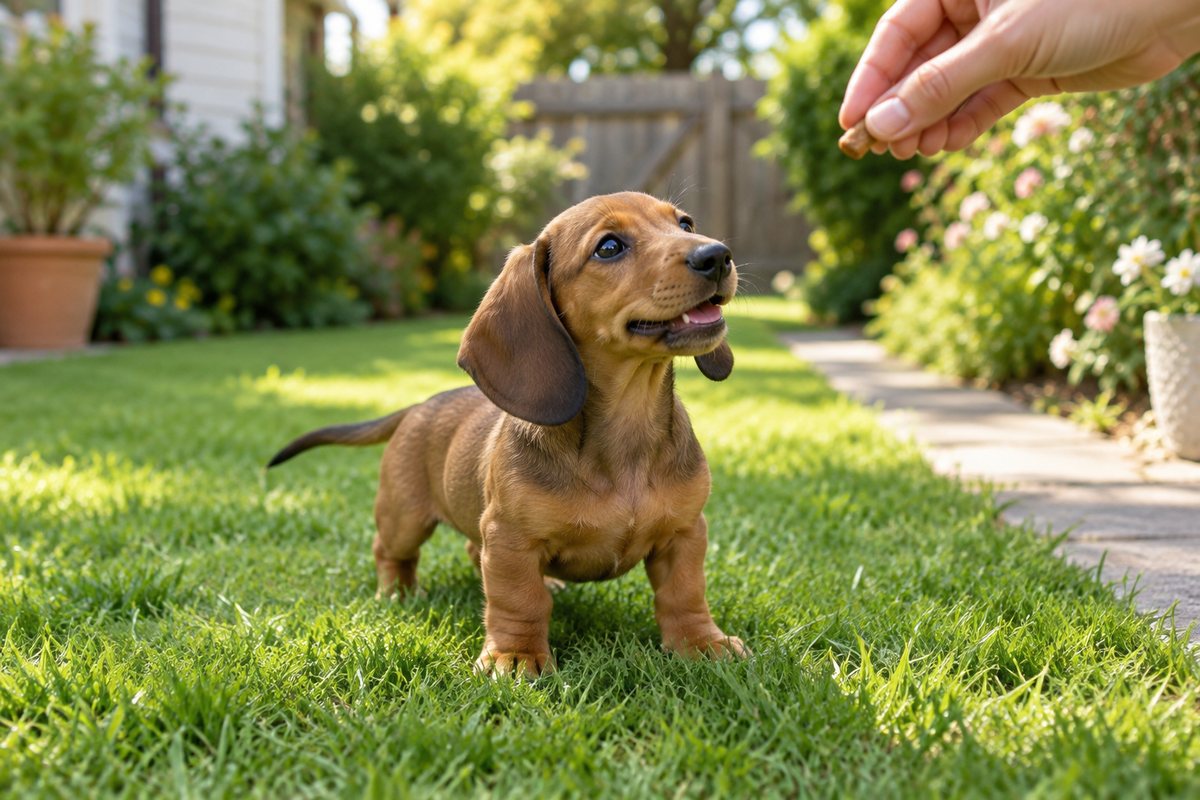
Use the same door, hallway path, elevator routine, and outdoor potty area whenever possible. Say one phrase such as “go potty” only when your Dachshund is at the correct place. Reward immediately after the potty happens, not after you return upstairs. This keeps the reward connected to the right behavior.
2. Use a crate or pen between outings
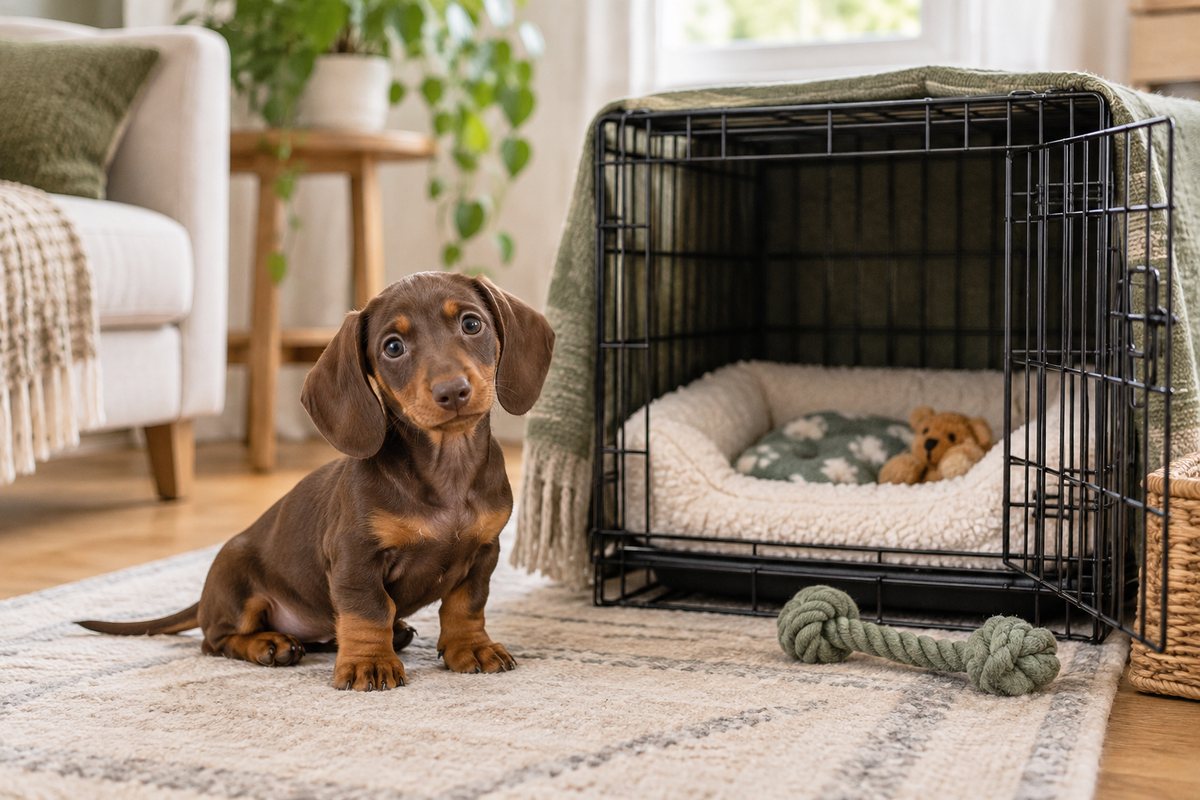
A crate or pen prevents unsupervised accidents and chewing while your dog is learning apartment rules. It should be comfortable, never used for anger, and introduced with food, calm praise, and short sessions. If your Dachshund is not crate-ready yet, follow the foundation in Dachshund crate training before using long confinement.
3. Train quiet before barking
Do not wait until your dog is already shouting at the hallway. Sit near the door during a quiet time, reward your Dachshund for noticing faint sounds without barking, and toss a treat away from the door. VCA explains that barking can be reinforced by attention or by the dog feeling successful at making a trigger go away. Apartment training should reward calm noticing before the bark chain begins.
4. Practice hallway and elevator manners
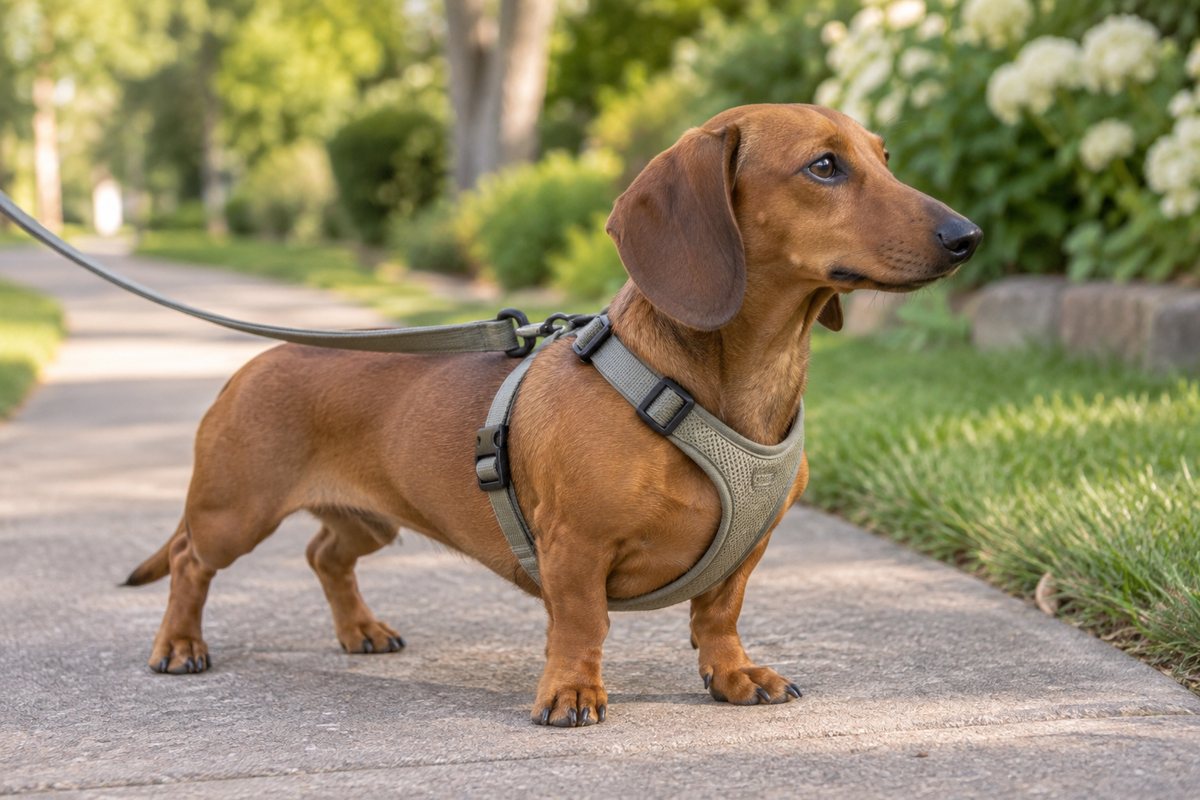
Leash your Dachshund inside the apartment before opening the door. Ask for a sit, wait, or hand target. Reward calm exits. In the hallway, keep treats low so your dog does not jump at neighbors. If the elevator is too exciting, practice walking to the elevator, feeding one treat, and returning home without riding. Make the building boring in tiny steps.
5. Build a mat routine for doors and visitors
Teach “go to bed” or “mat” away from the front door. Reward your Dachshund for staying there while you touch the doorknob, open the door a crack, or speak to someone outside. This also supports how to train Dachshund not to jump because your dog learns that calm placement, not launching at people, makes greetings happen.
6. Make alone time boring and gradual
In an apartment, separation barking can affect neighbors quickly. Start with tiny exits: pick up keys, step out, return before barking starts, and reward calm. Increase slowly. If your Dachshund already panics or barks the whole time, use the plan in how long can a Dachshund be left alone before expecting longer absences.
7. Protect the back in a small space
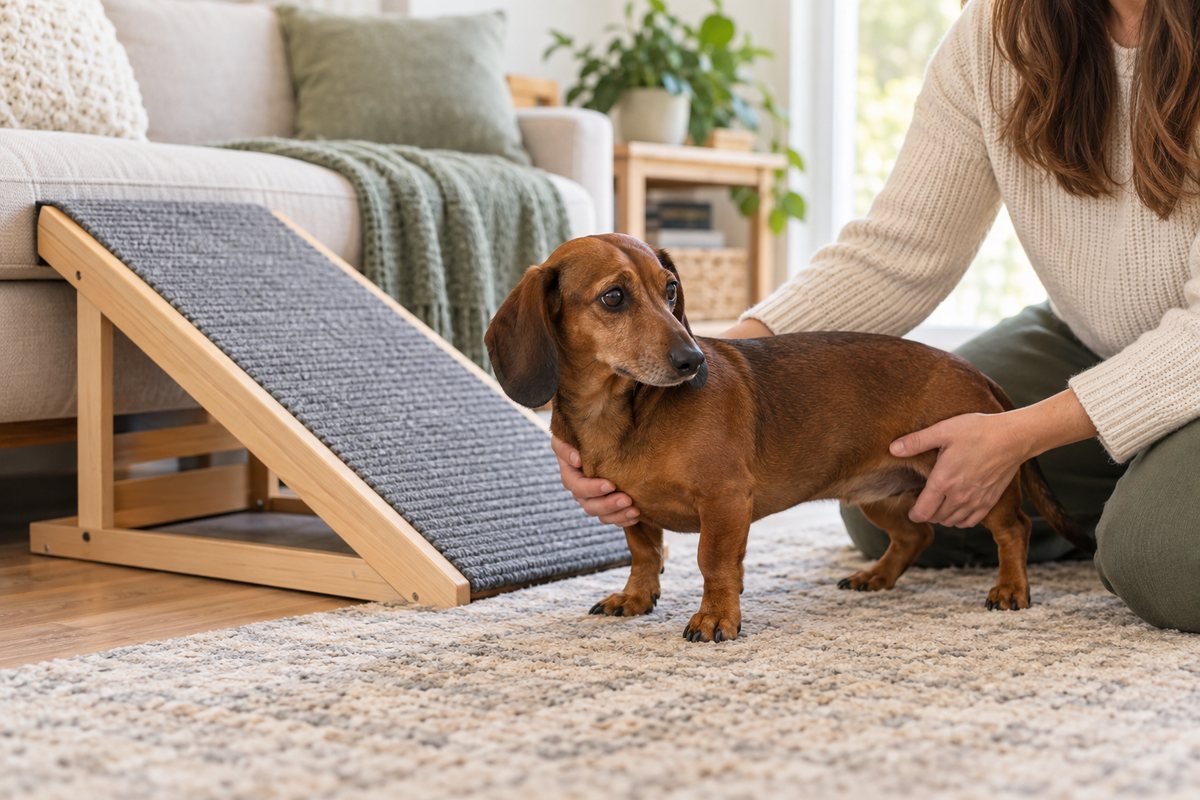
Dachshunds are low, long-backed dogs. In apartments, couches and beds are often close to everything, so jumping becomes easy to rehearse all day. Block furniture, use ramps, or keep furniture off-limits. If you see pain signs, review Dachshund back pain signs and contact your veterinarian.
Potty training in an apartment
Potty training is the heart of Dachshund apartment training. Puppies need frequent trips, and apartment logistics make timing harder. AKC notes that apartment dwellers may find the trip outside takes longer than a puppy can hold it, so indoor potty options may sometimes be part of the plan. Choose one system and be consistent.
| Apartment problem | Best training response | Owner note |
|---|---|---|
| Elevator delay | Go out earlier and carry young puppies if needed | Reward at the potty spot |
| No yard | Use one consistent outdoor spot or one indoor potty station | Do not keep moving the target |
| Accidents near the door | Schedule more frequent trips | Clean with enzymatic cleaner |
| Bad weather | Keep trips short but still routine | Use a coat if your dog tolerates it |
| Confusion with pads | Fade pads gradually if switching outdoors | Avoid mixed rules |
If you are already working on house training, connect this plan with Dachshund potty training. The apartment version simply adds logistics: longer travel time, shared spaces, neighbor distractions, and fewer quick yard breaks.
Barking and hallway noise
Many Dachshunds bark because they are alert, social, or frustrated by sounds they cannot investigate. In an apartment, every footstep may feel like a visitor. Instead of yelling from across the room, teach a pattern: sound happens, dog looks at you, treat appears away from the door. Over time, the hallway predicts calm rewards instead of alarm.
- Keep high-value treats near the door, but out of reach.
- Reward the first head turn before barking begins.
- Use white noise during high-traffic building hours.
- Block window views if street movement triggers barking.
- Practice “quiet” only when your dog is calm enough to learn.
- Do not let barking become the only entertainment of the day.
Exercise matters, but a tired Dachshund still needs skills. Use sniff walks, food puzzles, chew time, and short cue practice. Tiny treats work well for apartment drills because you can reward many quiet choices without overfeeding. See best treats for Dachshund training for size and calorie tips.
Alone time and neighbors
Apartment alone-time training should begin before you need to leave for hours. Practice departures that are so short your Dachshund stays calm. Pair the safe zone with a chew or food toy, leave quietly, and return quietly. If your dog barks, scratches, drools, refuses food, or panics, shorten the session and consider professional help.
Tell neighbors you are training if you have a puppy or new rescue. A simple note can prevent frustration while you build the routine. More importantly, it keeps you honest: do not let your Dachshund rehearse long barking sessions every day. Management is training’s quiet partner.
Common mistakes
| Mistake | Why it hurts progress | Better option |
|---|---|---|
| Waiting too long for potty trips | The elevator and hallway add delay | Go earlier than a yard-home schedule |
| Yelling at barking | It adds attention and energy | Reward quiet noticing before barking |
| Giving full apartment freedom too soon | Accidents and chewing become habits | Use crate, pen, leash, or closed doors |
| Skipping hallway practice | Real exits stay too exciting | Practice short calm reps at quiet times |
| Allowing furniture launches | Small spaces make jumping frequent | Use ramps, blocks, or a no-furniture rule |
Training timeline
Most Dachshunds need several weeks to settle into apartment routines. Puppies, rescues, and dogs moving from a house may need longer. Keep sessions short and daily.
- Days 1-3: set the potty route, confinement area, and treat stations.
- Week 1: reward calm door exits, quiet hallway sounds, and successful potty trips.
- Week 2: add short elevator practice, mat work, and brief alone-time reps.
- Weeks 3-4: build longer calm periods, more distractions, and fewer food rewards.
- Ongoing: refresh training after schedule changes, moves, new neighbors, or travel.
FAQ
Are Dachshunds good apartment dogs?
Dachshunds can live well in apartments if they get potty structure, quiet training, enrichment, and safe movement rules. Their size helps, but their barking, stubbornness, and back-safety needs still require training.
What is the hardest part of Dachshund apartment training?
Potty timing and barking are usually the hardest parts. Apartments add distance to potty breaks and more shared noises, so your Dachshund needs a predictable routine and rewards for quiet choices.
Should I use pee pads in an apartment?
Pee pads can help some puppies, seniors, or owners in high-rise buildings, but they can also confuse dogs if the final goal is outdoor potty only. Choose the system you can keep consistent, then fade pads gradually if you switch outdoors.
How do I stop my Dachshund barking at hallway sounds?
Reward your Dachshund for noticing soft sounds before barking starts. Toss treats away from the door, use white noise, block visual triggers, and practice when the building is quiet before training during busy times.
How long does Dachshund apartment training take?
Basic routines can improve within a few weeks, but reliable potty habits, quiet hallway behavior, and calm alone time may take longer. Consistency from every household member matters more than one perfect long session.
Sources
- American Kennel Club: How to Potty Train a Dog When You Live in an Apartment
- American Kennel Club: Indoor Potty Training for Puppies
- American Kennel Club: How to Potty Train Your Puppy and Prevent Accidents Indoors
- VCA Animal Hospitals: Barking in Dogs
- VCA Animal Hospitals: Tips to Quiet Barking
- American Kennel Club: How to Prepare Your Dog for a Downsize