Direct answer
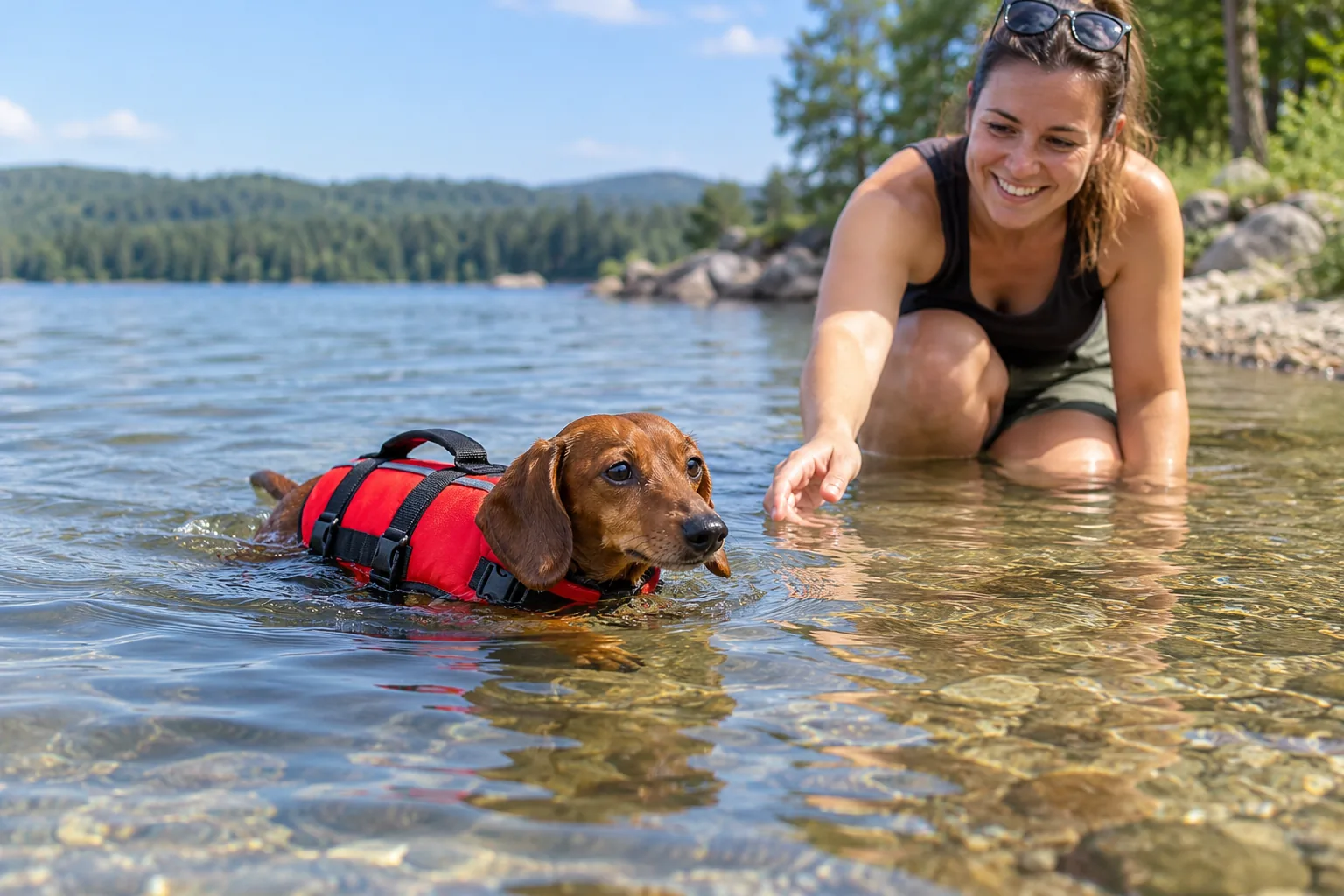
Can Dachshunds swim? Some can, but the ability to paddle is not a guarantee of safety or enjoyment. An individual dog may be comfortable in shallow, still water yet tire quickly in deeper water. Treat swimming as a supervised activity, not an instinct that needs no preparation. Begin where the dog can enter and leave easily, use a properly fitted canine life jacket for swimming, stay close enough to assist, and end while the dog is still comfortable. AKC’s water-safety guidance recommends gradual introductions, flotation, close supervision, rest breaks, and fresh drinking water.
Whether Dachshunds can swim safely depends on the dog, environment, and supervision. There is no universal rule that every Dachshund enjoys water. If yours chooses to stay dry, a sniffing walk near the shore can be the entire outing. Our separate guide to whether Dachshunds like water covers that preference question; this page addresses swimming conditions and response to risk.
First decide whether this water is suitable
Look at the entry, exit, water movement, depth, footing, temperature, and water quality before the dog approaches. A gentle slope in calm water gives a novice a way back to land. A pool with sheer walls, a river with current, surf, a steep bank, or slippery rocks creates a different risk. If you cannot identify a reliable exit, do not start. AKC’s swimming introduction favors a gradual slope and supervised practice.
Do not rely on a dog to recognize current or fatigue. Wind, waves, and boat wake can change conditions suddenly. Keep a person close enough to help rather than watching from a distant chair. Never throw a dog into water, pull it beyond its confidence, or treat a panicked paddle as proof of learning. A dog that hesitates or turns away is giving useful information.
Natural water can carry hazards beyond depth. Provide fresh drinking water so the dog is not encouraged to drink lake or salt water. Avoid visibly contaminated or suspicious water and follow local advisories. If a dog becomes ill after water exposure, tell the veterinarian where it swam. AKC’s water-safety article advises bringing fresh water and preventing consumption of lake or ocean water.
Fit a life jacket, then supervise anyway
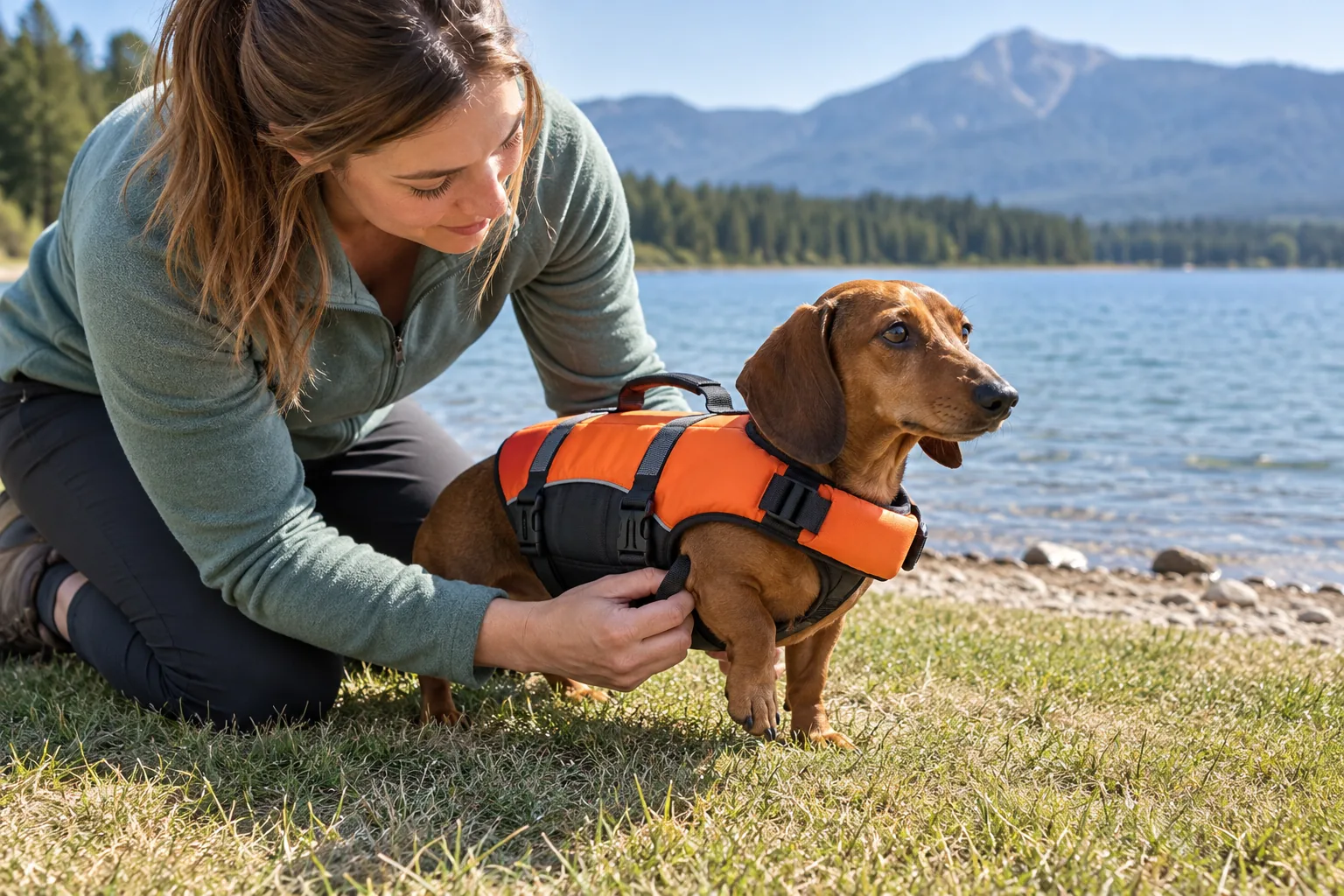
A canine life jacket adds buoyancy and can make a tired dog easier to assist. It is not permission to enter rough water or leave the dog alone. Before each outing, check buckles, straps, wear, and whether the jacket stays secure without restricting breathing or limb movement. A handle can help guide a dog to the exit, but it is not a substitute for a rescue plan. AKC warns that a loose or worn jacket can itself create problems.
Try the jacket on dry land first. Allow the dog to walk, turn, and rest; check for rubbing at the chest and under the forelegs. If it shifts, catches a leg, or presses on the throat, change the fit before swimming. Our separate life-jacket guide compares features and sizing; this article is about using flotation during an outing.
Even a dog that previously swam successfully needs continuous observation. Fatigue may appear as a slower paddle, lower posture, repeated attempts to climb onto a person, disorientation, or trouble reaching shore. Take the dog out before those signs become severe. Build in rest on dry ground; do not extend distance by throwing a ball farther and farther. AKC’s hydrotherapy overview notes that experienced dogs can tire and recommends properly fitted flotation in water.
Make the first session short and voluntary
Start at a calm, shallow place with a gently sloping exit. Let the Dachshund sniff the edge and step in or step back. Reward calm investigation on land. If the dog chooses to enter, stay beside it and keep the first water time brief. Leave the water together, allow a rest, and judge comfort before another short try. Do not make a particular distance the goal.
If the dog seems tense, circles without finding the bank, scratches at you, or refuses to re-enter, stop. That is not a training failure. Plenty of Dachshunds have enjoyable outdoor lives without swimming. If you hope to use water activity for a dog with a back or joint condition, ask the treating veterinarian whether supervised rehabilitation is appropriate. Recreational swimming and prescribed hydrotherapy are not interchangeable; AKC’s hydrotherapy overview distinguishes therapeutic use from play.
Pools, lakes, and boats need different plans
| Setting | Main question | Safer decision |
|---|---|---|
| Pool | Can the dog locate and use a reliable exit? | Teach the exit under direct supervision; block unsupervised access. |
| Lake or pond | Is the bank gradual, water still, and water quality acceptable? | Choose a shallow section and follow local advisories. |
| River or surf | Can current or waves move the dog away? | Skip swimming when flow, surf, or footing is uncertain. |
| Boat | Could the dog fall overboard or become separated? | Fit a life jacket, plan retrieval, and keep the dog under control. |
These are decision prompts, not promises that any location is safe. The same lake can change with weather. Do not tether a dog in a way that could trap it underwater or leave a leash dragging where it might snag. Ask a qualified local instructor for help if unsure how to practice an exit safely.
After the water
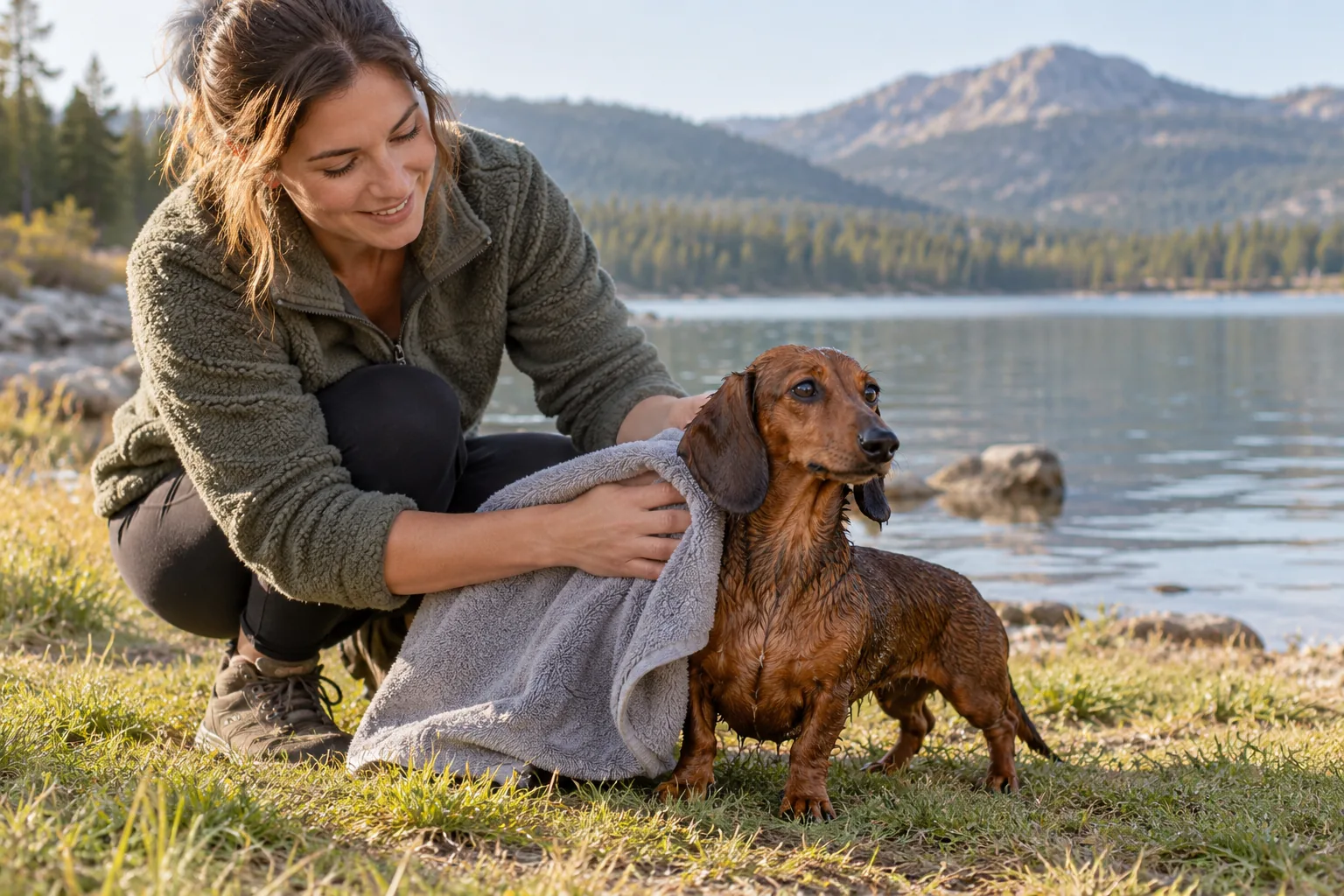
Bring the dog to dry, stable ground, offer fresh water, and dry the coat and ears gently. Rinse off pool chemicals or salt as appropriate, and check for debris around paws and skin. Watch for coughing, unusual breathing, marked lethargy, repeated vomiting, or difficulty walking. Contact a veterinarian promptly if these develop rather than assuming the dog is merely tired. AKC’s pool-safety advice includes rinsing after pool exposure.
Do not prolong a session because the dog still seems eager; excited dogs can exceed their comfortable effort. Note how the dog moves and rests later that day. A successful first visit may be a few relaxed minutes near the edge, not a swim across open water.
A practical example
An adult Dachshund has enjoyed walking at a lake but has never swum. Its owner chooses a quiet shore with a gradual bank, checks that dogs are allowed and no water-quality warning is posted, fits the life jacket on land, and stays within reach. The dog wades in and paddles a short distance, then returns with guidance to the same easy exit. The owner ends the water time, dries the dog, and watches recovery. If the dog had refused to enter, the outing could still have been a pleasant lakeside walk.
Frequently asked questions
Are Dachshunds natural swimmers?
Some paddle readily; others do not. Breed and body shape do not establish that an individual can safely handle depth, distance, current, or an unfamiliar exit. Supervision and a suitable environment matter more than the label “natural swimmer.”
Does a life jacket make deep water safe?
No. It adds flotation but cannot remove current, cold, fatigue, poor fit, or an inaccessible exit. Keep the dog within reach and choose calm water. AKC pairs a life jacket with human supervision.
Can swimming replace walking?
Swimming may be enjoyable for a healthy dog that likes water, but it is not a universal replacement for daily movement. For a dog with pain or a diagnosed condition, ask a veterinarian about an individualized exercise plan.
What if my dog coughs afterward?
Move the dog out of the water. Persistent coughing, breathing changes, vomiting, or unusual weakness warrant prompt veterinary advice. Tell the clinician where the dog swam and what you observed.