
Direct answer
Are Dachshunds hypoallergenic? No, a Dachshund is not a reliably hypoallergenic dog. The AKC’s Dachshund suitability guide explicitly says the breed is not hypoallergenic. More importantly, the American College of Allergy, Asthma and Immunology (ACAAI) says no breed can be guaranteed not to trigger symptoms in a dog-allergic person. Choosing a smooth coat, a miniature dog, or a dog advertised as “low shedding” is not a medical test of household tolerance.
People can react to proteins associated with a dog’s dander, saliva, urine, and other materials. The National Institute of Environmental Health Sciences (NIEHS) explains that fur often carries allergens but is not the whole source. A person with significant allergy or asthma should discuss the decision with an allergist before adopting. This page is an owner-suitability guide, not a diagnosis or a promise that cleaning will eliminate symptoms.
Are Dachshunds hypoallergenic? Shedding is not the same as allergen exposure
All three Dachshund coat varieties shed to some extent, though the amount of visible hair and grooming workload differ. The AKC breed profile provides a shedding-level overview, and the AKC suitability guide notes that long-haired and wire-haired coats need more regular grooming than smooth coats. None of that establishes that a smooth-coated Dachshund is safe for an allergic household.
The NIEHS states that all breeds, even hairless dogs, can trigger allergies. Allergen particles can move through indoor air and settle on furniture, carpets, and clothing. A clean-looking dog can still expose a sensitive person. Conversely, two people with the same broad “dog allergy” label may react differently in a particular home. Do not turn that variability into a sales claim that one dog is guaranteed compatible.
What “hypoallergenic” can and cannot mean
In marketing, “hypoallergenic” often implies low shedding or reduced allergen exposure. It is not a certification that a dog produces no allergens. The ACAAI explains that individual dogs and people vary, and there is no guarantee that choosing a particular breed will prevent symptoms. A breeder cannot certify a puppy as allergy-safe based on coat length, color, or parent appearance.
Beware of claims such as “wire-haired Dachshunds are allergy-free,” “miniatures are too small to cause reactions,” or “weekly baths solve dog allergy.” These statements skip the actual medical question: what is the person’s allergy, how severe is it, and what exposure level can they tolerate? Products and grooming may reduce some exposure, but they are not a cure.
Plan before bringing a dog home
If anyone in the household has suspected dog allergy, seek a clinician’s assessment rather than relying on a quick online checklist. The ACAAI recommends evaluation by an allergist when considering a pet. Ask about testing, current symptoms, asthma control, and what a realistic exposure-management plan would involve. Do not discontinue prescribed treatment because a dog is described as low shedding.
Spending time with Dachshunds can be informative, but a brief visit is not a definitive medical challenge. The person’s symptoms may depend on duration, environment, cleaning, medication, and the individual animal. If you arrange visits, make them meaningful and discuss any reaction with the clinician. A foster-to-adopt arrangement, when available and ethically appropriate, may provide more information than buying a puppy after one short cuddle; still, the medical advice should guide the decision.
Consider every household member. A child who wheezes after dog exposure may need a very different plan from an adult with mild seasonal symptoms. Severe reactions or poorly controlled asthma require caution and professional advice. Rehoming later can be painful for people and dog, so honest preparation matters.
Reducing exposure if you already live with a Dachshund

The NIEHS pet-allergen guidance lists practical ways to lower exposure, including keeping pets out of an allergic person’s bedroom, cleaning textiles, vacuuming with suitable filtration, and using an appropriate air cleaner. Discuss which steps are worth taking with an allergist. Their usefulness varies by home and person, and none guarantees a symptom-free household.
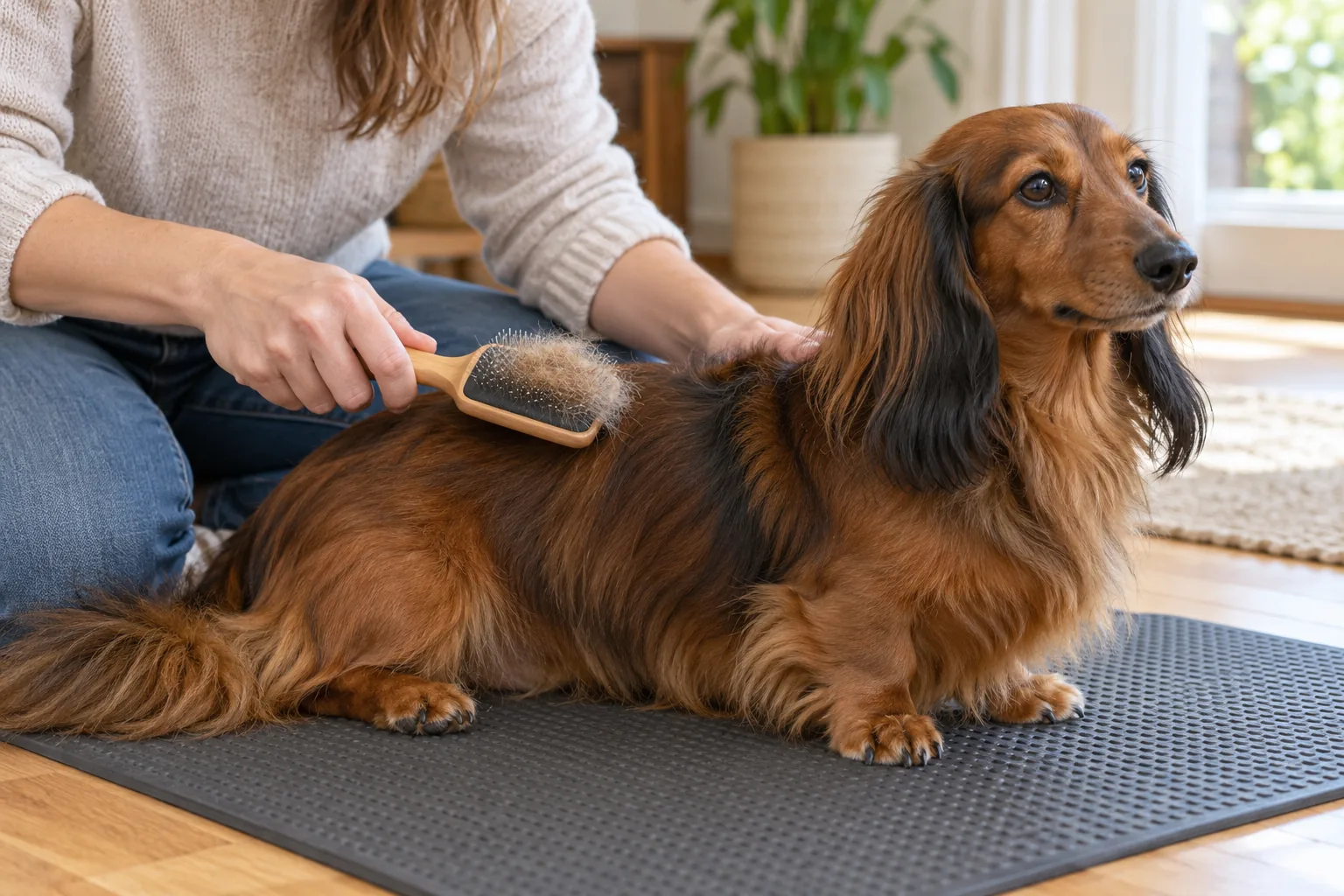
Have a non-allergic person handle grooming if that reduces exposure. Wash hands after close contact and avoid letting the dog lick an allergic person’s face. Maintain the dog’s skin health and choose grooming products for the dog, not solely as an allergy intervention. Excessive bathing can irritate skin; ask a veterinarian before increasing bath frequency. Our coat-care pages cover grooming needs separately.
Track symptoms and where they occur. If a person is repeatedly wheezing, coughing, or needing more medication after dog contact, do not simply add more fragrance or shampoo. Seek medical advice. The dog’s welfare also matters; a dog should not endure an unsuitable or excessive grooming regimen to make an unsafe household match appear workable.
Coat-type comparison without false promises
Smooth: Short coat, generally simpler grooming, but still sheds and carries allergens.
Long-haired: Feathering needs more brushing and can hold environmental debris, but that does not prove a higher or lower personal allergy response.
Wire-haired: Coat care may include specialized grooming; visible shedding patterns can differ, but the coat is not allergen-free.
This comparison concerns maintenance, not a ranking of medical safety. Our smooth-versus-long and wire-versus-long guides explain the grooming differences in detail. The NIEHS is clear that all dog breeds can trigger allergy.
A practical example
An owner with a known dog allergy visits a smooth-coated Dachshund for ten minutes and feels fine. The breeder says that proves the puppy will be safe. It does not. The owner should speak with an allergist, consider longer and repeated exposure in realistic settings, and make a plan for what happens if symptoms increase at home. A good adoption decision respects both the person’s health and the dog’s long-term stability.
Frequently asked questions
Is a smooth-haired Dachshund better for allergies?
It may be easier to groom, but it is not a guaranteed lower-allergen choice for a specific person. The ACAAI cautions against relying on breed or coat labels to prevent symptoms.
Do Dachshunds shed?
Yes. Amount and grooming needs vary by coat. Visible hair is only one part of allergen exposure; NIEHS identifies dander and saliva among the relevant sources.
Can regular baths make a Dachshund hypoallergenic?
No. Exposure management may help some households but cannot make a dog allergen-free. Choose a bath routine with veterinary advice for the dog’s skin and an allergist’s advice for the person’s health.
Should an allergic person avoid all Dachshunds?
The answer depends on the person, severity, and medical advice. Do not assume either guaranteed tolerance or guaranteed inability to live with any dog. Consult an allergist before committing to adoption.