Author: Sk Raju

  • Dachshund Size Chart: 7 Important Weight & Height Facts

    Dachshund Size Chart: 7 Important Weight & Height Facts

    This Dachshund size chart gives you a practical way to read adult Dachshund weight, height, and size labels without guessing from photos. In the American Kennel Club standard, Dachshunds are shown in two sizes: miniature and standard. Miniatures are 11 pounds and under at 12 months of age or older, while standards usually weigh 16 to 32 pounds.
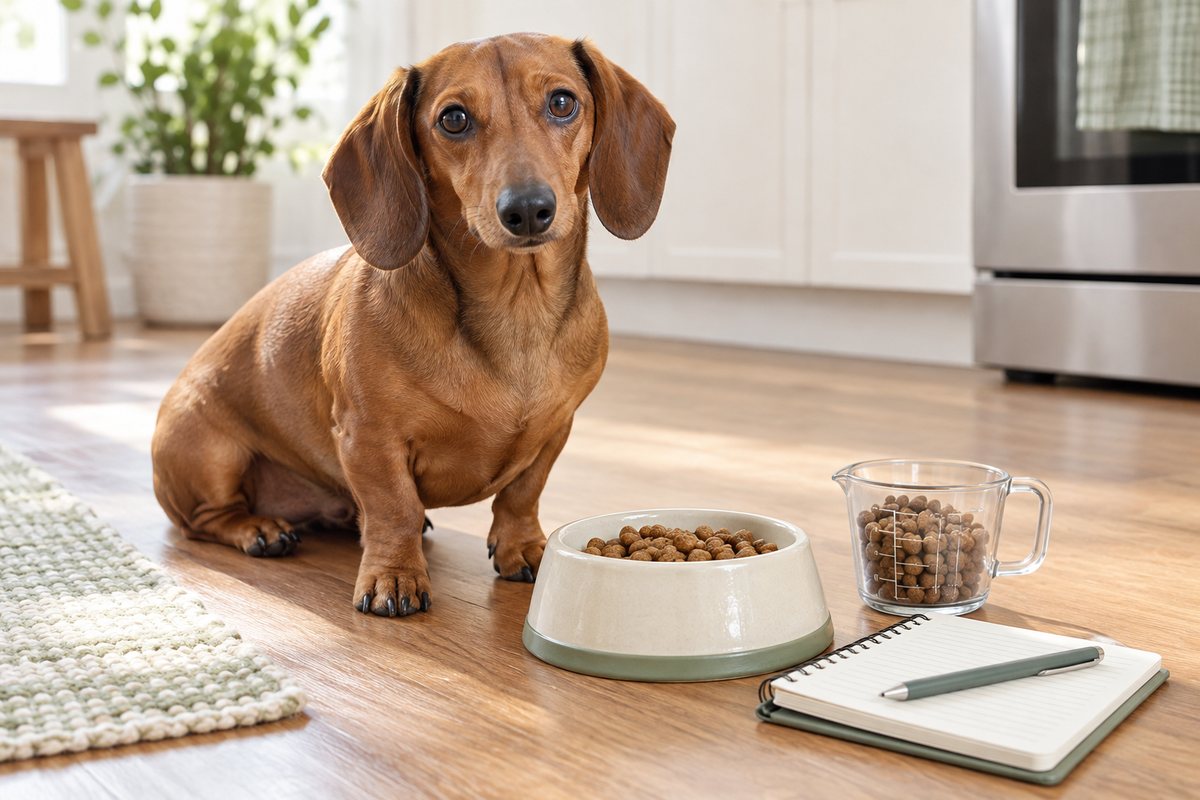
    Dachshund size chart and healthy weight guide with measured food portions

    The tricky part is the middle. Many family Dachshunds mature above 11 pounds but below the usual standard range. Owners often call those dogs “tweenies,” but that is an informal nickname, not an official AKC size division. Your dog’s healthy weight also depends on frame, muscle, age, and body condition, so this chart should guide your next question rather than replace your veterinarian’s advice.

    Dachshund size chart quick answer

    For most U.S. owners, the simplest Dachshund size chart is this: a miniature Dachshund is 11 pounds or under at 12 months or older; a standard Dachshund is usually 16 to 32 pounds. AKC breed information commonly lists standard Dachshunds around 8 to 9 inches tall at the shoulder and miniatures around 5 to 6 inches tall.

    Those numbers are useful, but they are not the whole story. A lean 13-pound Dachshund may be healthier than an overweight 10-pound Dachshund. If your dog falls between official ranges, use body condition, veterinary guidance, and your dog’s individual structure to decide whether their size is healthy.

    Adult Dachshund size chart

    Size labelAdult weight referenceTypical height referenceWhat it means for owners
    Miniature Dachshund11 lb and under at 12 months or olderAbout 5-6 in at the shoulderSmaller gear, smaller portions, easier to carry, but still needs back-safe handling
    Informal “tweenie”Commonly used by owners for dogs between miniature and standard rangesVariesNot an official AKC size division; judge health by body condition, not the nickname
    Standard DachshundUsually 16-32 lbAbout 8-9 in at the shoulderLarger gear, more body weight to lift safely, and stronger leash handling needs

    This adult Dachshund size chart is best used after a dog is mature. The AKC miniature weight reference is tied to 12 months of age or older, so a puppy’s current weight does not always settle the final size label. A young Dachshund can grow unevenly, fill out slowly, or look long and thin before adult muscle develops.
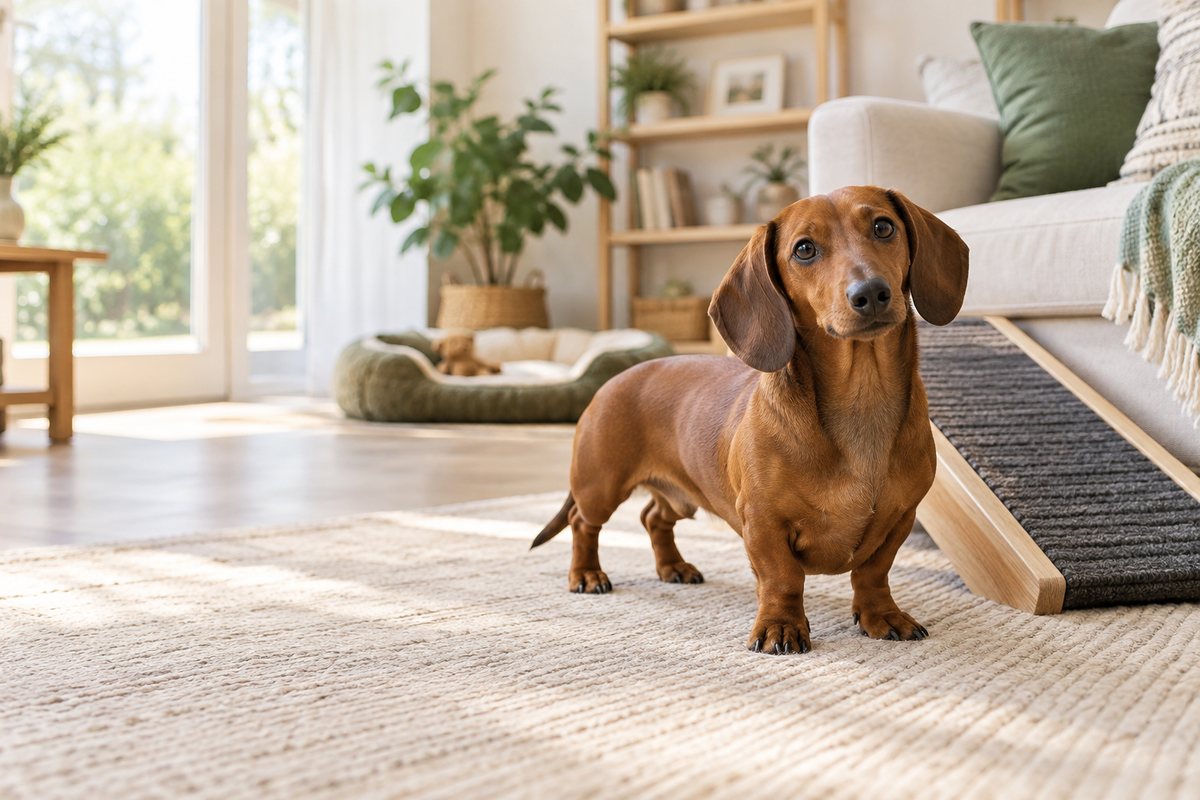
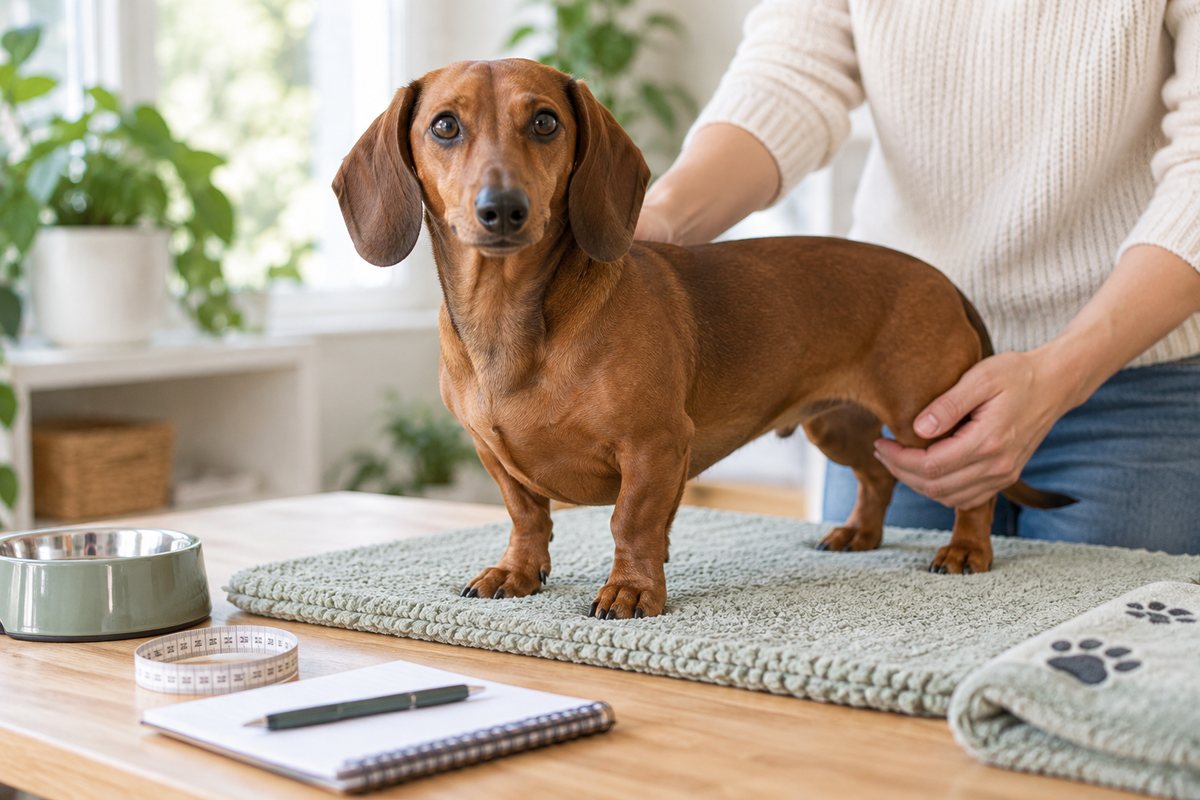
    Adult Dachshund standing for a height and weight size chart

    Miniature vs standard Dachshund size

    Miniature and standard Dachshunds are not different breeds. They are size divisions within the same breed. That means coat type, color pattern, personality, and training needs do not automatically change just because a dog is miniature or standard.

    The size difference does change daily life. Miniatures are easier to lift, travel with, and fit into small harnesses, but they can be easier to mishandle because they feel so small. Standards feel sturdier, but they are heavier to lift and may pull harder on leash. Both sizes need ramps or controlled lifting when furniture and car access become a jumping habit.

    If you are comparing the two sizes before choosing a dog, read Miniature Dachshund vs Standard Dachshund after this chart. It goes deeper into temperament, gear, training, and owner fit.

    Dachshund weight chart by size and care impact

    Weight rangeLikely labelCare note
    Under 11 lb as an adultMiniature rangeWatch tiny portion changes; a small weight gain can be a big percentage increase
    11-16 lb as an adultOften called tweenie by ownersFocus on body condition and frame; avoid forcing the dog into a label
    16-32 lb as an adultStandard rangeUse secure lifting, sturdy ramps, and well-fitted harnesses
    Over the expected rangeNeeds contextAsk your vet whether this is frame, muscle, excess fat, or another health issue

    Do not use this Dachshund size chart to decide that a dog should lose weight just because they are over a number. Some Dachshunds are larger-framed. Others are overweight at a number that looks “normal.” The scale is one tool; body condition is the second tool.

    Dachshund puppy size chart notes

    A Dachshund puppy size chart can help you track growth, but it cannot guarantee final adult size. Genetics, litter size, diet, neuter timing, activity, illness, and frame all affect growth. The most reliable thing you can do is weigh your puppy regularly, record the trend, and ask your veterinarian whether the growth curve looks healthy.

    Puppy ageWhat to trackWhat not to assume
    8-12 weeksStarting weight, appetite, stool quality, and body shapeDo not assume adult size from one early weigh-in
    3-6 monthsSteady weight gain, waist shape, and whether ribs can be feltDo not overfeed to “catch up” without veterinary advice
    6-12 monthsSlower growth, muscle development, and ideal body conditionDo not label a dog too early if they are still filling out
    12 months and olderAdult weight range, body condition score, and gear fitDo not judge health from the size label alone

    For training routines that fit a growing puppy, use the guide on how to train a Dachshund puppy. For house-training specifically, see how to potty train a Dachshund puppy.

    Healthy weight check: ribs, waist, and tuck

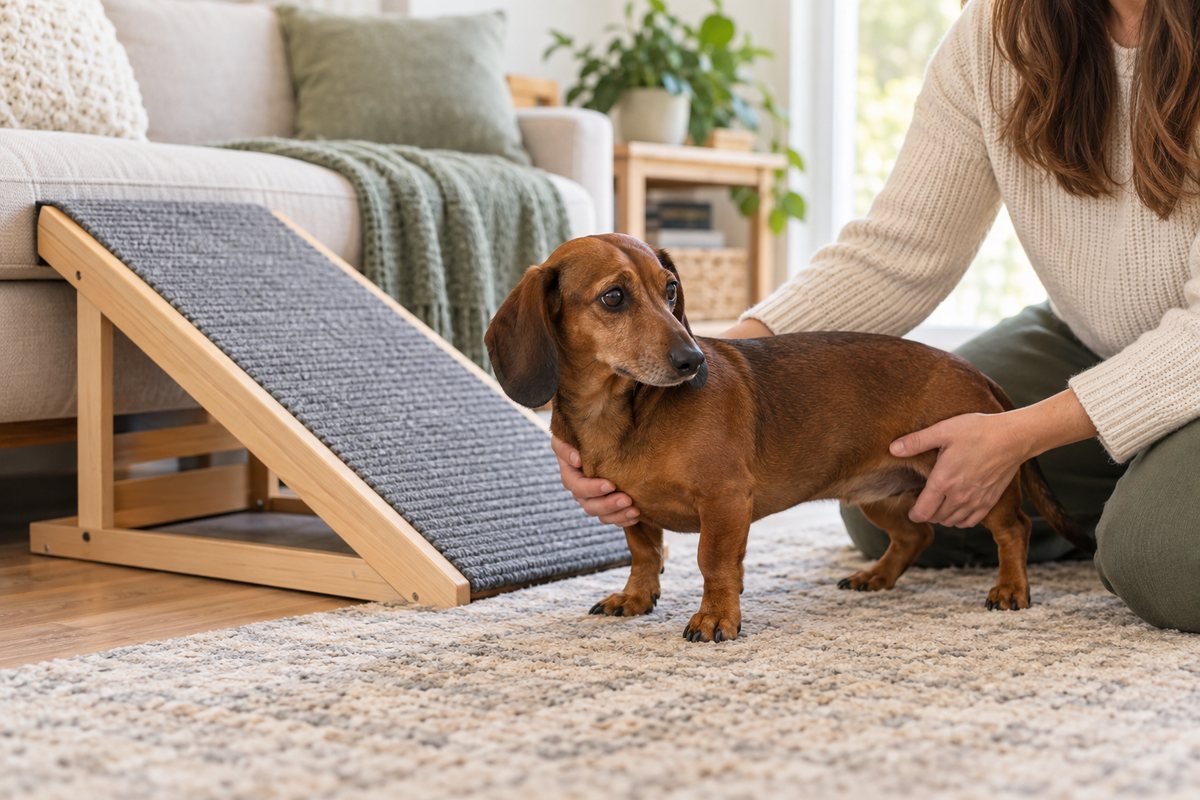
    The World Small Animal Veterinary Association body condition chart groups dogs into under-ideal, ideal, and over-ideal body condition. In the ideal range, ribs should be easy to feel without excess fat, a waist should be visible from above, and the abdomen should tuck up when viewed from the side. That matters for Dachshunds because excess body weight can make lifting, jumping, harness fit, and back-safe movement harder.
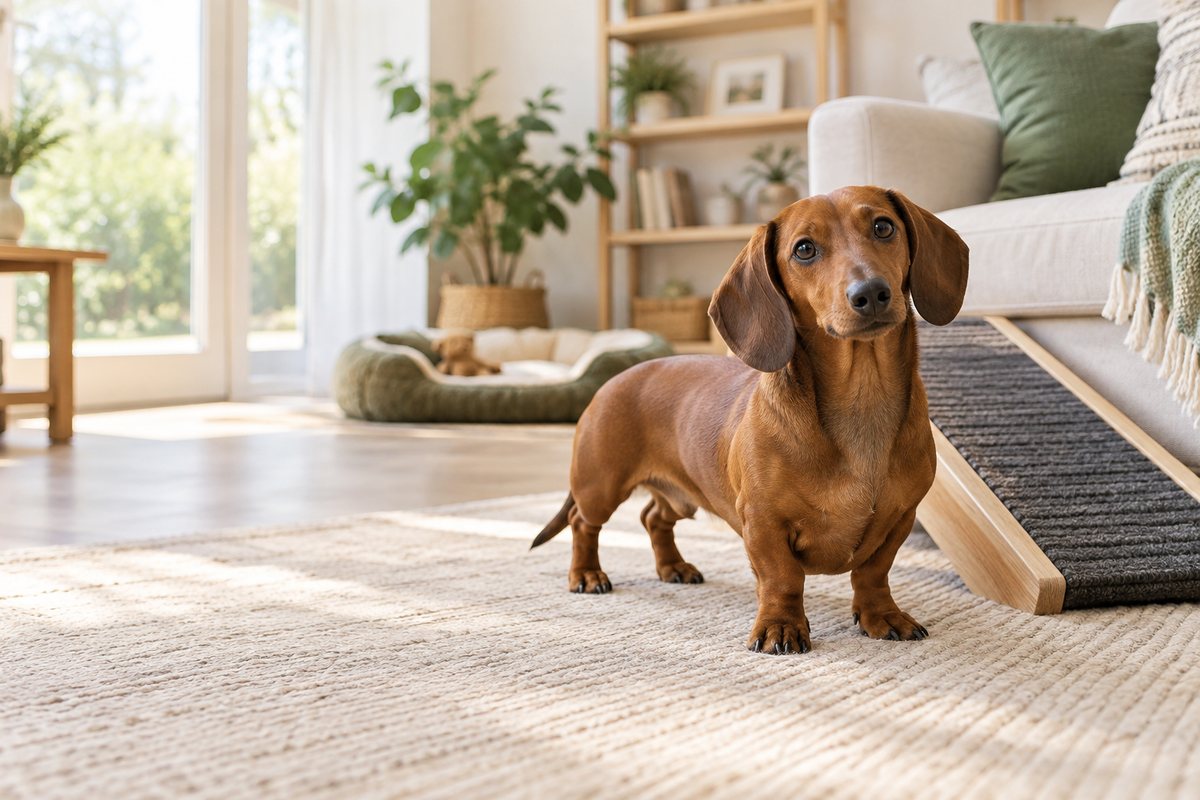
    Dachshund beside a sofa ramp showing why size and weight affect back safety
    • From above: look for a visible waist behind the ribs.
    • From the side: look for an abdominal tuck instead of a flat or sagging belly line.
    • With your hands: feel ribs under a light fat covering, not a hard ridge and not a thick pad.
    • With your vet: ask for a body condition score and a target weight range for your dog’s frame.

    If your Dachshund has pain, weakness, reluctance to jump, a hunched posture, or sudden movement changes, do not treat it as a simple size issue. Read Dachshund back pain signs and contact your veterinarian promptly.

    How to measure your Dachshund at home

    • Weight: use a pet scale or weigh yourself holding the dog, then subtract your own weight.
    • Height: measure from the floor to the top of the shoulders, not the top of the head.
    • Length: measure from the breastbone area to the rear of the thigh if you are fitting coats, crates, or ramps.
    • Chest: measure the deepest part of the chest for harness fit.

    For gear, the chest measurement often matters more than the size label. Dachshunds have a deep chest, short legs, and a long body, so generic small-dog gear may rub or slip. Start with best harness for Dachshunds if you are fitting walking equipment.

    Food portions and size

    Miniatures need smaller portions than standards, but the right amount is still individual. Treats, age, neuter status, activity, and current body condition can change daily calories. If your Dachshund is gaining weight, measure meals instead of guessing and count training treats as part of the day.

    For food decisions, use best food for Dachshunds and what Dachshunds can eat as next steps. For a size chart article, the safest rule is simple: feed the dog in front of you, not the average dog in a table.

    FAQ

    What size is a full-grown Dachshund?

    A full-grown standard Dachshund usually weighs 16 to 32 pounds. A full-grown miniature Dachshund is 11 pounds or under at 12 months or older under the AKC size reference.

    How tall is a Dachshund?

    AKC breed information commonly lists standard Dachshunds around 8 to 9 inches at the shoulder and miniature Dachshunds around 5 to 6 inches. Individual dogs can vary.

    Is a 12-pound Dachshund a miniature or standard?

    In AKC terms, miniature class language is 11 pounds and under at 12 months or older. A 12-pound adult Dachshund sits just above that line, but many owners would informally call a dog in the middle range a tweenie. Health matters more than the nickname.

    Can a miniature Dachshund become a standard?

    A puppy sold as miniature can mature larger than expected. Size is influenced by genetics and growth, and adult classification is clearer once the dog is at least 12 months old.

    What is the healthiest Dachshund weight?

    The healthiest weight is the weight that matches your dog’s frame and ideal body condition. You should be able to feel ribs, see a waist from above, and see an abdominal tuck from the side. Ask your veterinarian for a target range.

    Sources


    Related Dachshund guides

  • Miniature Dachshund vs Standard Dachshund: 7 Best Ways to Choose

    Miniature Dachshund vs Standard Dachshund: 7 Best Ways to Choose

    Miniature Dachshund vs Standard Dachshund is mostly a size and weight comparison, not a separate-breed comparison. In the American Kennel Club standard, Dachshunds are one breed shown in two sizes: miniature and standard. Miniatures are 11 pounds and under at 12 months or older, while standards usually weigh 16 to 32 pounds.

    Miniature Dachshund vs Standard Dachshund size comparison guide

    This Miniature Dachshund vs Standard Dachshund guide is meant to help you choose by lifestyle, handling, training needs, and health priorities. That weight difference can change daily life more than new owners expect. A standard may feel sturdier on walks and harder to carry. A miniature may be easier to travel with but more vulnerable to rough handling. Both sizes still need careful back protection, weight control, training, dental care, and a home set up for a long-bodied dog.

    Miniature Dachshund vs Standard Dachshund quick answer

    The main difference between a miniature Dachshund and a standard Dachshund is adult weight. Under the AKC standard, a miniature Dachshund is 11 pounds or under at 12 months of age and older. A standard Dachshund usually weighs 16 to 32 pounds. Dogs between those ranges are often casually called “tweenies” by owners, but that is not an official AKC size division.

    Miniature Dachshund vs Standard Dachshund at a glance

    Comparison pointMiniature DachshundStandard Dachshund
    AKC weight reference11 lb and under at 12 months or olderUsually 16-32 lb
    Breed statusSame breed, smaller size divisionSame breed, larger size division
    PortabilityEasier to carry and travel withHeavier to lift and transport
    Handling riskCan be easier for children to mishandle because of small sizeMay feel sturdier but still needs back-safe handling
    Gear fitNeeds very small harnesses, collars, crates, coats, and bowlsNeeds larger gear with the same long-body fit concerns
    Best owner fitOwners who want a smaller dog and can protect them from rough handlingOwners who want a bigger Dachshund and can manage the extra weight

    Are miniature and standard Dachshunds different breeds?

    No. Miniature and standard Dachshunds are size divisions within the Dachshund breed. The AKC standard says Dachshunds are bred and shown in two sizes, standard and miniature, and that miniatures are not a separate classification. The Dachshund Club of America uses the same basic weight language in its education materials.

    This matters because you should not choose a miniature expecting a totally different kind of dog. A miniature Dachshund is still a Dachshund: clever, bold, vocal when motivated, food-interested, stubborn at times, and built with a long back that needs sensible care.

    Miniature Dachshund vs Standard Dachshund size and weight differences

    For AKC purposes, size is defined by weight rather than height. Miniatures compete in a class division for dogs 11 pounds and under at 12 months of age and older. Standards usually weigh 16 to 32 pounds. That leaves a practical middle zone: many pet Dachshunds mature over 11 pounds but under the usual standard range. Owners often call those dogs “tweenies,” but that term is informal.

    If your Dachshund is 12 to 15 pounds, do not panic. The more important question is whether your dog has a healthy body condition for their frame. A lean 13-pound Dachshund and an overweight 13-pound Dachshund are very different dogs.

    Temperament: does size change personality?

    Size can affect how a Dachshund moves through the world, but it does not guarantee temperament. A miniature is not automatically calmer or more delicate in attitude. A standard is not automatically easier to train. Both sizes can bark, dig, chase, cuddle, guard resources, resist bad weather, or decide that your schedule is open for negotiation.

    Temperament depends on genetics, early socialization, daily structure, health, training, and the individual dog. If you are choosing a puppy, ask about the parents’ behavior and how the litter is raised. If you are adopting an adult, observe the dog you are actually bringing home.

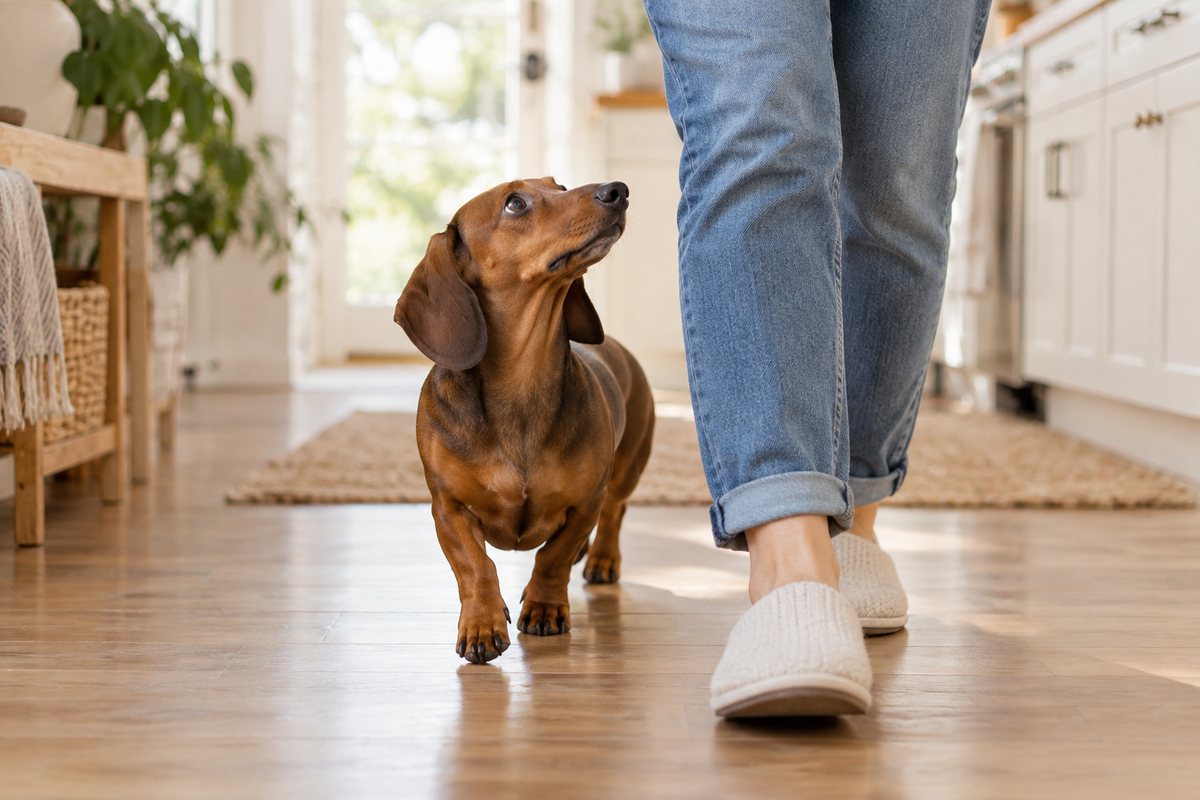
    Dachshund walking closely with an owner during size and temperament comparison

    Miniature Dachshund vs Standard Dachshund training differences

    Miniature and standard Dachshunds usually need the same training principles: short sessions, clear cues, food rewards, consistent routines, and patience. The practical differences come from body size. A standard may pull harder on leash. A miniature may be easier to scoop up, which can accidentally replace training with carrying.

    • For miniatures: avoid rescuing them from every challenge by picking them up. Teach recall, leash skills, crate comfort, and calm handling.
    • For standards: practice loose-leash walking early because more body weight can make pulling harder to manage.
    • For both: prevent jumping habits, teach ramps or waiting to be lifted, and reward calm behavior around doors, visitors, and food.

    If you are starting with a young dog, use the Dachshund Compass guide on how to train a Dachshund puppy as your foundation.

    Miniature Dachshund vs Standard Dachshund health and back safety

    Both miniature and standard Dachshunds need back-aware care. The breed’s long body and short legs are part of its charm, but they also make everyday choices important: weight control, careful lifting, limiting repeated furniture jumping, using ramps where helpful, and calling a veterinarian quickly if back pain signs appear.

    Do not assume a miniature is safer because they are lighter, or that a standard is safer because they feel sturdier. Body condition matters in both sizes. Extra weight puts more strain on a small long-backed dog. A mini that is only a few pounds overweight may be carrying a much bigger percentage of excess body weight than the number suggests.

    Dachshund beside a sofa ramp for miniature and standard back safety

    For warning signs, read Dachshund back pain signs. For broader health context, see common Dachshund health problems.

    Food, weight, and portion control

    Miniature Dachshunds need smaller portions than standards, but both can gain weight quickly. Food labels are only starting points. Your dog’s ideal amount depends on age, neuter status, activity, body condition, treats, and veterinary needs.

    • Measure meals instead of guessing.
    • Count training treats as part of the day.
    • Use body condition, not only the scale, to judge weight.
    • Ask your veterinarian for a target weight if your Dachshund is gaining.

    If diet is your next decision, start with best food for Dachshunds and what Dachshunds can eat.

    Gear and home setup

    The right size changes the gear you buy. A miniature may need very small harnesses, crates, coats, stairs, ramps, and bowls. A standard needs larger gear, but the fit problem is the same: long body, deep chest, short legs, and a back you do not want twisting awkwardly.

    • Harness: look for secure chest fit without rubbing behind the front legs.
    • Crate: your Dachshund should stand, turn, and lie down comfortably.
    • Ramp: choose a stable ramp with a gentle angle and traction.
    • Car travel: use safe restraint and avoid letting your dog jump out.

    For walking gear, see the guide to the best harness for Dachshunds.

    Miniature Dachshund pros and watch-outs

    Miniature pros

    • Easier to carry when necessary.
    • Can be easier for apartment living and travel.
    • Often needs smaller, less expensive gear.
    • May be easier for some owners to manage physically.

    Miniature watch-outs

    • Can be injured by rough handling or falls.
    • Owners may over-carry instead of training skills.
    • Small weight gains matter a lot.
    • Very small gear can be harder to fit securely.

    Standard Dachshund pros and watch-outs

    Standard pros

    • May feel sturdier for active households.
    • Often easier to see and manage around feet and furniture.
    • Can suit owners who want a bigger small dog.
    • Still compact compared with many medium breeds.

    Standard watch-outs

    • Harder to carry safely for some owners.
    • Pulling on leash can be more difficult to manage.
    • Larger crates, ramps, coats, and harnesses cost more.
    • Back-safe lifting matters because the dog is heavier.

    Miniature Dachshund vs Standard Dachshund: which size should you choose?

    Choose a miniature Dachshund if you want the smaller size and are ready to protect the dog from rough handling, manage weight carefully, and avoid treating them like a toy. Choose a standard Dachshund if you want a sturdier-feeling dog and can safely lift, train, and manage the extra weight.

    For most families, the better question is not “miniature or standard?” It is: can you meet this individual dog’s needs for training, back safety, weight control, companionship, and routine?

    FAQ

    Is a miniature Dachshund a separate breed?

    No. Under the AKC standard, miniature and standard Dachshunds are size divisions within the Dachshund breed, not separate breeds.

    What is a tweenie Dachshund?

    “Tweenie” is an informal owner term for a Dachshund that falls between the common miniature and standard weight ranges. It is not an official AKC size division.

    Are miniature Dachshunds easier than standards?

    Not automatically. Miniatures are easier to carry, but they still need training, exercise, back safety, dental care, and weight control. A smaller dog can still be demanding.

    Do standard Dachshunds have fewer back problems?

    You should not choose a standard size assuming back risk disappears. Both sizes need back-aware handling, healthy body condition, and prompt veterinary attention for pain or neurological signs.

    Sources


    Related Dachshund guides

  • Dachshund Coat Types: Smooth, Longhaired & Wirehaired

    Dachshund Coat Types: Smooth, Longhaired & Wirehaired

    Dachshund coat types are smooth, longhaired, and wirehaired. All three are still Dachshunds, but the coat changes how the dog looks, how grooming feels, how much maintenance you should expect, and sometimes what kind of breeder or rescue questions you need to ask.

    Dachshund in a cozy home setting for a coat type guide

    The short version is simple: smooth Dachshunds have a short, sleek coat; longhaired Dachshunds have longer feathering on the ears, chest, underside, legs, and tail; wirehaired Dachshunds have a harsher outer coat with beard and eyebrow furnishings. The best coat type for you depends less on which one is cutest and more on grooming time, shedding tolerance, climate, allergies in the home, and the individual dog’s temperament.

    Quick answer

    The three Dachshund coat types are smooth, longhaired, and wirehaired. The American Kennel Club breed standard lists those three coat varieties and describes smooth coats as short and shining, wirehaired coats as tight and rough with facial furnishings, and longhaired coats as sleek, often slightly wavy, and longer on specific body areas.

    Dachshund coat types compared

    Coat typeHow it looksTypical owner taskGood fit for
    SmoothShort, sleek, close coatWeekly brushing, wipe-downs, nail and ear careOwners who want the lowest coat maintenance
    LonghairedLonger feathering on ears, chest, body underside, legs, and tailMore brushing to prevent tangles and matsOwners who enjoy a softer, flowing coat and regular grooming
    WirehairedHarsh outer coat, undercoat, beard, and eyebrowsBrushing plus coat-specific grooming or hand-stripping adviceOwners who like a scruffy look and can manage texture care

    Smooth Dachshund coat

    A smooth Dachshund has the classic short-haired look many people picture first. The coat lies close to the body and usually feels sleek rather than fluffy. According to the AKC standard, the smooth coat should be short, smooth, and shining, not too long or too thick.

    For owners, this is usually the easiest Dachshund coat to maintain. A soft brush, grooming mitt, or damp cloth can remove loose hair and surface dirt. Smooth does not mean no shedding, though. Smooth Dachshunds can still leave hair on blankets, sofas, and clothing, especially during seasonal changes.

    Smooth coat pros

    • Fastest coat care routine.
    • Easier to inspect skin, ticks, lumps, or irritation.
    • Less matting risk than longhaired or wirehaired coats.
    • Good choice if you want a simple grooming schedule.

    Smooth coat watch-outs

    • Can feel colder in winter or wet weather.
    • Still sheds, even with short hair.
    • May need sweaters or coats in cold climates.
    • Sun and skin issues may be easier to notice, but still need attention.

    Longhaired Dachshund coat

    Longhaired Dachshunds have a softer, more elegant look. The AKC standard describes the longhaired coat as sleek and glistening, often slightly wavy, with longer hair under the neck, on the forechest, underside of the body, ears, behind the legs, and tail.

    Dachshund during a calm home coat and skin check

    This coat often needs more routine brushing than a smooth coat. Pay special attention behind the ears, under the chest, under the belly, behind the front legs, and around the tail, because longer hair can tangle where friction happens.

    Longhaired coat pros

    • Soft, flowing look many owners love.
    • May offer a little more weather comfort than a very short coat.
    • Brushing sessions can become useful handling practice.
    • Loose hair may be easier to catch with a brush before it spreads around the home.

    Longhaired coat watch-outs

    • More tangle and mat risk.
    • Needs more frequent brushing than a smooth Dachshund.
    • Feathering can collect leaves, burrs, mud, and snow.
    • Ear feathering and tail hair may need extra attention.

    Wirehaired Dachshund coat

    Wirehaired Dachshunds have the scruffiest of the three Dachshund coat types. The AKC standard describes a tight, short, thick, rough, hard outer coat with a finer undercoat, plus distinctive beard and eyebrow furnishings. From a distance, a wirehaired Dachshund should still look like a Dachshund, not like a fluffy mixed-coat dog.

    Wire coats can be confusing for new owners because texture varies. Some dogs have a harder, more classic wire coat, while others look softer. If you want a show-standard wire coat or plan to breed, talk with experienced breed people. If you are adopting as a companion, focus on comfort, skin health, and a grooming routine that prevents irritation.

    Wirehaired coat pros

    • Distinctive beard-and-eyebrow expression.
    • Harsh coat texture can be practical for outdoor adventures.
    • Often has a charming, rugged look.
    • May hide dirt better than a pale smooth coat, although it still needs care.

    Wirehaired coat watch-outs

    • May need coat-specific grooming advice.
    • Facial furnishings can collect food, water, and debris.
    • Texture varies, so ask what maintenance the individual dog needs.
    • Soft, curly, or irregular coats may not match the breed-standard wire description.

    Do Dachshund coat types change personality?

    Many owners have strong opinions about coat type and personality, but coat alone should not be treated as a guarantee. A Dachshund’s behavior comes from genetics, early socialization, training, health, daily routine, and the individual dog. Choose the coat you can care for, then evaluate the actual puppy or adult dog in front of you.

    If you are comparing puppies, ask about the parents’ temperaments, how the puppies are raised, what handling they receive, and how the breeder or rescue evaluates confidence and recovery from stress. Coat is visible right away; temperament takes more careful observation.

    Which Dachshund coat type sheds the least?

    All Dachshunds can shed. Smooth coats may drop short hairs that stick into fabric. Longhaired coats may leave longer, softer hair that is easier to see. Wirehaired coats vary depending on texture and grooming. If shedding matters in your home, meet adult dogs of each coat type before deciding.

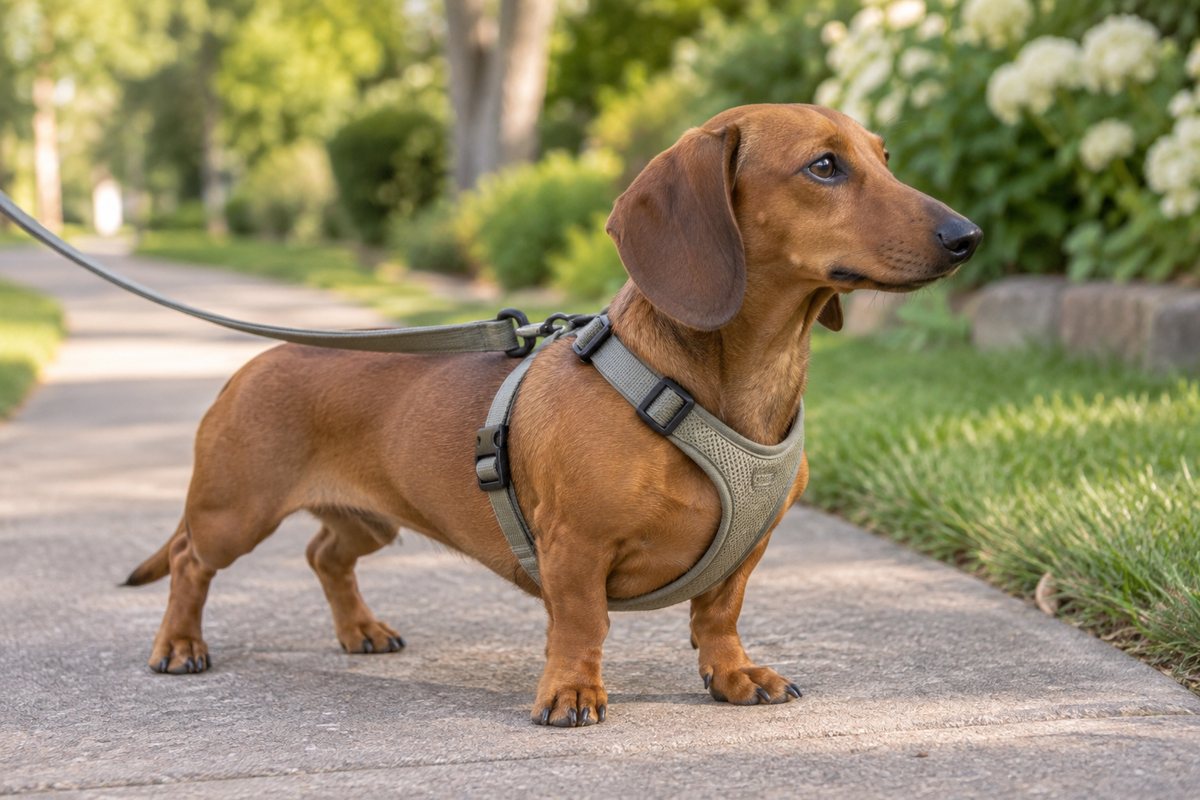
    Dachshund coat visible during a fitted harness check

    Grooming checklist by coat type

    • Smooth: brush or wipe weekly, check nails, ears, skin, and seasonal shedding.
    • Longhaired: brush several times per week, check friction areas, remove outdoor debris, and watch for mats.
    • Wirehaired: brush routinely, clean beard furnishings, ask a groomer or breeder about coat texture, and avoid harsh clipping choices without advice.

    Coat colors and patterns are separate from coat type

    Coat type means smooth, longhaired, or wirehaired. Color and pattern are separate topics. A Dachshund can be red, black and tan, chocolate and tan, cream, dapple, brindle, piebald, or another recognized or non-standard color depending on registry rules. Do not confuse “longhaired” with “cream,” or “wirehaired” with “wild boar.” One describes hair texture and length; the other describes color or pattern.

    The Royal Kennel Club also notes that health and temperament should be a priority over color when choosing a dog. That advice matters for Dachshunds because visual appeal can distract buyers from questions about back health, eye testing, responsible breeding, socialization, and long-term care.

    How to choose the best coat type for your home

    1. Be honest about grooming time. If you dislike brushing, a longhaired coat may frustrate you.
    2. Think about climate. Short coats may need extra winter protection; longer coats may collect debris outdoors.
    3. Meet adult dogs. Puppies do not always show the full maintenance picture.
    4. Ask about health, not just looks. Back safety, weight, dental care, and temperament matter more than coat.
    5. Choose the individual dog. The right dog with a manageable coat is better than the prettiest coat with the wrong lifestyle fit.

    Related guides

    If you are comparing Dachshund varieties, read miniature Dachshund vs standard Dachshund next. For body and weight context, see the Dachshund size chart. For grooming routines, read how to groom a Dachshund when that guide is live.

    FAQ

    What are the three Dachshund coat types?

    The three Dachshund coat types are smooth, longhaired, and wirehaired. Smooth is short and sleek, longhaired has longer feathering, and wirehaired has a rougher coat with beard and eyebrows.

    Which Dachshund coat type is easiest to groom?

    Smooth Dachshunds are usually the easiest to groom because the coat is short and close to the body. They still need brushing, nail care, ear checks, bathing when needed, and skin checks.

    Are wirehaired Dachshunds hypoallergenic?

    No Dachshund coat type should be assumed hypoallergenic. People react differently to dogs, and allergens can come from dander and saliva as well as hair. Spend time around the individual dog before deciding.

    Can two Dachshunds with different coats be bred together?

    Rules and best practices depend on registry, country, and breeding goals. If you are buying from a breeder, ask why a pairing was chosen, what coat outcomes are expected, and what health testing supports the litter.

    Sources


    Related Dachshund guides

  • How to Train a Dachshund Puppy: 7 Steps

    How to Train a Dachshund Puppy: 7 Steps

    How to train a Dachshund puppy starts with short, predictable, reward-based lessons. Start on the first day your puppy comes home: set a potty routine, introduce the crate as a calm resting place, reward the behaviors you want, and protect your puppy’s long back by teaching safer movement early.

    Dachshunds are clever hounds with big opinions. That does not mean they are impossible to train. It means your plan needs to be clearer than your puppy’s impulses: same cues, same schedule, tiny food rewards, lots of praise, and no long lectures after mistakes.

    How to train a Dachshund puppy: quick training plan

    • 8-12 weeks: name response, potty schedule, crate comfort, gentle handling, safe socialization, and simple cues like sit and come.
    • 3-4 months: longer sleep stretches, leash basics, door manners, calm alone-time practice, and consistent redirection for biting or barking.
    • 4-6 months: proof cues around distractions, build recall, prevent jumping from furniture, and keep house training consistent through adolescence.

    For most families, the best answer to how to train a Dachshund puppy is to build one repeatable daily rhythm: potty first, short lesson next, rest after that, and calm rewards whenever your puppy chooses the behavior you want.

    Before you start: set up the house

    A Dachshund puppy learns faster when the environment makes good choices easy. Before training sessions, prepare a small puppy zone with a crate or pen, washable bedding, safe chew toys, water, and baby gates. Block access to rugs, bedrooms, couches, stairs, and hidden corners until potty habits are reliable.

    Use a harness rather than relying only on a collar for walks. Because Dachshunds have a long body and short legs, also think about back-safe habits from the beginning: lift your puppy with support under the chest and rear, prevent repeated furniture jumping, and teach ramps or steps slowly rather than letting the puppy launch on and off sofas. For more body-safety context, read the Dachshund Compass guide to Dachshund back pain signs.

    Step 1: teach your puppy their name

    Your puppy’s name should mean, “Look at me, something good is coming.” Say the name once in a cheerful voice. When your puppy turns toward you, mark it with “yes” and give a tiny treat. Practice five to ten times, then stop before your puppy gets bored.

    Do not use the name as a warning. If “Daisy, no!” is the sound your puppy hears all day, the name becomes background noise. Use the name for attention, then give a clear cue: “Daisy, come,” “Daisy, sit,” or “Daisy, outside.”

    Step 2: start potty training on day one

    The American Kennel Club recommends starting Dachshund housetraining as soon as the puppy comes home, using a regular schedule and the same potty area each time. That consistency matters because many Dachshund puppies are confident enough to invent their own bathroom rules if the house is too open too soon.

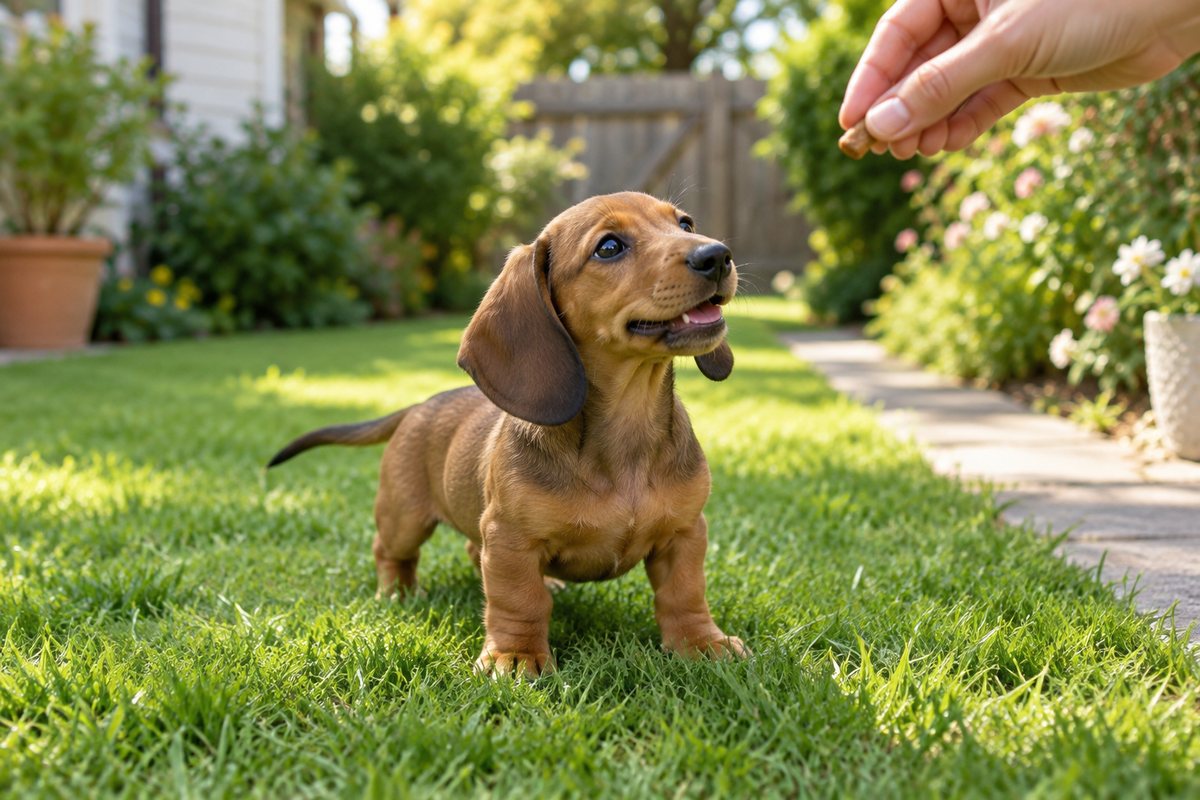
    Take your puppy out after waking, after eating, after drinking, after play, after naps, before bedtime, and any time sniffing or circling starts. Go to the same spot, use a simple phrase like “go potty,” and reward immediately after your puppy finishes. The reward must happen outside, not after you walk back into the kitchen.

    How to train a Dachshund puppy with outdoor potty rewards

    A simple Dachshund puppy potty schedule

    TimeWhat to do
    MorningCarry or walk your puppy straight outside before greeting, feeding, or play.
    After mealsGo outside within 5-15 minutes, then again after active play.
    During playPause every 20-30 minutes for a potty break.
    After napsOutside immediately. Puppies often need to go as soon as they wake.
    EveningFinal potty trip right before bed.

    If accidents happen, clean them with an enzymatic cleaner and tighten supervision. Punishment after the fact does not teach your puppy where to go. It usually teaches the puppy to hide next time.

    Step 3: make the crate a safe resting place

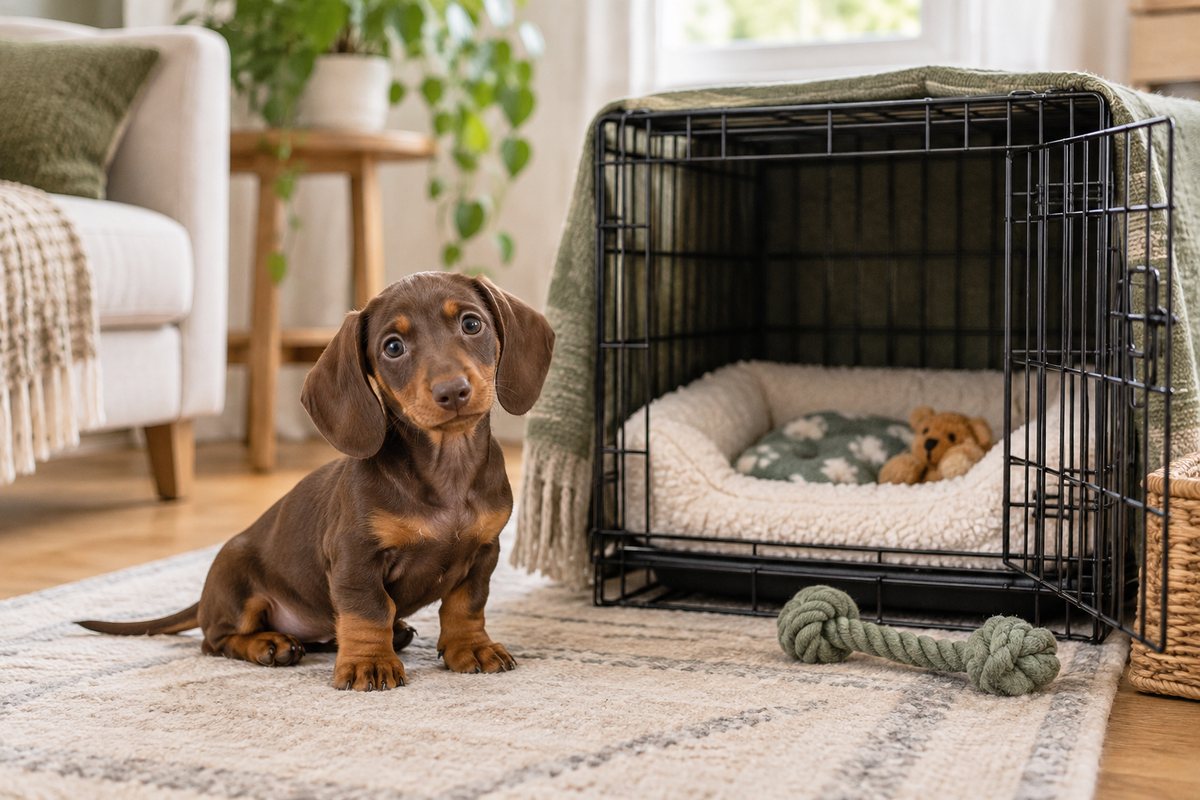
    A crate can help with sleep, travel, safety, and potty training, but only if your puppy learns that the crate is comfortable. Choose a crate that is big enough for standing, turning, and lying down, but not so large that one end becomes a bathroom. If you bought an adult-size crate, use the divider. This is a practical part of how to train a Dachshund puppy because it gives your puppy a predictable place to rest between lessons.

    Feed meals near the crate, toss treats inside, and let your puppy walk in and out without pressure. Then close the door for a few seconds while your puppy is calm. Build slowly: seconds first, then minutes, then a short nap. If your puppy panics, reduce the difficulty. The goal is not to “win” a crying contest; it is to teach calm confinement.

    • Put the crate near you at night for the first few days.
    • Take your puppy outside after every crate nap.
    • Do not use the crate as punishment.
    • Give a safe chew only when you can supervise.

    Step 4: use short positive training sessions

    Dachshunds were bred to work with confidence and persistence. That is useful when you teach them clearly, and frustrating when training becomes repetitive. Keep sessions to two or three minutes for a young puppy. End while your puppy still wants more.

    Use tiny soft treats, praise, and play. Reward the exact behavior you want. If you ask for “sit,” reward while your puppy is sitting. If you ask for “come,” reward when your puppy reaches you, not after they wander away again.

    First cues to teach

    • Sit: lure your puppy’s nose slightly up and back, then reward when the rear touches the floor.
    • Come: crouch, sound happy, reward generously, and never call your puppy for punishment.
    • Touch: teach your puppy to bump your hand with their nose. This is useful for recall and redirection.
    • Drop it: trade for a treat or toy before your puppy learns to run away with forbidden items.
    • Settle: reward calm lying down on a mat or bed.

    Step 5: socialize safely before the window closes

    Socialization is not the same as letting everyone touch your puppy. It means carefully introducing people, surfaces, sounds, handling, car rides, grooming tools, and friendly vaccinated dogs at an intensity your puppy can handle. The American Veterinary Society of Animal Behavior notes that the first three months are the most important window for puppy socialization and recommends safe socialization before puppies are fully vaccinated.

    Ask your veterinarian which places are safe in your area. A well-run puppy class, visits with healthy vaccinated dogs, sitting outside a quiet store, hearing traffic from a safe distance, and practicing gentle handling at home can all build confidence without flooding your puppy.

    Step 6: prevent barking habits early

    Dachshunds often notice everything: doors, windows, footsteps, squirrels, neighbors, and every suspicious leaf. Do not wait until barking is a full-time hobby. Reward quiet attention, teach a “thank you” cue, and manage the view from windows if your puppy rehearses barking all day. If barking is already your biggest problem, the companion guide on why Dachshunds bark so much explains the common triggers.

    When your puppy notices a trigger, say “yes” before the bark starts and feed a treat. You are teaching the puppy that seeing something does not require sounding the alarm. If barking has already started, calmly move your puppy away, wait for quiet, then reward.

    Step 7: teach back-safe habits

    Training a Dachshund puppy is also about protecting their body. Dachshunds are known for back risk, including intervertebral disc disease. The Dachshund Club of America advises lifestyle habits that limit the possibilities of disc herniation, including avoiding obesity, reducing excessive jumping, and teaching quiet confinement when needed. In other words, how to train a Dachshund puppy should include safe movement habits, not only obedience cues.

    Make the safe choice easier than the risky one. Put ramps near furniture you allow. Block furniture you do not allow. Reward all four paws on the floor. Teach your puppy to wait to be lifted rather than jumping from your arms or off the couch.

    Dachshund using a cozy home ramp for back-safe training habits

    Common Dachshund puppy training mistakes

    When you review how to train a Dachshund puppy, most setbacks come from giving the puppy too much freedom before the routine is reliable.

    • Giving too much freedom too soon. A puppy who can wander out of sight can practice accidents, chewing, and barking before you can teach better choices.
    • Repeating cues. “Sit, sit, sit” teaches your puppy that the first cue does not matter. Say it once, help, then reward.
    • Making sessions too long. A bored Dachshund puppy may look stubborn when they are simply done.
    • Using punishment for potty accidents. This damages trust and rarely improves housetraining.
    • Ignoring body safety. Jumping on and off furniture can become a habit before owners realize it.

    When to get help

    Talk with your veterinarian or a qualified positive-reinforcement trainer if your puppy is not making potty progress by 4-6 months, panics in confinement, growls when handled, guards food or toys, or seems unusually fearful. Early help is easier than waiting until the pattern is stronger. If you keep wondering how to train a Dachshund puppy after several consistent weeks, a trainer can spot timing, reward, or environment issues that are easy to miss at home.

    Sources

    Affiliate disclosure: If you buy through links on this page, I may earn a commission at no extra cost to you.

    For owners who want a structured, positive-reinforcement training plan at home, Brain Training for Dogs is an online course that can pair well with short daily Dachshund training sessions.


    Related Dachshund guides