The best food for miniature Dachshunds is a complete and balanced small-breed or adult dog food that is easy to measure, calorie-appropriate, and matched to your dog’s life stage. Miniature Dachshunds do not need a trendy boutique diet. They need a reliable food, tiny treat portions, and a feeding plan that keeps their waist visible. Because they are small, a few extra bites can quickly become too many calories.
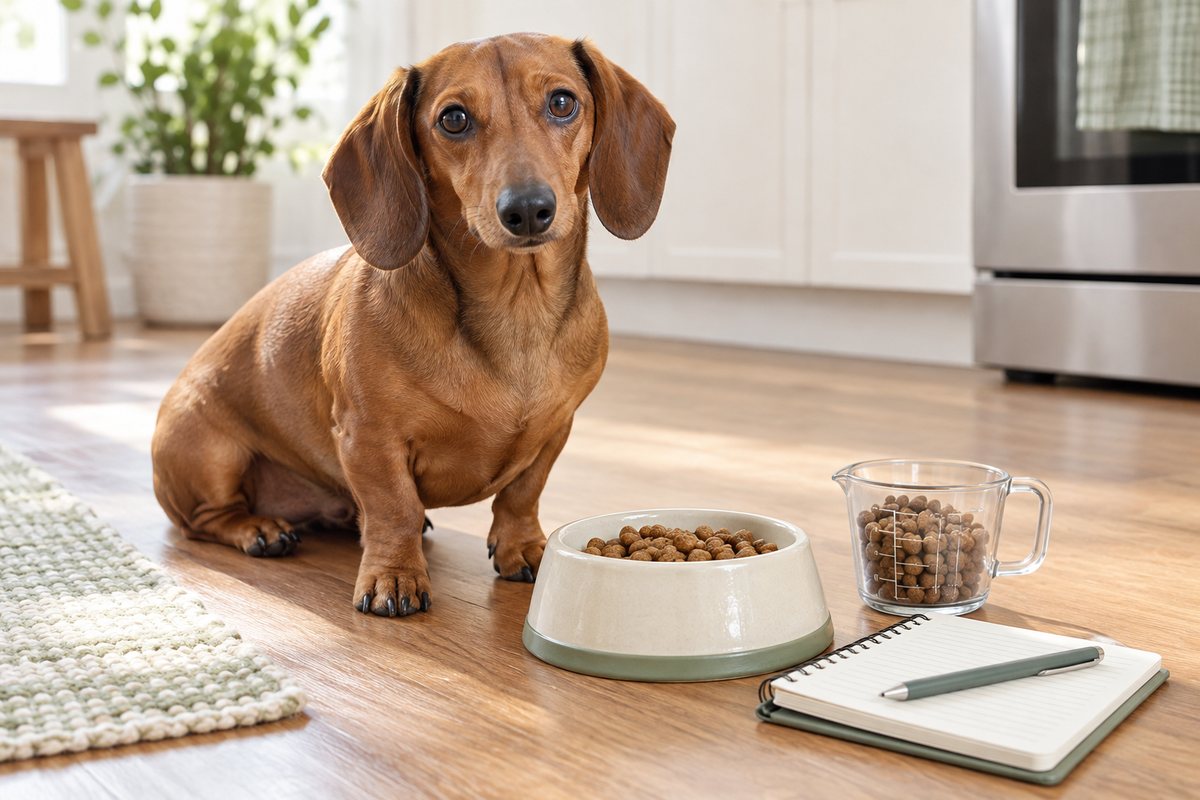
This guide focuses on miniature Dachshunds: small portions, kibble size, weight control, puppy versus adult food, wet food, sensitive stomach choices, and what to check on the label. If your mini Dachshund has pancreatitis, kidney disease, diabetes, food allergies, bladder stones, chronic vomiting, chronic diarrhea, obesity, or a prescription diet, ask your veterinarian before changing food.
Table of Contents
Best food for miniature Dachshunds: quick answer
For most healthy adult miniature Dachshunds, choose a complete and balanced adult maintenance food with clear calories, feeding directions, and an AAFCO nutritional adequacy statement. A small-breed adult formula is often convenient because the pieces are smaller and the feeding chart may be easier to apply to a 10- to 12-pound dog. But the best food for miniature Dachshunds is the one that keeps your individual dog lean, energetic, comfortable, and digesting well.
Start with the label’s feeding guide, then adjust based on body condition. You should be able to feel the ribs under a light fat cover and see a waist from above. If your miniature Dachshund’s waist disappears, the food may not be wrong, but the total daily calories probably need attention.
What miniature Dachshunds need from food
Miniature Dachshunds have the same core nutrition needs as other dogs: protein, fat, carbohydrates, vitamins, minerals, water, and the right calorie level. What changes is the margin for error. A spoonful of topper, a dental chew, and a few training treats can represent a large share of the day for a small dog.
- Complete nutrition: the main food should be complete and balanced, not a topper or snack.
- Measured calories: small dogs need careful portions because extras add up fast.
- Chewable texture: kibble pieces should be comfortable for a small mouth.
- Good stool quality: the food should not cause chronic soft stool, gas, or vomiting.
- Weight support: the diet should help your dog stay lean without constant hunger.
Mini Dachshunds are often persuasive beggars. Food motivation is useful for training, but it also makes overfeeding easy. Use the treat strategy from best treats for Dachshund training: pea-size rewards, counted calories, and part of the meal used during training.
Label checks before buying
AAFCO notes that complete and balanced pet foods should include a nutritional adequacy statement and feeding directions. WSAVA’s nutrition resources encourage owners to look beyond marketing terms and ask whether the company has nutrition expertise, appropriate formulation practices, quality control, and nutrient information available. These checks matter more than whether the bag uses words like premium, ancestral, or holistic.
| What to check | Why it matters | Mini Dachshund angle |
|---|---|---|
| Life-stage statement | Shows whether the food is for growth, adult maintenance, or all life stages | Puppies should not eat adult-only maintenance food |
| Calories per cup or can | Lets you compare foods accurately | Higher-calorie foods may require surprisingly tiny portions |
| Feeding directions | Gives a starting portion | Use it as a starting point, not a guarantee |
| Kibble size or texture | Affects chewing comfort | Small pieces are often easier for mini Dachshunds |
| Manufacturer quality control | Shows whether the company can support consistent food safety and nutrition | Important when the food is fed daily for years |
| Veterinary support for medical diets | Protects dogs with disease-specific needs | Do not self-prescribe therapeutic diets |
If two foods both look good, compare calories. A miniature Dachshund eating a calorie-dense food may need a portion that looks small to a person. That can lead owners to add extra toppers, which then causes weight gain. The fix is not always a new brand. Sometimes it is a lower-calorie formula, a slow feeder, a puzzle feeder, or more precise measuring.
Best food types by need
Use this table as a buying guide. It is better to choose by need than to chase a single universal product. Product formulas change, and two miniature Dachshunds can respond differently to the same food.
| Need | Best food type | What to prioritize |
|---|---|---|
| Healthy adult mini Dachshund | Small-breed adult or adult maintenance food | Complete and balanced, clear calories, good stool |
| Puppy | Puppy or all-life-stages food labeled for growth | Growth adequacy, small kibble, steady appetite |
| Easy weight gain | Veterinarian-guided lower-calorie plan | Calories, body condition, treat limit |
| Picky eater | Complete wet food, dry food with measured topper, or mixed feeding | Total calories and consistency |
| Sensitive stomach | Consistent complete diet with slow transition | Vet review if symptoms persist |
| Dental discomfort | Wet food or softened complete food if recommended | Dental exam, not only softer meals |
| Medical condition | Prescription or therapeutic diet | Veterinary diagnosis and follow-up |
For broader food selection criteria, connect this article with best food for Dachshunds. For safe add-ons and snacks, use what Dachshunds can eat and what Dachshunds should not eat.
Puppy, adult, and senior mini Dachshunds
Life stage matters. A miniature Dachshund puppy is not just a smaller adult. Puppies need growth nutrition and regular meals. Adults need maintenance nutrition with careful portions. Seniors may need changes based on muscle, teeth, appetite, weight, kidney values, or other health findings.
| Life stage | Food priority | Owner check |
|---|---|---|
| Puppy | Complete growth diet | Steady growth, stool, appetite, and schedule |
| Young adult | Adult maintenance after maturity | Waist, energy, coat, and measured meals |
| Senior | Diet matched to health and body condition | Weight trends, muscle, teeth, appetite, labwork |
| Overweight | Calorie-controlled plan | Body condition and treat budget |
| Medical diet | Veterinary therapeutic food | Follow the prescription and avoid random toppers |
If your mini Dachshund is still growing, keep feeding routines predictable. Food timing affects potty timing, crate comfort, and training focus. Use the Dachshund puppy schedule for the daily structure around meals, naps, potty trips, and play.
Portion control for small dogs
Portion control is the center of feeding a miniature Dachshund well. AAHA nutrition and weight-management guidance emphasizes body condition score, muscle condition, calorie planning, and keeping most calories from complete and balanced food. Treats and noncomplete extras should stay small because they dilute balanced nutrition and add calories.
- Find the food’s calories per cup, can, or serving.
- Use the feeding chart as a starting point for your dog’s weight and life stage.
- Measure meals with a real measuring cup or kitchen scale.
- Set a daily treat budget before training begins.
- Break treats into tiny pieces.
- Check body condition every two to four weeks.
- Ask your veterinarian for a calorie target if your dog is gaining weight.
A common mistake is feeding the right food in the wrong amount. Another is measuring the main food carefully but ignoring chews, dental sticks, peanut butter, cheese, training treats, and table scraps. Your mini Dachshund’s body counts all of it.

Wet, dry, or mixed food
Dry food, wet food, and mixed feeding can all work. The right choice depends on chewing comfort, appetite, budget, storage, stool quality, and calorie control. If you mix wet and dry food, calculate the total food amount instead of giving a full serving of each.
| Food style | Pros | Watch-outs |
|---|---|---|
| Dry food | Easy to store, measure, and use in puzzle toys | Some formulas are calorie dense |
| Wet food | Often appealing and easy to chew | Calories per can still matter |
| Mixed feeding | Can improve interest without abandoning kibble | Easy to double-feed by accident |
| Fresh commercial food | May be palatable and portioned | Check adequacy, calories, storage, and company standards |
| Homemade food | Can be tailored when professionally formulated | High risk of imbalance without a veterinary nutritionist |
If your dog suddenly refuses a food they normally like, do not assume pickiness first. Dental pain, stomach upset, back pain, nausea, and other illness can change appetite. For breed-specific warning signs, read Dachshund health problems and contact your veterinarian if symptoms persist.
What to avoid
Mini Dachshunds are small enough that food experiments can affect them quickly. Be especially careful with high-fat scraps, frequent toppers, unbalanced homemade meals, and diets chosen only because they sound natural.
- Avoid adult maintenance food for puppies unless your veterinarian says it is appropriate.
- Avoid unbalanced homemade diets without a board-certified veterinary nutritionist’s recipe.
- Avoid raw diets without discussing food-safety and nutrition risks with your veterinarian.
- Avoid grain-free or legume-heavy diets chosen only by trend.
- Avoid fatty table scraps, cooked bones, onion, garlic, grapes, raisins, chocolate, xylitol, and alcohol.
- Avoid changing foods repeatedly without tracking symptoms and calories.
The FDA has investigated reports of non-hereditary canine dilated cardiomyopathy associated with both grain-free and grain-containing diets. This does not mean every grain-free food is automatically harmful, but it does mean owners should avoid trend-based diet decisions and involve a veterinarian when choosing unusual diets.
How to switch food safely
For routine changes, switch gradually over about a week. Some dogs need longer. If your veterinarian is changing food for a medical reason, follow their instructions instead.
| Days | Current food | New food |
|---|---|---|
| 1 to 2 | 75% | 25% |
| 3 to 4 | 50% | 50% |
| 5 to 6 | 25% | 75% |
| 7+ | 0% | 100% |
Call your veterinarian if your miniature Dachshund has repeated vomiting, persistent diarrhea, blood in stool, severe itching, facial swelling, weakness, painful belly, sudden appetite loss, or weight loss. A different food may be part of the answer, but those signs deserve a health check.
FAQ
Do miniature Dachshunds need small-breed dog food?
Small-breed food is often convenient because the kibble is smaller and the calorie chart may fit small dogs better. It is not mandatory. A complete adult food can work if the calories, portion size, texture, and life-stage statement fit your dog.
How much should a miniature Dachshund eat?
There is no single cup amount for every mini Dachshund because foods differ in calories. Use the label as a starting point, measure meals, count treats, and adjust based on body condition. Ask your veterinarian for a calorie target if your dog is gaining or losing weight.
Is wet food better for miniature Dachshunds?
Wet food can be helpful for dogs that need a softer texture or stronger smell, but it is not automatically better. It still needs to be complete and balanced, and you still need to count calories per can or tray.
Can mini Dachshunds eat human food?
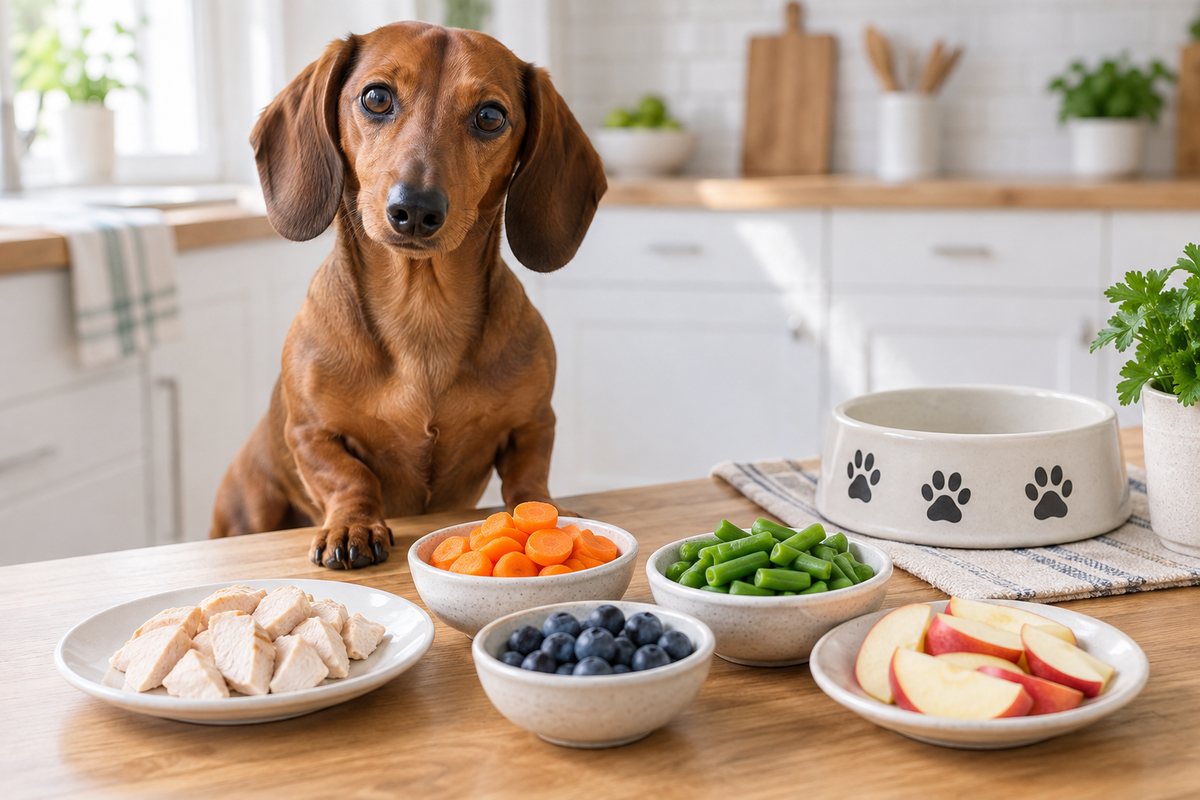
They can eat small amounts of some dog-safe human foods, but these should be extras, not the main diet. Plain cooked lean meat, carrot, green bean, blueberry, apple without seeds, and plain pumpkin may be okay for many dogs. Avoid toxic foods and keep portions tiny.
What if my miniature Dachshund is always hungry?
First confirm that your dog is getting enough calories and has no medical issue. If they are healthy but food-focused, try puzzle feeders, meal training, lower-calorie vegetables that are safe for dogs, and a veterinarian-approved lower-calorie food if weight is a problem.
Sources
- AAFCO: Selecting the Right Pet Food
- AAFCO: Reading Pet Food Labels
- WSAVA Global Nutrition Guidelines and Toolkit
- AAHA: Feeding Plans for Healthy, Appropriate Weight Cats and Dogs
- FDA: Questions and Answers on Potential Causes of Non-Hereditary DCM in Dogs
- Merck Veterinary Manual: Nutritional Requirements of Small Animals