The best food for Dachshund puppies is a complete and balanced puppy food, or an all-life-stages food labeled for growth, that supports steady development without excess weight gain. Dachshund puppies need more than a cute small-breed kibble. They need the right life-stage statement, measured meals, tiny training rewards, and a feeding schedule that works with potty training, crate training, naps, and growth.
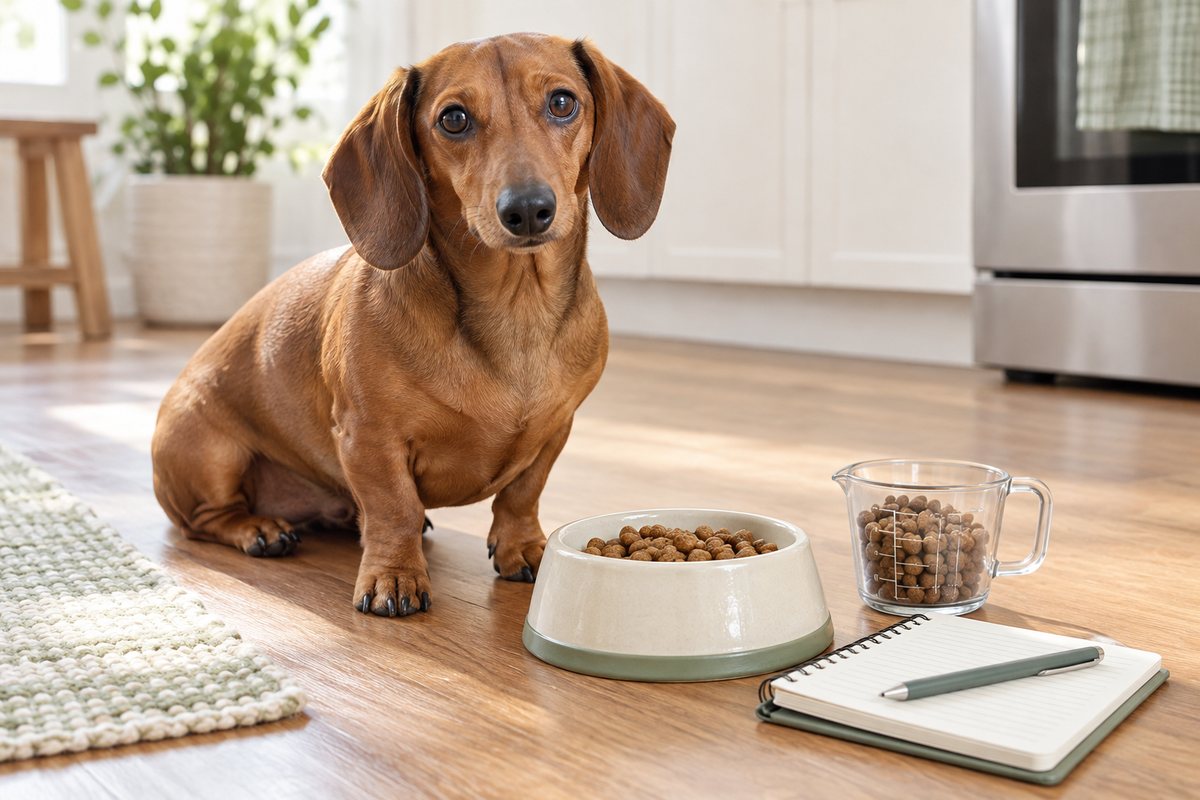
This guide explains how to choose Dachshund puppy food, how often to feed, when to switch to adult food, whether wet food is useful, and what mistakes to avoid. It is for healthy Dachshund puppies. If your puppy is not eating, has vomiting or diarrhea, is underweight, is gaining too fast, has parasites, has a medical diagnosis, or came home very young, ask your veterinarian for a specific feeding plan.
Table of Contents
Best food for Dachshund puppies: quick answer
Choose a puppy food with an AAFCO nutritional adequacy statement for growth, or an all-life-stages food that includes growth. Small-breed puppy food often works well because the kibble is easier to chew and the feeding chart fits smaller bodies. The best food for Dachshund puppies should help your puppy grow steadily, keep stools normal, maintain good energy, and support a lean body condition.
Do not feed adult maintenance food to a young puppy unless your veterinarian specifically recommends it. Puppies need a diet designed for growth. Merck Veterinary Manual notes that puppies need special puppy food with enough calories, fat, protein, vitamins, and minerals for development. VCA also advises checking the label for an AAFCO statement that the food is complete and balanced for growth.
What to look for in Dachshund puppy food
Start with life stage, not flavor. Puppy nutrition is less forgiving than adult feeding because growth requires the right nutrient balance. AAFCO explains that pet food labels use nutritional adequacy statements to show whether a food is complete and balanced for a life stage such as growth or adult maintenance.
| Label check | Why it matters | Dachshund puppy note |
|---|---|---|
| Growth or all-life-stages statement | Shows the food is intended for puppies | Adult maintenance alone is not the normal puppy choice |
| Calories per cup or can | Helps you measure and compare foods | Small puppies can be overfed quickly |
| Feeding directions for growth | Gives an age and weight starting point | Adjust with your vet as your puppy grows |
| Small kibble or soft texture | Supports chewing comfort | Useful for miniature puppies and young pups |
| Manufacturer quality control | Shows whether the company can support reliable nutrition | Important when food is the main diet every day |
| Veterinary guidance for problems | Protects puppies with poor growth or symptoms | Do not guess through chronic vomiting or diarrhea |
A food can be expensive and still be a poor fit if the life-stage statement is wrong, the calories are hard to manage, or the company cannot answer basic nutrition questions. WSAVA’s nutrition toolkit encourages owners and veterinary teams to consider formulation expertise, quality control, and nutrient information rather than choosing by marketing language alone.
Best puppy food types by need
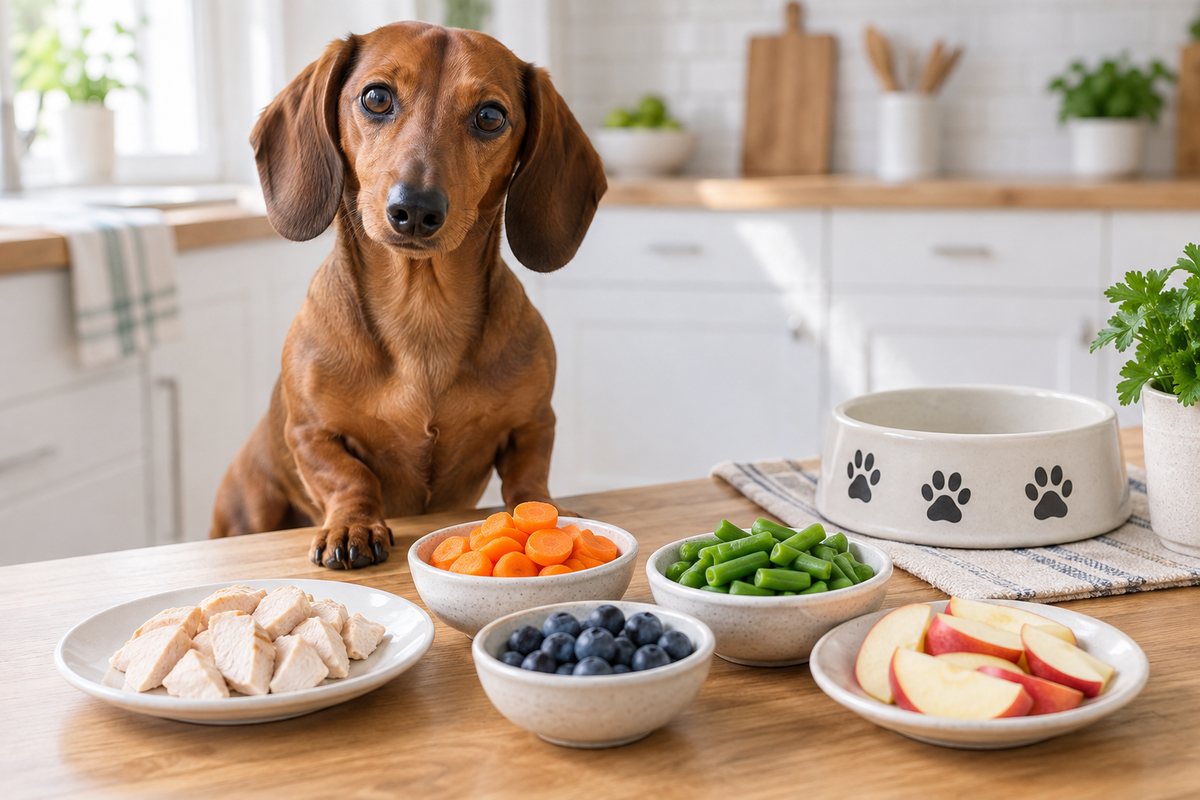
There is no single best product for every Dachshund puppy. The right choice depends on your puppy’s age, expected adult size, appetite, stool quality, chewing comfort, and veterinary history. Use this table to narrow the category first.
| Puppy need | Best food type | What to prioritize |
|---|---|---|
| Typical healthy puppy | Small-breed puppy food | Growth adequacy statement, small kibble, clear calories |
| Miniature puppy | Small-breed puppy or growth food with tiny portions | Chew size and precise measuring |
| Standard puppy | Puppy or all-life-stages growth food | Steady lean growth, not rapid weight gain |
| Picky puppy | Complete wet food, softened kibble, or mixed feeding | Total calories and consistency |
| Sensitive stomach | Consistent growth diet with slow transition | Vet help if symptoms persist |
| Underweight puppy | Veterinarian-guided calorie plan | Parasite check, growth tracking, meal frequency |
| Medical issue | Veterinary therapeutic or directed diet | Diagnosis before diet experiments |
If you are comparing puppy food to adult food, remember the job is different. Adult food maintains an already-grown dog. Puppy food supports growth. That difference is why the life-stage statement matters more than the ingredient photo on the front.
Dachshund puppy feeding schedule
A Dachshund puppy feeding schedule should support digestion, potty predictability, training, and sleep. Merck’s puppy feeding schedule lists four daily meals for young puppies around 6 to 12 weeks. Small-breed puppies may need more frequent meals than larger puppies, especially when very young. Your veterinarian can adjust this if your puppy is tiny, underweight, or has blood sugar concerns.
| Age range | Typical meals per day | Owner focus |
|---|---|---|
| 8 to 12 weeks | 3 to 4 meals | Consistent schedule, stool, appetite, potty timing |
| 3 to 6 months | 3 meals | Training rewards counted from daily food |
| 6 to 12 months | 2 to 3 meals | Body condition and transition planning |
| Adult stage | Usually 2 meals | Adult maintenance portions |
Food timing is also training timing. Meals often predict potty needs, and a hungry puppy may struggle to settle in a crate. Pair this article with the Dachshund puppy schedule, Dachshund potty training, and Dachshund crate training guides.
Miniature vs standard Dachshund puppies
Miniature and standard Dachshund puppies both need growth nutrition, but portions differ. A miniature puppy has less room for extra calories. A standard puppy may eat more total food, but still should grow lean, not heavy. In both cases, the goal is steady development and a visible waist as your puppy matures.
- Use the food’s growth feeding chart for current age and weight.
- Weigh your puppy regularly during early growth.
- Ask your veterinarian whether growth and body condition look appropriate.
- Do not use chunky appearance as proof of health.
- Keep high-calorie chews and training treats controlled.
For adult size context, use the Dachshund size chart and miniature Dachshund vs standard Dachshund comparison. Size expectations help you choose portions, but your puppy’s body condition still matters more than a number alone.
Wet, dry, or mixed puppy food
Dry puppy food is convenient, easy to measure, and useful for training. Wet puppy food can help with aroma and chewing comfort. Mixed feeding can work well if you calculate the total calories instead of giving a full serving of each food.
| Food style | Pros | Watch-outs |
|---|---|---|
| Dry puppy food | Easy to measure, store, and use as rewards | Some kibble may be too large for tiny puppies |
| Wet puppy food | Soft texture and strong smell | Calories per can must be counted |
| Softened kibble | Useful during transition or for young puppies | Discard uneaten moistened food promptly |
| Mixed feeding | Can improve interest and flexibility | Easy to overfeed if not measured |
| Homemade puppy diet | Can be tailored when professionally formulated | High risk if not made by a veterinary nutritionist |
Do not use toppers to solve every feeding issue. If your puppy is healthy and simply distracted, routine may help. If your puppy repeatedly refuses food, vomits, has diarrhea, seems weak, or fails to gain appropriately, call your veterinarian.
How to switch puppy food
When a puppy comes home, keep food changes gentle unless your veterinarian says otherwise. A new home is already a lot: new people, new smells, new schedule, and new training expectations. Sudden food changes can add stomach upset.
| Days | Current food | New puppy food |
|---|---|---|
| 1 to 2 | 75% | 25% |
| 3 to 4 | 50% | 50% |
| 5 to 6 | 25% | 75% |
| 7+ | 0% | 100% |
Some puppies need a slower transition. If your puppy has persistent diarrhea, blood in stool, repeated vomiting, poor appetite, weight loss, lethargy, or a painful belly, stop experimenting and contact your veterinarian.
When to switch to adult food
Many small and medium-size dogs stay on a growth diet until around one year of age, but the exact timing should match your puppy’s growth, body condition, and veterinarian’s advice. AAHA notes that for small and medium-size dogs, growth diets are typically fed until approximately one year of age. Merck also notes that after a dog reaches about 90% of expected adult weight, a less nutrient-dense diet is generally recommended.
Do not switch just because your puppy looks adult. Dachshunds can look long and sturdy before they are fully mature. Ask at a wellness visit when to move from puppy food to adult maintenance food, then transition gradually.
What to avoid
The wrong puppy-feeding habits can create avoidable problems. Most mistakes come from using adult food too early, giving too many treats, changing food repeatedly, or letting table food replace balanced nutrition.
- Avoid adult maintenance food as the main diet for a young puppy unless your veterinarian directs it.
- Avoid unbalanced homemade puppy diets without a board-certified veterinary nutritionist.
- Avoid raw diets without discussing food-safety and growth-balance risks.
- Avoid letting treats exceed the small daily treat budget.
- Avoid high-fat scraps, cooked bones, chocolate, grapes, raisins, xylitol, onion, garlic, alcohol, and heavily seasoned food.
- Avoid rapid growth through overfeeding. Lean, steady growth is the goal.
For safe extras, see what Dachshunds can eat. For toxic and unsafe foods, see what Dachshunds should not eat. For choosing food once your puppy becomes an adult, use best food for Dachshunds.
FAQ
Do Dachshund puppies need small-breed puppy food?
Small-breed puppy food is often a good fit because the kibble is smaller and the feeding directions may be easier to use for smaller bodies. It is not the only possible choice. The food should be complete and balanced for growth and should fit your puppy’s chewing comfort, stool quality, and body condition.
Can a Dachshund puppy eat adult dog food?
Adult maintenance food is not the normal main diet for a growing puppy. Choose puppy food or all-life-stages food labeled for growth unless your veterinarian recommends something different.
How many times a day should I feed a Dachshund puppy?
Many young puppies eat three to four meals per day, then move toward fewer meals as they mature. Very young or tiny puppies may need more careful scheduling. Ask your veterinarian if your puppy is miniature, underweight, weak, or not eating consistently.
Is wet food okay for Dachshund puppies?
Yes, if it is complete and balanced for growth. Wet food can help with chewing comfort and appetite, but calories still count. If you mix wet and dry food, reduce each amount so the total daily calories stay appropriate.
What if my Dachshund puppy has soft stool after switching food?
Slow the transition and check that treats, chews, and table foods are not causing the problem. If soft stool persists, becomes watery, contains blood, or comes with vomiting, poor appetite, or low energy, call your veterinarian.
Sources
- AAFCO: Selecting the Right Pet Food
- AAFCO: Reading Pet Food Labels
- Merck Veterinary Manual: Puppy Care
- Merck Veterinary Manual: Feeding Practices in Small Animals
- VCA Animal Hospitals: Feeding Growing Puppies
- AAHA: Age-Specific and Breed-Specific Diets
- WSAVA Global Nutrition Guidelines and Toolkit