Dachshund crate training works best when the crate becomes a calm, predictable resting place instead of a place your dog is sent after mistakes. For Dachshunds, the crate can help with potty training, safe naps, travel, guest management, and recovery routines, but only if you introduce it gradually and keep the experience positive.
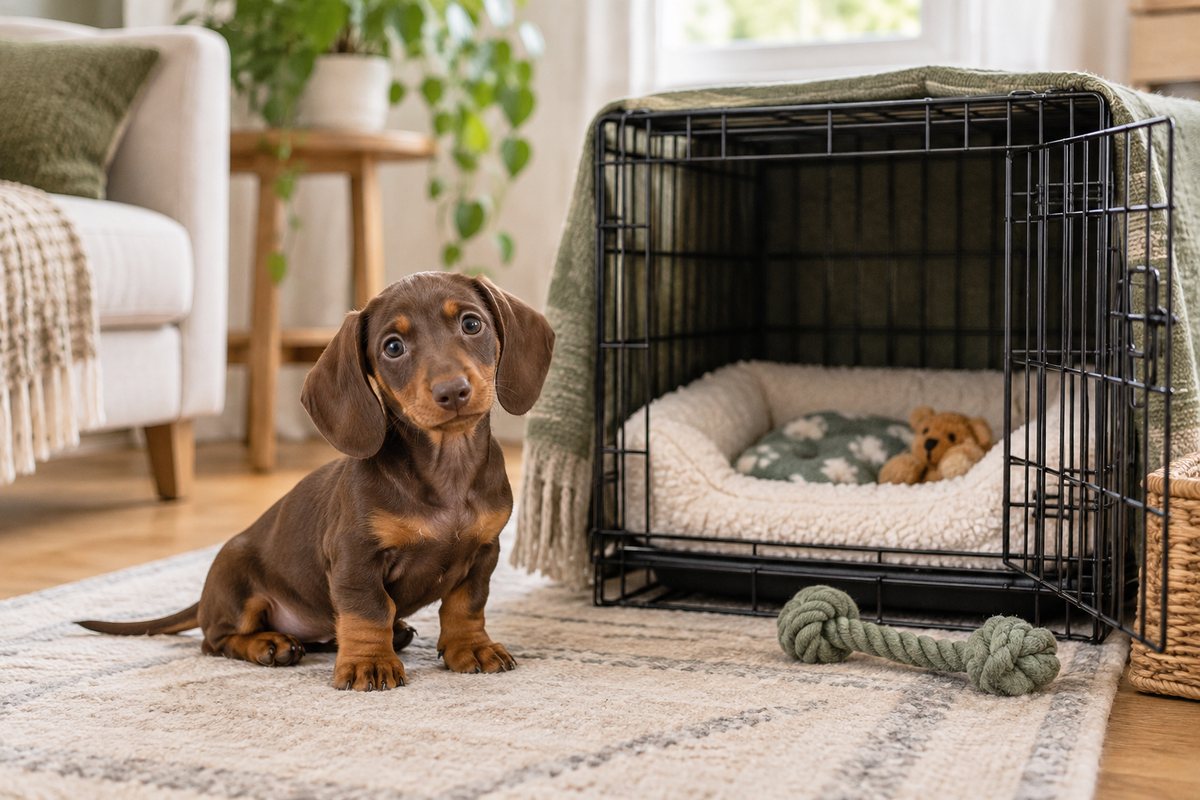
The goal is not to make your Dachshund stay in a crate all day. The goal is to teach a life skill: relaxing in a safe space when you cannot supervise, when your dog needs quiet time, when travel requires confinement, or when back-safe rest matters. This guide covers crate size, setup, a step-by-step training plan, overnight routines, whining, crate accidents, and common Dachshund-specific problems.
Table of Contents
Dachshund crate training quick answer
The simplest Dachshund crate training plan is to make the crate comfortable, feed treats and meals near it, reward voluntary entry, close the door for short calm moments, build duration slowly, and always pair crate time with predictable potty breaks. The crate should be large enough for your Dachshund to stand, turn around, and lie down, but not so large that one end becomes a bathroom.
Never use the crate as punishment. AKC crate training guidance recommends building positive associations with the crate and increasing time gradually. VCA also describes relaxed confinement as an important life skill for puppies and dogs, especially when you cannot supervise, during travel, and during veterinary or recovery situations.
Choose the right crate size
Crate size matters more for Dachshunds than many owners expect. A Dachshund needs enough length to lie comfortably without curling awkwardly, enough height to stand without hunching, and enough width to turn around. At the same time, a puppy crate that is too large can slow house training because the puppy may sleep at one end and use the other end as a toilet.
| Crate feature | What to look for | Dachshund note |
|---|---|---|
| Length | Your dog can lie down with their long body supported | Measure body length, not just weight label |
| Height | Your dog can stand without crouching | Short legs do not mean the crate can be cramped |
| Width | Your dog can turn around easily | Deep chest and long body need room to rotate |
| Divider | Adjustable space for puppies | Useful if you buy for adult size |
| Door and floor | Low entry, stable floor, washable tray | Helps small long-backed dogs enter without awkward jumps |
If your Dachshund is between miniature and standard sizes, do not choose from the label alone. Measure your actual dog. For size context, see the Dachshund size chart.
Set up the crate for a Dachshund
Put the crate somewhere your Dachshund can rest without feeling isolated from the household. Many dogs do better when the crate starts near normal family activity during the day and near the owner at night. Later, you can move it gradually if your long-term plan is a different sleep location.
- Add safe comfort: use washable bedding if your dog does not chew or swallow fabric.
- Keep it low and stable: avoid platforms or setups that require jumping in and out.
- Use good airflow: wire or well-ventilated crates are usually easier to monitor.
- Place rewards inside: make the crate predict food, chews, meals, and rest.
- Keep punishment out: the crate should not mean “you are in trouble.”
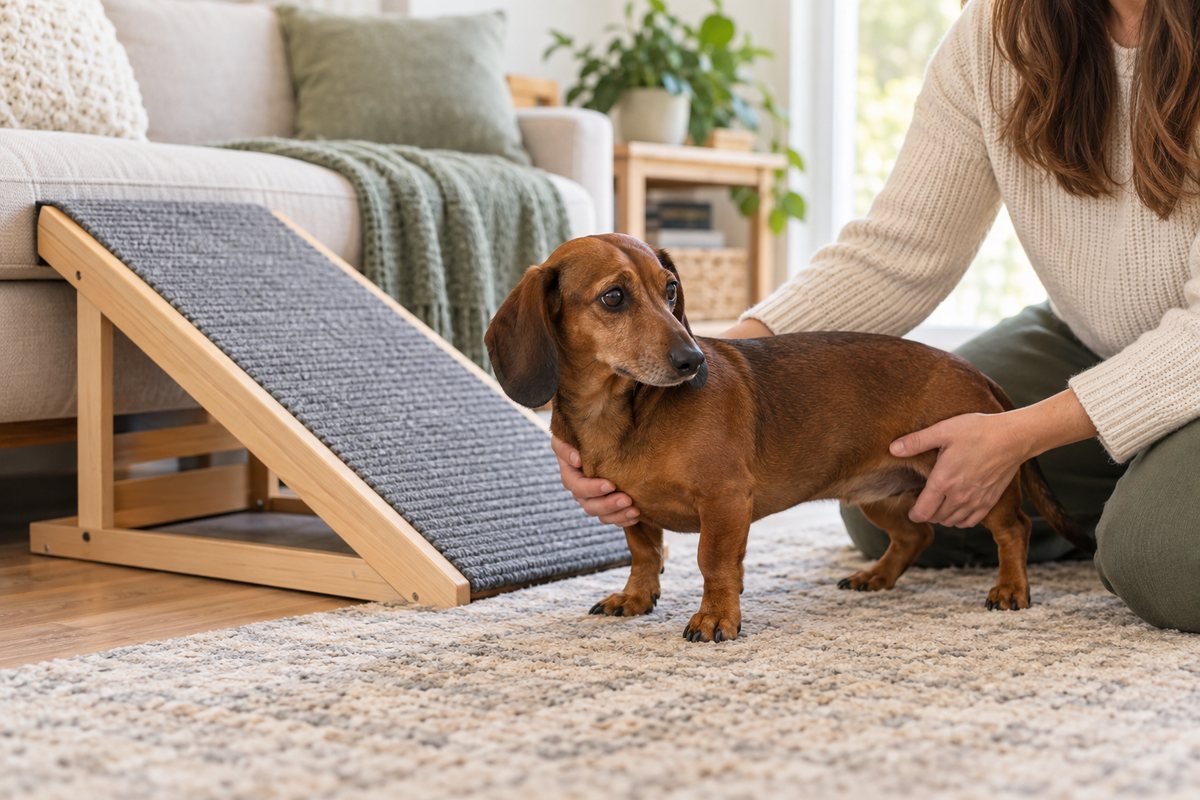
Back safety belongs in the setup. Dachshunds are long-bodied dogs, so crate routines should not include repeated furniture jumping before or after confinement. If your dog crates near a bed or sofa, use ramps, block unsafe launching spots, and watch for pain signs. The health guide on Dachshund back pain signs explains warning symptoms that need veterinary attention.
7-step Dachshund crate training plan
Move at your dog’s pace. Some Dachshunds walk in confidently on day one. Others need several days of open-door practice before the door closes. A rescue dog with a bad history of confinement may need a slower plan or a pen instead of a closed crate at first.
- Let your dog explore. Leave the door open and place treats around the entrance.
- Feed near the crate. Move meals gradually from outside the door to just inside the crate.
- Reward voluntary entry. Praise and treat when your Dachshund steps in without being pushed.
- Add a cue. Say “crate” or “bed” once, then reward entry.
- Close the door briefly. Start with a few seconds while your dog is eating or calm.
- Build duration slowly. Increase time in small pieces before expecting long naps.
- Add normal life. Practice with you nearby first, then short absences, then realistic nap and bedtime routines.
For a puppy-specific crate plan, use how to crate train a Dachshund puppy. For the broader foundation of cues, handling, and routines, use how to train a Dachshund puppy.
Crate schedule and potty breaks
A crate can support house training because many dogs try not to soil their sleeping area. That only works if the schedule is fair. A puppy left too long may have an accident because the owner waited too long, not because the puppy was stubborn.
| Crate moment | What to do | Why it matters |
|---|---|---|
| After waking | Go outside immediately | Prevents excited wake-up accidents |
| After meals | Potty break before returning to crate time | Meals often trigger bathroom needs |
| Before naps | Offer a calm potty trip first | Helps your dog settle |
| During work blocks | Use age-appropriate breaks or arrange help | Long confinement can cause accidents and stress |
| At bedtime | Final quiet potty trip, then crate routine | Builds predictable overnight rhythm |
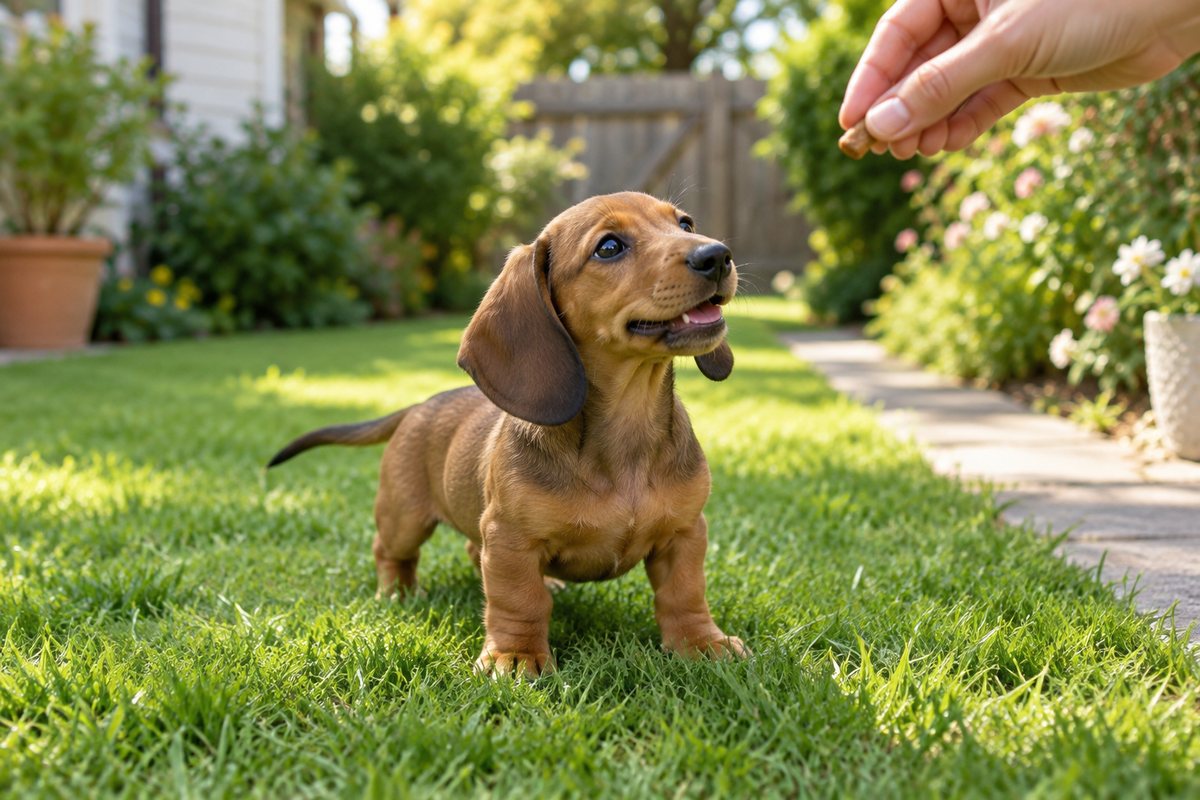
If you are using the crate for house training, pair this article with the full Dachshund potty training plan. The crate is only one tool. The real system is schedule, supervision, rewards, and cleaning accidents properly.
Overnight Dachshund crate training
For the first nights, place the crate near your bed or close enough that your puppy does not feel abandoned. Take your Dachshund out for a quiet potty break if they wake and seem urgent, then return calmly to the crate. Keep nighttime boring: no play, no long talking, no bright household reset.
If your Dachshund cries briefly and then settles, you may simply be hearing adjustment. If the crying escalates into panic, drooling, frantic digging, biting the crate, or repeated attempts to escape, pause the plan. Some dogs do better starting with an exercise pen, open crate, or gated area while you rebuild comfort more slowly.
Common crate training problems
My Dachshund barks in the crate
First, check the basics: potty need, hunger, thirst, pain, temperature, and whether the crate session was too long. Then look at the training history. If your Dachshund only goes in the crate when people leave, the crate may predict separation. Practice short, easy crate sessions while you are still home so the crate stops meaning “everyone disappears.”
My Dachshund pees in the crate
Crate accidents usually mean the crate is too large, the schedule is too long, the dog was already anxious, bedding smells like old urine, or a medical issue is involved. Clean thoroughly, shorten the interval, check crate size, and call your veterinarian if accidents continue despite a fair schedule.
My Dachshund hates the crate
Some dogs need a softer beginning. Stop forcing entry. Feed meals at the doorway, toss treats inside with the door open, and let your Dachshund leave freely at first. If your dog has separation anxiety signs, read why your Dachshund sleeps on you for related clinginess context, then consider a credentialed trainer or veterinary behavior support.
FAQ
Is crate training good for Dachshunds?
Yes, crate training can be useful for Dachshunds when it is introduced kindly. It can help with potty training, safe rest, travel, guest management, and recovery routines. It should not be used as punishment or as all-day confinement.
How long can a Dachshund stay in a crate?
It depends on age, health, training history, and bladder control. Young puppies need frequent potty breaks. Adults can usually handle longer rest periods, but daily life should include exercise, bathroom access, training, enrichment, and time with people.
Should a Dachshund sleep in a crate?
A Dachshund can sleep in a crate if they are comfortable, the crate is sized well, and the routine includes a final potty break. Some owners use a crate forever; others use it during puppyhood and transition to a dog bed later.
What size crate does a Dachshund need?
Your Dachshund should be able to stand, turn around, and lie down comfortably. Because Dachshunds are long-bodied, measure length as well as weight. Puppies may need a divider so the crate is not too large during house training.
Should I let my Dachshund cry it out in the crate?
Do not ignore panic. A little protest can be normal, but frantic distress means the plan is moving too fast. Check potty needs, reduce difficulty, practice shorter sessions, and build calm crate comfort before expecting long absences.
Sources
- American Kennel Club: Safe and Stress-Free Crate Training
- American Kennel Club: A Beginner’s Guide to Crate Training
- American Kennel Club: Crate Training for Dogs
- VCA Animal Hospitals: Crate Training and Confinement for Puppies and Dogs
- American Veterinary Society of Animal Behavior: Position Statements and Handouts
Affiliate disclosure: If you buy through links on this page, I may earn a commission at no extra cost to you.
For owners who want a structured, positive-reinforcement training plan at home, Brain Training for Dogs is an online course that can pair well with short daily Dachshund training sessions.