The best harness for miniature Dachshunds is lightweight, highly adjustable, secure around the chest, and shaped so it does not gape at the neck or rub behind the elbows. Mini Dachshunds are small, low to the ground, and often narrower through the shoulders than harness size charts expect. A harness that is technically “small” can still be bulky, loose, or easy to slip.
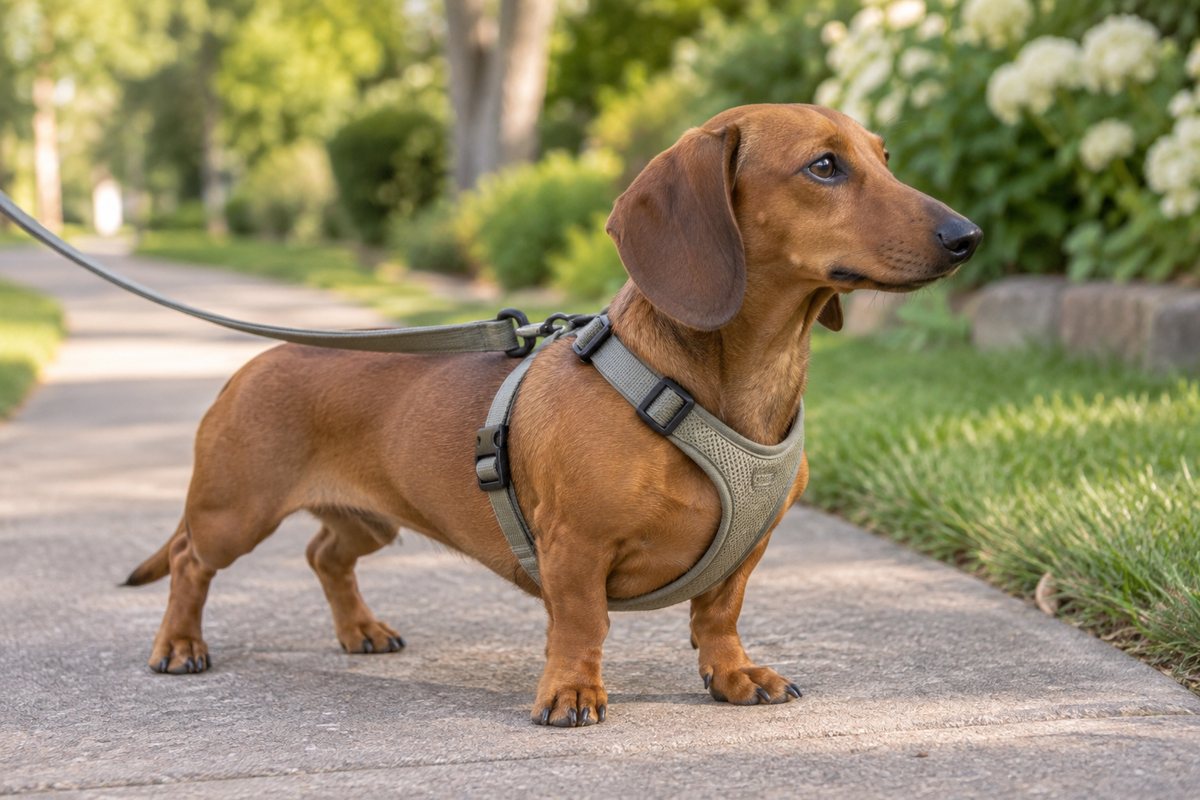
This guide explains what miniature Dachshund owners should look for, how to measure, which harness types work best, and what to avoid. For the broader Dachshund harness guide, use best harness for Dachshunds. This article focuses on mini fit problems.
Table of Contents
Best harness for miniature Dachshunds: quick answer
Choose a lightweight Y-front or step-in harness with multiple adjustment points, soft edges, a secure girth strap, and a leash ring that does not twist the harness sideways. For mini Dachshunds that pull, a front clip can help. For escape artists, a more secure body design or backup leash connection may be safer while training.
AKC harness guidance recommends measuring your dog and comparing those measurements to the product’s size chart. Do not buy by weight alone. A 10-pound miniature Dachshund can have a very different chest shape from another 10-pound small dog.
Mini Dachshund fit priorities
| Fit point | Why it matters | What to check |
|---|---|---|
| Neck opening | Too large allows slipping | Cannot slide over shoulders |
| Chest girth | Main security point | Snug but two fingers fit |
| Body length | Mini Dachshunds are long | Strap does not sit in armpit |
| Weight of harness | Bulky gear bothers small dogs | Light but sturdy hardware |
| Shoulder freedom | Prevents restricted gait | Dog walks naturally |
| Leash ring position | Affects control | Harness stays centered |
A harness should not press on the throat. VCA notes that dogs with cervical disc concerns should be walked with a harness instead of a collar-attached leash, which supports the general idea of avoiding neck pressure during walks.
Best harness types
| Harness type | Best for | Mini Dachshund watch-out |
|---|---|---|
| Y-front harness | Daily walking | Needs correct chest fit |
| Step-in harness | Dogs that dislike over-head gear | May slip if neck/chest gap is loose |
| Vest harness | Comfort and chest coverage | Can be bulky or warm |
| Front-clip harness | Pulling management | Leash can tangle under short legs |
| Escape-resistant harness | Fearful or slippery dogs | Fit must be tested indoors |
For slipping issues, see escape proof harness for Dachshunds. For pulling, see no pull harness for Dachshunds.
How to measure
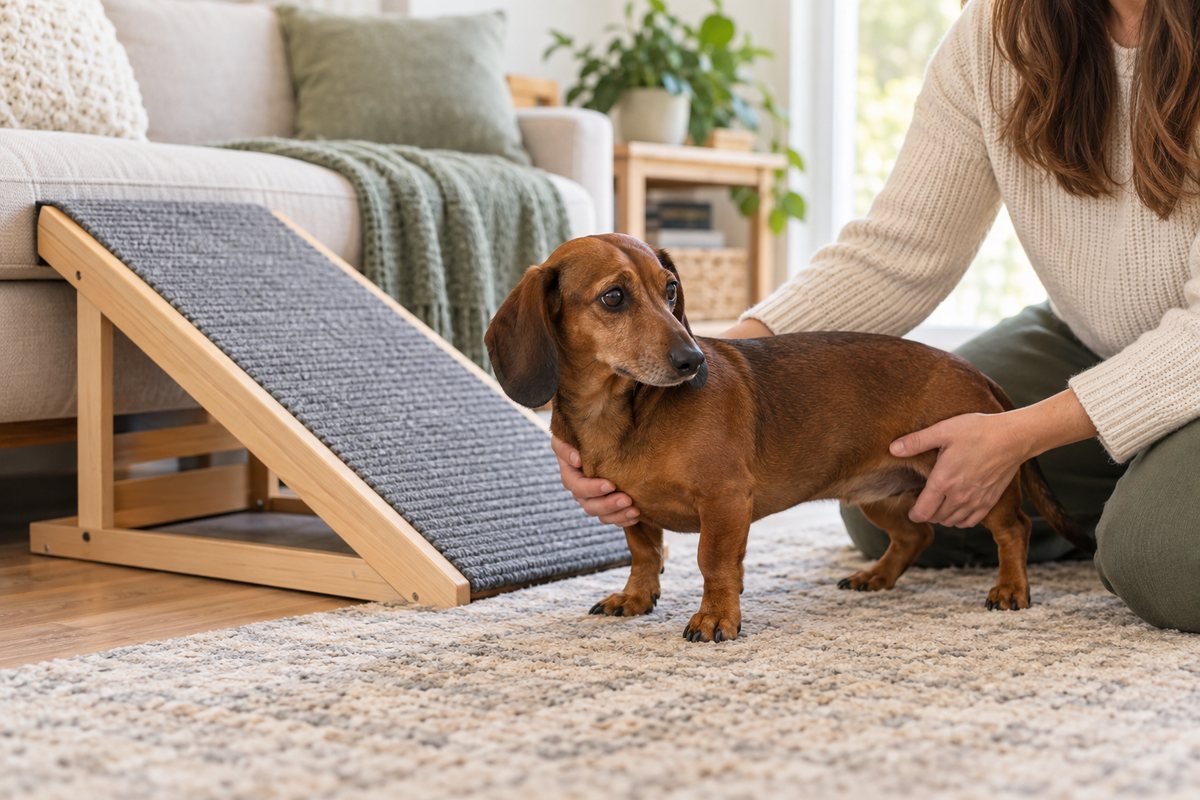
- Measure the widest part of the chest behind the front legs.
- Measure the lower neck where the harness sits.
- Measure body length if the harness has a long back or belly panel.
- Compare to the brand’s exact size chart.
- Check return options if your dog is between sizes.
- Fit-test indoors before the first outdoor walk.
If your mini Dachshund is between sizes, choose the design with more adjustment, not simply the smaller harness. A too-small harness can rub and restrict movement.
Escape and pulling issues
Miniature Dachshunds can slip out if the harness neck is too wide or if they back up against leash pressure. They can also pull surprisingly hard for their size. Use gear as management while you train loose leash skills, check-ins, and calm responses to triggers.
- Use front clip for pulling sessions.
- Use backup leash connection for escape risk.
- Keep leash slack when a dog starts backing up.
- Reward walking beside you before the leash tightens.
- Avoid retractable leashes while testing a new harness.
Harness over sweaters
Mini Dachshunds often wear winter coats or sweaters. Recheck harness fit over clothing. A harness that fits a bare chest may become tight over a sweater, while a harness adjusted over clothing may be loose when the sweater comes off.
For cold-weather care, see Dachshund winter coat care.
Mistakes to avoid
- Buying by weight only.
- Choosing bulky gear that changes gait.
- Leaving the neck opening loose.
- Ignoring rubbing behind the elbows.
- Using collar pressure to control pulling.
- Skipping indoor escape testing.
FAQ
What size harness does a miniature Dachshund need?
There is no universal size. Measure chest girth and lower neck, then use the specific brand’s chart. Many mini Dachshunds fall between extra-small and small depending on body shape.
Is a step-in harness good for miniature Dachshunds?
It can be, especially for dogs that dislike overhead harnesses. The fit must be secure enough that your dog cannot back out.
Should a mini Dachshund use a collar or harness?
A collar is useful for ID tags, but many mini Dachshunds are better walked on a harness to avoid leash pressure on the neck.
Mini harness fit tests
After adjusting the harness, run a few tiny fit tests indoors. Mini Dachshunds are small enough that a little looseness can become a slipping problem, but a little tightness can cause rubbing. Testing before the walk prevents surprises outside.
| Test | Pass sign | Fix if it fails |
|---|---|---|
| Two-finger fit | Snug, not pinching | Adjust girth evenly |
| Back-up test | Harness stays on shoulders | Tighten neck or choose secure style |
| Walk test | Normal stride | Check shoulder clearance |
| Sweater test | No pressure over clothing | Readjust for winter layers |
| Leash test | Harness stays centered | Balance straps on both sides |
Mini Dachshund shopping priorities
- Prioritize adjustability over decorative style.
- Choose low-profile hardware for very small dogs.
- Check whether the harness rubs short armpits.
- Use reflective details for low-light walks.
- Keep a backup harness if your dog changes weight.
Mini Dachshund harness fit plan
For miniature Dachshunds, the best harness is usually the one that fits a small chest without sliding into the armpits, twisting around the body, or putting pressure on the throat. A tiny dog still needs full-body stability, especially on stairs, near furniture, and during exciting walks.
Do not buy by breed label alone. Measure neck base, chest girth, and body length, then compare those numbers with the exact brand chart. A harness that is too loose can let a mini back out of it; a harness that is too tight can rub the skin and make walks uncomfortable.
| Situation | What it suggests | Best next step |
|---|---|---|
| Tiny chest | Harness shifts or rotates | Use a narrower Y-front or adjustable step-in design |
| Deep chest | Neck fits but girth is tight | Prioritize two girth adjustment points |
| Escape attempts | Backing out on leash | Choose secure fit and practice calm leash pressure |
| Sensitive skin | Armpit rubbing | Check strap width and padding after each walk |
| Puppy growth | Fit changes quickly | Re-measure every two to three weeks |
best harness for miniature Dachshunds: practical checklist
- Measure your dog while standing, not curled on a sofa.
- Fit two fingers under the straps without leaving slack.
- Check the armpit area after the first ten-minute walk.
- Attach the leash indoors and reward calm forward movement.
- Replace the harness if the chest strap sits across the throat.
- Use a short, light leash so the harness does not twist.
When to change course
If your miniature Dachshund freezes, scratches at the harness, coughs, or changes gait, the fit is not right yet. Try shorter sessions, a different shape, or a softer material before assuming your dog is being stubborn.
best harness for miniature Dachshunds: owner scenarios and fixes
The final step for best harness for miniature Dachshunds is matching the advice to the exact situation in front of you. Dachshunds are small, persistent, routine-sensitive dogs, so a plan that looks correct on paper can fail if the room setup, timing, gear, reward value, or health context is wrong. Before changing everything, choose the one pattern that happens most often and work there first.
This also helps prevent mixed signals. If you sometimes reward the unwanted pattern, sometimes interrupt it, and sometimes ignore it, your Dachshund may keep trying the behavior because the rules are unclear. A simple plan that everyone in the home follows for one week is usually more useful than a complicated plan that changes every day.
| Owner situation | How to handle it |
|---|---|
| When the main issue is tiny chest | Start with the practical fix: use a narrower y-front or adjustable step-in design. Give it several calm repetitions before adding a second change. |
| When the pattern looks like deep chest | Assume the setup is slightly wrong for your Dachshund and adjust the environment before expecting better behavior. |
| When you see escape attempts | Slow the plan down. Dachshunds often improve faster when the next step is easier, clearer, and more predictable. |
| When sensitive skin keeps returning | Look for a trigger that happens before the problem. Changing that trigger usually works better than reacting afterward. |
| When puppy growth is involved | Treat it as a sign to re-check fit, comfort, schedule, or health rather than assuming your dog is ignoring you. |
How to make the plan easier for your Dachshund
If progress stalls, make the next repetition easier instead of louder or longer. For best harness for miniature Dachshunds, easier can mean more distance, a shorter session, a lower height, a quieter room, softer handling, smaller rewards, or fewer choices. The easier version should let your dog succeed while still practicing the skill you want.
Watch recovery time. A Dachshund who can return to sniffing, eating, resting, or walking normally is usually in a workable zone. A dog who stays frantic, stiff, avoidant, or obsessed with the trigger is telling you the setup is too difficult. That is useful information, not a training failure.
7-day improvement plan
- Day 1: write down when the best harness for miniature Dachshunds problem happens, where it happens, and what happened right before it.
- Day 2: remove the easiest trigger or setup mistake connected to tiny chest.
- Day 3: practice the first checklist step: measure your dog while standing, not curled on a sofa..
- Day 4: repeat the same plan at an easier level instead of adding a new rule.
- Day 5: add one support step from the checklist: fit two fingers under the straps without leaving slack..
- Day 6: ask whether your dog recovers faster than earlier in the week.
- Day 7: keep what improved, drop what confused your dog, and decide whether health or professional support is needed.
This seven-day plan will not solve every case of best harness for miniature Dachshunds, but it gives you cleaner information. If the pattern improves, keep building gradually. If it stays the same or worsens, the cause may be discomfort, fear, poor fit, too much freedom, or a trigger that needs a different article-specific plan.
Quality check before you rely on the advice
The safest version of the advice should be specific, observable, and easy to repeat. You should know what you are changing, what success looks like, and when to stop. For Dachshunds, stop signs include pain, limping, yelping, frantic barking, snapping, refusal to eat rewards, vomiting, repeated accidents, or sudden behavior changes.
When in doubt, choose the lower-risk version: more distance, better traction, shorter sessions, calmer rewards, clearer routines, and earlier veterinary input. That keeps the best harness for miniature Dachshunds plan helpful without pushing a small long-backed dog through stress, pain, or confusion.
Sources
- AKC: How to Find the Right Dog Harness for Your Dog
- AKC: How to Put on a Dog Harness
- VCA: Cervical Intervertebral Disc Disease in Dogs
- Review of Collars, Harnesses, and Head Collars for Walking Dogs