Dachshund commands to teach should start with safety, daily manners, and calm cooperation. A Dachshund does not need a circus list of tricks before they can live well with your family. They need clear cues for coming when called, waiting at doors, dropping unsafe items, walking on leash, settling in a crate or bed, and checking in with you before their hound brain takes over.
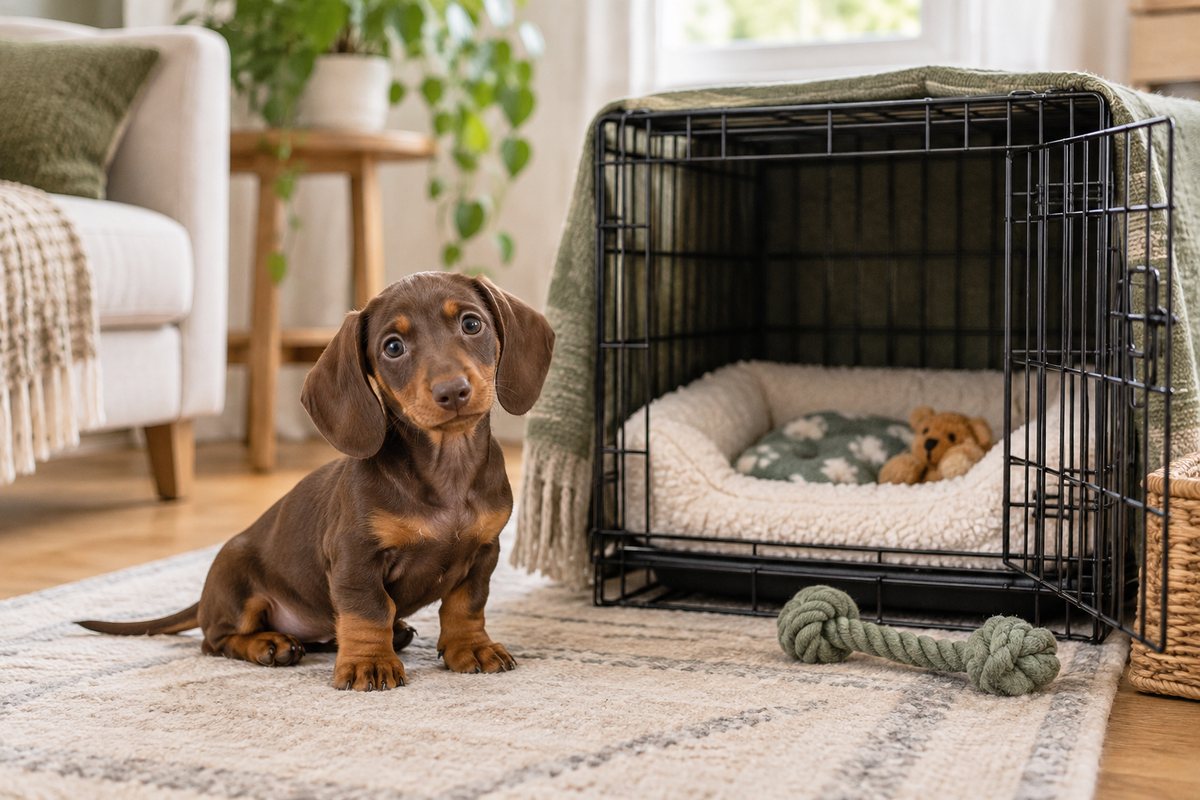
The word “command” is still what many owners search for, but many trainers now prefer “cue.” VCA explains that cue better fits reward-based training because it tells the dog which behavior will earn reinforcement, instead of implying force. In this guide, command and cue mean the same practical thing: a short word or signal your Dachshund can understand and repeat.
Table of Contents
Dachshund commands to teach quick answer
The most useful Dachshund commands to teach first are name response, come, sit, down, stay or wait, leave it, drop it, off, go to bed or crate, touch, loose leash, and a release word such as “okay.” AKC’s puppy training guidance includes core cues such as come, sit, stay, down, and leave it. For Dachshunds, add cues that protect their backs, reduce barking, and prevent chasing or scavenging.
Keep lessons short. Use tiny treats, praise, play, and real-life rewards. A five-minute session with a clear win is better than a 30-minute session where your Dachshund quits listening. If your puppy is in a sensitive period, pair this plan with Dachshund puppy fear stages so training builds confidence instead of pressure.
The 12 best Dachshund commands to teach first
Use this list as your foundation. The goal is not to teach all 12 in one weekend. Start with name, come, sit, leave it, and a release word. Then layer in the others as your puppy matures.
| Command or cue | Why it matters for Dachshunds | First goal |
|---|---|---|
| Name response | Gets attention before barking, chasing, or ignoring you | Dog turns toward you when hearing their name |
| Come | Safety cue for yards, doors, walks, and escapes | Dog runs to you indoors for a reward |
| Sit | Simple default behavior for greetings, meals, and doors | Dog sits without jumping or barking |
| Down | Helps settle a busy hound body | Dog lies down on cue in a quiet room |
| Stay or wait | Prevents rushing through doors or jumping from furniture | Dog pauses for one to three seconds |
| Leave it | Protects from dropped food, socks, mulch, and unsafe finds | Dog turns away from a low-value item |
| Drop it | Prevents guarding and unsafe chewing battles | Dog trades an item for a treat |
| Off | Reduces jumping on people and furniture | Dog puts paws back on the floor |
| Go to bed or crate | Creates a calm resting place | Dog steps onto a mat or into a crate |
| Touch | Easy recall helper and confidence builder | Dog taps your hand with their nose |
| Loose leash | Protects the neck and back during walks | Dog walks near you for several steps |
| Release word | Tells the dog when a cue is finished | Dog learns “okay” means move again |
Rules that make commands work
Dachshunds are smart, persistent, and easily distracted by scent, sound, movement, and food. That is not a character flaw. It is the dog in front of you. Your training plan has to make the right behavior worth choosing.
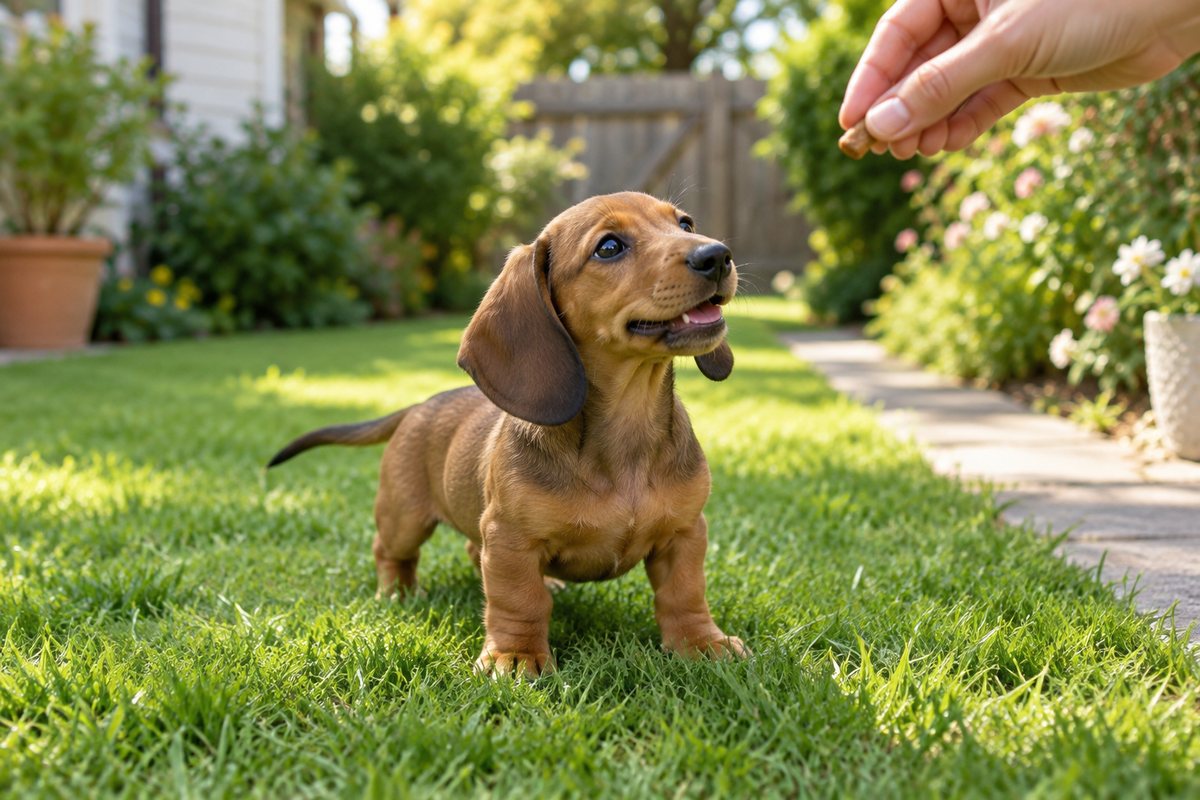
- Say the cue once, then help your dog succeed.
- Reward fast while your Dachshund is doing the behavior.
- Use tiny soft treats so repetitions stay quick.
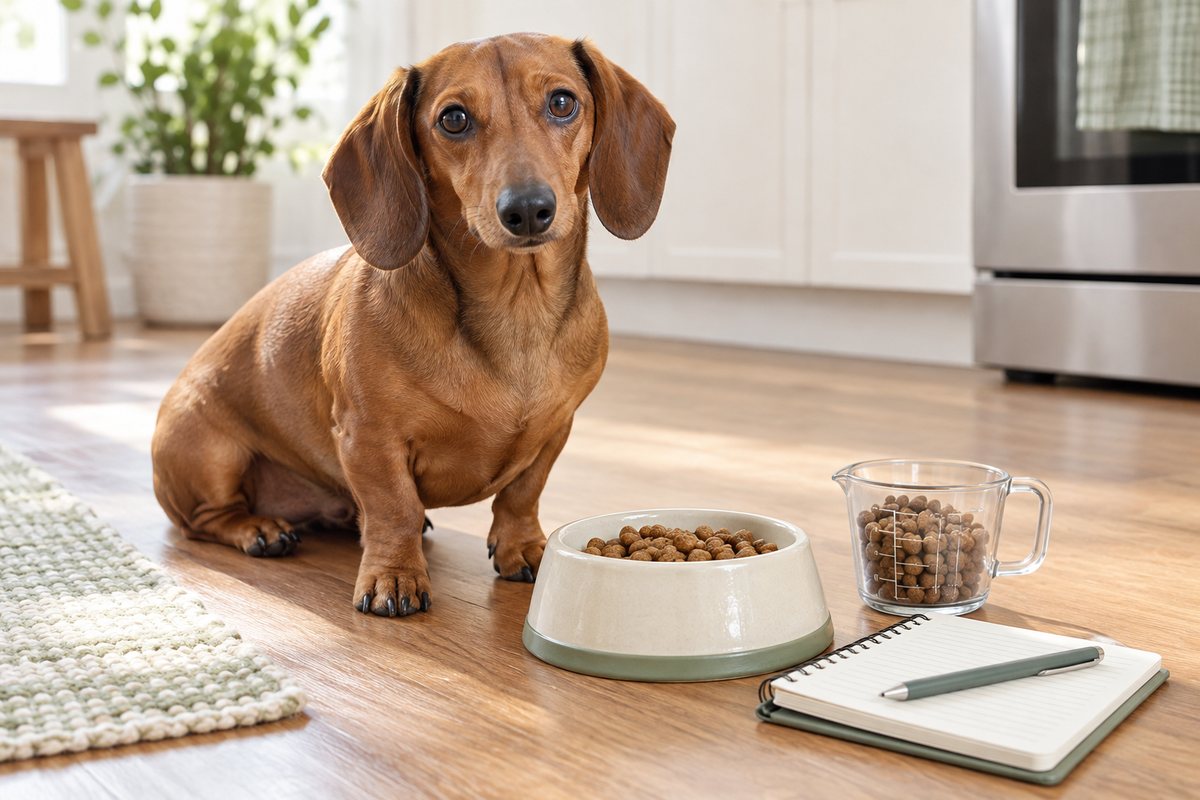
- Train before meals or with part of the meal kibble.
- Keep sessions to three to five minutes.
- Practice in boring places before busy places.
- End before your dog gets frustrated.
AVSAB’s humane dog training position statement supports reward-based methods and warns that aversive techniques can carry welfare risks. For a Dachshund, that matters. Pressure often creates barking, avoidance, shutdown, or stubborn-looking refusal. Clear rewards create better learning.
How to teach each cue
1. Name response
Say your dog’s name once. When they turn toward you, mark with “yes” and reward. If they do not turn, make a soft sound, move away, or show a treat near your leg. Do not repeat the name ten times. The name should mean “look at my person,” not background noise.
2. Come
Start indoors. Crouch, say “come,” and reward when your Dachshund reaches you. Run backward a few steps to make it fun. Never call your dog for punishment, nail trims, or the end of every good thing. A recall cue must predict something your Dachshund wants.
3. Sit
Hold a treat at your puppy’s nose and slowly lift it toward the forehead. As the head follows, the rear often lowers. Mark the sit and reward. Use sit before meals, doors, leash clipping, and greetings so it becomes a polite default behavior.
4. Down
From a sit, move the treat straight down between the front paws, then slightly forward. Reward any bend toward the floor at first. Dachshunds have a long body, so be patient. Do not push their shoulders down. Let them follow the lure and choose the position.
5. Stay or wait
Use “wait” for short pauses and “stay” for staying in place until released. Begin with one second. Say the cue, pause, reward, then say your release word. Add duration before distance. If your Dachshund breaks position, the step was too hard. Make it easier and reward sooner.
6. Leave it
Hold a low-value treat in a closed fist. Let your dog sniff. The moment they stop trying to get it, mark and reward from your other hand. Later, practice with a boring item on the floor while your puppy is on leash. This cue is for prevention, not wrestling an item out of the mouth.
7. Drop it
Offer a toy. After a few seconds, put a treat near your dog’s nose and say “drop.” When the toy falls, mark, reward, and give the toy back if safe. Returning the toy teaches your Dachshund that dropping something does not always end the fun. That reduces guarding.
8. Off
Use “off” for paws on people, counters, or furniture. Lure the dog down with a treat, mark when all paws are on the floor, and reward low. For back safety, also manage furniture access with ramps, gates, or supervision. Repeated jumping is a habit worth preventing.
9. Go to bed or crate
Toss a treat onto a mat or into the crate. When your dog steps in, mark and reward. Release them before they worry. Gradually add duration with calm treats. This pairs well with Dachshund crate training and helps with guests, meals, and naps.
10. Touch
Hold out your palm near your dog’s nose. When they sniff or tap it, mark and reward. Touch is useful for redirecting barking, moving your Dachshund without grabbing, and building confidence near mild distractions.
11. Loose leash
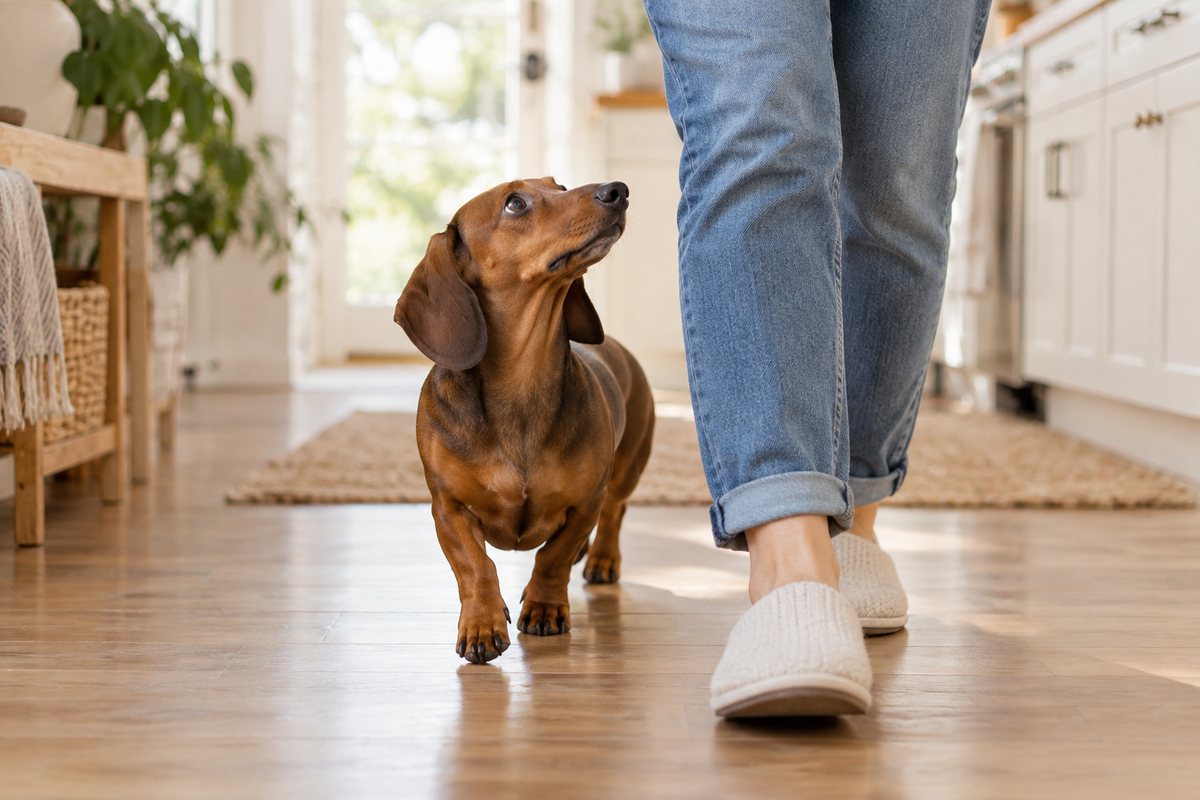
Reward your dog beside your leg before the leash gets tight. Take one step, reward. Take two steps, reward. If your Dachshund pulls toward a scent, stop and wait for slack, then move again. Use a well-fitted harness for walks, especially for puppies that surge forward.
12. Release word
Pick one word such as “okay,” “free,” or “all done.” Use it after sit, wait, stay, crate, and leash pauses. A release word prevents your dog from guessing when a command is over. That small clarity makes every other cue stronger.
A weekly command plan
Do not stack too many new skills at once. Use a weekly rhythm and practice in tiny pieces throughout the day.
| Week | Main focus | Daily practice |
|---|---|---|
| 1 | Name, come, sit, release word | Five one-minute sessions around meals and potty breaks |
| 2 | Down, wait, touch | Short indoor sessions with low distractions |
| 3 | Leave it, drop it, go to bed | Trade games, mat work, safe chew management |
| 4 | Loose leash, off, proofing | Practice in the yard, driveway, or quiet sidewalk |
If your puppy is biting, chewing, or overtired, commands will be harder. Use the routines in Dachshund puppy biting, Dachshund puppy chewing everything, and Dachshund puppy schedule so your dog is rested enough to learn.
Mistakes that slow Dachshunds down
- Repeating the cue until the dog tunes it out.
- Practicing recall only when fun is ending.
- Using treats too late, after the behavior is over.
- Training in busy places before the cue works at home.
- Scolding fear, barking, or hesitation instead of lowering difficulty.
- Letting furniture jumping, door rushing, and leash pulling rehearse every day.
VCA’s training basics emphasize teaching puppies what to do through praise and rewards. That is the simplest correction for most mistakes: show the wanted behavior earlier, reward it faster, and make the environment easier.
How to proof commands around distractions
Proofing means teaching your Dachshund that the cue still applies when life gets interesting. Change only one difficulty at a time: distance, duration, or distraction. If your dog can sit in the kitchen, try the hallway. Then the porch. Then the quiet yard. Do not jump from kitchen success to a crowded park and expect perfection.
- Practice the cue in a quiet room.
- Add one mild distraction, such as a toy on a shelf.
- Reward faster than usual.
- Move to a slightly harder location.
- Use better treats for harder distractions.
- Go back a step when your Dachshund struggles.
AKC’s puppy training timeline stresses building behaviors before distractions get too hard. For scent-driven dogs like Dachshunds, this is the whole game. Train the easy version until it feels automatic, then make it one notch harder.
When to get training help
Ask for help if your Dachshund growls over food or toys, bites when handled, panics on leash, cannot recover from barking, or ignores recall in risky places. Start with your veterinarian if pain may be involved. Then choose a qualified trainer who uses humane, reward-based methods and can coach you through timing, body language, and management.
The best commands are not about control for its own sake. They give your Dachshund a shared language with you. Once your dog understands that listening leads to rewards, safety, and clear choices, training becomes less of a battle and more of a daily conversation.
FAQ
What commands should I teach my Dachshund first?
Start with name response, come, sit, leave it, drop it, wait, and a release word. These cues help with safety, manners, and daily routines before you add advanced tricks.
Are Dachshunds hard to train?
Dachshunds can be independent and distracted by scents, but they are also clever. They usually learn well with short sessions, food rewards, consistency, and patient proofing.
Should I say a command more than once?
Try not to. Say the cue once, then help your dog succeed. Repeating the word many times can teach your Dachshund that the first cue does not matter.
What is the most important command for a Dachshund?
Come is one of the most important safety cues. Leave it and drop it are close behind because Dachshunds often investigate the world with their nose and mouth.
Can older Dachshunds learn new commands?
Yes. Older Dachshunds can learn new cues, especially when training is reward-based and broken into small steps. Keep sessions short and account for pain, hearing, vision, or mobility changes.
Sources
- American Kennel Club: Teach Your Puppy These 5 Basic Cues
- American Kennel Club: Basic Obedience Training For Puppies
- American Kennel Club: Puppy Training Timeline
- VCA Animal Hospitals: Puppy Behavior Training – Sit, Down, Stand and Stay
- VCA Animal Hospitals: Puppy Behavior and Training Basics
- AVSAB: Humane Dog Training Position Statement
Affiliate disclosure: If you buy through links on this page, I may earn a commission at no extra cost to you.
For owners who want a structured, positive-reinforcement training plan at home, Brain Training for Dogs is an online course that can pair well with short daily Dachshund training sessions.