An escape proof harness for Dachshunds should do three things well: fit the long chest securely, avoid pressure on the neck, and stay in place when your dog backs up, twists, or startles. Dachshunds are low, long-bodied dogs, so a generic harness that works for a square-shaped breed may gap behind the elbows or slide over the shoulders. The safest choice is usually a well-fitted, adjustable harness with secure chest coverage and a backup leash connection during training.
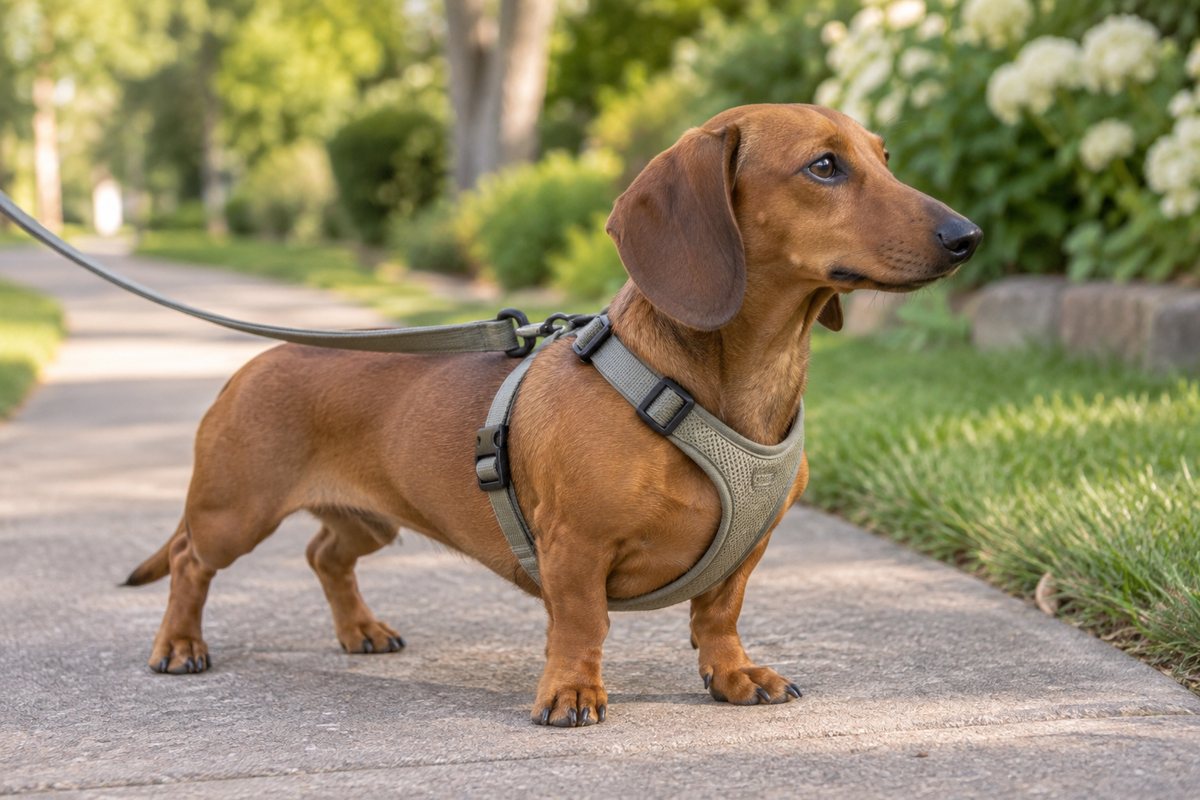
This guide explains how to choose an escape-resistant Dachshund harness, how to measure your dog, which features matter, and what to do if your Dachshund slips out during walks. It is not a substitute for training or supervision. A harness can reduce risk, but a frightened Dachshund can still escape if the fit, leash handling, or environment is wrong.
Table of Contents
Escape proof harness for Dachshunds: quick answer
Look for a harness with multiple adjustment points, a secure chest panel or Y-front shape, a girth strap that sits behind the front legs, and hardware that does not twist under tension. For serious escape artists, choose a design with an extra belly strap or use a temporary backup connection from the leash to a flat collar while you train calm walking.
The harness should be snug enough that your Dachshund cannot reverse out of it, but not so tight that it rubs, pinches, changes gait, or presses into the throat. AKC harness guidance emphasizes measuring the dog and checking fit rather than relying on breed labels alone. That matters for Dachshunds because chest depth, length, and weight vary widely between miniature and standard dogs.
Why Dachshunds slip harnesses
Dachshunds often escape harnesses for practical reasons, not because the owner chose a bad product on purpose. Their shoulders are narrow, their chest can be deep, and their body is longer than many size charts expect. When a harness is too loose at the neck or too short through the body, a Dachshund can back up and pull the harness forward over the head.
- The neck opening is too large.
- The girth strap sits too far forward behind the elbows.
- The body strap is too short for the dog’s long torso.
- The leash pulls from behind while the dog reverses.
- The dog panics before the owner can shorten the leash.
- The harness loosens during the walk.
If your Dachshund escapes because of fear, the harness is only part of the solution. Pair safer gear with confidence-building and a quieter walking plan. For behavior context, see why Dachshunds follow you everywhere and why Dachshunds bark so much.
Best escape proof harness features
No harness is truly escape proof in every situation. A better phrase is escape-resistant. Use the table below to compare features that matter for Dachshunds.
| Feature | Why it helps | Dachshund note |
|---|---|---|
| Multiple adjustment points | Lets you fit neck, chest, and torso separately | Useful for long bodies and deep chests |
| Y-front or chest-support shape | Helps distribute pressure away from the throat | Check shoulder movement and front-leg clearance |
| Extra belly strap | Can reduce backing-out escapes | Helpful for fearful or narrow-chested dogs |
| Front and back leash rings | Gives more control options | Front clip can help redirect pulling |
| Secure buckles and hardware | Reduces accidental loosening | Inspect after every adjustment |
| Soft edges and padding | Reduces rubbing behind elbows | Important on short-coated Dachshunds |
For a general buying guide, start with best harness for Dachshunds. This article is narrower: it is for owners whose Dachshund has already slipped a harness or is likely to panic outdoors.
How to measure your Dachshund
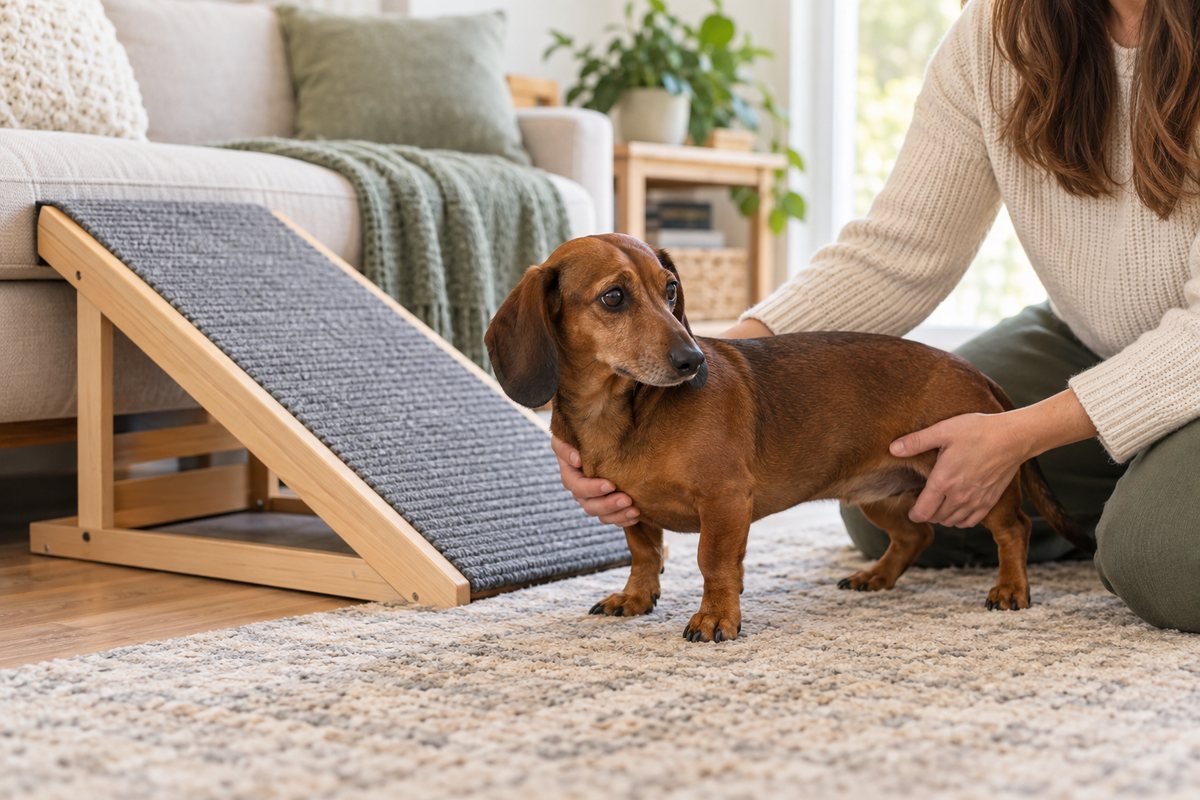
Measure before buying, even if you know your Dachshund’s weight. Weight alone does not tell you neck size, chest depth, or body length. AKC and other harness-fit guides recommend using a soft tape measure around the chest and neck, then checking the product’s exact size chart.
- Measure the widest part of the chest, usually behind the front legs.
- Measure the lower neck where the harness will sit.
- Check body length if the harness has a belly or back strap.
- Compare measurements to the specific brand’s size chart.
- If your dog is between sizes, prioritize adjustability and return policy.
- Try the harness indoors before using it outside.
Do not buy a harness only because it says small, medium, miniature, or Dachshund. A lean 11-pound miniature and a stocky 16-pound small standard may need very different proportions.
Fit test before walks
Before taking a new harness outdoors, test it inside. Your goal is to find slipping, rubbing, and panic points before there are cars, dogs, bikes, and distractions.
| Test | What to do | Pass sign |
|---|---|---|
| Two-finger check | Slide two fingers under main straps | Snug but not digging |
| Reverse test | Gently let the dog step backward while leash is short | Harness does not move over shoulders |
| Movement check | Let the dog walk, sit, turn, and sniff | No leg restriction or rubbing |
| Head check | Confirm neck opening cannot slide over the head | Opening stays secure |
| Hardware check | Inspect buckles, rings, and adjusters | No twisting or loosening |
If your Dachshund freezes, scratches, coughs, limps, or refuses to move, pause and reassess. The answer may be a different size, different shape, shorter practice sessions, or slower harness conditioning.
Miniature vs standard Dachshunds
Miniature Dachshunds often escape because the harness is scaled too broadly around the neck. Standard Dachshunds may have the opposite issue: the harness fits the chest but is too short through the body. Both types need girth and neck measurements, not guesswork.
If you are unsure which size category your dog fits, use the Dachshund size chart and miniature Dachshund vs standard Dachshund guide for context. Then still measure your individual dog.
Training for harness safety
An escape-resistant harness buys you time, but training prevents many escapes from happening. Start indoors with food rewards. Let your Dachshund sniff the harness, place their head through voluntarily, and wear it for short, calm sessions before going outside.
- Reward your dog for approaching the harness.
- Clip and unclip calmly without chasing or pinning.
- Practice short leash pressure and release indoors.
- Teach a hand target or name response for redirection.
- Avoid walking near known triggers until the harness is tested.
- Use a backup leash connection for high-risk outings.
If pulling is the main problem, read no pull harness for Dachshunds once that article is live. Gear helps most when it supports a training plan.
Common mistakes
- Using a loose harness because the dog dislikes snug pressure.
- Letting the leash go tight behind a scared dog who is backing up.
- Choosing by weight only instead of girth and neck size.
- Skipping indoor fit testing.
- Using the same harness after the dog loses or gains weight.
- Assuming a harness replaces recall, leash skills, and trigger management.
FAQ
Is any harness truly escape proof?
No harness is escape proof in every situation. A good harness can be escape-resistant when fitted correctly, but a panicked dog, loose leash angle, or wrong size can still create risk.
Should a Dachshund wear a collar or harness?
Many Dachshunds do better with a harness for walks because it avoids leash pressure on the neck. VCA notes that dogs with cervical disc disease should be walked with a harness rather than a leash attached to a collar. A collar can still hold ID tags.
What harness is best for a Dachshund that backs out?
Look for a snug, adjustable harness with secure chest fit and possibly an extra belly strap. Then practice backing-up scenarios indoors and keep leash tension low during outdoor walks.
How tight should a Dachshund harness be?
It should be snug enough that it cannot slide over the shoulders or head, but loose enough that you can fit two fingers under the main straps and your dog can move normally.
Final safety checks for escape-proof harnesses
An escape-proof harness is only escape-resistant when the fit, leash handling, and environment work together. Dachshunds often back out when they are frightened, overexcited, or pulled from the front. Practice indoors and in quiet outdoor spaces before trusting a new harness near traffic.
Use the warning signs below as a practical filter before you decide the plan is working. If one of these signs appears repeatedly, the next step is not more pressure; it is a clearer setup, a smaller training step, or a health check when comfort may be involved.
- Dog backs up when startled
- Neck opening sits too wide
- Leash pressure pulls the harness sideways
- Buckles loosen after a walk
For Dachshunds, the best plan is usually the one that reduces jumping, slipping, confusion, stress, or repeated rehearsal. Keep the routine boring enough to repeat, specific enough to measure, and flexible enough to change when your dog gives you new information.
Sources
- AKC: How to Find the Right Dog Harness for Your Dog
- AKC: How to Put on a Dog Harness
- VCA: Cervical Intervertebral Disc Disease in Dogs
- Cornell University College of Veterinary Medicine: Intervertebral Disc Disease
- Review of Collars, Harnesses, and Head Collars for Walking Dogs