Category: Training

Practical Dachshund training guides for potty training, recall, leash manners, barking, crate routines, and stubborn moments.

  • Dachshund Puppy Chewing Everything: 7 Calm Fixes

    Dachshund Puppy Chewing Everything: 7 Calm Fixes

    Dachshund puppy chewing everything is frustrating, but it is also one of the most normal puppy problems you will face. A young Dachshund explores with the mouth, relieves teething pressure, burns energy, asks for attention, and practices natural chewing. The mistake is treating every chewed shoe like defiance. Your puppy is not planning household damage. Your puppy is making fast puppy choices in an environment that has too many tempting objects.
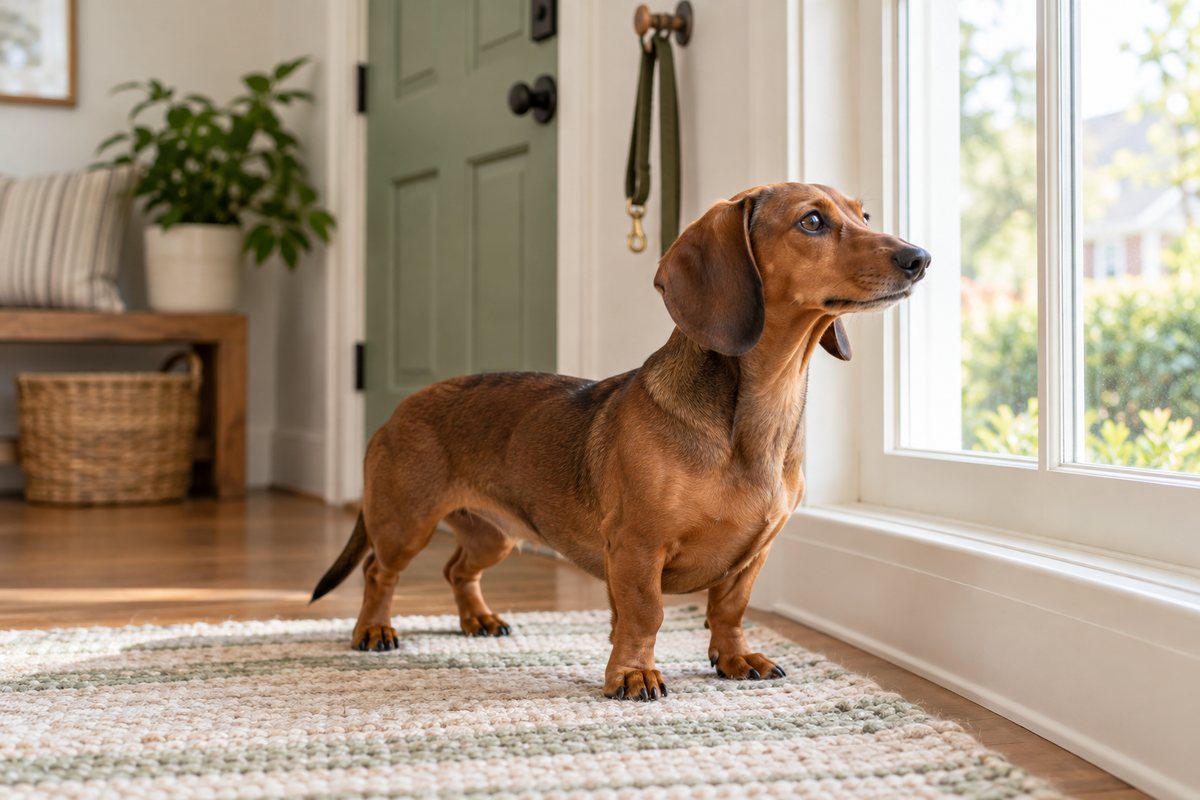
    Dachshund puppy being redirected from household chewing to a safe toy

    The solution is not one magic spray or one indestructible toy. Dachshund puppy chewing improves when you combine puppy-proofing, supervision, safe chew choices, calm redirection, short training, naps, and a predictable daily routine. This guide shows you exactly how to stop your Dachshund puppy from chewing everything without scaring them, chasing them, or turning chewing into a bigger game.

    Dachshund puppy chewing everything quick answer

    If your Dachshund puppy is chewing everything, assume the puppy needs better management before assuming a behavior problem. Pick up tempting items, block access to cords and furniture edges, supervise during all free time, use a crate or puppy pen when you cannot watch, and keep several safe chew options ready. When your puppy grabs the wrong item, calmly trade for a better chew and praise the switch.

    ASPCA destructive chewing guidance emphasizes that puppies do need to chew, but owners can teach them to limit chewing to appropriate objects. AKC also notes that if puppies are not given suitable chew options, they will make their own choices from whatever they can reach. For Dachshunds, this matters because they are curious, persistent, and low enough to find socks, cords, rug corners, and chair legs before you notice.

    Why Dachshund puppies chew everything

    Chewing can come from several causes at once. A 4-month-old puppy may chew because gums hurt. A 7-month-old puppy may chew because the habit has worked for months. A bored puppy may chew because it creates activity. A lonely puppy may chew because it smells like you. A puppy with too much freedom may chew because nobody has shown them what is legal.

    CauseWhat it looks likeBest first fix
    TeethingChewing rises around 3-6 months, with sore gums or loose baby teethUse puppy-safe soft rubber chews and cold teething options
    BoredomChewing happens after quiet periods or when the puppy is ignoredAdd short training, food puzzles, sniff walks, and toy rotation
    Too much freedomPuppy chews in another room or under furnitureUse gates, leash supervision, crate, or pen
    Attention seekingPuppy grabs shoes, laundry, or remotes and waits for a reactionTrade calmly; reward legal chewing before trouble starts
    AnxietyChewing happens mainly when alone, with panic signs or escape attemptsTalk to your veterinarian or a qualified behavior professional

    VCA explains that puppies naturally investigate by sniffing, tasting, and chewing household objects. VCA also separates normal chewing from chewing linked to anxiety, escape, garbage raiding, and other causes. That distinction is useful: the plan for a playful teething puppy is not the same as the plan for a puppy panicking when left alone.

    What chewing is dangerous?

    Some chewing is annoying. Some chewing is dangerous. Prioritize safety first, then training. A Dachshund puppy has a small body, a determined mouth, and very little judgment.

    • Electrical cords, chargers, batteries, and small electronics.
    • Medication bottles, dropped pills, supplements, and nicotine products.
    • Kids’ toys, hair ties, socks, underwear, and fabric that can be swallowed.
    • Cooked bones, splintering sticks, hard plastic fragments, and sharp objects.
    • Houseplants, mulch, garbage, food wrappers, and anything toxic to dogs.
    • Furniture legs, baseboards, rugs, and crate bedding that your puppy can shred.

    Do a floor-level inspection. Sit where your Dachshund puppy stands and look under tables, behind sofas, around nightstands, and beside charging stations. If the puppy can reach it, the puppy may test it. Puppy-proofing is not optional while this habit is active.
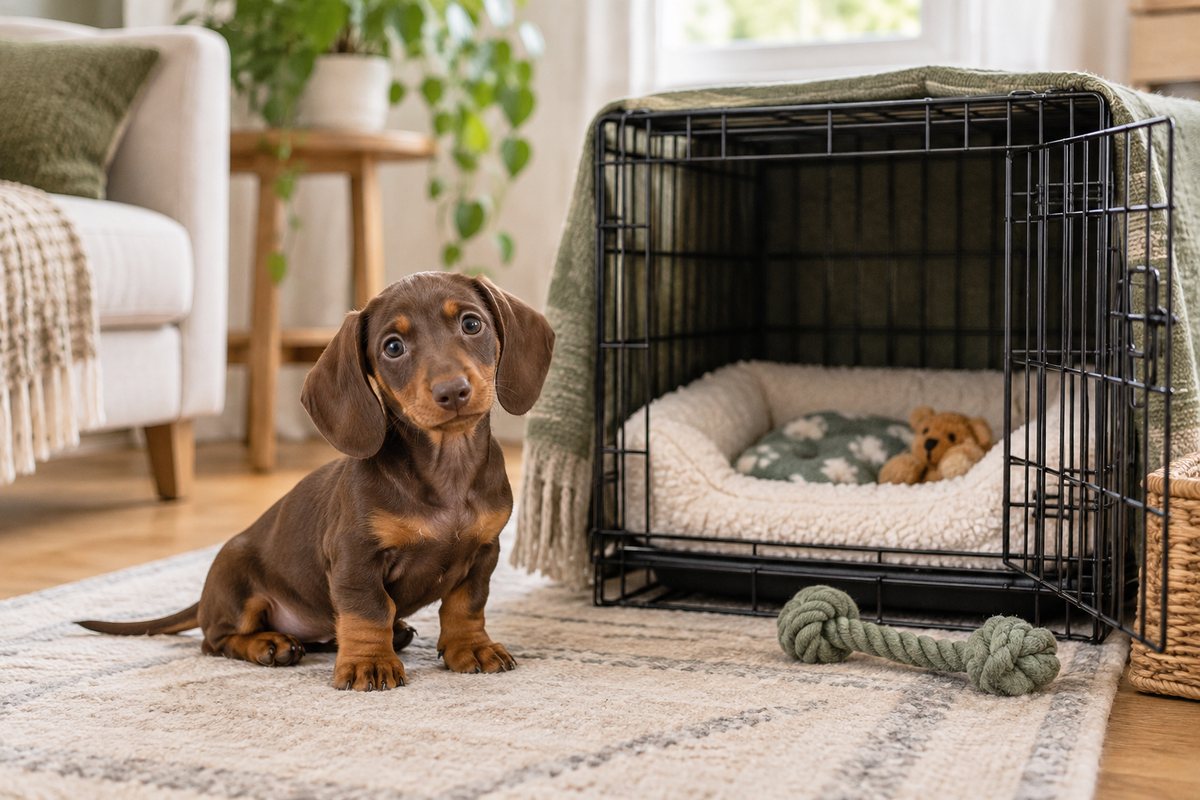
    Dachshund puppy in a safe crate area with chew toys nearby

    The 3-zone setup that prevents chewing

    The fastest way to reduce chewing is to stop giving your puppy unsupervised access to the whole home. Use three zones: a supervised zone, a puppy-proofed safe zone, and a rest zone.

    ZoneUse it whenWhat belongs there
    Supervised zoneYou are actively watching and trainingLeash, toys, treats, legal chew, blocked cords
    Safe zoneYou are nearby but cannot watch every secondPuppy pen, baby gate, water, chew toys, washable mat
    Rest zonePuppy is overtired or you need a breakCrate or quiet pen, safe chew, calm bedding if not shredded

    VCA’s destructive puppy guidance recommends using a safe space with good chew toys and notes that crate training can help prevent destructive chewing during the puppy phase. Pair confinement with comfort. The goal is not to trap a frustrated puppy. The goal is to let your puppy rest and chew legal items when you cannot actively supervise.

    If your puppy already chews crate bedding, remove soft bedding temporarily and use safer chew items only under supervision. Read Dachshund crate training if the crate causes whining, panic, or digging. A crate should feel predictable, not scary.

    How to redirect chewing in the moment

    When your puppy grabs something wrong, stay boring. If you run, yell, or chase, many puppies learn that stolen objects start a fantastic game. Instead, trade and redirect.

    1. Walk over calmly with a treat or better toy.
    2. Say “drop” once if your puppy knows it, or place the better item near the nose.
    3. Trade for the unsafe object instead of prying the mouth open.
    4. Move the wrong item out of reach.
    5. Give the legal chew back and praise when your puppy takes it.
    6. Reset the environment so the same mistake cannot happen again.

    AKC recommends teaching “leave it” and “drop it” cues for puppies chewing inappropriate items, and warns against chasing unless there is an immediate safety issue. ASPCA also recommends removing the wrong item, inserting something the dog can chew, and praising the right choice. For a Dachshund, calm trades are especially important because the breed can turn conflict into keep-away very quickly.

    Best chew options for Dachshund puppies

    The best chew is safe for your puppy’s size, interesting enough to compete with household items, and durable enough that chunks do not break off. Rotate textures so your puppy does not get bored.

    • Soft rubber puppy chews for daily redirection.
    • Freezable teething toys for sore gums.
    • Food-stuffed rubber toys for crate or pen time.
    • Short supervised chilled washcloth sessions if your puppy does not shred fabric.
    • Appropriately sized edible chews approved by your veterinarian.
    • Food puzzles that use part of the daily meal instead of extra calories.

    VCA recommends offering a variety of tastes, odors, and textures to discover what appeals to your dog. AKC adds that chew choices should match the puppy’s chewing strength and that your veterinarian can advise what is safe for your puppy. ASPCA cautions that edible chews can create choking risks if a dog bites off and swallows large pieces, so supervise edible chewing closely.
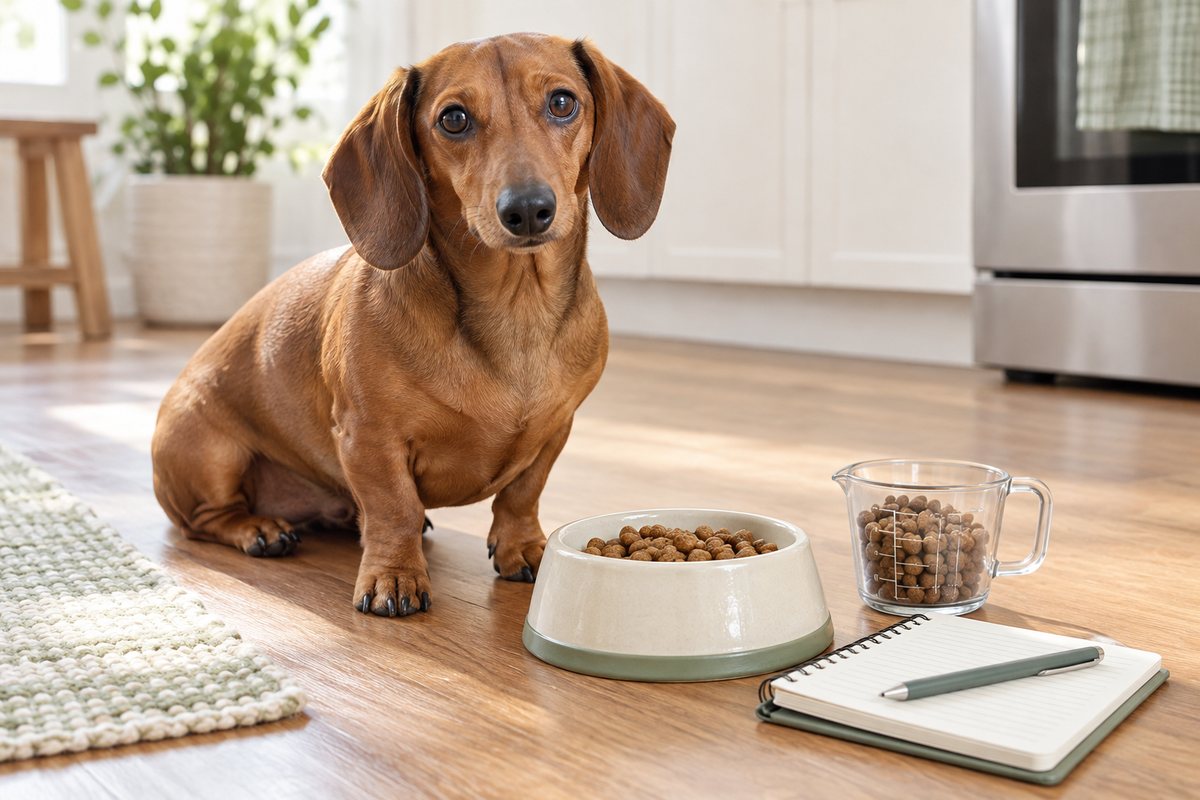
    Dachshund puppy using food rewards and safe chews for chewing redirection

    Daily anti-chewing routine

    Dachshund puppy chewing gets worse when the day has no rhythm. Use predictable cycles: potty, short activity, chew, nap. Many puppies chew most intensely when they are tired, overstimulated, or overdue for a potty break.

    1. Morning: potty, breakfast, 5 minutes of training, then a safe chew.
    2. Midmorning: nap in crate or pen before the puppy becomes wild.
    3. Midday: potty, short sniff walk, toy play, then food puzzle.
    4. Afternoon: supervised free time on leash or in one puppy-proofed room.
    5. Evening: calm chew before sofa time, not after furniture chewing starts.
    6. Bedtime: potty, quiet crate routine, and no rough play right before sleep.

    Use the routine in Dachshund puppy schedule if your puppy’s chewing spikes at predictable times. If chewing overlaps with sore gums, use the more specific plan in Dachshund puppy teething. If teeth land on hands and ankles, pair this with Dachshund puppy biting.
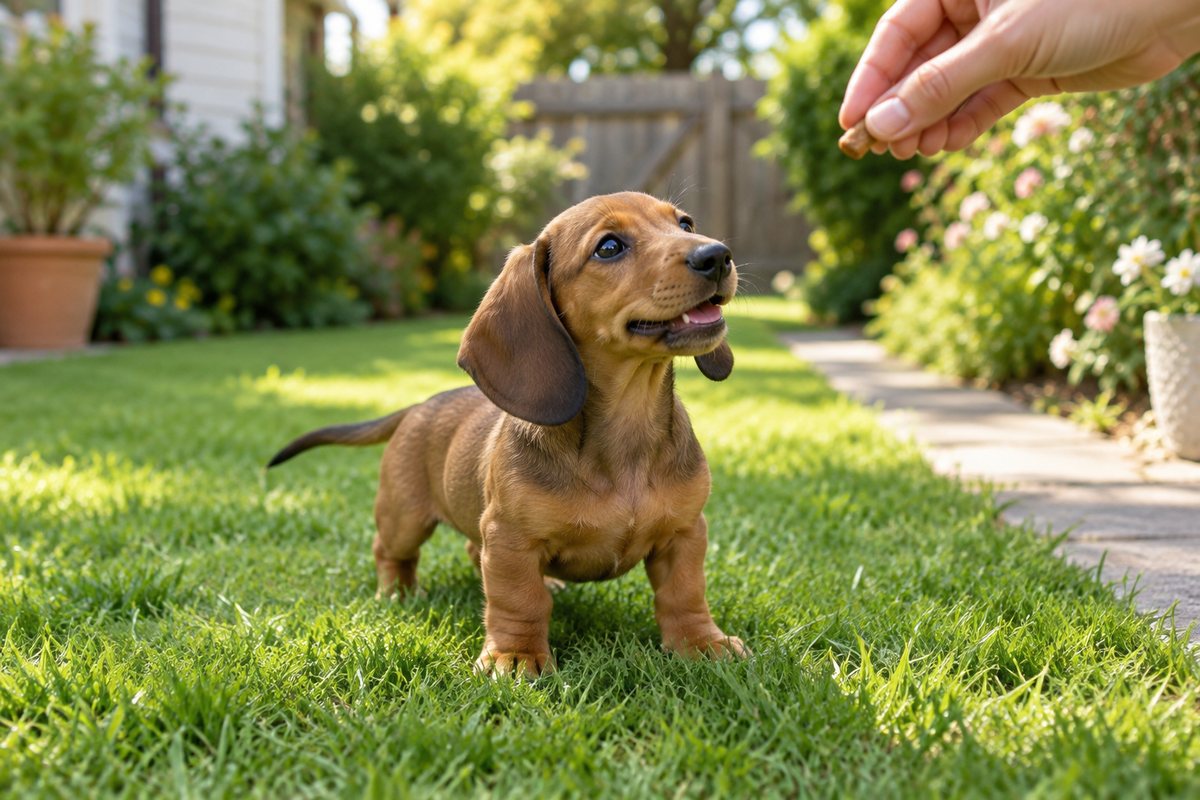
    Dachshund puppy routine using potty breaks and supervised chewing time

    Mistakes that make chewing worse

    Some common owner reactions accidentally teach a Dachshund puppy to chew more. Avoid these patterns while you build better habits.

    Chasing stolen objects

    Chasing can turn socks and shoes into trophies. Trade instead. Then close the laundry door, move the shoes, and reduce access.

    Punishing after the damage is done

    AKC warns against punishment after the fact because the puppy is no longer connecting the correction to the old chewing. VCA similarly notes that arriving home and punishing completed damage can increase anxiety. If you find chewed furniture later, change management. Do not punish a puppy for yesterday’s choice.

    Relying only on bitter spray

    Deterrents may help some dogs, but ASPCA stresses that chewing treatment requires more than deterrent sprays. Your puppy still needs to learn what they can chew. Spray without supervision, legal chews, and management is usually weak training.

    Giving too much freedom too soon

    A puppy who has chewed three rugs is not ready for unsupervised living room time. Freedom should expand after several weeks of good choices, not because the puppy looks cute and quiet for one afternoon.

    Dachshund puppy learning calm attention before chewing household items

    When to get extra help

    Most puppy chewing improves with age, structure, and consistent redirection. Get extra help if your Dachshund puppy chews frantically only when alone, injures the mouth, swallows fabric or toy pieces, guards stolen items, growls when approached, cannot settle, or keeps chewing despite strong puppy-proofing and supervision.

    Call your veterinarian if chewing seems tied to pain, broken teeth, severe teething discomfort, vomiting, appetite changes, or possible swallowed objects. If the chewing looks like separation anxiety or resource guarding, ask your veterinarian for a referral to a qualified trainer or veterinary behavior professional. Early help is easier than waiting until the habit becomes a household pattern.

    FAQ

    Why is my Dachshund puppy chewing everything?

    Your Dachshund puppy may be teething, exploring, bored, overtired, seeking attention, or getting too much unsupervised freedom. Start with puppy-proofing, supervision, and safe chew outlets.

    At what age do Dachshund puppies stop chewing everything?

    Many puppies improve after teething, often around the later puppy months, but chewing can continue if the puppy has practiced the habit. Training and management matter as much as age.

    How do I stop my Dachshund puppy chewing furniture?

    Block access, supervise closely, use a pen or crate when you cannot watch, redirect to legal chews, and reward your puppy for chewing toys. Deterrent spray may help, but it should not be the whole plan.

    Should I punish my puppy for chewing?

    No. Punishment after the fact is confusing and can increase fear or anxiety. Interrupt calmly if you catch chewing in the moment, trade for a safe chew, praise the right choice, and change the environment.

    What if my Dachshund puppy swallows part of a toy?

    Call your veterinarian for advice, especially if the piece was large, sharp, fabric, rubber, plastic, or if your puppy vomits, refuses food, becomes lethargic, or strains to poop.

    Sources


    Related Dachshund guides

  • Dachshund Puppy Teething: Timeline, Signs & Safe Chews

    Dachshund Puppy Teething: Timeline, Signs & Safe Chews

    Dachshund puppy teething can turn a sweet little puppy into a tiny chewing machine. Between sore gums, loose baby teeth, new adult teeth, and normal puppy curiosity, your Dachshund may chew fingers, socks, furniture, crate bedding, leash handles, and anything that feels good in the mouth. The good news is that teething is temporary. The training habits you build during this stage can last for life.

    Dachshund puppy teething setup with safe chew rewards and small training treats

    This guide explains the Dachshund puppy teething timeline, common signs, what chew items are safer, what to avoid, how to protect furniture, and when mouth pain or chewing needs a veterinarian. It is written for Dachshund owners, so it also includes back-safe play, crate rest, and routines that reduce frantic chewing without turning teething into a punishment cycle.

    Dachshund puppy teething quick answer

    Dachshund puppy teething usually starts before the puppy comes home and becomes most obvious around the months when baby teeth loosen and adult teeth erupt. AKC’s puppy teething timeline explains that puppies develop baby teeth early, then lose them as adult teeth come in, often finishing around the six-month mark. During that window, chewing is normal. Your job is to provide safe chew outlets, supervise, redirect calmly, and protect your puppy from unsafe objects.

    A practical teething plan has four parts: puppy-safe chews, short supervised play, enough sleep, and management. Do not wait until your Dachshund is chewing a chair leg to start training. Put legal chew items in the environment before the puppy makes their own choices.

    Dachshund puppy teething timeline

    Every puppy develops at a slightly different pace, but most Dachshunds follow the same general teething pattern as other dogs. If your puppy is much earlier, much later, or seems painful, your veterinarian can check the mouth and make sure teeth are erupting normally.

    Age rangeWhat is happeningWhat owners should do
    2-4 weeksBaby teeth begin coming in while the puppy is still with the breeder or rescueMonitor general mouth comfort if you are caring for a very young litter
    6-8 weeksMost baby teeth are presentStart gentle handling, toy play, and safe chewing habits
    3-4 monthsBaby teeth may loosen and fall outOffer soft puppy chews, frozen rubber toys, and calm redirection
    4-6 monthsAdult teeth erupt; chewing often peaksIncrease supervision and rotate chew textures
    6-7 monthsMany puppies have most or all adult teethKeep chew rules consistent and schedule a mouth check if baby teeth remain

    You may never find lost baby teeth. Puppies often swallow them during normal eating or play. That is usually not a problem. What matters more is whether the adult teeth come in cleanly and whether your puppy can eat, chew, and play without obvious pain.

    Common teething signs

    Dachshund puppy teething can look like a behavior problem because the puppy suddenly chews more. Before assuming stubbornness, look for normal teething signs.

    • Chewing toys, blankets, crate mats, shoes, socks, hands, or furniture more than usual.
    • Drooling or wet toys after chewing.
    • Small spots of blood on a toy when a baby tooth loosens.
    • Temporary bad breath.
    • Preference for softer or cooler chew textures.
    • More nipping during excited play.
    • Brief fussiness when tired, hungry, or overstimulated.

    Some chewing is not caused by teething alone. VCA notes that puppies also chew because they investigate, play, seek attention, and satisfy a natural urge to gnaw. That means a good plan should not rely on teething ending by itself. Teach your Dachshund what to chew now.

    Dachshund puppy practicing calm watching before redirecting to a teething toy

    Safe chew setup for teething puppies

    The best chew for a teething Dachshund puppy is not just “the toughest toy.” Dachshunds are small dogs with a long back and a strong personality. You want chew options that match the puppy’s size, tooth stage, chewing style, and supervision level.

    Chew optionBest useSafety notes
    Soft rubber puppy teething toyDaily chewing and redirectionChoose puppy size; remove if pieces break off
    Freezable rubber toySore gums during peak teethingUse cold, not rock-hard; supervise closely
    Wet washcloth, chilled and supervisedShort gum-soothing sessionsRemove before shredding or swallowing fabric
    Food puzzle with soft foodBusy mouth after meals or before napsCount calories and clean after use
    Puppy-safe edible chewOccasional supervised chewingPick size carefully; stop if chunks break off
    Soft tug toyInteractive play without fingersKeep tug low and controlled to protect the back

    VCA’s puppy teething toy guidance emphasizes choosing puppy-appropriate toys and removing toys that start breaking apart. ASPCA’s chew/treat position statement also reminds owners to supervise chewing and contact a veterinarian if a puppy consumes a chunk of chew material. No chew is perfect if the puppy is left alone long enough to destroy and swallow it.

    Chews and habits to avoid

    A teething puppy does not know the difference between a safe chew, an electrical cord, a child’s toy, and the corner of a rug. You have to make the safe choice easy and the unsafe choice unavailable.

    Avoid hard objects that do not give

    If an object is hard enough that you would not want it banged against your own knee, it may be too hard for a young puppy’s teeth. Skip rocks, hard plastic fragments, cooked bones, antlers, and anything that seems likely to crack teeth or splinter.

    Avoid unsupervised fabric chewing

    Blankets, towels, crate pads, and plush toys can feel wonderful on sore gums, but fabric can become dangerous when shredded and swallowed. If your puppy destroys fabric, use it only under direct supervision or remove it from the crate.

    Avoid turning hands into chew toys

    Hand play teaches a teething puppy that human skin is part of the game. Use the plan in Dachshund puppy biting if your puppy is already nipping people. For teething, the rule is simple: teeth go on toys, not fingers.

    Dachshund puppy resting near a crate with a safe teething routine

    Daily routine that protects your home

    Teething feels worse when your puppy is bored, overtired, hungry, or roaming unsupervised. The routine below helps many Dachshund puppies get through peak chewing months with fewer damaged belongings.

    1. Start the day with potty, breakfast, and a short calm chew.
    2. Use 5-minute training sessions before the puppy gets wild.
    3. Offer a legal chew before sofa time, not after the puppy grabs the furniture.
    4. Rotate two or three chew textures instead of leaving every toy out all day.
    5. Use a puppy pen, gate, or crate when you cannot supervise.
    6. Schedule naps before evening biting and chewing spikes.
    7. End rough games early and redirect to a toy or food puzzle.

    The Dachshund puppy schedule guide can help you put potty breaks, meals, naps, and training into a predictable rhythm. For crate comfort, pair this teething routine with Dachshund crate training so confinement feels safe instead of frustrating.

    Back safety matters too. Do not use teething as a reason to encourage rough jumping games. Play on the floor, keep tug low, avoid repeated sofa launches, and read Dachshund back pain signs if your puppy yelps, stiffens, drags a leg, or suddenly resists movement.

    Dachshund puppy teething routine starting with a potty break and calm reset

    Teething vs puppy biting

    Teething and biting overlap, but they are not exactly the same problem. A puppy chewing the corner of a blanket may have sore gums. A puppy chasing ankles may be playing, overtired, or seeking attention. A puppy guarding a chew with a stiff body needs a different plan from a puppy calmly gnawing a rubber toy.

    If your Dachshund bites people during teething, redirect early and reward the toy choice. If teeth hit skin hard, calmly pause the game. Do not yell, hit, pin, or pry the puppy’s mouth open. ASPCA puppy mouthing guidance warns that rough responses can make some puppies bite harder or become afraid.

    For household chewing, use management first. Pick up shoes, block cords, close laundry doors, and supervise. ASPCA destructive chewing guidance explains that puppies need appropriate chew outlets and gentle direction toward their own items. Deterrent sprays alone rarely solve the problem if the puppy is bored or unsupervised.

    When to call your veterinarian

    Most Dachshund puppy teething is normal. Call your veterinarian if your puppy will not eat, seems very painful, has heavy bleeding, has swelling or pus in the mouth, breaks a tooth, has a baby tooth that will not fall out, has breath that smells unusually foul, or swallows part of a chew toy.

    You should also ask your veterinarian before using very hard chews, dental chews, rawhide-type products, or edible chews if your puppy gulps food, guards items, has a sensitive stomach, or has had any choking or obstruction scare. Small puppies can get into trouble quickly, and Dachshunds are often determined chewers once they like something.

    FAQ

    When do Dachshund puppies start teething?

    Dachshund puppies get baby teeth early, often before they come home. Owners usually notice teething most when baby teeth begin loosening and adult teeth start coming in around the next few months.

    When does Dachshund puppy teething stop?

    Many puppies are through the most obvious teething stage by around six months, though chewing habits can continue if they have been reinforced. Keep toy rules consistent even after adult teeth arrive.

    What can I give my Dachshund puppy for teething?

    Offer puppy-safe rubber chews, freezable teething toys, short supervised chilled washcloth sessions, food puzzles, and size-appropriate edible chews recommended by your veterinarian. Always supervise new chew items.

    Is blood on a puppy toy normal during teething?

    A tiny spot of blood can happen when a baby tooth loosens. Heavy bleeding, swelling, pus, broken teeth, severe pain, or refusal to eat should be checked by a veterinarian.

    Why is my teething Dachshund chewing furniture?

    Furniture chewing can come from sore gums, boredom, attention seeking, or too much freedom. Block access, supervise, rotate legal chews, reward toy choices, and use a pen or crate when you cannot watch closely.

    Sources


    Related Dachshund guides

  • Dachshund Puppy Biting: 7 Calm Ways to Stop Nipping

    Dachshund Puppy Biting: 7 Calm Ways to Stop Nipping

    Dachshund puppy biting is normal, but it should not become a daily battle with sharp teeth, torn sleeves, and kids afraid to walk across the room. Most Dachshund puppies nip because they are teething, playing, overtired, excited, or looking for attention. The goal is not to scare the biting out of them. The goal is to teach bite inhibition, redirect the mouth to legal chew items, and build a calmer routine before your puppy gets wild.

    Dachshund puppy biting training starting with a calm outdoor reset

    This guide gives Dachshund owners a practical, humane plan for puppy biting: what causes it, how to respond in the moment, how to prevent evening biting bursts, what to do with children, and when biting needs help from a veterinarian or qualified behavior professional.

    Dachshund puppy biting quick answer

    To reduce Dachshund puppy biting, stop rough hand play, keep chew toys nearby, redirect before teeth land on skin, end play calmly when biting gets hard, reward quiet mouth behavior, add naps, and keep training reward-based. AKC puppy biting guidance explains that puppy biting is common during teething and development, and that puppies can learn better mouth habits through bite inhibition, redirection, brief calm breaks, and reinforcement for desired behavior.

    For Dachshunds, the routine matters as much as the correction. A tired, hungry, overexcited Dachshund puppy often bites more. Before assuming your puppy is being stubborn, check the basics: potty break, water, nap, chew outlet, and a calmer play setup.

    Why Dachshund puppies bite so much

    Dachshund puppies explore the world with their mouths. They also have a bold, persistent temperament that can make biting feel more intense than owners expected from such a small puppy. The behavior usually comes from one of several normal causes.

    Common causeWhat it looks likeBest first response
    Teething discomfortChewing fingers, sleeves, chair legs, blankets, or crate beddingOffer safe puppy chews and rotate textures
    Play bitingNipping during tug, chase, petting, or floor playPause play, redirect to a toy, reward gentle mouth
    Overtired behaviorEvening biting, frantic zooming, barking, inability to settlePotty break, water check, then nap or quiet crate time
    Attention seekingBiting hands, ankles, socks, or pant legs when ignoredManage access, ask for an easy cue, reward calm attention
    OverarousalBiting gets harder during exciting greetings or rough gamesLower the energy, use barriers, shorten play sessions
    Fear, guarding, or painGrowling, stiff posture, snapping near food, toys, handling, or sore areasStop pushing the situation and get professional help

    VCA notes that puppy nipping and mouthing are often social play, not only teething. That distinction matters. If you only buy more chew toys but keep wrestling with your hands, your puppy may still learn that human skin is part of the game.

    Bite inhibition comes before no biting

    Bite inhibition means a puppy learns to control the force of their mouth. ASPCA explains that puppies usually start learning this during play with other puppies; when one puppy bites too hard, the other may yelp and stop playing. With people, the lesson is similar: hard teeth make the fun pause.

    Do not expect a young Dachshund to understand “never put teeth on people” in one day. Start with the message that hard bites end interaction. Then shape toward softer mouth, then toward toys instead of hands. This step-by-step approach is usually more realistic than waiting until the puppy is wild and shouting “no” over and over.

    Small food rewards and chew options for Dachshund puppy biting training

    7-step plan to stop Dachshund puppy biting

    1. Remove hand wrestling from the game

    If hands are toys on Monday, your puppy will not understand why hands are forbidden on Tuesday. Use tug toys, food puzzles, flirt-pole style games on the floor, and short retrieve games instead. Keep your fingers out of the puppy’s mouth when playing, teasing, or petting an excited puppy.

    2. Redirect before the bite lands

    Keep a toy in reach during the biting windows you can predict: morning wake-up, after meals, after potty trips, and early evening. When your puppy starts aiming for hands or ankles, move the toy low and away from your body so the puppy can chase and bite the toy instead. Praise the switch immediately.

    3. Make hard biting end the fun

    When teeth hit skin hard, freeze, remove your hands, stand up if needed, and pause the game for a few seconds. If your puppy keeps jumping and biting, step behind a baby gate or place the puppy in a safe pen with a chew. Keep the reset calm and boring. AKC advises that biting during play should make playtime stop, while yelling can accidentally become exciting attention.

    4. Reward the behavior you want

    Do not only react when the puppy bites. Notice soft choices: sniffing instead of grabbing, licking instead of nipping, carrying a toy, lying on a mat, or watching your hands calmly. Mark the behavior with “yes” and give a small treat, a toy, or gentle praise. AVSAB’s humane training position supports reward-based training and warns against fear, intimidation, and pain in behavior work.

    5. Add naps before the biting storm

    Many owners try to exercise a bitey puppy more, but an overtired Dachshund puppy often gets sharper. If biting predictably spikes after 45 to 90 minutes awake, try a potty break and nap before the chaos starts. The full Dachshund puppy schedule guide can help you build a better rhythm.

    6. Teach simple replacement cues

    Train easy skills when your puppy is calm: name response, sit, touch, drop it, trade, crate, and go to mat. Then use those cues before biting starts. For example, when your puppy locks onto pant legs, toss a treat away and cue “touch” or “sit” when they return. For a broader foundation, pair this plan with how to train a Dachshund puppy.

    7. Use the crate or pen as a calm reset, not punishment

    A crate or pen can help a puppy settle, but only if it has been trained positively. Add a chew, keep your voice neutral, and release the puppy when calm. If your puppy panics in confinement, go back to Dachshund crate training basics before using it during biting bursts.

    Dachshund puppy taking a calm crate break after biting training

    Daily routine that reduces biting

    A biting plan works faster when the day is predictable. Dachshund puppies are small, low to the ground, and enthusiastic. They need play and enrichment, but they also need potty breaks, chew outlets, sleep, and back-safe movement instead of chaotic jumping from furniture.

    Time or triggerWhat to doWhy it reduces biting
    After wakingPotty trip, calm praise, breakfast if scheduledPrevents frantic wake-up nipping
    After mealsPotty, short sniff walk, then calm chewGives the mouth a legal job
    Before playPick a tug toy or soft toy before puppy gets excitedKeeps teeth away from hands
    During playPause if teeth touch skin; resume when calmTeaches bite inhibition and self-control
    EveningShort training, food puzzle, potty, nap or quiet timeReduces overtired biting bursts
    BedtimeFinal potty, dim room, safe chew if appropriateBuilds a predictable wind-down routine

    For house-training overlap, use the Dachshund potty training plan. Some “biting” moments are really a puppy trying to say they need something: outside, water, food, sleep, or distance from too much handling.

    Kids, guests, and ankle biting

    Dachshund puppy biting becomes more stressful when children run, squeal, wave hands, or drop to the floor. Do not ask kids to be the trainers during hard biting phases. Adults should manage the setup first.

    • Use baby gates so the puppy cannot chase running children.
    • Teach children to stand still, fold arms, and call an adult instead of pushing the puppy away.
    • Give visitors a toy or treat plan before they greet the puppy.
    • Keep greetings short and low-key.
    • End play before the puppy becomes frantic.

    Ankle biting often gets worse because moving feet are exciting. If your puppy stalks socks and pant legs, avoid running games in narrow hallways. Carry treats, cue a simple behavior, and reward the puppy for moving beside you instead of grabbing you. If your puppy also barks during arousal, the guide on why Dachshunds bark so much may help you separate excitement from anxiety.

    Dachshund puppy practicing calm watching instead of ankle biting

    Mistakes that make Dachshund puppy biting worse

    Yelling, smacking, or pinning the puppy

    Physical punishment can make puppy mouthing more intense and can damage trust. ASPCA warns that hitting puppies for playful mouthing can make them bite harder, react more aggressively, or become afraid. AVSAB also recommends reward-based training methods for behavior problems instead of aversive methods.

    Giving attention after every nip

    If biting makes you chase, shout, pick up the puppy, or start a dramatic conversation, biting may become a reliable attention button. Make the bite boring. Then reward the better choice when the puppy offers it.

    Expecting one chew toy to solve everything

    Rotate chew items and match them to the moment. A puppy who wants to tug may not want a hard chew. A teething puppy may want a cold rubber toy. A hungry puppy may settle better with part of their meal in a food puzzle. Always choose safe, size-appropriate items and supervise new chews.

    Letting the puppy rehearse wild behavior on furniture

    Rough couch games can create two problems for Dachshunds: harder biting and unsafe jumping. Use floor-level play and block access to repeated sofa launches. If your puppy ever yelps, stiffens, drags a leg, arches their back, or suddenly resists handling, review Dachshund back pain signs and contact your veterinarian.

    When puppy biting is not normal

    Most Dachshund puppy biting improves with maturity, structure, and consistent training. Get professional help sooner if the biting is escalating, breaking skin often, paired with stiff body language, linked to food or toy guarding, triggered by touch, or directed at children in a way you cannot safely manage.

    Talk to your veterinarian if biting appears suddenly, your puppy seems painful, or behavior changes after an injury. For serious fear, aggression, or guarding, work with a veterinarian, veterinary behaviorist, certified applied animal behaviorist, or qualified reward-based trainer.

    FAQ

    Is Dachshund puppy biting normal?

    Yes. Dachshund puppy biting is usually normal during teething, play, and early learning. It still needs calm training so your puppy learns bite inhibition and stops using people as chew toys.

    When do Dachshund puppies stop biting?

    Many puppies improve as adult teeth come in and training becomes consistent, but there is no magic date. If hard biting is still a major issue around six months, or it is getting worse, ask for help from a qualified trainer or behavior professional.

    Should I yelp when my Dachshund puppy bites?

    A brief “ouch” may help some puppies, but it can excite others. If your puppy bites harder after noise, skip the yelp and calmly pause play or step behind a barrier for a few seconds.

    Are Dachshunds more bitey than other puppies?

    Dachshunds are often bold, persistent, and quick to repeat behavior that works. That can make normal puppy biting feel intense. A predictable routine, toy redirection, and reward-based training usually help.

    What is the best toy for Dachshund puppy biting?

    The best toy depends on the reason for biting. Use soft tug toys for play biting, safe rubber chews for teething, food puzzles for hungry or busy mouths, and calm chew options during crate or pen breaks.

    Sources

    Affiliate disclosure: If you buy through links on this page, I may earn a commission at no extra cost to you.

    For owners who want a structured, positive-reinforcement training plan at home, Brain Training for Dogs is an online course that can pair well with short daily Dachshund training sessions.


    Related Dachshund guides

  • Dachshund Puppy Schedule: Daily Routine by Age

    Dachshund Puppy Schedule: Daily Routine by Age

    Dachshund puppy schedule planning is easiest when you build the day around five repeatable needs: potty breaks, meals, naps, short training sessions, and calm social time. A Dachshund puppy does not need a perfect military timetable. They need a predictable rhythm that prevents accidents, protects their long back, and gives them enough sleep to avoid overtired biting and barking.

    Dachshund puppy schedule starting with an outdoor potty break

    This guide gives you a practical Dachshund puppy schedule from morning to bedtime, plus age-based adjustments for 8-week, 10-week, 12-week, and older puppies. Use it as a framework, then adjust for your puppy’s bladder control, appetite, energy, vaccination status, and your veterinarian’s advice.

    Dachshund puppy schedule quick answer

    A good Dachshund puppy schedule starts with a potty break immediately after waking, meals at consistent times, potty trips after meals and play, short training sessions, several naps, and a calm bedtime routine. Young puppies usually need outdoor chances at least every two to four hours and after major activity changes. AKC puppy routine guidance also recommends predictable feeding, potty, play, and rest blocks instead of leaving the day completely random.

    For Dachshunds, add one more rule: keep the schedule back-safe. Do not build a daily routine around stairs, sofa jumping, or rough high-impact play. Short walks, sniffing, food puzzles, handling practice, and gentle games are better than repetitive jumping for a long-bodied puppy.

    Sample daily Dachshund puppy schedule

    This example works well for many 8- to 16-week Dachshund puppies when someone is home or can arrange help. The exact clock times can shift. Keep the order more consistent than the minute-by-minute timing.

    Time blockWhat to doWhy it helps
    6:30-7:00 amCarry or guide puppy outside for potty, then quiet praisePrevents wake-up accidents
    7:00-7:30 amBreakfast, water, then another potty chanceMeals often trigger elimination
    7:30-8:15 amShort play, name practice, handling, or leash practiceUses morning energy without overdoing exercise
    8:15-10:00 amNap in crate, pen, or puppy-safe areaProtects sleep and prevents overtired behavior
    10:00 amPotty, brief training, supervised free timeBuilds routine and house-training success
    MiddayLunch, potty, calm play, napKeeps digestion and bladder timing predictable
    AfternoonPotty, socialization outing or indoor enrichment, napAdds confidence without overwhelming the puppy
    EveningDinner, potty, gentle play, family timeLets the puppy wind down gradually
    BedtimeFinal potty trip, crate or sleep area, lights lowCreates an overnight pattern

    If you work away from home, do not expect a young puppy to simply “hold it” through a full workday. Arrange a family member, neighbor, dog walker, or safe puppy area with a planned potty solution. The full Dachshund potty training guide explains how to build the house-training part in more detail.

    Dachshund puppy schedule by age

    Your schedule should loosen as your puppy matures. Age matters because bladder control, attention span, sleep needs, teething behavior, and confidence all change quickly during the first months at home.

    Puppy ageMain schedule goalDaily focus
    8 weeksSafety, bonding, potty rhythm, napsVery frequent potty breaks, gentle handling, short crate comfort sessions
    10 weeksPredictable meals and short trainingName, recall games, sit, calm crate time, supervised exploration
    12 weeksMore confidence outside the homeVet-approved socialization, leash practice, fewer accidents through better timing
    4 monthsLonger awake windows and clearer cuesMore structured training, chew management, polite greetings
    5-6 monthsAdolescent-proof routinesConsistency, impulse control, back-safe exercise, continued potty reliability

    The schedule is not a punishment chart. It is a prevention system. If accidents or frantic behavior increase, your puppy may need shorter awake windows, more potty trips, or calmer transitions.

    Potty breaks and meals

    Potty timing is the backbone of a Dachshund puppy schedule. Take your puppy out after waking, after eating, after drinking, after play, after training, before crate naps, after crate naps, and before bed. AKC house-training guidance emphasizes that schedules help puppies learn where to go and reduce accidents because owners are offering success at predictable times.

    Measured Dachshund puppy meals used in a predictable daily schedule

    Most puppies do better with scheduled meals instead of all-day grazing. AKC puppy schedule guidance notes that many puppies eat three meals per day. Scheduled meals make potty patterns easier to predict. Keep water available, but pay attention to heavy drinking before bedtime and ask your veterinarian if thirst seems excessive.

    Crate naps and sleep

    Puppies sleep a lot, and many behavior problems get worse when they are overtired. AKC sleep guidance explains that puppies may need substantial daily sleep and that a sleep routine helps the puppy and owner adjust. For Dachshunds, planned naps are especially useful because they reduce wild jumping, ankle chasing, and frantic evening behavior.

    Dachshund puppy resting near a crate during nap time in a daily schedule

    If you use a crate, keep it positive. The crate should predict rest, treats, meals, and calm separation practice, not punishment. Pair this schedule with Dachshund crate training and how to crate train a Dachshund puppy if crate time is still stressful.

    Training, play, and socialization

    Training blocks should be short. A few minutes of reward-based practice several times per day is more realistic than one long session. Work on name response, coming when called, sit, handling, leash pressure, settling on a mat, and trading toys. The broader guide on how to train a Dachshund puppy covers the foundation skills.

    Socialization belongs in the schedule too, but it must be controlled. AVSAB’s puppy socialization position statement supports early, well-managed socialization and puppy classes while also advising owners to manage disease risk. AAHA also recommends asking your veterinarian about safe local exposure based on vaccine status and area risk. That means your schedule can include car rides, carried outings, invited visitors, safe surfaces, household sounds, and positive handling without rushing into dog parks.

    Common schedule mistakes

    Keeping the puppy awake too long

    A tired Dachshund puppy may look “naughty” when they are actually exhausted. If biting, barking, and zooming spike after a busy block, try a potty break followed by a nap.

    Waiting too long between potty trips

    Young puppies need repetition. If accidents happen daily, tighten the schedule before assuming stubbornness. Reward outdoor success immediately and clean indoor accidents thoroughly.

    Over-exercising a small long-backed puppy

    Dachshund puppies need movement, sniffing, and play, but they do not need repetitive stair climbing, sofa launches, or long forced runs. If your puppy seems stiff, reluctant to move, yelps, drags a leg, or changes posture, read Dachshund back pain signs and contact your veterinarian.

    FAQ

    What is the best Dachshund puppy schedule?

    The best Dachshund puppy schedule is a repeatable routine of potty, meal, potty, short activity, potty, nap, and repeat. The exact times should fit your home, but the order should stay predictable.

    How often should a Dachshund puppy go potty?

    Most young puppies need very frequent chances, especially after waking, eating, drinking, playing, and napping. Many schedules start with outdoor breaks every two to four hours, then adjust based on age and progress.

    How many naps does a Dachshund puppy need?

    Many puppies need several naps per day. If your puppy becomes bitey, frantic, or unable to settle, add a calm potty break and a nap instead of more stimulation.

    Should my Dachshund puppy follow a strict clock schedule?

    No. A consistent order matters more than exact clock times. Keep the pattern predictable while allowing flexibility for growth, weather, vet appointments, and your puppy’s individual needs.

    When can I reduce potty breaks?

    Reduce breaks gradually only after your puppy has a reliable accident-free pattern. If accidents return, shorten the interval again and rebuild success.

    Sources


    Related Dachshund guides

  • Dachshund Puppy Crying in Crate: Complete Dachshund Owner Guide

    Dachshund Puppy Crying in Crate: Complete Dachshund Owner Guide

    A Dachshund puppy crying in a crate may need to potty, feel lonely, be overtired, dislike confinement, have too much energy, or feel scared because crate training moved too fast. Some whining is normal during adjustment, but panic, nonstop distress, repeated accidents, vomiting, or attempts to escape mean the plan needs to slow down.

    Dachshund puppy crate routine connected to potty schedule

    Dachshund puppy crying in crate: quick answer

    First check potty needs, hunger, temperature, pain, and crate setup. Then teach the crate gradually with meals, chews, naps, short departures, and rewards for calm. AKC crate training guidance recommends making the crate comfortable and increasing time gradually. PetMD notes that puppies who are new to crate training may cry, whine, bark, or howl when left alone in the crate.

    Crying patternPossible causeResponse
    After 1 to 2 hoursPotty needQuiet potty trip
    Immediately franticToo much too soonShorter sessions
    At bedtimeLoneliness or routine changeCrate near bed temporarily
    After wild playOvertiredCalm wind-down first
    With accidentsSchedule or health issueMore potty trips or vet check
    Dachshund puppy learning calm crate independence near owner

    What to do tonight

    • Give a final potty trip before crate time.
    • Keep the crate comfortable but safe.
    • Place it near you at first if the puppy is scared.
    • Use a boring potty break if they wake crying.
    • Do not turn every cry into playtime.
    • Shorten crate sessions the next day and rebuild.

    For full crate setup, read Dachshund crate training and how to crate train a Dachshund puppy.

    Dachshund puppy meal timing before crate nap routine

    Daytime plan to reduce night crying

    Night crate crying often starts earlier in the day. A puppy that never practices calm crate time until bedtime may panic when the room goes dark. Add tiny daytime crate sessions after potty trips, meals, and calm play so the crate becomes normal before the night stretch.

    • Feed one meal near or inside the crate.
    • Practice 30-second door closes while you stay nearby.
    • Use crate naps after potty and play.
    • Keep pre-bedtime play calm.
    • Use boring nighttime potty trips if your puppy wakes.
    • Do not use the crate as punishment.

    Red flags

    Call your veterinarian if crying comes with vomiting, diarrhea, repeated crate accidents, coughing, weakness, poor appetite, or signs of pain. Ask a qualified trainer for help if your puppy panics, bites the crate, injures themselves, or cannot settle even with gradual training.

    Crate crying decision tree

    When your puppy cries, pause before reacting. The goal is to meet real needs without teaching that every noise creates play, food, or cuddles. A young puppy may truly need a potty break. A puppy who just went out may need help settling. A puppy who panics may need the training plan made easier.

    QuestionIf yesIf no
    Has it been long enough for potty?Quiet potty tripWait briefly and listen
    Did puppy just have wild play?Add calm wind-downCheck crate comfort
    Is crying frantic?Shorten future sessionsReward calm pauses
    Are there accidents or illness signs?Call veterinarianContinue gradual training

    Crate setup for Dachshund puppies

    The crate should be large enough for your puppy to stand, turn, and lie down, but not so large that one end becomes a bathroom. Place it where your puppy can settle. Some puppies do better near the bed at first. Others settle better in a quiet room after daytime practice. Keep bedding safe and remove anything your puppy shreds or swallows.

    • Use a divider if the crate is adult-sized.
    • Take collars or dangling tags off inside the crate if they can catch.
    • Keep the room temperature comfortable.
    • Use predictable nap and potty timing.
    • Practice calm crate time when you are home, not only when leaving.

    First-week night plan for crate crying

    The first week should be predictable. Take your puppy out for a quiet potty trip before bed, keep the crate close enough that you can hear real distress, and use boring nighttime potty breaks. No play, no big greetings, and no long cuddling sessions that wake the puppy fully.

    1. One final potty trip before lights out.
    2. Place the puppy in the crate with a calm cue.
    3. If crying starts, listen for a short moment before reacting.
    4. If potty is likely, carry or leash the puppy outside quietly.
    5. Return to the crate immediately after potty.
    6. Shorten daytime crate sessions if night panic repeats.

    Crate crying mistakes to avoid

    Do not use the crate only when you leave. That teaches the crate predicts isolation. Do not wait until bedtime to do the first practice. Do not ignore frantic panic for long periods. The goal is not to outlast the puppy. The goal is to build a crate routine that balances potty needs, sleep, and gradual confidence.

    MistakeBetter choice
    Only crating at nightPractice short daytime rests
    Playing during potty breaksKeep breaks boring
    Oversized crateUse divider for puppy size
    Ignoring panicMake the next session easier

    Dachshund puppy crate crying FAQ

    Should I ignore my Dachshund puppy crying in the crate?

    Do not use one rule for every cry. A young puppy may need potty, comfort, or an easier training step. Brief fussing after needs are met is different from frantic panic. Keep potty breaks boring, reward calm moments, and make daytime crate practice easier if night crying is intense.

    Where should the crate be at night?

    Many puppies settle better near the bed at first because they can smell and hear you. You can gradually move the crate farther away after the puppy is sleeping more reliably. A distant crate on the first night may work for some puppies, but it can be too abrupt for others.

    How long does crate crying last?

    Some puppies improve in a few nights. Others need several weeks of steady practice, especially if they are very young, newly rehomed, or had no crate exposure. Progress means shorter crying, faster settling, and fewer panic episodes, not instant silence.

    Crate crying decision tree

    Crate crying is not one single problem. A Dachshund puppy may cry because they need to potty, feel alone, are overtired, are under-exercised, dislike the crate setup, or have learned that crying brings a big response. Your first job is to identify which version you have.

    Use age, timing, and intensity. A young puppy crying after two hours at night may need a potty break. A puppy screaming the moment the door closes during the day may need easier crate games and more gradual independence practice.

    SituationWhat it suggestsBest next step
    Cries after wakingPotty need likelyQuiet trip outside, then back in
    Cries immediatelyCrate association too hardPractice open-door games
    Cries after wild playOvertiredUse calmer pre-crate routine
    Paws at door franticallyPanic or distressReduce difficulty and seek guidance
    Settles then restartsSchedule or sound triggerTrack timing and environment

    Dachshund puppy crying in crate: practical checklist

    1. Take a boring potty break before crate time.
    2. Put the crate near you at first if nights are difficult.
    3. Reward calm entries with the door open.
    4. Use short daytime sessions before expecting long nights.
    5. Avoid releasing during frantic peaks when needs are already met.
    6. Adjust the schedule before assuming defiance.

    When to change course

    If crying is panicked, paired with drooling, escape attempts, vomiting, or self-injury, stop pushing longer crate time and get professional help.

    Dachshund puppy crying in crate: owner scenarios and fixes

    The final step for Dachshund puppy crying in crate is matching the advice to the exact situation in front of you. Dachshunds are small, persistent, routine-sensitive dogs, so a plan that looks correct on paper can fail if the room setup, timing, gear, reward value, or health context is wrong. Before changing everything, choose the one pattern that happens most often and work there first.

    This also helps prevent mixed signals. If you sometimes reward the unwanted pattern, sometimes interrupt it, and sometimes ignore it, your Dachshund may keep trying the behavior because the rules are unclear. A simple plan that everyone in the home follows for one week is usually more useful than a complicated plan that changes every day.

    Owner situationHow to handle it
    When the main issue is cries after wakingStart with the practical fix: quiet trip outside, then back in. Give it several calm repetitions before adding a second change.
    When the pattern looks like cries immediatelyAssume the setup is slightly wrong for your Dachshund and adjust the environment before expecting better behavior.
    When you see cries after wild playSlow the plan down. Dachshunds often improve faster when the next step is easier, clearer, and more predictable.
    When paws at door frantically keeps returningLook for a trigger that happens before the problem. Changing that trigger usually works better than reacting afterward.
    When settles then restarts is involvedTreat it as a sign to re-check fit, comfort, schedule, or health rather than assuming your dog is ignoring you.

    How to make the plan easier for your Dachshund

    If progress stalls, make the next repetition easier instead of louder or longer. For Dachshund puppy crying in crate, easier can mean more distance, a shorter session, a lower height, a quieter room, softer handling, smaller rewards, or fewer choices. The easier version should let your dog succeed while still practicing the skill you want.

    Watch recovery time. A Dachshund who can return to sniffing, eating, resting, or walking normally is usually in a workable zone. A dog who stays frantic, stiff, avoidant, or obsessed with the trigger is telling you the setup is too difficult. That is useful information, not a training failure.

    7-day improvement plan

    1. Day 1: write down when the Dachshund puppy crying in crate problem happens, where it happens, and what happened right before it.
    2. Day 2: remove the easiest trigger or setup mistake connected to cries after waking.
    3. Day 3: practice the first checklist step: take a boring potty break before crate time..
    4. Day 4: repeat the same plan at an easier level instead of adding a new rule.
    5. Day 5: add one support step from the checklist: put the crate near you at first if nights are difficult..
    6. Day 6: ask whether your dog recovers faster than earlier in the week.
    7. Day 7: keep what improved, drop what confused your dog, and decide whether health or professional support is needed.

    This seven-day plan will not solve every case of Dachshund puppy crying in crate, but it gives you cleaner information. If the pattern improves, keep building gradually. If it stays the same or worsens, the cause may be discomfort, fear, poor fit, too much freedom, or a trigger that needs a different article-specific plan.

    Quality check before you rely on the advice

    The safest version of the advice should be specific, observable, and easy to repeat. You should know what you are changing, what success looks like, and when to stop. For Dachshunds, stop signs include pain, limping, yelping, frantic barking, snapping, refusal to eat rewards, vomiting, repeated accidents, or sudden behavior changes.

    When in doubt, choose the lower-risk version: more distance, better traction, shorter sessions, calmer rewards, clearer routines, and earlier veterinary input. That keeps the Dachshund puppy crying in crate plan helpful without pushing a small long-backed dog through stress, pain, or confusion.

    Sources


    Related Dachshund guides

  • Dachshund Bell Training Potty: 7 Easy Steps

    Dachshund Bell Training Potty: 7 Easy Steps

    Dachshund bell training potty is a simple way to teach your dog a clear signal for going outside. Instead of barking, scratching the door, staring at you, or having accidents near the exit, your Dachshund learns one polite action: ring the bell, go to the potty spot, and earn a reward for eliminating in the right place.

    Dachshund bell training potty routine before an outdoor walk

    The bell is not magic by itself. It works best when it is connected to a real potty schedule, close supervision, small rewards, and quick trips outside. Dachshunds are smart and persistent, so they may also learn to ring the bell for attention, sniffing, or play. This guide shows you how to teach the signal, prevent false alarms, and use bell training without confusing your dog.

    Dachshund bell training potty quick answer

    For Dachshund bell training potty success, first teach your dog to touch the bell for a treat. Then move the bell to the door, cue the ring before every scheduled potty trip, take your dog straight to the potty spot, and reward only after your Dachshund actually pees or poops outside. If your dog rings the bell just for fun, make the response boring: leash on, potty spot only, short wait, then back inside.

    Bell training is a communication tool, not a replacement for house training. Puppies still need frequent outings, crate or pen management, accident cleanup, and a consistent routine. Adult Dachshunds may learn the bell quickly, but they still need the same rule: ring means potty trip, not a free adventure.

    Before you start

    Pick one bell system and one door. A hanging strap bell works for many Dachshunds because it sits low enough for a nose or paw touch. A floor button can also work, but it should be stable and easy to press. Put the bell at nose height or lower so your Dachshund does not have to jump.

    • Bell: hanging bell, wall bell, or floor button.
    • Treats: tiny, soft rewards your dog can eat quickly.
    • Leash: clip on before opening the door.
    • Potty phrase: one cue such as “go potty.”
    • Cleaner: enzymatic cleaner for indoor accidents.
    • Management: crate, pen, baby gate, or close supervision.

    The American Kennel Club’s bell-training guidance recommends teaching the dog to ring the bell first, then pairing that sound with going outside. VCA’s housetraining guidance also notes that a bell by the door can help a puppy signal without scratching. The key is sequence: ring, go out, potty, reward.

    Small treats for Dachshund bell training potty practice

    7 step bell training plan

    1. Teach a simple nose touch

    Hold the bell near your Dachshund’s nose. When your dog sniffs or touches it, say “yes” and give a tiny treat. Repeat until your Dachshund is confidently moving toward the bell. Keep sessions short: five to ten easy repetitions is enough. If your dog is nervous about the sound, muffle the bell at first and reward any calm investigation.

    2. Add the word “bell”

    Once your Dachshund touches the bell willingly, say “bell” right before presenting it. Mark and reward the touch. You are not asking for potty yet. You are building a clean behavior your dog understands. Dachshunds often offer behaviors repeatedly when they pay well, so do not leave the bell available for free practice during this stage.

    3. Move the bell to the potty door

    Hang the bell at the door you will use for potty trips. Cue “bell,” wait for the touch, mark it, then immediately clip the leash and go outside. At this stage, reward the bell lightly, but save the best reward for successful potty outside. The bell should predict a potty opportunity, not become the main event.

    Dachshund bell training potty trip with an outdoor reward

    4. Ring before every scheduled potty trip

    Use the bell before normal potty times: after waking, after meals, after play, after crate time, and before bedtime. If your Dachshund is a puppy, do not wait for the bell to replace your schedule. Prompt the bell, go out, and reward the outdoor potty. Connect this with your core Dachshund potty training plan.

    5. Reward the potty, not just the ring

    This is where many owners accidentally train the wrong thing. If every ring earns a treat, attention, and play, your Dachshund may ring constantly. Instead, the ring opens the chance to potty. The jackpot comes after your dog eliminates in the correct place. Praise calmly, give a treat outside, and then decide whether the trip becomes a short walk or returns indoors.

    6. Make false alarms boring

    If your Dachshund rings five minutes after a successful potty break, still respond at first, but keep it dull. Leash on, go to the potty spot, wait two or three minutes, no play, no greeting neighbors, no long sniff walk. If nothing happens, return inside. This teaches that the bell is always respected, but it does not unlock entertainment.

    7. Fade prompts slowly

    After one to two weeks of consistent pairing, pause near the door and wait a moment before cueing “bell.” If your Dachshund rings independently, go out immediately. If not, prompt once and continue the routine. Do not rush this stage. Dachshund bell training potty works best when the signal grows out of predictable trips, not desperation.

    Puppy and adult routines

    Puppies and adult Dachshunds can both learn bell training, but they need different management. A puppy may understand the bell before the body is mature enough to hold it long. An adult rescue may be physically capable but confused by the new home routine.

    DogBell training focusPotty management
    8-12 week puppyPrompt the bell before scheduled tripsVery frequent outings and close supervision
    3-6 month puppyBuild independent rings slowlyAfter meals, naps, play, crate time, and bedtime
    Adult new to your homePair bell with one clear door and routeTreat like a beginner for the first weeks
    Senior DachshundKeep bell easy to reach and hearMore frequent trips and vet check for new accidents
    Apartment DachshundRing early before elevator or hallway delaysUse a leash and consistent potty location

    If you are raising a puppy, match the bell with a daily rhythm from Dachshund puppy schedule. If your Dachshund is still learning confinement, use Dachshund crate training to prevent unsupervised accidents between trips.

    Crate routine supporting Dachshund bell training potty success

    False alarms and over-ringing

    A smart Dachshund may discover that the bell controls people. That is normal. Your job is to keep the meaning narrow. The bell means a potty chance. It does not mean chase, snacks indoors, attention wrestling, or a twenty-minute sniff tour every time.

    • If the bell rings, calmly leash your dog.
    • Go to the potty spot without play.
    • Use your potty cue once.
    • Reward only if your Dachshund eliminates.
    • If nothing happens, return inside quietly.
    • Offer play, walks, and attention at separate times so your dog does not need to ring for fun.

    Do not punish the bell. If you scold your Dachshund for ringing too much, you may teach your dog that asking to go out is risky. Keep the response consistent and boring instead. If accidents continue despite a good routine, talk with your veterinarian, especially for sudden changes in a previously trained dog.

    Apartment bell training

    For apartments, start earlier than you think you need to. Your Dachshund may have to wait through a leash clip, hallway, elevator, lobby, and sidewalk before reaching the potty spot. That delay can be too long for a puppy. Bell training helps, but the schedule still has to respect the building layout.

    Use the same door, leash, elevator routine, and outdoor location. If your dog rings the bell during a high-distraction time, carry young puppies if needed and move directly to the potty area. Pair this routine with Dachshund apartment training so hallway manners and potty timing support each other.

    Back safe door routine for Dachshund bell training potty practice

    Common mistakes

    MistakeWhat happensBetter choice
    Treating every ring indoorsThe dog rings for snacksReward the outdoor potty instead
    Waiting for a young puppy to askAccidents happen before the signalPrompt the bell on a schedule
    Using different doorsThe signal becomes unclearUse one potty door at first
    Turning every bell into a walkThe dog rings for adventurePotty spot first, walk separately
    Letting the dog jump at the bellBad habit and back stressHang the bell low for nose touches

    Bell training also pairs well with polite door behavior. If your Dachshund jumps on you when you reach for the leash, review how to train Dachshund not to jump and ask for four paws before the door opens.

    Training timeline

    Many dogs understand the bell sound within a few days, but reliable potty communication takes longer. Do not judge the plan by one lucky ring. Look for a pattern of fewer accidents, faster trips to the potty spot, and more independent rings at realistic potty times.

    • Day 1: teach nose touch and reward calm bell contact.
    • Days 2-3: move the bell to the door and cue it before scheduled outings.
    • Week 1: ring before every potty trip and reward outdoor success.
    • Week 2: pause near the door so your Dachshund can offer the ring.
    • Weeks 3-4: reduce prompts and keep false alarms boring.
    • Ongoing: refresh the routine after travel, illness, weather changes, or moving homes.

    Use very small treats so frequent training does not overload calories. For reward ideas, see best treats for Dachshund training.

    FAQ

    Is bell training good for Dachshunds?

    Yes, bell training can be good for Dachshunds because it gives them a clear, polite signal for potty trips. It works best with a schedule, supervision, crate or pen management, and rewards for outdoor elimination.

    How long does Dachshund bell training potty take?

    Many Dachshunds learn to touch the bell in a day or two, but reliable potty signaling often takes several weeks. Puppies need extra time because bladder control and house manners are still developing.

    What if my Dachshund rings the bell constantly?

    Respond calmly, but make the trip boring. Go to the potty spot only, wait briefly, reward only if your dog goes, and return inside. Add more play, sniff walks, and enrichment at separate times.

    Should I use a bell with pee pads?

    You can use a bell for an indoor potty station, but keep the target consistent. If your final goal is outdoor potty, avoid changing between pads, balconies, and outside too often because mixed rules can slow progress.

    Should I wake my puppy to ring the bell at night?

    No. For nighttime breaks, keep the routine quiet and simple. Carry or leash your puppy, go to the potty spot, reward success, and return to sleep. Bell practice is usually better during daytime sessions.

    Sources

    Affiliate disclosure: If you buy through links on this page, I may earn a commission at no extra cost to you.

    For owners who want a structured, positive-reinforcement training plan at home, Brain Training for Dogs is an online course that can pair well with short daily Dachshund training sessions.


    Related Dachshund guides

  • Best Treats for Dachshund Training: What to Look For

    Best Treats for Dachshund Training: What to Look For

    Best treats for Dachshund training are tiny, soft, easy to chew, low enough in calories for repeated rewards, and exciting enough that your dog chooses you over smells, barking triggers, dropped food, or the neighbor walking past the window. For Dachshunds, the best training treat is not always the fanciest bag. It is the reward your dog can eat fast, digest well, and work for without gaining unnecessary weight.

    Best treats for Dachshund training in small low calorie pieces

    This guide is written for Dachshund owners, not giant-breed training classes. A five-calorie treat may sound small, but it adds up quickly for a small dog doing 30 to 60 repetitions in a day. Use the picks below as categories first, then choose the exact flavor and protein your Dachshund tolerates best.

    Best treats for Dachshund training quick answer

    The best treats for Dachshund training are pea-sized or smaller, soft enough to swallow quickly, around 1-4 calories per piece, easy to carry, and made with ingredients your dog tolerates. AKC recommends small treats for training because frequent rewards can add many calories, and soft treats keep the training session moving. VCA and UC Davis both advise keeping treats and extras within about 10% of daily calories.

    For most Dachshunds, start with a low-calorie soft mini training treat for everyday cues, use part of your dog’s regular kibble for easy behaviors, and save higher-value treats like freeze-dried meat or tiny cheese/chicken pieces for hard distractions. If your Dachshund has pancreatitis history, allergies, obesity, kidney disease, or a prescription diet, ask your veterinarian before changing treats.

    What to look for in a Dachshund training treat

    Dachshunds are small, food-motivated, and often very persistent. That combination is useful for training, but it can also create weight creep if treats are too big. Use this checklist before buying.

    • Small size: one reward should be pea-sized or smaller.
    • Soft texture: your Dachshund should not need a long chew break.
    • Low calories: aim for about 1-4 calories per training piece.
    • Easy to split: larger treats should tear cleanly into tiny bits.
    • High value: the treat should beat mild distractions.
    • Digestive fit: no loose stool, vomiting, itching, or gas after use.
    • Clear label: calories and ingredients should be easy to find.
    Dachshund puppy receiving a tiny training treat outside

    Best treats for Dachshund training: top picks by use case

    These are practical categories rather than one-size-fits-all winners. Your Dachshund’s best treat is the one that works for their body and motivation level.

    Use caseBest treat typeWhy it works for Dachshunds
    Everyday trainingSoft mini training treats, about 2-4 calories eachFast to eat and easy to count during repeated lessons
    Long sessionsMeal kibble or treats cut into tiny crumbsKeeps calories controlled while you reward often
    Hard distractionsFreeze-dried meat, chicken, or tiny cheese piecesHigher smell and value for recall or leash work
    PuppiesSoft puppy training bites or soaked kibble piecesGentler texture for baby teeth and short sessions
    Sensitive stomachSingle-ingredient or limited-ingredient treatsEasier to track what your dog tolerates
    Weight controlLow-calorie treats, vegetables approved by your vet, or part of mealsSupports training without adding hidden calories

    Examples from current official product pages include Zuke’s Mini Naturals at 2 calories per treat, Wellness soft training treats advertised at 3 calories per treat on the brand’s treats page, and Blue Buffalo’s BLUE Bits described as soft, chewy training treats made with salmon. Freeze-dried single-ingredient treats, such as chicken breast pieces, can be very high value, but you still need to break them small and count them.

    Calorie math for small Dachshunds

    Training works best when you can reward often. Dachshunds, however, have little bodies. Treat calories can quietly replace balanced food calories if you do not track them.

    Training rewardCalories each30 rewardsBest use
    Half-piece mini treatAbout 1 calorie30 caloriesPuppy basics, indoor repetition
    Small soft mini treat2 calories60 caloriesEveryday training
    Soft training bit4 calories120 caloriesShorter sessions or harder tasks
    Cheese or meat chunkVaries widelyCan climb fastEmergency recall, vet handling, big distractions

    UC Davis gives a simple rule: treats and extra foods should not exceed 10% of daily calories. VCA gives similar guidance and notes that toys, praise, and lower-calorie rewards can replace some food treats after a pet understands a command. For a small Dachshund, this is not trivia. It is how you keep training from turning into overfeeding.

    Dachshund puppy settling in crate after treat based training

    Best treats for Dachshund puppies

    Dachshund puppies need tiny, soft, predictable rewards. Use treats that do not interrupt the lesson. If a puppy has to crunch a biscuit for 20 seconds, you lose the moment. For most puppies, the best choices are soft puppy training bites, part of the puppy’s daily kibble, or a tiny lick of wet food from a spoon during calm handling practice.

    • Use tiny pieces for name response, sit, touch, and come.
    • Use slightly higher-value treats for potty rewards outside.
    • Keep new treats simple so stomach changes are easy to spot.
    • Do not introduce five new treats in the same week.
    • Reduce meal portions if training treats become a big part of the day.

    If your puppy is learning commands, pair this article with Dachshund commands to teach. If your puppy is teething or biting, use Dachshund puppy teething and Dachshund puppy biting to separate training treats from chew outlets.

    Treats for sensitive stomachs or picky dogs

    If your Dachshund gets loose stool, itching, vomiting, or gas after treats, stop guessing. Simplify. Choose one protein and one treat type for a week, and talk with your veterinarian if symptoms continue.

    • Single-ingredient freeze-dried treats: useful for dogs who tolerate that protein well.
    • Regular kibble: low drama, easy to budget, and often enough for simple cues.
    • Limited-ingredient soft treats: better when you need something tastier than kibble.
    • Vet-approved vegetables: useful for some weight-control plans, but not all dogs value them.

    Be careful with rich meats, fatty cheese, greasy treats, and large amounts of liver. They may be motivating, but some Dachshunds cannot handle them well. Dogs with pancreatitis history need veterinary guidance before using fatty high-value treats.

    How to use treats without bribing

    A treat is a reward when it comes after the behavior. It becomes a bribe when your Dachshund only listens after seeing food first. Start with food visible if needed, then fade it from your hand as quickly as your dog understands the cue.

    1. Say the cue once.
    2. Help your Dachshund succeed with a hand signal, lure, or easier setup.
    3. Mark the behavior with “yes” or a click.
    4. Reward quickly with a tiny treat.
    5. After several wins, hide the treat and reward from your pocket.
    6. Mix in praise, play, sniff breaks, and life rewards.

    For leash work, recall, and distraction training, keep treat value flexible. A quiet kitchen may only need kibble. A sidewalk with dogs, squirrels, and loud trucks may need soft meatier rewards. This is not spoiling your Dachshund; it is paying fairly for harder work.

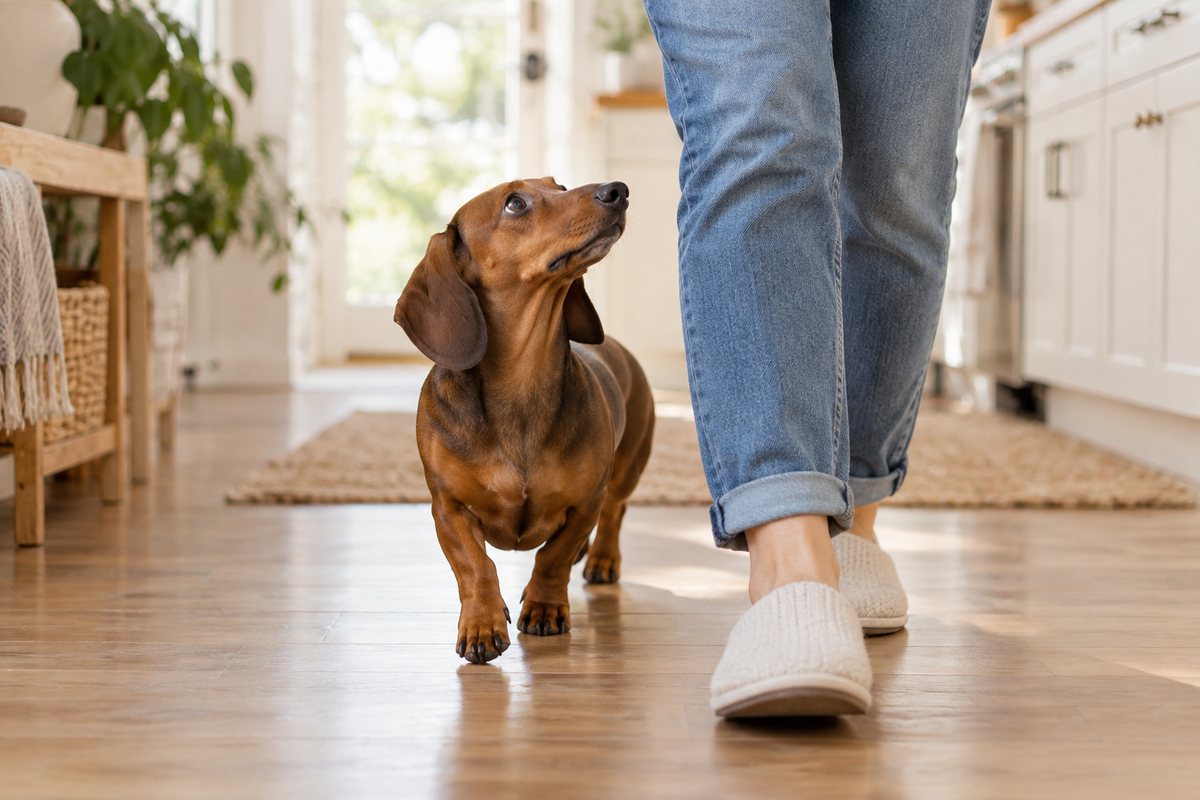
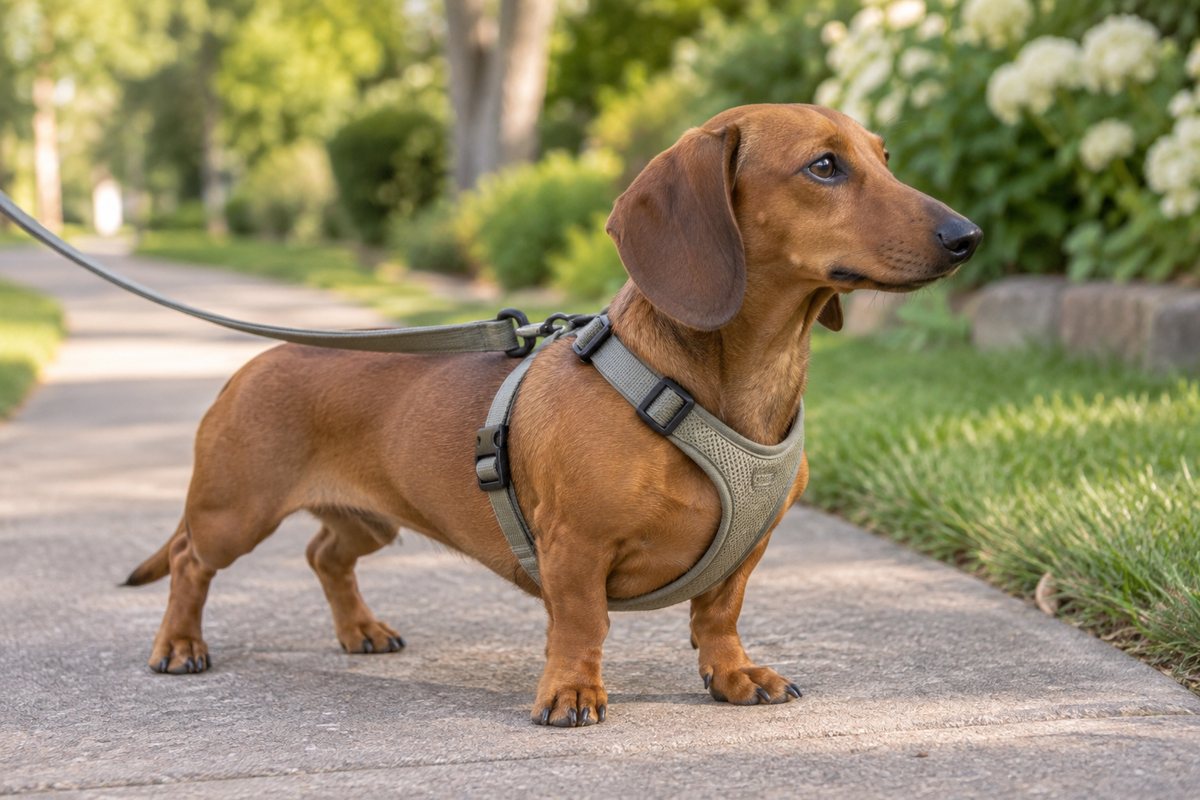
    Dachshund checking in during treat based leash training

    Treats to avoid or limit

    Not every tasty food belongs in a treat pouch. Avoid or limit anything that is too large, too hard, too fatty, too salty, or unsafe for dogs.

    • Large biscuits that must be chewed for a long time.
    • Hard treats for fast-paced puppy training.
    • High-fat cheese or sausage as an everyday reward.
    • Unknown ingredient mixes if your dog has allergies.
    • Cooked bones, chocolate, grapes, raisins, onions, garlic-heavy foods, and xylitol-containing products.
    • Any treat that causes stomach upset or behavior changes.

    For training, boring-but-safe often beats fancy-but-rich. Your Dachshund does not need a whole snack every time. They need clear timing, a reward they like, and a piece small enough to keep learning.

    FAQ

    What are the best treats for Dachshund training?

    The best treats are tiny, soft, low-calorie, and easy to digest. For most Dachshunds, soft mini training treats, kibble pieces, and tiny high-value meat rewards cover most training needs.

    How many training treats can a Dachshund have?

    Keep treats and extras within about 10% of your Dachshund’s daily calories unless your veterinarian gives a different plan. Count training treats, chews, table food, and lick mats together.

    Can I use kibble as Dachshund training treats?

    Yes. Kibble is useful for easy indoor cues and long repetition sessions. Use higher-value treats when distractions are harder or the behavior is especially important.

    Are freeze-dried treats good for Dachshund training?

    They can be excellent high-value rewards if your dog tolerates the protein. Break pieces small and count them because freeze-dried meat can still add calories quickly.

    Should Dachshund puppies get different training treats?

    Puppies usually do best with very small, soft treats or part of their daily puppy food. Introduce new treats slowly and keep sessions short to protect digestion and attention.

    Sources


    Related Dachshund guides

  • How to Teach Dachshund to Use a Ramp: Step-by-Step Guide

    How to Teach Dachshund to Use a Ramp: Step-by-Step Guide

    To teach a Dachshund to use a ramp, start with the ramp flat on the floor, reward one paw at a time, build confidence slowly, and only add height after your dog walks across calmly. Do not drag your Dachshund up the ramp. A ramp is only useful if your dog trusts it and uses it instead of jumping.

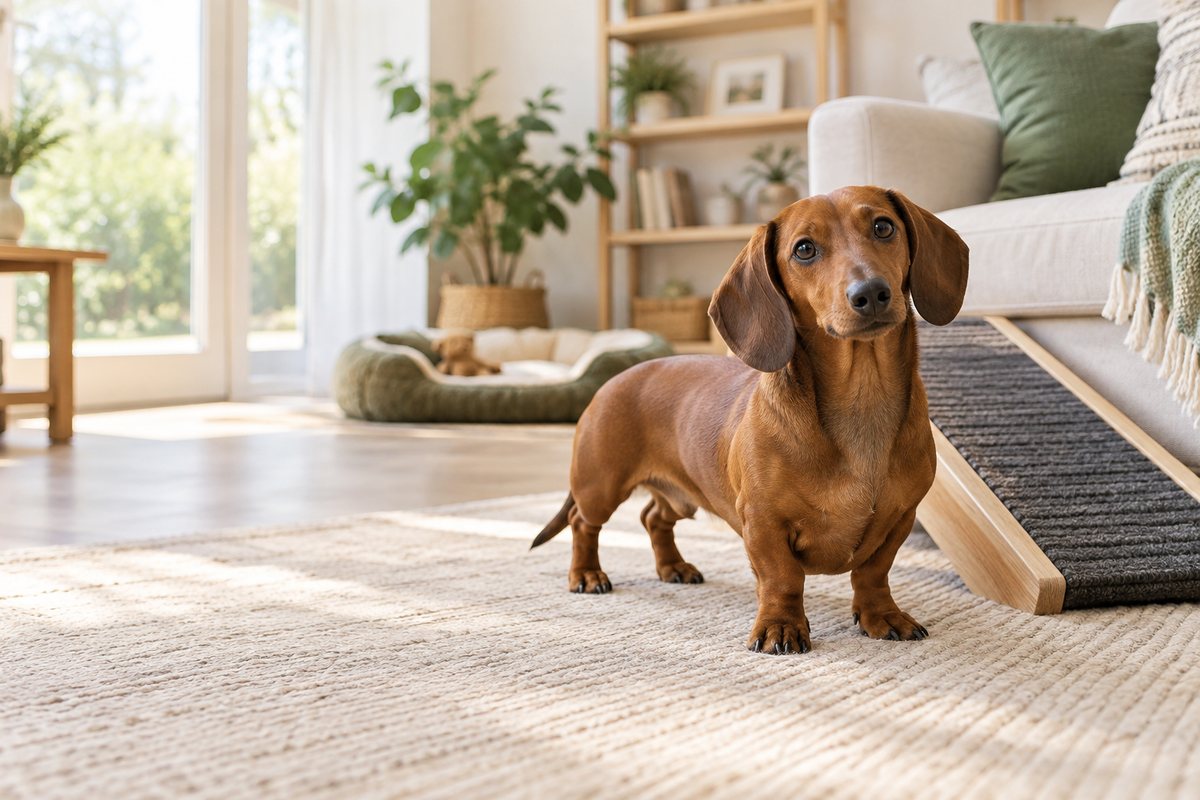
    Dachshund learning to use a ramp instead of jumping

    How to teach Dachshund to use a ramp

    1. Put the ramp flat on the floor.
    2. Reward sniffing and stepping near it.
    3. Place treats along the ramp.
    4. Reward walking across flat.
    5. Raise the ramp to a very low height.
    6. Guide slowly with treats at nose level.
    7. Block the old jumping path.
    8. Practice daily until it becomes routine.

    Cornell IVDD guidance recommends minimizing jumping and stairs for at-risk dogs. A ramp can help, but only when trained gently and used consistently.

    Dachshund ramp training with small food rewards

    If your Dachshund refuses

    ProblemLikely reasonFix
    Stops at baseRamp too steepLower height
    Jumps over itOld habit remainsBlock jump path
    SlipsPoor tractionAdd non-slip surface
    FreezesFearReturn to flat-floor practice
    Yelps or limpsPainCall veterinarian

    For choosing the ramp itself, see best dog ramp for Dachshunds and dog ramp vs stairs for Dachshunds.

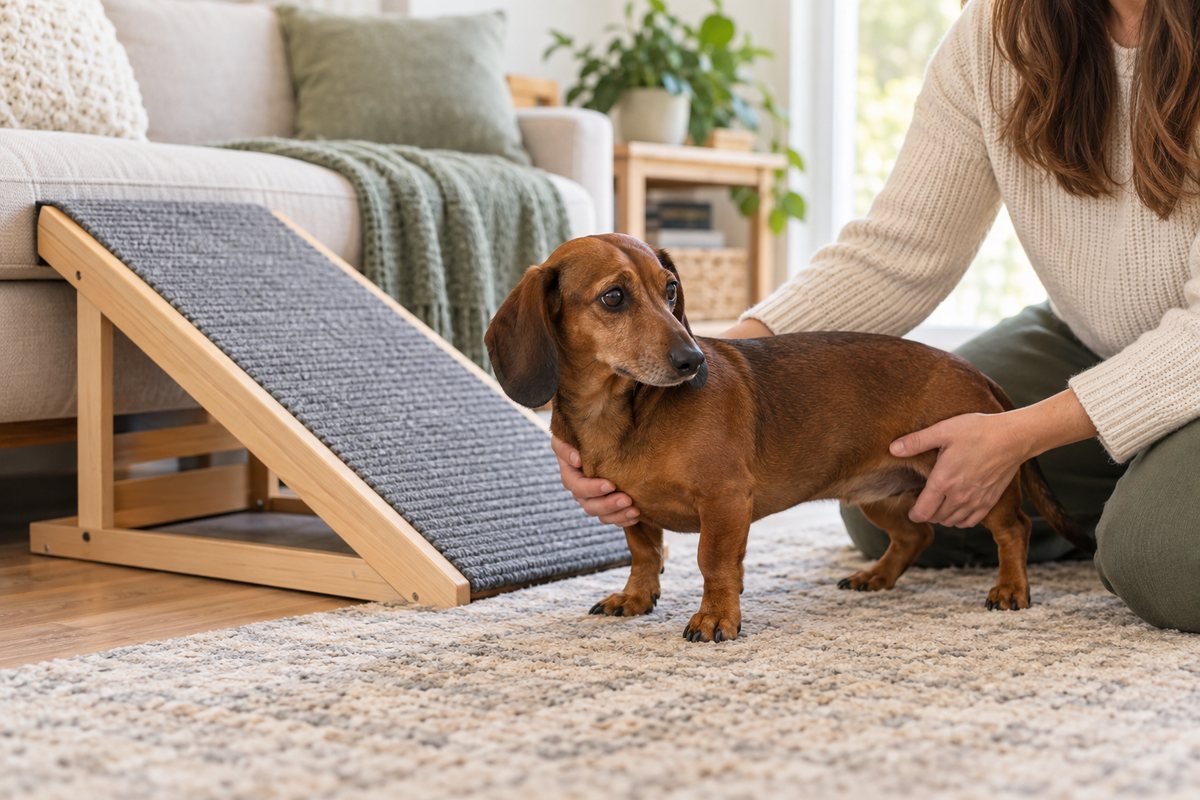
    Dachshund guided safely near a ramp with harness support

    Training for bed, couch, and car ramps

    Ramp locationTraining focusOwner tip
    BedSlow up and slow downBlock jumping from both sides
    CouchUse ramp before cuddlesReward before the dog launches
    CarConfidence and tractionPractice with parked car first

    Do not wait until your Dachshund is tired or excited to introduce the ramp. Teach it during a calm moment, then use it consistently when the dog actually wants access to the bed, couch, or car.

    Make the ramp the habit

    The hardest part is often not the first training session. It is consistency. If your Dachshund sometimes jumps and sometimes uses the ramp, jumping remains available. Use furniture placement, gates, or supervision until the ramp is automatic.

    14-day ramp training plan

    Some Dachshunds use a ramp in one afternoon. Others need a slower plan. A nervous dog, senior dog, or puppy may need many easy repetitions before the ramp feels normal. Keep the sessions short enough that your dog ends while still confident.

    DaysGoalPractice
    1 to 2Comfort near rampTreats for sniffing and stepping near it
    3 to 4Flat crossingWalk across ramp flat on the floor
    5 to 7Low heightRaise a few inches and reward slow steps
    8 to 10Furniture approachUse ramp to low couch or platform
    11 to 14Real usePractice at the actual bed, couch, or car

    Troubleshooting ramp refusal

    If your Dachshund avoids the ramp, do not assume stubbornness. Check the surface, slope, noise, wobble, and landing area. Some ramps move slightly when a dog steps on them, which can scare a cautious Dachshund. Add traction, lower the height, or brace the ramp before asking for more practice.

    • If the dog jumps around it, block the old path.
    • If the dog freezes, return to flat-floor training.
    • If the dog rushes, reward slow steps.
    • If the dog slips, improve traction before continuing.
    • If the dog yelps or limps, stop and call your veterinarian.

    Handler habits that make ramp training stick

    The hardest part is often not teaching the ramp. It is making the ramp the normal path every single time. If your Dachshund sometimes uses the ramp but sometimes jumps, the jumping habit stays alive. Put the ramp where it will remain, block the shortcut, and reward the ramp before your dog has a chance to choose the old route.

    Use a calm voice and slow movement. Dachshunds can rush when excited, especially near a couch, bed, or car. Hold a treat low to the ramp surface so the dog’s head stays down and the feet move deliberately. If your dog bolts up or down, go back to a lower height and reward each slow step.

    Ramp safety rules for Dachshunds

    • Never drag your Dachshund by the collar or harness onto the ramp.
    • Do not place the ramp on slick flooring without a stable base.
    • Keep the slope low enough that your dog can walk, not scramble.
    • Use side support or furniture placement if your dog steps off the edge.
    • Stop training if your Dachshund limps, yelps, or refuses after a slip.

    For a nervous dog, success can be one paw, then two paws, then one flat crossing. That pace is still progress. A ramp should feel predictable, quiet, and rewarding, not like a test your Dachshund has to pass in one session.

    Dachshund ramp training FAQ

    Why does my Dachshund jump beside the ramp?

    Jumping is the old habit and often the fastest path. Block the shortcut with furniture placement, a gate, or your body position, then reward the ramp before the dog chooses to jump. Keep the ramp in the same place so it becomes part of the room, not a temporary obstacle.

    How steep can a Dachshund ramp be?

    Gentler is better. If your Dachshund has to scramble, rush, or hesitate at the top, the ramp is probably too steep, too slick, or too narrow. Choose a longer ramp when possible, improve traction, and train at lower heights before moving to a tall bed or vehicle.

    Should I use stairs or a ramp?

    Many Dachshunds do better with a ramp because it reduces repeated climbing and jumping, especially for high furniture. Some dogs tolerate shallow stairs, but a steep staircase beside a tall bed may still encourage impact. Choose the option your dog uses slowly, safely, and consistently.

    Final ramp training tip

    Keep rewarding the ramp even after your Dachshund understands it. Owners often stop rewarding too soon, then the dog returns to jumping because it is faster. A few small rewards each day can keep the safer habit strong.

    Proofing ramp training after your Dachshund understands it

    Once your Dachshund can walk over a ramp, the training is not finished. The real goal is reliable ramp use when your dog is sleepy, excited, carrying a toy, rushing to greet you, or tempted by the old jump path. Proofing turns a trick into a habit.

    Keep the ramp in the same place long enough for the room layout to make sense. If the ramp moves every day, many Dachshunds return to the simpler old route: jumping. Block shortcuts while the new habit is forming.

    SituationWhat it suggestsBest next step
    Dog jumps beside rampShortcut still availableBlock the jump path
    Dog rushes downToo exciting or steepLower height and reward slow steps
    Dog freezes at topHeight or traction concernImprove surface and practice lower
    Dog uses it only for treatsCue not generalizedReward randomly after habit improves
    Dog avoids at nightVisibility or confidence issueAdd light and stable placement

    how to teach Dachshund to use a ramp: practical checklist

    1. Practice when your dog is calm, not only excited.
    2. Reward slow feet on the way down.
    3. Place rugs at the base to prevent sliding.
    4. Use furniture or gates to remove the old jump lane.
    5. Practice from both directions if the ramp allows it.
    6. Keep sessions short enough that your dog still wants to try.

    When to change course

    If your Dachshund suddenly stops using a familiar ramp, consider pain, slipping, eyesight, or a scary event on the ramp. Re-training may help, but health and traction come first.

    how to teach Dachshund to use a ramp: owner scenarios and fixes

    The final step for how to teach Dachshund to use a ramp is matching the advice to the exact situation in front of you. Dachshunds are small, persistent, routine-sensitive dogs, so a plan that looks correct on paper can fail if the room setup, timing, gear, reward value, or health context is wrong. Before changing everything, choose the one pattern that happens most often and work there first.

    This also helps prevent mixed signals. If you sometimes reward the unwanted pattern, sometimes interrupt it, and sometimes ignore it, your Dachshund may keep trying the behavior because the rules are unclear. A simple plan that everyone in the home follows for one week is usually more useful than a complicated plan that changes every day.

    Owner situationHow to handle it
    When the main issue is dog jumps beside rampStart with the practical fix: block the jump path. Give it several calm repetitions before adding a second change.
    When the pattern looks like dog rushes downAssume the setup is slightly wrong for your Dachshund and adjust the environment before expecting better behavior.
    When you see dog freezes at topSlow the plan down. Dachshunds often improve faster when the next step is easier, clearer, and more predictable.
    When dog uses it only for treats keeps returningLook for a trigger that happens before the problem. Changing that trigger usually works better than reacting afterward.
    When dog avoids at night is involvedTreat it as a sign to re-check fit, comfort, schedule, or health rather than assuming your dog is ignoring you.

    How to make the plan easier for your Dachshund

    If progress stalls, make the next repetition easier instead of louder or longer. For how to teach Dachshund to use a ramp, easier can mean more distance, a shorter session, a lower height, a quieter room, softer handling, smaller rewards, or fewer choices. The easier version should let your dog succeed while still practicing the skill you want.

    Watch recovery time. A Dachshund who can return to sniffing, eating, resting, or walking normally is usually in a workable zone. A dog who stays frantic, stiff, avoidant, or obsessed with the trigger is telling you the setup is too difficult. That is useful information, not a training failure.

    7-day improvement plan

    1. Day 1: write down when the how to teach Dachshund to use a ramp problem happens, where it happens, and what happened right before it.
    2. Day 2: remove the easiest trigger or setup mistake connected to dog jumps beside ramp.
    3. Day 3: practice the first checklist step: practice when your dog is calm, not only excited..
    4. Day 4: repeat the same plan at an easier level instead of adding a new rule.
    5. Day 5: add one support step from the checklist: reward slow feet on the way down..
    6. Day 6: ask whether your dog recovers faster than earlier in the week.
    7. Day 7: keep what improved, drop what confused your dog, and decide whether health or professional support is needed.

    This seven-day plan will not solve every case of how to teach Dachshund to use a ramp, but it gives you cleaner information. If the pattern improves, keep building gradually. If it stays the same or worsens, the cause may be discomfort, fear, poor fit, too much freedom, or a trigger that needs a different article-specific plan.

    Quality check before you rely on the advice

    The safest version of the advice should be specific, observable, and easy to repeat. You should know what you are changing, what success looks like, and when to stop. For Dachshunds, stop signs include pain, limping, yelping, frantic barking, snapping, refusal to eat rewards, vomiting, repeated accidents, or sudden behavior changes.

    When in doubt, choose the lower-risk version: more distance, better traction, shorter sessions, calmer rewards, clearer routines, and earlier veterinary input. That keeps the how to teach Dachshund to use a ramp plan helpful without pushing a small long-backed dog through stress, pain, or confusion.

    Sources


    Related Dachshund guides

  • How to Train a Dachshund Puppy: 7 Steps

    How to Train a Dachshund Puppy: 7 Steps

    How to train a Dachshund puppy starts with short, predictable, reward-based lessons. Start on the first day your puppy comes home: set a potty routine, introduce the crate as a calm resting place, reward the behaviors you want, and protect your puppy’s long back by teaching safer movement early.

    Dachshunds are clever hounds with big opinions. That does not mean they are impossible to train. It means your plan needs to be clearer than your puppy’s impulses: same cues, same schedule, tiny food rewards, lots of praise, and no long lectures after mistakes.

    How to train a Dachshund puppy: quick training plan

    • 8-12 weeks: name response, potty schedule, crate comfort, gentle handling, safe socialization, and simple cues like sit and come.
    • 3-4 months: longer sleep stretches, leash basics, door manners, calm alone-time practice, and consistent redirection for biting or barking.
    • 4-6 months: proof cues around distractions, build recall, prevent jumping from furniture, and keep house training consistent through adolescence.

    For most families, the best answer to how to train a Dachshund puppy is to build one repeatable daily rhythm: potty first, short lesson next, rest after that, and calm rewards whenever your puppy chooses the behavior you want.

    Before you start: set up the house

    A Dachshund puppy learns faster when the environment makes good choices easy. Before training sessions, prepare a small puppy zone with a crate or pen, washable bedding, safe chew toys, water, and baby gates. Block access to rugs, bedrooms, couches, stairs, and hidden corners until potty habits are reliable.

    Use a harness rather than relying only on a collar for walks. Because Dachshunds have a long body and short legs, also think about back-safe habits from the beginning: lift your puppy with support under the chest and rear, prevent repeated furniture jumping, and teach ramps or steps slowly rather than letting the puppy launch on and off sofas. For more body-safety context, read the Dachshund Compass guide to Dachshund back pain signs.

    Step 1: teach your puppy their name

    Your puppy’s name should mean, “Look at me, something good is coming.” Say the name once in a cheerful voice. When your puppy turns toward you, mark it with “yes” and give a tiny treat. Practice five to ten times, then stop before your puppy gets bored.

    Do not use the name as a warning. If “Daisy, no!” is the sound your puppy hears all day, the name becomes background noise. Use the name for attention, then give a clear cue: “Daisy, come,” “Daisy, sit,” or “Daisy, outside.”

    Step 2: start potty training on day one

    The American Kennel Club recommends starting Dachshund housetraining as soon as the puppy comes home, using a regular schedule and the same potty area each time. That consistency matters because many Dachshund puppies are confident enough to invent their own bathroom rules if the house is too open too soon.

    Take your puppy out after waking, after eating, after drinking, after play, after naps, before bedtime, and any time sniffing or circling starts. Go to the same spot, use a simple phrase like “go potty,” and reward immediately after your puppy finishes. The reward must happen outside, not after you walk back into the kitchen.

    How to train a Dachshund puppy with outdoor potty rewards

    A simple Dachshund puppy potty schedule

    TimeWhat to do
    MorningCarry or walk your puppy straight outside before greeting, feeding, or play.
    After mealsGo outside within 5-15 minutes, then again after active play.
    During playPause every 20-30 minutes for a potty break.
    After napsOutside immediately. Puppies often need to go as soon as they wake.
    EveningFinal potty trip right before bed.

    If accidents happen, clean them with an enzymatic cleaner and tighten supervision. Punishment after the fact does not teach your puppy where to go. It usually teaches the puppy to hide next time.

    Step 3: make the crate a safe resting place

    A crate can help with sleep, travel, safety, and potty training, but only if your puppy learns that the crate is comfortable. Choose a crate that is big enough for standing, turning, and lying down, but not so large that one end becomes a bathroom. If you bought an adult-size crate, use the divider. This is a practical part of how to train a Dachshund puppy because it gives your puppy a predictable place to rest between lessons.

    Feed meals near the crate, toss treats inside, and let your puppy walk in and out without pressure. Then close the door for a few seconds while your puppy is calm. Build slowly: seconds first, then minutes, then a short nap. If your puppy panics, reduce the difficulty. The goal is not to “win” a crying contest; it is to teach calm confinement.

    • Put the crate near you at night for the first few days.
    • Take your puppy outside after every crate nap.
    • Do not use the crate as punishment.
    • Give a safe chew only when you can supervise.

    Step 4: use short positive training sessions

    Dachshunds were bred to work with confidence and persistence. That is useful when you teach them clearly, and frustrating when training becomes repetitive. Keep sessions to two or three minutes for a young puppy. End while your puppy still wants more.

    Use tiny soft treats, praise, and play. Reward the exact behavior you want. If you ask for “sit,” reward while your puppy is sitting. If you ask for “come,” reward when your puppy reaches you, not after they wander away again.

    First cues to teach

    • Sit: lure your puppy’s nose slightly up and back, then reward when the rear touches the floor.
    • Come: crouch, sound happy, reward generously, and never call your puppy for punishment.
    • Touch: teach your puppy to bump your hand with their nose. This is useful for recall and redirection.
    • Drop it: trade for a treat or toy before your puppy learns to run away with forbidden items.
    • Settle: reward calm lying down on a mat or bed.

    Step 5: socialize safely before the window closes

    Socialization is not the same as letting everyone touch your puppy. It means carefully introducing people, surfaces, sounds, handling, car rides, grooming tools, and friendly vaccinated dogs at an intensity your puppy can handle. The American Veterinary Society of Animal Behavior notes that the first three months are the most important window for puppy socialization and recommends safe socialization before puppies are fully vaccinated.

    Ask your veterinarian which places are safe in your area. A well-run puppy class, visits with healthy vaccinated dogs, sitting outside a quiet store, hearing traffic from a safe distance, and practicing gentle handling at home can all build confidence without flooding your puppy.

    Step 6: prevent barking habits early

    Dachshunds often notice everything: doors, windows, footsteps, squirrels, neighbors, and every suspicious leaf. Do not wait until barking is a full-time hobby. Reward quiet attention, teach a “thank you” cue, and manage the view from windows if your puppy rehearses barking all day. If barking is already your biggest problem, the companion guide on why Dachshunds bark so much explains the common triggers.

    When your puppy notices a trigger, say “yes” before the bark starts and feed a treat. You are teaching the puppy that seeing something does not require sounding the alarm. If barking has already started, calmly move your puppy away, wait for quiet, then reward.

    Step 7: teach back-safe habits

    Training a Dachshund puppy is also about protecting their body. Dachshunds are known for back risk, including intervertebral disc disease. The Dachshund Club of America advises lifestyle habits that limit the possibilities of disc herniation, including avoiding obesity, reducing excessive jumping, and teaching quiet confinement when needed. In other words, how to train a Dachshund puppy should include safe movement habits, not only obedience cues.

    Make the safe choice easier than the risky one. Put ramps near furniture you allow. Block furniture you do not allow. Reward all four paws on the floor. Teach your puppy to wait to be lifted rather than jumping from your arms or off the couch.

    Dachshund using a cozy home ramp for back-safe training habits

    Common Dachshund puppy training mistakes

    When you review how to train a Dachshund puppy, most setbacks come from giving the puppy too much freedom before the routine is reliable.

    • Giving too much freedom too soon. A puppy who can wander out of sight can practice accidents, chewing, and barking before you can teach better choices.
    • Repeating cues. “Sit, sit, sit” teaches your puppy that the first cue does not matter. Say it once, help, then reward.
    • Making sessions too long. A bored Dachshund puppy may look stubborn when they are simply done.
    • Using punishment for potty accidents. This damages trust and rarely improves housetraining.
    • Ignoring body safety. Jumping on and off furniture can become a habit before owners realize it.

    When to get help

    Talk with your veterinarian or a qualified positive-reinforcement trainer if your puppy is not making potty progress by 4-6 months, panics in confinement, growls when handled, guards food or toys, or seems unusually fearful. Early help is easier than waiting until the pattern is stronger. If you keep wondering how to train a Dachshund puppy after several consistent weeks, a trainer can spot timing, reward, or environment issues that are easy to miss at home.

    Sources

    Affiliate disclosure: If you buy through links on this page, I may earn a commission at no extra cost to you.

    For owners who want a structured, positive-reinforcement training plan at home, Brain Training for Dogs is an online course that can pair well with short daily Dachshund training sessions.


    Related Dachshund guides

  • Dachshund Potty Training: 7 Step Housebreaking Plan

    Dachshund Potty Training: 7 Step Housebreaking Plan

    Dachshund potty training works best when you make the right choice easy, fast, and rewarding. Because Dachshunds are clever, scent-driven, and often stubborn about bad weather, the winning plan is not a lecture after accidents. It is a simple routine: frequent potty breaks, close supervision, a small safe area, immediate rewards outside, and very little freedom until the habit is reliable.

    Dachshund potty training outside with praise and rewards

    This guide gives you a practical Dachshund potty training plan for puppies, rescue dogs, and adults who need a reset. You will learn when to go outside, how to use a crate without turning it into punishment, what to do after accidents, and how to handle classic Dachshund problems like rain refusal, hidden corner accidents, and going potty right after coming back inside.

    Dachshund potty training quick answer

    The fastest Dachshund potty training plan is to take your dog to the same potty area first thing in the morning, after meals, after drinking, after naps, after play, after crate time, and before bed. Keep your Dachshund on leash, use one cue such as “go potty,” reward immediately after they finish, and supervise or confine them indoors when you cannot watch closely.

    Most accidents happen because the dog had too much freedom too soon, the schedule was too loose, the reward came too late, or old accident odors were left behind. For Dachshunds, weather resistance and sneaky bathroom spots can add another layer, so prevention matters more than correction.

    Set up the house before training

    Before you begin, shrink the world. A Dachshund who can roam the whole house can quietly choose a hallway, bedroom rug, laundry pile, or hidden corner. Start with a puppy pen, gated kitchen, crate, or one washable room. As your dog earns reliability, expand access slowly.

    • Choose one potty door: use the same exit so your dog learns where the routine starts.
    • Choose one potty spot: scent helps dogs understand the target area.
    • Use a leash: even in a fenced yard, a leash keeps your Dachshund from sniffing for ten minutes and forgetting the job.
    • Prepare tiny rewards: reward outside, within seconds of finishing.
    • Block tempting rooms: rugs, bedrooms, and low-traffic corners should wait until habits are stable.

    AKC potty training guidance emphasizes consistency, supervision, a predictable schedule, and positive reinforcement. That matches Dachshunds especially well because they learn patterns quickly, including patterns you did not mean to teach.

    Dachshund potty training schedule

    The schedule is the heart of Dachshund potty training. Young puppies need many trips because their bladder control is still developing. Adults can usually wait longer, but a rescue dog or a dog with a history of accidents may need a temporary puppy-style schedule while you rebuild the habit.

    Time or triggerWhat to doWhy it helps
    First thing in the morningCarry or walk straight outside before breakfast or phone checksPrevents the first easy accident of the day
    After mealsGo outside within a few minutes, then again if your dog is still restlessMeals often trigger bowel movement timing
    After drinkingOffer a potty break soon after big water intakeSmall dogs can need quicker bathroom access
    After naps or crate timeOutside immediately after releasePrevents accidents during excited wake-up moments
    After playPause play and go outsideActivity can trigger urgency
    Before bedQuiet final trip, then straight to sleep routineBuilds a predictable overnight pattern

    AKC notes that young puppies often need breaks after waking, eating, drinking, playing, chewing, and crate time. A common guideline is that many puppies can hold their bladder for roughly their age in months in hours, but individual puppies vary. For a tiny Dachshund puppy, assume you need more prevention, not less.

    Dachshund puppy in a crate as part of a potty training routine

    Use crate training the right way

    A crate can help with Dachshund potty training because many dogs prefer not to soil the place where they sleep. The crate should be big enough for your Dachshund to stand, turn around, and lie down comfortably, but not so large that one end becomes a bathroom and the other end stays clean.

    Crate training should feel calm and safe. Feed meals near or inside the crate, add a comfortable bed if your dog does not chew bedding, and practice short rests before expecting longer confinement. Do not use the crate as punishment after accidents. If you need a detailed setup, use the guide on how to crate train a Dachshund puppy.

    A 7-step Dachshund potty training plan

    1. Start with a written schedule. Track food, water, naps, play, potty trips, and accidents for one week.
    2. Take your Dachshund out before they ask. Waiting for signals is harder than preventing urgency.
    3. Use one cue. Say “go potty” when your dog begins, not twenty times while they sniff.
    4. Reward outside immediately. Praise and treat right after the correct potty, before going back indoors.
    5. Supervise indoors. If you cannot watch, use a crate, pen, tether, or gated room.
    6. Clean accidents completely. Use an enzymatic cleaner so old smells do not invite repeat accidents.
    7. Expand freedom slowly. Add one room at a time after several accident-free weeks.

    If your Dachshund is a young puppy, pair this plan with broader training foundations such as name response, gentle handling, crate comfort, and short reward-based lessons. The full puppy overview is here: how to train a Dachshund puppy. For the narrower puppy-only version of this topic, read how to potty train a Dachshund puppy.

    How to handle accidents

    Accidents are information. They tell you the schedule was too long, supervision slipped, the dog had too much freedom, the area still smelled like a bathroom, or a medical issue may be involved. Do not yell, rub your dog’s nose in it, or punish them after the fact. Your Dachshund will not connect the punishment to the earlier accident in the useful way you want.

    If you catch your Dachshund starting to go indoors, interrupt calmly, take them outside, and reward if they finish in the correct spot. If you find the accident later, clean it thoroughly and adjust the plan. AKC guidance also stresses cleaning accident areas well because lingering odor can pull a dog back to the same place.

    ProblemLikely causeFix
    Accidents right after coming insideThe outdoor trip turned into sniffing, not potty timeUse a leash, stand still, reward outside, then play after success
    Hidden accidents in another roomToo much house freedom too soonReturn to gates, pen, tether, or direct supervision
    Repeating one indoor spotOld odor remainsUse enzymatic cleaner and block access during retraining
    Rain refusalWeather discomfort or habitUse a covered spot, coat if needed, and reward fast outdoor success
    Crate accidentsCrate too large, schedule too long, stress, or medical issueAdjust crate size, shorten intervals, and call your vet if persistent
    Dachshund using a ramp to reduce jumping during potty training routines

    Common Dachshund potty training problems

    Why is Dachshund potty training so hard?

    Dachshund potty training can feel hard because the breed is independent, low to the ground, quick to sneak away, and often unimpressed by rain or cold grass. That does not mean your Dachshund is impossible. It means the plan needs to be more consistent than the dog’s alternatives. Less freedom, better timing, and faster rewards usually fix more than stricter punishment.

    Should you use puppy pads?

    Puppy pads can help in apartments, bad weather, or when a young puppy cannot safely wait for a midday break. They can also slow outdoor training if the dog learns that indoor potty is always an option. If your long-term goal is outdoor potty only, use pads as a temporary management tool and gradually move toward outdoor rewards.

    What if your adult Dachshund is having accidents?

    For an adult Dachshund, treat accidents as either a training reset or a health clue. Return to a puppy-style schedule for two weeks: supervised freedom, frequent breaks, rewards outside, and careful cleaning. If accidents start suddenly, happen during sleep, include straining, blood, diarrhea, increased thirst, weakness, or pain, call your veterinarian.

    Back-safe potty routines for Dachshunds

    Potty training is also a chance to build safer movement habits. Dachshunds should not be launching off beds, couches, porch steps, or car seats every time they need to go outside. Use ramps where needed, lift with support under the chest and rear, and make the path to the potty area simple. If your dog hesitates on stairs, arches their back, trembles, yelps, or changes gait, read Dachshund back pain signs and contact your veterinarian.

    For walks, use a secure harness that fits a long body and deep chest. The guide to the best harness for Dachshunds can help if your dog pulls or slips gear during bathroom walks. Food also affects bathroom timing, so keep meals predictable and review best food for Dachshunds if loose stool is making potty training harder.

    FAQ

    How long does Dachshund potty training take?

    Some Dachshunds improve within days, but reliable house training often takes weeks or months depending on age, previous routine, supervision, health, and consistency. Expect progress, not perfection, especially with puppies.

    How often should I take my Dachshund puppy out?

    Take a young puppy out first thing in the morning, after meals, after drinking, after naps, after play, after crate time, and before bed. During waking hours, many puppies need trips every one to two hours at first.

    Why does my Dachshund pee inside after going outside?

    Often, the outdoor trip was too distracting or too short. Use a leash, go to the same spot, stand quietly, reward the moment they finish, and give playtime only after the potty job is done.

    Are Dachshunds harder to potty train than other dogs?

    They can be more challenging because they are independent, small, and sometimes weather-sensitive. The fix is not harshness. It is tighter management, better timing, and consistent rewards.

    Should I punish my Dachshund for accidents?

    No. Punishment after an accident can increase stress and does not teach the correct bathroom location. Clean the area, tighten the schedule, supervise more closely, and reward outdoor success.

    Sources

    Affiliate disclosure: If you buy through links on this page, I may earn a commission at no extra cost to you.

    For owners who want a structured, positive-reinforcement training plan at home, Brain Training for Dogs is an online course that can pair well with short daily Dachshund training sessions.


    Related Dachshund guides