Homemade food for Dachshunds can work, but only when it is complete, balanced, and built for your individual dog. A bowl of chicken, rice, vegetables, and pumpkin may look healthy, but it is not automatically a complete diet. Dachshunds are small, easy to overfeed, and prone to weight problems, so homemade meals should be planned with your veterinarian or a board-certified veterinary nutritionist instead of copied from a casual internet recipe.
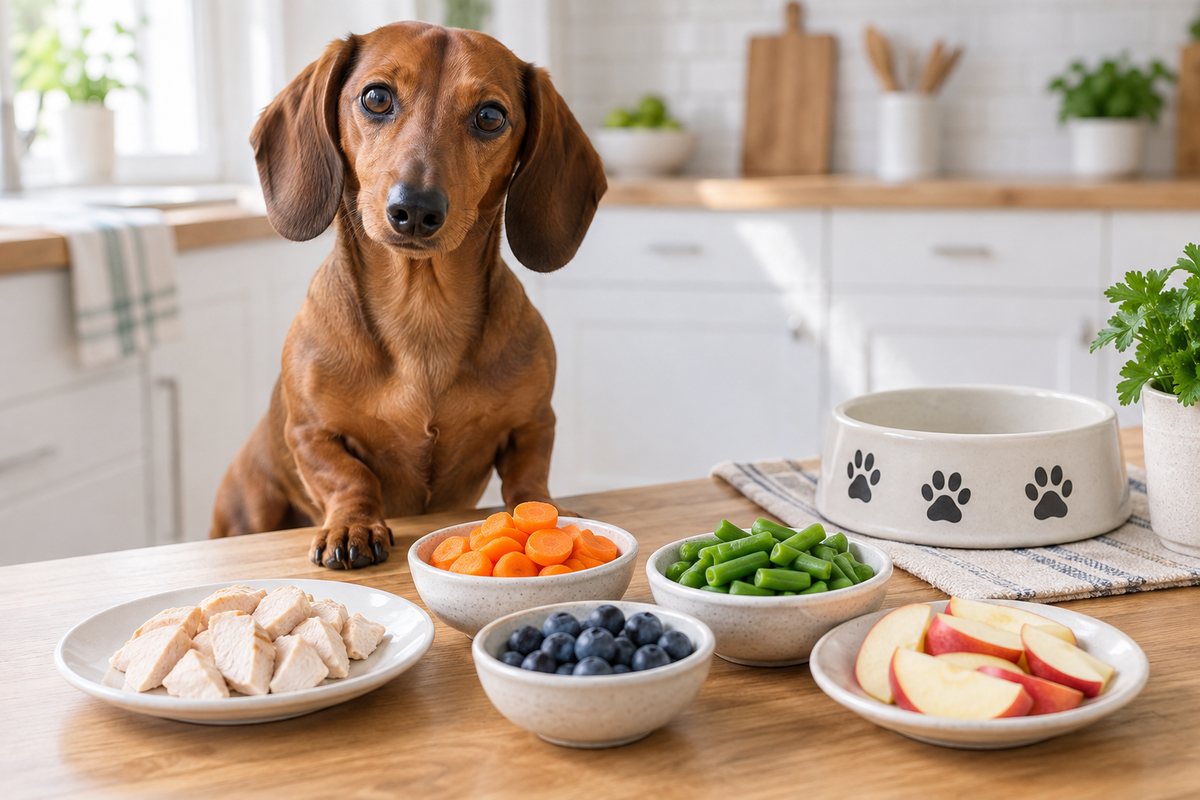
This guide explains when homemade feeding makes sense, why balance matters, what ingredients are commonly used, which mistakes to avoid, and how to make a safer plan. It does not provide a complete homemade recipe because safe long-term recipes require exact ingredient weights, supplements, calories, and medical context.
Table of Contents
Homemade food for Dachshunds: quick answer
Dachshunds can eat homemade food if the recipe is complete and balanced for their life stage and health needs. For long-term feeding, the safest route is a recipe formulated by a board-certified veterinary nutritionist or a veterinarian-guided service. Merck Veterinary Manual advises that owners who choose home-cooked diets should use a recipe formulated by a boarded veterinary nutritionist rather than one found casually online or in a book.
If you only want to add a spoonful of plain cooked food as a topper, keep it small and count the calories. AAHA nutrition guidance flags noncomplete or unbalanced foods above 10% of daily calories as a nutritional risk because they can dilute essential nutrients and add excess calories.
Can Dachshunds eat homemade food?
Yes, but there are two very different meanings of homemade food. The first is a small topper or occasional dog-safe extra. The second is a full homemade diet that replaces commercial food. A topper is simpler because the main complete food still supplies most nutrients. A full homemade diet must supply all required nutrients every day over time.
| Use case | Risk level | Best approach |
|---|---|---|
| Small topper | Lower if kept under the treat budget | Use plain dog-safe foods and count calories |
| Short bland diet | Moderate if used briefly | Use only when your veterinarian recommends it |
| Long-term homemade diet | High if not formulated properly | Use a board-certified veterinary nutritionist’s recipe |
| Medical homemade diet | High | Needs medical records, diagnosis, exact formulation, and follow-up |
| Raw homemade diet | High | Discuss pathogen and balance risks with your veterinarian |
For a basic safe-food list, read what Dachshunds can eat. For toxic foods and hidden hazards, read what Dachshunds should not eat.
Why balance matters
Dogs need more than protein and vegetables. A balanced diet must provide appropriate calories, amino acids, fatty acids, minerals, vitamins, and the right calcium-to-phosphorus relationship for the dog’s life stage. Puppies, adults, seniors, pregnant dogs, and dogs with medical problems do not all need the same recipe.
Tufts Petfoodology explains that strong home-cooked recipes use precise ingredient amounts and usually include added vitamin and mineral sources. VCA also notes that a homemade recipe from a veterinary nutritionist is tailored to the individual pet after reviewing the medical record and diet history.
- A recipe missing calcium can be risky, especially for puppies.
- A recipe too high in fat can be a problem for dogs prone to pancreatitis.
- A recipe too high in calories can cause weight gain in small Dachshunds.
- A recipe without the correct supplement can look healthy but still be deficient.
- Changing ingredients can break the nutrient balance of the original recipe.
When homemade food may help
Homemade food may be useful when a dog has multiple medical needs, poor tolerance of commercial options, a veterinarian-directed elimination diet, or a temporary bland-diet situation. It can also help some owners who need more control over ingredients. The key is that control does not equal balance unless the recipe is professionally formulated.
| Situation | Possible role for homemade food | Owner caution |
|---|---|---|
| Short stomach upset | Temporary bland food if vet recommends it | Not a long-term complete diet |
| Food allergy workup | May be part of a controlled elimination plan | Needs strict ingredients and vet guidance |
| Multiple medical issues | Can be customized when commercial diets do not fit | Needs a veterinary nutritionist |
| Picky eating | May improve interest | Do not reward pickiness with unbalanced meals |
| Owner preference | Can be done responsibly | Requires exact recipe, supplements, and follow-up |
If your Dachshund has repeated vomiting, diarrhea, weight loss, poor appetite, itchy skin, ear infections, or pain after eating, do not jump straight to a homemade recipe. Start with a veterinary exam. Food may be part of the plan, but symptoms need a diagnosis.
A safer homemade food framework
A safe homemade plan starts with the dog, not the pantry. Your Dachshund’s age, current weight, ideal weight, body condition score, activity, neuter status, medications, lab results, stool history, and medical conditions all matter. A recipe for one Dachshund may be wrong for another.
- Ask your veterinarian whether homemade feeding is appropriate.
- Get a body condition score and ideal weight target.
- Share medical records and diet history with the nutrition professional.
- Use an exact written recipe with gram weights, not vague cups and handfuls.
- Use the prescribed supplements exactly as written.
- Do not swap ingredients without approval.
- Track weight, stool, skin, coat, appetite, and energy.
- Schedule follow-up checks and labwork if your veterinarian recommends them.
This may sound less casual than normal cooking, and that is the point. A complete homemade diet is not just cooking for your dog. It is diet formulation.
Common ingredient categories
Many homemade dog diets use familiar ingredient categories. The category list below is educational, not a recipe. The correct amount and supplement plan must come from a qualified professional.
| Category | Examples | Important note |
|---|---|---|
| Protein | Cooked chicken, turkey, lean beef, egg, fish | Needs the right amount and fat level |
| Carbohydrate | Rice, potato, sweet potato, oats | Calories add up quickly in small dogs |
| Vegetables | Carrot, green bean, pumpkin, zucchini | Useful, but not enough to balance the diet |
| Fat source | Specific oils in exact amounts | Too much fat can be risky for some dogs |
| Calcium/mineral source | Veterinary nutritionist-selected supplement | Do not guess with bones or random powders |
| Vitamin/mineral supplement | Diet-specific supplement | Often essential for completeness |
Do not assume a human multivitamin or generic pet supplement makes a homemade meal balanced. Some supplements are incomplete for this purpose, and some ingredients can become excessive or unsafe when combined incorrectly.
Portion control for Dachshunds
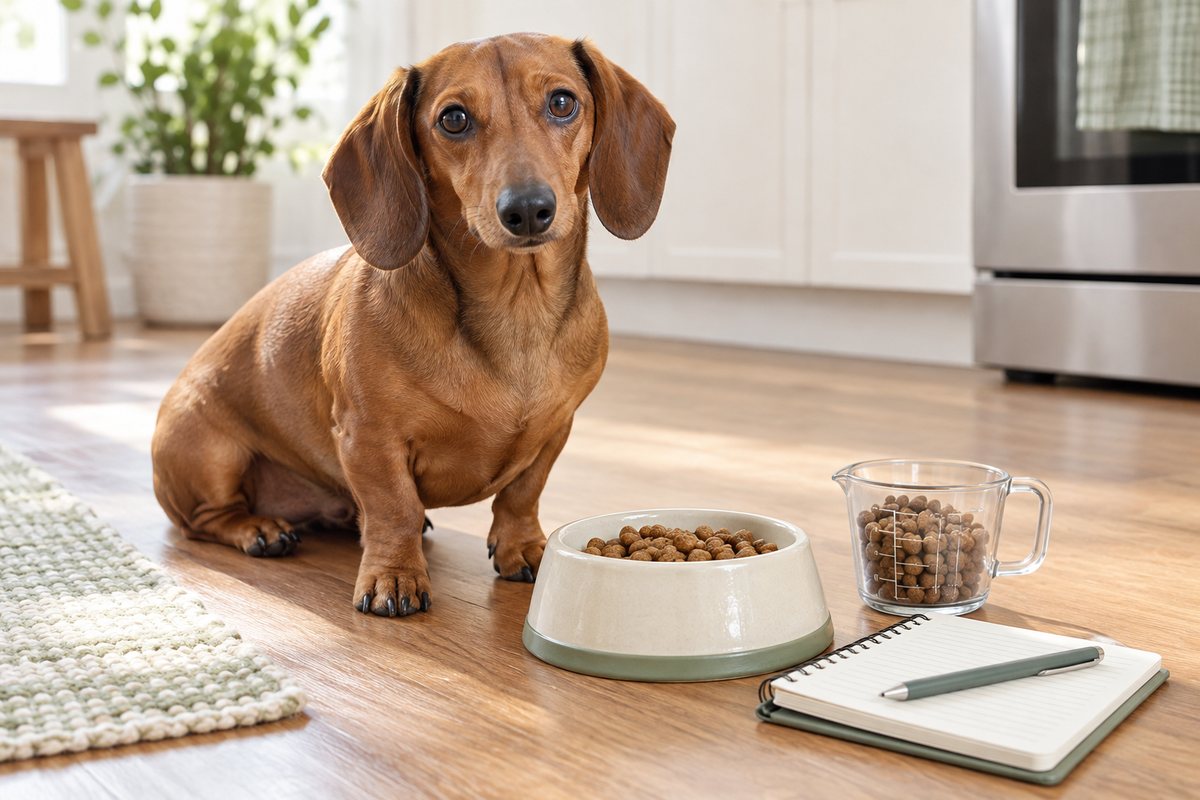
Portion control is especially important for Dachshunds. A homemade diet can be more calorie-dense than expected, and owners often serve by eye. That is risky for a breed where even a few extra pounds can affect comfort and movement.
- Use a kitchen scale for recipe ingredients and finished portions.
- Do not measure long-term homemade food by rough scoops.
- Track treats, chews, and toppers separately.
- Recheck body condition every few weeks while adjusting.
- Ask your veterinarian before cutting calories sharply.
For buying a balanced commercial base diet instead, see best food for Dachshunds. For smaller dogs, the best food for miniature Dachshunds guide focuses on calorie density and tiny portions.

Homemade meals vs toppers
If your goal is variety, enrichment, or appetite support, a topper may be safer than replacing the whole diet. The main complete food still carries the nutrition, and the topper stays small. This approach works only if you do not keep adding more and more extras.
| Option | Best use | Limit |
|---|---|---|
| Plain cooked chicken topper | Small training or appetite support | Count calories and avoid skin, bones, seasoning |
| Plain pumpkin | Small fiber add-on when tolerated | Use plain pumpkin, not pie filling |
| Green beans or carrots | Low-calorie crunch for some dogs | Cut small and introduce slowly |
| Homemade bland meal | Short veterinary-directed stomach support | Not complete for long-term use |
| Full homemade diet | Long-term feeding when formulated professionally | Requires exact recipe and supplements |
A topper should not turn into half the bowl. If your Dachshund refuses plain dog food unless it is covered in extras, talk with your veterinarian about appetite, dental comfort, nausea, behavior, and food choice.
What to avoid
The most dangerous homemade feeding mistakes are usually well-intentioned. Owners want fresh food, but they accidentally create an unbalanced or high-risk diet.
- Avoid long-term homemade diets from random internet recipes.
- Avoid replacing prescribed supplements with similar-looking products.
- Avoid ingredient swaps without professional approval.
- Avoid raw meat diets without discussing pathogen and nutritional risks.
- Avoid cooked bones, onion, garlic, grapes, raisins, chocolate, xylitol, alcohol, and heavily seasoned food.
- Avoid high-fat scraps, bacon grease, fried food, and rich gravy.
- Avoid homemade puppy diets unless a veterinary nutritionist formulates them.
AAHA states that it does not advocate or endorse feeding pets raw or dehydrated nonsterilized animal-origin foods because of pathogen risks to pets and people. This matters in homes with children, older adults, pregnant people, or anyone immunocompromised.
How to start safely
If you want to explore homemade food for your Dachshund, start with a professional plan. A good consultation usually reviews your dog’s medical record, diet history, body condition, preferences, medications, and owner constraints. The final recipe should be specific enough that another careful person could prepare it the same way.
- Book a veterinary visit or ask for a nutrition referral.
- Bring your dog’s current food, treats, chews, supplements, and feeding amounts.
- Ask whether a complete commercial food, fresh commercial food, or homemade diet is the best fit.
- If homemade is appropriate, request an exact recipe and supplement plan.
- Follow the recipe exactly for the trial period.
- Weigh your Dachshund and track stool, skin, appetite, and energy.
- Schedule follow-up adjustments instead of editing the recipe yourself.
For puppies, be even more cautious. Growing dogs can be harmed by nutrient mistakes faster than healthy adults. For puppy-specific feeding, use best food for Dachshund puppies.
FAQ
Is homemade food better for Dachshunds than kibble?
Not automatically. A complete and balanced commercial food is often safer and easier than an unbalanced homemade diet. Homemade food may be useful for certain dogs, but it needs professional formulation if it replaces the main diet.
Can I feed chicken and rice every day?
Chicken and rice may be used short term when your veterinarian recommends a bland diet, but it is not a complete long-term diet by itself. It lacks important nutrients unless it is part of a properly formulated recipe.
Do homemade Dachshund diets need supplements?
Most complete homemade diets need specific supplements to balance minerals, vitamins, fatty acids, and other nutrients. The supplement type and amount should come from the recipe formulator, not guesswork.
Can Dachshund puppies eat homemade food?
They can only if the homemade diet is formulated for puppy growth by a qualified professional. Puppies are not good candidates for casual homemade recipes because growth nutrition has less room for error.
What is the safest homemade topper for Dachshunds?
Many healthy Dachshunds can tolerate tiny amounts of plain cooked lean meat, plain pumpkin, carrot, green bean, or blueberry. Keep toppers small, introduce one at a time, and avoid seasonings, butter, salt, onion, garlic, bones, and fatty scraps.
Sources
- Merck Veterinary Manual: Dog and Cat Foods
- VCA Animal Hospitals: Nutrition – Home Made Diets
- VCA Animal Hospitals: Designer Diets, What’s in My Dog’s Food?
- AAHA: Nutritional Risk Factors
- AAHA: Raw Protein Diet
- Tufts Petfoodology: Should You Make Your Own Pet Food at Home?
- Tufts Petfoodology: Common Home Cooking Mistakes